Key Takeaways
1. From Idealism to Ruthless Pragmatism
Robert Moses possessed at the time of his confrontation with Ed Richards an imagination that leaped unhesitatingly at problems insoluble to other men… but the quality that had most impressed Richards and the rest of ‘09 was his idealism.
Early aspirations. Robert Moses began his career as a passionate idealist, dreaming of public service and grand civic improvements for New York. His early writings and conversations at Yale and Oxford emphasized truth, logic, and helping the "lower classes," believing that merit and sound principles would naturally prevail. He envisioned projects like waterfront highways and Central Park shelters, driven by a genuine desire for public good.
Disillusionment and shift. However, his initial efforts to reform New York's civil service were met with political obstruction and ultimately crushed by Tammany Hall. This bitter defeat, where his scientific logic and idealism proved powerless against entrenched interests, taught him a harsh lesson: ideas were useless without the power to implement them. This marked a profound shift from his earlier belief in the inherent triumph of truth.
Embracing political realities. The turning point was his alliance with Governor Al Smith, who taught him the art of practical politics. Moses, once scornful of politicians, eagerly learned how to navigate the political landscape, compromise, and leverage influence. This transformation from an uncompromising idealist to a shrewd pragmatist, willing to bend principles for results, became the foundation of his future power.
2. Power's Corrupting Influence
Power is the backdrop against which both confrontation scenes should be played. For power was the reason for the contrast in their denouements.
The allure of control. Once Moses gained power, it began to profoundly alter his character. The subtle arrogance observed in his youth intensified, evolving into an unyielding conviction of his own infallibility and a deep contempt for those who disagreed or lacked influence. This shift was evident in his interactions, where he increasingly dismissed dissenting opinions and used his authority to impose his will.
From means to end. Initially, Moses sought power as a tool to realize his ambitious dreams for public works. However, as his influence grew, power itself became an end. He began to crave it for its own sake, demonstrating a relentless drive to expand his control over every aspect of urban development, often at the expense of the very ideals he once championed.
Ruthlessness as a tool. His methods became increasingly ruthless and vindictive. He learned to use threats, public humiliation, and political blackmail to silence opposition and ensure compliance. This willingness to "kick you in the balls" if you stood in his way, as one official put it, became a hallmark of his administration, intimidating opponents and consolidating his absolute control.
3. The Authority: Moses's Unassailable Empire
The institution named “the public authority” was, in the form it took after Moses’ eyes focused on it in 1937 and 1938, the lengthened shadow of Robert Moses.
A new form of governance. Moses's genius lay in recognizing the untapped potential of the public authority. These quasi-governmental entities, initially conceived for single projects with limited lifespans, became his primary vehicle for accumulating and wielding immense, unchecked power. He transformed them into self-perpetuating empires, independent of traditional democratic oversight.
Financial autonomy. Through ingenious legal drafting, Moses ensured his authorities could issue "open-ended" revenue bonds, allowing them to refinance debt indefinitely and retain surpluses for new projects. This financial independence freed him from reliance on legislative appropriations or mayoral budgets, giving him unparalleled control over vast sums of money.
- Triborough's annual revenue soared from $8 million in 1941 to $75 million in 1967.
- This allowed capitalization of billions in bonds, far exceeding city or state budgets.
Insulation from democracy. By embedding his powers within bond covenants—legally binding contracts with bondholders—Moses made his authority immune to political interference. Neither governors, mayors, nor legislatures could revoke his powers without risking lawsuits from powerful financial institutions. This effectively created a "fourth branch of government" accountable only to him.
4. Master of Political Manipulation
He gave everybody involved in the political setup in this city whatever it was that they wanted. Therefore they all had their own interest in seeing him succeed.
Strategic alliances. Moses masterfully cultivated alliances with powerful political and economic forces. He understood that by providing "honest graft"—lucrative contracts, insurance premiums, legal fees, and patronage jobs—he could secure the unwavering support of:
- Banks and investment firms (eager for high-yield, tax-exempt bonds)
- Construction unions (guaranteed jobs and overtime)
- Contractors (lucrative, often non-bid, projects)
- Political bosses (patronage and campaign contributions)
The "Retainer Regiment." This network of beneficiaries formed a formidable "Retainer Regiment" that consistently backed his projects. When a mayor or governor hesitated, calls from these influential allies would pour in, pressuring officials to approve Moses's plans. This system ensured that his proposals, regardless of public opposition, moved forward.
Information as leverage. Moses maintained extensive dossiers on politicians and officials, containing damaging personal or financial information. This "bloodhound" tactic served as a powerful deterrent against opposition, ensuring compliance through fear of public exposure. He also controlled the flow of information to federal and state agencies, ensuring his plans were presented as the only viable options.
5. The "Ends Justify the Means" Doctrine
You can’t make an omelet without breaking eggs.
Unwavering focus on accomplishment. Moses was driven by an insatiable need for tangible achievement. He believed that the ultimate value of a public work lay in its completion, and any means necessary to achieve that end were justified. This philosophy, often expressed as "the end justifies the means," became the guiding principle of his building programs.
Disregard for process. He routinely circumvented democratic processes, legal restrictions, and ethical considerations. Public hearings were often a mere formality, and laws were either ignored, subtly rewritten, or openly defied. His attitude was that such "red tape" only hindered progress and that his vision for the city superseded conventional rules.
Justification through results. Moses consistently argued that the immense benefits of his projects—such as alleviating traffic congestion or providing recreational spaces—outweighed any temporary hardships or procedural irregularities. He believed that future generations would be grateful for his accomplishments, regardless of the methods used to achieve them.
6. Shaping the City, Displacing its People
He tore out the hearts of a score of neighborhoods, communities the size of small cities themselves, communities that had been lively, friendly places to live, the vital parts of the city that made New York a home to its people.
Massive displacement. Moses's urban expressways and renewal projects required the displacement of hundreds of thousands of people. His "meat ax" approach to city planning prioritized efficient traffic flow and large-scale development over the preservation of existing communities.
- 250,000 people evicted for highways.
- Tens of thousands more for other projects like Lincoln Center.
- Total evictions estimated near half a million.
Creation of new slums. The displaced populations, disproportionately poor and non-white, were often forced into already overcrowded slums or "soft" borderline areas, exacerbating existing housing crises and creating new blighted neighborhoods. His relocation efforts were often inhumane, with families shuttled between condemned buildings or left with no viable alternatives.
Ghettoization and social impact. Moses's policies contributed to the ghettoization of the city, dividing communities by race and income. His focus on revenue-generating projects and car-centric infrastructure neglected the needs of the poor, who lacked access to private transportation and were denied adequate local parks and services. This deepened social inequalities and fostered resentment.
7. The Media: A Weapon and a Shield
As long as you’re on the side of parks, you’re on the side of the angels. You can’t lose.
Cultivating a heroic image. For decades, Moses masterfully manipulated the press to cultivate an image as a selfless, incorruptible public servant, a "Master Builder" who "Gets Things Done." He understood the power of public opinion and ensured that his projects were portrayed in a universally positive light, often by framing them as battles against "selfish millionaires" or "red-tape bureaucrats."
Controlling the narrative. He maintained close relationships with publishers and editors, providing them with exclusive stories, lavish hospitality, and carefully crafted press releases. This ensured overwhelmingly favorable coverage, with critical voices often silenced or marginalized. His ability to control the narrative was a crucial shield against scrutiny of his methods.
Weaponizing the press. When faced with opposition, Moses used the press as a weapon. He would leak damaging information about opponents, launch vicious personal attacks, and frame dissent as obstruction of public good. His accusations, amplified by the media, often destroyed reputations and intimidated critics, reinforcing his image as an unassailable figure.
8. The Battle for Battery Park: A Turning Point
The battle had proven that the powers he had obtained as head of a new part-private, part-public entity, a “body corporate and politic,” were vast enough so that in his spheres of activity he, not the formal democratic institutions of New York, would henceforth shape New York’s destiny.
A direct challenge. The proposed Brooklyn-Battery Bridge, which would have destroyed Battery Park and marred New York Harbor, sparked unprecedented opposition from a unified front of influential reformers, architects, and civic leaders. This battle was different because it directly threatened cherished civic assets and exposed Moses's disregard for aesthetic and historical values.
Moses's overreach. His attempts to push through the bridge, despite overwhelming public and expert opposition, revealed the extent of his dictatorial power and his contempt for democratic processes. He dismissed critics, manipulated facts, and used political leverage to bypass city approvals, demonstrating that he believed his will alone should determine the city's future.
Presidential intervention. The reformers' desperate appeal to President Franklin D. Roosevelt, Moses's long-time personal enemy, ultimately led to the bridge's defeat. Roosevelt, leveraging his authority over the War Department, blocked the project on specious military grounds. This intervention, while a victory for the reformers, starkly highlighted that only a power greater than Moses's could stop him.
9. Monopoly Over Mobility: The Highwayman's Reign
All new water crossings would also be under his control.
Eliminating competition. Following World War II, Moses systematically consolidated his control over all revenue-producing water crossings in New York City. He used the war as an opportunity to dismantle the rival Tunnel Authority, falsely accusing its chief engineer of incompetence and financial mismanagement. This takeover gave him a complete monopoly over bridges and tunnels.
Unchecked expansion. With this monopoly, Moses gained absolute power to decide which new crossings would be built, their design, location, and the tolls charged. This allowed him to implement a vast, car-centric transportation network, prioritizing highways and bridges while neglecting mass transit.
- He built 627 miles of roads in and around NYC.
- This included the Verrazano-Narrows Bridge (longest suspension bridge), Throgs Neck Bridge, and numerous expressways.
The "traffic generation" paradox. His relentless highway construction, however, did not alleviate congestion but exacerbated it. Each new road generated more traffic, leading to an "inexorably widening spiral" of congestion. This self-defeating cycle, predicted by planners, was ignored by Moses, who simply responded by building more roads.
10. The Cost of Unchecked Vision: A City Transformed
The true extent of this toll can perhaps be described in psychiatric terms.
Human cost of "progress." Moses's grand vision, while creating impressive infrastructure, came at a devastating human cost. The Cross-Bronx Expressway, for example, displaced thousands of families, destroyed vibrant neighborhoods, and subjected remaining residents to unbearable noise, pollution, and blight. His policies fostered ghettoization and deepened social inequalities.
Environmental degradation. His relentless building also caused irreversible environmental damage. Priceless natural areas like Inwood Hill Park's primeval forest and Van Cortlandt Park's freshwater marsh were sacrificed for highways. Waterfronts were paved over, denying public access and destroying natural beauty.
A legacy of congestion. Despite building an unparalleled network of roads, Moses failed to solve New York's transportation problems. His neglect of mass transit, coupled with his car-centric policies, led to chronic, worsening traffic jams and the decay of the subway and commuter rail systems. The "commuter syndrome" became a widespread psychological toll on millions.
The broken reed. By the 1960s, Moses's public image was shattered, and his power began to wane. The World's Fair, intended as his crowning achievement, instead exposed his arrogance and financial mismanagement, turning him into an object of public scorn. Though he left an indelible physical mark on New York, his legacy is also one of profound social and environmental consequences, a testament to the dangers of unchecked power and vision.
Last updated:
Review Summary
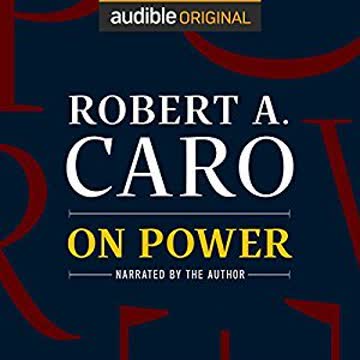
On Power is an Audible-exclusive audiobook under two hours, narrated by Robert A. Caro. Rather than a comprehensive meditation on power, it's essentially an extended autobiographical essay adapted from speeches. Caro discusses his career evolution from investigative journalism to writing monumental biographies of Robert Moses and Lyndon B. Johnson. He explores his central theme: how political power affects ordinary people's lives, for both good and ill. Reviewers appreciate his New York accent, research dedication, and storytelling, though some longtime fans found limited new material. Most found it an excellent introduction to his work.