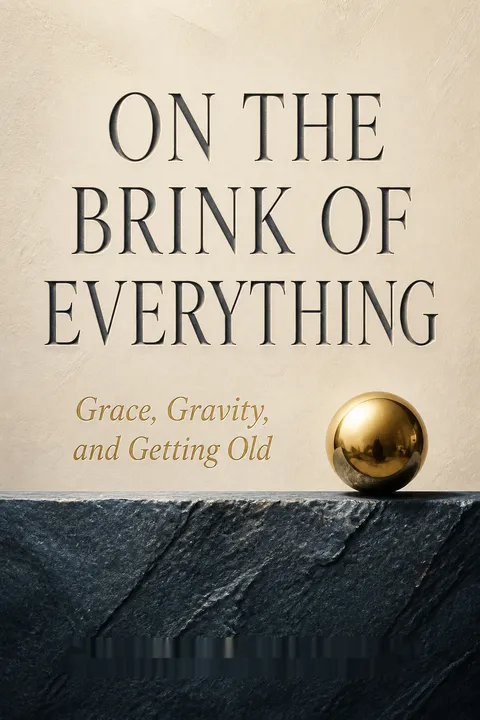


Key Takeaways
Meet old age as a new frontier, not a slow retreat
The view changes with age. Palmer writes from his late seventies, candid about slower movement, health concerns, and the nearness of death. Yet the same changes sharpen his attention: he notices a sunrise through an ice-laced window, values unhurried coffee, and sees past hardships as part of a larger life rather than isolated disasters. Aging is not simply a loss to resist. It can reveal what a younger, busier self overlooked.
Choose how to meet it. Palmer describes a choice between denial, defiance, and working with the reality of aging. He does not pretend decline is pleasant or death avoidable. His point is that awareness of limits can make ordinary beauty and present opportunities more vivid, and can prompt older people to keep contributing where they are able.
What's compelling is the shift from treating age as a medical problem to treating it as a change in attention. A slower pace can expose the value of experiences that productivity culture labels small. The image of a sunrise noticed during an ordinary morning makes that claim concrete. Still, this account comes from someone with resources, a partner, and enough health to travel and write. Aging differs sharply with disability, poverty, and caregiving demands. The invitation is best read as a possibility, not an obligation to feel grateful about every loss.
Make room for the failures that belong to your whole story
Wholeness is not spotless. Looking back, Palmer sees that his life includes depression and despair alongside love, work, and moments of service. He draws on psychologist Florida Scott-Maxwell’s idea that claiming one’s history helps a person become more fully themselves. The task is not to rebrand every failure as a hidden success, but to stop pretending that painful chapters do not belong.
A life is more than its scorecard. A stranger once told Palmer that a book he had written about depression helped save a life. That moment sat beside all the times he had been too busy, too self-absorbed, or simply unable to help. Together, the imperfect parts form a more truthful account than either self-congratulation or self-condemnation.
This resembles narrative identity: people make sense of experience by connecting events into a story, rather than treating each setback as a final verdict. The approach can soften shame and help people recognize capacities that hardship has developed. But integration is not the same as exoneration. Owning a harmful choice should include naming its effects and, where possible, making repair. The value of a complete story lies in honesty, not in forcing every painful event to serve a redemptive plot.
Serve what matters without demanding proof that your life mattered
Meaning is not fully measurable. Palmer finds the question, Does my life have meaning?, traps him in self-assessment: the ego wants a satisfying verdict. A poem by Czesław Miłosz leads him toward a different emphasis: serve as well as possible without assuming full control over who benefits. Palmer recalls giving a talk that drew little response. Years later, a former listener told him it had changed how he taught.
Choose intention over applause. The delayed effect was invisible at the time, just as some outcomes may never be known. Palmer argues that a person can guide their intentions and actions, but cannot dictate the meaning others will find in them. The practical question becomes whether an offering serves something beyond the desire to impress.
The distinction between contribution and recognition is useful wherever effects are delayed or distributed across many people, including teaching, care work, and public service. It loosens the grip of metrics without dismissing skill or accountability. Yet uncertainty about impact can also excuse ineffective work. Good intentions do not guarantee good results, so reflection and feedback still matter. Palmer’s emphasis works best when service includes both humility about what cannot be controlled and curiosity about what can be improved.
Let a job end without letting your vocation end
Work has two meanings. A job provides income and a social role; a vocation is the deeper activity through which someone makes meaning. Palmer’s paid work ranged from mowing lawns and organizing communities to teaching and writing. He describes his enduring vocation as learning and teaching, even when particular jobs changed or ended.
Keep the underlying gift alive. His grandfather made machine parts for tractors, but his deeper pleasure was shaping raw materials into useful or beautiful objects. After retirement, he continued carving small figures from peach pits. The example shows how a calling can outlast the workplace where it first took form. Palmer warns that when identity rests entirely on a job, retirement or job loss can feel like the loss of the self.
Separating vocation from employment can protect identity during retirement, layoffs, or career change. It also helps people notice the transferable impulse beneath a job title, such as teaching, making, or caring. But this distinction must not romanticize insecure work. Paid employment is not merely an identity choice; it pays for housing, health care, and family needs. Palmer acknowledges his own relative security. The framework is most useful when it honors both material dependence on jobs and the sources of meaning that work alone cannot provide.
Mentor across generations as a learner, not a baton passer
Mentoring goes both ways. Palmer rejects the idea that elders simply hand responsibility to the young and leave. He compares intergenerational work to making music together: older people can offer experience, while younger people bring knowledge of a changing world. Mentoring, in this account, is a reciprocal relationship that helps both people discover what they can contribute.
Share the unfinished stories. At a faculty workshop, Palmer heard professors describe failures that had redirected their lives. He urged them to tell those stories to students, who might otherwise mistake one setback for proof of permanent failure. Younger colleagues also challenge elders’ assumptions and help them notice new possibilities. Psychologist Erik Erikson called this turn toward the rising generation generativity, meaning investment in the growth and well-being of those who follow.
The reciprocal model counters two familiar distortions: elders as unquestionable authorities and young people as solely responsible for fixing inherited problems. It also resembles apprenticeship, where practical knowledge travels through relationship rather than instruction alone. The exchange is not automatically equal, however. Age and institutional power can shape whose account gets heard. Effective mentoring requires elders to invite correction, share access, and listen without turning every conversation into a lesson. Young people need room to disagree, not merely to inherit advice.
Use anger to protect love, then turn it toward action
Anger can signal a violated value. Palmer, a Quaker committed to nonviolence, argues that suppressing anger at cruelty or injustice is not the same as peace. Anger becomes dangerous when it is denied, aimed indiscriminately, or used to excuse harm. It can instead supply energy for action that protects people and democratic life.
Keep difference in the conversation. Palmer compares social diversity with a prairie ecosystem: a restored patch containing more than 150 plant species is more varied than the surrounding uniform crop fields. He sees a parallel in communities, where contact across differences can widen understanding and resilience. His own civic practice is to combine firm disagreement with efforts to understand the fears and economic concerns shaping other people’s views.
The distinction between anger as information and anger as instruction is valuable. Emotion can identify what a person believes is under threat, but it cannot by itself determine a fair response. The prairie comparison makes diversity feel like a condition for adaptation, not merely a matter of etiquette. Human communities are more contested than ecosystems, and contact alone does not erase unequal power. Dialogue needs boundaries and protection for those most exposed to harm, as well as genuine curiosity across disagreement.
Build inner sanctuary before activism turns into another violence
Engagement needs renewal. Palmer defines sanctuary as a place or relationship that helps someone regain perspective, reconnect with the self, and return to the world with greater capacity to care. It might be a church, a forest, a trusted friend, silence, poetry, or music. Sanctuary is not necessarily escape; it can be preparation for re-engagement.
Overwork can reproduce the harm it opposes. Drawing on Thomas Merton, Palmer warns that constant activism and too many simultaneous demands can erode the inner wisdom that makes work fruitful. During a civil rights pilgrimage, he saw how churches had served as places where activists prepared for peaceful protest and found refuge after attacks. Rest and reflection can support sustained action, rather than replace it.
This insight connects activism with recovery: attention, judgment, and compassion are finite capacities, and relentless exposure to conflict can make them harder to sustain. Sanctuary gives those capacities room to return. The idea is especially strong because it treats rest as part of public responsibility rather than a private indulgence. Still, access to quiet, safe space is unequal, and professional care may be necessary for depression or trauma. A sanctuary is a support, not a universal treatment or a reason to withdraw from danger others cannot escape.
Practice holding opposites instead of amputating half your life
A whole life contains contradictions. Palmer learned from Thomas Merton to resist false choices between strength and vulnerability, darkness and light, or spiritual life and ordinary mess. He calls the capacity to hold apparently conflicting truths paradoxical thinking. It lets a person admit both generosity and self-interest, rather than defending an idealized version of the self.
Suffering can open the heart, but it does not have to. Palmer describes grief that, with time and inner work, can deepen compassion. He contrasts a heart that breaks open to others with one that shatters and spreads pain. His autumn image adds another layer: falling leaves become part of the conditions for new growth. These metaphors invite attention to renewal without claiming that every loss is secretly good.
Holding complexity is a safeguard against brittle moral identities. In psychology, the capacity to tolerate ambivalence can help people respond to conflict without forcing a quick, simplifying verdict. Palmer’s image of renewal is evocative, but it needs a limit: suffering is not automatically transformative, and people who are harmed owe no one a lesson or a more compassionate self. The strongest version of the claim is that support and reflection may help some people make meaning from pain, not that pain itself reliably produces wisdom.
Keep death visible, and ordinary life becomes harder to waste
Mortality can sharpen attention. Palmer draws on the Benedictine practice of keeping death in mind, not to fixate on dying, but to notice the life available now. Remembering that life is temporary can deepen gratitude and encourage people to share their gifts while they can. For Palmer, preparation for death begins with showing up as honestly as possible in life.
Nature offers a grounded picture of continuity. Palmer returns each year to Minnesota’s Boundary Waters. After a 1999 windstorm and subsequent fires damaged large areas of forest, he later watched plants and young trees grow into the open space. The recovery does not answer what happens after death. It does suggest that bodies return to the earth and that the natural world can turn decay into conditions for new life.
The practice of remembering death can counter the illusion that meaningful action can always be postponed. It directs attention toward present relationships and responsibilities without requiring certainty about an afterlife. The forest recovery offers an ecological analogy for renewal, not proof that personal consciousness continues. That distinction makes Palmer’s spiritual stance unusually open: it allows faith, doubt, and material return to coexist. The image can comfort, but it should not flatten the difference between ecological regeneration and the singular loss of a person.
Analysis
On the Brink of Everything is a memoiristic meditation, not a step-by-step manual. Its seven-part structure turns the same central question through aging, relationships, spirituality, work, civic life, inner life, and death. Palmer’s authority comes less from expertise about aging than from the willingness to show his own mixed record: depression, misjudgment, privilege, failed projects, gratitude, and continuing uncertainty. That candor makes the book’s ideas feel tested rather than merely declared.
Its governing movement is from control toward participation. Palmer cannot control whether his work matters, what young people will make of inherited institutions, or what death contains. He can choose to serve, listen, speak against injustice, and accept the whole of his own history. The result is not passivity. His version of acceptance includes political anger, risk, and sustained public engagement. Grace is not an excuse to leave the world alone; it is a resource for returning to it without pretending that outcomes are guaranteed.
The book is strongest when it joins private self-examination to public responsibility. Unacknowledged fear can become prejudice, and relentless activism can become a form of self-harm. Inner work and outward action are therefore not competing priorities. Each can correct the distortions of the other. Its recurring images, especially the forest, the changing seasons, and the view from a brink, make this connection memorable without claiming that nature solves human suffering.
A useful caution is that Palmer’s freedom to travel, write, and choose work reflects real advantages. Not everyone can treat aging as an expansive threshold or find solitude on demand. Nor does hardship reliably produce wisdom. Read with those limits in view, the book offers a durable ethic: face reality without demanding perfection, let uncertainty make room for humility, and keep giving what can still be given.
Review Summary
On the Brink of Everything receives mostly positive reviews for its reflections on aging, spirituality, and social engagement. Readers appreciate Palmer's vulnerability, wisdom, and ability to embrace life's complexities. Many find the book inspiring and thought-provoking, praising its insights on finding meaning in later years. Some readers, however, criticize the book's format, repetitiveness, and political commentary. Overall, the book is viewed as a valuable companion for those contemplating life's later stages, offering a blend of personal anecdotes, poetry, and philosophical musings.
People Also Read



Glossary
True self
Inner source of vocationIn Palmer’s use of Thomas Merton’s term, the true self is the deepest, most genuine sense of who a person is, distinct from an ego shaped by approval, status, or fear. It helps a person discern their particular gifts, limits, and callings. Listening to it means becoming more fully oneself, not adopting someone else’s ideal life.
Contemplative by catastrophe
Insight through upheavalPalmer’s name for a way of becoming contemplative through failures, depression, and other disruptive experiences rather than through a consistent formal spiritual practice. Such events can expose illusions about the self and the world. The term describes his experience, not a recommended route or a claim that catastrophe is necessary for spiritual growth.
Generativity
Investment in the next generationA term from psychologist Erik Erikson for turning toward the development and well-being of younger generations. Palmer presents it as more than creating or advising: it involves offering experience, learning from younger people, and helping them flourish. He contrasts it with stagnation, the inward narrowing that can leave older adults disconnected from a changing world.
Hidden wholeness
Unity beneath brokennessA phrase Palmer draws from Thomas Merton to describe a deeper connectedness that can remain present beneath visible conflict, damage, or loss. It is not a claim that suffering is harmless or that every problem resolves neatly. Rather, it invites people to notice possibilities for relationship and renewal that are obscured by a broken surface.
Life on the Möbius strip
Inner and outer life intertwinedPalmer’s image for the continuous relationship between a person’s inner life and the public world. Like a Möbius strip, which appears to have two sides but forms one continuous surface, inward beliefs and outward actions are connected. Personal spirituality therefore cannot be sealed off from social responsibility, and public work is shaped by inner motives.
Broken-wholeness
Integrity that includes imperfectionPalmer’s way of describing a person who is whole without being flawless. It means acknowledging both light and shadow, including failures, fears, and harmful choices, rather than presenting an idealized self. This acceptance is not approval of wrongdoing; it creates a more honest basis for responsibility, repair, compassion, and change.
FAQ
What's "On the Brink of Everything" about?
- Exploration of Aging: The book is a deep reflection on aging, offering insights into the challenges and opportunities that come with growing older.
- Intergenerational Dialogue: It emphasizes the importance of connections between young and old, suggesting that these relationships can be mutually enriching.
- Spiritual and Personal Growth: Parker J. Palmer shares his personal journey and insights on living a life of integrity and wholeness.
- Embracing Life's Paradoxes: The book encourages readers to embrace the complexities and contradictions of life as a path to wisdom and fulfillment.
Why should I read "On the Brink of Everything"?
- Wisdom from Experience: Parker J. Palmer, a respected author and teacher, shares his reflections from nearly eight decades of life.
- Inspiration for All Ages: While focused on aging, the book offers insights relevant to readers at any stage of life.
- Encouragement to Engage: It motivates readers to stay engaged with the world and their inner selves, regardless of age.
- Practical and Poetic: The book combines practical advice with poetic reflections, making it both thought-provoking and enjoyable to read.
What are the key takeaways of "On the Brink of Everything"?
- Embrace Aging: Aging is a natural process that can bring wisdom and new perspectives if embraced rather than feared.
- Value of Community: Intergenerational relationships are vital for personal growth and societal well-being.
- Inner and Outer Engagement: Staying engaged with both the world and one's inner life is crucial for a fulfilling life.
- Paradox and Wholeness: Accepting life's paradoxes and embracing one's whole self, including flaws, leads to a more authentic life.
How does Parker J. Palmer define "fierce with reality"?
- Embrace All Experiences: Being "fierce with reality" means embracing all aspects of one's life, both light and shadow.
- Wholeness Over Perfection: It involves accepting one's imperfections and contradictions as integral parts of life.
- Courageous Self-Examination: Honest self-examination is necessary to live authentically and engage creatively with the world.
- Living Fully: It encourages living fully and lovingly, showing up as one's true self in the world.
What is the significance of "The Guest House" by Rumi in the book?
- Welcoming All Emotions: The poem suggests welcoming all emotions and experiences as they come, even the difficult ones.
- Human Condition: It reflects the human condition of being a "guest house" for various feelings and thoughts.
- Learning from Challenges: Challenges and sorrows can clear space for new delights and growth.
- Universal Connection: Embracing all experiences connects us with the universal human journey.
What role does "Revolutionary Love" play in the book?
- Transformative Power: Revolutionary Love is seen as a powerful force for personal and social transformation.
- Three Directions: It involves love directed toward others, opponents, and oneself, fostering empathy and understanding.
- Activism and Compassion: The concept encourages activism rooted in compassion and a commitment to justice.
- Hope and Action: It offers hope and a call to action in the face of societal challenges and personal biases.
How does Parker J. Palmer view the relationship between spirituality and aging?
- Spiritual Growth with Age: Aging is seen as an opportunity for spiritual growth and deeper understanding of life.
- Contemplative Practices: Engaging in contemplative practices can help navigate the challenges of aging.
- Integration of Life Experiences: Spirituality involves integrating all life experiences, both joyful and painful, into a coherent whole.
- Facing Mortality: Spirituality provides a framework for facing mortality with grace and acceptance.
What are the best quotes from "On the Brink of Everything" and what do they mean?
- "Fierce with reality": Embrace all aspects of life, including imperfections, to live authentically.
- "Old is just another word for nothing left to lose": Aging can be liberating, allowing for greater risks and engagement.
- "The world unravels always, and it must be rewoven time and time again": Life is a continuous process of renewal and adaptation.
- "Welcome to the human race": A reminder of shared humanity and the acceptance of one's flaws and strengths.
How does Parker J. Palmer address the concept of "inner life" in the book?
- Silent Reflection: The inner life involves silent, solitary reflection to connect with one's true self.
- Rootedness: It helps individuals root themselves in something larger than their egos, providing perspective and peace.
- Facing Demons: Engaging with the inner life means confronting personal demons and fears.
- Spiritual Alchemy: The inner journey transforms suffering into wisdom and compassion.
What does Parker J. Palmer mean by "embracing the human frailty"?
- Acceptance of Imperfection: Embracing human frailty means accepting one's imperfections and vulnerabilities.
- Learning from Failure: Failures and challenges are seen as opportunities for growth and learning.
- Connection with Others: Recognizing shared human frailty fosters empathy and connection with others.
- Path to Wholeness: Embracing frailty is part of the journey toward becoming whole and authentic.
How does "On the Brink of Everything" explore the theme of intergenerational relationships?
- Mutual Enrichment: Young and old can enrich each other's lives through shared experiences and wisdom.
- Energy and Wisdom Exchange: The young bring energy and new perspectives, while the old offer wisdom and guidance.
- Breaking Age Barriers: The book encourages breaking down age-related barriers to foster understanding and collaboration.
- Vital for Society: Intergenerational relationships are essential for a healthy, dynamic society.
What insights does Parker J. Palmer offer on the topic of death and dying?
- Preparation for Death: Preparing for death involves living fully and authentically in the present.
- Death as Transformation: Death is seen as a natural transformation, part of the cycle of life.
- Embracing Mortality: Embracing mortality can lead to greater appreciation and gratitude for life.
- Legacy of Love: The focus is on leaving a legacy of love and connection rather than material achievements.
About the Author
Other books by Parker J. Palmer
Download PDF
Download EPUB
.epub digital book format is ideal for reading ebooks on phones, tablets, and e-readers.








