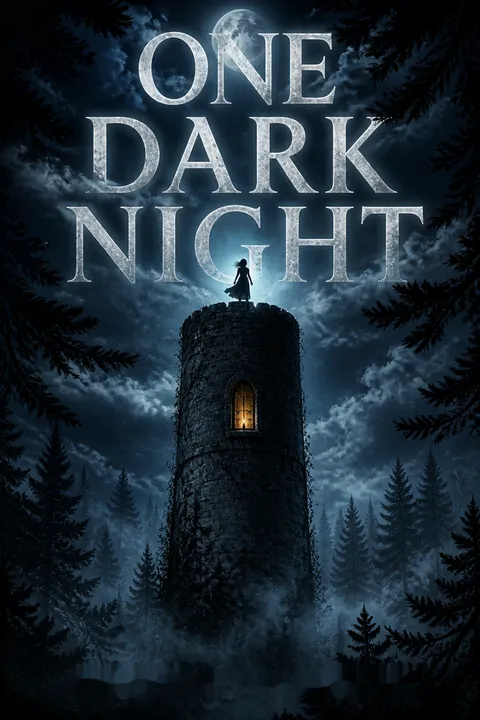


Plot Summary
Prologue
At a Halloween bonfire, teenagers test an old tale about Sally, a bride said to haunt the woods after her fiancé murdered her at the folly. A homemade spirit board appears to answer them, spelling Sally’s name and then directing the group toward a dare.
One girl breaks the circle after glimpsing someone among the trees. The others keep watching the board as the same name moves beneath their hands again and again. They leave the gathering with the uneasy sense that their game has drawn something close.
The opening makes folklore both entertainment and a screen for danger. The teenagers use the story to turn fear into a game, assigning the woods a supernatural explanation before they know what is actually there. The board’s repeated name may be a prank, a group’s wishful interpretation, or evidence of someone manipulating the circle. That uncertainty establishes the novel’s method: local legend supplies a ready-made narrative, but human motives will prove more consequential than ghosts. The dare also seeds a crucial tension between play and harm, since the group’s rituals make reckless behavior feel harmless until consequences arrive.
A Body Beneath the Folly
After dropping two Halloween revellers home, taxi driver John Slater sees something white cross the road through Sally in the Wood. He brakes hard, nearly sending his car down the steep verge, then persuades himself he saw an animal and continues home. At dawn, Girl Guides hiking to the stone folly find a young woman lying below its tower.
Her white dress and the black bird mask over her face make the familiar ghost story suddenly difficult to dismiss. One girl screams, bringing the adults and, soon, the police into the woods. Slater does not yet connect his near miss to the discovery. By the time the newspapers catch up with him, the girl in white has become a murder investigation.
The two sightings create a deliberate gap between what witnesses perceive and what they can bear to conclude. Slater chooses the harmless explanation of an animal because it lets him finish his drive; the Guides have no such escape once the body is close enough to recognize as human. The setting amplifies that difference. A dangerous road and an abandoned tower already carry stories of death, so the crime arrives inside a community trained to interpret violence as legend. The novel makes folklore useful to a killer precisely because it gives real events a misleading shape.
The Crime Scene Is Composed
DS Ben Chase joins DCI Hassan Khan at the tower and sees that the young woman has not simply fallen. Her arms have been arranged, a plague-doctor-style mask covers her ruined face, and words meaning punishment, destruction, and repentance mark her skin. Ben reads the care in the arrangement as intentional, while the missing phone leaves the victim nameless.
Police search the woods and find a recent Halloween gathering in an old quarry, including a red-painted Sally on a rock. Nearby, school welfare head Rachel Dean notices the cordon while running, unaware of what lies above. At home, her daughter Ellie has already returned from a weekend with Ben, and the adults’ tense separation makes every new worry harder to discuss.
The staging turns the body into a message whose author remains unknown. Ben’s attention to arrangement, rather than only injury, makes interpretation part of the investigation: someone wanted the death to be read. Yet the missing phone prevents the police from beginning with the victim’s own account of her life. Around the crime scene, private fractures echo that absence. Rachel and Ben are no longer a functioning couple, and Ellie moves between their homes under agreements that neither parent fully trusts. The murder enters an already unstable family system, where fear and miscommunication can distort judgment.
Sarah's Name Comes Home
At Thornfield Manor, businessman Christopher Easton reports that his niece Sarah Lawson has failed to return from a party. Sarah lived with Christopher, his wife Philippa, and their daughter Olivia while her mother, Diana, worked abroad.
Olivia says she left Sarah in the woods after Sarah refused to obey their curfew, then tracked her phone to the area. Ben shows the family the broken half-heart necklace found on the body; Olivia produces its matching half, confirming the likely identity.
She also identifies Sarah’s Sally costume and describes the party in the quarry. Rachel learns from Ellie that Ben’s new partner, Chrissie, is pregnant, news Ben has not shared with her directly. The case and the family’s private resentments now occupy the same small community.
The pendant transforms a missing-person report into a confirmed loss, but it also makes intimacy visible as evidence. Olivia and Sarah’s divided necklace once represented closeness; in Ben’s hands, it becomes a tool of identification. The Eastons’ wealth offers no protection from uncertainty, while Christopher’s instinct to manage the crisis contrasts with Olivia’s visible grief. At the same time, Rachel receives major family news through Ellie rather than Ben. These parallel failures of communication matter: characters are surrounded by information, yet crucial truths arrive in fragments, through objects, children, and police procedure.
Ellie Buries the Evidence
Seventeen-year-old Ellie wakes in her friend Jasmine Ware’s dorm room with a blood-marked hoodie and flashes of the previous night that she cannot face. She remembers white fabric, blood on her hands, and losing control, but tells Jasmine she wandered around the woods. When she returns to the cave where she keeps a stash, Ellie finds new black writing on the rock and hears movement deeper inside.
Frightened, she escapes without discovering who has used the tunnels. She hides the plastic bag containing her clothes in a roadside grit bin, then sprays over part of a billboard advertising Christopher Easton’s housing project. At school, rumours of a death in the woods begin circulating. Ellie expects the coming assembly to expose her.
Ellie’s actions make guilt concrete before the reader knows what she has done. She hides clothing, lies to a friend, and tries to erase a stain, each effort creating more evidence than it removes. Her visit to the cave introduces a second, unseen presence in the woods, separating her fear of being caught from a genuine fear of someone else. The billboard vandalism links her secret night to a public political grievance against the Easton development. Her impulsiveness is not a single flaw but a pattern: she acts quickly to regain control, then has to live inside the consequences.
The Quarry Has Witnesses
At Folly View College, Khan tells the sixth form that Sarah is dead and asks anyone at the quarry gathering to come forward. Interviews establish that Sarah arrived with Olivia, drank, and joined a game built around dares and the Sally legend.
Her on-and-off romantic interest, Danny Carlisle, argues with her after she kisses his older brother Connor, who has arrived with a friend and drugs to sell. Danny leaves with Saul Ayofo, while Olivia has already gone home; Sarah remains with Connor and his companion.
Danny admits that Sarah had received an intimate message from an unfamiliar account, then refused to explain it. He and other students also recall Jasmine seeing a watcher in the trees. The police now have multiple suspects, but no clear account of Sarah’s final hours.
The interviews expose how adolescent performance can conceal vulnerability. The dares reward public bravado, while the students’ shifting romantic labels leave Danny unable to tell whether Sarah’s attention is genuine. Connor exploits the party’s looseness to sell drugs and provoke his brother, turning a game into a contest over status and desire. The missing phone makes the anonymous message impossible to verify, so the police must work through contradictory memories. The students’ silence is not necessarily a conspiracy; shame, loyalty, and fear of punishment all give them reasons to edit what they saw.
Blood on Ellie's Sleeves
After Ben and Rachel confront Ellie about lying, she admits she attended the party but withholds the bloodshed. DC Fiona Maxwell later questions her with Rachel present and produces photographs of the clothes recovered from the grit bin.
Ellie recognizes her labelled hoodie and finally says the stain is Sarah’s blood. She explains that she found Sarah at the folly after becoming lost, argued with her over Danny and the housing project, and punched her. Sarah struck back, but Ellie says she left her conscious and shouting around one in the morning.
The police detain Ellie while they examine the clothes and search the cottage for Sarah’s phone. Before that night, Rachel catches Malcolm Crowe in her office beside Sarah’s private file, an unsettling intrusion that adds another possible threat.
Ellie’s account is both a confession and a defence: she accepts the violent act that can be proven, then insists it did not become murder. Her shame about the punch is inseparable from her fear of losing her scholarship, home, and future, revealing how economic insecurity shapes the way she understands punishment. Rachel’s presence cannot protect her from the police process, and her professional instincts conflict with her maternal wish to take Ellie away. Malcolm’s unexplained access to a confidential file widens suspicion beyond the students and shows how institutional authority can make privacy fragile.
A Camp Below the Woods
Though Khan has removed him from the case because Ellie is a suspect, Ben returns to the woods before dawn, following a hunch that the caves were not properly searched. Behind a loose metal grate, he finds a makeshift camp, black writing on the rock, and fragments of Sarah’s rose-gold phone. Someone has been hiding underground.
When Ben hears movement deeper in the tunnels, he calls Khan rather than risk pursuing the stranger alone. A search team and a spaniel track the tunnels; Ben spots a thin, unkempt man doubling back and pins him before he can escape. The arrest gives the investigation a new suspect and offers Ben a way to help Ellie, but the man’s presence in the cave does not yet prove he killed Sarah.
Ben’s decision to return to the cave is an act of paternal devotion that risks compromising his professional judgment. He believes the overlooked entrance may clear Ellie, but the evidence he finds instead leads to a new suspect. His restraint in calling for help matters: he acts on intuition without pretending it is certainty. The cave becomes a literal repository for abandoned evidence, but also for the investigation’s blind spots. The phone is present, damaged, and nearly useless, a physical reminder that access to a person’s digital life can vanish even when the device itself is found.
Gemma's Killer Reappears
The arrested man is Jamie McIvor, the driver imprisoned for causing the crash that killed Ben’s sister, Gemma. In interview, McIvor fixates on punishment and collapses at the sight of Ben’s phone. He eventually explains that he was living in the caves, heard a scream, and found Sarah dead below the tower.
He says he moved and covered her body because her injuries recalled Gemma’s death, then destroyed Sarah’s phone because he believed phones ruin lives. The words on Sarah and the cave echo the judge’s sentencing language in McIvor’s case. His account fits the post-mortem evidence, but Ben cannot separate the suspect from the man who took his sister. Investigators still need to establish who pushed Sarah.
McIvor’s return collapses Ben’s private grief into his professional case. Ben has spent years treating his sister’s killer as a symbol of injustice; now he must assess the man as a witness and possible suspect. McIvor’s disturbing treatment of Sarah’s body is not presented as innocence made simple. It is a response shaped by guilt, prison, addiction, and delusion, and it still contaminates the crime scene. The repeated language of punishment shows how institutions can become internal voices, but it cannot establish who caused Sarah’s fall. Emotional resemblance is not evidence.
A Painter's Room of Secrets
Rachel visits Ellie’s admired art teacher, Edward Morgan, believing his invitation offers both kindness and a break from the crisis. In his turret studio, she finds a painting of a girl in white running through woods toward the folly, alongside intimate photographs of a blonde student in the same dress.
She recognizes the scene as connected to Sarah and escapes before Edward can question her. That evening, Ben misses Chrissie’s antenatal appointment while pursuing the case.
Chrissie tells him the pregnancy has ended in miscarriage, and his absence leaves their relationship badly damaged. By morning she asks him to move out, convinced he is not ready to build a life with her. Both parents now face the investigation while their own family arrangements shift again.
The studio turns art from a reassuring sign of Edward’s sensitivity into an ambiguous record of access and attention. Rachel interprets the images through the known crime, a reasonable response that still risks mistaking resemblance for proof. Her fear is sharpened by the intimate setting and by the loneliness that made Edward’s invitation appealing. In parallel, Ben’s missed appointment reveals the cost of his habit of treating emotional obligations as postponable. The miscarriage is not merely another loss; it exposes how quickly he entered a new family arrangement without resolving the old one.
The Watcher Names a Teacher
John Slater finally reports seeing a white-clad figure run across Sally in the Wood shortly after two in the morning, heading away from the manor rather than toward the folly. His memory could be imperfect, but it suggests someone fled the scene.
Malcolm admits he followed the students into the woods after finding vandalism at the school entrance. He watched from above the quarry, then says he later saw Sarah riding on Edward’s motorbike. He had also searched her student file.
At the station, technicians recover messages from Sarah’s damaged SIM card that appear connected to Edward. The clues make the art teacher look dangerous, while McIvor’s account increasingly suggests he arrived after Sarah died. Rachel believes the police have taken Edward in, but he remains with Ellie.
This section demonstrates how evidence can redirect suspicion without immediately resolving it. Slater’s late recollection is useful but uncertain; Malcolm’s disclosure is specific yet shaped by his desire to defend the school and his own reputation. The recovered messages seem to confirm Rachel’s fears about Edward, but their apparent authorship has not been tested against the phone’s owner. The institutional setting matters: a teacher’s access to students, a caretaker’s access to records, and a detective’s access to evidence each carry different forms of power. The novel asks readers to distinguish authority from trustworthiness.
A Secret Account Splinters
Olivia returns to Folly View and finally tells Rachel that she believed she had been exchanging private messages with Edward for months. Edward had once invited her to model for a painting, and she mistook his attention for the start of a romance. On Halloween, Sarah discovered the secret and seemed to know more than Olivia could bear.
Olivia shows Rachel the message in which Edward appeared to promise that he would deal with Sarah. Rachel takes it as evidence of his guilt. Then Olivia reveals that Ellie left school with Edward on his motorbike, after he offered to take her back to the place that frightens her. Rachel understands he is leading Ellie to the folly and drives there with Olivia, despite knowing she may be walking into danger.
Olivia’s account is credible as an expression of her experience, but its interpretation remains unstable. She has built a relationship around messages and a single modelling session, and the emotional reality of that bond has outrun the facts. Rachel, already primed by the studio, treats the messages as confirmation rather than asking who controlled the account. Olivia’s warning nevertheless changes the immediate stakes: Ellie is alone with a trusted teacher in a place associated with death. Rachel’s choice to go after her is protective, but bringing Olivia along also carries the danger of returning a grieving, volatile girl to the site of her trauma.
The Folly Claims Another
At the tower, Rachel finds Edward guiding Ellie toward the high opening. Olivia rushes in, and the struggle sends Edward falling; Rachel reaches him below and tries to keep him alive. Ben climbs the tower and finds Olivia holding Ellie at knifepoint. As he keeps Olivia talking, she reveals that Sarah had impersonated Edward online, using a fake account to make Olivia believe he loved her.
At the party, Olivia recognized her own message on Sarah’s phone, then confronted Sarah at the folly. During their fight, Olivia pushed her over the edge and fled. She also sent Ellie the threats meant to stop her opposing the Easton development. Olivia tries to step into the drop; Ben catches her, and Ellie helps pull her back to safety.
The climax separates emotional truth from factual truth. Olivia’s feelings for Edward were real to her, but the relationship was manufactured by Sarah, whose act of supposed encouragement became humiliating control. Olivia’s grief and anger explain her choices without absolving the fatal push or the later threat to Ellie. The tower forces the characters into a physical version of the story they have been telling themselves: one person at the edge, another deciding whether to save or abandon her. Ben and Ellie’s joint rescue reverses the family’s earlier pattern of mistrust, though it does not erase the harm done.
The Case Finds Its Shape
The investigation separates three different acts that had seemed to belong to one killer. Olivia caused Sarah’s fatal fall and faces proceedings in youth detention.
McIvor found the body afterward, moved it, wrote the words, covered Sarah’s face with the mask Ellie had lost, and destroyed the phone; his behavior made him look like the murderer, but he did not cause her death. Edward survives his fall with severe injuries. His private connection to Olivia was not what she believed, and Sarah had used his identity to deceive her.
Ben steps back from the case after the crisis, while Rachel and Ellie begin to speak more honestly about school, money, grief, and the family’s changes. The ending leaves justice unfinished, but the false stories no longer govern them.
The resolution does not offer a clean moral sorting of the cast. Sarah manipulated Olivia; Olivia killed Sarah; McIvor altered the scene through a deluded attempt at care; Edward’s behavior and art invited suspicions that his actual role did not support. Responsibility remains distinct from motive, and trauma explains without canceling consequences. For Rachel, Ben, and Ellie, the more meaningful change is a partial return to truthful conversation. The family cannot restore its former structure, but it can stop making decisions through omissions and assumptions. The case’s answer is less comforting than a ghost story, yet more usable.
Epilogue
By December, Edward is recovering in hospital, and Rachel and Ellie visit him with Ellie’s art portfolio. Her finished protest piece transforms the glossy Easton Estates billboard into a landscape of damaged homes, dead trees, and lost wildlife; it has helped bring the development under council review.
Malcolm’s research on endangered bats in the caves gives the opposition further evidence. Olivia remains in youth detention while a hearing approaches. Ben waits to take Rachel and Ellie home, and their exchange carries a new warmth without pretending that the old marriage has been restored. Sarah’s memorial has also helped Ellie remember the living girl, not only the body in the woods.
The ending replaces the novel’s misleading images with acts of interpretation grounded in evidence. Ellie’s artwork alters the development billboard rather than simply defacing it, turning anger into a public argument that other people can inspect. Malcolm’s bat studies add ecological facts to a conflict previously dominated by money and influence. In the hospital, Edward’s recovery and Olivia’s detention preserve the consequences of the climax without reducing either person to a single label. Ben, Rachel, and Ellie can share a moment of care, but the narrative does not promise reconciliation as a reward. Their progress is smaller and more credible: they can look toward a future without pretending the past has disappeared.
Analysis
One Dark Night turns a murder investigation into a study of how people manufacture certainty. The town has a story about Sally, so the teenagers treat a dangerous night as folklore, the police initially read the staged body as a single author’s message, and Olivia mistakes a fake digital identity for a real romantic bond. Each interpretation feels convincing because it answers an emotional need: fear becomes legend, grief becomes a search for blame, and loneliness becomes the hope of being chosen. The clues matter not only for what they reveal, but for how they tempt characters to stop asking questions.
The book also separates responsibility from explanation. Sarah’s bereavement may help explain her need to manipulate, but it does not erase the harm she causes. Olivia’s isolation and humiliation help explain her violence, but they do not undo Sarah’s death. McIvor’s guilt helps explain why he rearranges the body, yet his intervention makes the investigation harder and frightens the community. Trauma shapes behavior without serving as a moral pardon. This distinction gives the thriller its psychological weight: understanding a person is not the same as excusing them.
The family plot makes the investigation intimate rather than decorative. Ben’s grief over Gemma and his separation from Rachel impair his sense of proportion, while Ellie’s fear of losing her scholarship pushes her toward concealment. Rachel’s professional skill cannot automatically make her an effective mother, and Ben’s protectiveness cannot guarantee safety. Their eventual cooperation begins not with a return to marriage, but with listening and shared action. Ellie’s final artwork extends that change into public life. She turns anger at the development into an argument about damaged land, while Malcolm’s bat research gives the argument evidence. The novel’s answer to darkness is therefore neither superstition nor easy forgiveness. It is the difficult work of seeing clearly, naming harm, and accepting that care must include accountability.
Review Summary
One Dark Night is a thrilling mystery set in a small English town on Halloween. When a teenage girl is found dead after a party in the woods, Detective Ben Chase investigates, uncovering secrets and lies within the community. Readers praised the atmospheric setting, well-developed characters, and unexpected twists. The novel effectively blends elements of ghost stories, teenage angst, and family drama. While some found it slightly slow-paced, most enjoyed the suspenseful plot and satisfying conclusion.
People Also Read
Characters
Rachel Dean
The school's steady listenerRachel is Folly View College’s Head of Student Welfare and Ellie’s mother. Her work depends on noticing what young people cannot yet say, but her professional closeness to the students complicates her ability to see what is happening in her own family. Since separating from Ben, she has struggled to balance care with boundaries and to understand Ellie’s resentment toward the school. Rachel wants to be dependable, yet often mistakes practical support for emotional understanding. Her attention to small changes in behavior makes her valuable to the investigation and puts her in danger when she trusts the wrong person. Beneath her competence is a woman trying to rebuild a life that no longer follows the plans she made.
Ben Chase
The grieving detective fatherBen is a detective sergeant, Rachel’s estranged husband, and Ellie’s father. He is perceptive at a crime scene and protective at home, but those instincts can work against each other when the case touches his daughter. Gemma’s death left him angry and emotionally withdrawn, and the end of his marriage followed years in which he could not let Rachel close to his grief. He has tried to build a new life quickly with Chrissie, while still carrying the habits and memories of his old one. Ben’s central struggle is not whether he loves his family, but whether he can remain present when love offers no control over danger or loss.
Ellie Chase
The impulsive young artistEllie is Rachel and Ben’s seventeen-year-old daughter, a scholarship student at Folly View, and a committed artist and environmental activist. She is quick to anger when she sees injustice, especially the proposed development threatening the landscape near her school, but her impulsiveness often leaves her with secrets to manage. Her parents’ separation and Ben’s new relationship make her feel moved between households rather than consulted. Ellie distrusts adult attempts to supervise her, including her mother’s counselling approach, yet she still wants her parents to notice when she is struggling. Art gives her a way to make arguments that her guarded speech cannot. She is tough in public and more vulnerable than she wants anyone to see.
Sarah Lawson
The magnetic new studentSarah is a bright, socially confident Folly View student who moved from Dubai after her father’s death. She lives with her aunt, uncle, and cousin Olivia, and quickly becomes central to the school’s social life. Her theatrical talent and ease with attention make her seem self-assured, while her relationships reveal a more complicated appetite for influence and connection. Sarah can be generous, encouraging Olivia to take risks, but she is also capable of using other people’s feelings carelessly. The contrast between these qualities matters: those around her remember different versions of the same girl, and their partial knowledge becomes central to how they interpret the events of Halloween night.
Olivia Easton
The lonely Easton cousinOlivia is Christopher and Philippa Easton’s daughter and Sarah’s cousin. She is quieter than Sarah and depends heavily on her cousin for companionship, confidence, and help navigating school and romantic uncertainty. Her family’s wealth does not make her feel secure: Christopher is consumed by business, Philippa is distant through pain and medication, and Olivia often experiences their large home as isolating. She longs to be chosen and understood, which makes private attention especially powerful to her. Olivia’s intense attachment to Sarah coexists with envy and resentment, though she rarely lets other people see the full force of those feelings.
Edward Morgan
The admired art teacherEdward teaches art at Folly View and serves as Ellie’s tutor and mentor. He is young, talented, and unusually good at connecting with students who feel out of place. His landscape paintings draw on the woods and local stories, giving his work a darker quality than his approachable manner suggests. He encourages students to take their feelings and creative ambitions seriously, and he is close enough to the school community to be trusted by Rachel and Ellie. His warmth, artistic privacy, and attention to students make him difficult to read, especially when the investigation begins to touch his relationships with them.
Jamie McIvor
The haunted local drifterJamie is a troubled man living rough in the old quarry caves. His history includes a fatal road crash and a prison sentence, and he carries guilt and psychological distress that shape his behavior. He is physically isolated from the town but not free of its memories, especially those associated with the dangerous road through the woods. Jamie’s presence makes him an alarming suspect, while his condition complicates the police’s ability to distinguish deliberate violence from confused attempts to make amends.
Malcolm Crowe
The watchful caretakerMalcolm is Margaret’s retired husband, a former teacher who still occupies himself with odd jobs and unofficial caretaking around Folly View. He is physically frail and socially awkward, and his habit of appearing around campus makes him a natural focus for rumor. A past accusation at another school has left him wary of scrutiny and defensive about his reputation. Malcolm takes school rules and the protection of the grounds seriously, though his methods can feel intrusive. His attention to the woods, the students, and the school’s records makes him both a source of information and a figure others struggle to trust.
Hassan Khan
The demanding case leaderHassan is the detective chief inspector leading the investigation and Ben’s superior. He combines a sociable manner with a firm sense of procedure, and he expects his team to protect evidence even when public pressure rises. Khan knows Ben well enough to recognize when personal grief is affecting his judgment, and he removes him from the case when Ellie becomes a suspect. His decisions can frustrate Ben, but they reflect a responsibility to the victim, the investigation, and the possibility of a defensible prosecution.
Fiona Maxwell
The relentless investigatorFiona is a detective constable on Khan’s team, a recent transfer from Manchester and one of Ben’s strongest colleagues. She conducts student interviews with patience and precision, refusing to let adult sympathy replace evidence. Her work ethic earns her the confidence of her superiors, though some colleagues resent the attention she receives. Fiona is also a partner to Steph, whose support gives her a place to set down the strain of the case. She is observant enough to detect when students are withholding information and disciplined enough not to mistake a hunch for proof.
Christopher Easton
The powerful local developerChristopher is Olivia’s father, Sarah’s uncle, and the wealthy head of Easton Estates. He is pursuing a housing development near Thorncombe and has the influence to press his interests in local politics. Christopher takes charge when Sarah disappears, but his concern for his family exists alongside an intense focus on business and reputation. His confidence can become aggression when events disrupt his plans. He is used to solving problems through control and access, a strategy that does not help him understand what Olivia needs from him.
Philippa Easton
The withdrawn Easton motherPhilippa is Olivia’s mother and Sarah’s aunt. Once socially energetic and involved with horses, she has been changed by a serious riding accident that left her with ongoing pain. Medication and sleeping pills often make her seem distant, and Olivia feels unable to rely on her emotionally. Philippa cares about her family but struggles to be fully present during a crisis, leaving Christopher to dominate decisions and Olivia to manage much of her grief alone.
Diana Lawson
Sarah's faraway motherDiana is Sarah’s mother, a lawyer whose work takes her between Dubai and England. After Sarah’s father died, Diana agreed that her daughter could live with the Eastons and attend Folly View. She is polished and controlled in public, but her grief is immediate and physical when the police confirm Sarah’s identity. Diana represents the painful distance between loving a child and being able to accompany her through every part of her life.
Margaret Crowe
Folly View's strict headMargaret is the head teacher at Folly View and Malcolm’s wife. She is disciplined, protective of the school’s standing, and deeply invested in its claim to provide exceptional care. Margaret responds to crisis with meetings, rules, and reputation management, believing that order can protect the institution and its pupils. Her devotion to the school is genuine, but it can lead her to treat damaging information as a threat to contain rather than a truth to examine.
Danny Carlisle
The scholarship athleteDanny is a Folly View student on an athletics scholarship and Connor’s younger brother. He is popular across social groups, serious about his future, and romantically entangled with Sarah without knowing where he stands. His loyalty to his brother persists even when Connor embarrasses and provokes him. Danny’s restrained manner conceals how strongly he feels rejection and how much he fears losing the scholarship that gives him access to a future beyond Thorncombe.
Connor Carlisle
Danny's reckless older brotherConnor is a young man with a record of petty drug crime and an online persona built around misogynistic advice. He arrives at the quarry party to sell drugs and provoke his younger brother, treating other people’s feelings as entertainment. His bluster makes him an obvious suspect, but his arrogance is not the same as the careful intent behind the crime scene. Connor’s presence reveals the uglier adult influences circulating around the teenagers.
Jasmine Ware
Ellie's protective friendJasmine is Ellie’s friend and dormmate, quick to make plans and more socially confident than Ellie. She helps Ellie attend the Halloween party and gives her somewhere to sleep afterward, though neither girl is in a state to discuss the night clearly. Jasmine is attracted to Saul and sometimes becomes absorbed in that relationship, leaving Ellie uncertain whether she can depend on her. Her account of seeing someone in the trees provides an important early clue.
Saul Ayofo
Danny's daring friendSaul is Danny’s friend and a confident participant in the quarry gathering. He encourages the group’s spooky games and helps Danny search for the watcher Jasmine believes she saw. His teasing also influences Danny’s decision to leave Sarah behind, showing how peer pressure can pass for practical advice.
John Slater
The observant taxi driverJohn is a local taxi driver who gives two partygoers a ride home before driving through Sally in the Wood. Tired and unsettled by what he sees on the road, he initially explains it away and does not report it. His later recollection provides investigators with a crucial possible movement after the murder.
Big Kev
Connor's hulking companionBig Kev accompanies Connor to the quarry party and helps him leave when tensions rise. His size and presence make the two older visitors feel threatening to the school students, but he remains a peripheral figure whose account may help establish Connor’s movements.
Plot Devices
Sally in the Wood folklore
Legend disguises human dangerThe local tale of a murdered bride gives the woods and folly a ready-made supernatural explanation. Teenagers use it to fuel Halloween games, while the white dress, bird imagery, and dangerous road make later events appear to echo the legend. The story supplies atmosphere but also distorts judgment: witnesses and investigators must separate the town’s inherited narrative from evidence of what people actually did. Its most important function is misdirection, since the characters can blame a ghost when the real danger is human.
The staged tableau
A body becomes a false messageSarah’s body is arranged beneath the folly with a bird mask and words associated with punishment, destruction, and repentance. The staging makes the scene look ritualistic and suggests a killer who wanted to communicate through the victim. In fact, it combines the actual killer’s violence with a second person’s post-mortem interference. That distinction misleads the police about the number of people involved and forces the investigation to treat the body’s presentation as evidence without assuming that every detail belongs to the murderer.
The false Messenger account
Digital intimacy conceals its authorOlivia believes she is corresponding privately with Edward, while a fake account lets someone else control the messages. The exchanges create the appearance of a hidden romance, encourage Olivia to disclose her feelings, and give Sarah access to a secret that can be used for humiliation. Because the account borrows Edward’s identity, the messages initially make him look responsible and obscure the real conflict between the cousins. The recovered phone data eventually allows the investigators to question who wrote the messages rather than simply accept the name attached to them.
The quarry cave network
A hiding place stores evidenceThe old stone tunnels beneath the woods are introduced as dangerous, sealed spaces that local teenagers know about. Ellie enters a cave to retrieve her stash and notices fresh markings, but she does not investigate further. Ben later finds the loose grate and discovers a makeshift camp, Sarah’s damaged phone, and the person who has been living there. The caves provide concealment for a suspect and explain why a full search of the woods misses important evidence at first. They also embody the investigation’s blind spot: what looks closed may only be poorly secured.
The broken heart pendant
A bond identifies the victimThe silver half-heart found on Sarah’s body is matched by the pendant Olivia wears. The object allows Ben to connect the unidentified victim to the missing girl before formal identification is complete. Its paired design also gives their relationship a physical trace, making Olivia’s closeness to Sarah legible to investigators and readers. The pendant is not proof of what happened between them, but it anchors the emotional stakes in a concrete object rather than a family’s uncertain account.
Download PDF
Download EPUB
.epub digital book format is ideal for reading ebooks on phones, tablets, and e-readers.








