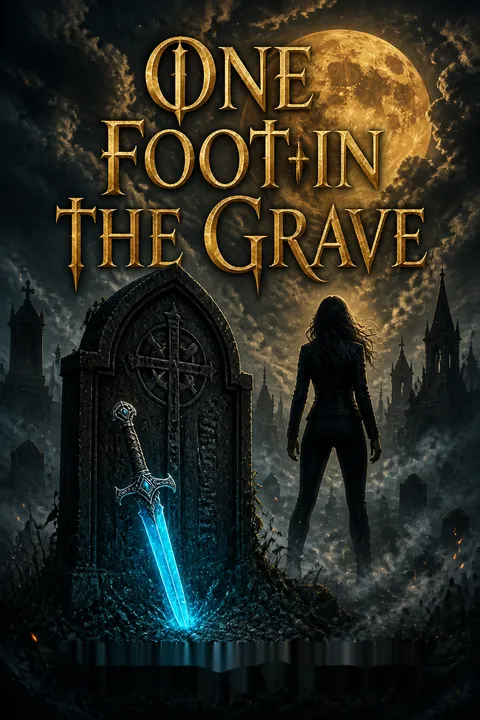


Plot Summary
The Knife in Flannery
Cat enters Liam Flannery’s mansion under a false federal identity, intending to punish the Master vampire for two drained employees. When Flannery turns predatory, she fights him with silver knives and kills his ghoul bodyguard, but cannot land a fatal strike. A clue in his London past and Australian keepsakes identifies him as Ian, the vampire who transformed Bones.
Cat pins Ian’s heart with a blade, then lets him live because Bones once saved her mother. She conceals her lingering love by pretending she despises Bones and their years together. Ian escapes through a window; Cat wounds herself to make her team believe she barely survived. Her mercy preserves a connection that will soon pull her past back into danger.
Cat’s choice is both tactical and intimate. She has spent years turning grief into a profession, yet the one vampire she spares is tied to the person she has tried hardest to erase. Her cover story protects Bones from Ian as much as it protects her own pride. The scene also makes her divided identity concrete: her heartbeat marks her as living, her eyes and strength disclose her inheritance, and her work depends on inhabiting both sides of that boundary. Mercy is not a soft alternative to violence here. It is a risky decision shaped by debts, loyalties, and feelings Cat cannot safely admit.
Limestone in Ohio
Cat’s covert unit is sent to Ohio after a couple is butchered in the house where she grew up. Someone has written a childhood nickname on the wall, making the killings a deliberate summons. Cat fears for her mother, Justina, and leads her team through the damaged rooms. Inside one victim, she finds a piece of limestone from the cave where she once lived with Bones.
The evidence convinces her that her former lover may be behind the murders, though she cannot explain why he would target her this way. She orders her team to wait beyond the vampires’ hearing range and sets a thirty-minute limit for entering the cave. If she does not return, they are to destroy it, even if she is still inside.
The limestone turns an anonymous crime scene into a personal address. Cat’s professional habits tell her how to investigate, but the evidence strikes at her private history before she can separate the two. Her plan to enter alone is an effort to contain the danger, yet it also repeats her deepest coping strategy: she takes responsibility for everyone by excluding them from the risk. The scene lets fear wear the clothes of duty. Cat’s conviction that Bones may be responsible shows how completely their separation has been built around unspoken assumptions, not a settled understanding of what either of them wanted.
Dave Falls in the Cave
Inside the wrecked cave, Cat finds seven vampires holding Bones prisoner, but their leader, Lazarus, has also seized Danny Milton, the boy who betrayed her years earlier. Cat shoots Danny to distract the vampires, then kills the others while trying to reach the exit before her team’s missile deadline. Lazarus escapes into the dark and tears open Captain Dave’s throat.
Cat pours vampire blood over Dave’s wound, but he dies before it can save him. Grief becomes pursuit: Cat and the surviving captains drink from the dead vampires, gaining enough power to resist mind control and follow Lazarus by scent. Cat catches him near a lake and kills him during interrogation, but the victory cannot undo Dave’s death or the cost of their new strength.
The battle makes command a moral burden rather than a title. Cat orders a plan that fails to account for Lazarus’s escape, and Dave pays for the gap between what she intended and what the team could actually control. Her response is brutally practical: she asks living colleagues to drink from corpses so they can hunt the killer. The act saves them from helplessness, but it also brings them closer to the world they oppose. Cat’s grief does not produce reflection first; it produces action. Only afterward can she understand that strength is not innocence, and that surviving a fight may leave its own permanent wound.
The Watch in Chicago
During Cat’s enforced leave, Don reveals that Danny disappeared from a guarded Chicago hospital, but delayed telling her because he feared her reaction. Cat examines the hospital evidence and finds no sign of a struggle. Among Danny’s belongings is a plain watch she recognizes as her own.
Years earlier, she left it with her goodbye note to Bones; its hidden button could page only his device at short range. The watch means Bones had been close enough to reach Danny and has tried to contact her without forcing a meeting.
Cat also returns to work carrying grief over Dave and unresolved feelings for Bones. At a birthday gathering staged by Tate, she learns that her trusted second-in-command has loved her for years, further complicating her effort to build an ordinary life.
The watch is a small object with an enormous emotional radius. Its ordinary appearance conceals a private channel, just as Cat’s competence conceals how much of her life remains organized around Bones. Finding it does not reunite them; it reveals that she missed an invitation by being excluded from the investigation. Don’s decision to withhold the disappearance repeats the larger pattern of authority deciding what Cat can bear. Tate’s confession adds another pressure: Cat is not simply choosing between two men, but confronting how her grief has made emotional availability seem like a threat to everyone involved.
Bones at the Altar
Denise marries Randy at a country club, with Cat serving as maid of honor and hoping to keep her complicated life outside the celebration. Instead, Bones appears among the groomsmen. He is there because he befriended Randy months earlier, unaware that Randy would marry Cat’s closest friend.
Cat and Bones meet privately in the ladies’ room, where he insists that their unfinished relationship cannot be ignored; she warns him that her mother and employer would treat him as a target.
Justina discovers him, renewing her hatred of the vampire who once saved her. At the reception, Cat drinks to steady herself while Bones sits beside her under a joke disguise using her alias. When she sees him kiss bridesmaid Felicity, jealousy overwhelms her, and she flees the party.
The wedding places private history inside a public ritual of commitment. Cat must perform loyalty to Denise while pretending that Bones is merely an inconvenience, and the effort exposes how little emotional distance she has achieved. Her disguise is not only a changed hair color or assumed name; it is the story she tells herself about having moved on. Bones’s appearance disrupts that story, while Felicity’s kiss forces Cat to see the cost of the separation from the outside. The scene also contrasts two kinds of family: Denise and Randy build a chosen partnership, while Cat remains caught between her mother’s fear and her own unacknowledged attachment.
The GiGi Club Hunt
Still raw from the reception, Cat drives alone to investigate the GiGi Club, where two young women have vanished. A confused ghost leads her past a locked door to vampires feeding on three women. Cat kills the attackers she can reach, while Bones arrives to heal the two survivors with his blood.
The ghost disappears once his girlfriend is safe, leaving Cat with the task of stopping the remaining predators. Cat and Bones pursue the last vampires through the club and nearby streets. After the final killer falls, Bones forces the conversation she has avoided.
Cat denies still loving him, but he points out that she spared Ian despite having his heart under her knife. He warns that Ian wants to collect Cat, and reveals an active contract on her life. Then he bites her, and she loses consciousness before she can decide how to respond.
The hunt restores the partnership before Cat has agreed to restore the romance. She trusts Bones with her life, coordinates with him under pressure, and accepts his help for the victims even while denying what she feels. That contradiction gives their reunion its force: intimacy is already present in action, while Cat tries to keep it out of language. The ghost’s disappearance offers a brief, earned release, unlike Cat’s unresolved grief over Dave. Bones’s bite crosses a boundary that he knows she can resist, making his test ethically troubling even as it reveals the strength of their bond. Their love is real, but sincerity does not make every choice harmless.
The Years Cat Was Promised
When Cat wakes in Bones’s rented house, he explains that her half-vampire body may not age like a human’s. The two pints of his blood she drank years earlier may extend her life further, removing the future separation she once considered inevitable.
Cat confronts Don and learns he has long known her medical records place her body at roughly nineteen or twenty, not twenty-seven. He also knew the blood Cat and her captains drank in Ohio could lengthen their lives, but withheld the information.
Cat challenges his view that vampire blood corrupts by nature, then takes time to reconsider her future. She and Bones agree to try again slowly. When Justina arrives to condemn the relationship, Cat openly defends Bones and sets a boundary with her mother for the first time.
The revelation changes the problem Cat thought she had solved by leaving. She believed sacrifice was the only ethical response to an impossible lifespan mismatch; now she must admit that her certainty depended on incomplete information. Don’s concealment makes the issue political as well as intimate, because Cat’s body has been treated as an asset whose future belongs to command. Her argument that power amplifies character rather than replacing it challenges the fear that supernatural influence automatically erases moral agency. By confronting Justina, Cat begins to separate love from permission: her mother may disapprove, but disapproval no longer gets to determine Cat’s private life.
A Bullet Through Glass
After Cat’s unit discovers she is dating a vampire, Don summons her to defend her judgment. Cat refuses to surrender Bones, despite Tate’s jealousy and Don’s warnings. At dinner, a sniper fires through the restaurant window.
Bones knocks Cat down, carries her through the shattered wall, and flies after the getaway van, where he captures the shooter, Ellis Pierson. Under vampire mind control, Ellis admits that an unknown client ordered a precise head shot and recently accelerated the job. The details point toward someone with intimate knowledge of Cat’s identity and routines.
Bones gives Cat an envelope containing information he has been investigating, then enters Don’s heavily guarded compound concealed in a transport capsule. Cat follows, uncertain whether the danger comes from her employer, a colleague, or someone reaching into the past.
The attack converts romantic risk into an immediate security crisis, but it also establishes the difference between Cat’s independence and isolation. She insists on choosing Bones herself, while his intervention demonstrates a capacity that her human team cannot match. Yet rescue does not settle the question of trust; it raises the possibility of a mole inside the very institution Cat leads. The contrast between the couple’s intimate dinner and the long-range, clinical assassination attempt is telling. The shooter treats Cat as a target defined by vulnerabilities, while Bones treats her survival as personal and nonnegotiable. The envelope signals that love here requires investigation, not merely faith.
Don’s Brother in the Photograph
At the compound, Don restricts Cat from seeing the vampire he believes attacked her mother, but she presses Tate to investigate with her. She finally admits that the prisoner is Bones, the man she once claimed to have killed. Cat and her allies use a planned power outage to free him from the capsule.
Bones then confronts Don with the envelope’s photograph: Cat’s unknown father stands beside Don, who recognizes him as his missing brother. Don admits he knew Cat’s heritage and recruited her partly because he hoped she might stop his brother, Max, from becoming a threat.
Bones identifies Brad Parker, a lab assistant, as the paid informant who gave Max access to Cat’s location and weaknesses. Brad’s confession confirms Max arranged the assassination. Don allows Bones to kill the traitor, and Cat agrees to stay in the operation if Bones joins her.
The revelation turns Cat’s workplace into an extension of the family history she thought she had escaped. Don’s recruitment was never wholly neutral: he saw Cat as a person and as a possible answer to his brother’s transformation. The betrayal is therefore not simply that Don kept a secret, but that he made decisions about Cat’s life while claiming to protect her. Brad’s treachery shows the institution’s vulnerability to ordinary motives such as money, not only supernatural coercion. Cat’s choice to remain is neither forgiveness nor submission. She sets new conditions, insisting that her service can continue only if her own judgment and relationships are recognized.
A Line of Their Own
Bones takes Cat into Virginia Tech’s service tunnels to meet Mencheres, his powerful grandsire, because he wants to leave Ian’s vampire line and protect Cat independently. Mencheres explains the political danger: Ian’s authority extends through the vampires he created, and Cat has no sire to defend her.
Bones argues that he can claim her through their intimacy, but Cat refuses to be treated as property. She instead proposes exploiting Ian’s concern for his own people: they can present captives as hostages, then demand a binding promise that Ian will leave her alone.
Back at the compound, Don’s captains volunteer to serve as bait. Bones gives Tate, Juan, and Cooper his blood so they can resist vampire mind control and fight more effectively. The men train against captive vampire Belinda, learning that subduing a vampire is harder than killing one.
The meeting exposes a conflict between protection and ownership. Bones wants to use the rules of vampire hierarchy to shield Cat, but Cat recognizes that a safe position can still be an imposed one. Her counterplan does not reject strategy; it demands agency within strategy. The captains’ voluntary participation matters because they are not merely pieces on Cat’s board. Their choice makes solidarity reciprocal, even as the blood they drink alters their bodies and extends their lives. The training with Belinda supplies a practical lesson in restraint: their objective is not to destroy every enemy, but to keep control long enough to negotiate. Ethics becomes a combat skill.
Annette’s Old Score
Bones gathers allies, including Annette, the first vampire he made and a former lover. Annette needles Cat with stories of Bones’s sexual past, hoping to make her doubt the relationship. Cat fights Annette and pins her with a silver knife, but spares her when Annette agrees to stop undermining them.
Bones later confirms that he had many lovers before Cat, while insisting that his feelings for Cat are different. The argument forces them to discuss his past rather than letting jealousy stand in for evidence.
With Ian’s deadline advancing, Cat, Annette, and the captains prepare a trap. Bones and Rodney leave to protect Noah, whom Ian has targeted as leverage. Cat takes Annette and the captains to deliver them as apparent prisoners, knowing one mistake could expose the plan.
Annette’s attack works because it exploits a genuine vulnerability: Cat has little experience with intimacy and fears being one episode in Bones’s long life. Cat responds first with violence, then with a more difficult act of judgment, distinguishing a rival’s cruelty from a threat that must be killed. Bones’s account does not erase his past; it places that past in a history Cat can evaluate. Meanwhile, the plan’s division of labor shows that trust has become operational. Cat lets Bones protect Noah, accepts Annette as an ally despite their hostility, and relies on her captains to survive a role designed to look like helplessness.
The Warehouse Switch
At the warehouse, Cat and Annette pose as companions delivering Tate, Juan, and Cooper in restraints. The captains have hidden silver knives in their shoes, while the vampires accept the apparent surrender and begin to flirt. Cat and Annette use the guards’ confidence to launch the attack.
Cat blinds two vampires with thrown blades, then pins them without killing them; the captains fight the others, and Annette turns on her former associate Francois. The battle is close, especially when Juan is hurled over the van, but the team captures all six guards alive.
Their captives give Cat leverage for the coming meeting with Ian. Before she faces him, Cat undergoes a spa treatment arranged to erase Bones’s scent, then is collected by Spade and taken to Ian’s mansion, where her three captains are no longer the only people at risk.
The warehouse scene tests whether Cat’s team can act without the familiar certainty of a kill order. Their disguises depend on being underestimated, and the captains must restrain their reflexes long enough to preserve hostages. Cat’s control is not effortless: she is briefly out of knives and depends on Tate’s intervention, while Annette’s loyalty is proven through action rather than apology. The spa that follows is an odd but pointed form of preparation. Cat must strip away the scent of her private bond to make the deception credible, turning her body into evidence that can be managed. The operation succeeds because the team understands both appearances and their consequences.
The Arena and the Blood Oath
Ian presents Cat as a rare half-vampire and holds Noah in a cage above the arena. Bones publicly asks Ian to release him from his line; Ian agrees, allowing Bones to become an independent Master. Cat then fights Grendel, a six-hundred-year-old ghoul, and wins by blinding him and tearing off his head.
She claims Noah back, only to reveal that her own captains and six of Ian’s guards are now hostages in the opposite direction. Cat demands that Ian leave her people alone. Before leaving, she challenges Max, the vampire she has pursued as her father, but discovers he remains under Ian’s protection.
Ian offers Max in exchange for Cat abandoning Bones. Cat refuses, binding herself to Bones by blood as his wife. Max denies having raped Justina and threatens to return; Bones exposes his role in the assassination, and Ian lets him go under warning.
Cat wins the physical contest, but the decisive struggle is over what she will value when offered the revenge she has wanted since adolescence. Ian’s bargain makes her choose between an imagined completion of the past and a future she has only recently dared to consider. Her blood vow is a deliberate commitment, not a surrender to the vampire hierarchy; she accepts its cost after rejecting the version of protection that would make her property. The unanswered dispute over Max’s account of Justina’s assault complicates any clean moral closure. Cat leaves without revenge, but not without resolve: Max remains a threat, and the choice to love Bones does not erase the history that formed her.
Dave Rises from the Grave
Back at Don’s compound, Bones explains that Dave may be revived as a ghoul because he swallowed a little vampire blood when Cat tried to save him in Ohio. The process requires replacing his heart with a ghoul’s and flooding the body with fresh blood, but Dave can choose death again if he wakes and rejects the change.
Cat, Tate, Juan, Cooper, and Don agree to try. Rodney performs the surgery while Bones and volunteers supply the blood; after a long, frightening wait, Dave’s fingers move and his eyes open.
He remembers the cave, not the months he has been buried. Cat tells him he died and has returned as a ghoul. Dave initially recoils, then accepts his friends’ support and leaves the cemetery with them. Cat follows, carrying both relief and a new responsibility.
Dave’s return does not cancel his death; it asks the living to confront what they are willing to accept in order to recover someone they love. The group cannot promise that Dave will welcome his new body, so their act is an offer of possibility rather than a simple rescue. Cat’s earlier attempt to save him failed, and this second effort requires the knowledge, power, and alliances she has gathered since. Dave’s first concern is still his team, a reminder that identity survives through remembered commitments as much as through biology. His friends’ acceptance matters because it gives him a social world in which to decide what being a ghoul will mean.
Analysis
The novel builds its emotional conflict from a practical mistake: Cat leaves Bones because she believes that loving him will eventually require surrendering her human life. When that premise proves false, the obstacle does not disappear so much as change shape. Cat must reckon with the way other people have made decisions about her body, identity, and future: Don withholds medical knowledge, Justina defines her through fear, and vampire custom offers protection by naming her as someone’s possession. Cat’s development is therefore not a simple movement from independence to romance. She learns to distinguish self-determination from isolation, accepting help without handing over the right to choose.
The action plot gives this question physical form. Blood can heal, sharpen senses, extend life, and alter a person’s species; each benefit arrives with an ethical cost. Cat’s team drinks vampire blood to pursue Lazarus, then trains to restrain rather than kill Ian’s guards. Their changing bodies do not automatically change their values, challenging Don’s belief that supernatural power corrupts by itself. The deeper danger is not transformation but the institutions and assumptions that treat people as tools.
The family revelations intensify that argument. Don recruited Cat partly because of her connection to his missing brother, while Max tries to eliminate the daughter whose existence threatens him. Cat’s choice not to kill Max in Ian’s arena is not forgiveness. It is a refusal to let vengeance make the last decision of her life. Her blood marriage to Bones is equally deliberate: she accepts a binding commitment after rejecting the claim he assumed he could make for her.
Dave’s revival closes the book by turning the question of identity into a collective responsibility. His friends cannot restore his former life, but they can welcome him into a changed one and let him decide whether to stay. The ending’s hope is not that loss can be undone. It is that love and loyalty can survive bodily change, imperfect choices, and the frightening work of making room for what comes next.
Review Summary
One Foot in the Grave receives mostly positive reviews, with readers praising the development of Cat and Bones' relationship, the witty dialogue, and the action-packed plot. Many highlight Chapter 32 as particularly memorable. Some criticize Cat's character evolution, finding her less likable than in the first book. The vampire world-building and secondary characters are well-received. While some readers prefer the first book, most find this a strong sequel that leaves them eager to continue the series.
People Also Read



Characters
Cat
Half-vampire field commanderCat is a half-vampire who leads a covert unit that protects humans from supernatural predators. Her strength, speed, and ability to resist vampire mind control make her valuable, but her authority is grounded in a deep sense of responsibility to her team. She has survived by treating vulnerability as something to conceal and by making decisions alone before anyone can challenge them. That self-reliance can become recklessness, especially when old grief or family history is involved. Cat is also funny, blunt, and practically compassionate: she will risk her own safety to help strangers, whether the victim is human or a broken-legged kitten. Her central drive is to decide for herself what her unusual nature and dangerous work are for.
Bones
Vampire with a long memoryBones is an English vampire, an experienced fighter, and Cat’s former lover. His wit often masks a calculating mind, while his loyalty tends to appear through decisive action rather than reassuring promises. Centuries of violence have made him comfortable with power, but Cat challenges his assumptions about what protection should look like. He wants to keep her safe and to reclaim their relationship, yet he must learn that devotion does not give him the right to decide her future. His history as a killer and former sex worker is part of his self-understanding, not something he believes he can erase. Bones is at his most human when he risks his standing and safety for the people Cat values.
Don
Commander with buried loyaltiesDon is the guarded head of Cat’s covert government unit. He values discipline, secrecy, and the lives his operation protects, though his commitment to the greater good can lead him to treat colleagues as resources. He recruited Cat when she was young and built a working relationship that mixes genuine concern with control. Don is politically shrewd and rarely shows fear, but family history complicates his professional judgment. His instinct is to manage risk by withholding information, even when that secrecy damages trust. Cat’s independence forces him to confront the cost of his methods and to distinguish obedience from loyalty. He respects competence, particularly when it proves that a person can carry power without surrendering moral judgment.
Tate
Loyal second-in-commandTate is Cat’s disciplined second-in-command, a former Special Forces soldier who prefers clear orders and reliable plans. He is protective of the team and often tries to protect Cat by challenging decisions he considers too dangerous. Beneath his military reserve is a personal attachment that makes his judgment more vulnerable than he wants to admit. Tate’s loyalty is not blind: he can disagree sharply, but he remains when the stakes become frightening and real. His self-image is built around taking responsibility for others, which makes setbacks and romantic disappointment especially difficult for him to absorb. Cat trusts him as a leader even when their feelings complicate their friendship.
Justina
Cat’s fearful, fierce motherJustina is Cat’s mother, a survivor whose experience with vampires has hardened into broad, uncompromising fear. She loves her daughter, but that love is tangled with grief, religious conviction, and a terror that Cat will be consumed by the supernatural world around her. Justina’s judgments are often cruel because she treats condemnation as protection. She is not timid; when threatened, she acts with startling force and refuses to soften her position for the sake of politeness. Her relationship with Cat is shaped by years of unresolved hurt and by Cat’s resemblance to the father Justina cannot bear to discuss. She wants to preserve her daughter, even when her methods make closeness difficult.
Ian
Master vampire and old sireIan is a powerful English vampire who has spent centuries building relationships, territory, and influence. Charming when it serves him, he also treats people as pieces in a negotiation and expects others to respect the hierarchy he commands. He values spectacle and confidence, often assuming that his age and status make resistance temporary. His complicated history with Bones restrains some of his choices, though it does not make him harmless. Ian can be pragmatic enough to recognize a clever opponent, but he is also possessive and accustomed to getting what he wants. He embodies the political world Cat must navigate, where personal desire and formal claims are difficult to separate.
Denise
Cat’s steady closest friendDenise is Cat’s closest human friend, a warm, direct woman who knows Cat’s work is unusual without demanding every detail. Her instinct is to push Cat toward ordinary pleasures and honest connection, especially when Cat retreats into grief. Denise is confident about her own romantic choices and expects her friends to be candid with themselves. She offers a rare space where Cat can be more than a commander or fighter.
Noah
Kind veterinarian and dateNoah is a veterinarian whose gentleness is visible in the care he gives an injured stray. He is new to Cat’s life and offers the possibility of an uncomplicated human relationship, though her secrets and unpredictable work make that hope difficult to sustain. Noah is sincere rather than naïve, and his attention to how people treat the vulnerable reveals a quietly strong moral center. He wants genuine connection, not a role in Cat’s evasions.
Juan
Flirtatious, fearless captainJuan is one of Cat’s captains, a former criminal whose humor and flirtation soften a hard-earned toughness. He is quick to act in a fight and deeply loyal to his friends, especially the men who serve beside him. His warmth makes him an emotional counterweight to Tate’s discipline and Don’s reserve. Juan’s courage is not abstract; he shows it by stepping into danger for people he loves.
Dave
Steady captain and friendDave is a former firefighter and one of Cat’s most dependable captains. He brings practical courage to the team and trusts Cat’s leadership, even when a mission turns chaotic. His easy camaraderie helps make the unit feel like a family rather than a chain of command. Dave’s defining quality is his willingness to stand between danger and the people beside him.
Cooper
Skeptical undercover recruitCooper is a former undercover narcotics officer who joins Cat’s unit with sharp instincts and a guarded view of her mixed heritage. He is practical, blunt, and initially distrustful of what he cannot categorize. Rather than disguising his doubts, he tests whether Cat’s leadership is dependable under pressure. His respect is earned through action, and he values courage more than easy agreement.
Max
Vampire tied to Cat’s pastMax is a vampire whose history intersects with Cat’s family and Don’s professional life. He is calculating, self-protective, and willing to use other people’s vulnerabilities to keep danger away from himself. Max relies on distance and intermediaries rather than facing threats directly, but he carries enough influence to endanger people around Cat. His resemblance to her becomes a source of unsettling recognition.
Mencheres
Ancient vampire patriarchMencheres is Bones’s grandsire, an ancient vampire whose power and unusual foresight make him a consequential figure in undead politics. He speaks with calm authority and looks beyond the immediate demand to the long consequences of a choice. Mencheres is not easily persuaded by personal loyalty alone; he insists that Cat understand the laws and implications surrounding her. His presence reveals how much of vampire society is governed by lineage, obligation, and carefully observed custom.
Annette
Vampire ally with historyAnnette is an elegant vampire from Bones’s past, both his first creation and a former lover. She is socially polished, sexually confident, and skilled at using charm as a form of pressure. Her bond with Bones gives her a long view of his habits, but her familiarity can become a weapon when she feels displaced. Annette is more than a rival: she has her own loyalties, pride, and capacity for courage. Cat must decide whether to judge her by past intimacy or present actions.
Rodney
Practical ghoul allyRodney is a ghoul and one of Bones’s trusted allies. He is practical, dryly funny, and far less sentimental in manner than his loyalty suggests. His knowledge of ghoul customs and physiology becomes valuable when the team faces problems that human medicine cannot solve. Rodney is wary of government authority but willing to take risks for people he considers his own.
Belinda
Captive vampire sparring partnerBelinda is a vampire held by Cat’s unit after being caught among predators who prey on humans. She is bold, physically capable, and willing to exploit an opponent’s hesitation. Her cooperation is conditional, but her presence gives Cat’s team a living test of the difference between defeating a vampire and restraining one. Belinda understands how desire, fear, and distraction can become weapons.
Spade
Bones’s formidable old friendSpade is a Master vampire and one of Bones’s oldest friends. His polished manners coexist with formidable strength and an exacting sense of dignity. He remembers his human past and the humiliation attached to it, choosing a name that keeps that history close. Spade can move comfortably through vampire politics without losing his personal loyalties.
Lazarus
Bounty hunter and MasterLazarus is a powerful vampire bounty hunter hired to find the rumored Red Reaper. He is controlled, arrogant, and accustomed to using captives as leverage. His confidence rests on both supernatural strength and the belief that fear will make opponents predictable.
Danny Milton
Cat’s bitter childhood betrayerDanny is a boy from Cat’s past whose betrayal left her with a lasting grudge. He is self-pitying and quick to blame Cat for the consequences of his own choices. His history with her becomes useful to others because he knows details she would rather keep buried.
Randy
Denise’s perceptive new husbandRandy is Denise’s husband, a software consultant whose curiosity makes him unusually perceptive about the people around him. He is kind, practical, and willing to notice what others would rather leave unexplained. His affection for Denise is direct, and he values the friendship she has built with Cat.
Felicity
Flirtatious wedding cousinFelicity is Denise’s cousin and a bridesmaid who pursues attractive men with little embarrassment. Her blunt appetite for flirtation irritates Cat, especially when Bones becomes her chosen target. She provides social friction at the wedding without understanding the history beneath it.
Brad Parker
Compromised lab assistantBrad Parker works as an assistant in Don’s pathology unit. He has access to sensitive information and is willing to trade what he knows for money. His ordinary position inside the compound makes him a reminder that security can fail through familiar faces, not only through supernatural force.
Plot Devices
Cat’s hybrid physiology
Power with a heartbeatCat’s mixed inheritance gives her a human heartbeat alongside vampire traits, including unusual strength, speed, healing, and resistance to vampire mind control. It lets her work inside a human team while confronting the undead on nearly equal terms. The same body complicates how others see her: Don treats her abilities as an institutional asset, Justina fears they make Cat monstrous, and vampires regard her as a rare prize. Her physiology also changes the stakes of blood, aging, and belonging. Rather than serving only as a combat advantage, it forces Cat to decide whether biology defines her loyalties or merely gives her more choices to make.
Vampire blood
Power passed between bodiesVampire blood heals severe injuries, alters human senses and strength, and can protect a drinker from vampire mind control. Cat and her team use it to pursue Lazarus and prepare for Ian’s guards, while Don’s researchers filter undead blood into Brams, a medical treatment that avoids its more transformative effects. Blood also extends Cat’s and the captains’ expected lifespans. Finally, a small amount Dave swallowed before dying becomes relevant to the possibility of his return as a ghoul. The device links rescue, enhancement, dependency, and transformation, making each use a decision about what kind of power the characters are willing to carry.
Vampire line and claim
Protection through hierarchyVampires organize themselves through lines of creation: a maker and the powerful figures above them share authority and obligations. A vampire without a protecting line can be exposed to claims from another Master. Bones seeks to leave Ian’s line so he can protect Cat independently, while Cat resists being treated as property through vampire custom. Their negotiations show that a claim can offer safety and restrict choice at once. The rules shape the plan against Ian, the captains’ protection, and the formal bond Cat ultimately accepts. This structure turns private relationships into public political facts, with consequences that cannot be undone as easily as a human promise.
The pager watch
A private signal across yearsThe ordinary watch Cat left with her goodbye note contains a concealed button that pages a single receiver at short range. When it turns up among the belongings of the missing Danny Milton, Cat understands that Bones was near the hospital and had tried to reach her. Its discovery changes her interpretation of his silence: he had not simply accepted her disappearance, and she had missed a chance to answer. The watch gives their estrangement a physical object and a precise mechanism, linking a past farewell to the present investigation. It also reveals how easily institutional secrecy can obstruct a personal message.
The Red Reaper identity
A rumor becomes a targetThe Red Reaper is the name attached to Cat’s record of killing vampires, a reputation that spreads through the undead world while she uses aliases and changes her appearance. The identity helps Cat operate under cover, but it also makes her a valuable bounty target. Lazarus is hired to find the rumored killer, and Cat’s old name and family history eventually connect her to people who want her dead or under their control. The contrast between the public legend and the woman leading a small team lets the novel explore how reputation protects, distorts, and endangers the person it describes.
Night Huntress Series
About the Author
Other books by Jeaniene Frost


Download PDF
Download EPUB
.epub digital book format is ideal for reading ebooks on phones, tablets, and e-readers.








