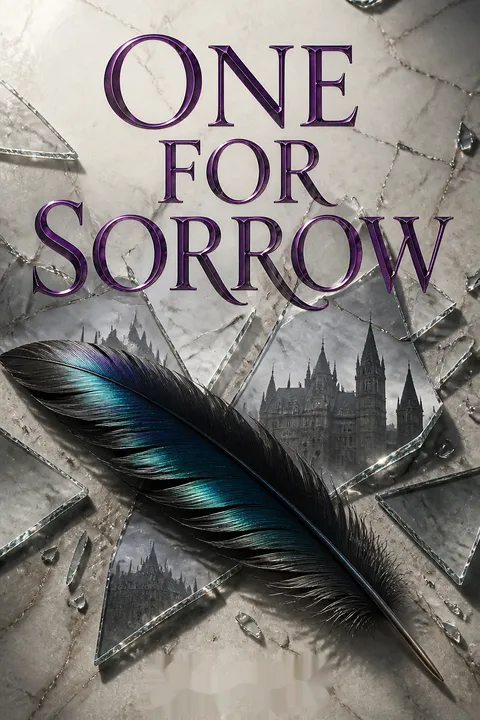


Plot Summary
Prologue
At Illumen Hall’s phone-free end-of-term beach party, a scream stops the dancing and sends students rushing toward the water. They find Lola Radcliffe facedown on the sand, her lips blue and an elaborate magpie drawn across her back.
The police question the students, but none can offer a photograph or message from the night: everyone obeyed the ban on phones. The coroner calls Lola’s death misadventure. The students are left with a body, a strange bird, and a story the authorities consider closed.
The phone ban makes the party’s central mystery unusually resistant to proof. The students have memories, but no recordings to settle contradictions or protect them from suspicion. That absence also gives the school’s traditions unusual power: the magpie on Lola’s back becomes a clue precisely because nobody can verify when or how it appeared. The scene places collective loyalty beside individual vulnerability. Illumen’s rules hold the party together until the moment they cannot explain what happened, leaving grief and uncertainty to compete with the official account.
The Room Lola Left
Audrey Wagner arrives from Georgia at Illumen Hall, a remote English boarding school where her father expects her to settle in and behave. She wants the move to become a clean break, though she has not told her new classmates what she is leaving behind. Headmistress Mrs Abbott assigns her to share a room with Ivy Moore-Zhang, a high-achieving prefect who had expected Lola Radcliffe’s former room to herself.
Ivy greets Audrey with a warning that the room is cursed, then explains that Lola drowned over the summer. Audrey recoils from Ivy’s bluntness, while Ivy resents losing the privacy she had earned. Their first encounter turns the room into a reminder of the school’s loss before Audrey has even unpacked.
The room gives the two girls different forms of exposure. Ivy sees it as a private refuge that has been taken from her; Audrey sees a stranger’s death intruding on the fresh start she badly wants. Their conflict is not simply a clash of manners. Ivy’s control and Audrey’s polished friendliness are both defenses against circumstances they have not yet disclosed. Assigning them to Lola’s room binds those defenses to the same unresolved absence. The school calls the room home, but its history makes home feel less like shelter than a place where other people’s grief remains physically present.
Rules, Phones, and Warnings
Audrey drops her phone on the school stairs, cracking its screen. Theodore, a charming student who offers her an old replacement, becomes her first possible ally. At the opening assembly, Ivy helps manage the students as Illumen remembers Lola and unveils a portrait of her.
A power failure interrupts the ceremony; when the lights return, flyers have appeared on students’ laps, promising that someone knows who killed Lola and that another student is next. Audrey still tries to stay outside the gossip, but she soon learns that phones are collected on weekdays. Ivy quietly keeps a second phone, showing Audrey that the school’s strict rules are not followed as evenly as they are enforced.
The school’s rules create a double system: visible discipline for newcomers and private exceptions for students who already know how Illumen works. Audrey’s broken phone leaves her dependent on other people just as the institution removes her ordinary connection to home. The flyers exploit that vulnerability, turning a formal memorial into an invitation to doubt the official story. Ivy’s hidden phone shows how competence at Illumen includes knowing which rules are real and which are performances. For Audrey, the discovery is not yet a reason to investigate; it is evidence that the school’s polished order has seams.
Vee's First Clues
Ivy listens to the first episode of a podcast called Who Killed Lola? Its anonymous host, Vee, questions whether Lola fell from the cliffs alone, noting that a witness reportedly saw another person and that Lola’s phone was never recovered.
The host also points out the magpie image on Lola’s back, which the police say was drawn with a marker rather than tattooed. The next episode adds that an unknown witness placed two people on the cliffs, then suggests the new head girl, Araminta Pierce, had wanted Lola’s position.
Ivy’s curiosity overcomes her disgust at the podcast’s timing. Mrs Abbott asks her to identify the host, offering help with Ivy’s university ambitions in return. Ivy accepts, unsure whether she is investigating for the school or for herself.
The podcast converts uncertainty into a public contest over who gets to interpret Lola’s death. Vee’s claims are not proof, but they expose gaps the school and police have allowed to stand. Ivy’s role as Mrs Abbott’s informal investigator complicates her motives: she is offered institutional advancement for doing work that might destabilize the institution. Her acceptance reflects a familiar bargain for a scholarship student who has learned that opportunity often comes with an obligation to perform. Yet the investigation also gives her a way to approach grief as a solvable problem, an impulse that protects her from feeling how little control she had over Lola’s death.
Patrick Radcliffe's Invitation
When Ivy suspects Audrey may be behind Vee’s podcast, she confronts her in the senior common room. Audrey denies knowing Lola before arriving at Illumen and counters that Ivy may be hiding something herself. Shaken and angry, Audrey leaves school grounds without permission.
In town, she meets Patrick Radcliffe, Lola’s older brother, who says the police have not answered his questions and asks Audrey to help investigate from inside the school. Audrey refuses, but Patrick gives her his business card with a reference to the Magpie Society written on it.
Back at Illumen, Mrs Parsons discovers Audrey’s unauthorized trip and locks her in the shared room during dinner. The punishment drives Audrey to a hidden compartment in the wall, where she finds an old sealed letter.
Audrey’s escape is both a rejection of Illumen’s authority and a return to the flight response she has not explained to anyone. Patrick’s appeal gives the mystery a human face: his need for answers is not merely the podcast’s appetite for scandal. Yet Audrey cannot accept his request immediately, because the investigation threatens the distance she has tried to create from her past. The letter hidden in the room changes the terms of her refusal. Illumen’s architecture keeps secrets in the walls, and the punishment meant to confine Audrey accidentally puts one within reach.
The Podcaster Unmasked
Ivy traces Vee’s school-based email to a computer inside Illumen, then finds a page of duet music in a 1967 yearbook that she recognizes from her younger mentee Clover Mirth’s music. Before Ivy can question Clover privately, Araminta overhears enough to accuse her.
Araminta and her friends corner Clover in a bathroom, where Audrey intervenes and pulls them away. Clover admits she is Vee and insists the investigation is sincere. She has uncovered a long-forgotten Magpie Society and believes the police dismissed evidence too quickly.
Mrs Abbott warns Clover not to record on school property, but cannot stop the podcast entirely. Ivy is hurt that Clover hid her work, while Audrey’s willingness to defend a girl she barely knows changes how Ivy sees her.
The reveal draws a sharp line between investigation and spectacle without making the distinction simple. Clover’s secrecy has helped her pursue evidence, but it has also deprived Ivy of the chance to judge the risks beside her. Araminta’s attempt to silence Clover takes the language of loyalty to Lola and turns it into coercion. Audrey’s intervention matters because she acts before she knows whether Clover is right. For her, resisting a crowd is a first practical step away from the passive role she has carried from Georgia. Ivy sees that courage in action before either girl is ready to call the other a friend.
The Pirate Boat Pact
When Audrey learns that Theodore is Ivy’s on-and-off boyfriend, she realizes he has been flirting with both of them. Ivy refuses to blame Audrey, and the two girls retaliate by arriving at Theodore’s boat together.
They catch him dressed as a pirate, expecting Audrey, and photograph him so they can hold the image over him if he plays them against each other again. The joke gives their strained room-sharing a new ease.
Around the same time, Clover returns from the school break with news that someone has ransacked her room, destroyed her research and left a warning that she will be next if she keeps looking. Audrey and Ivy decide to investigate the Magpie Society together, even though the threat makes clear that the mystery is no longer just a school rumor.
The prank lets the girls turn humiliation into shared agency. Instead of competing for Theodore’s attention, they compare notes and refuse the usual romantic triangle, which makes their alliance feel earned rather than sentimental. The threat against Clover then tests that alliance against something more serious than a boy’s foolishness. Both girls are accustomed to managing danger alone: Ivy through discipline, Audrey through retreat. Their decision to investigate together does not erase those habits, but gives them a way to notice when fear is becoming a reason to abandon someone else.
A Society in the Walls
During half-term, Ivy and Audrey search the library’s restricted collection for the Magpie Society. An old book reveals a hidden painting along its page edges, which points them to a matching image in a school corridor and then to a ruined outbuilding.
Under a loose stone, they find an 1897 yearbook showing Lily Ellory, a girl who looks remarkably like Lola. Groundskeeper Mr Tavistock confirms that Lily was among Illumen’s first female students, but directs them to local historian Maggie Trawley.
Maggie explains that boys bullied Lily severely and that a group called the Magpies protected her after one boy pushed her into a lake. The society later intervened in cases of school corruption. Maggie warns that they may still act when needed, then addresses the girls by name despite their never having introduced themselves.
The school’s history offers a counter-myth to the assumption that Illumen’s traditions exist only to preserve privilege. The Magpies once protected a student whom the institution failed to protect, but their anonymity also makes their power difficult to question. Maggie’s knowledge suggests continuity without revealing who currently holds that power. Her inexplicable use of Ivy and Audrey’s names shifts the story from archival puzzle to present danger. The girls are no longer merely recovering a forgotten history; they may have attracted the attention of people who still believe secrecy is necessary for protection.
Lola's Earring Below
Following Maggie’s hint that they should look where only those with feathers can go, Ivy and Audrey use Theodore’s access to enter staff areas. A carved magpie panel in the laundry room opens a concealed passage through the school’s old foundations.
The tunnel leads to a sea cave containing the remains of someone’s makeshift shelter and a collection of beach finds. Audrey recognizes a silver earring with dangling shells as one Lola wore. Ivy thinks the cave may simply have sheltered a beachcomber, but they cannot rule out a connection to Lola’s death.
Meanwhile, Clover’s next podcast explores Lola’s relationship with an unnamed older man, using an interview with Lola’s best friend Jessica. The missing second earring and the possible lover leave Ivy and Audrey with more questions than proof.
The passageways make Illumen’s hidden past materially traversable, but the cave refuses to deliver a clear answer. The earring is a concrete object connected to Lola, yet its presence could mean discovery, concealment, or coincidence. That ambiguity is important: the girls are learning that finding evidence is not the same as knowing what it proves. Jessica’s account introduces the possibility of an older lover, moving the investigation from institutional lore toward Lola’s private life. The distinction between public reputation and private distress begins to narrow, while the girls’ excitement makes them vulnerable to treating every clue as confirmation.
The Letter Behind Wood
Audrey finally shows Ivy the letter she found in the wall. Its language describes a secret love and a planned meeting on the cliffs on the night Lola died. The girls search the compartment again and recover Lola’s diary, which contains poems, heartbreak, and entries about a man she calls Goofo. Beneath a poem, they find a photograph that appears to show Lola holding hands with history teacher Mr Willis.
Before they can act, they discover a package in Clover’s room from Patrick: he has paid her to keep the podcast going and sent equipment as a reward. The discovery damages Ivy’s trust in Clover and casts doubt on the podcast’s methods. Still, the diary and photograph give the girls a lead that cannot be dismissed as rumor.
The diary complicates the image of Lola as a universally radiant student. Her private writing shows a person who felt abandoned and trapped in a relationship she could not publicly claim. But a diary is not a complete account, and the photograph is too unclear to settle the lover’s identity on its own. Patrick’s payment further clouds the investigation: his grief may be sincere while his support still pressures Clover to continue. In this section, evidence arrives entangled with motive. Ivy and Audrey must distinguish the value of what they found from the credibility of the people who helped put it before them.
The Paris Alibi
Ivy and Audrey confront Mr Willis with the photograph and Lola’s diary. He acknowledges that Lola had feelings for him, but says he rejected her and did not meet her on the night of the party. He shows them photographs placing him in Paris with his fiancée, Carly, that night.
The girls cannot prove he harmed Lola, yet Ivy insists he leave Illumen and never teach again; Mr Willis agrees. Ivy burns the photograph, choosing to prevent further damage rather than bring uncertain evidence to the police.
She and Audrey also confront Clover about Patrick’s money, the diary, and her suspicion of Mr Willis, but Clover remains convinced the killer is still at school. Before the party, Audrey tells Ivy that a classmate, Alicia, drowned at her Georgia home after Audrey’s friends bullied her.
The Paris evidence weakens the case against Mr Willis for that night, but it does not erase the ethical concern raised by his connection with a student. Ivy responds by choosing a private sanction, an act that protects him from public accusation while also withholding evidence from formal scrutiny. Her decision reflects the limits of the justice she trusts: she wants to prevent further harm, but she assumes she can judge what consequence is sufficient. Audrey’s account of Alicia reveals why the question of bystander responsibility has become personal. She left Georgia to escape the aftermath, yet now understands that looking away can also be a choice with consequences.
Samhain's Falling Mirror
Audrey, Ivy, and their friends attend Illumen’s elaborate Samhain party, where Audrey begins to feel at ease with Ivy and accepts Theodore’s attention cautiously. Masked figures in feathered costumes interrupt the ceremony, chant a counting rhyme about magpies, and scatter through the hall.
Ivy becomes separated from Audrey and freezes beneath a large antique mirror as its chain gives way. Audrey drags her clear just before the mirror crashes and shatters, cutting Ivy.
The school tries to resume the party, but Araminta reveals that Clover had helped decorate the mirror. A newly released podcast episode warns students not to attend, claims the Magpies tried to protect Lola, and cuts off mid-warning. The apparent attack turns the school’s old symbols into an immediate threat.
The party transforms Illumen’s folklore into a physical hazard. The masked figures may be staging a warning, a prank, or an attack, but the falling mirror makes the consequences real before anyone can interpret their motive. Audrey’s rescue of Ivy reverses their earliest relationship: the new girl once felt overwhelmed by the school, but now she recognizes danger and acts decisively within it. The episode’s unfinished warning adds another layer of uncertainty rather than explaining the spectacle. In a community accustomed to treating tradition as entertainment, the damaged mirror forces students to confront how easily a performance can injure someone.
Clover's Vanishing Invitation
Ivy gathers students outside while Teddy and Harriet try to delay Mrs Abbott, then she and Audrey go to Clover’s room to confront her. Clover is missing. Her belongings have been disturbed, blood marks her desk, and a phone on the floor has recorded someone ordering her to stop resisting before a thud ends the audio. Ivy calls the police and preserves the recording.
Audrey notices that an old carving on Clover’s desk has been altered to read Ill Omen Hall. Beneath the desk, Ivy finds an invitation asking Clover to join the Magpie Society and protect the school and its students at any cost. The book ends before the girls learn who took Clover, whether the society is real, or what happened to Lola.
The ending withholds the resolution that the investigation has been trying to force. Clover’s disappearance gives her warning a terrifying credibility, but it does not establish who abducted her or whether the Magpies are rescuers, manipulators, or both. The invitation’s language echoes the society’s history of protecting the school, while its demand for loyalty at any cost exposes the danger built into that ideal. Ivy and Audrey now possess evidence and have called for help, but they are still working inside an institution that may conceal as much as it protects. The mystery closes on an ethical question as well as a cliffhanger: who gets to define safety?
Analysis
One for Sorrow follows two girls who arrive at the same mystery from opposite forms of vulnerability. Audrey wants distance from a past in which she failed to act when a classmate was bullied. Ivy wants control: she has built her education, friendships, and ambitions around effort, believing that discipline can keep loss from derailing her future. Their investigation brings those strategies into contact. Audrey learns to remain present when conflict calls for intervention; Ivy learns that competence does not make her an impartial judge.
Illumen Hall’s traditions are not decorative background. The phone ban, prefect system, house hierarchy, hidden rooms, and Magpie Society all shape who can know what and who is allowed to act. The school’s secrecy has sometimes protected students, as Lily Ellory’s story suggests, but the same secrecy makes accountability difficult. The girls repeatedly mistake an intriguing clue for a settled explanation, and the novel shows how grief and ambition can make certainty feel more comforting than accuracy.
The podcast sharpens this problem by making investigation public before it is reliable. Clover’s work gives overlooked questions an audience, but attention also rewards escalation. Patrick’s support, Ivy’s private verdict against Mr Willis, and the police’s closed case each demonstrate a different substitute for a complete inquiry: influence, personal judgment, and institutional convenience. None resolves what happened to Lola.
The final disappearance refuses the satisfaction of a solved case. The Magpie Society may be a genuine protective force, a dangerous organization, or something whose purpose has changed over time. By ending with Clover missing and an invitation that demands loyalty at any cost, the book leaves the central moral tension alive: protecting a community is not the same as protecting its reputation, and secrecy can shelter the vulnerable or silence them. Audrey and Ivy have become more willing to act, but the story insists that courage must be paired with evidence and responsibility.
Review Summary
One for Sorrow received mixed reviews, with an average rating of 3.71 out of 5. Many readers found it an engaging YA mystery set in a boarding school, praising the atmosphere and friendship between the main characters. However, some criticized the simplistic writing, underdeveloped plot, and lack of resolution. The book's pacing was often described as slow until the final chapters. While some enjoyed the podcast element and cliffhanger ending, others felt frustrated by unanswered questions and predictable twists.
Characters
Audrey Wagner
The outsider learning to stayAudrey is a tall, fashion-conscious American from Georgia who arrives at Illumen Hall wanting distance from a painful past. She is sociable by habit, but her polished friendliness often conceals anxiety and a fear of being judged. Her first instinct is to escape conflict, whether by refusing to engage with Ivy or by leaving school without permission. She is observant in ways she does not initially trust, and her quick response when another student is cornered shows that she can act bravely before she has fully understood her own courage. Her growing connection with Ivy gives her a safer place to speak honestly and turns her wish for a fresh start into a chance to behave differently.
Ivy Moore-Zhang
The scholarship prefectIvy is a driven lower-sixth student whose academic record, music, running, and prefect duties are all part of a carefully managed future. Raised by a hardworking mother after her father left, she treats achievement as both a route to security and a way to repay the sacrifices made for her. She is sharp, organized, and often guarded, especially when grief or uncertainty threatens her control. Her relationships with Lola, Clover, and Audrey reveal different sides of her: admiration, protectiveness, and a capacity for friendship she had not planned to make room for. Ivy’s determination helps her pursue answers, but it can also make her believe she should decide what justice requires.
Lola Radcliffe
The absent school starLola is the beloved former head student whose death shapes the lives and suspicions of the entire school. Students remember her beauty, charm, and ease with people, while her family sees a talented young actor with plans for university and work. Through her hidden writing, the story complicates that public image, suggesting a private person who felt pressure, longing, and disappointment. Lola connects the novel’s social world to its mystery: her friendships, ambitions, and secret relationship become clues, but never a complete explanation. She is present through other people’s memories and the objects she left behind, making the difference between being admired and being truly known central to the investigation.
Clover Mirth
Ivy's outspoken menteeClover is a fifteen-year-old student with an outspoken political streak, a gift for organizing protests, and a willingness to challenge school authority. Ivy mentors her and takes that responsibility seriously, though Clover’s independence makes her difficult to protect or direct. She is curious, persistent, and drawn to questions other students would rather leave alone. Her confidence can look like fearlessness, but it also makes her willing to take risks before she has secured the trust of the people closest to her. Clover’s interest in fairness reaches beyond routine school causes and into the unresolved questions surrounding Lola.
Patrick Radcliffe
Lola's searching brotherPatrick is Lola’s older brother and a former Illumen head student, born into a family deeply connected to the school. His grief appears as a refusal to accept an explanation that does not fit the sister he remembers. He approaches Audrey because she is new enough to ask questions without being tied to old school loyalties. Patrick can be persuasive and resourceful, but his urgency makes him willing to shape the investigation in ways that serve his need for answers. His position between family history and school life gives him access, yet it does not guarantee that he sees the whole truth.
Theodore, called Teddy
The clever school prefectTeddy is a popular prefect with a gift for technology, a playful manner, and a sailing boat inherited through his family. He first helps Audrey after she breaks her phone, then becomes a romantic complication for both Audrey and Ivy. His affection is genuine, but his attempt to keep both girls interested reveals a carelessness he initially treats as harmless. He knows Illumen’s systems unusually well and is comfortable finding ways around restrictions. His easy charm helps the girls lower their guard, though his own feelings are less casual than his jokes suggest.
Araminta Pierce
The ambitious head studentAraminta is the new head girl, polished and socially skilled, with a keen awareness of rank and reputation. Lola’s absence has placed her in a position she once wanted, leaving her vulnerable to comparison and scrutiny. She can be warm to newcomers and commanding in public, but grief and pressure expose a sharper, more defensive side. Her reaction to questions about Lola is often forceful, making it difficult to tell whether she is protecting the dead girl’s memory, her own authority, or both. Araminta shows how a leadership role can become a performance when its holder fears being seen as an insufficient replacement.
Mr Willis
The engaging history teacherMr Willis teaches history and has a reputation for making the subject lively. His youthful appearance, intelligence, and slightly distracted manner make him popular with students, while his engagement gives his personal life an apparent stability. He knew Lola and appears in the orbit of the school’s investigation, giving students reason to examine the boundary between teacherly concern and private attachment. He is also an adult whose authority changes the stakes of any relationship with a student. The girls’ interest in him forces them to consider how easily charm and professional standing can complicate judgment.
Mrs Abbott
The school's watchful headmistressMrs Abbott runs Illumen Hall with a sharp eye for discipline, reputation, and the movements of its students. She is willing to use the school’s surveillance systems and personal incentives to manage problems, especially when a public controversy threatens the community. Her expectations are demanding, but she also takes responsibility for student welfare and the institution’s traditions. She treats Ivy as capable, which is both an expression of trust and a way of recruiting her into school business. Mrs Abbott embodies the ambiguity of authority at Illumen: she can protect students, but she also wants to control what becomes known.
Harriet
Ivy's candid longtime friendHarriet is one of Ivy’s oldest friends at Illumen, known for blunt honesty, irreverent humor, and a habit of smuggling sweets where they are forbidden. She is close to Tom and devoted to her girlfriend, Cassie, who is away at college. Harriet’s directness can unsettle Ivy, but it also gives their friendship room for teasing rather than ceremony. She often notices what Ivy is avoiding and pushes her to think about other people’s motives. Her practical loyalty is visible in the everyday moments, and she joins the group when the school’s danger becomes immediate.
Bonnie
Audrey's first school guideBonnie is a friendly student in Audrey’s year who knows Illumen’s buildings, customs, and social hierarchy. She offers Audrey a tour, explains the houses, and tries to introduce her to the school’s traditions. Her enthusiasm makes the institution seem welcoming, though she is also attentive to status and to Araminta’s approval. Bonnie’s shifting closeness to Audrey and Ivy reflects how quickly social belonging can become conditional in a tightly knit boarding school.
Mr Tavistock
The groundskeeper and keeperMr Tavistock has tended Illumen’s grounds for years and knows its plants, paths, and neglected corners intimately. Ivy regards him with affection because he shared his knowledge of birds and flowers when she was younger. Other students circulate darker rumors about him, but Ivy sees a patient, lonely man whose attachment to the school is genuine. His knowledge makes him a useful guide to the past, though he is careful about what he shares and warns the girls against following every curiosity.
Maggie Trawley
The local school historianMaggie is an elderly former Illumen student who works at the town market and preserves local history. She is related to Lily Ellory, the student whose story brings the girls closer to the Magpie Society’s origins. Her warmth is paired with a pointed understanding of what the school chooses to remember. Maggie speaks of the society as a force that appears when the institution needs protection, but she does not offer the girls a clear path to find its members.
Ed Tavistock
The groundsman's grandsonEd works on Illumen Hall’s grounds with his grandfather. He is imposing, watchful, and protective of the older man, reacting sharply when Ivy and Audrey visit the cottage. His brief appearance adds unease to the girls’ exploration of the school’s neglected places.
Xander Tamura
The new head studentXander is Illumen’s head boy, a diplomatic family’s son with a strong interest in geography. He shares formal duties with Araminta and appears at the school’s public ceremonies. His measured manner contrasts with the more volatile emotions around him.
Jessica Parkins
Lola's closest school friendJessica has known Lola since childhood and is now a university student. Her memories offer the podcast a view of Lola’s friendships, ambitions, and private worries beyond the polished public image. Jessica carries her own grief and wonders whether she should have stayed closer to Lola on the night of the party.
Lydia
Audrey's Georgia confidanteLydia is Audrey’s closest friend from Georgia and remains in contact through messages and social media. She knows Audrey’s earlier life and recognizes that the move to England may be an attempt to escape more than a change of school. Lydia represents the friendship and home Audrey has left behind.
Walter Wagner
Audrey's distant fatherWalter is Audrey’s wealthy father, a property investor who travels often and expects his daughter to adapt to the family’s move to England. He can be affectionate in person, but his work and assumptions about Audrey leave her feeling that he does not understand what she needs. His resources help shape her privileged life, while his emotional distance leaves her without much guidance.
Alicia
Audrey's former classmateAlicia attended Audrey’s former school in Georgia and belonged to a less socially powerful group than Audrey’s friends. She stood up for herself when that group mocked her, a choice that Audrey remembers with painful clarity. Alicia’s place in Audrey’s past helps explain why Audrey is so alert to bullying and exclusion.
Plot Devices
Who Killed Lola? podcast
Turns grief into investigationThe anonymous podcast raises questions about the police ruling and releases claims in installments: a possible second witness, the marker-drawn magpie, the Magpie Society, and an older man connected to Lola. Its growing audience pressures students and staff to respond, while its concealed host makes it difficult to assess motive or reliability. When the host is identified as Clover, the podcast becomes a personal risk as well as a source of information. The device pushes the mystery forward but also shows how public attention can distort evidence and intensify grief.
The Magpie Society
Makes school history operationalIllumen’s magpie traditions appear at first to be superstition: students leave shiny objects at a pond and repeat a rhyme to ward off bad luck. Research in the library and Maggie Trawley’s account reveal an older secret society that intervened against bullying and corruption. The society’s methods and present membership remain hidden. Its history gives the girls a way to connect scattered clues, while its promise to protect the school raises a harder question about whether secrecy can serve justice or simply shield authority.
The hidden passages
Turns architecture into evidenceConcealed compartments and routes connect the room Audrey shares with Ivy, the laundry room, the school foundations, and a sea cave. Each discovery changes how the girls understand Illumen: it is not just an old building but a place designed, altered, and used in ways students do not see. The passages offer access to evidence such as Lola’s earring and the old yearbook, but they also encourage dangerous speculation. The school’s physical secrets mirror the gaps in its public history without automatically explaining them.
Lola's hidden writings
Complicates the official storyA letter and diary concealed behind a wall reveal that Lola had a secret love, felt rejected, and planned to meet someone on the cliffs on the night she died. A photograph tucked into the diary appears to show her with Mr Willis. These materials challenge the school’s simple image of Lola as carefree, but they do not identify the lover conclusively or establish what happened at the cliffs. Their partial nature makes the girls confront the difference between a clue, a confession, and a reliable account.
The phone-free party
Removes easy proofIllumen’s end-of-term beach party bans phones and cameras, leaving the students with no recordings of the night Lola’s body is found. The rule makes the party feel like a deliberate retreat from public documentation, but it also deprives the police and the students of an objective record. The absence of evidence gives memories and rumors greater force, allowing the podcast to exploit uncertainty. Later parties introduce the opposite danger: phones are available, but images can capture spectacle without revealing who caused it or why.
Download PDF
Download EPUB
.epub digital book format is ideal for reading ebooks on phones, tablets, and e-readers.








