

Plot Summary
The Son-in-Law's Tree
When Kali returns to his in-laws’ home for the Tiruchengode festival, he first studies the portia tree he planted there as a new husband. It has spread wide enough to shade ten cots, while he and Ponna, married for twelve years, still have no child. The tree recalls their early closeness, when they could barely bear to be apart.
Now Ponna’s mother repeatedly calls her inside, and the couple’s private life has narrowed under chores, family eyes, and the question of conception. Kali’s mother raised him alone on their farm and depends on his work, so he cannot simply settle with his in-laws. The old tree flourishes in plain view; their unfulfilled hope does not.
The tree makes time visible without turning it into a simple symbol of hope. Kali planted it as a gift and has watched it become part of his in-laws’ household, a durable thing that belongs to both families. Its growth throws the couple’s infertility into sharper relief, but it also records a period when desire was uncomplicated. The contrast matters: their marriage has not become loveless, yet every act of intimacy is now shadowed by an outcome neither can command. The opening frames the central pressure as domestic and social at once, rooted in affection but enlarged by other people’s scrutiny.
Pavatha Beneath the Trees
As the couple searches for an explanation, Kali’s mother recalls an ancestor who swore falsely over stolen castor seeds, then suffered a collapse that the family treats as the source of a curse.
Kali’s grandmother offers another account: four ancestral men assaulted and killed a forest girl, whose curse supposedly brought early deaths and no daughters to their line. Neither story can be proved, but both turn private grief into inherited guilt. On the hill, a Brahmin priest identifies the local goddess Pavatha with the fused male and female deity worshipped at the temple.
Kali and Ponna instead visit Pavatha’s open-air shrine, where a working man conducts the rites. They offer a rooster and food, then wait for a child. Ponna’s monthly hopes rise and fall; nothing changes.
The competing origin stories reveal how a community makes uncertainty bearable by giving it a cause, even when its explanations contradict one another. For Kali and Ponna, the stories offer a bargain: if misfortune began with a wrong, ritual repair might undo it. Yet the temple priest’s account of a deity containing both sexes sits uneasily beside the women’s insistence on a separate, angered goddess. These are not merely different beliefs; they assign authority differently. The couple move between systems because each offers a possible route out of shame. Their repeated offerings show faith becoming labor, while each failed month quietly transfers the burden back onto Ponna.
The Barren Rock
A woman working in the fields tells Ponna that crossing the narrow ledge around the hill’s barren rock can bring fertility. Kali knows the route, but Ponna has never attempted it. She studies his careful demonstration, gathers herself, and makes the dangerous circuit above the drop.
The effort briefly restores their confidence, and they return home believing their prayers may finally have reached the gods. No pregnancy follows. The social injuries continue: after Ponna helps sow a neighbor’s field, villagers blame her supposed barrenness for a poor harvest, so she confronts the woman who invited her and defends her work.
At weddings and in the fields, other women’s remarks make her feel that even ordinary participation can be treated as a threat. She withdraws from gatherings, but the gossip persists.
Ponna’s climb is an act of agency inside a system that repeatedly denies her control. She chooses the risk and completes it through practical attention, drawing on the bodily skill she has gained from farm work. Yet the ritual cannot protect her from the village’s more ordinary violence: blame, exclusion, and insinuation. The field accusation is especially revealing because it converts a bad crop into evidence against her body, making superstition useful to those who want a scapegoat. Ponna answers with the knowledge of a cultivator, not with submission. Her withdrawal from social life is therefore not passivity alone; it is a defense against a community that makes every public appearance another trial.
Nallupayyan's Unruled Life
Kali’s uncle Nallupayyan offers a model of life outside the village’s usual demands. He fights for his fair share of family land, refuses to be shamed for cutting his topknot, and treats community punishments with irreverence.
His independence is imperfect: after taking a woman into his household, he drives her away when she asks for marriage and a child. Still, Nallupayyan’s relatives compete to care for him because they fear he may leave his property elsewhere.
Watching this, Kali sometimes wonders whether children are essential to a life, or only to inheritance and public standing. His own mother and Ponna’s family continue to discuss a second marriage for him, but he cannot imagine replacing Ponna, and he fears a second wife would suffer the same uncertainty.
Nallupayyan gives Kali a counterargument to the idea that a man’s life is incomplete without an heir, but the example is deliberately compromised. His refusal of convention protects his freedom while denying the woman beside him the security he rejects for himself. The village’s response to his hair and property exposes how social control operates through both custom and material dependence. Kali can admire his uncle’s defiance without fully inheriting it. He remains attached to Ponna and to the recognition a child might bring, caught between a private life he values and a public measure of manhood that reduces him to fertility and land succession.
The Fourteenth Night
After years of prayers and remedies, Kali’s mother Marayi tells him what she and Ponna’s mother have been discussing. On the festival’s fourteenth night, she explains, women hoping for children may meet men among the anonymous crowds and regard the encounter as a god’s blessing.
She urges Kali to let Ponna go. He recoils at the thought of another man touching his wife, even under religious cover, and worries about caste, gossip, and whether he could accept a child as his own.
He does not tell Ponna what his mother proposed. Instead, he keeps her from attending the festival that year, leaving her disappointed and his mother to avoid his eyes. The solution remains unspoken between husband and wife, but the silence begins to alter their trust.
The proposal turns the couple’s most intimate problem into a social negotiation. Marayi’s argument is not simply that a child matters; she believes public recognition will rescue Kali and Ponna from humiliation. Kali, however, experiences the custom as a demand to surrender the exclusivity that gives his marriage meaning. The language of divine agency might make the encounter bearable to others, but it does not erase his jealousy or his fear of caste boundaries. By withholding the proposal from Ponna, he tries to protect her and himself at once. That secrecy blocks the honest conversation their dilemma requires, and leaves both spouses imagining what the other might accept.
Muthu's Borrowed Consent
The following year, Ponna’s brother Muthu arrives determined to take her to the festival. Kali tells him plainly that he will not send Ponna to another man, though he agrees she may visit her family and that he will come for the final day.
Ponna, remembering the humiliations that childlessness has brought, had earlier told Kali she would go if he wanted her to. Their exchange wounds him, and his affection grows strained for a long period. Now Muthu chooses to act without resolving the disagreement: he tells Ponna that Kali has approved the plan and urges her to think of the encounter as divine.
Ponna leaves with her mother, believing the couple are in agreement. Kali stays behind, unaware that his limited permission has been presented as consent to something he explicitly refused.
The conflict here is not a simple contest between a loving husband and a desperate wife. Ponna’s willingness emerges from repeated public degradation, while Kali’s refusal protects a bond he understands as exclusive. Muthu treats the urgency of a child as justification for overriding the distinction between permission to travel and consent to sex. His deception recruits religious language to make the plan seem settled, but it does not settle the couple’s incompatible meanings. The scene’s ethical pressure lies in the gap between what Ponna believes Kali has accepted and what he actually said. Once Muthu fills that gap with a lie, the spouses lose the chance to choose together.
A Cart Into the Crowd
Ponna travels with her parents in a bullock cart toward Tiruchengode, where carts and pilgrims crowd the roads. Her father gives the reins to Maran, a Chakkiliya farm worker whose wife and children need a ride. Ponna watches the family closely. She wants to hold their little child, but caste rules keep her from reaching out.
The sight recalls earlier journeys when she cared for other people’s babies, only to be mocked when one became ill and soiled her sari. Now the crowded road carries her toward the festival and away from Kali, who remains at the farm until Muthu comes for him. Ponna leans against her mother as the town approaches, caught between fear of the night ahead and the hope that it may change how others see her.
The journey places Ponna inside the social world that has made motherhood both a longing and a public credential. Maran’s family is welcomed into the cart as a practical kindness, yet caste boundaries still govern whether Ponna may touch the child beside her. Her restraint is learned, not natural, and the earlier humiliation gives this moment its weight. The road’s crowds suggest collective possibility, but the journey is also a separation engineered by Muthu’s half-truth. Ponna does not travel as a carefree pilgrim. She carries her husband’s imagined consent, her mother’s reassurance, and a hope that one night might restore the social ease she has lost.
Mandayan's Coconut Grove
Muthu brings Kali away from the festival traffic to a coconut grove, where Mandayan and Katthayi, a couple who once lived on Kali’s land, receive them. Katthayi had been driven out after a neighbor spread sexual rumors about her, a memory that still angers Kali.
Now she and Mandayan have two young children and another on the way. Their family life makes Kali’s own absence of children impossible to ignore. As the men drink coconut toddy and arrack, Mandayan describes the strain of supporting his growing family.
Kali, increasingly drunk, offers to raise the child Katthayi is carrying. She rushes out to reject the idea, warning that a child cannot be casually handed over or raised across their caste divide. Kali’s longing spills out in front of everyone.
The grove gathers several of the novel’s pressures into one intimate encounter: caste, sexual reputation, fertility, and the economics of raising children. Katthayi’s history makes clear that a woman’s body can become the subject of rumor regardless of what she has done. Her refusal to give away a baby is both maternal and socially alert; Kali’s offer reveals how urgently he wants a child, but also how little a drunken promise can solve. Mandayan’s household is not a simple picture of happiness, since another child may deepen its hardship. Kali sees its abundance and aches for it, missing the fact that it carries burdens as well as joy.
A Face from the Crowd
At the festival, Ponna becomes separated from her mother among the packed streets. For a moment, the crowd frees her from familiar eyes and their judgments. She watches the dancers, then refuses one man who reaches for her with practiced entitlement. Later, another stranger’s face recalls Sakthi, the goatherd she once imagined during adolescence before marriage replaced that fantasy with Kali.
She knows the man is not Sakthi, yet she responds to his attention, accepts food from him, and follows as he leads her away from the festival noise. The encounter remains unshown. Ponna’s thoughts move between the stranger, her husband, and the hope of a child, while her actions carry her farther from the identity and rules she knows.
Ponna’s movement through the crowd is neither a simple surrender nor a clean declaration of freedom. She rejects a man who treats her as an available body, then chooses to accompany someone whose attention feels different to her. The resemblance to Sakthi draws an old private fantasy into a present charged with fertility and social pressure. At the same time, she cannot fully set Kali aside; years of intimacy have shaped what she recognizes in another man. The novel leaves the encounter’s physical outcome unstated, preserving the difference between Ponna’s decision to follow and what may have followed from it. Her agency is real, but it is exercised inside a choice Muthu manipulated.
The Lock at Dawn
Kali wakes in the grove at the hour he usually feeds his cattle, still troubled by the children he has seen and the offer he made. He thinks of Ponna and decides to return to her before dawn. Carrying arrack and a coconut, he crosses the fields toward his in-laws’ home, expecting to find her beneath the tree or inside. Instead, he finds the house locked from outside.
The bullocks and cart are gone. Kali concludes that Ponna has gone with another man despite his refusal, though he has no knowledge of what happened in the crowd. He drinks the bottle in one swallow, returns to his own barnyard, kicks away the dog that greets him, and collapses beneath the portia tree. The story ends with his certainty, not with proof of Ponna’s actions.
The ending makes the reader inhabit a damaging inference rather than a confirmed revelation. Kali sees a locked door, an absent cart, and the history of a disputed festival plan; he turns those facts into a story of betrayal. His conclusion is emotionally understandable, but the text has shown how little he knows about Ponna’s night. The return to the portia tree closes the novel’s spatial circle while leaving its marriage radically open. The tree that once held their shared beginnings now shades Kali alone, and the dog’s frightened retreat shows how his pain spills onto the nearest living creature. No child, explanation, or reconciliation resolves the scene.
Analysis
One Part Woman makes infertility social without making it merely social. Kali and Ponna’s desire for a child is real, but the village continually converts that desire into a public verdict: on Kali’s masculinity, Ponna’s worth, and the future ownership of their land. Their suffering therefore comes from two sources that cannot be cleanly separated. They grieve what they do not have, while also being forced to perform that grief for relatives, neighbors, and ritual authorities.
The novel’s competing remedies expose how communities manage what they cannot explain. Ancestor stories, temple interpretations, herbal treatments, dangerous vows, and the festival custom all offer different accounts of fertility. None gives the couple reliable control. The result is not a simple opposition between superstition and reason; each practice promises a form of agency in a world where medical certainty is absent and public judgment is relentless.
Kali and Ponna respond differently because their intimate bond means different things to them under pressure. Ponna’s willingness to consider the festival arises from exhaustion with humiliation and a longing to participate in ordinary social life. Kali’s resistance arises from love, possessiveness, and fear that the arrangement will dissolve the exclusivity by which he understands marriage. Muthu’s intervention does not reconcile those meanings. By telling Ponna that Kali has approved, he replaces shared choice with a convenient fiction.
The final scene refuses to confirm what happened to Ponna. Kali reads the locked door and missing cart as proof of betrayal, but the reader has seen only her decision to follow a man into the crowd. That gap is the novel’s last moral pressure: the same uncertainty that drove the couple toward ritual now governs how they interpret each other. The tree remains, but no narrator can make its shade mean reconciliation or loss with certainty.
Review Summary
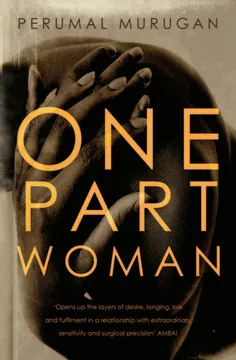
One Part Woman is a controversial yet powerful novel exploring the struggles of a childless couple in rural India. Readers praise Murugan's evocative portrayal of Tamil culture, vivid characters, and poetic prose. The book tackles sensitive topics like infertility, societal pressure, and religious customs. While some found the translation lacking, many appreciated its insights into rural life and gender dynamics. The novel's ending and treatment of cultural practices sparked debate, but overall, it is considered a thought-provoking work of Indian literature.
Characters
Kali
The guarded farmerKali is a hardworking farmer whose days revolve around his fields, cattle, and the barnyard he has built with care. Raised by his widowed mother, he learned self-reliance early and trusts practical labor more readily than people’s opinions. His marriage to Ponna began in love, and he remains deeply attached to her, but he is quiet where she is quick to answer. The village’s talk about their childlessness makes him feel exposed and diminishes his confidence as a husband. He dislikes the expectation that a man should prove himself through fatherhood, yet he also wants the standing and continuity that a child might bring. His tenderness and pride often pull him in opposite directions.
Ponna
The sharp-tongued wifePonna is Kali’s wife, a capable farmer and caretaker whose warmth extends to the couple’s animals and the children around them. She and Kali married for love, and her affection for him is vivid and playful. But years without a child make her the target of gossip, pity, and exclusion, and she refuses to accept those judgments quietly. Her sharp retorts defend her dignity, though they can also isolate her from neighbors and relatives. Ponna has exhausted herself trying remedies and rituals because motherhood matters to her personally and because society makes it a condition of belonging. She is observant, emotionally direct, and able to act decisively, even when the choices before her have been shaped by others.
Muthu
The childhood confidantMuthu is Ponna’s brother and Kali’s close friend since childhood. His familiarity with both spouses makes him a natural intermediary, and he wants Kali to regain the lively, sociable nature he remembers. He is resourceful, at ease in the countryside, and skilled at finding secluded places where he and his friends can escape work or family pressures. His loyalty to Ponna and affection for Kali can conflict with his judgment: he is willing to intervene when he believes the couple need help, even when they have not agreed on what help should mean.
Marayi
Kali's self-reliant motherMarayi raised Kali alone after her husband died, working the land and tending livestock so that her son would never be treated as lesser. Her pride in self-sufficiency is matched by a fierce concern for his future. She knows the pain of being judged as a widow and fears the same public scrutiny will consume Kali and Ponna. Her love expresses itself through work, food, advice, and schemes to secure the family line. She can be forceful, but her pressure comes from a belief that she is protecting her son from a harsher world.
Nallayi
Ponna's watchful motherNallayi is Ponna’s mother, a busy household manager who relies on her daughter’s labor and remains alert to the couple’s childlessness. She repeatedly calls Ponna back to chores, sometimes intruding on the young couple’s moments together. Her concern mixes affection with the community’s expectations, and she sees motherhood as a path to relief from Ponna’s isolation. She is practical rather than reflective, often pressing forward with remedies or plans instead of asking what they cost emotionally.
Nallupayyan
The unruly uncleNallupayyan is Kali’s unmarried uncle, a restless man who refuses to let village convention dictate his appearance, property, or daily habits. He has a talent for puncturing solemnity with irreverent humor and gives Kali a glimpse of life outside the demand for heirs. Yet his independence has limits: he enjoys freedom for himself while resisting the commitments others ask of him. His presence offers comfort to Ponna as well, since he treats her kindly and refuses to measure her worth by whether she has children.
Mandayan
The wandering toddy tapperMandayan is a skilled palm and toddy worker who has moved from village to village in search of a livelihood. He is practical, sociable, and proud of his craft, but his family’s survival depends on uncertain work and the goodwill of landowners. His household gives Kali a close view of a life shaped by children, labor, and limited resources. Mandayan’s easy hospitality contrasts with the precariousness of his position.
Katthayi
The slandered young motherKatthayi is Mandayan’s wife, a palm worker who once lived on Kali’s land. She is warm toward Ponna, who supported her when she was a new bride, but gossip about her beauty and customers eventually made her household unwelcome. Katthayi has learned how quickly a woman’s reputation can be damaged by insinuation. She is protective of her children and speaks plainly when a decision threatens their security.
Maran
The careful cart driverMaran is a Chakkiliya farm worker traveling with his wife and children to the festival. When Ponna’s father gives his family space in the cart, Maran drives the bullocks carefully and helps the journey continue. His brief presence brings caste boundaries and family tenderness into Ponna’s thoughts.
Plot Devices
The portia tree
A measure of shared timeKali plants the tree at his in-laws’ home soon after marrying Ponna. Its growth records the years passing and remains a physical link between their households. The shade also carries memories of their early intimacy, before the pressure to conceive overtook their marriage. As the story returns to the tree, its presence changes with Kali’s understanding of his relationship, making it both a domestic landmark and a witness to their hopes.
The fourteenth festival night
A crowded test of consentThe final night of the Tiruchengode festival draws a vast, anonymous crowd into the town. In local belief and custom, a woman seeking a child may treat an encounter with a man as a divine blessing. Kali’s mother presents this possibility as a way out of childlessness and public shame. The festival’s anonymity makes the custom possible, but it also conceals individual choices and disagreements. The night becomes the story’s central pressure point because people around the couple assign different meanings to the same act.
Pavatha and the barren rock
Rituals against uncertaintyPavatha’s open-air shrine and the dangerous ledge around the barren rock represent separate forms of fertility seeking. Kali and Ponna offer food and animal sacrifice at the shrine; Ponna later risks the cliffside crossing after hearing it may bring conception. These rituals do not establish a cause for the couple’s childlessness or guarantee a result. Their repeated use shows how desperation sends the couple through many competing explanations, each offering a temporary structure for hope.
The family land
Inheritance made intimateKali’s farm is his work, home, and source of security, but its future is also a subject of village speculation. Relatives consider inheritance, neighbors question why a childless couple saves money, and Ponna fears that others may claim what they have built. Land turns the idea of an heir into more than a private wish: it links social status, labor, family continuity, and the couple’s sense of whether their life will be recognized as complete.
Download PDF
Download EPUB
.epub digital book format is ideal for reading ebooks on phones, tablets, and e-readers.








