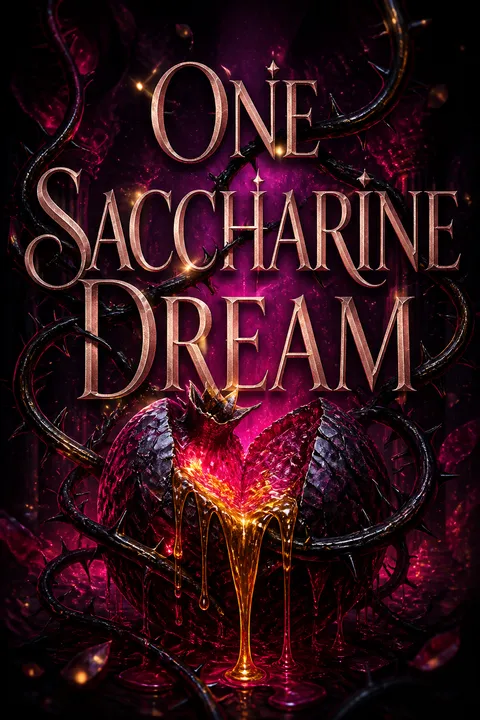


Plot Summary
Prologue
Persephone, Demeter’s sheltered daughter, slips from the harvest fields to her secret patch of daffodils, where a mysterious voice has praised her flowers for weeks. At the brook she meets Narcissus, a handsome stranger who seems curious about her magic and her thoughts, not merely her lineage.
Tired of suitors seeking an alliance with Demeter, Persephone chooses to trust him. His attention awakens desire and a taste of self-determination, though her mother has warned her that the streams lead toward danger. Persephone steps toward the stranger anyway, making her first private choice without asking permission.
The meeting frames desire as both a genuine discovery and a vulnerability that others can exploit. Persephone’s attraction is not simply rebellion against Demeter. Narcissus offers the rare experience of being noticed as a person, and that recognition gives her choice emotional force. Yet the scene also plants the danger in confusing attention with safety: his interest feels different from the political calculations surrounding her, but she has little experience with trust outside her mother’s control. Her step toward him is an assertion of agency, and the novel will repeatedly ask whether agency can survive when powerful people treat another person’s body as a negotiable asset.
Brooks Returns to Hel
After escaping the Asylum, Brooks reaches Anthemoessa, the island where Club Hel holds Xia captive. He expects his vast chaos to answer him, but finds his power strangely drained, leaving him and his darker half, Chaos, uncertain how much they can risk. He decides that rescuing Xia matters more than testing his limits.
At the club entrance, Brooks discovers that clothing customs have changed during his absence and fashions himself a shirt and trousers from nearby reality. When a harpy mocks him and a male patron punches him, Brooks must choose between a public fight and a quieter route inside. His return begins as a rescue mission, but his weakened power makes every step toward Xia dangerous.
Brooks’s first obstacle is not an enemy but the loss of the conditions that once made him invulnerable. His instinct remains cosmic and absolute, while the present world demands restraint, observation, and bodily vulnerability. The comic collision with ordinary club etiquette makes the change tangible: even clothing has become unfamiliar. More seriously, his depleted chaos converts devotion into a practical risk. He cannot simply reach for Xia; he must calculate what remains of himself. The scene establishes a central tension between godhood as limitless capacity and care as a commitment that must persist when capacity fails.
Nyx Enters the Underworld
Nyx, a poor seer from Avyssos, disguises herself in a stolen wig and dress to enter Club Hel and steal valuables for her starving community, especially the child Evangeline. She uses four wealthy patrons to pass security, then watches the elevator reveal the club’s hierarchy: gluttony below, a murderous fighting ring, and rich spectators betting above it.
On the Lust floor, Nyx has a vision of a drained woman and a terrifying man whose gaze reaches her across the vision. She finds a concealed portal into Envy, where patrons spy on the sexual rooms below. There, the club’s owner catches her. Nyx’s attempt to provide for home has brought her into the hands of a predator who knows she is out of place.
Nyx’s disguise makes visible the social economy of the club: wealth and male entitlement open doors that her own ingenuity must force. Her observations are not decorative world-building. They teach the reader how the system sorts bodies into spectators, fighters, and commodities. Her vision, meanwhile, interrupts her practical mission with knowledge she cannot control. Nyx is both an investigator and an involuntary witness, a combination that gives her limited power but exposes her to danger. Her strategy is not glamorous confidence. It is improvisation shaped by scarcity, with each risk measured against the people who cannot afford for her to fail.
Tor Seals the Bargain
The club owner identifies Nyx as a thief and threatens to sell her through a hidden auction. When she refuses his offer to spend the night with him, he uses Evangeline as leverage, revealing that the child is being held with his ally Epiales. He cuts Nyx’s palm, then makes her drink his blood, binding their lives together.
The owner identifies himself as Tor, the Lord of Nightmares, and explains that Chaos has escaped the Asylum. Tor needs Nyx to guide the primordial god to Erebos, where an unnamed ally can solve his problem. If Nyx fails, Tor threatens both Evangeline and Avyssos. Nyx leaves the penthouse with no real choice, bound to a man she despises and ordered to manipulate the being she has come to find.
The blood bond converts coercion into a continuing relationship: Tor does not merely threaten Nyx, he makes her own survival contingent on his. His leverage over Evangeline exploits Nyx’s strongest attachment, turning protective love into a tool of control. Yet Nyx’s refusal to accept Tor’s sexual bargain matters. Even within a forced arrangement, she draws a boundary, and Tor responds by changing the terms rather than respecting it. The scene therefore distinguishes survival choices from consent. Nyx’s apparent assignment to guide Chaos is not a freely chosen alliance; it is a constrained strategy whose moral cost will grow as she comes to care about the people she is ordered to deceive.
The Soul Eater Breaks Through
Outside the club, Brooks’s attempt to avoid attention collapses when the harpies attack him. Chaos urges violence, and Brooks gives the darker self enough room to seize Tobias and search his memories for the club’s layout. Brooks extracts the harpy’s chaos, leaving him dead, then drains the others who rush in.
The stolen power lets Brooks move through the club’s shadows and bypass its ordinary routes. As he climbs, he hears the patrons’ fear and recognizes how much his old reputation has faded. He reaches the upper levels just as Xia’s power surges through the building. The shortcut has helped him find her, but each death makes his return more like the feared Soul Eater than the man Xia once knew.
Brooks’s violence is presented as both tactical and morally consequential. He does not kill only because he is angry; he needs power, information, and speed. That practical logic is precisely what makes the act dangerous. The more he treats souls as fuel, the easier it becomes to justify the next extraction as necessary. His fading reputation also unsettles him: the people he created no longer recognize the authority that once defined his place in their world. The scene links his external weakness to an internal temptation. Every act that restores his power risks strengthening the part of him that regards other lives as usable material.
Xia Shatters Her Prison
Tor returns to Xia’s bathroom and attacks her, striking her and forcing her beneath the water. When she realizes he intends to kill her, Xia stops suppressing the fury she has carried for years. Her chaos repairs her body as she gives the monster inside her room to act. Xia’s scream calls the sea against Club Hel’s glass walls, and the building begins to fracture.
Brooks races toward her through collapsing corridors and finds the club’s patrons dead, their chaos drained by her Song. He also kills frightened survivors trapped behind a viewing wall to replenish his failing power. At the island’s shore, Brooks reaches Xia as the storm breaks. She collapses in his arms, unable to control the force she has released.
Xia’s escape from helplessness is inseparable from a frightening loss of control. She does not become powerful by becoming untouched by trauma; she becomes powerful by ceasing to numb the anger that trauma produced. Yet the consequence is catastrophic, and Brooks’s response compounds it. Her Song and his soul-taking leave them joined in a scene where rescue and devastation cannot be cleanly separated. The novel resists a simple empowerment fantasy: reclaiming force can be necessary and still carry a cost. Xia’s next challenge is not to deny the monster, but to recognize it as part of herself without allowing its fury to decide every action.
Nyx Saves Tor’s Heart
On the blood-soaked beach, Nyx realizes the blood bond is killing her because Tor lies nearby with his chest torn open. She finds his still-beating heart in his hand and puts it back inside him, even though she knows he has used her and threatened Evangeline. Tor revives before Brooks can discover what she has done.
Nyx then tells Brooks that she knows where Xia is and offers to take him somewhere safe. Brooks warns that he will kill her if she betrays him, but accepts her hand. Nyx leads him and the unconscious Xia through chaos to Avyssos. Her decision preserves her own life and keeps Tor’s bargain active, while also placing the god she was meant to manipulate among the people she is trying to protect.
Nyx’s choice to revive Tor is not forgiveness. It is the brutal arithmetic of a bond that makes his death hers, layered over her responsibility to Evangeline. The scene refuses the comforting idea that moral action is always available to people under coercion. Nyx must preserve the person harming her because the alternative is immediate death and the possible destruction of her home. Her subsequent decision to guide Brooks to Avyssos is equally strategic: she creates a chance to protect Xia and her village while concealing the larger bargain. Nyx survives through divided loyalties, not because she has discovered a clean way out.
Avyssos Challenges Its God
In Avyssos, Brooks sees starving families, crumbling homes, and a child whose hunger makes the village’s prayers newly concrete. Nyx explains that the people once trusted the sacred ground to protect them, but the old protections and their connection to chaos are failing.
She also tells Brooks that priests planned to sacrifice her at his altar, and that she refused to die for a god who never answered. Brooks cannot dismiss her account, especially after learning the Olympians may be trying to control the nearby source of chaos.
Xia recovers in his shadow-protected bed, then begins helping villagers with water and laundry. A woman named Ruby welcomes her, while Nyx remains guarded. Brooks has reached refuge, but Avyssos makes his long absence impossible to treat as neutral.
Avyssos turns divine neglect from an abstract failure into material conditions: empty meals, unsafe water, and religious practice organized around a promised rescue. Nyx’s anger is not mere hostility toward Brooks. It is a political judgment formed by watching faith become another resource powerful people can exploit. Her refusal of sacrifice complicates the idea that devotion is virtuous when institutions demand the vulnerable pay for collective hope. Xia’s practical help offers a contrasting form of care, one measured in clean water and labor rather than promises. The village forces Brooks to confront the human scale of a creation he once regarded from too great a distance.
Hades Offers Persephone Shelter
After Narcissus leaves Persephone shattered and near death, Hades finds her and carries her to his palace in the Underworld. He gives her healing tea sweetened with pomegranate and stays near while she regains the ability to move.
Persephone gradually trusts him, accepting his protection and tending the sacred Asphodel Meadow, where souls are separated from chaos and the cycle of life continues. Hades makes the meadow her responsibility and shares knowledge that he keeps from the Olympians.
But Persephone’s body begins to weaken without sunlight, and Hades controls her routines, food, and access to the world beyond his realm. What first looks like sanctuary becomes a life in which his generosity and his authority are difficult to separate.
Hades’s care is persuasive because it answers needs Persephone genuinely has: safety after violence, warmth, knowledge, and a place to use her gift. The meadow gives her meaningful work, but its sacred importance also binds her more closely to the man who controls access to it. Her dependence develops through kindness rather than obvious force, making the relationship harder to assess than a straightforward imprisonment. The body’s decline without sunlight acts as evidence she cannot easily ignore, while Hades’s reassuring explanations teach her to doubt her own judgment. The scene explores how care can become a governing system when one person alone controls both comfort and reality.
Tor Returns to Avyssos
Tor appears in Nyx’s home and torments Evangeline with a nightmare to punish Nyx for not delivering Chaos. He gives Nyx an invitation to Dionysus’s Freakshow, promising food and protection for Avyssos if she brings Brooks there. Nyx rejects the first terms, but Tor changes the bargain and makes the child, supplies, and safety conditional on her cooperation.
Before leaving, he tells Nyx the invitation will open a portal when the time is right. Nyx gives Evangeline food and a badly sewn chimera toy, then tells her she will return, though she doubts it. She asks Andreas to help care for the child and village. Her farewell makes the mission more than a con: Nyx leaves behind the life she is trying to save.
Tor’s return narrows Nyx’s options by converting a general threat into a domestic one. Evangeline’s nightmare makes the cost immediate and intimate, while the revised bargain offers the village precisely what Nyx cannot secure alone. Her handmade toy and concealed farewell reveal that she expects the mission may be fatal, even as she refuses to burden the child with that knowledge. The scene also shows the emotional labor of leadership: Nyx must maintain Evangeline’s hope while privately preparing for the possibility of not coming back. Her apparent betrayal of Brooks is rooted in the same protective instinct that drove her into Club Hel.
Blood Reveals the Invitation
When Nyx collapses into a vision, she sees Tor kneeling before a cruel woman who calls herself Mel and threatens him while arranging the Freakshow. Later, the invitation’s hidden writing appears when Nyx smears it with blood.
Its signature is Dr. Kore, the physician who tortured Brooks in the Asylum. Brooks recognizes the name and suffers a flashback so severe that Xia must ground him with her presence. The revelation changes the Freakshow from a vague trap into the place where Brooks’s tormentor expects to confront him.
Nyx then offers to guide the pair there, explaining that someone has threatened her family. Brooks agrees, but the three now approach the invitation carrying different motives, incomplete information, and no reliable trust between them.
Nyx’s visions transform her from a clever scavenger into a source of intelligence, but their involuntary nature means knowledge arrives as an assault. Blood makes the invitation legible, tying the secret to the bodily cost that governs so many relationships in the novel. The name Dr. Kore collapses distance between Brooks’s remembered suffering and the present mission. His panic is not a weakness to be argued away; it is evidence that the Asylum’s violence remains active in his nervous system. The party consequently becomes more than a destination. It is where Nyx’s coerced bargain, Brooks’s trauma, and Mel’s strategy are likely to collide.
Persephone Becomes Melinoe
A year in the Underworld exposes the pattern beneath Hades’s tenderness. He has secretly fed Persephone pomegranate, the fruit of the dead, and used Narcissus to arrange her transfer below. During their anniversary, wine and coercion lead Hades to hurt her; the poison in her body kills her, and he reveals that he made her dependent on his heart so she would remain with him.
Persephone attacks, tears out that heart, and takes its power into herself. She replaces her ruined organ with his still-beating one, then names her surviving self Melinoe and gives her former body the name Rue. Her transformation turns a sheltered daughter and a controlled partner into a strategist determined to punish those who shaped her fate.
Persephone’s transformation does not erase her earlier choices; it reveals how systematically those choices were manipulated. Narcissus exploited her first act of sexual independence, while Hades used rescue, nourishment, and romance to make captivity feel like refuge. The pomegranate links intimacy to death, so that the very food associated with care becomes the instrument that binds her. When Persephone takes Hades’s heart, she reverses the structure of dependence rather than simply escaping it. Melinoe’s power is born from the recognition that benevolence can conceal possession. Her revenge may reproduce the coercion she suffered, which makes her emergence morally charged rather than uncomplicatedly triumphant.
The Altar Costs Nyx
Nyx agrees to guide Brooks and Xia to Dion, but withholds the location of the village’s hidden portal. Chaos responds by forcing his way into her memories and finding the shrine beneath the woods. Brooks understands what his darker half has done only after Nyx is left shaken and crying.
Xia condemns the violation and tells Brooks that protecting her cannot mean deciding for everyone else. She insists on standing beside him, not being carried as a helpless charge.
Brooks admits that he will use violence to protect her, even if the world suffers for it, and Xia recognizes the danger in that promise. Despite the breach, they prepare to leave together. Their relationship survives, but only after Xia states the boundaries Brooks must learn to respect.
The mind-reading incident repeats the Asylum’s central violence in a new form: a powerful being treats another person’s inner life as territory he may enter for a necessary result. Brooks’s intention to protect does not erase the violation, and Xia refuses to let romance make it acceptable. Her boundary is an act of self-definition, not a threat to the relationship. The tension between Brooks and Chaos also becomes legible as a conflict between emotional attachment and instrumental logic, though neither can fully separate from the other. Their decision to continue together is therefore conditional, built on Xia’s insistence that partnership requires agency rather than benevolent control.
Dion Baits the Siren
The portal brings Brooks, Xia, and Nyx to Dion, a neon city built around sexual spectacle and enslaved labor. Nyx guides them through the streets while warning them not to stare at the attractions. In an alley, a deal with an unseen presence requires blood, and Xia’s Siren responds with possessive hunger. She bites Brooks and drains him until Chaos intervenes, leaving him weakened.
Xia is horrified by how close she came to killing him, but she refuses to call on her chaos again. When Nyx later needles her about being sheltered, the Siren seizes control and threatens to pull the blood from Nyx’s body. Xia recoils from her own cruelty, then confronts the truth that her suppressed darkness is part of her, not an outside creature.
Dion externalizes the predatory dynamics that the protagonists have been trying to escape. Its polished spectacle depends on hidden coercion, and the trio’s route through it makes looking itself dangerous. Xia’s attack on Brooks is especially destabilizing because desire and violence arrive through the same surge of power. Her Siren is not merely an enemy inside her, but a repository for rage that Xia has tried to disown. Nyx’s provocation exposes how quickly trauma can reproduce itself between people who might otherwise become allies. Xia’s path forward requires neither submission to the Siren nor renewed repression, but responsibility for integrating the force she has kept outside her sense of self.
Xia Claims Her Darkness
In the alley, Xia finally listens to the Siren describe the anger she has carried for years on Xia’s behalf. Xia recognizes that she created the monster by refusing to feel rage, grief, and resentment, then blaming it for existing. She accepts the Siren as part of herself and reaches a fragile understanding with Nyx after the confrontation.
Brooks, meanwhile, withdraws from Xia when she demands space, but Chaos remains with her so she is not alone. The three reach a rundown tavern and take rooms. Xia refuses to use her Song to secure comfort, still frightened by the bloodshed it caused. Her choice is not a completed cure; it is the first conscious step toward wielding her power without denying the person who bears it.
Integration is framed as a negotiated relationship, not the destruction of a frightening inner self. Xia’s Siren names the cost of being made to absorb emotions that Xia could not safely express. Their reconciliation shifts the question from whether Xia is good or monstrous to how she will act with all her capacities acknowledged. Nyx’s willingness to embrace Xia after being threatened creates a tentative bond grounded in honest disclosure rather than idealization. Brooks’s withdrawal also matters: care sometimes means not pursuing someone who asks for room. Yet Xia remains afraid of using her Song, showing that insight alone cannot undo the consequences or the terror of power.
Chaos Empties the Tavern
After Xia tells Brooks to leave, Chaos takes control of their shared body and searches for enough chaos to survive the coming confrontation. He enters the tavern’s rooms and drains sleeping patrons one by one, tearing their souls from their bodies.
He then kills everyone downstairs, reasoning that the Freakshow will soon demand power he does not possess. The massacre restores some of his strength, but it annihilates the inn’s population and leaves a trail that cannot be mistaken for ordinary violence.
When Chaos returns, Xia is gone. Ruby has led her away after warning that Brooks killed the villagers of Avyssos. Brooks wakes Nyx and demands to know where Xia went, while the deaths make it harder to separate his protective love from Chaos’s capacity for mass destruction.
The massacre is the clearest rupture between Brooks’s self-understanding and the consequences of his power. Chaos acts from a coherent calculation: replenish strength now to defend Xia and face the coming threat. But the dead are not abstractions to the people around him, and his reasoning reproduces the logic of every authority that treats the vulnerable as expendable. Xia’s absence turns the violence into a relational crisis as well as a moral one. The book does not allow affection to serve as an absolution. Brooks may love Xia, but the bodies in the tavern demand that he confront what protection means when it overrides everyone else’s right to live.
Ruby Leads Xia Away
Ruby wakes Xia and claims Brooks slaughtered Avyssos, then leads her from the bloodied inn before Brooks can stop them. Xia sees the dead patrons and cannot dismiss the possibility that the accusation is true.
When Chaos finds Nyx, her involuntary vision shows Ruby, now called Rue, beside the unconscious Xia in a Freakshow tent. Tor is there too, discussing the plan with Rue, who warns him that Melinoe expects results. Nyx also sees Melinoe kill Tor in the vision, and feels the blood bond threaten her life as he dies.
Chaos realizes the vision has shown him where Xia has been taken, but the final words suggest Brooks has receded behind the primordial god. He heads toward the tent with the danger and the identity of his companion unresolved.
The ending converts the trio’s fragile alliances into a maze of competing versions of rescue. Ruby claims to protect Xia from Brooks, yet Nyx’s vision places her inside the plan that draws Xia toward Melinoe. Tor’s apparent death is not liberation for Nyx, because their blood bond makes his fate hers. The vision gives Chaos a route forward but offers no reassurance about who remains in control of Brooks’s body. By ending on pursuit rather than resolution, the book preserves the central ethical uncertainty: the people Xia needs protection from may include the very person who loves her most. Knowledge arrives, but trust does not.
Epilogue
On Erebos, Melinoe decides she can no longer wait for her plans to unfold through other people. She enters Asphodel Meadow and tears the life-bearing stalks from the ground, drawing their chaos into herself until the field lies ruined. The stolen power carries her to the Fates.
Melinoe kills Atropos and Lachesis, then cuts Clotho free from the tree that sustains the cycle. With the keepers of life and death struck down, Melinoe prepares to return to the living world and make her next move against Brooks, Xia, and the powers that once controlled her.
The epilogue expands a personal revenge story into a threat against the system that governs existence. Melinoe’s grievance is rooted in real betrayal, but her method attacks the machinery that sustains every soul, making the scale of her response impossible to contain within private justice. The Fates’ deaths are not merely a victory over individual enemies. They put the cycle of life, death, and return at risk. Her actions echo the novel’s recurring danger: a person who was once powerless can seize power and reproduce the same disregard for others that injured her. The cliffhanger leaves readers facing a world where both divine neglect and retaliatory control threaten ordinary lives.
Analysis
One Saccharine Dream repeatedly tests the difference between protection and possession. Brooks loves Xia, but his fear encourages him to override her boundaries; Hades shelters Persephone while arranging her dependence; Tor binds Nyx to himself through a threat against Evangeline. Each relationship offers a different vocabulary for control, from tenderness to contract to terror. The novel’s romance does not dissolve this problem. It makes the problem more immediate, because affection can give coercive behavior the appearance of care.
The characters’ inner darkness is not treated as a simple moral stain. Xia’s Siren gathers the anger she has been forced to suppress, and her attempt to reject that part of herself makes it more dangerous. Brooks’s Chaos similarly embodies power without empathy, while his humanlike self struggles to remain accountable to lives he once considered distant. Their integration is not achieved by declaring darkness good. It requires recognizing what it contains and choosing what to do with it. Nyx’s suspicion, meanwhile, is a survival skill that protects her community but makes trust costly.
The mythic machinery gives these psychological conflicts material stakes. Souls carry chaos; the Fates maintain its circulation; sacred ground becomes a contested source of power. When Brooks drains people to recover strength, intimate violence and cosmic imbalance become the same act. Melinoe’s final assault on the Fates threatens the entire cycle, extending her personal history of betrayal into a universal crisis.
The book’s most difficult insight is that being wronged does not automatically make a person just. Nyx’s compromises, Xia’s rage, Brooks’s vengeance, and Melinoe’s rebellion all arise from comprehensible wounds, yet each can injure others. The story therefore offers no easy division between monster and victim. It asks whether characters can claim their power without repeating the logic that once made them powerless, and ends before any of them has fully answered.
Characters
Brooks
The wounded creatorBrooks is the humanlike self that emerged from the primordial Chaos after a long captivity in the Asylum. He is curious, lonely, and capable of tenderness, especially toward Xia, whose presence anchors him to a world he once observed from a distance. His unfamiliarity with ordinary life makes him sincere but often socially clumsy, while his capacity for violence gives his affection a dangerous edge. Brooks wants to protect Xia and repair the damaged world, but he must learn that caring for someone does not grant him authority over their choices. His struggle is to remain emotionally present without allowing fear to turn protection into possession.
Chaos
The primordial forceChaos is Brooks’s darker, more ancient aspect: the creator and source of the power woven into every soul. He values survival, balance, and decisive action, and sees sentiment as a liability when danger is near. His voice and influence can take control of their shared body, making him both Brooks’s protector and his most unsettling capacity. Chaos is drawn to Xia’s strength and darkness, but his possessiveness makes him prone to treating threats as problems to eliminate. The divide between him and Brooks dramatizes a conflict between feeling and instrumental reasoning, though both are parts of one being and neither can simply be discarded.
Xia
The sea-born SirenXia is the last Siren, a powerful wielder of water whose Song can turn her chaos into a devastating force. Years of captivity have taught her to hide her anger and survive by becoming quiet, but the rage she suppresses is inseparable from her ability to defend herself. Her bond with Brooks offers tenderness and recognition, yet she insists that love cannot replace her independence. Xia is compassionate and often quick to protect others, but she must confront the danger of calling her own needs monstrous. Her deepest struggle is to acknowledge every part of herself and choose how to use her power, rather than letting fear or another person make that choice for her.
Nyx
The village’s scrappy seerNyx is a resourceful, low-powered seer who survives by stealing from the wealthy and bringing supplies to Avyssos. Her sarcasm and suspicion protect a fierce sense of responsibility, especially toward Evangeline and the people who depend on her. Because her visions arrive without her control, knowledge is both her talent and a source of vulnerability. Nyx is willing to lie, bargain, and take dangerous risks when her community is threatened, but she is not indifferent to the people those choices may harm. She distrusts easy promises and resists being treated as weak. Her challenge is to let others matter without surrendering the hard-won agency that has kept her alive.
Tor
The nightmare lordTor, also known as Phobetor and the Lord of Nightmares, runs Club Hel and wields terror as both entertainment and leverage. He is calculating, sexually provocative, and skilled at finding the attachment that will make a threat effective. His interest in Nyx is inseparable from the advantage he believes he can gain through her, while his dealings with Melinoe leave him both powerful and vulnerable. Tor treats cruelty as a form of amusement, yet his dependence on stronger forces complicates his self-image as master of his domain. He represents a system in which people are made to perform, suffer, or bargain for the pleasure of those with power.
Persephone
Demeter’s sheltered daughterPersephone is Demeter’s daughter, a goddess whose gift is the growth of flowers. Sheltered from danger and surrounded by suitors seeking her family’s influence, she longs to make choices that belong to her alone. Her tenderness and curiosity are real strengths, but her inexperience makes attention from a seemingly attentive stranger difficult to judge. Persephone is drawn to beauty, simplicity, and the possibility of being known beyond her lineage. Her story explores the difference between taking a risk by choice and having another person exploit that choice. She must learn to see herself as more than a dutiful daughter or the object of someone else’s plan.
Melinoe
The underworld strategistMelinoe is a formidable figure whose plans reach across the Underworld, Club Hel, and the Freakshow. She studies people as pieces in a larger contest and uses fear, bargains, and delegated tasks to pursue her aims. Her control is sharpened by a history of injury and betrayal, though she responds to that history by seeking power rather than reconciliation. Melinoe’s intelligence makes her dangerous precisely because she can turn other characters’ vulnerabilities into mechanisms of influence. She is not merely an opponent with a plan; she embodies the possibility that resistance to oppression can become another form of domination.
Hades
The exiled Underworld kingHades rules the Underworld and guards its souls, rivers, and the cycle that returns chaos to its source. He is intelligent, composed, and attentive in ways that make him appear safer than the Olympians who speak about him. He values strategy and secrecy, and he shares knowledge selectively, especially when it might challenge the power he has built. His relationship with Persephone is shaped by a mixture of care and control, leaving her to decide whether his kindness is an opening or a boundary around her life. Hades represents the seductive danger of authority that presents itself as protection.
Evangeline
Nyx’s beloved childEvangeline is a young child in Avyssos who gives Nyx a personal reason to keep returning home. Her affection, laughter, and trust make the village’s hardship more than a political abstraction. She depends on Nyx for food, comfort, and reassurance, while her mother works to keep her safe. Evangeline’s innocence is also a vulnerability that Tor exploits, making her a source of emotional leverage in Nyx’s choices.
Ruby
The helpful strangerRuby appears in Avyssos as a warm, capable newcomer who befriends Xia and offers practical ideas for improving the village. She helps with laundry, understands how to use the local resources, and speaks openly about Nyx’s guarded leadership. Her kindness gives Xia a chance to imagine friendship beyond Brooks. Ruby’s willingness to guide Xia makes her presence feel reassuring, though the novel also encourages the reader to notice how quickly trust can be shaped by circumstance.
Rue
A hidden piece on the boardRue is a figure connected to Melinoe and involved in the plan surrounding Xia and the Freakshow. She has access to the living world and can approach people under a more ordinary identity. Her role depends on observation, persuasion, and following instructions, rather than open displays of power. Rue’s connection to Melinoe makes her presence difficult to interpret, especially when her apparent kindness becomes part of a larger strategy.
Narcissus
The beautiful first betrayerNarcissus is the stranger who first draws Persephone away from Demeter’s protection. He appears attentive to her personality and flowers, making her feel recognized rather than treated as an alliance. His fascination with his own reflection and beauty governs his desires, and he sees other people through the uses they can serve. Narcissus represents the danger of mistaking intimate attention for respect.
Dr. Kore
Brooks’s Asylum tormentorDr. Kore is the physician associated with Brooks’s imprisonment and torture in the Asylum. Her methods leave him with severe trauma that resurfaces when he encounters her name again. She is remembered less as a healer than as an authority who uses medical access to control and injure. Her anticipated presence gives Brooks’s journey to the Freakshow a personal threat beyond the larger crisis of chaos.
Lytta
Brooks’s lost friendLytta was Brooks’s close friend, a goddess whose suffering and sacrifice changed how he understands the world he created. He remembers her as someone who endured great pain yet retained a sense of purpose. Her absence shapes his desire to avenge those who harmed her and to repair the damage that has spread through creation. Lytta remains a moral presence in his mind, though Brooks must decide how to honor her without turning vengeance into another excuse for cruelty.
Demeter
The protective harvest goddessDemeter is Persephone’s mother and the goddess of harvest. She protects her daughter from suitors and warns her away from the dangerous streams, but her protection also limits Persephone’s freedom to choose. Her grief over her daughter’s loss affects the fertility of the land, linking private sorrow to widespread hardship. Demeter’s care is sincere, yet her authority reflects the novel’s recurring question about when protection becomes control.
Adriana
Evangeline’s devoted motherAdriana is Evangeline’s mother and one of the adults trying to keep a family alive in Avyssos. She welcomes Nyx’s help and shares the work of protecting her daughter amid hunger and scarcity. Her presence shows the ordinary family bonds Nyx’s choices are meant to preserve.
Andreas
Avyssos’s firewood splitterAndreas works to gather and split firewood for Avyssos. He voices the villagers’ hope that Nyx will return with a solution, adding the weight of communal dependence to her departure. His faith in her makes her responsibility personal rather than symbolic.
Dionysus
The pleasure godDionysus is the Olympian associated with pleasure and the Freakshow, whose city of Dion celebrates intoxication, spectacle, and excess. His influence shapes the club culture and the city’s brutal economy, even when he is not present in the central action.
Atropos
The thread-cutting FateAtropos is one of the three Fates, responsible for cutting the thread of life. Her role links individual mortality to the cosmic order maintained in the Underworld.
Lachesis
The life-measuring FateLachesis is one of the three Fates and measures the span of a life. She belongs to the system that determines how souls pass through the cycle of life, death, and return.
Clotho
The life-spinning FateClotho is the Fate who spins the thread of life and is bound to the great tree of chaos. Her connection to the tree places her at the beginning of the cycle that Hades guards.
Plot Devices
The chaos cycle
Life’s power supplyEvery living being carries a portion of chaos that gives the soul life. In the Underworld, souls pass through judgment while their chaos returns to the great source, where it can sustain new life. Brooks’s ability to remove chaos makes him both creator and Soul Eater, and the failing flow explains why his power is diminished. The Olympians’ interest in sacred sites threatens to let them seize power they cannot safely contain. The cycle ties the intimate danger of a stolen soul to the stability of the universe, making each act of extraction both a personal death and a cosmic imbalance.
Nyx’s visions
Uncontrolled warning systemNyx’s seer ability pulls her into scenes she cannot choose or reliably control. The visions expose events beyond her immediate reach, including the dead woman outside Club Hel and later the schemes involving Tor, Ruby, and Melinoe. Her body remains vulnerable while her awareness is elsewhere, and the visions can feel increasingly physical. They provide crucial information, but never a complete explanation. As a result, Nyx must interpret what she witnesses and persuade others to act on knowledge that may look like a hallucination.
The blood bond
Coercion made mutualTor binds Nyx to him through a forced exchange of blood, linking their lives so that his death can endanger hers. The bond allows Tor to compel Nyx without keeping her physically captive, because his survival becomes part of her own. It also shapes her actions after his apparent defeat: she must protect him even though she has every reason to hate him. Blood therefore functions as more than a magical contract. It makes intimacy, threat, and bodily consequence inseparable, reflecting the novel’s wider concern with relationships imposed through power.
The Siren Song
Power drawn through bloodXia’s Song connects her water affinity to the blood and chaos inside living beings. When she releases it, she can summon the sea and drain those around her, but the force is difficult to control while she suppresses the anger bound up in it. The Song becomes the means of her escape from Club Hel and later threatens the people she loves. Xia’s relationship with the Siren within her determines whether the power remains a denied, destructive force or something she can acknowledge and govern.
The blood-written invite
A secret route to ErebosThe invitation to Dionysus’s Freakshow appears to be an ordinary message until blood reveals its hidden writing and the name Dr. Kore. It is also tied to a portal that opens when conditions are right, drawing Brooks, Xia, and Nyx toward Dion and the dangerous gathering on Erebos. The invitation links Nyx’s coercive bargain with Tor to Brooks’s personal history in the Asylum. Because its message is concealed, the characters cannot know its full purpose when they first accept it.
Download PDF
Download EPUB
.epub digital book format is ideal for reading ebooks on phones, tablets, and e-readers.








