

Key Takeaways
Choose Socrates' inquiry over Tolstoy's escape from the why question
Success did not save Tolstoy. At about fifty, after achieving literary fame, wealth, and family life, Leo Tolstoy could no longer explain why any of it mattered. He feared that examining the question would destroy his life. Socrates faced the same uncertainty and chose the opposite path: make inquiry the work of a life, rather than a crisis to postpone. Callard presents Socrates not just as a thinker, but as an example others can imitate: a person willing to keep asking what their actions are for.
A philosophical life is practical. It does not mean becoming a professional philosopher or abandoning ordinary commitments. It means refusing to treat the most important questions as distractions from real life. Socrates’ wager is that inquiry can help make a life intelligible, rather than merely expose its emptiness.
The contrast is compelling because it refuses to equate existential questioning with a symptom of success gone wrong. Still, philosophical reflection is not a clinical treatment for depression, and Tolstoy’s crisis should not be romanticized as a necessary awakening. The useful distinction is between questioning that becomes isolated rumination and inquiry that develops through sustained exchange. The book’s invitation is most persuasive when read as a case for intellectual companionship, not as a demand that people face profound questions without support.
Reopen beliefs that are steering you before calling them knowledge
Some questions arrive pre-answered. Callard calls them “untimely questions ”: questions that matter to a person, but whose answers are already guiding that person’s actions. A parent may be acting on assumptions about good parenting while struggling to ask what good parenting is. A person pursuing prestige may find it hard to investigate whether prestige deserves that pursuit. The answer is in use, so the question does not feel open.
Unexamined answers wobble. Socrates finds this instability in people who confidently defend a choice, then reverse themselves when circumstances change. Tolstoy’s character Pierre talks himself into breaking a promise by dressing desire up as reasoning. Callard calls beliefs that organize action “load-bearing beliefs.” Inquiry matters because an answer reached and tested through argument can become more stable than one simply inherited or assumed.
This account connects naturally to motivated reasoning: people often scrutinize inconvenient claims more intensely than beliefs that protect identity, plans, or relationships. It also explains why exhortations to “be objective” can feel hollow when a belief supports someone’s whole way of acting. Yet instability alone does not prove a belief is false; people can revise sound judgments when emotions or incentives shift. The diagnostic value lies in noticing reversals and asking whether the reasons changed, not simply treating consistency as truth.
Treat impulse and belonging as fallible commands, not final authorities
Two voices offer ready answers. “Savage commands” is Callard’s term for unexamined directives arising from bodily needs and social belonging. Hunger urges immediate comfort; a community can demand loyalty, approval, and retaliation. Neither source is always wrong, but both can reverse themselves. A pleasure that seemed worth pursuing can bring regret. A desire to defend one’s group can become revenge against someone once treated as kin.
Socrates calls the failure ignorance. He rejects the ordinary explanation that people knowingly choose what they judge worse. In his account, a person who overeats or takes revenge has misjudged what is good, rather than acted against settled knowledge. This is Socratic intellectualism: the view that genuine knowledge of what is good would guide action. Callard contrasts it with ethical systems that refine bodily pleasure, social duty, or moral character into rules for living.
The account usefully reframes some failures of self-control as conflicts among changing judgments, rather than a mysterious contest between reason and willpower. It also exposes how moral language can make retaliation sound principled. But Socrates’ denial of knowingly acting against better judgment is more controversial than the practical diagnosis around it. Habit, addiction, fear, and coercion can shape behavior without being reducible to a mistaken belief. The idea remains useful as a prompt to inspect what someone actually values in the moment, while leaving room for forces that knowledge alone may not overcome.
Make difficult thinking a shared practice of challenge and response
One mind cannot easily inspect itself. Callard’s answer is Socratic conversation: one person offers an answer, while another tests it with questions and objections. This “inquisitive refutation” is not a debate aimed at victory. It is a division of intellectual labor, where one participant tries to state what seems true and the other looks for what fails. If either is persuaded, both gain a better answer.
Conversation exposes blind spots. In Plato’s Alcibiades, the ambitious young man comes to acknowledge that he believes he understands justice while failing to understand it. Callard relates this to Moore’s paradox, the difficulty of sincerely recognizing that one currently believes something false. A second person can act as a mirror, making that mismatch visible. Socratic exchange also addresses a tension between seeking truth, which requires forming beliefs, and avoiding error, which encourages withholding belief.
The proposal resembles modern practices such as peer review and adversarial collaboration, where competing scrutiny can reveal errors that solitary reflection misses. Its distinctive claim is that disagreement need not be zero-sum: correction can benefit the person corrected. That requires more than politeness, though. Differences in status, fear of social punishment, or unequal speaking power can make a conversation formally open but practically unsafe. The method is strongest when participants can challenge claims without turning criticism into a verdict on one another’s worth.
Ask what a thing is, not only how to achieve a preset goal
A question is not always a problem. A problem has a practical target and recognizable ways to tell whether it is solved. A genuine question asks what something is, without a ready-made procedure or agreed finish line. In Plato’s Meno, Meno argues that a person cannot search for an answer they do not already know. Callard treats this as a challenge to philosophical inquiry, not to ordinary tasks such as finding lost keys.
The slave’s geometry offers a model. Asked how to make a square with twice the area of a smaller square, Meno’s slave first proposes a side twice as long, then one and a half times as long. Both fail. Through Socrates’ questions, he sees that the diagonal produces the doubled area. He reaches an answer without having known the procedure in advance. The example suggests that mistakes can become part of inquiry, rather than proof that inquiry cannot begin.
Turning open questions into measurable problems is one of science’s great strengths: it makes claims testable and methods shareable. The risk appears when the proxy replaces the question. A measure of surgical complications can help select a surgeon, but it does not by itself explain what makes someone a good surgeon. This distinction does not make measurement suspect; it clarifies its limits. Philosophical questions are especially valuable when the goals and standards used to measure success are themselves in dispute.
Turn political disagreement back into inquiry before it becomes a contest
Disagreement can be converted into combat. Callard defines “politicization” as moving a dispute from argument into a contest where one side’s gain counts as the other’s loss. In Homer’s Iliad, Agamemnon and Achilles argue over honor and compensation; the quarrel becomes a struggle for status, not simply an attempt to settle what is fair. Callard argues that political fighting often imitates argument without actually proving an idea right or wrong.
Speech needs more than permission. Legal protections matter, but free speech also depends on people being able to exchange ideas without being forced to flatter an audience or win a public contest. Socrates rejects persuasion and debate as sufficient standards, since an audience can favor a persuasive speaker who is mistaken. For Callard, speech becomes genuinely free when people can question one another in pursuit of truth, with neither side’s popularity deciding the result.
The distinction between disagreement and politicization helps explain why conversations about climate, gender, or law can feel like tests of group loyalty rather than attempts to learn. It also points toward deliberative democracy, where citizens exchange reasons instead of merely counting opposing interests. A limitation is crucial: political conflicts often concern who bears material costs, not just whose ideas prevail. Inquiry can clarify those stakes, but it cannot substitute for institutions, rights, or collective action that protect people while disagreements remain unresolved.
Treat equality as reciprocal standing to change one another's minds
Equality is more than matching shares. Callard argues that equal portions, titles, or polite gestures can signal respect, but do not guarantee that people regard one another as equals. In a story from her school years, her younger friend’s sister suggests using sugar already in a bowl when the older girls run short. The girls listen, act on her idea, and recognize her as someone capable of directing their thinking. Being heard gives her a more substantial form of inclusion than a token gesture could.
Conversation can make equality real. Socratic equality means treating another person as a mind with a claim on the truth, even when that person disagrees. Each participant can teach, challenge, and be corrected. Callard connects this to freedom of speech: people are freer when their words can genuinely shape inquiry, rather than merely perform respect or signal allegiance.
This account captures why recognition can matter beyond distributing goods: people want not only fair treatment, but evidence that their judgment counts. It complements political theories focused on legal rights and economic resources by explaining the interpersonal experience of respect. But conversational recognition cannot repair discrimination or compensate for unequal access to power. The stronger interpretation is additive: equal standing in dialogue is a valuable practice, while material equality and protection from exclusion remain necessary conditions for many people to participate in it.
Let love aim at shared growth rather than possession of a person
Attachment and admiration can pull apart. In Plato’s Symposium, Aristophanes imagines lovers longing to be fused into a single being. Socrates objects that closeness alone is not enough: love also needs a connection to what is good. Yet love based only on a person’s attractive qualities seems unstable, since someone more attractive might appear or those qualities might fade.
Socrates redirects love toward shared inquiry. Callard presents Socratic love as a pursuit of the good through philosophical conversation. The point is not that sex, marriage, monogamy, or children are wrong; none is sufficient to define love. Alcibiades wants Socrates’ exclusive affection and offers intimacy in exchange for wisdom. Socrates instead invites him to consider what is best together. The episode makes the difference concrete: possession seeks to secure a person, while this model treats a relationship as a shared effort to understand and improve.
The idea offers a striking alternative to romance as either unconditional acceptance or a market search for a better partner. Shared inquiry can preserve curiosity and encourage partners to change without treating change as betrayal. The risk is that an ideal of improvement can become pressure to remake another person, especially when one partner claims superior insight. A defensible version therefore needs mutual consent and reciprocity: growth is shared only when each person can question the other’s standards, not merely submit to them.
Prepare for death by continuing the work you cannot finish alone
Death threatens more than future pleasures. Callard distinguishes FOMO, the fear of missing future experiences, from FONA, the fear of never arriving at an important goal. A person may fear not only losing years, but dying before completing a task that gives present effort its point. The philosopher’s task of finding knowledge has no guaranteed endpoint, which makes that second fear especially sharp.
Socrates faces death in conversation. In Plato’s Phaedo, his friends challenge arguments for the soul’s survival, and he welcomes their objections rather than protecting his confidence. Callard sets this beside Tolstoy’s dying Ivan Ilyich, who feels isolated as his familiar life loses its justification. She also recalls a philosophy conference held after her friend Steve died: the group mourned while discussing his unfinished work. Inquiry did not erase grief; it gave grief a shared activity.
The distinction between losing future experiences and failing to complete a meaningful project explains why a young death can feel different from an old one, without making either loss trivial. The conference story also gives a concrete account of collective mourning: attention to a dead friend’s ideas can sustain a relationship without pretending death has not occurred. Still, philosophical engagement cannot resolve every form of grief, and continuing a project is not an obligation imposed on the bereaved. It is one possible way to remain connected while accepting absence.
Analysis
Callard’s central achievement is to recast Socratic philosophy as an ethical practice rather than a decorative habit of skepticism. Her argument moves from Tolstoy’s despair to a diagnosis of ordinary agency: people act on answers to questions they have not examined, then mistake those answers for knowledge. Since action keeps the answers in use, private reflection cannot reliably scrutinize them. Conversation supplies a second standpoint, making self-correction possible without requiring a person to abandon every commitment before investigating it.
That move links epistemology to ethics and politics. To be corrected becomes a benefit, disagreement can avoid becoming a contest, and equality means recognizing another person as a participant in truth-seeking. The theory is especially strong as an account of why social interaction matters to self-knowledge. Its memorable examples, from Alcibiades’ ambitions to the dying Socrates’ willingness to hear objections, make intellectual humility active rather than merely modest. The main pressure point is the book’s intellectualism. The claim that wrongdoing is ignorance helps expose rationalizations, but it risks understating habit, compulsion, trauma, and unequal power. People may understand a reason and still lack the practical capacity or conditions to follow it. Similarly, framing political conflict as displaced argument can illuminate symbolic revenge, but not every conflict can be resolved through conversation. Some involve direct struggles over resources, safety, or legal standing. Inquiry needs institutions that make participation possible and protect those who disagree.
The best reading is therefore neither that talk solves everything nor that conversation is a soft alternative to action. Callard offers a demanding standard for action: examine the reasons behind it with people who can challenge them, and avoid confusing victory, conformity, or emotional certainty with truth. A Socratic life is not guaranteed to produce final answers. Its promise is more modest and more demanding: a life that does not hide its foundations from examination, and does not try to examine them alone.
Review Summary
Open Socrates received generally positive reviews, with readers praising its thought-provoking nature and accessible approach to philosophy. Many found it challenging but rewarding, appreciating Callard's examination of Socratic methods and their modern applications. Some critics felt the book was overly long and occasionally tedious. Readers highlighted the book's exploration of "untimely questions" and the social nature of thinking. While some struggled with dense passages, others found the book transformative in approaching philosophical discussions and life questions.
Glossary
Untimely questions
Questions already answered in practiceQuestions about matters that guide a person’s life, such as justice, love, or what makes a life worthwhile. They are difficult to ask because the person is already acting on an assumed answer. To investigate one, a person must somehow examine the belief that is currently organizing their actions.
Load-bearing beliefs
Beliefs that organize actionBeliefs a person relies on to decide what matters and what to do. Because these beliefs support ongoing projects, relationships, or expectations about the future, challenging them can cause deep disorientation. Callard argues that people often find these beliefs harder to assess impartially than claims with little personal importance.
Savage commands
Unexamined demands from body or groupCallard’s name for ready-made directives that arise from bodily needs and social belonging. Appetite can demand pleasure or safety, while a community can demand loyalty, conformity, or retaliation. These demands answer practical questions before a person has deliberately investigated them, and they can give contradictory or unstable guidance.
Inquisitive refutation
Testing answers through shared questioningA form of Socratic conversation in which one person offers an answer and another tests it for contradiction, incoherence, or failure to address the question. The aim is not to defeat an opponent but to improve understanding. The person whose answer is challenged participates in seeing its weaknesses and may develop a better one.
Moore's paradox
Difficulty recognizing one's present errorA puzzle about sincerely acknowledging a mismatch between reality and one’s own current belief. A person can say that someone else believes a falsehood, or that they themselves were wrong in the past, but may be unable to recognize that a belief they hold now is false. Callard argues that questioning by another person can make this self-blindness visible.
Meno's paradox
The puzzle of searching for unknown answersThe challenge, posed in Plato’s Meno, that inquiry seems impossible: if someone already knows an answer, there is no need to search, but if they do not know it, they may not know what to seek or how to recognize it. Callard distinguishes open-ended questions from problems with predetermined goals and procedures, and presents joint inquiry as a response.
Politicization
Turning disagreement into a contestCallard’s specialized use of the term for shifting a disagreement from shared argument into a zero-sum contest. The question of which view is correct becomes entangled with whether a group wins or loses. This can make discussion serve status and allegiance rather than the examination of claims.
Socratizing move
Revealing a higher form of an activityCallard’s term for arguing that an ordinary practice is an incomplete image of a more fundamental activity. Rather than explaining a practice away as something lower, the move redirects it toward a higher aim. For example, romantic attachment becomes a pursuit of the good through shared philosophical inquiry.
FONA
Fear of never arrivingCallard’s term for fearing that death will interrupt an important activity before its goal is reached. Unlike fear of missing future pleasures, FONA concerns the possibility that present effort will remain unfinished and lose its purpose. She uses the distinction to explain why a philosopher may fear not merely less life, but failing to reach knowledge.
FAQ
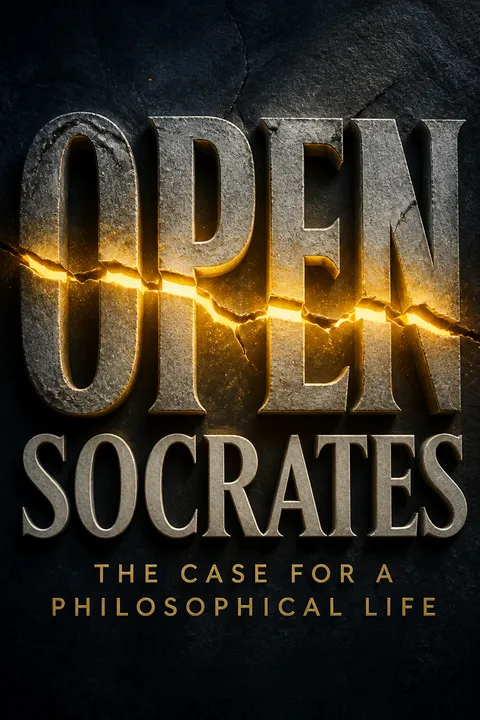
1. What is Open Socrates: The Case for a Philosophical Life by Agnes Callard about?
- Philosophy as a way of life: The book argues that philosophy is not just an academic pursuit but a way of living, centered on confronting and inquiring into fundamental, "untimely" questions about meaning, purpose, and how to live.
- Socratic model: Agnes Callard uses Socrates as the exemplar of this philosophical life, contrasting his approach with the despair of figures like Tolstoy who found such questions unanswerable.
- Book structure: The book is divided into three parts: exploring untimely questions and the Tolstoy problem, explaining the Socratic method and its paradoxes, and applying Socratic ethics to love, politics, and death.
- Distinct ethical stance: Socratic ethics is presented as an alternative to Kantianism, Utilitarianism, and Virtue Ethics, emphasizing ongoing inquiry and intellectual humility.
2. Why should I read Open Socrates: The Case for a Philosophical Life by Agnes Callard?
- Addresses universal concerns: The book tackles deep questions about meaning, purpose, and how to live, which everyone faces but often avoids.
- Practical and transformative: It offers concrete insights into living inquisitively in domains like love, politics, and death, promising to make readers freer, more equal, more romantic, and more courageous.
- Challenges assumptions: Callard critiques the avoidance of deep inquiry and the superficial adoption of "Socratic" attitudes, urging genuine philosophical engagement.
- Accessible and relevant: The book makes philosophy approachable and shows its relevance to everyday life and personal growth.
3. What are the key takeaways from Open Socrates: The Case for a Philosophical Life by Agnes Callard?
- Philosophy as inquiry: Living philosophically means embracing ongoing inquiry into untimely questions, rather than settling for inherited or unexamined answers.
- Socratic method’s power: The Socratic method is a social, dialogical process that enables progress on questions that resist easy answers.
- Ethics of learning: Socratic ethics centers on intellectual humility, the willingness to admit ignorance, and the pursuit of knowledge through dialogue.
- Transformative potential: Applying Socratic inquiry to love, politics, and death can fundamentally reshape how we approach these aspects of life.
4. What are "untimely questions" in Open Socrates: The Case for a Philosophical Life and why are they important?
- Definition: Untimely questions are fundamental, open-ended questions that people act on before they are able to genuinely ask or inquire into them, such as "Why am I doing any of this?" or "What is justice?"
- Hard to ask: Because we rely on inherited answers, these questions are difficult to raise sincerely, creating a blind spot in our self-understanding.
- Philosophical significance: Confronting untimely questions is essential for overcoming existential despair and achieving a stable, examined life.
- Central to philosophy: Callard argues that philosophy’s core task is to inquire into these questions, which cannot be reduced to technical problems.
5. What is the "Tolstoy problem" as described by Agnes Callard in Open Socrates: The Case for a Philosophical Life?
- Tolstoy’s existential crisis: Despite outward success, Tolstoy was unable to answer why he cared about anything, leading to despair and a collapse of motivation.
- Avoidance in everyday life: Most people avoid this crisis by living moment-to-moment, relying on default answers from society and the body, and never fully confronting the meaning of their lives.
- Socratic contrast: Socrates represents the opposite approach, embracing untimely questions and pursuing inquiry as a path to meaning and happiness.
- Cautionary tale: The Tolstoy problem serves as a warning against the avoidance of deep philosophical questioning.
6. How does Agnes Callard define the Socratic method in Open Socrates: The Case for a Philosophical Life?
- Inquisitive refutation: The Socratic method is a cooperative process of questioning and refutation, where one person asks probing questions and the other responds, leading to the elimination of false beliefs.
- Social and dialogical: Thinking is seen as a social activity, relying on dialogue and mutual testing of ideas rather than solitary reflection.
- Focus on untimely questions: The method is especially suited for questions that cannot be turned into well-defined problems, allowing for progress without prior knowledge of the answer.
- Resolves philosophical paradoxes: The method addresses classic philosophical puzzles like Meno’s paradox, Moore’s paradox, and the Gadfly-Midwife paradox.
7. What is the "Socratizing move" in Open Socrates: The Case for a Philosophical Life and how does it work?
- Conceptual re-interpretation: The Socratizing move is a way of revealing ordinary concepts as imitations of higher, more real, and more demanding realities, often phrased as "A is the real B."
- Elevating concepts: Socrates Socratizes love, death, and politics by showing that their true nature is inquiry into untimely questions, rather than their common or superficial understandings.
- Contrast with reductionism: Unlike reductive explanations that demote phenomena to lower causes, Socratizing elevates concepts to their intellectual and aspirational essence.
- Transformative perspective: This move encourages readers to see everyday experiences as opportunities for philosophical inquiry and growth.
8. How does Open Socrates: The Case for a Philosophical Life reinterpret love through Socratic philosophy?
- Love as inquiry: Socratic love is not about accepting a person as they are, but about a shared, dynamic, and aspirational quest for the good.
- Eroticized philosophy: Lovers engage in inquisitive refutation, treating love as a process of mutual improvement and knowledge-seeking, rather than mere attachment.
- Non-exclusivity: Socratic love merges romantic love (erōs) and friendship (philia), emphasizing openness and mutual intellectual engagement, even suggesting polyamory as a natural extension.
- Challenges romantic ideals: This view challenges conventional notions of love as static or possessive, making it a philosophical partnership.
9. What does Open Socrates: The Case for a Philosophical Life say about death and the philosophical life?
- Philosophy as preparation: Philosophy is portrayed as training for death, engaging with untimely questions and fostering communal inquiry that sustains courage and hope.
- FOMO vs. FONA: The book distinguishes between fear of missing out on future pleasures (FOMO) and fear of never arriving at one’s life’s goals (FONA), with philosophers primarily confronting FONA.
- Social support: Socrates’ courage in facing death is shown to be supported by his friends and the shared practice of inquiry.
- Death as communal endeavor: Facing death is not a solitary ordeal but a communal philosophical project.
10. How does Agnes Callard critique political ideals like justice, freedom, and equality in Open Socrates: The Case for a Philosophical Life?
- Political fictions: Callard identifies ideals like freedom of speech, egalitarianism, and social justice as political fictions—distorted images of intellectual ideals rooted in the shared quest for knowledge.
- Fighting as pretend arguing: The book argues that much political fighting is symbolic rather than genuine argumentation, and that true disagreement should be resolved through inquisitive, non-zero-sum dialogue.
- Intellectual norms: Justice, freedom, and equality are seen as intellectual norms realized in free, inquisitive conversations, not through coercion or symbolic displays.
- Socratic politics: The Socratic approach to politics emphasizes dialogue, mutual recognition, and the pursuit of truth over adversarial contest.
11. How does Open Socrates: The Case for a Philosophical Life relate Socratic ethics to Kantianism, Utilitarianism, and Virtue Ethics?
- Shared agreement: All these traditions reject the idea that justice and advantage are distinct goods, agreeing with Socrates that justice is advantageous and good.
- Systematization vs. inquiry: Kantianism and Utilitarianism systematize kinship and bodily commands, offering fixed ethical systems, while Virtue Ethics aims to harmonize them through habituation.
- Socratic distinctiveness: Socratic ethics is intellectualist, requiring ongoing philosophical inquiry rather than adherence to settled rules or systems.
- Challenge to plausibility: This approach is demanding and often seen as implausible, but it offers a novel vision of the good life as a continuous quest for knowledge.
12. What are the best quotes from Open Socrates: The Case for a Philosophical Life by Agnes Callard and what do they mean?
- On untimely questions: “Untimely questions are those that come after they have been answered in practice.” This highlights the difficulty and importance of questioning the foundations of our lives.
- On Socratic inquiry: “Socratic inquiry is inquisitive refutation—refutation itself is a form of positive inquiry.” This reframes criticism and questioning as constructive, not merely destructive.
- On love: “Socratic love is not about admiring or accepting a person as they are, but about a shared, dynamic, and aspirational inquiry.” This challenges conventional romantic ideals and emphasizes growth.
- On politics: “Justice, freedom, and equality are intellectual norms realized in free, inquisitive conversations.” This redefines political ideals as rooted in the pursuit of truth through dialogue.
Download PDF
Download EPUB
.epub digital book format is ideal for reading ebooks on phones, tablets, and e-readers.








