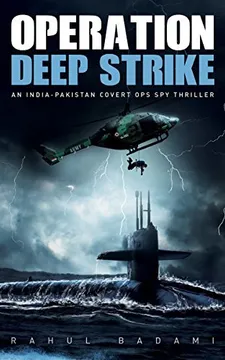


Plot Summary
Prologue
In Pakistan's Hunza Valley, missile engineer Abdul is relaxing in a hotel when masked gunmen kill his guard and storm his room. He escapes through a window, but the men chase him across the snow and corner him on a hillside.
Their purpose remains unclear; what matters is that a man who builds missiles has become a target, and his knowledge may soon be used by people willing to turn an engineering project into mass murder.
The opening makes technical expertise feel physically vulnerable. Abdul's work gives him strategic value, but the prologue withholds who wants that value and why, turning an engineer into a human question mark before the political machinery comes into view. His flight across the snow also establishes the novel's recurring contrast between grand military systems and individual bodies: missiles may be discussed as deterrents, yet their consequences begin with people cornered in rooms, roads, and bunkers. The scene's unresolved threat becomes a promise that the story's covert mission will intersect with a more dangerous plan.
Roshan's First Blood
Months before the main operation, young DIA operative Roshan Gupta joins Armaan Ahmed, Baldev Bakshi, and technician Namit Seth on a night raid against ISIS-linked militants in Bangladesh. Roshan kills the first guard and helps eliminate the sleeping cell, but a hidden explosive kills Namit as the team withdraws.
Unable to leave his dead colleague behind, Roshan carries Namit's body and falls into enemy fire. Armaan returns with Baldev, kills the attackers, and saves Roshan, but condemns his disobedience for endangering the whole team. Wounded and hospitalized, Roshan replays the choice and recognizes that courage without discipline can become another danger to the people he means to protect.
The raid establishes the story's central tension between mission discipline and human loyalty. Roshan's decision is morally legible, but operationally disastrous: he treats the dead as someone still owed rescue, while Armaan sees a living team whose survival remains actionable. The novel does not make either value trivial. Instead, Roshan's guilt becomes a test of whether obedience means emotional numbness or a practiced way to protect others. Namit's death also changes Armaan's leadership before the new mission begins, giving the operation a private burden beneath its geopolitical stakes.
A Nuclear Blind Spot
At a defence review in New Delhi, Prime Minister Jagdish Inamdaar hears that Pakistan's submarine-launched Babur-3 missiles could complete its nuclear triad and make a retaliatory launch harder to detect. General Vishwajeet Singh argues for a covert team to disable the missiles without alerting Pakistan; Shikha Tiwari, who leads the DIA's advanced warfare group, warns that such an attack could trigger war.
Tanmay Mehta raises a different weakness: India's ballistic missile defences have never been tested against a large salvo. Inamdaar approves Singh's plan, expecting results while underestimating how quickly covert action could collide with a genuine missile crisis.
The decision makes deterrence a problem of uncertainty rather than simple weapon counts. India's leaders fear that a hidden submarine launch could evade their existing warning systems, yet their proposed solution depends on crossing into Pakistan without provoking the very escalation they hope to prevent. Shikha and Tanmay supply two forms of institutional resistance: ethical caution and technical skepticism. Inamdaar hears both, but chooses action because political patience has become indistinguishable from helplessness. That choice gives the covert mission urgency, while its untested assumptions prepare the ground for catastrophe.
Four Men, One Sub
Singh assigns veteran field leader Armaan Ahmed, his longtime partner Baldev Bakshi, Roshan, and new technical specialist Hitesh Vohra to Operation Deep Strike. Armaan resents having the two less experienced men on his team, but accepts the assignment rather than surrender leadership. The four travel from an Indian airbase to the Arabian Sea, where a helicopter lowers them onto the submarine INS Khanderi in a storm.
When sonar detects an unidentified submarine nearby, Captain Khurana orders a change of rendezvous; Armaan insists the team stay together, then reluctantly accepts the delay. During the voyage, Baldev recognizes that Namit's death has made Armaan controlling and afraid to trust the people now under his command.
The submarine transfer turns a personnel dispute into a literal lesson in interdependence. Armaan treats authority as a way to contain risk, but his insistence on completing the drop strains cooperation with the captain responsible for everyone aboard. Baldev's private challenge identifies the emotional source of Armaan's rigidity: guilt has converted leadership into an attempt to prevent all future loss. Roshan and Hitesh, meanwhile, enter a team whose technical and tactical skills must compensate for the leader's damaged trust. The mission begins with a contradiction: it requires mutual reliance from people Armaan is trying to control.
Fazal Turns His Guns
After landing on the Makran coast, the team meets Balochi leader Fazal Darzada, who has arranged local documents and transport. Believing the Indians caused the recent Gwadar port bombing and the deaths of innocent Balochis, Fazal has his men disarm them and threatens to hand them to police. Armaan counters that Fazal could be accused as their accomplice, making both sides vulnerable to the authorities.
Fazal relents, but a Pakistani Army patrol arrives before the team can leave. From a derelict garage, the agents kill the four patrolmen, take their uniforms and jeep, and pass themselves off as soldiers. The improvised disguise gets them inland, but leaves a trail for investigators to follow.
Fazal's reversal shows how covert alliances rest on overlapping interests, not shared loyalties. He supports the Indian team when it benefits him, then sees the Gwadar bombing as a chance to shift blame and improve his position with Pakistan's government. Armaan survives by using the same leverage against him, revealing a leader who can read incentives but treats trust as expendable. The stolen uniforms solve an immediate problem while creating a new one: every successful disguise leaves evidence, and the patrolmen's deaths give the Pakistani state a concrete trail.
Ormara's Empty Torpedo Room
Armaan and Baldev swim through an underwater tunnel into Ormara's concealed naval base, then disguise themselves as Pakistani Navy officers and board the submarine PNS Khalid. Baldev installs the software component of their kill switch in the submarine network. But the weapons are not aboard: Captain Yusuf explains that the Babur-3 missiles have been sent to Sargodha for redesign because they do not fit the older submarine class.
Armaan learns the mission's hardware component cannot be completed at Ormara and refuses to withdraw. He orders the team to pursue the missiles inland, despite the original plan calling for a brief coastal operation. At the same time, surveillance analyst Hatim notices the unrecorded visitors on base cameras.
The operation's first apparent success is deliberately incomplete. The team reaches the target, gains network access, and leaves without detection, yet the crucial weapons have moved beyond reach. Armaan interprets the setback as a reason to improvise rather than reconsider, a decision that reflects both his commitment and his unresolved need to prove himself after Namit's death. The hidden base's surveillance system also demonstrates that stealth is never absolute: Hatim's careful attention converts a clean exit into a pursuit. The mission now depends on whether persistence is judgment or simply momentum.
The Desert's Mobilization
In Afghanistan's Desert of Death, Malik trains a Lashkar-e-Jhangvi unit for an undisclosed operation. The volatile Zia resents the drills and bullies Shafiq, while veteran Pasha sees Malik's tolerance of Zia as a way to channel his recklessness. Once orders arrive, the group packs weapons and supplies and travels north through Afghanistan.
Shafiq keeps a small locked chest of personal effects, a private remnant of a life the others believe he has left behind. In Jalalabad, the famed Kunduz brothers join Malik's party, raising the recruits' expectations. The trucks then cross into Pakistan and head for an isolated mountain resort, where leaders from several militant organizations are gathering.
The militant subplot initially presents its members through hierarchy, grievance, and the promise of belonging. Malik manages Zia by giving his volatility a purpose, while Shafiq's quiet reserve sets him apart without yet explaining why. The locked chest makes that difference physical: even in a group that claims to share everything, Shafiq protects a private past. The convergence of factions enlarges the threat from a local cell to a coordinated network. Because the recruits do not know their assignment, their excitement becomes a source of suspense rather than confidence.
Gorbat Follows the Jeep
Quetta CTD inspector Gorbat Khan pursues the Gwadar bombing after a fisherman discovers a shredded Indian-made inflatable boat on the Makran coast. Fazal gives Gorbat a misleading account of armed strangers, hoping to protect himself by directing suspicion toward the Indians.
Gorbat connects the boat to the missing Army patrol and identifies four professionally killed soldiers at a roadside garage. Their stolen jeep passes through checkpoints toward Karachi, then turns north; Gorbat alerts Hyderabad's CTD, whose ambush sends trucks crashing into the agents' vehicle.
After a violent chase, the jeep overturns and the four Indians are captured. Gorbat's persistence has found them, but his agency loses control when the ISI claims jurisdiction over the prisoners.
Gorbat's investigation offers a grounded counterpoint to the operatives' high-tech tradecraft. He works from a boat motor, bullet patterns, and vehicle reports, assembling meaning from evidence that more powerful institutions would rather ignore. His pursuit is competent, but the system around him is not: the ISI's intervention strips the CTD of its achievement just as Gorbat expects recognition. The episode links institutional corruption to personal cost. Gorbat is not merely chasing spies; he is trying to make honest work matter in a hierarchy that rewards proximity to power.
The Van Opens
During transfer to an ISI facility, Armaan and Baldev use concealed pins to free their handcuffs. They overpower the two guards inside the van, then kill the escort force when it opens the doors with a stun grenade. Armaan contacts General Singh, admits that he has abandoned the original extraction plan, and asks permission to continue toward Sargodha.
Singh rebukes him but authorizes the mission and directs him to a long-term Indian asset in Sukkur. The asset, Sultan, meets Armaan and Baldev at a graveyard, supplies weapons and equipment, and agrees to drive them north. Roshan and Hitesh rejoin the plan. Meanwhile, Gorbat realizes the captured team has escaped and resumes the chase.
The escape is a tactical victory that exposes the strategic cost of Armaan's unilateral choices. He regains physical freedom, but his team has lost its equipment, communications, and secure route home. Singh's conditional authorization recognizes the mission's importance without erasing the breach of trust. Sultan's assistance restores practical capacity, while Gorbat's renewed pursuit ensures that the agents have no clean reset. Armaan now has to lead through accountability: the team's survival depends not only on his skill but on whether he can keep others informed and accept their help.
Kirana's Empty Bunker
Sultan drives the team to the Central Ammunition Depot at Kirana Hills, where Hitesh identifies the bunker listed for the Babur-3 stock. Roshan cuts through the perimeter while Hitesh disrupts the security network, and the four enter the underground store. Its weapon pods are empty: the missiles were moved the day before to a classified destination.
Security forces release gas into the bunker, knocking the team unconscious. The guards also find Sultan's vehicle and kill him as he tries to escape. When the operatives wake, they are bound in another bunker with Major Ijaz Ibrahim, the depot's security chief, and the men who captured them.
The empty bunker turns repeated ingenuity into exhaustion. The team has crossed Pakistan, escaped custody, and breached a military depot, only to arrive one day too late. Sultan's death makes the cost of Armaan's extended mission personal and irreversible; his support was not a disposable logistical detail but a human commitment. The capture also strips the team of agency at the very moment it seems least able to afford another setback. The story's recurring pattern sharpens: each apparent solution opens onto a larger system of hidden movement.
Ijaz's Hidden Channel
Ijaz surprises the prisoners by killing the guards who captured them, then reveals that he is an Israeli intelligence operative embedded in the Pakistani Army. His access to the depot has let him follow the Babur-3 shipment to Project S25, a concealed missile complex in Khyber Pakhtunkhwa. He also explains that CIA-installed tracking technology helped expose the facility's location.
Ijaz offers a contact inside S25, Colonel Mohammed Tahir, who can admit the Indians. The team learns from Ijaz that Sultan died after his vehicle was discovered. Armaan absorbs the loss, but Baldev and Roshan refuse to let him retreat into self-blame. With a new lead and no safe route home, they press on.
Ijaz's revelation changes the map of the conflict: the apparent security perimeter contains an adversary's intelligence network, and even foreign assistance has its own surveillance agenda. The disclosure is useful but not comforting. It identifies S25 while showing how many actors have been manipulating information around the same weapons. Armaan's grief over Sultan echoes his earlier guilt about Namit, but the team's response insists that responsibility cannot mean solitary self-punishment. Their decision to continue is collective, even though the risk remains concentrated in Armaan's command.
Shafiq's Mechanical Fly
At the mountain resort, Shafiq uses a miniature flying camera hidden in his belongings to listen to Al-Qaeda leader Hamza Bin Laden, TTP leader Najib Mushtaq, and Jamaat-ul-Ahrar leader Muhammed Akbaruddin. He discovers that militants plan to seize missiles at Project S25 and strike New Delhi.
A flashback reveals Shafiq's actual work: he was recruited by Indian intelligence and placed inside Malik's group to map terrorist leadership. He reports the plot to General Singh, but Zia catches him after overhearing the call. Zia shoots and captures him before Shafiq can act against the leaders. Wounded and confined, Shafiq faces torture while his warning becomes the only chance to stop the plan.
The listening device literalizes the novel's interest in hidden knowledge, but the decisive revelation is Shafiq's divided identity. His apparent place among the militants has required him to perform belonging while privately measuring the group's structure and intentions. The role is psychologically costly because survival depends on looking like the person he is not. Once discovered, his carefully gathered intelligence becomes actionable only if others can use it. The scene makes espionage less a glamorous disguise than a prolonged negotiation between self-preservation and the duty to expose violence.
Tahir's Open Door
Armaan and Baldev reach S25 posing as visiting scientists, while Roshan and Hitesh take an observation position on the surrounding mountains with satellite support from Eagle. Colonel Tahir admits them and guides them through the underground research, manufacturing, assembly, and storage floors.
The agents find the Babur-3 missiles and install their kill-switch program. Then Tahir draws a gun and explains that his apparent opposition to Pakistan's intelligence services was a deception; he has been feeding false information to Ijaz and brought the Indians inside to learn their methods.
Armaan and Baldev are disarmed and held in the barracks. From the mountain, Roshan and Hitesh hear the betrayal but cannot reach them without triggering a firefight.
Tahir's betrayal overturns the comforting assumption that personal grief produces political dissent. His losses are real, but they do not make him an ally; the novel distinguishes private suffering from political allegiance. The facility tour first grants the agents access to the machinery of the threat, then makes that access part of Tahir's trap. Armaan's choice to enter unarmed reflects a calculated attempt to pass security, yet it also leaves him dependent on another man's interpretation of justice. The team is divided at precisely the moment its mission becomes tangible.
Thirty Missiles Rise
A suicide bomber breaches S25's gate as coordinated attackers fire rockets from the mountains and storm the compound. Tahir's defenders retreat under the barrage; Armaan and Baldev remain confined until the assault reaches their barracks.
Amid the crossfire, they seize weapons and fight beside the Pakistani soldiers, while Roshan uses a Vidhwansak rifle to destroy the militants' firing positions. The attackers overwhelm the facility and take scientist Abdul to the missile control room.
He programs thirty missiles toward New Delhi and launches them. Armaan and Baldev cannot reach the sealed controls in time. Elsewhere, Shafiq, bleeding in captivity, confirms the terrorist leaders' location to Singh and authorizes an air strike on the resort where they are gathered.
The assault collapses the usual categories of enemy and ally. Armaan's team fights alongside the very military force that imprisoned them, because the immediate threat no longer respects national boundaries. Yet tactical cooperation cannot prevent the central failure: the terrorists convert the facility into a launch platform and send thirty missiles toward civilians. Shafiq's decision to call an air strike makes the same ethical calculus at a smaller scale. He accepts the possibility of dying with the target because delay could expose millions of people to attack.
KALI Stops the Last Ten
Indian satellites and an AWACS aircraft detect the launches, and Shikha coordinates the national crisis response. India's ballistic missile defence destroys twenty incoming missiles but misses ten, reaching the saturation limit Tanmay had warned about.
With seconds left, Tanmay deploys the experimental KALI 5000, whose electronic pulse disables the remaining missiles before they strike Delhi. At S25, Armaan and Baldev rig grenades at the control-room door, killing the terrorists inside when they emerge, then confirm their earlier kill switches remain installed in the Babur missiles.
They are nearly overrun and run out of ammunition, but a Ghatak combat drone destroys the remaining attackers. The missile crisis ends, and the operatives survive long enough for extraction.
The defence sequence pays off the earlier technical warning without making preparation equivalent to certainty. Tanmay's concern about saturation proves exact, and the conventional system fails at the point where its design assumptions run out. KALI succeeds because someone preserves an experimental option, not because the crisis becomes predictable. On the ground, Armaan's team also survives through layered improvisation: traps, a sniper's precision, and unmanned air support. The parallel action links engineering to judgment. Systems can buy time, but people must recognize when the system has stopped being enough.
The Counterstrike's Quiet End
With Delhi safe and the Babur kill switches intact, General Singh authorizes a retaliatory strike against the militant leaders whose resort location Shafiq supplied. Armaan's team uses S25's missile control system to destroy the gathering, killing the leaders of the major groups and Shafiq, who is still at the resort.
A helicopter extracts the surviving operatives, and their return to India is routed through Afghanistan, Iran, and the Arabian Sea. In the epilogue, Inamdaar tells Pakistan's prime minister that Pakistani forces defeated the attackers and destroyed the terrorist headquarters, allowing both governments to avoid public acknowledgment of the covert operation. Back home, Singh arrives with another assignment in Xinjiang.
The resolution is built on reciprocal secrecy. India avoids a declared war by framing the destruction of the militant leadership as an outcome Pakistan can accept without admitting foreign intervention. That diplomatic fiction mirrors the operational lies that made the mission possible, while leaving the moral cost visible in Shafiq's death. Armaan returns with his team, but not with an uncomplicated victory: he has acted beyond orders, lost people, and helped launch a retaliatory strike. The final Xinjiang assignment suggests that institutions absorb crisis quickly, even when their operatives have barely returned from it.
Epilogue
Prime Minister Inamdaar speaks with Pakistan's Mian Fateh and presents the destruction of the terrorist headquarters as a Pakistani military success. Mian is baffled, but the account gives both governments a way to avoid admitting what happened.
Armaan and his surviving teammates return to India by a circuitous route. General Singh visits them and immediately assigns the group to a new operation in Xinjiang, leaving their hard-won rest brief.
The epilogue resolves the public crisis through a story both governments can live with. Inamdaar offers Mian a version of events that preserves Pakistan's dignity while concealing India's covert strike; the fiction functions as a diplomatic instrument, not merely a cover-up. The final assignment then restores the machinery of espionage before the agents have processed their losses. Armaan's private growth matters, but the institution remains organized around the next emergency. The ending therefore grants the team survival and a measure of recognition, while refusing the comfort of a clean moral or emotional pause.
Analysis
Operation Deep Strike treats espionage as the management of uncertainty under conditions where every institution has incomplete information and every delay can become lethal. India's leaders fear Pakistan's submarine-based nuclear deterrent, but the covert response depends on assumptions about weapons storage, local allies, and the reliability of intelligence. Each assumption fails in turn. The missiles move, Fazal changes sides, the ISI captures the team, the Sargodha bunker is empty, and Tahir turns an apparent opening into a trap. The plot's repeated reversals make competence less about predicting everything than about adapting without losing the people around you.
That problem becomes personal through Armaan. Namit's death has taught him to equate leadership with preventing loss, so he initially withholds trust and takes unilateral risks. Roshan's growth runs in the opposite direction: his instinct to save a dead comrade once endangered the team, but he later uses discipline and courage to protect Armaan. Their changing relationship suggests that obedience and compassion need not be enemies, provided judgment accounts for both the mission and the living people carrying it out. Baldev serves as the emotional witness who can challenge Armaan without abandoning him.
The parallel story of Shafiq complicates national loyalty and militant identity. He must perform belonging inside a group whose rhetoric turns grievance into permission for mass murder. His intelligence saves the Indian team from ignorance, but it cannot save him from the machinery he infiltrated. Meanwhile, the missile crisis exposes a broader distinction between technical capacity and political control: a defence system may be carefully designed and still fail under saturation. The experimental KALI succeeds because people preserved an alternative, while the final strike and diplomatic fiction show how the same governments that fear escalation also depend on secrecy to contain it. The novel's uneasy lesson is that survival may require deception and force, but neither arrives without human costs.
Characters
Armaan Ahmed
The burdened field commanderArmaan is a decorated DIA operative whose experience has made him decisive, resourceful, and accustomed to carrying responsibility alone. Namit's death has left him convinced that a leader must prevent every loss, so he tightens control over Roshan and Hitesh and pushes the mission forward without always consulting headquarters. His loyalty to the objective is genuine, but it can obscure the people required to achieve it. Baldev's long friendship and Roshan's steady courage force him to recognize that command is not the same as isolation. Armaan's defining struggle is learning to treat trust as an operational strength rather than a vulnerability.
Roshan Gupta
The rookie who stays behindRoshan is a young former Army soldier eager to prove himself in the DIA's covert unit. During his first mission, he risks the team to carry Namit's body, an act of loyalty that nearly costs him his life and leaves him ashamed of his failure to obey. He enters the next operation determined to be disciplined, but his instinct to protect others remains central to how he acts under fire. His technical skill as a sniper and his willingness to intervene when a teammate is in danger make him more than a novice. Roshan's tension between obedience and conscience gives the team's rules their human weight.
Baldev Bakshi
The team's iron anchorBaldev is a veteran operative, physically imposing and emotionally steady, who has worked beside Armaan for many years. He can tease his old friend, challenge him, and remain loyal without pretending that Armaan's judgment is always sound. On the mission, Baldev provides strength in combat and perspective when grief begins to distort Armaan's leadership. His loyalty is not blind obedience: he stays because he cares for the man beneath the commander and wants the team to survive. Baldev's humor offers brief relief, but his deeper function is to keep trust and clear judgment alive under pressure.
Hitesh Vohra
The field-tested analystHitesh joins the covert team as its technical specialist, bringing cyber expertise, analytical patience, and a more limited background in dangerous field conditions. Armaan initially treats his questions as a nuisance, which leaves Hitesh unsure whether his knowledge is valued beyond the computer terminal. The mission repeatedly depends on his ability to breach security systems, locate weapons, and interpret technical information. As the operation forces him into physical danger, he adapts without pretending to be a veteran fighter. Hitesh represents the increasingly blurred boundary between intelligence work and direct action: information is useful only when someone can carry it into the field.
Shikha Tiwari
The cautious systems chiefShikha leads the DIA's Advanced Warfare Systems team and is proud of the technical work that protects India's forces. She is not a pacifist, but she resists the easy assumption that an aggressive military action will remain controllable. Her skepticism is practical as well as ethical: she knows India's missile defence system has not faced a realistic multiple-missile test. Shikha's professional care can make her wary of political bravado, while her commitment to her team keeps her engaged when a crisis becomes real. She embodies the often invisible labor of defense: testing, coordination, and systems knowledge that matter most when there is no time to improvise.
Jagdish Inamdaar
The impatient prime ministerIndia's newly elected prime minister believes the country has answered terrorism with too much restraint. Inamdaar is forceful, politically astute, and impatient with officials who present obstacles without alternatives. His willingness to authorize covert action comes from a conviction that deterrence has failed, though he must also reckon with the possibility of nuclear escalation. He listens to technical and military advice, but ultimately accepts responsibility for choosing among dangerous options. Inamdaar's confidence can look like aggression, yet the novel presents him as aware that leadership means managing public anger as well as protecting the public from the consequences of war.
General Vishwajeet Singh
The calculating mission chiefSingh directs the DIA and oversees the covert operation against Pakistan's submarine-launched missiles. A seasoned military leader, he believes that inaction can be as consequential as an attack and is willing to use unconventional means to reduce a future nuclear threat. His trust in Armaan is built on years of successful missions, which makes Armaan's unilateral decisions especially troubling. Singh balances mission urgency against the lives of his operatives, sometimes granting them broad authority and sometimes drawing a hard line. He represents institutional judgment at its best and most strained: responsible for outcomes he cannot fully control.
Gorbat Khan
The incorruptible investigatorGorbat is an inspector in Balochistan's Counter-Terrorism Department, a diligent investigator working with poor equipment, scarce staff, and little institutional respect. He follows small clues carefully and connects the discarded boat, the dead patrolmen, and the stolen jeep into a coherent trail. His commitment to the case competes with his responsibilities at home, especially when work keeps him from his son's birthday. Gorbat is not naïve about corruption; he has watched less principled colleagues advance while his own work is overlooked. Still, he continues because public service means something to him even when the system fails to reward it.
Fazal Darzada
The self-serving local brokerFazal is a wealthy Balochi leader who presents himself as a defender of his people while using their grievances to build influence and personal security. He understands that both the Pakistani government and foreign operatives may find his connections useful, and he tries to turn that usefulness into leverage. His sudden shifts of loyalty are less ideological than strategic. Fazal's power rests on his ability to speak for a community whose needs he does not consistently serve, making him both a political intermediary and a source of danger for anyone who relies on him.
Shafiq
The quiet recruitWithin Malik's militant unit, Shafiq appears disciplined, observant, and less eager for status than the volatile Zia. He follows orders, keeps his possessions carefully guarded, and watches how authority works inside the group. His reserve makes him difficult for the others to read, while his intelligence and patience set him apart from recruits who seek attention through bravado. Shafiq's ability to notice patterns becomes important as the group's plans grow larger. He is drawn between the need to preserve himself and the consequences of what the people around him are preparing to do.
Abdul
The captured missile engineerAbdul is a Pakistani missile engineer whose expertise makes him valuable to people with designs on the country's weapons. The story first presents him as a frightened man escaping armed kidnappers in Hunza, then later shows how coercion and self-preservation complicate his choices. He is neither a battlefield operative nor a political leader; his power lies in knowing how a missile system works. Abdul's position asks whether technical skill can remain neutral when another person controls the conditions under which it is used.
Mian Fateh
Pakistan's wary prime ministerMian Fateh leads Pakistan through a government where intelligence agencies, the military, and elected officials do not always share information or authority. He is attentive to the political consequences of an attack on Gwadar and the pressure such an event brings from foreign partners. His relationship with Inamdaar is shaped by mutual suspicion and the need to communicate during a crisis. Mian wants information and accountability, yet often receives decisions already made by institutions beyond his control. His caution reflects the fragile position of a civilian leader attempting to manage threats inside and outside his country.
Ijaz Ibrahim
The exacting depot chiefIjaz runs security at the Central Ammunition Depot in Sargodha and relies on surveillance, discipline, and contingency planning. He takes the warning about Indian operatives seriously, prepares an ambush, and captures Armaan's team when they enter the wrong bunker. Ijaz is confident in his ability to anticipate intruders, and that confidence makes him a formidable obstacle. His work places him between classified weapons and the many intelligence services trying to locate them. He represents the hidden security architecture surrounding the missile program, where even routine movements can carry national consequences.
Mohammed Tahir
The grieving army colonelTahir is the colonel in charge of the remote Project S25 facility. He has lost both his son and his wife, and his grief has left him emotionally withdrawn and deeply suspicious of the institutions around him. His public criticism of the ISI brings professional consequences, while his work at S25 gives him authority over a highly sensitive weapons complex. Tahir's personal history makes him difficult to classify: he is wounded by state policy and terrorism, yet remains a soldier shaped by duty and national loyalty. His quiet manner conceals a hard understanding of what access to the facility could mean.
Sultan
The trusted field contactSultan is an Indian long-term resident asset in Sukkur who maintains a discreet channel through a local dry-cleaning shop. He moves between ordinary social roles with ease and understands the roads, checkpoints, and safe routes that the covert team cannot navigate alone. When Armaan's group reaches him, Sultan supplies weapons and transport without demanding that the agents explain every detail of their mission. His calm competence makes him a vital bridge between intelligence planning and the difficult realities of travel inside Pakistan.
Malik
The controlling militant commanderMalik leads the Lashkar-e-Jhangvi recruits with a measured authority that contrasts with Zia's impulsiveness. He uses training to maintain cohesion and understands that even a volatile subordinate can be useful if given a defined role. Malik's leadership depends on discipline, loyalty, and the promise of a larger purpose, though he keeps the group's true assignment concealed until the right moment. His restraint is not kindness so much as management: he is willing to tolerate friction when it serves the mission.
Zia
The reckless unit leaderZia is a volatile recruit shaped by the deaths of his father and brothers in Afghanistan's wars. He treats combat as a chance to avenge those losses and shows little patience for preparation or dissent. Malik tolerates his aggression because it can be directed toward the group's needs, but Zia's hunger for recognition makes him domineering with other recruits, especially Shafiq. He confuses fearlessness with authority and is quick to turn suspicion into violence.
Nadeem Kunduz
The veteran militant plannerNadeem Kunduz is one of two brothers whose long history of fighting in Afghanistan has made them respected figures among militant groups. He is experienced enough to understand the value of preparation and coordination, and his presence signals that the coming operation has ambitions beyond a single faction. Nadeem's confidence rests on years of surviving conflict, but his plans depend on other people accepting risks whose full scale they may not understand.
Nazal Kunduz
The veteran's trusted brotherNazal works alongside his brother Nadeem and shares the reputation earned through decades of fighting in Afghanistan. He helps move the militant group across borders and into the network of allies preparing for a major operation. The brothers' closeness gives them influence among recruits who see their survival as proof of authority. Nazal is a practiced organizer, but like Nadeem, he serves a cause that treats mass violence as a measure of success.
Hamza Bin Laden
The gathering's symbolic leaderHamza Bin Laden appears at the mountain resort as a unifying figure for militants from several organizations. He frames their planned operation as a historic act and uses the promise of fame, sacrifice, and religious purpose to energize the assembled recruits. His authority is partly organizational and partly symbolic: the groups gathered around him have their own leaders, but his presence gives their alliance a shared center.
Tanmay Mehta
The warning systems analystTanmay is a veteran member of Shikha's advanced warfare team and a colleague who knows how she thinks. He gives her frank counsel during the political debate and identifies the weakness in India's missile defence testing, which has not accounted for a large simultaneous attack. His technical judgment is easy for officials to treat as a budget concern until the threat becomes real. Tanmay's work on the experimental KALI system gives him a role beyond analysis, but his defining trait is his refusal to confuse a successful test with certainty.
Namit Seth
The lost technical teammateNamit is the covert team's technical specialist before Hitesh joins. He works primarily on operational support and has enough field training to serve as backup when needed. His death during Roshan's first mission becomes a lasting source of guilt for Armaan and a formative memory for Roshan. Namit matters to the team not as a symbol but as a colleague whose absence changes how the survivors understand risk and responsibility.
Plot Devices
The Babur-3 kill switch
A hidden missile safeguardThe operation's central tool is a program designed to disable Babur-3 missiles after launch, making them appear functional while preventing them from reaching their targets. The team must first install it in a submarine network, then physically synchronize it with the missiles themselves. This two-part design forces Armaan's team to enter both a naval base and a weapons complex. It also gives the mission a non-destructive objective: India hopes to neutralize the threat without alerting Pakistan that its nuclear deterrent has been compromised.
The Sukkur dead drop
A covert route to supportSultan uses a dry-cleaning shop as an intermediary for messages, with notes hidden in clothing rather than sent through an obvious communications channel. Armaan validates the contact through a coded exchange and a meeting at a public graveyard. The method suits an asset who must remain inconspicuous, and it gives the stranded team transport and equipment after the escape from ISI custody. Its vulnerability is human rather than technical: once Sultan carries the agents north, his safety depends on the secrecy of the journey.
The flying camera
A spy hidden in plain sightShafiq's miniature camera is disguised as an insect and controlled by a tiny device concealed among his belongings. It allows him to observe and record a private meeting between militant leaders without entering the room himself. The device converts his long, dangerous infiltration into actionable intelligence by exposing the plan to attack New Delhi. Its small scale contrasts with the immense consequence of what it reveals, while its discovery risks exposing the agent who has spent months hiding his real purpose.
Satellite surveillance
An eye above the battlefieldIndian satellites provide imagery of the remote S25 facility, monitor activity during the operation, and help identify the militant gathering. Synthetic-aperture radar lets the analysts see through roofs and walls, exposing the complex's hidden underground floors. An AWACS aircraft and ground systems also detect the missiles launched toward India. Satellite intelligence expands the team's awareness but cannot solve every problem: Armaan and Baldev remain trapped on the ground, and the missile defence system still has to respond to a real salvo.
KALI 5000
The experimental final defenceThe KALI 5000 is an experimental high-power electron accelerator developed by Indian research agencies. After ballistic missile defence intercepts twenty of the thirty incoming missiles, ten continue toward New Delhi. Tanmay activates KALI as a last resort, and its electronic pulse disables the remaining missiles' onboard circuits. The device pays off the earlier warning that India's conventional defence had never been tested against a mass launch. Its success is not presented as a guarantee for future crises, but as an unproven option that becomes decisive when the standard system reaches its limit.
Download PDF
Download EPUB
.epub digital book format is ideal for reading ebooks on phones, tablets, and e-readers.








