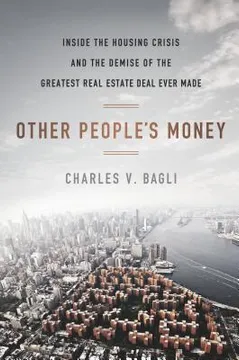


Key Takeaways
Buyers risked just 3.6% of a $6.3 billion deal
A thin slice of risk. Tishman Speyer and BlackRock paid for Stuyvesant Town-Peter Cooper Village with about $4.4 billion in loans and outside investors’ equity. The operating sponsors supplied roughly $225 million, just 3.6% of the $6.3 billion total cost. This was OPM, or other people’s money: using outside capital to acquire and operate an asset while the sponsor contributes relatively little of its own. Much of the mortgage was nonrecourse, meaning lenders could claim the property after default but not the sponsors’ other assets.
The upside was asymmetric. If rents rose, sponsors could earn management and other fees, plus a share of profits. If the plan failed, investors and lenders bore most of the loss. That structure made a record-setting purchase possible, while weakening the buyers’ incentive to protect against a bad outcome.
The deal makes a familiar principal-agent problem unusually visible: decision-makers can capture fees and upside while other parties absorb much of the downside. That does not mean outside capital is inherently reckless; pension funds and insurers need investment managers to deploy capital. The danger arises when compensation rewards transaction volume or optimistic growth more reliably than durable performance. A useful test for any investment is therefore not just who supplies the money, but who controls the assumptions, earns fees, and loses first when those assumptions fail.
Public aid built Stuyvesant Town, but public accountability stopped at the gate
A subsidized private enclave. In the 1940s, New York supplied land, tax breaks, and eminent-domain powers to help Metropolitan Life build Stuyvesant Town. The insurer promised middle-class housing, but the project also demolished more than 500 buildings and displaced thousands of existing residents, many unable to afford the new apartments. Its chairman, Frederick Ecker, barred Black families, arguing that integration would harm the investment. The project opened in 1947 with public support behind it and discriminatory access at its doors.
Tenants challenged the exclusion. In 1949, a group of residents helped a Black veteran’s family stay temporarily in an apartment, defying MetLife’s policy. Tenant organizing and lawsuits eventually helped build momentum for fair-housing protections, though integration remained limited for years. The founding story is not simply a tale of generous housing, but of who received public investment and who was shut out.
The project exposes a recurring tension in public-private partnerships: public authorities can enable private development without retaining enough power to enforce the public purpose. The original deal’s benefits were concrete, while its protections for access and accountability were weak. The history also complicates nostalgia for a once-cohesive community. The complex offered real stability to many families, but that stability was initially built through displacement and racial exclusion. Remembering both sides makes it harder to treat affordability as a neutral benefit detached from questions of access.
A neighborhood's loyalty is an asset, not a spreadsheet nuisance
Community became a bargaining force. Stuyvesant Town was more than 11,000 apartments. Residents shared schools, playgrounds, traditions, and long-standing neighborly ties. When MetLife announced a sale, tenant leaders Al Doyle and councilman Dan Garodnick organized residents and won support from unions and elected officials. Their group submitted a $4.5 billion bid, a remarkable effort for tenants with no conventional real-estate empire behind them. More than 7,100 residents later signed a unity pledge as the lenders considered the property’s future.
But a coalition needs capital. The tenant bid could not overcome the lack of decisive city backing and the competition’s access to enormous financing. The residents’ political influence did, however, make clear that any buyer would face scrutiny and resistance if it ignored them. Community loyalty mattered to the asset’s public legitimacy, even when the auction measured value mainly in projected income.
The residents’ organizing illustrates how social capital can function as a form of leverage. Trust, shared identity, and dense local networks help people coordinate against institutions with far greater financial resources. Yet cohesion does not automatically become ownership: a coalition may be politically powerful and still lack financing, legal expertise, or a workable governance model. The distinction matters for community-led initiatives. Mobilization can change the terms of a debate, but durable control usually requires institutions capable of converting solidarity into money, authority, and long-term management.
A rent-growth forecast is a bet on law and human behavior
Turnover was the key assumption. In 2006, about 72% of the apartments were rent stabilized, limiting how quickly owners could raise rents. The buyers planned to increase income by renovating vacant units, challenging tenants they believed were ineligible for protection, and moving apartments to market rents. Their projections assumed unusually rapid turnover. Experienced operators warned that 4% to 5% annual turnover was more realistic; one rival’s own experience suggested rates closer to 3% to 4% among stabilized tenants.
The rules were not settled. The J-51 program gave property owners tax benefits for improvements, but a later court ruling found that the owners had improperly deregulated thousands of apartments while receiving those benefits. Vacancy decontrol, the process by which certain regulated apartments could leave regulation after becoming vacant, was not a mechanical revenue switch. It depended on tenant behavior, legal interpretation, and public policy.
A financial forecast is often presented as if it describes a neutral future. Here, it also embedded a theory of how tenants would behave and how regulators would interpret the law. That is why sensitivity analysis should include institutional and political scenarios, not only rent growth and interest rates. The counterpoint is that no model can predict every court decision or market shift. The failure was not simply that uncertainty existed, but that the deal depended on several favorable uncertainties breaking in the same direction.
Securitization rewarded loan volume while exporting the danger
Mortgages became products. Commercial mortgage-backed securities, or CMBS, are bonds created by pooling commercial property loans and selling claims on the payments to investors. Banks could originate loans, bundle them, and move much of the exposure off their own balance sheets. In the Stuyvesant Town deal, Wachovia and Merrill Lynch arranged billions in financing, then sold the senior mortgage to investors. Rating agencies assessed the bonds, even though the banks paid for those ratings.
The weak cash flow was visible. At purchase, rent income covered only about 40% of the debt service. The lenders and buyers expected income to rise sharply through deregulation and higher rents. The rating documents emphasized future cash flow, including projections for 2011, rather than the property’s weak current coverage. Once the loans were sold, the originators had earned substantial fees, while distant investors inherited the risk that the rosy projections would fail.
Securitization can broaden access to capital and spread risk across many investors. Its failure mode is less about pooling itself than about broken incentives and information: the party making a loan may not bear the consequences of its quality, while buyers of the securities may struggle to evaluate the underlying property. This is a classic originate-and-distribute conflict. A meaningful safeguard must make risk visible and give originators a continuing stake in performance, rather than assuming that a rating label can substitute for scrutiny.
Luxury finishes cannot turn an ordinary building into a luxury market
The physical product had limits. Tishman Speyer planned extensive renovations, new amenities, and elaborate landscaping to attract wealthier tenants. It spent heavily on apartments, gardens, and shared facilities. But the buildings remained decades-old, non-doorman properties, and many two-bedroom apartments had only one bathroom. New countertops and a health club could improve comfort, but they could not make the apartments equivalent to newly built luxury towers nearby.
Price resistance arrived early. The company raised asking rents, then found hundreds of units sitting vacant. By the end of 2007, there were 757 unrented apartments, despite the complex’s historically low vacancy rate. Management offered rent concessions and incentives to fill them. The episode showed that renovations do not create unlimited pricing power. A landlord can improve a property and still misread what tenants value, what competing buildings offer, and what the neighborhood will pay.
The business plan treated amenities as a way to reposition the asset, but positioning is not merely a design decision. It depends on how customers compare the whole experience, including location, services, building condition, and price. This is a useful corrective to the idea that capital spending automatically increases value. Improvements can raise costs without changing a property’s category in the market. The more durable question is whether upgrades solve a real tenant problem or mainly serve a financial model’s desired rent target.
Debt service exceeded rent income before the bubble burst
The deal needed time and cash. The $4.4 billion debt carried annual payments of about $284 million. Yet net income at the complexes was about $138 million in 2009, less than half that amount. The shortfall was not a surprise produced only by the recession. At the outset, the property’s income covered a fraction of debt service, so the owners depended on reserve funds and rapid revenue growth to bridge the gap.
The reserves bought time, not safety. Lenders set aside hundreds of millions of dollars to cover interest and other costs while rents were expected to rise. But conversion of regulated apartments lagged, operating and legal expenses increased, and market rents softened. The reserves dwindled. When income cannot service debt without a future transformation, even a temporary delay becomes dangerous. A slowdown does not need to be catastrophic to expose a structure built with almost no margin for error.
Leverage magnifies both returns and forecasting mistakes. It can make a sound property more productive, but it also turns a temporary mismatch between income and payments into a countdown. The key diagnostic is not whether the asset is attractive in the long run, but whether it can survive the path to that future. Reserves are sometimes described as protection, yet they can conceal fragility if they merely finance recurring losses. A resilient plan needs a credible fallback, not just a long runway toward an optimistic target.
The people who lost most were not the people who ran the deal
Losses landed unevenly. By late 2009, the property’s estimated value had fallen to roughly $1.8 billion. Pension funds, foreign institutions, and junior lenders lost billions; CalPERS alone had invested $500 million in equity. Tishman Speyer and BlackRock also lost their invested capital, about $225 million combined, but the sponsors had collected roughly $48 million in fees over the deal’s first years. Wachovia and Merrill Lynch earned an estimated $210 million arranging the financing.
Failure did not erase the business. The sponsors continued operating elsewhere, and the banks had already sold much of the mortgage risk. That does not make the sponsors’ loss trivial, or prove that every fee was improper. It does show how a financial structure can separate decision-making, compensation, and consequences. Pension losses could ultimately affect public budgets and retirees, while the institutions that designed and sold the transaction remained able to pursue new business.
This outcome challenges the popular assumption that a bad investment automatically disciplines everyone involved. Market losses are not distributed according to responsibility; they follow contracts, seniority, and bargaining power. Public pension funds make the imbalance especially consequential because their beneficiaries did not choose the specific bet, yet taxpayers and retirees may feel its effects. Still, fees can pay for legitimate work, and sponsors did lose capital. The sharper question is whether compensation was sufficiently tied to long-term outcomes to make the parties who shaped the risk answerable for it.
Default did not restore the middle-class refuge the deal put at risk
A legal victory was not a reset. In 2009, New York’s highest court ruled that the owners had improperly deregulated thousands of apartments while receiving J-51 tax benefits. A 2012 settlement set aside $68.75 million for rent-overcharge claims involving 4,311 apartments. Yet the settlement did not return the complex to its earlier affordability. By 2012, about 48% of apartments were renting at or near market levels, even though rent stabilization still applied.
The ownership question remained. After Tishman Speyer defaulted, lenders controlled the property, and tenants renewed their effort to buy it without forcing residents out. Their challenge was to finance a purchase while preserving affordable homes. The transaction’s collapse ended one speculative plan, not the economic pressure to raise rents. A property can survive its owners’ failure and still continue changing who can afford to live there.
The distinction between correcting an unlawful rent increase and preserving long-term affordability is essential. Courts can enforce rules and compensate people harmed by violations, but they do not by themselves create a durable housing model. That requires financing, governance, and rules that survive changes in ownership. The case also cautions against treating default as a social remedy. A lender’s priority is recovering value, while residents need stability. Those goals can overlap, but they are not interchangeable and should not be assumed to align.
Analysis
The Stuyvesant Town story works as both a financial autopsy and a history of who gets to belong in a city. Its central transaction is easy to summarize as a reckless purchase: a record price, extensive borrowing, and rent-growth assumptions that proved impossible. But the deeper account is of institutions repeatedly redefining a housing asset according to the incentives of the moment. In the 1940s, public authorities used land, tax relief, and eminent domain to invite private capital into redevelopment, while tolerating displacement and racial exclusion. Decades later, a public-company insurer sold the property to maximize value for shareholders. Financial firms then translated the expected rent increases into loan capacity and securities that could be sold to investors.
This sequence connects urban planning to principal-agent theory. The parties making decisions were not the same people who depended on the homes, held the bonds, or ultimately faced public costs. Fees and projected returns rewarded dealmaking; the tenant community’s accumulated value was difficult to express in the underwriting. That omission was not just moral. It was analytical. A model that assumes tenants will leave quickly, rents will rise, and courts will uphold deregulation is modeling political and social behavior, whether or not it admits it.
The book also refuses a simple villain story. MetLife maintained the properties for decades and sold at a moment of extraordinary demand. Tishman Speyer invested in improvements and lost capital, while operating within a market that encouraged leverage and fee generation. Yet structural pressure does not erase choices. The sponsors accepted a plan with thin cash coverage, aggressive turnover expectations, and little room for legal or political resistance.
The lasting lesson is that real estate value is partly manufactured by law, credit, infrastructure, and community consent. Those forces can raise an asset’s price, but they can also undermine the assumptions behind that price. Housing cannot be treated as a commodity without consequences for residents, and treating it as a public good does not make the financing problem disappear. Durable policy must account for both: a viable capital structure and enforceable protections for the people whose homes give the asset its value.
Glossary
OPM (other people's money)
Capital supplied by othersA real-estate financing approach in which sponsors use loans and outside investors’ capital to acquire and operate property, while contributing a comparatively small amount of their own money. The sponsors may earn management and transaction fees, and sometimes a share of profits. In the Stuyvesant Town deal, outside financing made a purchase possible at a scale the sponsors could not have funded alone.
Commercial mortgage-backed securities (CMBS)
Bonds backed by commercial mortgagesSecurities created by pooling commercial property loans and selling investors claims on the payments from those loans. Banks can earn fees by originating and packaging the mortgages, then transfer much of the credit exposure to investors. The structure can widen the pool of available financing, but investors may bear risks that are hard to judge if loan assumptions or property performance are inadequately scrutinized.
Vacancy decontrol
Decontrol after a vacancyA rent-regulation mechanism that, under specified legal conditions, allows an apartment to leave regulation after the tenant moves out. Owners may renovate a vacant unit and raise its rent, potentially bringing it above a legal threshold for deregulation. Investors in Stuyvesant Town relied on this mechanism to convert regulated apartments to market rents, but the process depended on actual vacancies, renovation rules, and legal interpretation.
J-51
Tax benefits for building improvementsA New York City property-tax benefit program intended to encourage owners to improve or rehabilitate residential buildings. The Stuyvesant Town litigation centered on whether apartments could be deregulated while the property received J-51 benefits. The courts ruled that the owners had improperly deregulated thousands of units during the tax-benefit period, undermining a key part of the buyers’ revenue plan.
Mezzanine loan
Debt behind the primary mortgageA subordinate loan that ranks behind a property’s main mortgage for repayment. If the borrower defaults, the senior lender generally has priority over the mezzanine lender in claims on the asset or its cash flow. The Stuyvesant Town purchase included $1.4 billion in junior financing, divided among multiple lenders, which stood at greater risk than the $3 billion first mortgage.
Download PDF
Download EPUB
.epub digital book format is ideal for reading ebooks on phones, tablets, and e-readers.








