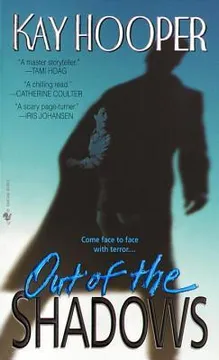


Plot Summary
Prologue
Gladstone has always seemed too quiet to harbor danger. Then Lynet Grainger, a sixteen-year-old who knew one of the town’s murdered teenagers, walks home after dark and accepts company from someone she recognizes.
The stranger offers concern, then reveals a weapon and makes Lynet go along. Her trust turns the town’s greatest comfort, knowing its neighbors, into a vulnerability. By the time Lynet’s mother reports her missing, the killer has already taken her.
The opening turns small-town familiarity into a mechanism of danger. Lynet does not walk into a trap because she ignores obvious warnings; she accepts help from someone whose presence seems ordinary and safe. That choice gives the crime its intimate force. Gladstone’s faith in its own innocence is not merely mistaken, it leaves its residents unprepared to recognize menace when it wears a familiar face. The delayed missing-person report also shows how neglect and communal assumptions can give a predator time.
The Town’s Second Body
On a rain-soaked morning, Deputy Alex Mayse and Sheriff Miranda Knight examine the remains of Adam Ramsay, a teenager whose mother had assumed he ran away. His class ring and gold-capped tooth identify him, but the county doctor estimates the bones belonged to a man decades older. The discovery makes two dead teenagers in less than a month, since Kerry Ingram’s battered body was found earlier.
Miranda resists calling in federal help, determined not to surrender the investigation before her department has tried. Yet she seems to know more than she admits, and the impossible age of Adam’s skeleton turns a grim murder inquiry into a puzzle that ordinary forensics cannot settle.
The discrepancy between Adam’s identity and his bones establishes the novel’s governing tension: evidence is real, but its meaning resists ordinary explanation. Miranda’s refusal to call for help is partly professional pride, yet it also protects a private history she has reason to fear reopening. Alex’s practical concern exposes the limits of a small department without making its local knowledge irrelevant. Gladstone’s apparent safety has been maintained by treating disappearances as personal choices; now the town must confront the cost of that convenient story.
Miranda Calls Her Past
When another teenager, Lynet Grainger, disappears, Miranda finally asks the FBI’s unconventional task force for help, though the call means facing Noah Bishop, the profiler she once loved. Bishop arrives with agents Tony Harte and Sharon Edwards as searchers drag Gladstone’s lake. Miranda’s vision has already shown her that Lynet is nearby, and Bishop senses an abandoned well the local deputies have missed.
His certainty confirms what Miranda has concealed: neither of them relies only on conventional police work. They share a history of extraordinary intimacy and a rupture she refuses to discuss. Their restrained reunion leaves Alex puzzled, while the search shifts from the lake to the surrounding ground.
The reunion makes cooperation emotionally costly before it becomes practically useful. Miranda needs Bishop’s expertise, but his presence threatens the controlled life she built after their separation. Their psychic abilities create a second form of professional intimacy: they can recognize one another’s knowledge without being able to trust one another’s motives. Alex’s confusion gives the reader a grounded perspective on a partnership shaped by secrets. The case begins to force private history into public work, showing that competence alone cannot keep the past contained.
The Well Gives Up Lynet
The search team finds an abandoned well and hauls Lynet’s battered body from its depths. Dr. Edwards determines that Lynet was drugged, beaten to death, drained of blood, and carefully blinded; the clean removal of her eyes suggests a killer who handles bodies with practiced skill.
Her treatment differs from Kerry Ingram’s, who appears to have endured prolonged strangulation, while Adam’s remains conceal still stranger injuries. Bishop warns Miranda that she is blocking the psychic impressions his team uses, but she keeps her defenses tight. The town now has three murdered teenagers, no reliable physical trail, and a killer whose rituals change from victim to victim.
Lynet’s body offers precise facts without a clear motive, an unsettling distinction between what forensic knowledge can establish and what it cannot explain. The killer’s care in removing her eyes complicates the violence: control and attention coexist with brutality. Miranda’s shielding is both a survival strategy and an obstruction, protecting her sister while limiting the team’s access to information. Her choice carries a bodily cost, as headaches and sensitivity to light begin to appear. The investigation’s central method therefore has an intimate price, paid first by the person best equipped to help.
Four Gifts, One Wound
Inside the task force room, Miranda acknowledges that she can receive thoughts through touch, sense danger, read emotional traces, foresee events, and shield minds. Bishop explains that the FBI team was formed to investigate cases where evidence defies standard methods. He also reveals that he killed Lewis Harrison, the Rosemont Butcher, years earlier, though the Bureau kept Harrison officially listed as missing.
Miranda’s sister Bonnie, who has lived under Miranda’s protection since their family was attacked, remains central to the strain between them. Miranda accesses the old case records and sees the relentless work Bishop did, but understanding his effort does not erase the betrayal that drove her away.
Naming Miranda’s abilities gives structure to what had seemed like uncanny luck, but it does not make them easy to control. Her skills are less a superpower than a set of involuntary forms of exposure, each requiring discipline and concealment. The Harrison revelation complicates her judgment of Bishop: he acted with courage, yet also withheld a truth she had needed. His past success cannot repair trust by itself. The scene frames recognition as an ethical problem, not a simple exchange of information: knowing what someone did is different from knowing why, and different again from forgiving them.
The Killer’s Private Rules
The autopsies and crime scenes reveal that the victims were drained of blood, but the killer’s methods differ. Bishop reads Lynet’s apparent role in the pattern as a mistake: unlike the other teenagers, she provoked sexual desire and shame in him, so he drugged her and killed her quickly.
He predicts the next target will be a physically confident older boy, chosen to restore the killer’s sense of control. Miranda orders a curfew, while the agents find no comparable crimes in nearby counties and conclude that the murderer likely lives locally. The prediction proves urgent when eighteen-year-old Steve Penman vanishes after returning to town from dropping off his girlfriend, Amy.
Bishop’s profile turns apparently inconsistent crimes into a sequence governed by the killer’s self-image. His violence is not random in the psychological sense; it follows rules designed to preserve a respectable identity while discharging hidden impulses. The prediction is useful but morally grim, because identifying a likely next victim does not give the police a way to prevent his abduction. Miranda’s curfew is an attempt to make limited authority meaningful. Steve’s disappearance demonstrates the gap between understanding a danger and being able to reach it in time.
Steve Vanishes Before Curfew
With no witnesses and Steve’s parked car left near the drugstore, the search stalls. Amy, desperate to find her boyfriend, persuades Bonnie to use a Ouija board. The planchette spells Lynet’s name, then directs the girls toward an abandoned millhouse on the river, warning that they may be too late.
Miranda and Bishop follow the lead without revealing its source; inside, they find Steve’s body hanging above a trench where his blood has drained. Edwards confirms that he was struck unconscious, washed, and drained, with his tongue carefully removed. Amy later reveals she is pregnant and remembers Steve hinting that Adam had discovered something dangerous. His death may have followed his attempt to investigate it.
The Ouija board converts grief into evidence, but the knowledge arrives in a form that exposes the living to new risks. Bonnie’s willingness to help Amy is compassionate, not reckless, yet she cannot control who answers or what the contact opens. Steve’s body confirms the urgency of the message without making the method safe. His missing tongue and Amy’s recollection connect the newest victim to Adam’s secret, while her pregnancy gives the loss an ongoing consequence. The scene resists the fantasy that information automatically brings agency: the girls learn where Steve is only after they can no longer save him.
Miranda Opens the Door
As a winter storm closes over Gladstone, Miranda returns home exhausted and finds the Ouija board downstairs. She lowers her psychic shields to check the house, inadvertently giving the spirit summoned by Bonnie and Amy an opening. The force tries to separate Miranda from her body, and she collapses, nearly dying as her systems slow.
Bishop reaches her and breaks through the darkness by touch, restoring her breathing and consciousness. Their reunion becomes a physical and psychic joining that revives their bond but temporarily disables their extra senses. When they trace the attack to the board, they realize a hostile spirit may still be confined in the house, while the living killer remains at large.
The supernatural danger grows directly from an understandable act of care: Bonnie tried to help Amy, and Miranda tried to protect herself by using a familiar defense. The resulting crisis exposes the limits of both women’s control. Bishop saves Miranda by violating the boundary she had insisted he respect, a breach justified by immediate danger but not emotionally simple. Their renewed intimacy is not a cure for old injury; it is a choice made under pressure, followed by the vulnerability of temporarily losing their abilities. The scene makes connection both rescue and risk.
Liz’s Last Cup of Tea
Before the storm fully seals the town, Liz Hallowell recognizes that Bishop’s death may be more than a disturbing vision. The killer reaches her at her car, stabs her, and leaves her body at home with Justin Marsh’s Bible beside the bed. When the snow eases, Miranda, Bishop, and Harte find Liz dead, and the staged clue points suspicion toward the town’s religious scold.
Her cat has disturbed part of her face, leaving Alex to discover a death he cannot yet bear to grieve. The Bible gives the investigators a suspect to question, but Bishop reads the scene as an attempt to conceal the killer’s fear of Liz and the information she might have shared.
Liz’s murder turns her folk knowledge from a source of communal color into a genuine investigative threat. She sees patterns others dismiss, yet her visions arrive symbolically and cannot protect her from the person they concern. The Bible functions as deliberate misdirection, exploiting the town’s readiness to associate public moralism with violence. Alex’s grief is sharpened by his earlier failure to recognize his growing love for Liz. His loss mirrors the case’s larger pattern: people often understand what mattered only after the chance to act has passed.
Adam’s Car Holds the Past
While deputies search years of paper files, the number of teenagers reported missing near Gladstone rises to twenty-nine. Justin recalls Adam driving a green Mustang, and the team learns the car was registered through Adam’s uncle and kept at Steve’s family property. In its barn, they find the vehicle untouched by the storm.
Two burlap sacks in the trunk hold a jar of preserved human eyes, handcuffs, a knife, and ash. The knife’s sale records trace it to Mayor John MacBride. Amy also recalls that Steve believed Adam had learned something dangerous. Together, the hidden car and Steve’s inquiry point toward a local crime history much older than the three bodies that began the investigation.
The Mustang turns accumulated absence into material evidence. Twenty-nine missing young people could be dismissed individually as runaways, but the car’s contents give those disappearances a physical center. Adam’s theft of objects from the killer’s collection suggests both youthful opportunism and a genuine attempt to expose what he found. Steve’s decision to pursue the clue links his fate to Adam’s. The evidence also changes the scale of the case: Gladstone’s current murders are not an isolated eruption but the visible edge of a long-running pattern, enabled by gaps in records and attention.
Bonnie Taken From Station
The knife from Adam’s car was sold to Mayor John MacBride, and police learn that he has a secluded home and years of access to transient teenagers. Before they can secure Bonnie, MacBride hears gossip that she helped locate Steve through the dead.
He visits the clinic, discovers she has gone to the sheriff’s department, then abducts her from inside the building while deputies are nearby. Miranda realizes the mayor could have learned Bonnie’s location from the clinic staff and station chatter.
With MacBride’s home isolated and the storm complicating movement, she and Bishop leave without waiting for a larger team. Their evidence identifies the suspect, but Bonnie’s disappearance makes the investigation a race against his need to understand her abilities.
The kidnapping exposes how information travels through a small community faster than formal security can contain it. MacBride exploits ordinary access, public trust, and overheard gossip, turning the town’s openness into an operational advantage. The sheriff’s department itself offers no sanctuary because the threat has learned how to move within its routines. Miranda and Bishop’s decision to proceed with limited support is dangerous but grounded in the immediate need to protect Bonnie. Their relationship now enables coordination, yet the larger question is whether emotional closeness can withstand the physical risk that follows it.
The Greenhouse Gunshot
In the greenhouse behind his isolated house, MacBride holds Bonnie at gunpoint and keeps a grenade ready as a dead man’s switch. He admits that he killed teenagers to study bodies, preserve blood and organs, and test chemicals, including the compound that artificially aged Adam’s bones.
Adam had found his collection and tried to blackmail him; Steve later asked about the knife and exposed his connection to Adam. MacBride says he killed Liz because he mistook her for the source of the tip. When he aims at Bonnie, Miranda reaches for her gun. Bishop takes the bullet meant for her, and Miranda shoots MacBride dead. Bonnie then uses her healing ability to bring Bishop back.
MacBride’s confession strips away the reassuring boundary between civic authority and private monstrosity. He presents cruelty as research, using the language of knowledge to evade the ethical fact that his subjects are people. His terror of exposure coexists with a desire to control every variable, which explains both his rituals and his repeated mistakes. The climax reverses the conventional rescue: Bishop saves Miranda with his body, while Bonnie, previously treated as someone to shield, becomes the person capable of restoring him. Their survival depends on reciprocal agency rather than one protector acting alone.
Harrison Crosses Again
After MacBride’s death, the Ouija board at Miranda’s house moves by itself. The spirit claiming to be Lynet warns that another presence entered when the girls opened the board: Lewis Harrison, the psychic murderer Bishop killed years earlier.
Harrison has waited for Bonnie’s mediumistic gift and attacks her at the clinic, where she lies conscious but unable to respond. Bishop recognizes Harrison’s mind, and he and Miranda reconnect telepathically without physical joining.
Inside Bonnie’s mind, they find her protected within a crystal-like refuge. Bishop confronts Harrison while Miranda reaches Bonnie; together, with Bonnie’s will, they drive the intruder out. Bonnie wakes, and a white streak appears in Bishop’s hair as the cost of their fight.
The final threat turns the earlier supernatural subplot into a consequence rather than an unrelated twist. Bonnie’s gift has always made her receptive to the dead, and the door opened to help Amy also lets an old enemy follow her. Unlike MacBride’s laboratory violence, Harrison’s assault targets the boundary between identity and possession. Bonnie’s inner refuge shows that protection can be self-created, while the three-way effort to free her makes trust materially effective. The white streak in Bishop’s hair gives their victory a visible cost, refusing to make psychic power effortless or consequence-free.
The Basement of Horrors
Investigators search MacBride’s basement and uncover a locked laboratory with cells, medical equipment, chemical supplies, preserved body parts, and nearly two decades of records.
Tire matches, hairs, tools, and MacBride’s journals corroborate the case, while his notes explain how he recruited vulnerable young people through local work advertisements. The discovery confirms that Adam’s car held evidence of a much longer campaign, and that the town’s missing-person files concealed its scale.
Miranda must face the public fallout and the grief of a community that trusted its mayor. Alex, bereaved by Liz, stays busy rather than confronting his loss. Miranda and Bishop leave the case stronger together, though she still has a sheriff’s term to complete.
The basement transforms inference into institutional proof. MacBride’s records show that the crimes depended not only on individual cunning but on the ordinary systems that made vulnerable teenagers easy to overlook: casual employment, transient traffic, incomplete files, and local confidence in familiar authority. The town’s shock is therefore more than embarrassment; it is a crisis of collective self-knowledge. Miranda’s professional victory cannot erase that complicity or Alex’s bereavement. The ending leaves healing unfinished, but it gives the survivors a more honest basis for deciding what responsibility requires.
Epilogue
A week later, the evidence against MacBride is overwhelming, and the town begins the public work of reckoning with what he did. Bishop urges Miranda to leave the sheriff’s office eventually and join his FBI team, where their strengthened psychic bond could help solve cases together.
Miranda resists because Bonnie, Seth, and her elected term anchor her to Gladstone. A sudden shared vision interrupts the argument, and Bishop treats it as confirmation that their future is already taking shape. Rather than leave immediately, Miranda asks Alex whether he wants to be sheriff.
The epilogue refuses an easy escape from Gladstone. Miranda’s abilities make her valuable to the FBI, but she has obligations rooted in relationships and civic responsibility, not merely fear or habit. Asking Alex to consider the sheriff’s role turns succession into an act of trust rather than abandonment. The shared vision also echoes the novel’s persistent uncertainty about fate: prediction may shape choices without dictating every detail. Miranda’s future remains open, but she no longer has to approach it alone or pretend that self-protection means refusing connection.
Analysis
Out of the Shadows treats evil not as an intruder who arrives from outside but as a presence protected by local habits of trust. Gladstone’s residents assume that familiar faces are safe, that missing teenagers have chosen to leave, and that civic respectability is evidence of moral character. Those assumptions allow the killer to operate for years. The town’s records are incomplete, its institutions under-resourced, and its public attention easily diverted by gossip or panic. The horror grows from these ordinary failures as much as from the killer’s violence.
The novel also distinguishes between knowing and controlling. Miranda’s visions can reveal what may happen, but they cannot simply cancel it; her attempts to shield herself alter her relationships and impair her access to the world around her. Bishop’s profiling offers powerful interpretations, yet his earlier certainty helped him make choices that damaged trust. Both characters must learn that insight does not confer ownership over another person’s mind or decisions. Their renewed partnership works because their abilities become relational rather than unilateral, with each relying on the other’s consent and strength.
Bonnie and Amy show how grief can drive people toward dangerous forms of hope. The Ouija board gives them information when official searches fail, but the message carries consequences neither girl can manage alone. Bonnie’s eventual ability to protect and heal others challenges the assumption that care means remaining passive or sheltered. Meanwhile, MacBride’s claim to pursue research exposes the moral emptiness of knowledge detached from responsibility. He can describe bodies in technical terms because he has trained himself not to recognize persons. The novel’s counterclaim is enacted by its survivors: expertise matters, but it becomes ethical only when joined to attention, accountability, and care.
Review Summary
Out of the Shadows receives mostly positive reviews, with an average rating of 4.25/5. Readers praise the compelling plot, character development, and psychic elements. Many enjoy learning more about Bishop's backstory and his relationship with Miranda. The suspenseful mystery keeps readers guessing until the end. Some criticize predictable elements or slow pacing. Overall, fans of paranormal thrillers and the Bishop/Special Crimes Unit series find it engaging and satisfying, with several calling it their favorite in the series so far.
People Also Read

Characters
Miranda Knight
Guarded psychic sheriffMiranda is Gladstone’s sheriff, a former lawyer, and a woman with several psychic abilities she has spent years concealing. She values evidence, competence, and the independence of her department, partly because she knows how easily unusual knowledge can be used against her. Her protectiveness toward her younger sister Bonnie shapes her decisions more deeply than public approval does. Miranda’s reserve is not a lack of feeling; it is a practiced defense built around grief, responsibility, and fear of being exposed. She is a capable investigator who wants to remain in control of what she knows and whom she trusts, even when a crisis makes those boundaries difficult to maintain.
Noah Bishop
Telepathic FBI profilerBishop is a senior FBI profiler whose unusual senses help him interpret crime scenes and anticipate how offenders think. He is disciplined, perceptive, and willing to pursue a case with an intensity that can become ruthless. That determination has produced results, but it has also damaged his closest relationship. The scar on his face and his controlled manner make him appear difficult to approach, while his loyalty to colleagues is expressed more through action than ease. He wants to repair what he once broke with Miranda, yet must learn that his certainty and good intentions do not entitle him to her trust.
Bonnie Knight
Sensitive younger sisterBonnie is Miranda’s teenage sister, a gentle and empathetic young woman whose sensitivity to other people’s pain makes her a devoted friend. She has grown up under Miranda’s fierce protection and carries private experiences that have taught her caution around her own abilities. Bonnie’s instinct is to help, even when she understands that helping can expose her to danger. She is not simply a vulnerable person for others to guard; her judgment, courage, and capacity for care matter to the people around her. Her relationship with Seth offers companionship without requiring her to hide the complicated parts of herself.
Alex Mayse
Loyal local deputyAlex is Miranda’s trusted deputy and a practical investigator who knows Gladstone’s people, routines, and blind spots. He is protective of Miranda without treating her as incapable, and his skepticism about the paranormal is tempered by respect for her judgment. The death of his wife has left him wary of new attachments and more comfortable with work than with grief. His friendship with Liz develops within that guardedness, while his loyalty to the department keeps him engaged in a case that repeatedly exceeds its resources. Alex provides a grounded counterweight to the FBI team’s extraordinary methods.
John MacBride
Anxious town mayorMacBride is Gladstone’s mayor, a political figure attentive to public confidence and the town’s reputation. He is accustomed to being treated as an authority and expects the sheriff to keep residents calm during a crisis. His manner can be reassuring in public, though strain reveals how much he depends on order and recognition. He is a familiar presence in the civic life of a small town, where access and trust often come without formal scrutiny. His character matters because the community’s assumptions about respectability shape how readily people notice, question, or excuse those in power.
Liz Hallowell
Tea-reading booksellerLiz owns Gladstone’s bookstore and café, a gathering place where news, gossip, and private worries meet. Her Romany family heritage informs her attention to omens, dreams, and patterns, though she does not treat every impression as certainty. Kind, curious, and socially perceptive, she often notices what more conventional observers dismiss. Her connection with Alex is tender but complicated by his grief and her reluctance to demand what he may not be ready to offer. Liz’s independent life and intuitive habits make her an important interpreter of the town’s emotional weather.
Tony Harte
Emotion-reading FBI agentTony is a member of Bishop’s FBI task force who senses emotional traces and helps interpret investigative patterns. He uses humor to ease tense rooms, but his levity does not diminish his seriousness about victims or colleagues. Tony is perceptive about the emotional strain between Miranda and Bishop and often recognizes what they avoid saying. He respects local authority and adapts his methods to the limits of a small department. His mix of intuition, professional skill, and tact makes him a bridge between the task force and Gladstone’s deputies.
Sharon Edwards
Forensic pathologistSharon is the task force’s forensic pathologist, practical and clear-eyed in her examination of victims. She translates disturbing physical evidence into useful findings without pretending that the evidence answers every question. Her professional curiosity is matched by respect for local medical staff, especially Dr. Shepherd. Sharon’s presence gives the investigation technical resources Gladstone lacks, while her careful distinctions between certainty and speculation help keep the team’s theories accountable.
Amy Fowler
Grieving teenage girlfriendAmy is Steve Penman’s girlfriend and Bonnie’s close friend. She wants to believe Steve cares for her, even as his treatment of their relationship leaves her uncertain. Her desperation to find him leads her to ask Bonnie for help with an Ouija board, an act driven by grief rather than curiosity alone. Amy’s vulnerability makes her especially susceptible to guilt and fear, but she also holds information about Steve and Adam that becomes important to the investigation.
Seth Daniels
Steady young boyfriendSeth is Bonnie’s boyfriend, a responsible teenager balancing school, work, and a future in medicine. He is protective without being controlling and takes Bonnie’s fears seriously even when he does not understand their source. His initial uncertainty about the paranormal gives way to a willingness to listen and stay present. Seth’s practical steadiness supports Bonnie during the storm and the upheaval around Amy, while his own intuition makes him attentive to danger others overlook.
Dr. Peter Shepherd
Curious county doctorShepherd is Gladstone’s coroner and a local doctor who approaches forensic work with more enthusiasm than specialized training. His curiosity helps him notice anomalies, and he is willing to acknowledge the limits of his expertise when the remains demand outside analysis. He treats Miranda as a colleague and cooperates readily with Sharon Edwards. His scientific interest offers the town a useful local resource, even as the case quickly exceeds what his small facility can handle.
Colin Daniels
Community-minded physicianColin is Seth’s father and a local doctor who runs a pediatric clinic. He provides care for frightened teenagers and helps keep the clinic functioning through the winter storm. Colin is practical about medicine but willing to acknowledge when a problem exceeds its tools. His calm presence gives Seth a model of responsibility and offers Bonnie a safe place to help her friend.
Justin Marsh
Zealous local preacherJustin is a religiously zealous Gladstone resident who scolds the town for what he sees as moral decline. He is theatrical, persistent, and quick to interpret public events through a strict moral framework. His long marriage to Selena appears to have settled into a pattern in which he speaks and she follows quietly. Justin’s loud certainty makes him a conspicuous presence during the investigation, though his convictions do not make him a reliable guide to the town’s actual dangers.
Selena Marsh
Quiet preacher’s wifeSelena is Justin Marsh’s wife, a quiet woman who usually remains close to him in public. She carries herself with a habitual deference that leaves others unsure whether she is content or simply accustomed to the life she has built. Her limited speech contrasts with her husband’s public certainty.
Lynet Grainger
Studious Gladstone teenagerLynet is a diligent teenager who takes school seriously and worries about getting home safely after dark. She is known to Bonnie’s circle and lives with a mother whose instability leaves her carrying more responsibility than a child should. Her ordinary hopes and careful nature make her disappearance especially frightening to the town.
Kerry Ingram
Missing girl rememberedKerry is a fourteen-year-old Gladstone teenager whose disappearance becomes the town’s first warning that something is wrong. She is remembered as shy, hardworking, and proud of succeeding in a difficult class. The adults around her make assumptions about her family and choices rather than looking closely at what has happened.
Adam Ramsay
Restless teenage runawayAdam is a seventeen-year-old who has a strained relationship with his mother and a habit of leaving home after arguments. He is resourceful and curious, with a reputation among peers that makes adults underestimate how much he may notice. His connection to Steve and his secret use of a car become relevant to the investigation.
Kara Daultry
Gifted older sisterKara is Miranda and Bonnie’s older sister, whose unusual perceptive abilities helped shape the family’s understanding of psychic experience. She is remembered as protective and brave, especially toward Bonnie. Her place in the sisters’ shared history explains the depth of Miranda’s caution and Bishop’s remorse.
Mrs. Task
Devoted household anchorMrs. Task is the housekeeper who has supported Miranda and Bonnie since they came to Gladstone. Practical and nurturing, she offers food, routine, and dependable care when the sisters are absorbed by the demands of the sheriff’s office. Her loyalty is part of the home Miranda has worked to build.
Plot Devices
The FBI psychic task force
Unconventional investigative lensBishop’s FBI unit investigates cases where conventional evidence is missing, contradictory, or apparently inexplicable. Its agents combine ordinary police work with distinct psychic sensitivities, including emotional impressions, heightened perception, and telepathy. The unit does not replace local law enforcement; Miranda remains in charge of the Gladstone investigation. This structure allows the novel to make intuition part of procedure without treating it as infallible. Each impression must still be tested against physical evidence, witness accounts, and the limitations of the agent receiving it.
Miranda’s psychic defenses
Knowledge with a bodily costMiranda combines precognition, touch-based telepathy, danger-sensing, and the ability to shield minds. Her powers help her anticipate discoveries and protect Bonnie, but she can also restrict her own perception and block the task force. Maintaining strong defenses brings headaches, light sensitivity, and physical strain. The abilities therefore operate as both investigative tools and psychological defenses: they help Miranda manage exposure, but excessive control can isolate her from allies and make her less safe.
The Ouija board
A dangerous spirit doorwayBonnie and Amy use the board while trying to learn where Steve has been taken. It spells out a location, allowing the sheriff and Bishop to find Steve’s body, but the contact is not safely controlled. An unwanted presence can follow the connection, and Miranda later opens herself to danger when she lowers her shields near the board. The object converts grief and curiosity into actionable information while making clear that receiving a message is not the same as understanding who sent it.
The shared psychic bond
Trust becomes tactical strengthMiranda and Bishop can communicate telepathically and amplify one another’s abilities when their minds are open. Their bond began in an earlier relationship, but emotional betrayal led Miranda to shield herself from him. As the investigation forces them to cooperate, the connection returns, enabling silent coordination and eventually helping them confront a threat inside Bonnie’s mind. Their shared power is not simply convenient: it depends on trust, consent, and the willingness to be known.
Adam’s hidden Mustang
A buried crime archiveThe green Mustang gives the investigators a physical link between Adam Ramsay, Steve Penman, and a hidden cache of objects. The contents include preserved human eyes, handcuffs, ash, and a collectible knife whose sale leads to an influential local figure. The car turns scattered hints into evidence and helps connect the current victims to a much older pattern of disappearances. It also shows how a teenager’s curiosity, initially treated as mischief, can expose truths adults and institutions failed to find.
Download PDF
Download EPUB
.epub digital book format is ideal for reading ebooks on phones, tablets, and e-readers.








