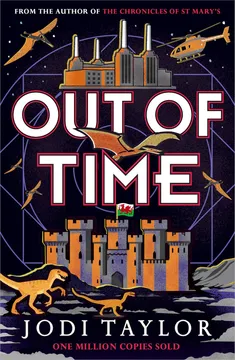


Plot Summary
Prologue
Exhausted Time Police officers enter a ravine believing they are hunting illegal activity. Instead, Lieutenant Sharron recognizes too late that the briefing has led them into an ambush. A sonic weapon and blaster fire kill seven officers before she gets the survivors back to their pod.
An emergency jump misfires: pod, wall, floor, and crew fuse into one impossible wreck, leaving several officers alive but trapped. Colonel Albay sends the rescuers away, then shoots every survivor to conceal the accident and keep the depleted Time Police fighting. Sharron dies promising the truth will surface. In the dark, the pod’s damaged system preserves one faint accusation.
The prologue makes institutional violence concrete before the main investigation begins. Sharron’s leadership keeps a retreat orderly, but no competence can protect her team from a system that treats manpower as more important than people. Albay’s justification converts murder into logistics: concealment becomes a way to preserve morale, and silence becomes a weapon more durable than the blasters. The pod’s surviving signal gives the buried crime a mechanism for returning. Its accusation is not merely supernatural menace; it is the consequence of a memory the institution chose not to keep.
A Dinosaur Reaches Wales
At Time Police headquarters, Commander Hay is managing a unit-wide recall and the return of Team 236 from its disastrous recent assignment. Luke Parrish gives Jane Lockland a replacement notebook, quietly showing that her preferences have begun to matter to him, while Matthew Farrell is assigned to study the immense Time Map during his recovery.
Then a recently dead, unfamiliar reptile washes up beside a Welsh river. Its electronic collar suggests an owner, not a prehistoric accident. Hay sends Major Ellis and Lieutenant North to secure the body and investigate discreetly.
At the same time, former officer Hooke, held in custody after the earlier mission, dies shortly after Major Callen questions him. Lieutenant Varma, responsible for security, fears the unexplained death will end her career.
The story begins by making ordinary institutional routines collide with anomalies that resist classification: an illegal toilet experiment, a prisoner’s death, and a fresh dinosaur corpse. The humor does not erase danger; it shows how the Time Police metabolize crisis by turning it into procedure and banter. Jane’s notebook and Luke’s attentiveness establish an intimate countercurrent to that machinery. Meanwhile, the collar shifts the dinosaur from a marvel into evidence of human control, planting the ethical question that will govern the investigation: who has treated living beings as equipment?
Wales Goes Silent
At the Welsh pavilion, Ellis and North examine the body and conclude that it is a carnivorous raptor fitted with a remotely controlled collar. Before they can leave with the evidence, an explosion obliterates the helicopter, the veterinarian, two civilian police officers, and the dinosaur.
Ellis and North survive because the blast throws them clear, but their communications equipment fails. They hide in the countryside, carrying the veterinarian’s file and realizing the collar may have allowed the creature’s owners to track the recovery team.
Hay declares the Time Police under attack and orders a lockdown. The missing evidence leaves the investigators blind, while the deliberate timing suggests that whoever owns the animal knew where the body had gone.
The blast converts curiosity into a contest over information. The perpetrators do not merely kill; they erase the object that could explain their operation, forcing the Time Police to rebuild a case from fragments. Ellis and North’s survival depends on their refusal to trust an apparently normal response from local authorities, a useful reversal for agents trained to rely on institutional channels. The collar’s tracking function also recasts the initial clue: technology meant to restrain an animal has become a beacon that endangers anyone who handles it.
Max Leaves Ancient Rome
The medical report clears Varma of causing Hooke’s death: his aneurysm followed his refusal to take medication, and he had been able to summon help. Hay gives Varma a new assignment, but first Varma tricks Sawney into talking by making him believe Hooke has betrayed him.
His information helps identify the threat behind the Welsh investigation. Hay sends Luke and Jane to St Mary’s for Dr Maxwell, the historian most likely to recognize the creature. They find Maxwell observing the mysterious disappearance of Romulus in 717 BC.
During a storm, a team led by Varma stuns the Roman king and carries him away. Maxwell records the act. Back at headquarters, the footage makes Varma appear to be a traitor, though she is simultaneously investigating in Wales.
The apparent contradiction between Varma’s conduct in Rome and her presence in Wales makes evidence itself unstable. The footage is accurate, but its meaning depends on when the viewer stands in time. That distinction exposes a central vulnerability in organizations built on records: documentation can establish an event without establishing motive or chronology. Varma’s interrogation tactics likewise show her working within a compromised system without surrendering her intelligence. Maxwell’s recording becomes both protection and danger, since a clear image can incriminate the wrong person just as effectively as it can reveal a crime.
The Wall Opens
While repairs continue at headquarters, the Senior Mech admits to Hay that the blocked corridor conceals a pod that returned from a wartime mission fused with a wall. He had obeyed Colonel Albay’s order to seal it, never knowing for certain what happened inside.
Hay and Major Callen enter the wreck and find Sharron and her crew preserved among the damaged machinery. The Senior Mech discovers fatal blaster wounds on every body, evidence that the trapped officers were executed rather than simply abandoned to their injuries.
At Hay’s direction, he downloads the pod’s damaged AI records. The recovered data carries Sharron’s accusation into the Time Police network, where the old cover-up begins to speak through their screens and communications systems.
The hidden pod makes architecture a form of institutional memory: the building has literally incorporated the officers the organization erased. The Senior Mech’s shame is not the same as Albay’s direct violence, but his silence helped make the concealment durable. Hay’s decision to open the wall interrupts that inheritance, though the recovered AI immediately demonstrates that truth is not automatically safe or orderly. The recording can bear witness, but its corrupted transmission turns remembrance into a crisis that the living must choose how to face.
A Mine Hides Dinosaurs
In Wales, Varma and Maxwell search upriver while Trainee Tucker works the opposite bank. They discover a camouflaged structure covering an abandoned mine entrance, then are caught by armed guards and thrown into the shaft.
Beneath the castle, the tunnel network reeks of animals and leads toward a misted time-slip. Henry Plimpton, a powerful time criminal, recognizes Maxwell from an earlier encounter and identifies Varma as the Time Police security chief. He separates them from the outside world and questions their value.
Plimpton’s guards do not know that Tucker, increasingly worried by their silence, has chosen to cross the river rather than abandon his colleagues. He finds the entrance and slips into the complex, where the first clues point toward a large-scale animal operation.
The mine turns the landscape into a concealed supply chain: a river brings the first body to public attention, while tunnels carry living creatures between eras. Varma and Maxwell enter the danger through different habits. Varma seeks control and reliable procedure; Maxwell follows curiosity, even when it makes her an easy target. Tucker’s decision to return across the river marks a quieter moral choice. His history as an illegal gives him a credible route into Plimpton’s operation, but his willingness to risk capture shows that belonging is becoming more important to him than escape.
Plimpton’s Human Zoo
Plimpton explains that the mine’s time-slip opens into the Cretaceous and that his workers capture dinosaurs for wealthy clients, laboratories, and weapons research. Control collars punish the animals into attacking on command, but captivity has made many sick or dead.
His larger ambition is a private exhibition in which rich customers can watch, influence, or purchase the fates of people taken from history. The Princes in the Tower are among his planned attractions; Romulus is an early acquisition.
Maxwell pretends to welcome employment, using her historical knowledge to persuade Plimpton she can improve the business. She learns that he has an investor and a ready-made suite for the princes. Varma remains a prisoner, while Maxwell searches for a way to disrupt the scheme without alerting him.
Plimpton’s project is not simply a criminal enterprise; it is a market built around converting personhood into spectacle. His language of investment and customer experience hides the blunt fact that he intends to sell access to other people’s lives and deaths. Maxwell survives by speaking his language, which makes performance a form of resistance and a psychological hazard: the more convincingly she plays a mercenary, the more she risks being recruited into the role. The sick dinosaurs mirror the human captives, both damaged by removal from their own worlds.
Tucker Breaks the Enclosure
Tucker moves through Plimpton’s facility disguised as a worker and learns that the tunnels hold rows of distressed dinosaurs, while the far side of the mine opens into their prehistoric habitat.
He sees that the operation depends on an electrified barrier, unreliable power, and cages already damaged by desperate animals. After locating Maxwell and Varma in the complex, he decides not to wait for rescue. He drives a forklift into a control panel, cutting power to the barrier, then releases animals from their cages to create confusion.
Small dinosaurs scatter first; larger creatures begin to push through the tunnels. The disruption gives the captives a chance to move, but it also sends predators toward the Welsh town and puts everyone in the facility at risk.
Tucker’s sabotage is both rescue and escalation. His criminal experience lets him recognize that a system’s weak points are often mundane: a control panel, a careless latch, an assumption that workers will obey. Yet liberation without a plan creates new victims, a consequence he cannot fully control. The scene complicates any easy distinction between lawful order and moral action. Plimpton’s barriers are technically functional, but they exist to protect an abusive enterprise; breaking them is necessary even though it unleashes danger on people far beyond the mine.
The Princes Become Targets
Plimpton orders Maxwell and Varma to lead a team into 1483 and seize Edward and Richard, the young Princes in the Tower. Maxwell recognizes that her own historical visits had found the boys inexplicably absent, suggesting Plimpton’s scheme may already account for their disappearance.
She and Varma agree to cooperate outwardly, intending to save the princes and escape with evidence. Plimpton adds Sir James Tyrell, an unnervingly capable assassin, and denies the women weapons.
At the Tower, the team quietly incapacitates the attendants and enters the princes’ room. Maxwell and Varma make their move against Plimpton’s men, but the planned extraction collapses into a fight. Varma is stabbed and stunned; Maxwell is shot while trying to protect her.
The princes’ threatened fate gives the story’s historical puzzle an immediate ethical cost. Maxwell and Varma cannot simply expose Plimpton later; they must act inside a mission designed to make them accomplices. Their tactical cooperation depends on different strengths: Maxwell reads the historical setting and improvises, while Varma evaluates force and risk. The plan’s failure demonstrates how little agency captives possess when their captor controls weapons, transport, and the terms of participation. Still, the women’s decision to resist matters, even before they know whether they can survive it.
A Murder Speaks Again
As the damaged pod AI spreads through headquarters, Sharron’s recorded accusation appears on screens and sounds through communications equipment. The Time Map and other systems fail, trapping Matthew inside a projected segment.
Hay and the Senior Mech realize that the broadcast comes from the pod they opened. They restore power to it and Hay enters alone, accepting responsibility for the Time Police’s silence and promising recognition for the dead officers. The Senior Mech admits his own complicity and joins her.
The pod does not trap them. The Senior Mech then cuts power across headquarters to stop the corrupted AI, leaving the organization nearly blind. Hay authorizes a low-tech response and dispatches whatever personnel and equipment remain available to Wales.
Hay does not defeat the accusation by disputing its facts. She answers it with accountability, naming both the original crime and the later institutional neglect. Her willingness to offer herself is not a magical solution; it is a credible act of command because she accepts that authority includes responsibility for inherited failures. The power shutdown then makes the material cost of truth visible: the institution loses the systems it trusts and must act through people, memory, and judgment. Matthew’s entrapment links the Map’s mystery to the same crisis without reducing one to the other.
The Library Holds Wales
While Grint’s force searches the Welsh town, Luke and Jane first mistake escaped animals for danger, then find two raptors by the park lake and kill them when they attack. Grint gathers residents inside the public library, where Miss Knibbs organizes staff, readers, and mobile library vehicles into a defense.
Raptors enter the square and converge on the building, while an ankylosaurus becomes entangled in the fight and smashes through the library’s windows. A giant mobile library, the Red Dragon, draws predators away with noise and motion long enough for civilians to evacuate. Inside, alarms and blaster fire hold off the animals, but pterosaurs breach the barricade and trap Jane beneath fallen shelving as Luke struggles to reach her.
The library’s transformation from welcoming civic space to improvised fortress makes collective knowledge practical rather than symbolic. Miss Knibbs knows the building’s doors, shelves, vehicles, and staff, and that local expertise proves as valuable as military equipment. Luke and Jane’s early encounter with the raptors also shifts their reputation: they act decisively, but Jane’s sorrow for the creatures refuses to confuse necessity with blame. The siege dramatizes a community confronting a danger created elsewhere, and the librarians’ competence turns a supposedly soft institution into a place of organized protection.
Pheromones Turn the Tide
Reinforcements arrive as Bailey’s helicopter sprays elephant pheromones and drops meat to draw dinosaurs back toward the mine. In the tunnels, Jane carries the spray while Grint guards her.
The mixture affects both dinosaurs and people; trapped together during a stampede, Jane and Grint finally act on their mutual attraction, then acknowledge that their feelings are not merely the drug’s effect. Elsewhere, Tucker stops a confrontation between Plimpton’s workers and the Time Police by persuading both sides to cooperate against the animals.
Using locker doors as shields, workers and officers push the overexcited herd toward the time-slip. Maxwell, Varma, and Callen escape the Tower with the princes, while the assault on Plimpton’s castle begins above them.
The pheromone plan is comic precisely because it makes bodies impossible to ignore, but its emotional payoff depends on what predates the chemical influence. Jane and Grint have to distinguish desire from coercion before their intimacy can mean anything; their later recognition gives the scene its relational weight. Tucker’s alliance with Plimpton’s workers offers a parallel model of cooperation. He does not ask either group to trust the other completely, only to acknowledge a shared immediate danger. Survival becomes a temporary coalition rather than a reward for institutional purity.
Plimpton Falls at Dawn
Time Police teams sweep the castle while Luke, Jane, Matthew, and others search for Plimpton. They find Romulus drugged in a guarded room and discover an elaborate viewing suite prepared for the Princes in the Tower. Plimpton slips through the chaos disguised in a Time Police uniform and reaches the keep roof, where he takes Romulus hostage and threatens the wounded officers awaiting evacuation.
Luke cannot get a clear shot without hitting the Roman king. Jane draws Plimpton’s attention, giving Luke a narrow opening. He shoots Romulus in the thigh, making Plimpton stumble clear of his shield. Bailey starts the helicopter rotors, which kill Plimpton before he can escape. Romulus survives, and Luke’s team is credited with ending the threat.
The climax refuses a clean rescue in which every person is untouched. Luke chooses a disabling shot that wounds Romulus rather than risk a miss that could leave Plimpton free to kill several people. The choice is consequential, morally uncomfortable, and made under pressure. Jane’s deliberate exposure and Bailey’s intervention make the outcome collective, not the triumph of a lone marksman. Plimpton’s death by the machinery he hoped to use for escape is grimly apt: his command over bodies and technology ends in a loss of control he cannot negotiate away.
The Truth Costs More
With Plimpton dead, the Time Police dismantle his operation and spend a week guiding dinosaurs back through the time-slip before sealing it. One ankylosaurus misses the deadline and becomes a Welsh public favorite, eventually settling at a wildlife park as Ankaret.
Hay learns that Major Callen has secretly worked with Raymond Parrish, Luke’s father, on investigations involving wealthy time criminals. She dismisses Callen from the Time Police after confronting his concealed employment and divided loyalties.
Tucker rejects Varma’s offer to leave and commits to staying with the unit. Imogen’s mother secures the release of the Time Police budget. Maxwell realizes Plimpton’s recorder may have exposed St Mary’s to his unseen backer, so she returns there to warn Dr Bairstow.
The resolution distributes consequences instead of treating Plimpton’s death as a reset. The dinosaurs require patient management, the trapped officers require public recognition, and the Time Police must examine the compromises inside its own leadership. Callen’s case is especially uncomfortable because he claims his private work served the same ends as the organization; Hay’s response insists that good intentions do not erase divided accountability. Tucker’s choice to stay answers his earlier temptation to disappear. Maxwell’s final warning keeps the ending open: one criminal network has been broken, but the knowledge it gathered may travel farther.
Epilogue
At the Stop the Clock ceremony, the Time Police formally name the thirteen officers killed in the old pod accident and award them medals for bravery. Sharron and her team are no longer missing in action or buried behind a wall.
Hay reads their names before the assembled unit, and Mellor’s sister receives his medal. Jane watches Luke and Matthew beside her and imagines the day one of them might be remembered in the same way. Hay orders the clock stopped for the fallen, holds the silence they were denied, and then starts it again.
The ceremony repairs a public record, but it cannot return the dead or undo the years in which their families were left without the truth. Stopping the clock gives the officers a collective ritual for facing what the institution once concealed. Jane’s fear that Luke, Matthew, or Grint could someday be named at a similar ceremony keeps the moment from becoming easy consolation. The clock restarts because the living must continue, but the pause changes what continuation means: memory is now part of the organization’s duty rather than an obstacle to its work.
Analysis
Out of Time builds its plot around three kinds of containment: the Time Police’s protocols, Plimpton’s cages and collars, and the historical record itself. Each promises control, and each fails when it treats living beings as manageable objects. The dinosaurs do not thrive in captivity; the pod’s safety systems fuse people into a wall; the Time Map cannot remain a neutral chart once events begin to shift. These failures are material, not abstract. They injure bodies, destroy evidence, and force characters to make decisions without reliable systems. The novel’s strongest ethical contrast is between institutional survival and individual accountability. Albay kills trapped officers to preserve morale, then hides them as missing. The Senior Mech’s silence shows how complicity can consist of doing nothing under pressure, while Hay’s response demonstrates that command can mean accepting responsibility for inherited wrongs. The Stop the Clock ceremony cannot repair the deaths, but it changes the institution’s relationship to them by restoring names, benefits, and public memory.
The ensemble also offers competing models of trust. Varma trusts preparation, Maxwell trusts improvisation, Tucker trusts practical knowledge, and Jane trusts observation. None is sufficient alone. The mission succeeds when they collaborate across those differences, especially when Tucker persuades Time Police officers and Plimpton’s workers to confront the dinosaurs together. Even the romance between Jane and Grint depends on recognizing affection beneath an artificial chemical influence, rather than confusing pressure with consent.
Finally, the book insists that history is neither a museum exhibit nor a resource for the powerful. Plimpton’s Human Zoo makes the fantasy of owning the past literal, while Maxwell’s defense of the princes and the animals restores the personhood his business erases. The ending resolves the immediate danger but leaves a recorder, an investor, and St Mary’s exposed. Victory matters, yet it cannot guarantee that the next threat will arrive from outside the institution.
Review Summary
Characters
Dr Maxwell
Unruly historical expertA historian from St Mary’s whose practical experience with the past makes her useful to the Time Police, even when her methods make them regret asking. Maxwell is curious, verbally fearless, and quick to recognize what other people overlook. Her humor often serves as misdirection, allowing her to test powerful people while appearing less threatening than she is. She values independence and is wary of being controlled by institutions, employers, or expectations. Beneath her mercenary jokes is a strong attachment to historical people as living individuals, not material for research or entertainment. She improvises under pressure, but her confidence can also pull her into risks she has not fully measured.
Lieutenant Varma
Relentless security chiefA disciplined Time Police officer responsible for security and investigations. Varma believes preparation and clear authority keep people alive, and she is impatient with Maxwell’s digressions and disregard for orders. Her competence is physical as well as analytical, but she is not simply a rule-bound soldier: she understands legal limits, institutional responsibility, and the danger of acting on incomplete evidence. She carries the burden of being accountable for everything that happens in her section, even when responsibility is not the same as fault. Her dry skepticism makes her a sharp counterweight to Maxwell’s improvisation, while her loyalty to colleagues keeps her from reducing them to liabilities.
Commander Hay
Scarred institutional commanderThe commander of the Time Police, Hay leads a depleted organization through threats that arrive faster than resources can be assembled. She is decisive, practical, and accustomed to concealing pain behind command discipline. Her damaged appearance and wartime losses shape how she understands survival, though she does not allow those experiences to excuse failures of leadership. Hay values loyalty but expects it to be accountable rather than unquestioning. She can tolerate eccentricity when it produces results, and she knows that command means accepting responsibility for decisions made before her tenure as well as during it.
Matthew Farrell
Time Map prodigyA member of Team 236 with an unusual affinity for the Time Map, the vast system that charts historical events and temporal movement. Matthew is intellectually fearless and drawn toward patterns others cannot perceive, sometimes more absorbed by discovery than by the safeguards meant to protect him. His quiet manner can make him seem passive, but he is deeply committed to his teammates and often accepts danger without complaint. He is still recovering from injuries and from the unsettling possibility that the Map may respond to him personally. His curiosity gives the team insight, while his willingness to approach the unknown makes his friends worry about what he may find.
Luke Parrish
Impulsive team leaderThe outspoken leader of Team 236, Luke relies on confidence, quick reactions, and a long history of surviving situations that seemed designed to defeat him. His teasing can conceal insecurity, especially when his feelings become more serious than he knows how to manage. He has spent much of his life treating relationships as temporary, but his growing attentiveness to Jane unsettles that familiar pattern. Luke is brave and capable, though pride sometimes makes him resist asking for help. His strongest loyalty is to his team, whose odd methods he once treated as a burden and increasingly recognizes as the reason they endure.
Jane Lockland
Quietly formidable officerA thoughtful member of Team 236 who prefers notebooks, careful observation, and clear evidence to improvisation. Jane is often embarrassed by attention and uncertain of her own authority, but that reserve should not be mistaken for weakness. She notices practical details, speaks up when treatment of her team is unfair, and can act decisively when another person is in danger. Her inner life is lively and self-questioning, shaped by the tension between a cautious self-image and a bolder part of her personality. Jane seeks trust and emotional security, yet she is learning that courage can include expressing what she wants rather than only protecting others.
Trainee Tucker
Former illegal, new allyA physically imposing trainee with a past outside the Time Police, Tucker has practical skills that conventional officers do not always recognize. He is observant, resourceful, and alert to how people behave inside a hierarchy, having once worked on the other side of the law. His central struggle is whether to return to the freedom and familiarity of his former life or accept the obligations of a new one. Tucker distrusts easy moral labels, but he is capable of loyalty and decisive care. He tends to hide vulnerability behind understatement, even when a choice places him in danger for people who may never fully trust him.
Henry Plimpton
Polite criminal impresarioA wealthy, controlled criminal whose manners make his appetite for power more unsettling, not less. Plimpton treats historical people, dangerous animals, and skilled employees as assets to be managed for profit. He values intelligence and initiative when they serve his designs, but his patience vanishes when he loses control. His ambition is theatrical as well as financial: he wants an audience for the power he can exercise over other lives. Plimpton’s polished self-image allows him to frame exploitation as entrepreneurship, and his ability to move between genial host and ruthless employer makes him difficult to read until he decides that someone has disappointed him.
Lieutenant Grint
Blunt field commanderA senior Time Police officer who leads teams in the field with a stern manner and a deep suspicion of avoidable risk. Grint is direct, physically imposing, and more emotionally perceptive than his clipped delivery suggests. He takes responsibility for his people and does not enjoy admitting uncertainty, especially in front of civilians or junior officers. His relationship with Jane grows from mutual respect and shared work, rather than grand gestures. Grint’s authority can make him seem inflexible, but he is capable of adapting when someone offers a better plan, and he recognizes competence even when it arrives in an unexpected form.
Major Callen
Secretive veteran officerA veteran Time Police officer shaped by the wartime period when the organization was short of people and short of choices. Callen is intelligent, controlled, and skilled at keeping his feelings behind a professional mask. His experience gives him a long view of institutional danger, but it has also taught him to treat secrecy and compromise as tools. He can be protective of others without explaining why, and his loyalty is difficult to distinguish from self-interest. Callen’s presence unsettles Hay because their shared history contains truths neither has been willing to discuss openly.
Senior Mech
Keeper of the hidden pastThe senior mechanic responsible for the Time Police’s pods and much of their technical infrastructure. He is practical, conscientious, and accustomed to solving problems with his hands, but an old decision has followed him for years. He understands that technical expertise cannot absolve a person from moral responsibility. His loyalty to the organization is tested by the possibility that keeping it operational has sometimes meant helping it remain silent.
Commander Hay’s adjutant, Captain Farenden
Orderly, dependable adjutantHay’s adjutant and a steady presence amid the Time Police’s recurring disorder. Farenden values paperwork, useful information, and unobtrusive support, often bringing humor to situations that have exhausted everyone else. His friendship with Ellis and his loyalty to Hay give him a personal stake in the unit’s crises. He is not a field hero, but his careful work keeps people connected when the main systems fail.
Major Ellis
Wounded investigative officerAn experienced Time Police officer sent to investigate the Welsh dinosaur discovery alongside North. Ellis is perceptive, courteous, and fond of humor, but he does not mistake levity for safety. He values his colleagues and is especially attentive to North, whose personal history he handles with care. His experience helps him recognize when procedure must give way to caution.
Lieutenant North
Resourceful field investigatorA capable officer whose composure and practical judgment help her survive the Welsh attack. North is observant and self-reliant, with a personal connection to St Mary’s that she does not readily discuss. Her humor can soften tense exchanges, but she remains alert to the cost of carelessness. She and Ellis share trust that extends beyond formal rank.
Mikey Meiklejohn
Inventive technical adviserA technical adviser whose experiments frequently create complications before they become useful. Mikey is inventive, persistent, and more willing than her superiors to propose solutions that sound ridiculous at first. Her confidence comes from testing ideas rather than waiting for permission, though her projects can endanger the people enlisted to demonstrate them. She sees practical possibilities where others see only absurdity.
Lieutenant Sharron
Unyielding wartime leaderA capable officer who assumes command during a disastrous ambush after her superior is lost. Sharron focuses on getting the wounded to safety and keeping the surviving team together. Her bluntness and decisiveness come from responsibility rather than appetite for authority. She represents the officers whose service was hidden by the institution they served.
Romulus
Founder caught in historyThe early Roman king whose unexplained disappearance becomes a target for St Mary’s historians and, later, for Plimpton’s operation. Romulus is presented not as a marble monument but as a popular, practical leader moving among his soldiers. His historical importance makes him valuable to criminals, but his immediate vulnerability is that he is a person living through events he cannot understand.
Miss Knibbs
Library’s determined organizerThe local librarian who knows the building, her staff, and the town’s routines intimately. Miss Knibbs is courteous without being timid and turns library resources into an effective emergency plan. Her commitment to readers is matched by a clear-eyed willingness to take danger seriously. She understands that public service is not passive; it means preparing people to help one another.
Beckett
Dinosaur facility foremanA practical foreman who manages the exhausting, dangerous work inside Plimpton’s dinosaur operation. Beckett knows the animals and equipment better than the people who own the enterprise, and he cares about the safety of his workers. His bluntness comes from experience with managers who demand results without supplying the tools. He is wary of the Time Police but capable of recognizing a useful ally.
Mrs Farnborough
Protective political motherImogen’s mother and a politically experienced woman who remains attentive to her daughter’s recovery. Mrs Farnborough is direct, shrewd, and willing to use what she knows about government to protect the people she values. Her care is practical rather than sentimental: she offers support, applies pressure when needed, and understands when her daughter needs her presence more than public life needs her.
Colonel Albay
Wartime commander without mercyA senior officer who places the Time Police’s continued operation above the lives and dignity of its members. Albay is calm under pressure and uses that composure to make extreme decisions sound administrative. His command style turns secrecy into policy and treats people as expendable resources.
Imogen Farnborough
Recovering civilian witnessThe daughter of Mrs Farnborough, staying at Time Police headquarters while recovering from a traumatic experience. Imogen is sharp-tongued and resistant to being treated as fragile, but her anger also reflects how difficult recovery can be. Her presence matters to Luke, who is learning to take another person’s needs more seriously.
Lieutenant Bailey
Unconventional helicopter pilotA Time Police pilot whose exuberant style contrasts with the danger of her work. Bailey is confident, skilled, and untroubled by the disapproval her methods attract. She enjoys turning a difficult flight into a performance, but she remains capable of making fast, consequential decisions under fire.
Sir James Tyrell
Dangerous professional infiltratorAn expert operative whose calm manners conceal a calculating and highly dangerous nature. Tyrell adapts quickly to the role required of him and understands how fear can control a room. His presence unsettles even Plimpton’s experienced team.
Plot Devices
The Time Map
Charting history’s structureThe Time Police’s vast, luminous map represents events across time and space, including known jumps and the relationships among historical moments. Matthew can enter projected sections to explore them, but his unusual connection to the Map makes that work dangerous. He discovers a disturbance centered in the fifteenth century, near the period when the Princes in the Tower disappear. Later, the Map’s systems are contaminated by the damaged AI from the wartime pod. It serves both as investigative technology and as a reminder that history is not merely a database the organization controls.
The Damaged Pod AI
A buried crime returnsThe pod that fused with the wall during the wartime accident preserves a damaged record of what happened inside. After the Senior Mech downloads its AI, the system spreads through Time Police networks, projects the old footage, and broadcasts Sharron’s accusation. The AI functions as evidence, witness, and threat: its transmission forces the organization to confront the murder it concealed, but also disables systems needed by officers in the field. Its failure is not a convenient ghost story; it is the technical afterlife of a record the institution tried to bury.
The Welsh Time-Slip
A route into the CretaceousA natural temporal opening in an abandoned mine connects modern Wales to a cave system in the Cretaceous. Plimpton’s workers use the tunnel network to capture, contain, and transport dinosaurs, while animals also escape through the mine entrance near the river. The time-slip explains the fresh raptor corpse and the increasing number of animals in town. Its nearby presence disrupts communications and makes travel dangerous. Closing it requires herding the surviving dinosaurs back through the passage before the opening is destroyed.
Control Collars
Pain used as a leashElectronic collars track and restrain Plimpton’s dinosaurs, delivering escalating shocks to force obedience and potentially killing an animal remotely. One collar helps the Time Police infer that the Welsh corpse had an owner and may have led its handlers to the recovery site. In the facility, collars and barriers offer Plimpton’s staff a sense of control that proves fragile when power fails. The device embodies the operation’s central abuse: animals are treated as programmable weapons, while their resistance and suffering are dismissed as maintenance problems.
Pheromone and Meat Trail
A lure back through timeMikey proposes synthetic elephant pheromones as a way to attract escaped dinosaurs, and the Time Police pair the spray with large quantities of meat. Bailey’s helicopter lays the trail from the Welsh town toward the mine, drawing animals toward the time-slip. The plan makes use of instinct rather than force, but its effects are difficult to control: the spray agitates and attracts creatures, complicates the tunnel operation, and also affects the people exposed to it. It becomes the improvised tool that lets officers and facility workers herd the animals home.
Download PDF
Download EPUB
.epub digital book format is ideal for reading ebooks on phones, tablets, and e-readers.








