

Key Takeaways
Stop letting the public role become the only self you can inhabit.
Three selves competed for space. Gold distinguishes the polished Olympic star, Gracie Gold, from Grace Elizabeth, her private, less polished self, and Outofshapeworthlessloser, the punishing inner voice that treated every flaw as evidence of failure. The public character did not appear all at once. A childhood story about discovering skating was gradually edited into a more appealing version, while her tomboyish interest in hockey disappeared from the script.
The role had real rewards. The ice gave Gold purpose, skill, travel, and recognition. But she also learned to perform a narrow image of femininity, and her management worried that openly dating a woman might undermine her appeal. Her struggle is not simply to reject skating. It is to stop confusing a marketable identity with her whole person.
What's striking is that a public persona can be both protective and imprisoning. In performance professions, a consistent character makes audiences and institutions feel they know the person, even when the character hides private complexity. That can bring opportunity, but it also creates pressure to keep supplying the version that earned approval. Gold's three selves make that cost unusually visible. The answer is not necessarily to abandon ambition or public life. It is to build enough relationships and activities outside the role that praise, criticism, or career change cannot define the entire self.
Treat perfectionism as a strategy, not proof of your worth.
Precision felt like safety. As a child, Gold sorted clothes by color and rewrote homework after a single spelling mistake. Figure skating offered a clear ladder of skills, repeated practice, and visible standards, making it a natural fit for someone who hated errors. Her parents supported her intensely, and the family increasingly organized its life around her progress. Her twin Carly, by contrast, could value doing her best without needing to be the best.
The same drive had a cost. Gold felt that a fifth-place finish made all the effort pointless, while Carly could accept it and preserve a life beyond skating. The family’s sacrifices raised the stakes: Gold increasingly experienced success not merely as a personal goal, but as a way to justify what everyone had given up. Excellence became tangled with the question of whether she deserved love and attention.
Perfectionism is often praised as discipline because it can produce visible results. The memoir shows why that praise is incomplete: a behavior can improve performance while narrowing a person's sense of acceptable outcomes. Carly's contrast is useful because it shows that commitment and self-preservation are not opposites. At the same time, family ambition cannot be reduced to parental pressure alone. Gold was intensely driven, and her parents were trying to support a child they loved. The harder question is how families can encourage exceptional effort without making a child's results carry the emotional meaning of the whole household.
Read body shame as a warning, not a training prescription.
Appearance became a performance metric. Puberty changed Gold's body and jumping mechanics just as coaches and judges were scrutinizing her shape. Comments about her weight, paired with a culture that rewarded thinness, taught her to treat eating as a test of character. She restricted food severely, counted calories, used laxatives, and hid food-related behavior from people around her. When she lost weight, she received compliments, even as her strength and health were at risk.
The consequences followed her onto the ice. Gold links restrictive eating and erratic fueling to exhaustion, mood problems, and a stress fracture in her foot. Later, depression and isolation accompanied binge eating and further weight gain. Her experience challenges the easy assumption that visible body change is simply a matter of discipline. It also shows how praise for an athlete's appearance can reinforce harmful behavior, even when the praise is meant kindly.
The memoir makes a powerful distinction between a body's appearance and its capacity to do the work being demanded of it. In a judged sport, visual ideals can masquerade as technical necessities, making harmful practices seem like ordinary preparation. Gold's story also cautions against assuming that one eating pattern explains every person's distress: restriction, bingeing, and avoidance can have different causes and require qualified care. Coaches and family members are not diagnosticians, but they can notice warning signs, avoid appearance-based praise, and refer athletes to professionals rather than prescribing weight loss.
Judge coaching by its human cost, not its medal count.
Results can hide damaging methods. One early coach controlled skaters' clothing, music, training, and social environment, sometimes humiliating children in front of others. Alex later sharpened Gold's jumping technique and helped her reach the Olympics, but his coaching also involved shouting, punitive laps, weight comments, and objects thrown in anger. Gold loved him and imagined him as family, which made leaving emotionally painful.
A successful coach can still cross a line. Frank Carroll offered a calmer alternative. He taught Gold that a mistake did not have to ruin an entire program and encouraged her to keep moving after an error. Yet he did not fully understand the family crisis and disordered eating behind her decline. Gold's account resists simple villains and heroes: technical expertise, affection, good intentions, and harmful conduct can coexist in one relationship.
Elite coaching concentrates power in a relationship where the athlete is young, dependent, and often rewarded for compliance. That imbalance makes intent a poor measure of safety. A coach may care deeply and produce champions while still using methods that damage confidence or health. Gold's account also shows why a gentler style is not automatically sufficient: a coach can reduce pressure on the ice and still miss the life circumstances shaping performance. A sound standard is not whether a method once worked, but whether it preserves the athlete's agency, safety, and capacity to grow.
When performance collapses, investigate the life surrounding it.
A bad result became a false diagnosis. At the 2016 World Championships in Boston, Gold entered the free skate in first place, fell early, and finished off the podium. She publicly blamed her shape and described herself harshly. Others focused on her weight, motivation, or attitude. But her family was unraveling: her mother's drinking was worsening, her father's prescription-drug problem had cost him his medical position, and Gold felt excluded from the family truths shaping her life.
The rink reflected that wider strain. Gold describes becoming detached and unable to concentrate, while those around her treated the symptoms as a character problem or a temporary slump. She says an extended break might have helped, but feared that stepping away would be read as weakness. A disappointing performance is not proof of a hidden crisis, but it can be a reason to ask what else is happening before demanding more effort.
The useful shift here is from judging behavior to investigating context. An athlete who misses training may be unmotivated, injured, depressed, frightened, or managing a crisis at home; the same visible behavior can have very different causes. This does not mean every poor result requires a psychological explanation, or that standards should disappear. It means that performance data alone cannot identify what intervention is appropriate. Gold's story illustrates the cost of treating a complex person as a faulty machine whose only repair is more discipline.
Make care concrete before a crisis becomes impossible to ignore.
Being heard changed the frame. By 2017, Gold was isolated, barely skating, binge eating, and experiencing suicidal thoughts. At a U.S. Figure Skating camp, officials saw her poor performance and criticized her, including a demand that she lose substantial weight quickly if she wanted her assignments restored. In a kitchen conversation, dietitian Susie and doctor Jen asked about her family. When Gold described the turmoil, Jen named it as a genuine mental health crisis rather than self-indulgence.
Practical help followed recognition. Jen and strength coach Brandon helped find inpatient treatment, with the skating and Olympic organizations covering the cost. At The Meadows, Gold spent forty-five days in a structured community, received diagnoses, and began therapy. She learned that depression could shape eating behavior, rather than being merely the consequence of insufficient discipline. The key intervention was not a speech about trying harder. It was a safe place, professional care, and people who followed through.
The kitchen conversation matters because compassion became operational. Someone asked about the surrounding life, recognized the seriousness of what was disclosed, and connected Gold to appropriate resources. Institutions often announce concern without changing access, workload, or expectations. This story offers a more demanding measure of care: does concern lead to time, treatment, and protection from further harm? Recovery is not a guaranteed result of inpatient care, and no single approach fits everyone. But dismissing distress as attitude can prevent a person from reaching any form of help at all.
Take survivors seriously while insisting institutions finish the investigation.
Gold's report did not bring resolution. She describes being sexually assaulted after telling the man to stop. She blamed herself for drinking and waited to report what happened, fearing she would not be believed. After disclosing it in treatment, she reported the assault to skating officials and SafeSport. The memoir says years passed without a decision, while the accused skater continued his career.
A second case complicated her faith in the process. John Coughlin, a close friend who had supported Gold's recovery, was accused of sexual misconduct, suspended from skating activities, and died by suicide before the investigation concluded. Gold loved him and believed survivors deserve to be believed, while also recognizing that his case had no completed finding. She is left with grief and unresolved questions, not a verdict.
These accounts resist two tempting simplifications: treating an allegation as a completed finding, or treating procedural uncertainty as a reason to ignore a survivor. Institutions owe people both protection and a process capable of reaching a timely conclusion. Delay can leave complainants exposed and accused people trapped in public suspicion, while a process without transparency can erode trust on every side. Gold's grief makes the stakes intimate, but the underlying responsibility is institutional. Fairness is not achieved by silence; it requires competent investigation, clear communication, and care for everyone affected.
Return to what you love only on terms that protect you.
A comeback was built in small steps. After treatment, Gold returned to skating with coaches who used a harness, helped her rebuild jumps, and challenged her habit of blaming every struggle on her weight. She learned to stop when pain, fear, or exhaustion mattered, rather than treating every limit as a character flaw. Progress was uneven. She withdrew from a competition in 2018 when she judged that continuing would harm her confidence and mental health.
Her body and goals changed, too. Gold resumed competing without returning to her former level, and chronic hip pain eventually limited training. She chose breast-reduction surgery after years of painful taping and binding to skate comfortably. Her comeback was not a neat return to Olympic glory. It was a continuing negotiation over what skating could offer without consuming her health, identity, or right to make decisions about her body.
A comeback story is often made to prove that resilience means returning to the old standard. Gold offers a more useful test: can a person re-enter a valued activity without repeating the conditions that caused harm? That requires practical boundaries, trustworthy support, and permission to change the goal. It also means accepting that recovery may coexist with body anxiety, injury, and uncertainty. The decision to continue is not automatically brave, and stopping is not automatically defeat. The relevant question is whether the activity still serves a life the person wants to live.
Teach children that skating matters even when the Olympics do not.
Coaching became a second act. Gold's Road to Gold clinics bring her back to rinks as a teacher and mentor. She tells young skaters that Olympic participation is extraordinarily unlikely and that skating should still be worthwhile without that outcome. Her lessons emphasize trying difficult skills, learning from falls, and finding personal goals beyond elite competition.
Her teaching is candid, not flawless. Gold recalls telling a young student to hide his tears after a poor skate, then recognizes that she should have advised him not to compete while injured and unprepared. She wants coaches to have access to specialists in child development, eating disorders, and athlete well-being. Her own experience gives the proposal urgency: technical instruction cannot substitute for knowing when an athlete needs a different kind of support.
Gold's coaching vision shifts success from selection to development. That is especially important in a sport where expense and early specialization can make the Olympic pathway feel like the only legitimate purpose. A wider definition of achievement can preserve participation for children who love skating but will never reach the top tier. Her self-critique also matters: a former champion is not automatically a safe mentor. Good teaching requires reflection, boundaries, and access to expertise beyond skating technique. The strongest legacy is not a copy of the old system, but a better environment for the next athlete.
Analysis
This memoir is a case study in how an achievement identity can become both a source of agency and a trap. Skating gives Gold structure, mastery, travel, and a public voice. The same institution rewards narrow appearance standards, relentless practice, emotional polish, and obedience to adults who control access to opportunity. Her deterioration is therefore not a simple story of an individual failing to manage stress. It emerges from the interaction of family instability, gendered scrutiny, perfectionism, isolation, and a sport that treats continued performance as evidence of wellness.
A useful connection is to role engulfment, the condition in which one role comes to dominate a person's sense of self. Gold's three identities show what happens when the public role is rewarded while private needs are hidden. Her recovery depends less on discovering a perfect replacement identity than on expanding the set of relationships and activities through which she can be known. In that respect, the memoir also makes a case for autonomy, connection, and competence as distinct needs. Achievement supplies competence, but without autonomy and connection it can become a brittle source of self-worth.
The story should not be mistaken for a universal map of athlete mental illness. It is retrospective testimony, shaped by memory and one person's perspective. Gold herself acknowledges gaps and uncertainty, especially around family events and the unresolved allegations involving people in skating. That uncertainty is not a weakness to edit away. It clarifies the difference between personal truth, institutional findings, and clinical explanation.
The book's deepest challenge is directed at systems that recognize athletes chiefly when they are useful. Its proposed remedies are practical: listen before prescribing effort, establish clear safeguarding processes, connect coaches to qualified specialists, and make non-Olympic participation meaningful. These reforms cannot eliminate grief, injury, or competitive disappointment. They can reduce the danger of interpreting every sign of distress as laziness, and they can make excellence less dependent on a young person's ability to suffer quietly.
Review Summary
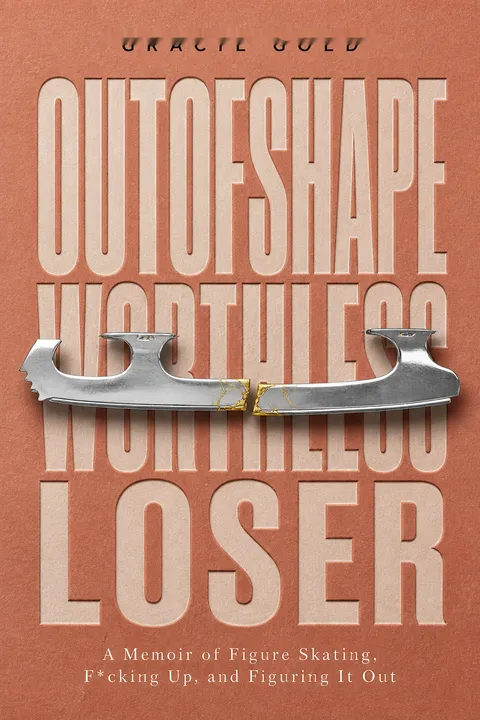
Outofshapeworthlessloser is a raw, honest memoir by Olympic figure skater Gracie Gold. Readers praise her candid account of struggling with mental health issues, eating disorders, and the toxic culture of elite figure skating. Many find her story inspiring and eye-opening, appreciating her critique of the sport's systemic problems. Some reviewers note the writing style is conversational and the chronology can be confusing at times. Overall, the book is seen as a brave and important contribution to discussions about mental health in sports.
People Also Read




Glossary
Outofshapeworthlessloser
Punishing inner criticGold's name for the harsh internal persona that attacks her over weight, performance, and perceived failures. In her account, this voice turns specific difficulties into sweeping judgments about her value and urges self-erasure. It is distinct from her public skating identity and from her private self, Grace Elizabeth.
F.I.R.E.
Collapse and recovery cycleGold's shorthand for a recurring pattern in her skating: fiasco, implosion, redemption, and equanimity. A poor performance could trigger an emotional collapse, followed by a strong comeback and a period of calm. She recognizes that anger sometimes powered the recovery, but that this source of energy was not sustainable.
GST
Gold's late arrival timeShort for Gracie Standard Time, Gold's joking name for her longstanding tendency to arrive about fifteen minutes late. The term reflects a personal habit rather than a formal scheduling method or clinical diagnosis.
Road to Gold
Skating clinics and seminarsThe name of the skating seminars Gold developed with John Coughlin and continued after his death with support from Amy and others. The clinics combine skating instruction with encouragement and candid discussion. They give young skaters access to an elite athlete while emphasizing that the sport can matter without an Olympic outcome.
intuitive skating
Listening to bodily limitsGold's phrase for learning to skate in response to what her body and mind are signaling, rather than following rigid demands to push through every difficulty. During her comeback, this meant rebuilding skills gradually, trusting her coaches, and recognizing fatigue, pain, fear, or anxiety as information rather than automatic evidence of weakness.
Download PDF
Download EPUB
.epub digital book format is ideal for reading ebooks on phones, tablets, and e-readers.








