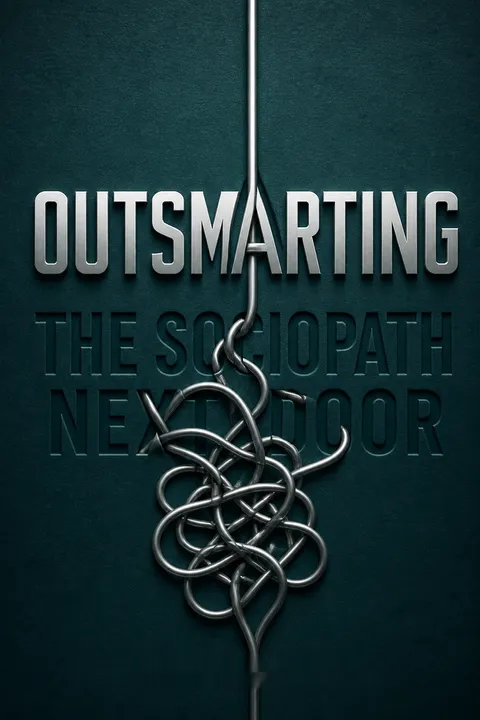


Key Takeaways
Understand cruelty as a missing capacity for attachment, not a supernatural force.
The book’s central claim. Stout asks readers to compare two versions of a roadside near-collision. In one, an angry driver considers shooting the man whose mistake ruined his evening, but his connection to other people stops him. In the other, the driver has no such inner brake and kills. The scenario illustrates Stout’s argument that evil is not a force or substance, but an absence: the inability to form emotional bonds that, in her model, gives rise to conscience.
Explanation changes response. Stout uses conscience to mean an emotional sense of obligation rooted in attachment, not merely knowing rules. She argues that most sociopathic harm is not murder, but manipulation, abuse, and exploitation. Avoidance is her preferred protection when possible; when it is not, understanding the pattern can replace bewilderment with practical planning.
What's useful here is the shift from asking why a person would do something terrible to asking what normally restrains such behavior. That directs attention toward observable conduct and safeguards rather than supernatural explanations. The account also invites caution: a vivid hypothetical can clarify an idea, but it cannot establish that one neurological deficit explains cruelty. Conscience is shaped by relationships, culture, and institutions as well as individual capacities. The model is most valuable as a way to think about risk, not as a complete scientific account of human wrongdoing.
Judge repeated behavior, not charm, job titles, or a frightening-looking face.
The disguise is ordinary. Stout describes sociopathic behavior as possible across professions and social classes. A person may seem warm, attractive, or unusually attentive, then use flattery, lies, risk-taking, and blame to gain control. In her workplace example, a manager gives a new employee glowing praise, then corners and humiliates another worker for amusement. Other tactics include gaslighting, which means trying to make someone doubt their own memory or judgment, and a pity play, a display of distress designed to draw sympathy and deflect accountability.
Look for a pattern. One lie, a cold moment, or a difficult personality does not establish a disorder. Stout’s practical point is to notice repeated deception, exploitation, and disregard for harm, even when a respected title or convincing performance encourages trust.
This advice counters a common shortcut in social judgment: treating status, polish, or a professional role as proof of character. The same principle appears in safety engineering, where repeated failures matter more than a system’s reassuring appearance. Still, behavioral lists can become confirmation traps if every conflict is read as evidence of predation. A fair assessment asks what happened, how often, who was affected, and what independent records support the account. Attention to patterns is stronger than amateur diagnosis.
Protect family members with boundaries and behavior plans, not blame.
Parents need usable explanations. Stout describes Silas, an eleven-year-old who treats a deadly storm as entertainment, steals from damaged homes, and shows no concern for a dead man. She connects such cases to conduct disorder in children and to callous-unemotional traits, a persistent pattern involving little guilt, empathy, or concern for others. The book cites research suggesting that at least 60 percent of youth diagnosed with adolescent-onset conduct disorder later meet criteria for antisocial personality disorder. It also cautions that abuse is neither a necessary nor a sufficient cause: one cited study found sociopathy in 13.5 percent of abused participants and 7.1 percent of comparison participants.
Manage behavior and risk. Stout recommends positive contingency management, in which parents set clear behavior expectations and link them in advance to rewards. School coordination, treatment for co-occurring ADHD, and protection for siblings can help, even though the book says no known treatment cures the underlying deficit.
The practical distinction between changing behavior and changing a child’s inner experience is important for caregivers who need immediate safety and less chaos. The approach also resists reflexive parental blame, which can isolate families and delay help. Yet a high-risk label can follow a child for years, so descriptions of troubling behavior should lead to qualified assessment, not a home diagnosis. Development is not destiny, and group-level findings cannot reliably forecast one child’s future. Protection and compassion can coexist with uncertainty.
Break workplace secrecy, document conduct, and report business consequences.
Secrecy magnifies vulnerability. Stout calls an isolated relationship known only to the people involved a closed system. In one example, a bartender wins a bookkeeper’s trust during a vulnerable period, pressures her for confidential workplace information, asks for money, then threatens her after losing his job. She kept the relationship private, leaving her without outside perspective. Stout recommends telling a trusted person what is happening, even without using a psychological label.
Make the record concrete. If staying and confronting the problem is the goal, she advises keeping dated, concise notes of specific incidents, consequences, and potential witnesses. Present the issue as damage to work, not as a diagnosis. She cautions that HR or a direct supervisor may protect the organization or defend a hiring decision, and suggests considering senior leadership, legal advice, or leaving. These choices depend on the workplace and the employee’s safety and resources.
Opening a private situation to a trusted outsider is a useful check against distorted judgment, whether the cause is manipulation, stress, or ordinary conflict. Documentation also translates a personal account into material an organization can evaluate. Stout’s skepticism about HR highlights a genuine conflict of interest, but treating HR as uniformly unhelpful could close off a necessary reporting channel. Employees should understand their workplace policies, legal protections, and available support before escalating. A dated record is valuable; a single escalation route is not always safe.
In custody fights, prove behavior and protect children, not a diagnosis.
Courts need concrete facts. Stout opens this section with Perry, a father who falsely accuses his ex-wife of abusing their daughter while presenting himself as the injured parent. His calm performance nearly persuades a court-appointed counselor. The scene illustrates how a composed liar can appear credible while a frightened, loving parent risks being dismissed as irrational. Stout argues that custody proceedings can reward gamesmanship when they rely on assumptions such as joint custody being best or the friendly parent doctrine, which favors the parent more willing to support the child’s relationship with the other parent.
Build a behavior-based case. She advises recording threats, abuse, and violence, using plain language, and discussing relevant research with a lawyer. She warns against trying to prove an ex-partner is sociopathic, because courts may not know what to do with that label. Legal standards and procedures vary, so qualified local advice matters.
The distinction between a label and evidence is especially important in court, where a psychological diagnosis may be contested while a documented act can be tested. Research on children exposed to violence also supports looking beyond injuries directly inflicted on a child. At the same time, a parent’s calmness or distress cannot by itself establish truth or deception. Fair process requires careful corroboration, trained evaluators, and attention to the child’s safety without assuming that every custody dispute follows the same pattern.
Treat threats as safety problems, and online abuse as evidence to preserve.
Violence changes the priority. Stout distinguishes common manipulative harm from the smaller group of assaults and murders. She describes the BTK killer, who maintained an ordinary public identity while controlling and tormenting people in everyday ways. The book characterizes sociopathic murder as planned, instrumental violence rather than an impulsive crime of passion. That distinction helps explain why a person may appear calm, but it cannot predict who will become violent.
Act on risk, not bravado. For cyberbullying, Stout advises telling someone trustworthy, restricting contact, blocking the harasser, and saving screenshots and messages. If there is a physical threat, she recommends contacting police and taking the concern seriously. Her broader warning is that visible emotional reactions can reward a harasser, but calmness is not a substitute for safety planning, adult intervention, or emergency help.
The strongest principle is that online cruelty should be treated as conduct with a record, not as a private test of resilience. Saving messages preserves information that may otherwise disappear and gives adults or authorities something concrete to assess. The advice to withhold a reaction may reduce one source of reinforcement, but it should never imply that targets are responsible for stopping abuse by acting correctly. Threat assessment belongs with trained people, and urgent danger takes precedence over any tactic meant to bore or frustrate an aggressor.
Separate the narcissist’s hunger for praise from the sociopath’s hunger for control.
Similar harm, different motives. Stout contrasts sociopathy, which she describes as lacking both conscience and empathy, with narcissistic personality disorder, where empathy is impaired but a capacity for attachment and conscience remains. In her account, the narcissist seeks admiration and reacts angrily to challenges to a grand self-image. The sociopath seeks power and may use calculated charm or threats without needing admiration. A narcissist may seem emotionally heated and self-absorbed; a sociopath may seem cool and strategically responsive.
Use the distinction carefully. Both patterns can involve exploitation, lying, and serious damage to close relationships. Stout offers differences in motivation as clues, not as a do-it-yourself diagnostic test. The DSM describes personality disorders through clinical criteria, and people can show overlapping traits. When deciding how to respond, concrete behavior and its effects are more dependable guides than guessing which label fits.
The distinction helps explain why two people who both hurt others may respond differently to criticism, boundaries, or loss of admiration. It also discourages the assumption that every self-centered or cruel person shares one motive. The limitation is that motives are difficult to observe from outside, and coldness or anger can arise for many reasons. In clinical practice, a label requires more than a relative or coworker’s impression. The book’s contrast is most useful as a provisional lens for noticing patterns, not as a shortcut to certainty.
Change the definition of winning, then enlist allies and protect your health.
Choose an objective you control. Stout’s guideline to change the game means refusing to make victory equal domination or revenge. In a custody conflict, success might mean reducing a child’s exposure to harm; at work, it might mean ending daily torment, even if the outcome is leaving the job. One lawyer in the book describes stopping her reactions to an abusive former partner’s provocations, while maintaining her parenting commitments and accepting help from a therapist and mentor.
Do not fight alone. Stout recommends trusted allies, small manageable steps, realistic expectations, and care for the physical stress of prolonged conflict. She calls the calm, apparently uninterested response to provocation the indifference method. It may reduce the payoff an aggressor seeks, but when violence is possible, her priority is physical safety first.
Reframing success is a form of agency: it shifts attention from an opponent’s choices to goals that remain partly within reach. Social support can also correct the tunnel vision that prolonged conflict produces. The danger is mistaking composure for emotional recovery. Suppressed fear still needs somewhere safe to go, and a person cannot always disengage without material costs. The strongest version of this strategy pairs outward calm with private support, careful planning, and clear thresholds for seeking legal or emergency help.
Make institutions answer for harms that profit or obedience can conceal.
Systems can reward callousness. Stout extends her argument from individuals to organizations. A corporation does not need a sociopathic leader to act without concern for people: incentives focused narrowly on profit can make risks to customers, workers, or the environment seem acceptable. Her examples include drug companies accused of hiding safety concerns and Ford’s decision not to adopt a Pinto safety change after comparing its cost with estimated losses from deaths and injuries.
Ordinary roles can hide harm. The Milgram obedience studies, as Stout presents them, found that 26 of 40 participants continued to the experiment’s highest shock setting when an authority figure urged them on. She connects this to moral exclusion, treating some people as undeserving of ordinary concern, and moral inversion, recasting harmful conduct as proper or even good. Oversight and accountability help resist both.
The institutional argument shifts attention from identifying bad personalities to examining incentives, reporting channels, and who bears the cost of a decision. That is a powerful move: organizations can produce harmful outcomes through ordinary procedures, even without a single villain. But calling a corporation sociopathic is metaphorical, not a clinical diagnosis. Institutional analysis is stronger when it identifies specific decision rules, incentives, and failures of oversight. Milgram’s experiment also illuminates obedience without proving that most people will obey in every real-world setting.
Hold compassion and boundaries together; forgiveness is not forgetting.
Connection is the counterweight. Stout closes by defining goodness through attachment, empathy, gratitude, and responsibility. In one story, a girl challenges classmates who bully a new child, reminding them that their own games have rules. In another, a survivor of a manipulative relationship learns that her generosity was not a defect, even though it was exploited. The book connects close human relationships with happiness and meaning, and argues that compassion can help victims reclaim their sense of self.
Forgiveness does not require access. Stout distinguishes forgiving from forgetting or returning to an unsafe relationship. A person can release revenge, retain an accurate memory of what happened, and keep protective distance. Compassion for a harmful person does not cancel accountability, nor does it require continued contact.
This ending avoids making recovery depend on hatred. A person can protect others and still refuse to let revenge organize an entire life. The distinction between forgiveness and renewed trust is essential because reconciliation is not always safe or possible. The account of the girl who intervenes also shows that compassion can become action, not just a private feeling. In practice, individual goodwill cannot substitute for institutional accountability, but it can sustain the relationships that make accountability and recovery possible.
Analysis
Stout’s central strength is practical translation. She takes experiences that often make victims doubt their own judgment, then turns them into recognizable patterns and specific responses: preserve records, widen the circle of witnesses, focus on conduct rather than diagnosis, and redefine success around safety rather than domination. Her recurring stories give the advice emotional stakes. The bereaved parent, the isolated employee, and the court-involved caregiver are not abstract examples of personality theory; they show how manipulation exploits ordinary trust and how institutions can mistake composure for credibility.
The book’s main conceptual risk is treating a complex family of behaviors as one underlying absence of attachment and conscience. Sociopathy, psychopathy, and antisocial personality disorder overlap in common usage, but they are not interchangeable in every clinical or research context. The diagnostic criteria for antisocial personality disorder emphasize observable behavior, while the book’s defining claim concerns an inner emotional deficit. Neuroscience findings described in the book are associations across groups, not a reliable way to identify an individual or predict a particular act. Readers should therefore use its behavioral advice without treating its explanatory model as a settled diagnostic test. The institutional chapters offer an important counterweight to a purely individual explanation. Incentives, authority, secrecy, and weak accountability can enable harm even when many participants consider themselves decent. That insight prevents the solution from becoming simply better detection of allegedly bad people. Stronger safeguards and transparent processes matter. At the same time, describing institutions as sociopathic works best as metaphor, not clinical classification.
The book is most responsible when its guidance is treated as a set of protective options rather than universal rules. Calmness may reduce provocation, but it cannot replace safety planning, professional assessment, or legal advice. The enduring lesson is to trust corroborated patterns over charisma, preserve the capacity for connection, and avoid surrendering practical judgment to either panic or diagnosis.
Review Summary
"Outsmarting the Sociopath Next Door" offers insights into identifying and dealing with sociopaths in various settings. Readers appreciate the practical advice, especially on distinguishing sociopaths from narcissists. Many find it enlightening and validating, though some criticize its repetitiveness and depth. The book is praised for its empathetic tone and real-world examples. While not universally lauded, it's considered a valuable resource for those dealing with manipulative individuals, offering strategies to protect oneself and understand sociopathic behavior.
People Also Read




Glossary
Conscience
Attachment-based moral feelingStout uses conscience to mean an emotional sense of obligation arising from genuine attachment to other people or living beings. In this account, conscience is not simply knowledge of rules or a reasoning process. The capacity to care about another’s welfare makes harm emotionally consequential and helps restrain behavior.
Sociopathy
Proposed absence of conscienceStout uses sociopathy for a pattern marked by lack of conscience and emotional attachment, often accompanied by manipulation, deceit, callousness, and exploitation. She treats sociopathy and psychopathy as closely related terms. Clinical and research usage varies, and antisocial personality disorder is a formal diagnosis with its own criteria.
Callous-unemotional (CU) traits
Low guilt and empathyCallous-unemotional traits describe a persistent pattern in children or adolescents involving limited guilt, reduced empathy, and a tendency to use others without concern. Stout discusses these traits as a subgroup within conduct disorder associated in research with more severe and stable antisocial behavior. The traits are not, by themselves, an adult diagnosis.
Positive contingency management
Rewards tied to behaviorA structured behavior-management approach in which specific actions are linked in advance to clear rewards. Parents or caregivers may use a points chart so a child can earn privileges or items for defined behaviors. Stout presents it as a way to reduce disruptive conduct and family chaos, not as a cure for an underlying lack of conscience.
Closed system
Isolated private relationshipStout’s term for a relationship or situation known only to the people directly involved, with no outside perspective or support. Secrecy can make a person more vulnerable to manipulation and less able to assess events clearly. Sharing a factual account with a trusted outsider can provide perspective without requiring a diagnostic label.
Pity play
Sympathy used to deflectA tactic in which a person presents themselves as suffering, helpless, or endangered to elicit sympathy and redirect attention from harmful conduct. Stout describes it as one possible response when denial no longer works. A claim of distress should not automatically be assumed false; context and repeated behavior matter.
Extinction burst
Temporary escalation after reward stopsIn behavior analysis, an extinction burst is a temporary increase or change in a behavior after the reward that once followed it is withheld. Stout applies the idea to harassment: a person whose provocations no longer produce visible distress may try harder before stopping. The concept does not guarantee that a harasser will stop or that ignoring them is safe.
Moral exclusion
Withholding ordinary moral concernA concept associated in the book with psychologist Ervin Staub. Moral exclusion occurs when an individual or group is treated as outside the circle of people entitled to humane consideration. Once that boundary is drawn, conduct toward the excluded group may no longer feel constrained by ordinary moral obligations.
Moral inversion
Harm reframed as goodA concept discussed through the work of Guy Adams and Danny Balfour. Moral inversion describes how harmful actions can be presented as responsible, correct, or necessary within an organization. Technical language, role expectations, and official procedures can conceal the human consequences of a policy or decision.
Indifference method
Withhold visible emotional rewardStout’s suggested response to some nonviolent provocations: appear calm, uninterested, and matter-of-fact rather than displaying the anger or fear the aggressor may be seeking. The aim is to reduce the emotional payoff of manipulation. It is not a substitute for evidence gathering, support, or safety measures when threats or violence are present.
FAQ
What's Outsmarting the Sociopath Next Door about?
- Understanding Sociopathy: The book delves into the nature of sociopathy, characterized by a lack of conscience and emotional connection. It explains how sociopaths manipulate and control others, often causing significant harm.
- Real-Life Applications: Martha Stout offers practical advice for recognizing and dealing with sociopaths in various contexts, such as family, work, and legal situations, aiming to empower readers to protect themselves.
- Personal Stories: The book includes real-life accounts from individuals who have encountered sociopaths, illustrating the emotional and psychological toll these relationships can take.
Why should I read Outsmarting the Sociopath Next Door?
- Gain Insight: The book provides valuable insights into the behaviors and tactics of sociopaths, helping readers understand their manipulative nature.
- Practical Strategies: Stout offers actionable strategies for protecting oneself from sociopaths, making it a practical guide for those in challenging relationships.
- Empowerment: By reading this book, individuals can feel less isolated and more empowered to confront and manage their interactions with sociopaths.
What are the key takeaways of Outsmarting the Sociopath Next Door?
- Recognizing Sociopathy: A major takeaway is the ability to identify sociopathic traits, such as manipulativeness, deceitfulness, and lack of remorse.
- Emotional Management: The book emphasizes maintaining emotional privacy when dealing with sociopaths, as they thrive on the emotional reactions of others.
- Legal and Social Strategies: Stout discusses navigating legal systems when a sociopath is involved, providing guidance on documenting abusive behavior and advocating for oneself.
How does Martha Stout define sociopathy in Outsmarting the Sociopath Next Door?
- Absence of Conscience: Sociopathy is defined as a condition characterized by a lack of conscience, preventing individuals from forming genuine emotional bonds.
- Emotional Detachment: Sociopaths are described as having a "hole in the psyche," meaning they cannot connect emotionally with others.
- Behavioral Patterns: Common behaviors include manipulation, deceit, and a lack of empathy, which are crucial for identifying sociopaths.
What strategies does Stout recommend for dealing with sociopaths?
- Maintain Emotional Privacy: Stout advises keeping emotions private to prevent sociopaths from feeding off emotional reactions.
- Document Behavior: Detailed records of manipulative actions are essential, especially in legal situations.
- Seek Support: Discussing experiences with trusted friends or professionals can provide clarity and reduce feelings of isolation.
How can I identify a sociopath in my life?
- Look for Manipulative Behavior: Sociopaths often exhibit deceitfulness and charm, drawing people in with inconsistencies in their stories and behaviors.
- Observe Emotional Responses: A lack of genuine emotional reactions, especially in situations that typically elicit empathy, is a key indicator.
- Assess Relationships: Consider how the individual treats others, particularly those who are vulnerable, as sociopaths often exploit and manipulate for personal gain.
What are the differences between sociopathy and narcissism as discussed in Outsmarting the Sociopath Next Door?
- Lack of Conscience vs. Self-Importance: Sociopathy involves a complete absence of conscience, while narcissism involves an inflated sense of self-importance and entitlement.
- Emotional Connection: Sociopaths lack the ability to form genuine emotional bonds, whereas narcissists may form relationships that serve their self-interest.
- Behavioral Patterns: Sociopaths engage in deceitful and harmful behaviors without remorse, while narcissists use charm and manipulation to maintain their self-image.
How does the legal system fail to protect against sociopaths, especially in custody cases?
- Presumption of Joint Custody: The legal system often assumes joint custody is best, which can be detrimental when one parent is a sociopath.
- Friendly Parent Doctrine: Sociopaths can manipulate the legal system to appear more favorable, resulting in the non-sociopathic parent being perceived as hostile.
- Lack of Understanding: Many legal professionals may not fully understand sociopathy, leading to inadequate protection for children.
What specific methods does Martha Stout recommend for dealing with sociopaths?
- Be Boring: Appearing indifferent and unresponsive to provocations deprives sociopaths of the emotional reactions they seek.
- Document Everything: Keeping a detailed record of interactions can be invaluable, especially in legal or custody situations.
- Seek Support: Building a support network of friends, family, or professionals provides emotional strength and practical advice.
What are the psychological effects of being involved with a sociopath?
- Emotional Distress: Individuals often experience anxiety, depression, and feelings of worthlessness due to manipulative tactics.
- Loss of Trust: Relationships with sociopaths can erode trust, leading to isolation and difficulty forming new connections.
- Identity Confusion: Victims may struggle with their sense of self, questioning their perceptions and judgments due to gaslighting.
How can I protect my children from a sociopath?
- Educate Yourself: Understanding the signs of sociopathy is crucial for protection.
- Limit Contact: Minimize children's exposure to the sociopath through legal measures like seeking sole custody.
- Open Communication: Encourage dialogue with children about their feelings and experiences to help them process emotions.
How does Outsmarting the Sociopath Next Door suggest I cope with the aftermath of a relationship with a sociopath?
- Seek Therapy: Professional help can provide a safe space to process trauma and regain a sense of self.
- Build a Support Network: Surrounding yourself with supportive friends and family can mitigate feelings of isolation.
- Focus on Self-Care: Prioritizing mental and physical well-being is essential for recovery and resilience.

Download PDF
Download EPUB
.epub digital book format is ideal for reading ebooks on phones, tablets, and e-readers.








