

Plot Summary
The Grey House Arrival
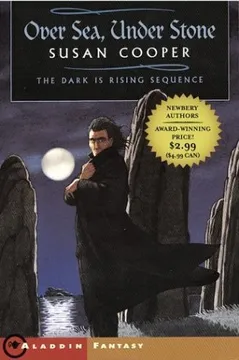
The Drew family arrives in Trewissick for a summer holiday with Great-Uncle Merry, an old family friend whose unexplained travels make him seem older than his years. At the station, a red dog named Rufus chooses the children and joins them at the Grey House, a tall, dark home above the harbour.
Simon is captivated by a sleek yacht, the Lady Mary, while Jane senses something wrong about it. On the quay, an ill-tempered local boy, Bill Hoover, knocks Jane down, then rows out to the yacht with supplies. The fisherman Mr Penhallow warns the children to avoid Bill. That night, the yacht slips out of the harbour, and Merry leaves without explaining where he is going.
The holiday begins with competing invitations to curiosity. Simon sees the yacht as a promise of adventure; Jane notices the unease that its polished appearance cannot quite conceal. Bill's rudeness gives that unease a human face, while Merry's sudden departure establishes a pattern the children must learn to interpret: adults may know more than they disclose. Rufus, who attaches himself to the children without explanation, offers a counterpoint to the yacht's secrecy. His instinctive allegiance hints that judgment in this story will depend less on appearances than on attention.
The Wardrobe's Hidden Stair
Rain traps Simon, Jane, and Barney inside, so they turn the Grey House into an expedition, taking provisions from Mrs Palk and exploring its odd passages. In their bedroom, Jane notices that a wall seems too deep for the landing outside. The children shift a heavy wardrobe and uncover a concealed door; a steep stair behind it leads to a vast attic packed with forgotten belongings.
While searching for a discarded apple core, Barney finds a brittle parchment scroll tucked beneath the floor. Simon recognizes Latin names that seem to refer to Marcus and Arthur, and Barney connects them to King Mark and King Arthur. The children decide the writing may point to treasure, but cannot yet read most of it or explain its map.
The discovery grows out of the children's distinct habits rather than a deliberate search: Jane measures space, Simon organizes the expedition, and Barney's distraction puts him near the parchment. Their childish game becomes consequential when the attic's discarded objects yield evidence of a history older than the house. The scene also establishes the moral ambiguity of discovery. They know the scroll belongs to someone else, yet its neglected condition tempts them to claim it. Their excitement is not greed alone; it is the intoxicating sense that an old story might have left a real trail.
A Map That Matches
Before the boys leave for a day aboard the Lady Mary, Simon fits the fragile scroll into an empty brass telescope case so it will not crumble in their hands. Jane stays behind, uneasy about the yacht and its owners, Norman and Polly Withers. Studying the parchment, she finds a place-name that resembles King Mark's Head on a local guidebook map, though the coastlines differ.
She visits the vicarage to ask whether Trewissick's shoreline once looked different. The man who answers, Hastings, shows an unsettling interest in her pencilled outline and asks whether she has seen old maps in the Grey House. Jane leaves without mentioning the manuscript, but understands that the question has touched something dangerous.
Jane's contribution comes through disciplined observation, not the boldness Simon associates with leadership. Comparing two maps lets her turn an obscure name into a location, but her attempt to verify the clue exposes her to someone already searching for it. The encounter also makes politeness difficult to read: Hastings welcomes her into his study, yet his questions press beyond what her inquiry requires. Jane leaves with no proof of wrongdoing, only a sharpened awareness that information itself can be hazardous. The telescope case, meanwhile, transforms a decorative object into practical protection for the fragile evidence.
The Searchers Ransack the House
The morning after the yacht trip, Simon discovers the Grey House wrecked: books have been torn from locked cases, maps removed from their frames, and drawers emptied, but silver remains untouched. The children realize the intruders searched for something specific.
Jane finds the manuscript safe beneath her bedclothes, and they take it to Merry, who explains that it is a six-hundred-year-old copy of an older account. The text describes Bedwin, a wounded knight who carried King Arthur's Grail to Cornwall, where it was hidden with a promise tied to Arthur's return.
Merry has searched for the relic for years. He identifies the Witherses as enemies seeking it too, then warns that the children must follow the clues themselves while he distracts their pursuers.
The burglary converts private curiosity into a contest with immediate stakes. Because the intruders ignore obvious valuables and target books and maps, the children correctly infer intention before they know its meaning. Merry's account enlarges the scroll from a local treasure puzzle into a record of a continuing struggle, but he does not turn that explanation into a simple transfer of responsibility. He assigns the children a role while limiting his own help. His decision recognizes their growing competence, yet leaves them exposed to the psychological burden of acting on knowledge that adults around them might dismiss.
The Sun Chooses a Stone
From a headland opposite Trewissick, Barney sees that the parchment's crooked coastline is not a conventional map but a drawing of the actual view. Its first mark identifies the rock where Merry had sat, and the children use the setting sun to find the standing stone aligned between that rock and the horizon. Polly Withers appears with Bill and abruptly asks whether they have found a map.
When Simon grabs the parchment and runs, Bill chases him down the headland and through country lanes. Simon hides in a roadside thicket, but Bill returns with a tall man dressed in black. As they close in, Merry arrives in his battered car, finds Simon, and drives him back to the Grey House with the manuscript intact.
The first clue rewards a change in how the children look: the parchment works as a picture grounded in place, not as a set of written directions. Barney supplies the perceptual shift, and Simon turns it into action under pressure. His flight is a practical test of the responsibility he has claimed as eldest, but the chase shows that courage does not mean self-sufficiency. Merry's rescue preserves the evidence without erasing Simon's achievement. Polly's direct question also changes the danger from suspicion to pursuit: the enemy now knows the children may possess exactly what they seek.
Moonlight Names the Next Landmark
That night Simon and Jane return to the standing stones with Merry, while sunburned Barney stays home to guard the scroll. Under the nearly full moon, the stone's shadow seems to point inland, but Jane realizes the reflected moonlight itself forms a bright path across the sea toward rocks at the tip of Kemare Head. Before they can investigate, Merry disappears into the wind and darkness.
A cloaked man emerges among the stones; Jane recognizes him as Hastings, the stranger who questioned her at the vicarage. More black-clad figures appear behind him. Merry reappears, carries the frightened Jane down the hill, and leads the children to safety, confirming that the enemy is gathering around the next clue.
The moon clue makes perception relational: the answer lies not in the stone alone, but in the light connecting it to the distant coast. Jane's attentiveness advances the quest, while the night's scale makes the children feel how little control they have over the forces involved. Merry's disappearance briefly removes their dependable protector at the very moment the enemy becomes visible. Jane's recognition of Hastings gives her earlier unease retrospective force, though it does not yet explain his identity. The scene binds physical danger to an epistemic one: they can see the threat, but still cannot know its full nature.
Carnival Takes Barney
The next morning, Mrs Palk tells the exhausted Merry that the children have gone to Truro, sending him away from the house. Simon, Jane, Barney, and Rufus instead slip out toward Kemare Head. During Trewissick's carnival, Simon and Jane are separated from Barney in the crowds.
Mr Penhallow tells them the exceptionally low tide may uncover rocks around the headland; he also reveals that Mrs Palk is Bill's aunt. Costumed dancers sweep Barney into their line. A black cat figure and a man dressed as an Arab pull him into a car, then take him to Hastings's rented house. The friendly carnival turns into cover for an abduction, while Rufus escapes the crowd and makes his way home alone.
The carnival's cheerful disorder becomes dangerous precisely because it suspends ordinary scrutiny. Costumes let the kidnappers approach Barney as performers, while noise hides his struggle and the crowd prevents his siblings from tracking him. At the same time, Mrs Palk's fabricated errand removes Merry, demonstrating how the enemy exploits trust and domestic familiarity rather than relying only on force. The low tide offers the children a narrow practical opportunity, but the tide's timing also makes the day a countdown. Barney's separation is not a failure of affection; it is the consequence of a crowded public ritual being turned against him.
Hastings Offers a Story
At Hastings's house, Barney is offered food and treated with courteous attention. Hastings claims that Merry is pursuing the Grail for scholarly fame, while he himself intends to put the discovery in a museum and share its knowledge. Barney listens, uncertain, but refuses to confirm what the map leads to. When Hastings presses him, Barney invokes Arthur and the old world, provoking a chilling answer that darkness always wins.
Hastings then uses his commanding presence to place Barney in a dazed, obedient state and orders him taken toward the yacht. Norman Withers and Bill prepare the journey. Barney's resistance has kept the Grail's location secret, but he is now being carried toward the harbour without control of his own choices.
Hastings attacks Barney's loyalty by offering a plausible moral vocabulary: scholarship, public access, and recognition for the children. The manipulation works because it addresses a real vulnerability, Barney's wish to matter, rather than relying on a crude threat alone. Yet Barney tests the story by noticing that Hastings avoids naming the object they seek. His impulsive appeal to Arthur breaks through the polished argument and reveals the hostility underneath it. The scene distinguishes persuasion from coercion: Hastings first tries to redefine Barney's relationships, then overrides his agency when the boy will not cooperate.
Rufus Breaks the Spell
At the Grey House, Simon and Jane find Rufus returned without Barney. The dog stiffens, leads them to the doorway, and climbs onto the harbour wall. When Hastings's party marches Barney past below, Rufus releases a startling howl. Barney snaps out of his obedient daze, breaks from the group, and races uphill.
Simon, Jane, and Rufus pull him through a side entrance and bolt the heavy door before the pursuers can follow. The children escape through a gap in the back hedge. Hiding in a field, they see Hastings, Withers, and Bill head toward the headland. Simon realizes the extreme low tide could expose the cave entrance, so the siblings choose to search for the Grail rather than wait for Merry.
Rufus's intervention is not a clever plan but a form of recognition beyond conscious reasoning. His howl gives Barney a sensory interruption strong enough to break Hastings's control, and his earlier attachment now becomes materially protective. The escape also changes the siblings' relationship to Merry: they must decide without knowing where he is, rather than treating his guidance as indispensable. Simon makes the decision, but the choice belongs to all three. Their move toward the coast is risky and informed by Mr Penhallow's tide knowledge, showing how practical local information can counter an enemy's apparent advantage.
The Cave Beneath the Headland
Taking the quieter bay on the far side of Kemare Head, the children reach the exposed shoreline and scramble around the cliff at low tide. Rufus grows frightened and runs off; the siblings hear an owl cry and recognize it as the enemy's signal, so they hurry on. Near the headland's tip, Barney finds a narrow cleft beneath the rocks.
Jane holds the manuscript while Simon ties fishing line around Barney and follows him inside with matches. The passage leads to a high chamber and a deep shaft; Barney finds a gold chalice on a ledge, with a second manuscript sealed inside it. As the tide rises, they retrace the line and emerge, but the Lady Mary is already rounding the headland.
The cave tests the children through material limits: darkness, cramped stone, dwindling matches, and the rising sea. Their earlier discoveries have prepared them for each obstacle, but no clue removes the need for trust. Simon secures Barney with fishing line, Jane watches the tide, and Barney enters the narrow passage because he is the smallest. The Grail's discovery therefore belongs to their coordinated effort, not to a single heroic gesture. The second manuscript also complicates success: they have found the object, but its accompanying text is fragile and its retrieval has placed them in immediate danger.
The Grail Crosses the Waves
With the tide flooding the rocks, the children race toward the beach as Withers and Hastings approach in separate boats. Trapped between the rising water and their pursuers, Barney threatens to throw the Grail and manuscript case into the sea rather than surrender them. Hastings seizes Simon and threatens to break his arm. Merry and Mr Penhallow arrive in a speedboat.
Simon throws the chalice to Merry, who catches it, but Withers strikes the telescope case with an oar. The case breaks in midair, and both manuscripts, including the lead tube containing the second text, sink. Hastings dives after them but surfaces empty-handed. Merry's commanding words drive the defeated party back to the yacht, which leaves Trewissick Bay.
The climax refuses a clean victory in which courage preserves every prize. Barney's threat protects the objects by making their destruction preferable to enemy possession; Simon's throw then saves the Grail but cannot save the texts. The loss is not arbitrary: the tide, the boats, and the children's limited strength all converge on the cost of keeping the secret safe. Hastings's dive makes his desire physical and desperate, yet he retrieves nothing. Merry's arrival matters, but it does not replace the children's decisions. Their triumph consists in denying the enemy access, even at the cost of their own understanding.
Epilogue
At a museum ceremony, the Drew children receive public credit and a cheque for finding the Grail, now displayed as an ancient golden chalice with undeciphered inscriptions. Merry explains that Hastings was never the vicar: the real vicar is Mr Smith, and Hastings merely let Jane draw the wrong conclusion.
The first manuscript is lost, but the second remains sealed in its lead tube beneath the sea, beyond the enemy's knowledge. Jane believes she could locate it again at an exceptionally low tide. Barney notices that Merry's full name, Merriman Lyon, resembles Merlin, a possibility Merry neither confirms nor denies.
The museum offers the children recognition but not the knowledge they expected the Grail to provide. Scholars can classify the cup and debate its inscriptions, yet the missing manuscript keeps its central meaning unavailable. The resolution reframes the apparent loss as successful concealment: the enemy is denied the key, and the secret survives without being fully understood by the heroes. Hastings's false identity also shows how easily expectation can manufacture evidence; Jane inferred a role from a rented house and a careful ambiguity. Barney's Merlin association leaves Merry's identity suspended between scholarship and legend, preserving mystery rather than closing it.
Analysis
The novel makes knowledge a physical activity. The Drew children do not solve the mystery by possessing superior scholarship; they compare maps, remember a view, test a shadow, listen to a tide, and trust one another in a dark passage. Each mode of knowing has limits. Jane's inference exposes her to Hastings, Simon's confidence can become haste, and Barney's imagination helps him see patterns but also leaves him vulnerable to a story tailored to his desire for importance. Their combined attention is more reliable than any one child's certainty.
The adults embody competing claims over the past. Merry treats the Grail as a trust whose meaning belongs to a moral history, while Hastings dresses acquisition in the language of scholarship and public knowledge. The conflict is not simply secrecy versus openness. Hastings wants access without restraint, and the children eventually discover that withholding an object can protect others when the seeker intends to misuse it. Yet their victory is deliberately incomplete: the chalice enters a museum, but its inscription remains unreadable because the crucial manuscript is lost beneath the sea.
The landscape binds history to present choices. Cornwall's headlands preserve names, standing stones, caves, and local warnings, but none explains itself without human attention. The tidal coast also refuses to behave like a stable treasure map: it opens a route, then closes it, turning discovery into a race. Against this shifting ground, Rufus represents a form of knowledge that is neither scholarly nor verbal. His loyalty and alarm register danger before the children can explain it. The story's ending therefore offers neither total revelation nor simple triumph. The children have protected a secret they cannot fully interpret, and their confidence rests on shared judgment rather than mastery.
Review Summary
Over Sea, Under Stone receives mixed but generally positive reviews, averaging 3.85/5. Many readers find it a charming, Narnia-esque adventure that works best when read as a child, praising Cooper's atmospheric Cornish setting, likable characters, and Arthurian themes. Critics note it's the weakest entry in the Dark is Rising sequence, feeling lightweight compared to later installments. Some appreciate the children's deductive reasoning, while others find the conflict too easily resolved. A few readers flag dated racial stereotypes and gender roles as problematic.
Characters
Simon Drew
The practical eldest brotherSimon is the eldest Drew child by eleven months, and he often treats that small difference as a mandate to lead. His love of boats, confidence in physical challenges, and impatience with uncertainty make him quick to act, though not always quick to listen. He wants to be useful to Jane and Barney and takes responsibility seriously, even when his attempts at authority turn bossy. The quest gives his decisiveness a real purpose: he learns to think strategically, protect what the group has found, and accept that courage may mean relying on others. His loyalty is practical and direct, expressed through planning, endurance, and taking the risk himself when someone he loves is in danger.
Jane Drew
The observant middle childJane is the thoughtful, perceptive member of the Drew trio. She is less drawn to Simon's boats or Barney's Arthurian fantasies, but she notices what others overlook: a wall that seems too deep, a name obscured by age, or a mismatch between two coastlines. Her caution is not timidity; it is a way of registering danger before she can fully explain it. Jane sometimes doubts her own intuitions, especially when adults seem reassuring, yet she acts on careful comparisons and questions. Within the sibling group, she can temper Simon's haste and recognize Barney's insights. Her strength lies in holding details together until they reveal a pattern, turning quiet attention into decisive knowledge.
Barney Drew
The dreaming youngest brotherBarney is the youngest Drew child, imaginative, affectionate, and devoted to King Arthur. He moves easily between make-believe and close observation, which allows him to see the parchment as a picture when others treat it as a map. His absent-mindedness can lead him into trouble, but it also takes him to the places where discoveries are waiting. Barney wants to belong to the world of heroes he admires, and the story tests that desire against the frightening reality of being responsible for something important. He is capable of wonder without being merely fanciful, and his instinct to protect his family grows stronger when adventure stops behaving like a story.
Great-Uncle Merry
The elusive scholar guardianMerry is an old friend of the Drew family, a celebrated scholar and traveller whose long absences have become familiar to them. Tall, forceful, and difficult to question, he seems at once affectionate and remote. He knows far more about the Arthurian past than he initially reveals, but he does not simply solve the children's problems for them. His role is to protect and guide while leaving them room to make discoveries of their own. This restraint can feel like abandonment, especially when danger rises, yet it reflects his respect for their judgment. Merry's presence links the ordinary family holiday to an ancient history that he has spent years trying to understand.
Rufus
The red dog with instinctsRufus is a long-legged red dog who attaches himself to the Drew children as they arrive in Trewissick. He is affectionate and playful, but his responses to certain people and places are sharper than the children's understanding of events. Barney treats him as a companion and potential helper, while the others come to trust his behavior as a warning. Rufus does not reason through the mystery, yet his loyalty and sensitivity make him an important presence in the family's discoveries.
Hastings
The polished adversaryHastings is a tall, controlled stranger with a scholar's vocabulary and an unsettling command of other people's attention. He can make a threat sound like a reasonable proposal, and he studies what people want before deciding how to influence them. His interest in the Grey House's old maps places him in opposition to the Drew children's investigation. Rather than relying on open force at first, he uses courtesy, authority, and carefully shaped explanations to make others doubt their own loyalties.
Norman Withers
The charming yacht ownerNorman Withers is a well-dressed antique dealer who arrives in Trewissick aboard the Lady Mary. Sociable and polished, he quickly befriends the Drew parents and offers the family a day on his yacht. His courteous manner makes him seem like a harmless holiday companion, while his repeated interest in the Grey House and its old papers gives the children reason to watch him closely. He is an accomplice to Hastings and helps turn hospitality into a means of gaining access.
Polly Withers
The watchful yacht companionPolly Withers is Norman's attractive, quick-witted companion, introduced as his sister. She can move easily between friendly warmth and hard scrutiny, and her interest in old maps is more pointed than her casual manner suggests. Polly is an adept observer who tests the Drew children with questions and uses the carnival's disguises to approach them without drawing attention. Her composure makes her difficult to read, especially when she is measuring how much the children know.
Bill Hoover
The hostile village boyBill Hoover is a local boy with a quick temper and a talent for making himself feared. His first encounter with Jane and her brothers leaves them wary of him, and his close association with the Lady Mary brings him into the mystery surrounding the Grey House. Bill is also related to Mrs Palk, though the two sides of the family are estranged. His toughness and resentment make him easy for more powerful people to use.
Mrs Palk
The Grey House caretakerMrs Palk cooks and keeps house for the Drews during their stay. Warm, bustling, and fond of the children, she knows the rhythms of Trewissick and takes pride in its customs, especially the carnival. Beneath her homely manner is a practical woman attentive to money and family ties. Her relationship to Bill is an uncomfortable point of local knowledge, since the estranged branches of their family rarely acknowledge one another.
Dr Dick Drew
The easygoing fatherDr Dick Drew is the children's father, a former naval man who enjoys fishing and approaches family life with dry humour. He trusts Merry, accepts the Witherses' invitation, and tries to keep the children safe without turning their holiday into a list of prohibitions. His ordinary explanations and practical concerns give the adventure a domestic counterweight. He is loving, though the children's growing secret keeps him outside the central mystery.
Ellen Drew
The artist motherEllen Drew is an artist who comes to Cornwall hoping to paint. She is affectionate and alert to her children's needs, but often gives them room to explore while she works. Her easy relationship with Merry reflects years of family closeness, even though his origins and travels remain mysterious. Ellen's independence and creative attention quietly parallel the children's own efforts to study the landscape.
Mr Penhallow
The weatherwise fishermanMr Penhallow is an elderly Trewissick fisherman whose small, weathered presence is matched by a broad knowledge of the harbour and its people. He advises the children about Bill, shares local lore, and understands the unusual tides that shape their route. His practical observations are more valuable than grand theories: he knows when the sea rises, where it exposes rock, and how local memory survives in place-names and customs.
Miss Hatherton
The adventurous artistMiss Hatherton is an older sculptor and a former teacher of Ellen Drew. Cheerful, energetic, and fond of fishing, she invites the Drews' parents to Penzance and keeps them away from Trewissick for a day. Her visit creates an important opening in the children's schedule without her knowing the part she plays.
Mr Smith
The real village vicarMr Smith is Trewissick's actual vicar, an elderly man who lives in a small cottage rather than the village's former vicarage. He remains mostly outside the children's adventure, but his existence clarifies how a stranger could occupy the old house and let Jane draw the wrong conclusion.
The Reverend Hawes-Mellor
The guidebook's dead authorHawes-Mellor was an earlier vicar of Trewissick and the author of a local guidebook. His map preserves the old name King Mark's Head, giving Jane the comparison that connects the ancient parchment to the present-day landscape.
Plot Devices
The medieval manuscript
The quest's written keyBarney discovers a brittle copy of a medieval account in the Grey House attic. Its first section explains that an older record described Bedwin, King Arthur's Grail, and the decision to hide the relic in Cornwall. A rough drawing accompanies the text, but the writing is too damaged and archaic for the children to interpret alone. The scroll creates the central conflict because both Merry and Hastings seek what it can lead them to. Its fragility also shapes the action: Simon stores it in a telescope case, and the children must guard it while following clues across the landscape.
The landscape drawing
A picture disguised as mapThe parchment's distorted coastline initially appears to be an inaccurate map of Trewissick. Jane connects its place-name to a modern guidebook, and Barney recognizes that its lines depict the view from a particular headland. The children then use the setting sun, standing stones, the moon's reflection, and the coast itself to move from one landmark to another. The device makes observation an active skill: the clues cannot be solved by reading the page alone, because the children must stand in the right place and see how light and land align.
The Grail and sealed text
The prize and its missing keyThe Grail is a gold chalice hidden in a chamber beneath Kemare Head. A lead tube inside it contains a second manuscript, which the original account identifies as necessary to understand the cup's inscription and secret. The pairing separates possession from comprehension: finding the Grail does not automatically reveal its meaning. The children must protect both objects from Hastings, and the final struggle leaves the cup recoverable while the texts disappear beneath the sea. Their loss preserves the secret from the enemy while keeping its full significance beyond the children's reach.
The spring tide
A narrowing coastal clockAn unusually low tide exposes rocks that are normally submerged around Kemare Head. Mr Penhallow's knowledge of the harbour alerts the children to the opportunity, while the incoming water later cuts off their return and gives Hastings a way to trap them. The tide governs both access and danger: the children can reach the cave only during a brief interval, and the rising sea forces their final confrontation on the rocks. This natural mechanism makes the landscape more than a setting, because every decision must be made against the water's movement.
Download PDF
Download EPUB
.epub digital book format is ideal for reading ebooks on phones, tablets, and e-readers.








