

Key Takeaways
Treat medical knowledge as a commons, not a fenceable private asset.
Ideas do not run out. A patent gives its holder temporary power to exclude others from using an invention. The book stresses the tension in that arrangement: unlike a stolen object, copied knowledge remains with its originator. Medical knowledge is non-rivalrous, meaning its use by one person does not reduce its availability to others. Broader sharing can increase its public value, especially when many producers are needed quickly.
The bargain has conditions. The U.S. Constitution authorized limited exclusive rights to promote the spread of knowledge, not to make monopoly an unquestioned end in itself. Benjamin Franklin and Thomas Jefferson doubted that patents reliably served the public. Their skepticism matters: the rules around ownership are political choices, not natural laws.
What's striking is how the book shifts the question from whether innovators deserve rewards to whether a particular reward system actually spreads useful knowledge. That distinction resembles debates over shared resources: a commons can be productive when people can use and build on it, but access to information alone does not pay for factories, trials, or quality control. The strongest policy test is therefore practical: does exclusivity produce benefits that would otherwise be missing, and are those benefits worth the access it restricts?
Remember that medical patenting began as an ethical breach, not destiny.
Medicine drew a line. In the nineteenth century, U.S. medical and pharmaceutical associations generally opposed patents on medicines. The American Medical Association’s founding code barred physicians from seeking patents or prescribing patented remedies; pharmacists adopted a similar position. Their concern was that secrecy and exclusive control would obstruct research, clinical judgment, and access. Patents on manufacturing processes were more acceptable than patents on the medicines themselves.
Aspirin tested the taboo. German firms brought patent strategies to the U.S. drug market, where Bayer’s patented Aspirin became both a useful new treatment and a symbol of monopoly pricing. Pharmacists organized smuggling and resistance. The conflict also exposed a real complication: when generic sellers adulterated products, patients could be harmed. The history was not a simple contest between virtuous openness and villainous business.
The old ethical code treated medical knowledge as a professional trust, an idea that still informs debates about conflicts of interest and research integrity. Yet the book also notes that this medical establishment could defend open knowledge while accepting abusive treatment of marginalized people in medical research. That contradiction is important: professional virtue is not automatically public virtue. The case for open medicine is strongest when it includes both access to discoveries and accountability for how research is conducted.
Use public research and competitive contracts to scale lifesaving discoveries.
Penicillin was a public project. During World War II, government scientists and researchers at many institutions helped develop ways to produce penicillin at scale. The government licensed the relevant technology broadly and without royalties, then coordinated private manufacturers through contracts and supply arrangements. By D-Day in 1944, nearly twenty firms were producing the antibiotic. Public ownership did not mean private firms were excluded; they earned money making the drug.
Polio offered another model. Jonas Salk’s vaccine research was supported by the March of Dimes, which raised money from ordinary donors. The government arranged production by several companies and capped the price per dose. The Cutter Incident, in which improperly produced vaccine caused infections and deaths, showed why public production needs rigorous oversight. Open licensing can widen supply, but it cannot replace quality control.
These examples separate three roles that are often collapsed into one: funding discovery, coordinating manufacturing, and owning the resulting technology. The penicillin effort suggests that public agencies can organize the first two while firms compete to produce. The Cutter Incident adds a vital qualification: competition is not a substitute for inspection, standards, or clear accountability. The broader lesson is not that every medicine should follow one template, but that exclusive ownership is only one possible way to organize innovation.
Keep publicly funded inventions accessible unless private control proves public benefit.
The New Deal challenged patent power. During World War II, New Dealers such as Senator Harley Kilgore argued that inventions created with public money should generally remain publicly controlled and widely licensed. Vannevar Bush and industry allies favored giving contractors stronger rights. A postwar investigation found that 90 percent of wartime contracts left patent ownership with contractors, even when public funding was substantial.
The rule changed direction. John F. Kennedy’s 1963 policy generally favored government control of publicly funded inventions, with exceptions when exclusivity served the public interest. The 1980 Bayh-Dole Act reversed the default for universities and small businesses, allowing them to claim patents on federally funded research. In 1983, the Reagan administration extended that approach to larger firms. The fight was about who could control publicly financed knowledge, not whether public research should exist.
The ownership rule acts like a hidden subsidy: it determines who gets to decide which firms may use a discovery and on what terms. That makes patent policy a competition policy as well as a science policy. The book’s account also cautions against treating public ownership as automatically wise. Public agencies can be slow or politically constrained. The relevant comparison is between real governance options, including transparent, broad licensing and exclusive deals with enforceable obligations.
Watch industries rewrite the story before they rewrite the law.
A new account of patents spread. The book traces how some Chicago School economists moved from opposing monopoly to arguing that market competition would naturally limit it. George Stigler’s theory of regulatory capture described how regulated industries can gain influence over the agencies meant to oversee them. The pharmaceutical industry supported research centers and public messaging that framed regulation as a threat to innovation.
The argument gained traction. In the 1970s, advocates claimed that government ownership created an inventions gap by leaving thousands of publicly funded patents unused. Critics noted that most patents, public or private, never become products, and government-owned discoveries could often be used without formal licenses. Repeating the inventions-gap claim helped sell a new policy direction: more private control over publicly funded science.
Policy debates are shaped not only by evidence, but by the categories used to interpret it. A count of unused patents sounds damning until one asks whether those inventions had commercial potential or whether a license was needed at all. This is a useful lesson in evaluating industry research: inspect the denominator, the comparison, and the assumptions that turn a statistic into a policy conclusion. At the same time, industry influence does not make every criticism of regulation false. Independent scrutiny matters in both directions.
Generic access can rise while drug spending stays painfully high.
Competition helps, but selectively. The 1984 Hatch-Waxman Act created a faster approval path for generic drugs while also extending some brand-name drug monopolies. The deal helped bring many generics to market, often at prices substantially below their branded counterparts. The book reports that generics came to fill 90 percent of U.S. prescriptions, yet accounted for only 20 percent of prescription spending.
The protected remainder matters. Companies can maintain high spending by raising prices on drugs still protected from competition. They can also seek additional patent terms for minor changes, a practice known as evergreening. The book describes examples involving altered formulations, manufacturing methods, and product relaunches. A high generic prescription share, by itself, therefore does not tell whether competition has made medicines affordable overall.
This is a reminder to measure competition by its effect on costs and patients, not by the number of transactions labeled competitive. When inexpensive generics dominate routine prescriptions but a smaller set of protected drugs accounts for most spending, averages conceal where market power is concentrated. The policy challenge is to preserve a workable route for generic entry without rewarding cosmetic changes as if they were major therapeutic advances. Patent incentives may support genuine improvements, but the evidence should be about patient benefit, not novelty in paperwork.
India's 1970 drug-patent law made it a global generics supplier.
A different model took root. India’s 1970 Patents Act barred patents on drug products while allowing patents on manufacturing processes. Indian researchers could develop alternative methods and local firms could produce medicines without licensing a foreign product patent. The UN-backed Hindustan Antibiotics project helped establish domestic capacity, supporting Nehru’s aim of reducing dependence on imported medicines.
Global rules narrowed that choice. U.S. drug companies sought stronger international patent protections after developing countries resisted them through the World Intellectual Property Organization. They shifted the campaign to trade negotiations, where U.S. pressure and threatened trade penalties helped secure the 1994 TRIPS agreement. It required countries to adopt stronger intellectual-property protections, including drug patents. The book presents this not as a settled global consensus, but as a contest shaped by unequal bargaining power.
India’s history shows that patent policy can shape industrial capacity, not merely the price of a single drug. Local production can create expertise and reduce dependence on outside suppliers, though building that capacity requires investment, trained workers, and reliable oversight. The book persuasively emphasizes coercive leverage in global negotiations. A further distinction is useful: an agreement can be formally accepted by governments while still reflecting unequal power. Consent and fairness are related questions, but they are not identical.
Set public-interest conditions before publicly developed medicines reach the market.
AZT exposed the gap. In the 1980s, researchers at the U.S. National Cancer Institute identified AZT, a compound originally developed with public funding, as a possible treatment for HIV. Government scientists conducted much of the early testing, and the National Institutes of Health helped move the project forward after companies showed little interest. Burroughs Wellcome eventually partnered on development and secured exclusive rights.
The price followed the ownership. The company announced a yearly price of $8,000 to $12,000, making AZT the most expensive drug sold at the time. The government did not use its available authority to force broader licensing. The episode illustrates a practical weakness in public-interest clauses: if they are vague, politically difficult to invoke, or poorly enforced, they may not protect access when it matters.
Public funding creates a stewardship question, not an automatic answer about ownership. Companies can contribute development capacity, manufacturing expertise, and regulatory work, so the public contribution should be assessed carefully rather than assumed to be total. But those contributions do not erase the public’s stake. Funding agreements can specify pricing, supply, licensing, and transparency requirements in advance. Conditions written before a crisis are easier to enforce than moral appeals made after a monopoly price is announced.
Build vaccine factories and share know-how before the next emergency.
COVID-19 began with open science. Researchers shared the virus’s genetic sequence and related findings rapidly, allowing international teams to study it and identify promising approaches. The World Health Organization proposed a voluntary pool, C-TAP, through which companies and countries could share relevant technology and knowledge for broader licensing. Few wealthy countries joined, and no major drug company participated.
Procurement was not production. COVAX, backed by Gavi and the Gates Foundation, pooled vaccine purchasing to improve access, but could not guarantee enough supply when wealthy countries made large bilateral orders. In early 2021, the book reports that 75 percent of available doses had gone to ten countries. The episode points beyond patents alone: production capacity, manufacturing knowledge, and reliable technology transfer all shape who receives vaccines.
A purchasing pool can distribute what exists, but it cannot by itself create factories, train staff, or transfer the techniques needed to make complex vaccines. That distinction clarifies why emergency plans need both demand coordination and supply expansion. Voluntary sharing may be a useful starting point, but its reach depends on whether rights holders participate and whether knowledge is sufficiently complete. Intellectual property can contribute to scarcity, yet the full supply chain, including materials and regulatory capacity, also deserves attention.
Look beyond patents: trade secrets can keep the real recipe locked away.
A patent is not the whole technology. The book distinguishes public patent filings from undisclosed information, a category that includes trade secrets, manufacturing know-how, and clinical data. A patent may describe an invention without providing every detail needed to produce it reliably at scale. Trade secrets can protect those missing details indefinitely, while data exclusivity can prevent regulators from relying on existing clinical trials to approve a generic.
The barrier can outlast a patent. The book points to Ukraine, where data-exclusivity rules blocked a generic hepatitis C medicine even though the branded product had no patent there. It argues that COVID-19 vaccine sharing therefore required more than a patent waiver: production instructions, quality-control knowledge, and trial data also mattered.
The distinction between formal rights and operational knowledge is crucial. Removing a patent does not magically transfer process expertise, and disclosing every commercial secret is not a cost-free or simple remedy. But when public funds support research or a health emergency creates urgent need, governments can negotiate access to technical information as part of the original partnership. A policy that addresses only patents risks mistaking the most visible lock for the only one.
Analysis
The book’s central argument is historical rather than merely economic: pharmaceutical monopolies are not the inevitable price of medical progress. They are legal and political arrangements that have repeatedly been contested, redesigned, and expanded. Its long arc, from early suspicion of monopolies to the global TRIPS regime, challenges the idea that current rules are natural or permanent. The stories of penicillin, polio vaccination, India’s generics sector, and publicly developed AZT make the debate concrete by showing how ownership rules shape production, prices, and access.
The strongest analytical distinction is between discovery and delivery. Drug companies can contribute expertise, manufacturing, and development, but that does not establish that exclusive ownership is always necessary or that every public-private deal serves the public. The book’s counterexamples make the industry’s absolute claim, that monopoly incentives are the only route to innovation, difficult to sustain. They do not, however, prove that open licensing alone can solve the practical challenges of clinical trials, investment, manufacturing, and quality assurance. Those are separate functions that policy must organize.
The account is deliberately adversarial toward concentrated corporate power, and its evidence is strongest when it traces specific legal changes, political tactics, and consequences. Readers should distinguish that documented history from the broader causal claim that monopoly is the primary driver of high prices or unequal access in every case. A useful evaluation asks three questions: who paid for the research, who controls the resulting knowledge, and what enforceable public obligations accompany that control? The book’s lasting contribution is to make those questions feel ordinary rather than radical. Once asked, they turn patent policy from a technical matter into a choice about democratic accountability and the distribution of public science.
Review Summary
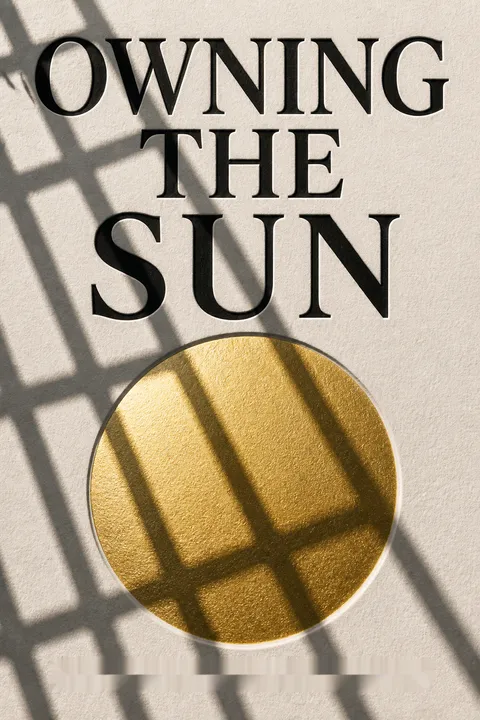
Owning the Sun receives generally positive reviews, praised for its detailed history of pharmaceutical patents and monopolies. Readers appreciate the thorough research and engaging narrative style. Many find it eye-opening and infuriating, highlighting the industry's greed and disregard for human life. Critics note its dense content and occasional dryness. The book is seen as important and timely, exposing how intellectual property laws have been manipulated to prioritize profits over public health. Reviewers recommend it for understanding the complex issues surrounding drug patents and healthcare.
Glossary
Progress Clause
Constitutional basis for limited patentsThe constitutional provision empowering Congress to grant authors and inventors exclusive rights for limited times in order to promote progress in science and useful arts. The book emphasizes that the clause’s stated public purpose has been interpreted in competing ways: as a reason to protect private rights, and as a limit on monopolies that obstruct public benefit.
ethical patenting
Patenting framed as public serviceThe effort to make medical and academic patenting compatible with older professional ideals of open scientific exchange. Advocates argued that patents could disclose inventions, support research, or ensure responsible production. Critics worried that exclusive rights, even when held by universities or managed through special organizations, could restrict research, access, and competition.
Bayh-Dole Act
Private claims on funded researchThe 1980 U.S. law that allowed universities and small businesses to claim patents on inventions developed with federal research funding. The Reagan administration extended the policy to larger companies in 1983. The book treats Bayh-Dole as a major shift from default government ownership toward private control of publicly supported inventions.
march-in
Government power to license inventionsA provision associated with Bayh-Dole that allows the government to require additional licensing of a federally funded invention under specified circumstances, including when public needs are not being met. The book notes that this authority has not been used to address drug pricing, raising questions about whether a legal safeguard is effective when agencies hesitate to enforce it.
inventions gap
Claim of unused public patentsA policy argument advanced in the 1970s that government ownership left large numbers of publicly funded inventions unused and therefore blocked innovation. The book challenges the claim’s measurement: most patents do not become commercial products, and government inventions can often be used without formal licensing. The argument helped build support for transferring more patent rights to private actors.
regulatory capture
Industry influence over regulatorsA theory associated in the book with economist George Stigler. It describes how an industry subject to regulation may gain influence over the agency responsible for overseeing it, because the industry has concentrated incentives and resources. The book emphasizes that influence can extend beyond lobbying to shaping the assumptions and evidence used by regulators.
TRIPS
Global minimum intellectual-property rulesThe Agreement on Trade-Related Aspects of Intellectual Property Rights, established through the 1994 Uruguay Round and enforced through the World Trade Organization. It required member countries to adopt minimum intellectual-property protections, including drug patents. The book traces its creation to corporate advocacy and pressure on countries that had resisted pharmaceutical monopolies.
TRIPS Plus
Rules exceeding TRIPS minimumsA term for additional intellectual-property protections pursued through bilateral and regional trade agreements, diplomatic pressure, and other arrangements beyond the minimum standards in TRIPS. The book describes these measures as ways powerful governments and companies can constrain poorer countries’ use of public-health safeguards and generic-drug policies.
C-TAP
WHO technology-sharing poolThe World Health Organization’s COVID-19 Technology Access Pool, launched in 2020. It invited governments and companies to share relevant intellectual property, data, and technical knowledge so that qualified producers could develop and manufacture COVID-19 products. Participation was voluntary, and the book notes that major pharmaceutical companies did not join.
evergreening
Extending exclusivity through minor changesA strategy in which a drug company seeks new or additional patent protection for minor modifications to an existing medicine, formulation, or manufacturing method. The goal can be to delay generic competition without a comparable increase in therapeutic benefit. The book distinguishes these extensions from patents on genuinely significant medical advances.
undisclosed information
Protected commercial knowledgeA broad category of legally protected information that is not publicly disclosed, including trade secrets, manufacturing know-how, and clinical data. In medicine, these materials can contain practical instructions and evidence needed to reproduce or obtain approval for a product. The book argues that such protections can restrict competition even when patent barriers are removed.
data exclusivity
Exclusive control of trial dataA form of protection that limits when regulators may rely on a medicine’s clinical-trial data to approve competing products. A generic producer might be able to make a chemically identical medicine yet still face a regulatory barrier if it cannot use the originator’s data and cannot afford to repeat the trials. The book presents data exclusivity as a potential barrier independent of patents.
Download PDF
Download EPUB
.epub digital book format is ideal for reading ebooks on phones, tablets, and e-readers.








