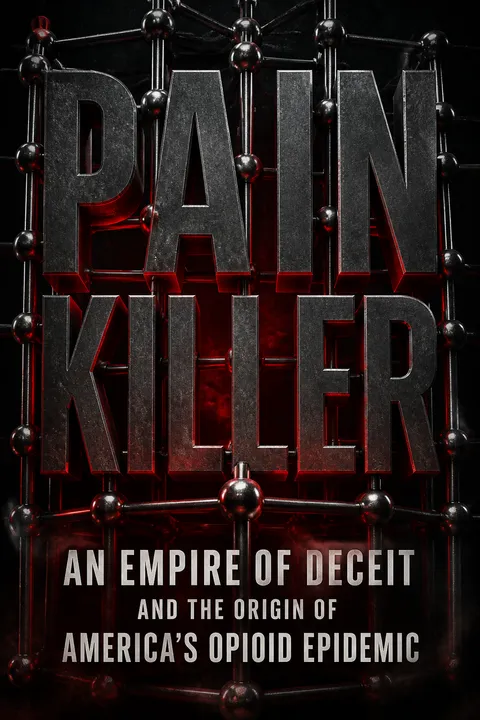


Key Takeaways
A time-release coating could not neutralize a tablet's massive oxycodone payload.
The design had a weakness. OxyContin was built to release oxycodone over roughly twelve hours, allowing it to carry far more narcotic than older combination painkillers. Those often paired about 5 milligrams of oxycodone with a non-opioid pain reliever. OxyContin started at 10 milligrams and came in strengths up to 160 milligrams. Purdue reasoned that slow release would make the drug less attractive to people seeking a rapid high. But users learned they could crush the tablet and take much of its dose at once.
The harm reached Lee County. Teenager Lindsay Myers began using the drug recreationally, then experienced withdrawal when she could not get more. In 2000, a local doctor found a young woman near death after an overdose. The drug's engineered duration did not prevent abuse. It made a large dose available in a single pill.
What's striking is the gap between a feature that improves a medicine's intended use and a safeguard that actually resists misuse. A formulation can change the timing of a dose without changing the underlying drug's capacity to produce dependence or overdose. That distinction matters well beyond opioids: engineering claims should be tested against how products behave when users do not follow instructions. The episode also cautions against treating a tamper warning as a tamper-resistant design. The tablet's intended use and its vulnerable use were both foreseeable questions, not mutually exclusive realities.
Correcting pain neglect did not prove long-term opioids were safe.
The original concern was real. Many doctors had little training in pain care and feared addiction so strongly that they undertreated even severe pain. Cancer specialists showed that scheduled morphine could spare patients the painful gaps created by giving it only when they asked. Pain advocates, including Russell Portenoy, argued that some chronic-pain patients might also benefit from long-term opioids.
The evidence was much thinner. A 1986 Portenoy and Kathleen Foley paper covered only 38 patients. Advocates and drug companies then relied on small or misrepresented reports to suggest addiction risk was below one percent. One frequently cited report was a short letter about hospitalized patients, not a study of years of opioid treatment. Another study's three cases came from a subgroup of just 62 headache patients, not the full sample of 2,369.
The important distinction is between correcting a documented failure and claiming that a new treatment is broadly safe. Both can be true: patients may be undertreated, while evidence for indefinite opioid use remains inadequate. The book shows how a moral urgency, relief for people in pain, made uncertainty easier to minimize. This is a familiar problem in medicine: a treatment's initial success in a selected group can be mistaken for proof across a wider population. Compassion is not the enemy of evidence. In high-risk care, it is a reason to demand better evidence.
Treat pharmaceutical education as marketing when the sponsor sells the cure.
Promotion wore a white coat. Arthur Sackler helped build a drug-marketing system that reached doctors through journal advertisements, sponsored publications, consultants, and educational events. He defended promotion as physician education, even as his agency helped expand the market for drugs such as Librium and Valium by positioning them for different everyday troubles.
Purdue inherited the playbook. It funded pain seminars, paid doctors to speak, supported professional and patient groups, and circulated material about undertreated pain. The subject was legitimate, but Purdue's commercial interest was specific: more doctors prescribing OxyContin. The Appalachian Pain Foundation, presented as a local advocacy group, was organized with Purdue's support as reports of abuse were already emerging. The resulting blur made sales arguments appear to come from independent medical voices.
The key issue is not that industry support automatically invalidates every medical claim. It is that sponsorship can shape which problems receive attention, which treatments seem practical, and which uncertainties go unmentioned. A lecture may contain accurate information and still function as promotion if its setting, audience, and examples steer toward one product. The case suggests a useful test for any sponsored education: Would the same event, with the same emphasis, exist if the sponsor had no product to sell? Disclosure helps, but transparency alone does not remove the influence built into the agenda.
A hedged FDA phrase became OxyContin's most powerful safety pitch.
A theory gained official weight. Purdue argued that a slow-release opioid might be less appealing to abusers because it did not produce an immediate effect. The company had not tested that claim directly before OxyContin's approval. Still, the FDA allowed the label to say that delayed absorption was believed to reduce abuse liability. An FDA reviewer had questioned the claim internally, but it remained on the approved label.
The qualification faded in sales. Purdue described the label language as so valuable it could serve as the drug's main selling point. Sales representatives used it to reassure doctors that OxyContin was safer or not addictive, even though the label did not establish that it could not be abused. Crushing the tablets defeated the release mechanism, and the label itself warned against crushing or chewing them.
This is a case study in how regulatory language travels. A cautious statement about a possible mechanism can become, through repetition, a confident claim about real-world safety. The problem is not simply that audiences misunderstand technical language. Commercial actors can benefit from that ambiguity, while the regulator's imprimatur makes the claim feel settled. A practical lesson for interpreting product labels is to ask what the evidence demonstrates, not merely what the wording permits someone to imply. Approval of a claim is not the same as proof of the outcome consumers infer from it.
Follow the incentives: Purdue rewarded prescription value, not safer patient outcomes.
The sales system had a direction. Purdue grew its sales force to about 625 people by 1998, with roughly 70 percent assigned to OxyContin. Representatives used prescription data to identify doctors already writing many prescriptions for other painkillers. The company ranked prescribers by volume and treated some as especially promising targets.
Bonuses rewarded dollars. Unlike systems based on prescription counts, Purdue's sales bonuses tracked increases in the dollar value of OxyContin prescriptions. Higher doses cost more, so the structure could reward dose escalation. The company also identified high-prescribing regions as marketing hot spots. In Myrtle Beach, prescriptions surged around a clinic that pharmacists and local officials suspected was a pill mill. Purdue attributed the area’s growth to its large senior population, even as federal agents investigated the clinic.
Incentives make a company's stated values less informative than the behavior its compensation system rewards. A representative can be told to promote responsible use, yet still face pressure to grow high-value prescriptions. That does not prove every rep acted improperly or every prescription was unsafe. It does show why oversight should examine the operating system, not only individual misconduct. Sales data used to find customers can also identify patterns that merit scrutiny. When a company has the capacity to detect growth but disclaims responsibility for what that growth means, the gap deserves attention.
Purdue's internal records placed abuse warnings years before its public timeline.
The warning signs accumulated. Purdue executives later said they first learned of significant OxyContin abuse around early 2000. But prosecutors' 2006 memo described earlier signals. A 1998 Canadian study found that users were extracting morphine from Purdue's earlier drug, MS Contin, and selling it on the street. The tablets were called peelers because users removed their coating before crushing them. The study's accompanying editorial warned that OxyContin could also be abused.
OxyContin appeared in the reports. Prosecutors cited a 1997 company email about drug-abuse chat rooms, sales representatives' reports of patients crushing and snorting the drug in 1999, and other internal messages. Investigators said the terms street value, crush, or snort appeared in 117 sales call reports from 27 states between 1997 and 1999. These records contradicted the company's later claim of only scattered early reports.
The distinction between knowing that a product can be abused and knowing the scale of a crisis is important. The evidence described here does not make every executive's state of mind self-evident, and prosecutors' memo was an argument for charges, not a verdict on every allegation. But repeated, geographically dispersed reports should trigger a documented process for investigation, escalation, and disclosure. The deeper lesson is procedural: organizations need ways to aggregate frontline warnings before they become a public catastrophe. Information that remains scattered across emails and sales notes is not the same as information responsibly acted upon.
Treat local overdose signals as warnings, not isolated community failures.
Lee County saw the pattern early. Doctor Art Van Zee, addiction counselor Beth Davies, and physician Vince Stravino watched OxyContin use spread among young people and patients. A survey found that 28 percent of eleventh-graders and 20 percent of twelfth-graders at Lee High had tried it. Van Zee urged Purdue to warn doctors, curb promotion for chronic non-cancer pain, review sales patterns, and consider a formulation that would resist misuse. The company did not adopt his recommendations.
The institutions were poorly prepared. The DEA unit responsible for prescription-drug diversion lacked the staffing and tools available to the agency's criminal investigators. FDA and DEA responsibilities also overlapped awkwardly. Local health workers and law enforcement were left confronting a rapidly growing problem with few treatment resources and little reliable national monitoring.
A small community can function as an early-warning system for a national risk, especially when its clinicians, pharmacists, counselors, and police observe different parts of the same pattern. Van Zee's analogy to early HIV signals captures the value of treating local clusters as information, not as proof that the affected community is uniquely defective. Still, local warnings need confirmation: a single outbreak can have distinctive causes. The stronger response is neither dismissal nor automatic generalization, but rapid data collection, transparent assessment, and a clear path for local evidence to reach national regulators.
A corporate guilty plea cannot replace public evidence or individual accountability.
The case narrowed at its climax. After a four-year investigation, federal prosecutors recommended felony charges against Purdue executives, arguing that evidence showed the company had misrepresented OxyContin's abuse risk and its knowledge of misuse. Senior Justice Department officials rejected those recommendations. In 2007, Purdue pleaded guilty to felony misbranding and agreed to pay $600 million. Three executives pleaded guilty to misdemeanors and received probation and community service, not prison sentences.
The evidence stayed mostly hidden. Prosecutors' detailed memo, including internal emails, remained sealed after the settlement. The executives maintained that they had done nothing wrong, and prosecutors did not charge Sackler family members. The public therefore heard about a corporate conviction without seeing much of the evidence that had shaped the government's more serious proposed case.
The settlement illustrates the difference between legal resolution and public understanding. A plea can impose penalties and establish corporate wrongdoing, while leaving unresolved what senior individuals knew and when. At the same time, the prosecution's recommended charges cannot be treated as findings of guilt. The sealed record made it harder for the public to evaluate either side's account. For high-impact cases, accessible evidence is part of accountability, not an optional supplement to it. Without it, institutions may settle the immediate dispute while leaving the underlying story contested and the deterrent effect uncertain.
Separate illicit-drug deaths from medical opioid harms without minimizing either.
The epidemic had several routes. OxyContin helped normalize and expand prescription opioid use, but the larger crisis did not come from one drug alone. The book describes later shipments of enormous quantities of oxycodone and hydrocodone into West Virginia, followed by the growing role of heroin and counterfeit fentanyl. In 2016, the book reports, opioids were involved in 42,000 of 64,000 American overdose deaths.
The harms differ. Illegal fentanyl and heroin demand urgent overdose prevention, law enforcement, and addiction treatment. Medical opioid use raises a different set of questions about prescribing, dose, duration, and alternatives. The epilogue notes that even patients taking opioids as directed can face problems such as lethargy, falls, and increased pain sensitivity. Treating all opioid deaths as one undifferentiated problem obscures both causes and remedies.
This distinction improves policy by separating the pathways into harm. A patient who becomes dependent during treatment, a person using counterfeit fentanyl, and a dealer supplying diverted medication do not present identical needs or risks. A single narrative can unite them politically, but a single intervention will not address them equally well. The book's account also resists a common false choice: recognizing medical harms does not require dismissing the needs of people with severe pain, and supporting treatment does not require excusing reckless distribution. Categories should clarify intervention, not determine who deserves compassion.
Use opioids selectively, and make non-drug pain care genuinely accessible.
Long-term benefit was not assured. Pain specialist Jane Ballantyne warned in a 2003 study that prolonged, high-dose opioid treatment could become neither safe nor effective as patients developed tolerance and required escalating doses. The book also describes research finding that some patients recovered faster with non-drug approaches, including physical rehabilitation, than with opioids. Workers receiving high doses for common injuries were reported to stay off work longer than those receiving lower doses.
Alternatives need real support. Exercise, physical therapy, behavior modification, and non-narcotic medicines are among the approaches discussed. These treatments can require time and resources, while a prescription may be easier to provide. The author does not argue that opioids never help: some patients who have not found relief elsewhere may benefit, particularly at lower doses. The goal is to stop treating escalation as the automatic answer when a patient remains in pain.
A safer pain strategy depends on more than telling clinicians to prescribe less. If insurers cover pills readily but deny rehabilitation or psychological care, the nominal choice of alternatives is not a real choice. The account therefore points toward a systems problem: treatment guidelines, reimbursement, clinical time, and patient expectations all shape prescribing. Caution must also avoid swinging back to the old neglect that made pain advocates persuasive in the first place. The strongest position is neither opioid optimism nor blanket prohibition. It is individualized care with honest discussion of uncertain benefit, material risks, and viable alternatives.
Analysis
Pain Killer is investigative history with a human narrative at its center: Lindsay Myers's movement from teenage experimentation to dependence unfolds alongside Art Van Zee's attempt to make distant institutions notice what was happening in Lee County. That structure gives the account moral force without reducing the crisis to statistics. The book's main contribution is to connect a potent drug to a broader system: a genuine medical movement against undertreated pain, weak evidence promoted as certainty, a sophisticated sales operation, regulatory ambiguity, and institutions unable or unwilling to respond quickly.
Its strongest evidence is documentary. Internal emails, sales reports, FDA records, and the prosecutors' memo complicate Purdue's public account that significant abuse became apparent only around 2000. Still, an investigative narrative is not a courtroom finding. The 2006 prosecution memo represents prosecutors' case for more serious charges, while senior Justice Department officials rejected that recommendation and the executives maintained their innocence. The book is most persuasive when it distinguishes records from interpretations, and its broader point does not depend on pretending every disputed inference was adjudicated.
The account also preserves a necessary tension. Doctors had often failed people in severe pain, and some patients benefited from opioids. Yet evidence from cancer care or short-term hospital treatment could not establish the safety of long-term prescribing across very different patients. A movement can begin as a corrective and become overconfident when advocacy, commercial interests, and institutional convenience reinforce one another. Purdue did not create every condition behind the opioid epidemic, but its marketing helped turn an uncertain treatment into a mass-market answer.
The enduring lesson is about governance under uncertainty. A company selling a high-risk product should not be the sole judge of emerging safety signals, particularly when its sales systems reward growth. Regulators need independent data and the capacity to act; medical institutions need alternatives that patients can actually access. By 2018, the crisis included prescription drugs, heroin, and illicit fentanyl, each demanding distinct responses. The book's central warning remains precise: when uncertain claims become profitable, delay is not neutral.
Review Summary
Glossary
OxyContin
time-release oxycodoneA prescription painkiller introduced by Purdue Pharma in 1996. Its controlled-release tablet was designed to deliver oxycodone over an extended period and was available in strengths from 10 to 160 milligrams. Crushing the tablet could release much of its opioid dose quickly, making it vulnerable to misuse. Purdue marketed it broadly for pain, while controversy grew over abuse, addiction, and overdose.
Opiophobia
fear of opioid prescribingA term used by opioid advocates to describe what they viewed as excessive medical fear of prescribing narcotics. Advocates argued that concern about addiction led doctors to undertreat severe pain. The term identified a genuine problem in some settings, but it could also frame appropriate caution, monitoring, or regulation as irrational opposition to pain relief.
Pseudoaddiction
drug-seeking from undertreated painA term introduced by David Haddox and a coauthor for behavior that can resemble addiction, such as repeatedly seeking prescriptions, but is interpreted as a response to inadequately treated pain. They proposed that increasing opioid treatment could resolve it. The book emphasizes that the idea rested initially on a single patient's behavior, not a large clinical study.
Iatrogenic addiction
addiction arising during treatmentAddiction that develops in the course of medical treatment, such as when a patient receives narcotics for pain. Opioid advocates cited low estimates of this risk to reassure doctors. The book shows that some figures used to support the claim came from limited evidence that did not establish the safety of long-term opioid use.
Schedule II
strictly controlled drug categoryA category under United States drug-control law for substances considered to have accepted medical uses but a high potential for abuse and dependence. OxyContin was placed in this category alongside drugs such as morphine and fentanyl. Schedule II controls require tracking as the drug moves through manufacturers, distributors, prescribers, and pharmacies.
Drug Abuse Warning Network
emergency-room drug data systemA government system, commonly called DAWN, that collected reports of emergency-room visits involving drug misuse or overdose. The book discusses DAWN data used in research and public arguments about opioid use. Because some cited data ended before OxyContin appeared, it could not establish what happened after the drug's introduction.
Chronic Use of Opioid Analgesics in Non-Malignant Pain
1986 chronic-pain opioid paperA paper by Russell Portenoy and Kathleen Foley examining long-term opioid treatment among 38 patients with non-cancer pain. It argued that some patients who had not found relief through other approaches might benefit. The paper helped influence pain-management advocacy, but its small, selected sample could not establish broad safety or addiction rates.
Addiction Rare in Patients Treated with Narcotics
1980 hospital-patient letterA short letter by Hershel Jick and Jane Porter, published in the New England Journal of Medicine, reporting few documented addiction cases among hospitalized patients who received narcotics. It was not a long-term study. The authors' data followed patients only during hospitalization and could not support claims about years of opioid treatment.
Around the Clock, Controlled Release Oxycodone Use in Osteoarthritis
Purdue-funded oxycodone studyA Purdue-funded study used in discussions of OxyContin's safety and prescribing. Prosecutors later cited internal company records indicating that researchers found withdrawal symptoms among some patients, despite the study's reported conclusion that no overt withdrawal syndrome occurred. The dispute raised questions about how Purdue handled evidence relevant to stopping treatment.
Download PDF
Download EPUB
.epub digital book format is ideal for reading ebooks on phones, tablets, and e-readers.








