

Key Takeaways
Treat painful shyness as a treatable fear pattern, not a fixed identity.
Shyness has a threshold. Ordinary nervousness before a speech is different from persistent fear that disrupts work, school, relationships, or daily routines. The book calls the more impairing pattern social anxiety disorder: fear of being judged or embarrassed, strong anxiety in social situations, and frequent avoidance despite recognizing that the fear may be excessive. Gina avoided lunch with coworkers; Jim dreaded blushing in front of people he saw as higher status. Their lives were narrowing around anticipated judgment, not simply around a quiet temperament.
Recognition changes the story. The book reports that roughly one in eight Americans experiences social anxiety disorder at some point in life, and describes it as both underrecognized and treatable. A diagnosis is not a verdict about character. It is a name for a pattern that can be assessed and addressed, often with cognitive-behavioral methods and, when appropriate, medical care.
What's important here is the distinction between personality and impairment. A quiet person does not need to become outgoing to have a worthwhile life; the relevant question is whether fear is choosing on that person's behalf. Naming a pattern can reduce shame and make help-seeking possible, much as a clear diagnosis can replace moral blame with a practical problem to solve. At the same time, prevalence figures and diagnostic criteria in this 2001 book reflect their era. They are useful context, not a substitute for a current professional assessment.
Accept anxiety without approving it, then spend less energy fighting yourself.
Acceptance is not surrender. It means noticing what is happening without adding a verdict that the feeling is disastrous, shameful, or permanent. The authors distinguish accepting a situation from approving of it or refusing to act. Their client Christy had lost the ability to speak above a whisper and called herself worthless. Therapy first helped her notice and question cruel self-talk, then replace it with a more compassionate assessment. She began volunteering at an animal shelter before her voice returned, rather than making life wait for a perfect recovery.
Try a simple practice. Write down a self-critical thought, apologize to yourself for the attack, examine what evidence supports it, and form a more balanced response. Christy’s progress did not depend on pretending she liked her symptoms. She learned to tolerate them while pursuing things that mattered.
Acceptance can interrupt a costly second layer of suffering: anxiety about being anxious, followed by self-punishment for not controlling it. That shift preserves energy for action and resembles the distinction between an experience and the judgment attached to it. The book’s approach is especially humane because it does not make self-kindness a reward for improvement. One caution: acceptance should not be used to normalize preventable harm or dismiss medical symptoms. It is a way to meet reality clearly, including the parts that call for change or professional help.
Match the next step to your readiness, not someone else's urgency.
Change has stages. The book uses a six-stage model: precontemplation, contemplation, preparation, action, maintenance, and termination. People may move through the stages at different speeds or revisit them after setbacks. In precontemplation, a person may not yet see anxiety as a changeable problem; in contemplation, the problem is recognized but action remains uncertain. Preparation turns intention into a plan, while action means practicing new behaviors.
Nolan needed room. His parents arranged therapy because they feared his isolation, but he was not ready to begin assignments. His therapist first listened and built trust. As Nolan understood how anxiety shaped his choices and began imagining a different future, he became more willing to act. The point is not to wait forever: it is to use the work suited to the moment, whether that is learning, planning, or practice.
Readiness is a useful antidote to the fantasy that motivation can be commanded from outside. A relative may see a clear problem while the person experiences change as threat, loss, or uncertainty. Matching the intervention to readiness can protect trust and make later effort more self-directed. Yet a stage model is a map, not a fixed law of human behavior. People can be ready in one area and ambivalent in another, and prolonged preparation can become another form of avoidance. A useful plan respects hesitation while giving it a next, manageable question.
Lower your body's alarm so fear does not dictate every choice.
Physical care matters. Anxiety is not only a thought problem. Poor sleep, overwork, little exercise, and heavy caffeine use can intensify agitation and make social situations harder to manage. Claire, an overextended office worker who drank several cups of coffee and rarely exercised, began a gradual exercise routine with help from a supportive YMCA staff member. The book reports that 20 to 40 minutes of aerobic exercise can improve mood and reduce anxiety for several hours, while regular activity can support energy and confidence.
Practice breathing deliberately. Diaphragmatic breathing uses slower breaths, with the abdomen expanding on the inhale and relaxing on the exhale. The authors suggest practicing when calm before using it in stressful situations. This can reduce overbreathing, which may contribute to dizziness, tingling, and a racing heart. Persistent or unfamiliar physical symptoms deserve medical evaluation, not automatic attribution to anxiety.
This section treats the body as part of the feedback loop rather than as a passive vehicle for the mind. Better sleep and less stimulant use may reduce sensations that anxious attention can misread as danger; breathing practice also offers a concrete point of influence when fear feels abstract. The important nuance is that self-care is supportive, not a cure or a measure of virtue. Exercise access, disability, health conditions, and work demands differ. A useful recommendation is one that can be adapted safely, not one that turns another unmet standard into evidence of personal failure.
Test feared predictions against evidence, including how bad outcomes would really be.
Anxiety predicts and catastrophizes. The book names two common thinking errors. Probability distortion means overestimating the chance that others will judge negatively. Severity distortion means treating that judgment as catastrophic. Kim feared coworkers would stare at her after maternity leave and judge her weight. At first she rated that outcome as 90 percent likely. Reviewing how coworkers actually behaved and how she herself viewed new parents brought her estimate down to 30 percent. She also examined whether being stared at would truly mean losing her job or her worth.
Aim for realistic thinking. Empty reassurance that everything will go perfectly can feel dismissive. A more useful response allows that something awkward may happen and asks whether it is survivable. A thought diary can capture the situation, the prediction, the emotion, and the evidence that supports or challenges the prediction.
The strongest move is separating two questions that anxiety fuses: How likely is the feared event, and what would it mean if it happened? That distinction makes vague dread easier to investigate. It also avoids the trap of replacing negative certainty with positive certainty. Still, cognitive review works best when it does not become courtroom cross-examination aimed at proving that feelings are irrational. Some people really do encounter rude behavior or discrimination. The goal is a more proportionate estimate and a workable response, not a guarantee that others will behave well.
Move attention from your imagined audience back to the person or task.
Self-monitoring can hijack performance. Socially anxious people may track every blush, gesture, pause, or glance while trying to speak. Ross, a medical resident, worried so intensely about how his eyes looked during patient rounds that he struggled to attend to the patient or the discussion. The book argues that judging performance while performing can consume attention needed for the task itself.
Choose a useful focus. In a conversation, notice what the other person is saying. In a presentation, return to the point being explained. If anxiety surges, a brief breathing check or description of a neutral object can help settle attention before redirecting it. The authors connect this to flow, a state of absorbed concentration in which attention rests on the activity rather than on constant evaluation.
Attention is limited, and repeated checking of one's own performance can leave too little available for listening, reasoning, or responding. Ross's case makes the cost visible: the more he tried to control how he appeared, the less present he became with the person in front of him. This is not an argument against all self-awareness. Reflection after an event can help identify what to practice; real-time surveillance of every movement is the problem. The distinction is between attention that informs behavior and attention that interrupts it.
Make fear faceable through graded experiments, not forced endurance.
Exposure is structured practice. Exposure means entering a feared situation, in steps, so a person can learn that anxiety is tolerable and feared outcomes are not inevitable. The book recommends building a hierarchy from easier to harder situations, repeating steps, and staying long enough to observe what happens. Social situations do not always allow neat repetition, so the authors also suggest imagined practice and small experiments.
Drop the protective tricks gradually. Safety behaviors include drinking beforehand, hiding at the back of a room, or avoiding eye contact. They can make a situation feel manageable while preventing the person from learning whether the feared catastrophe would occur without them. One client who believed nobody went to the movies alone counted twelve solo moviegoers and found that the audience was focused on the film, not on him. The goal is information, not a perfect performance.
Exposure is most persuasive when framed as learning rather than proving courage. A small experiment can test a specific prediction and produce evidence that ordinary reassurance cannot. This also explains why sheer endurance may fail: entering a situation while relying on elaborate protection can preserve the old belief that only the protection kept disaster away. The approach requires judgment, however. A step should be challenging but workable, and genuine danger, bullying, or severe impairment changes the calculation. When anxiety is intense or complex, experienced clinical support can help tailor the process.
Use treatment, including medication, as support rather than proof of weakness.
Biology is part of the picture. Social anxiety can reflect interacting influences, including temperament, family vulnerability, stressful events, and learned avoidance. Garrett had completed therapy assignments but remained intensely anxious. Learning that some people have a stronger biological vulnerability helped him stop interpreting limited progress as a moral failure. After consulting a physician, he added medication and continued therapeutic work.
Make the decision with a clinician. The book reviews medication classes, including SSRIs, benzodiazepines, and beta-blockers, and emphasizes that benefits, risks, and side effects vary. It cites a Paxil study in which 55 percent of participants taking the drug were rated much or very much improved, compared with 23.9 percent taking placebo. These figures describe research available to the authors at the time, not current prescribing guidance. Medication is an option to discuss with a qualified medical professional.
The central contribution is moral as much as medical: treatment response is not a referendum on character. Medication can make therapeutic practice more reachable for someone whose arousal remains overwhelming, while therapy can address habits and beliefs that medication alone may not change. The book also cautions against treating medication as an effortless fix. Because its drug discussion and evidence date from the early 2000s, readers should not use it to choose a drug or dose. Current decisions require individualized medical advice, including attention to other conditions and medications.
Help children practice social courage without making quietness a defect.
Support without shame. A child can be cautious and healthy, so parents should ask whether fear is persistent and interfering with school, friendships, or ordinary activities. The book advises parents to listen, name feelings, break new situations into manageable steps, recall past successes, and give the child time. Tyler wanted gymnastics lessons but clung to his mother at first. She let him observe, then join gradually; by the end of the course he participated comfortably.
Know when to seek help. School refusal, frequent distress, or a child who remains unable to speak in public settings may signal more than ordinary shyness. Selective mutism describes a child who speaks in some settings, often at home, but not in others, such as school. The authors advise early assessment and gradual, supported practice, while discouraging punishment or speaking for the child indefinitely.
Parents can offer a powerful model by treating temperament as a difference, not a defect, while still helping a child build skills. The balance is delicate: rescuing can unintentionally strengthen avoidance, but pressure and public labeling can increase shame. A child's own account matters, since a parent may mistake solitary play for loneliness or overlook hidden distress. The same principle applies in school: supportive adults can create low-pressure opportunities without assuming silence means lack of ability. Persistent impairment calls for assessment rather than a simple wait-and-see approach.
Build a life around what matters, even before anxiety disappears.
Meaning can guide action. The authors describe spirituality broadly, as a search for connection, purpose, and values that may or may not involve religion. They connect it with four existential concerns: mortality, personal responsibility, isolation, and meaning. These questions can shift attention from endless worry about approval toward what deserves a person's time and care.
Do not wait for perfect calm. Christy began volunteering at an animal shelter while still whispering and feeling anxious. The work mattered to her, and the animals did not require her to perform socially in a particular way. The book presents spiritual practice, community, and reflection as possible sources of hope and perspective, not as replacements for therapy or medical care. Its practical message is to keep participating in valued life while recovery remains unfinished.
Values give exposure a reason beyond symptom reduction. A person may tolerate discomfort more readily when the action serves connection, care, learning, or contribution. This also protects recovery from becoming another perfection project in which life begins only after anxiety vanishes. The spiritual framing will resonate differently across readers, and the book acknowledges that it is not a scientific treatment claim. Its broader insight survives that difference: purpose can be religious, relational, creative, or civic, and it can be practiced without certainty about why suffering occurs.
Analysis
Painfully Shy works as both a practical manual and a sequence of clinical stories. Its main claim is not that social anxiety disappears through one clever technique, but that people can reclaim choice by combining self-understanding, acceptance, physical regulation, cognitive review, attention training, graduated exposure, and sometimes medication. The case histories make this integrated approach memorable: Gina's avoidance shows the cost of an unnamed problem, Garrett's experience counters self-blame, and Christy's return to meaningful activity demonstrates that life need not wait for symptoms to vanish.
The book's most useful distinction is between temperament and impairment. It refuses to portray quietness as a flaw while taking seriously the suffering that fear and avoidance create. This allows treatment to target restriction rather than personality. Its behavioral logic is also strong: avoidance brings immediate relief but blocks the learning that anxiety can be endured and that feared outcomes may be less likely or less devastating than predicted. The emphasis on experiments, including noticing safety behaviors, turns abstract confidence into observable evidence.
The source is from 2001, so its prevalence figures, diagnostic language, and medication discussion are historically situated. Readers should not treat its drug comparisons or DSM-IV criteria as current clinical guidance. The book also gives less attention to broader conditions that can shape social fear, such as discrimination, disability-related stigma, economic constraints, and genuinely unsafe social environments. Exposure cannot make an unfair setting fair, and not every withdrawal is irrational. A careful contemporary application preserves the book's central insight while asking what the person fears, what the environment actually does, and what kind of support creates meaningful freedom. The result is not a demand to become socially fearless, but a practical distinction between choosing solitude and being forced into it by anticipated judgment.
Review Summary
Painfully Shy receives mostly positive reviews, with readers praising its practical advice and relatable content for those struggling with social anxiety. Many found the book helpful in understanding their condition and providing strategies for improvement. Readers appreciated the author's personal experience with social anxiety and the inclusion of case studies. Some critics felt the information was outdated or not entirely applicable to their situation. Overall, the book is considered a valuable resource for those seeking to overcome social anxiety and increase self-confidence.
People Also Read


Glossary
Social anxiety disorder
Persistent fear of judgmentA pattern of strong, persistent fear in social or performance situations where a person may be observed, judged, embarrassed, or rejected. It can involve anxious thoughts, physical symptoms, and avoidance. In the book, the key distinction from ordinary shyness is the degree of distress and interference with daily life.
Behavioral inhibition
Cautious response to noveltyAn inborn temperament marked by watchfulness and caution, especially in unfamiliar circumstances. The book describes inhibited children as more likely to pause, become distressed, or withdraw when situations are new. It treats this temperament as a possible vulnerability to social anxiety, not as a disorder or an inevitable cause.
Probability distortions
Overestimating negative outcomesA thinking pattern in which a socially anxious person overestimates the likelihood that an awkward event will occur or that other people will respond negatively. Someone may assume that coworkers will notice a tremor and conclude the person is incompetent, despite having little evidence for that prediction.
Severity distortions
Catastrophizing possible consequencesA thinking pattern in which criticism, embarrassment, or rejection is treated as disastrous or impossible to tolerate. A person may believe that one awkward conversation will lead to permanent exclusion. The book pairs this with probability distortions and recommends examining both the likelihood of an event and its actual consequences.
Safety behaviors
Protective actions that preserve fearSubtle strategies used to control anxiety while entering a feared situation, such as drinking beforehand, avoiding eye contact, sitting where one will not be noticed, or memorizing every line of a presentation. They can offer short-term relief, but may prevent learning that the person could manage without them.
Exposure therapy
Planned contact with feared situationsA treatment approach that gradually and repeatedly brings a person into contact with feared situations, images, or sensations. The aim is to learn that anxiety can be tolerated and that feared outcomes are not inevitable. The book recommends designing manageable steps, practicing consistently, and reducing reliance on safety behaviors.
Habituation
Reduced response through repetitionA process in which repeated contact with a stimulus or situation reduces the body's reaction to it. In exposure, a person may notice anxiety rise and then diminish while remaining in a feared situation. The book presents habituation as one explanation for why repeated exposure can reduce fear.
Stages of change
Readiness shifts toward sustained actionA six-stage model associated in the book with James Prochaska, John Norcross, and Carlo DiClemente: precontemplation, contemplation, preparation, action, maintenance, and termination. It describes how people move from not considering change to practicing it and sustaining gains. People may spend different amounts of time in each stage or cycle back after setbacks.
Diaphragmatic breathing
Slow breathing using the abdomenA slower breathing pattern in which the abdomen expands during inhalation and settles during exhalation, reflecting movement of the diaphragm. The book recommends learning it through regular practice while calm, then using it as one tool for managing anxiety. It is not presented as a way to eliminate all anxiety.
Selective mutism
Speech limited by settingA childhood condition in which a child speaks in some settings, often at home, but does not speak or speaks only in a whisper in other settings where speech is expected, such as school. The book describes it as anxiety-related rather than deliberate defiance and recommends early assessment and gradual, supportive speaking practice.
FAQ
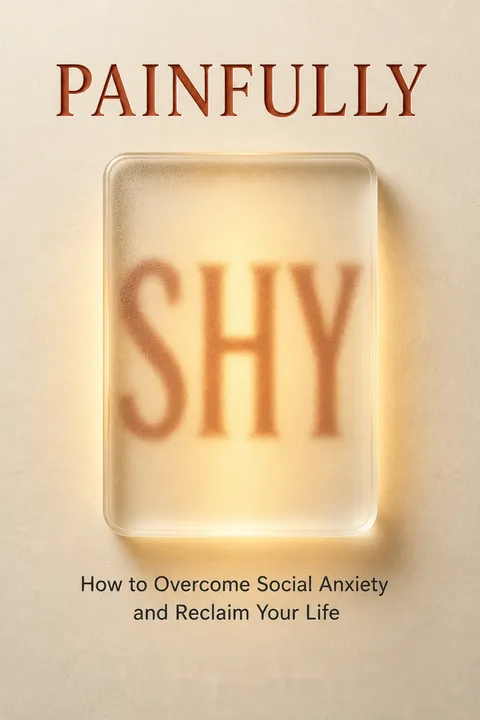
What is Painfully Shy: How to Overcome Social Anxiety and Reclaim Your Life by Barbara G. Markway about?
- Comprehensive guide to social anxiety: The book explores social anxiety disorder, its causes, symptoms, and the profound impact it has on people’s lives.
- Focus on hope and courage: It emphasizes that overcoming social anxiety is possible with the right tools, mindset, and support.
- Blends research and real stories: The author combines scientific research, clinical experience, and personal stories to make the content relatable and actionable.
- Step-by-step recovery: Readers are guided through practical methods to reclaim their lives and build confidence in social situations.
Why should I read Painfully Shy by Barbara G. Markway?
- Expert, compassionate guidance: Barbara G. Markway is a nationally recognized psychologist with deep experience treating social anxiety, offering credible and empathetic advice.
- Practical, actionable strategies: The book provides clear, step-by-step exercises and methods, such as applied relaxation and exposure therapy, that readers can implement immediately.
- Holistic approach: It addresses psychological, biological, social, and spiritual aspects of social anxiety, making it a comprehensive resource for sufferers and their families.
- Real-life examples: Stories of individuals overcoming social anxiety make the advice relatable and inspire hope.
Who will benefit most from reading Painfully Shy by Barbara G. Markway?
- Individuals with social anxiety: Anyone struggling with excessive anxiety in social situations, whether diagnosed or not, will find practical help and encouragement.
- Parents and educators: The book offers guidance for helping shy or socially anxious children develop confidence and social skills.
- Family and professionals: Family members, healthcare workers, and mental health professionals gain insight into supporting and treating those with social anxiety disorder.
How does Painfully Shy by Barbara G. Markway define social anxiety and social anxiety disorder?
- Normal vs. disordered anxiety: Social anxiety is a universal feeling of apprehension about being judged, but social anxiety disorder involves persistent, significant fear that disrupts daily life.
- Symptom categories: The disorder includes cognitive (negative thoughts), physical (blushing, shaking), and behavioral (avoidance) symptoms.
- Recognition of excessiveness: Sufferers often realize their fears are exaggerated but feel unable to control them, leading to avoidance and distress.
What causes social anxiety according to Painfully Shy by Barbara G. Markway?
- Biological factors: Genetics, brain chemistry, and temperament (such as behavioral inhibition) increase vulnerability to social anxiety.
- Environmental influences: Humiliating experiences, restrictive parenting, and observing anxious behavior in others can contribute to its development.
- Interaction and stress: The interplay between biology and environment, along with life stressors, often triggers or intensifies social anxiety.
Why does social anxiety persist, according to Painfully Shy by Barbara G. Markway?
- Avoidance maintains anxiety: Avoiding feared situations prevents learning that anxiety can be managed, reinforcing the cycle of fear.
- Faulty thinking patterns: Overestimating the likelihood and severity of negative outcomes keeps anxiety high.
- Worry and self-focus: Excessive worry about future events and focusing on internal sensations or perceived judgment exacerbate symptoms and lower self-esteem.
What is the role of acceptance in overcoming social anxiety in Painfully Shy by Barbara G. Markway?
- Acceptance as a mindset: The book encourages seeing oneself and one’s anxiety without harsh judgment, reducing unnecessary suffering.
- Building patience and trust: Acceptance fosters patience and trust in the recovery process, allowing for gradual progress.
- Practical self-compassion: Readers are guided to recognize negative self-talk, question its validity, and replace it with affirmations that promote self-acceptance.
How does Painfully Shy by Barbara G. Markway describe the process of change for social anxiety?
- Stages of change model: Change unfolds in six stages—precontemplation, contemplation, preparation, action, maintenance, and termination—each requiring different strategies.
- Matching strategies to stage: Progress depends on using appropriate methods for one’s current stage, such as increasing awareness or planning action steps.
- Nonlinear journey: The process is often nonlinear, with setbacks being a normal part of overcoming social anxiety.
What physical self-care methods does Painfully Shy by Barbara G. Markway recommend for reducing social anxiety?
- Exercise and movement: Regular aerobic exercise reduces anxiety, boosts mood, and improves concentration, though embarrassment about exercising can be a barrier.
- Nutrition and substances: Limiting caffeine, nicotine, alcohol, and certain medications helps minimize anxiety symptoms; eating smaller, frequent meals can prevent hypoglycemia-related anxiety.
- Rest and relaxation: Adequate sleep and relaxation techniques, especially diaphragmatic breathing, are crucial for managing physical symptoms of anxiety.
How does Painfully Shy by Barbara G. Markway suggest changing negative thoughts related to social anxiety?
- Realistic thinking: The book promotes realistic, rather than overly positive, thinking to validate concerns while reducing catastrophizing.
- Thought monitoring: Keeping a thought diary helps identify and manage automatic negative thoughts that fuel anxiety.
- Challenging core beliefs: Readers learn to assess the probability and severity of feared outcomes and confront underlying beliefs like perfectionism or fear of rejection.
What are the key methods for exposure therapy in Painfully Shy by Barbara G. Markway, and what challenges are unique to social anxiety?
- Habituation through exposure: Repeated, graduated, and prolonged exposure to feared situations reduces anxiety and challenges catastrophic beliefs.
- Complexity of social fears: Social situations are unpredictable and often brief, making it hard to create gradual exposure steps and achieve natural anxiety reduction.
- Creative solutions: The book suggests imaginal exposure, turning exposures into experiments, and paradoxical approaches (inviting feared symptoms) to overcome these challenges.
What are the most memorable quotes from Painfully Shy by Barbara G. Markway, and what do they mean?
- “Life is either a daring adventure, or nothing.” —Helen Keller: Encourages readers to view social anxiety as an opportunity for growth rather than something to avoid.
- “And the day came when the risk to remain tight in a bud was more painful than the risk it took to blossom.” —Anaïs Nin: Symbolizes the turning point when facing fears becomes preferable to staying in one’s comfort zone.
- “Be patient toward all that is unsolved in your heart and try to love the questions themselves…” —Rainer Maria Rilke: Emphasizes the importance of accepting uncertainty and ongoing self-exploration in the healing process.
- “As long as you’re prepared, you have nothing to be nervous about. For the moment you are speaking, you are the expert on the subject.” —Julie McGovern: Highlights how preparation and self-assurance can reduce performance anxiety.
Download PDF
Download EPUB
.epub digital book format is ideal for reading ebooks on phones, tablets, and e-readers.








