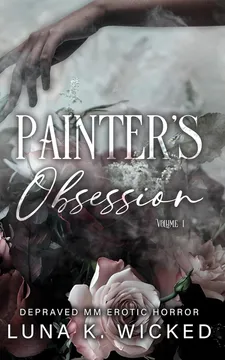


Plot Summary
Prologue
Two years before the main story, Byron Lopez1 runs through Laguna Bay with cash he hopes will help his younger sister,3 Gabriela,3 escape their abusive home. An old friend in the police force14 corners him before he can hide the money.
Gabriela3 watches Byron1 surrender, then returns to the trailer with their father,7 leaving her brother1 to prison and another failed attempt to protect her. Byron1 insists to himself that the sacrifice will still buy her a better life. Instead, the arrest begins a long separation that leaves Gabriela3 to carry the family alone.
The arrest makes Byron's protectiveness concrete before it becomes a defining trait: he risks his freedom to create an exit for Gabriela, but cannot control what happens after he is taken away. His loyalty is both generosity and a burden he assumes without asking what his sister wants. The hidden cash symbolizes his belief that rescue can be achieved through sacrifice alone. The prologue also places the siblings inside a family system shaped by their father's abuse, where Byron's instinct to shield Gabriela is understandable, but not always distinguishable from his need to manage her life.
The Lawyer Sees a Thorn
Ren Sato2 wakes from memories of his mother,8 whose abuse and control have shaped his carefully managed life as a successful lawyer. He also maintains a private art studio where women become subjects of his violence. During mandatory pro bono work, Ren2 meets Byron,1 a defiant client facing years in prison on drug charges.
Ren2 pressures him to accept a plea by invoking his family, and Byron1 signs, then rejects Ren2 as his lawyer.2 The encounter should end there. Instead, Ren2 becomes fixated on Byron's1 anger, strength, and vulnerability, imagining him as a subject he wants to possess. The legal meeting gives Ren2 a route into Byron's1 world, while Byron1 leaves unaware that his brief contact has made him a target.
Ren's professional authority is not merely a mask; it gives him legitimate access to people whose circumstances already limit their choices. He reads Byron's concern for family as leverage, then mistakes his own fascination with Byron for artistic insight. Byron's refusal to trust him should mark a boundary, but Ren interprets resistance as an invitation to pursue. Their first meeting therefore establishes the central asymmetry: Byron experiences a coercive legal encounter and moves on, while Ren turns it into a private claim.
A Sister Between Them
In prison, Byron1 receives Gabriela's3 letter: their father7 has died, the family business is lost, and she has had to abandon college to support herself. A cellmate's9 sexual advances stir memories of his father's7 beatings over his attraction to men, leaving Byron1 ashamed of his body's responses. Nearly two years later, he is released and reunited with Gabriela,3 who has come to collect him.
At the diner, she meets Ren,2 now a polished lawyer she has already noticed, and gives him her number after a small accident. Byron1 recognizes the man from court and distrusts him, while Gabriela3 is excited by his attention. Ren2 begins courting her, seeing her closeness to Byron1 as a way to approach the brother1 he wants.
The reunion returns Byron to the role he has practiced since childhood: protector, provider, and interpreter of danger for Gabriela. His sister has survived his absence by making her own decisions, but Byron struggles to accept that independence without feeling responsible for what might go wrong. Ren exploits the gap between them. His courtship offers Gabriela attention and possibility, while Byron sees the warning signs without evidence she will accept. Byron's unresolved shame about desire further complicates his response to Ren, making aversion and attraction difficult for him to separate.
Flowers in the Crime News
Ren2 uses dinners and practiced warmth to deepen Gabriela's3 trust, while privately planning to break Byron1 by taking what matters to him. He also kills Mary Jane Taylor,6 Gabriela's3 missing best friend, and stages her body as one of the Laguna Bay Painter's2 artworks.
When news of the discovery reaches Gabriela,3 Byron1 stays with her through her grief and learns that the killer's victims are women from neighborhoods like theirs. He notices Ren's2 name on Gabriela's3 phone and grows more uneasy, though he still lacks proof.
Ren's2 access to the siblings expands as Gabriela3 invites him into their home. The public crime gives Byron1 a concrete reason to worry, but Ren's2 respectable reputation makes his suspicions hard to persuade anyone else to share.
The murder exposes the difference between how Ren and the community read vulnerability. He treats neglected women as material, while Gabriela and Byron experience each disappearance as a loss within their already fragile neighborhood. Byron's concern is sharpened by class: he knows authorities often dismiss people from their community, so a missing woman's absence may go unanswered. Ren benefits from the same social divide, moving between elite legal spaces and marginalized victims without attracting suspicion. Gabriela's grief is genuine, but Ren consumes it as proof of his control.
Theresa Becomes the Bait
After a confrontation with Byron,1 Ren2 spots Theresa,5 a waitress from the diner, stranded on an isolated road and offers her help. She accepts the ride, and Ren2 drugs her, taking her to his secluded studio. Byron1 learns at work that Theresa5 has vanished and realizes the police are unlikely to search seriously.
At the diner, he compares what he knows with Sandra,4 his former partner, who also finds Ren's2 excessive politeness unsettling. Byron1 decides to investigate rather than wait for authorities. He follows Ren's2 car into the woods, finds a separate building on the property, and looks through a low window. Theresa5 is inside, chained and injured. Byron's1 attempt to rescue her draws him through an unlocked door and into Ren's2 reach.
Byron's investigation grows from local knowledge, not professional expertise: he knows Theresa's routines, recognizes how quickly officials dismiss people without status, and understands that delay can become its own verdict. Sandra's caution confirms his instincts but cannot give him the proof he needs. Ren's unlocked door turns Byron's compassion into a trap. The rescue attempt is not foolish in motive; it is the predictable choice of someone who has spent his life believing that if he does not intervene, no one else will.
The Studio's Open Door
Inside the studio, Byron1 reaches Theresa5 and searches for a way to free her, but Ren2 strikes him and injects him with a drug that leaves him conscious yet unable to move. Ren2 kills Theresa5 with a bat as Byron1 watches, then uses her body to complete the work he intends to display. He chains Byron1 in the room among mirrors, paintings, and remnants of previous victims.
When Byron1 wakes, he understands that Ren2 is the Laguna Bay Painter2 and that his own attempt to help has brought him into the killer's control. Ren2 has not abducted him by chance: Byron's1 rescue instinct was the route Ren2 wanted him to take. Theresa's5 death becomes both a public horror and a private message aimed at her helpless friend.
The scene converts Byron's most valued moral reflex into the mechanism of his capture. Ren has arranged the circumstances so that compassion carries a cost, then treats that cost as evidence of Byron's weakness. The studio's mirrors intensify the violation: Byron must witness both Theresa's murder and his inability to act. Ren's artistic language attempts to aestheticize violence, but the summary's causal facts resist that framing. Theresa is a person Byron tried to save, and Ren's work is murder, not creation.
A Leash Made of Family
Ren2 keeps Byron1 chained, starved, and injured, then uses a screen to show him Gabriela3 in Ren's2 company, including footage designed to make Byron1 believe she is being sexually abused. Byron1 cannot call out or reach her; guilt and fear become another restraint.
Ren2 tells himself that Byron's1 history makes him a kindred subject, but his own past is far darker: his father died by suicide, and his mother8 sexually abused and controlled him while forcing him toward the law. Ren2 later killed her, yet repeats the control that shaped him. He mutilates Byron1 and interrogates him about his father,7 sexuality, and former relationship with Sandra.4 Byron1 resists where he can, but Ren's2 threat to Gabriela3 dictates what he dares to do.
Ren's childhood explains the vocabulary he uses to rationalize domination, but it does not excuse the choice to reproduce it. He treats survival responses as consent and bodily reactions as proof of desire, collapsing distinctions that matter precisely because Byron is captive. Gabriela's image works as a psychological leash: Byron's love for her gives him a reason to endure, while Ren weaponizes that love to intensify his helplessness. The story's coercion is therefore both physical and interpretive. Ren tries to dictate not only what Byron does, but what Byron's responses are supposed to mean.
The Captor Plays Nurse
The wound Ren2 inflicted on Byron1 becomes infected, and a fever leaves him delirious and close to collapse. Ren2 finds him convulsing through the studio camera feed and, despite briefly considering abandoning him, carries him into the main house.
He pays Kevin,12 a discreet medical contact, to provide antibiotics and treatment, then keeps Byron1 restrained beside him while he recovers. Fever dreams bring Byron's1 dead mother and Theresa5 into the room, mixing grief with fear for Gabriela.3
Ren2 stays close, cleans and monitors him, and calls the behavior practical rather than caring. When Byron1 wakes, Ren2 says Gabriela3 is safe and insists that keeping him alive serves his own plans. The crisis makes Ren's2 control dependent on preserving the captive he has been destroying.
Ren's intervention exposes a contradiction in his possessiveness: he can inflict severe injury, yet cannot tolerate the possibility that Byron might die outside his control. He recasts care as ownership so he need not revise his self-image, but his actions become less neatly explained by his stated indifference. Byron, meanwhile, receives survival from the person who caused his danger, a dependency that can confuse relief with attachment without making the captivity consensual. The fever also strips away his defenses, forcing buried grief and childhood memories into consciousness.
Rain Gives Byron One Chance
Still weak from illness, Byron1 wakes cuffed beside Ren2 in the main bedroom. When Ren2 threatens to punish him for losing control of his bladder, Byron1 uses the moment to punch him and flee. He runs barefoot through the storm toward the woods, trying to reach his truck and get back to Gabriela.3
Ren2 pursues him with a gun and a tranquilizer dart, then corners him in a clearing. Byron1 cannot escape the drug or the threat against his sister,3 and Ren2 forces him into degrading sexual submission before dragging him back to the studio. The attempt proves that Byron's1 will has not been extinguished, but Ren2 turns every effort at freedom into another lesson in helplessness.
The escape is a meaningful act even though it fails. Byron does not run toward abstract freedom; he runs toward Gabriela, the person whose safety gives his actions direction. Ren's pursuit transforms the landscape into an extension of the studio, with rain and trees offering no refuge from his surveillance and force. The failure deepens Byron's physical vulnerability, but it also makes the conflict explicit: he continues to choose resistance despite knowing the cost. Ren's claim to control is repeatedly challenged by the fact that Byron still wants something beyond survival.
The Confession Under Threat
While Byron1 remains imprisoned, Sandra4 visits Ren's2 law office and admits she once caught Byron1 with her cousin, Carlos.10 Ren2 uses the disclosure to confront Byron1 with the desire he has denied since his father's7 beatings taught him to associate attraction to men with shame. Ren2 also brings a woman he has abducted into the studio and threatens to carve her if Byron1 refuses to answer.
Byron1 admits that he knew he was attracted to men and describes what happened with Carlos10 and Sandra.4 Ren2 recognizes the history of abuse beneath Byron's1 denial, kisses him, and briefly presents their shared damage as a bond. Then he mutilates the captive woman and insists he cannot feel or be saved, making clear that recognition has not made him safe.
Byron's admission matters because it is an act of self-recognition made under coercion, not a romantic surrender. His sexuality is real; Ren's methods of extracting that truth are abusive, and the two facts must not be confused. Ren can identify the structure of Byron's shame because he recognizes echoes of his own childhood, yet empathy does not interrupt his violence. The captive woman's suffering punctures the intimacy of the kiss. Ren's insistence that he is incapable of feeling functions as both self-protection and warning: understanding his history cannot substitute for accountability.
Gunfire in the Woods
Ren2 later attacks Gabriela3 at home, but she escapes to a neighbor. He abducts another woman and brings her to the studio, threatening Byron1 with harm to Gabriela3 if he refuses to participate. Ren2 begins carving the captive while Byron1 finally speaks openly about his attraction and his father's7 abuse.
When Gabriela3 unexpectedly finds them outside in the storm, Byron1 shoves Ren2 and urges her to run. Ren2 shoots Gabriela3 in the leg, and Byron1 tackles him before he can finish the attack. They struggle over the gun in the mud; a shot strikes Ren2 in the chest. Byron1 reaches Gabriela,3 and the siblings flee together. When police arrive, Ren's2 body is gone, leaving the apparent victory unsettled.
The climax tests whether Byron's self-acceptance can coexist with the duty he feels toward Gabriela. Ren tries to make the siblings' bond a tool of captivity, but their reunion turns that bond into a source of action: Byron redirects Ren's attention, and Gabriela runs. The gunshot ends Ren's immediate dominance without delivering certainty or emotional closure. His disappearance prevents the conventional comfort of a confirmed death, while Byron's departure with Gabriela marks a concrete choice to protect life rather than remain inside Ren's staged world.
Epilogue
Months later, Byron1 speaks at a support group for men, describing himself as a survivor and acknowledging that he no longer needs to deny his attraction to men, even if he is unsure what label fits. He and Gabriela3 have sued Ren's2 estate, used the settlement to buy a ranch in Montana, and planned a life far from Laguna Bay.
Ren's2 body was never found. After Byron1 leaves the meeting for the airport, the SUV he has ordered locks its doors and drives away from the curb. The driver2 lowers his mask. Ren2 is alive, and Byron1 recognizes him.
The apparent aftermath gives Byron a measure of agency: he speaks publicly, accepts uncertainty about labels, and helps Gabriela build a future outside the poverty and violence that shaped them. Yet the final abduction makes recovery neither complete nor linear. Ren's survival turns the closing image into a deliberate breach of safety, not a triumphant reunion. The support group offers a form of witness that Ren's private world denied Byron, but the last reveal shows that testimony and distance have not erased danger. The book closes on a new captivity before Byron can reach the home he has planned.
Analysis
Painter's Obsession builds its horror from the collision between public credibility and private violence. Ren's2 legal career gives him the appearance of protection, while Byron's1 criminal record and poverty make his suspicions easy to dismiss. The town's indifference to missing women is not background decoration; it creates the conditions in which Ren2 can move freely and in which Byron1 feels compelled to investigate alone.
The book also follows two different inheritances of abuse. Byron1 has learned to answer fear with anger and to hide desire because his father7 made attraction a source of punishment. Ren2 has absorbed his mother's8 coercion so completely that he treats domination as both intimacy and artistic authorship. Their histories echo, but the narrative does not make them morally interchangeable. Byron1 is harmed and confused, yet his loyalty to Gabriela3 continues to direct him toward protecting another person. Ren2 recognizes his own past in Byron1 while choosing to reproduce its violence.
The floral imagery shows the danger of turning people into symbols. Ren2 calls Gabriela3 a rose and Byron1 a thorn because symbolic roles are easier to control than separate human beings with their own wishes. His art performs the same reduction on victims, converting their suffering into compositions he alone gets to interpret. The camera feed and the captive studio extend that control into perception: Byron1 is shown fragments designed to make him afraid, while Ren2 decides what remains unseen.
The ending refuses to present survival as closure. Byron1 speaks, accepts uncertainty about his identity, and plans a life with Gabriela,3 but Ren's2 reappearance in the car dismantles the safety of that future. The support group and the siblings' plans still matter. They offer forms of connection built on consent and mutual care, unlike Ren's2 possession. But the last reveal makes clear that telling the truth is the beginning of recovery, not a guarantee that danger has vanished.
Characters
Byron Lopez
The protective survivorByron is Gabriela's3 older brother, an ex-convict whose first instinct is to shield his family, even when doing so puts him in danger. His father's7 abuse taught him to equate masculinity with suppression, leaving him ashamed of his attraction to men and quick to turn anger against himself. He works physically demanding jobs, distrusts polished authority, and understands how easily poor neighbors are ignored by police. His protectiveness is sincere, but it can become controlling because he confuses responsibility with deciding what others need. Byron's story centers on the effort to keep his loyalty and courage without letting shame dictate his identity.
Ren Sato
The polished predatorRen is a wealthy lawyer whose precision, social charm, and professional reputation conceal a private appetite for control. He sees art as a way to impose order on other people's bodies and suffering, and uses metaphors of flowers and thorns to turn human beings into roles in his private mythology. His childhood under an abusive, sexually exploitative mother8 helps explain his distorted ideas about intimacy, but Ren repeatedly chooses to reproduce the domination he endured. He is fascinated by Byron1 because Byron1 resists him and carries a history of shame Ren recognizes. Ren's capacity to describe pain is not the same as remorse or empathy.
Gabriela Lopez
Byron's independent sisterGabriela is Byron's1 younger sister, a hairstylist who has carried family responsibilities through her father's7 illness, death, and her brother's1 imprisonment. Warm and emotionally open, she values attention and connection, but her gentleness is not weakness. She wants to make her own choices rather than remain under Byron's1 protection, which creates tension even as their bond remains central to both of them. Gabriela's grief for friends and her hope for a different future make her especially vulnerable to people who perform concern. Her relationship with Byron1 is loving, complicated, and shaped by years in which survival often required one sibling to take responsibility for the other.
Sandra
The wary former partnerSandra is a diner waitress, Byron's1 former partner, and the mother of a young child. She has endured a painful relationship with Byron1 and eventually left it, yet she still notices danger around Gabriela3 and helps Byron1 take Theresa's5 disappearance seriously. Her guarded manner and cigarette habit reflect a life that has made easy trust difficult. Sandra does not simply endorse Byron's1 suspicions; she questions whether Ren2 may be genuine, then later shares a secret that gives Ren2 leverage. She is a practical witness to the neighborhood's fractures, including the costs of Byron's1 denial and the limits of her own ability to protect others.
Theresa
The aspiring dancerTheresa works at the diner and is close to Gabriela3 and Byron1. She dreams of ballet, but family illness and poverty have forced her to leave her training and prioritize income. Her choices reveal how economic pressure narrows the futures available to people in Laguna Bay. Theresa is more than a victim in the plot: she has ambitions, friendships, and a life shaped by obligations she did not choose. Her disappearance exposes the way the community and its authorities can overlook women who lack money or status.
Mary Jane Taylor
Gabriela's missing friendMary Jane is Gabriela's3 close friend, remembered as lively and affectionate despite personal struggles. Her sudden absence unsettles Gabriela3 because it breaks the pattern of a friend who normally stays in touch. The search for her turns an ordinary worry into a public fear and makes the Laguna Bay Painter's2 crimes personal to the Lopez family1. Mary Jane's role also shows how a person's reputation can be used to dismiss a disappearance instead of prompting a serious investigation.
Byron's father
The abusive patriarchByron1 and Gabriela's3 father is a violent, controlling presence whose treatment of Byron1 links masculinity with punishment and silence. His illness and death leave Gabriela3 with financial burdens and Byron1 with unresolved anger. Byron's1 memories of him are complicated by the family's dependence on him and by the community's kinder view of the man he was in public. That divide helps explain why Byron1 distrusts easy accounts of family life.
Ren's mother
The controlling teacherRen's2 mother is central to the history he tells himself about his life. After her husband's suicide, she directs Ren2 toward law and subjects him to sexual abuse and coercive control, making affection inseparable from obedience in his understanding of intimacy. Her influence survives as a set of lessons Ren2 repeats through his own violence. Understanding her role reveals the origins of Ren's2 distorted beliefs, but it does not remove his responsibility for the choices he makes.
Luigi
Byron's prison cellmateLuigi is Byron's1 cellmate during his imprisonment. He makes unwanted sexual advances that leave Byron1 confused by his bodily responses and deepen the shame Byron1 already carries from his father's7 abuse. His role shows how prison intensifies Byron's1 difficulty separating desire from coercion and self-image.
Carlos
Sandra's cousinCarlos is Sandra's4 cousin and the man involved in the sexual encounter that ended her relationship with Byron1. Byron's1 memory of the event, and his attempt to explain it away, become a crucial measure of how fear and denial have shaped his sense of himself.
Flores
Ren's office assistantFlores schedules Ren's2 legal work and handles the flow of clients through his office. Her presence helps sustain his public image as a busy, successful professional, while their brusque exchanges reveal how little warmth he offers even to people who work closely with him.
Kevin
Ren's discreet medical contactKevin is a medical professional Ren2 pays to treat Byron1 when the injuries in the studio become dangerous. He prioritizes the practical work and avoids pressing questions, allowing Ren2 to obtain care outside ordinary scrutiny. His brief appearance shows how money and secrecy help Ren2 maintain control.
Jonathan
A fellow survivorJonathan is an ex-convict and survivor Byron1 meets through a men's support group. He offers companionship without demanding intimacy and asks permission before hugging Byron1. His careful warmth contrasts with the coercive touch Byron1 has experienced, providing a small but concrete example of safer connection.
Armando
The arresting officerArmando is an old friend of Byron's1 who works as a police officer and arrests him in the prologue. Their history makes the arrest personal, but Armando carries out the law rather than helping Byron1 escape the circumstances that brought him there.
Plot Devices
The painter's studio
Violence made into artRen's2 secluded studio turns his crimes into a private gallery of paintings, preserved bodies, and staged victims. It also becomes the setting where Byron1 discovers the killer, loses the ability to intervene, and is held captive. The studio's clinical surfaces and mirrors let Ren2 pretend that precision transforms cruelty into beauty. For Byron1, its art objects are evidence of crimes rather than aesthetic achievements. The contrast exposes Ren's2 effort to control how other people understand what he has done.
Flowers and thorns
People reduced to rolesRen2 imagines Gabriela3 as a rose and Byron1 as her thorn, turning their sibling bond into a symbolic system he believes he can manipulate. The language helps him rationalize using Gabriela3 to control Byron1 and treating both siblings as possessions in a planned artwork. Byron's1 loyalty disrupts Ren's2 neat categories: he is not simply an obstacle, and Gabriela3 is not merely bait. The repeated imagery reveals how Ren2 substitutes a private mythology for other people's autonomy.
The lawyer's public mask
Respectability conceals accessRen's2 career as a lawyer gives him social standing, a plausible reason to enter the diner and courthouse, and opportunities to interact with vulnerable people without raising immediate suspicion. His polished manners make Gabriela3 trust him and leave Byron1 struggling to convince others that something is wrong. The legal mask is especially effective in Laguna Bay, where the community has learned not to expect reliable protection from authorities. Ren2 does not hide from society by disappearing; he hides in plain sight by performing usefulness.
The studio camera feed
Distance becomes coercionRen's2 remote cameras let him monitor Byron1 and show him selected images of Gabriela3 from the studio. The feed turns an ordinary display into a weapon: Byron1 can see Ren2 with his sister3 but cannot warn her, intervene, or know what is happening outside the frame. Ren2 controls when the screen goes dark, making uncertainty part of the torment. The device extends captivity beyond the chain and collar, allowing Ren2 to dictate what Byron1 sees while keeping the real situation uncertain.
The brothers' family trauma
Shame repeats across generationsByron's father's7 violence teaches him to hide his attraction to men, while Ren's mother's8 abuse shapes his belief that sex, control, and affection belong together. Both men carry childhood injuries into adulthood, but they respond differently: Byron1 struggles to name his desire and still seeks to protect Gabriela3, while Ren2 turns his history into a rationale for harming others. Their parallel pasts create recognition between them, but the story distinguishes recognition from repair. Shared trauma does not make their actions equivalent or make coercion consensual.
Download PDF
Download EPUB
.epub digital book format is ideal for reading ebooks on phones, tablets, and e-readers.








