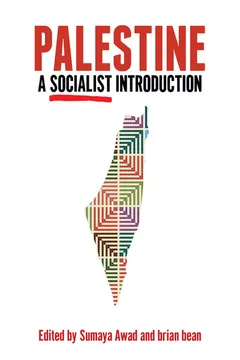


Key Takeaways
Treat the Nakba as an ongoing structure, not a sealed event.
The rupture has a present tense. Before 1948, Palestine was a network of towns, villages, farms, ports, and cultural traditions, not empty land. The book describes the Nakba as the mass expulsion and destruction of Palestinian communities during Israel’s founding, including the destruction of roughly 400 villages. It presents Zionism as a modern political project developed in Europe and pursued with imperial backing, rather than as an inevitable expression of Jewish identity.
Memory is political infrastructure. The chapter uses the village of Tantoura and the suppression of archives, textbooks, and public commemoration to show how dispossession continues through erasure and restrictions on return. Its central point is that 1948 is not a closed chapter when land seizure and displacement persist.
Treating a historical rupture as an ongoing structure helps readers connect land loss, movement restrictions, and contested memory without pretending they are identical events. This approach resembles how historians study colonial institutions that outlast formal conquest. It also clarifies why remembrance can be politically consequential, not merely symbolic. The framework needs historical precision, however: continuity should not erase changes in policy, leadership, or Palestinian experience across different periods. The book’s strongest case is not that every present condition is unchanged since 1948, but that later arrangements build upon unresolved displacement.
Trace US support for Israel to strategy, not lobbying alone.
Follow the interests beneath policy. The book defines imperialism as competition among capitalist states for resources, markets, and geopolitical influence, expressed through both military power and economic pressure. It argues that US support for Israel is rooted not only in lobbying or individual presidents, but in the US effort to secure influence in an oil-rich, strategically important region.
The alliance took shape over time. Britain and France initially backed Israel; US support grew as Washington sought to contain Soviet influence and anticolonial movements. The 1967 war became a turning point: Israel demonstrated that it could defeat regional adversaries, making it a useful partner for US power. The book also describes Israeli arms sales and security training for governments abroad as part of this wider role.
A structural explanation shifts attention from the personalities of presidents to the institutions and interests that make policy durable across administrations. It also connects foreign policy to arms production and domestic security practices, a useful corrective to treating military aid as a distant budget line. The risk is making the US ruling class sound more unified than it is, or treating strategic interests as the whole explanation. Lobbying, electoral politics, religious commitments, and public opinion can shape the form and timing of policy even when strategic alignment persists.
Read Oslo as managed autonomy, not a failed route to sovereignty.
A process can entrench power. The book argues that the Oslo Accords did not guarantee an end to occupation, settlement growth, or Palestinian sovereignty. The PLO accepted limited self-rule while in severe financial and political difficulty, hoping that autonomy would be temporary and that its leadership could return to Palestine. The agreements left major questions unresolved and offered no effective independent mechanism for enforcing Palestinian claims.
Control changed its form. The resulting Palestinian Authority administered some local affairs while Israel retained decisive power over movement, borders, and security. The authors describe this as separation and control: Palestinian communities were divided into restricted areas, while the PA and foreign donors helped maintain an administrative system that did not end occupation. Settlement expansion continued during negotiations, and the process weakened rather than resolved the underlying conflict.
The chapter’s central distinction is between negotiating a transfer of sovereignty and negotiating the administration of a population under continuing constraint. That distinction travels well beyond this case: institutions created in the name of peace can stabilize unequal arrangements if enforcement and bargaining power are one-sided. Still, the analysis benefits from separating the agreement’s design from the choices and pressures facing Palestinian leaders, and from the political agency of Palestinians living under the resulting system. Calling Oslo a trap captures its asymmetry, but should not make every participant’s motives seem identical.
Make liberation democratic and international, not a bargain among elites.
Power must come from below. The editors define socialism as workers collectively owning and democratically controlling their labor and the value they create. Their preferred approach, socialism from below, means that ordinary people organize and lead their own emancipation rather than receiving reform from a state or party acting on their behalf. This differs from top-down systems that call state ownership socialism while leaving workers without democratic control.
Class divisions matter inside national movements. The book criticizes political strategies that postpone social equality until after national liberation, or unite all classes under leaders who fear popular mobilization. It argues that workers and oppressed people across borders have shared interests in opposing exploitation and imperialism. In this view, Palestinian freedom is linked to a wider democratic transformation, not just a settlement negotiated by powerful leaders.
This perspective offers a useful test for any liberation project: who makes decisions, who controls resources, and who bears the cost of compromise? It also resists the assumption that an independent state automatically produces popular power. The challenge is practical as well as theoretical. Broad coalitions can be necessary under repression, and immediate survival needs may not wait for class unity to emerge. The book’s most persuasive contribution is to insist that these tensions be faced openly, rather than treating democracy and economic justice as optional additions to national freedom.
Do not mistake a shared class label for shared interests.
Class position is not enough. A settler-colonial working class is a workforce whose material place in society is tied to the expansion and maintenance of a settler project. The chapter argues that many Israeli Jewish workers benefited from Palestinian dispossession through land, state services, segregated employment, and the occupation economy. The Histadrut, Israel’s labor federation, historically organized Jewish workers while excluding Arab workers from much of the labor market.
The incentives changed, but persisted. After 1967, Palestinian labor and occupied territory became economically useful to Israel. Later, the growth of arms production and security technology further linked jobs and investment to occupation. The chapter argues that declining welfare and rising inequality have not automatically turned Israeli workers against the system, since their relative advantages over Palestinians remain significant.
The argument challenges a familiar socialist shortcut: workers are not automatically allies simply because they share an economic category. Material benefits, citizenship, and racial hierarchy can shape political interests as powerfully as wages. This analysis is especially useful when deciding whom a solidarity strategy should prioritize. Its broad account of Israeli workers also needs room for differences in class, ethnicity, ideology, and individual dissent. Explaining structural incentives is not the same as claiming every worker holds one view, or that political change within Israel is impossible.
Tie Palestinian liberation to popular power across the Arab region.
Three forces reinforce one another. Drawing on Palestinian writer Ghassan Kanafani, the book identifies three recurring obstacles to liberation: Zionist power backed by imperialism, Arab regimes that protect their own rule, and Palestinian leaders who can restrain popular struggle. These forces can conflict with one another, yet the authors argue that their actions often combine to limit Palestinian self-determination.
Regional uprisings changed the equation. The Arab Spring showed how protest over economic hardship and authoritarian rule could also create space for solidarity with Palestine. In Egypt, mass mobilization after the fall of Hosni Mubarak helped ease restrictions at the Rafah crossing into Gaza. The book cites surveys finding that roughly three-quarters of respondents across Arab countries considered Palestine a concern for all Arabs, not Palestinians alone. Popular support, however, does not guarantee governments will act on it.
The regional frame prevents Palestine from being treated as an isolated dispute and explains why alliances with neighboring governments can be unstable or self-serving. It also highlights a political resource beyond diplomacy: public movements capable of raising the cost of repression and normalization. But shared concern does not mean a single Arab political identity or common strategy. Uprisings face different institutions, social divisions, and foreign pressures, and can be violently reversed. Solidarity is strongest when it connects struggles without collapsing their distinct demands into one storyline.
Turn solidarity into pressure with Palestinian-led, rights-based BDS campaigns.
A call with specific demands. In 2005, more than 170 Palestinian civil society organizations called for boycott, divestment, and sanctions, known as BDS. The campaign asks institutions and individuals to stop supporting systems and businesses implicated in violations of Palestinian rights. Its three core goals are an end to occupation and colonization, equal rights for Palestinian citizens of Israel, and recognition of refugees’ right to return and receive reparations.
Solidarity becomes a practice. The book points to campus campaigns, church decisions, artist boycotts, and union resolutions as ways to apply pressure. It presents BDS as a connection between popular resistance inside Palestine and international action, not as a substitute for Palestinian organizing. The chapter also describes legal and political efforts to penalize boycotts, framing the right to participate in such campaigns as part of the broader contest over free expression.
BDS translates a broad moral position into identifiable institutional choices, which helps movements move from statements of sympathy to organized pressure. Its rights-based demands can also build coalitions among people who do not share one complete political program. A useful strategic question is how campaigns measure progress: divestment, changed policy, public debate, or reduced complicity may require different tactics. Boycotts alone cannot dismantle a political system, as the book acknowledges. Their force depends on sustained organization, clear targets, and connection to the people whose rights they are intended to support.
Make feminism part of liberation, not a side issue.
Resistance is more than armed struggle. The chapter describes Palestinian women organizing across generations, from providing aid during the British Mandate to leading community networks during the First Intifada. Women organized underground schooling and health care, circulated information, and built local self-sufficiency. The account of Hind al-Husseini, who sheltered children orphaned after the massacre at Deir Yassin, shows how care work could also preserve a community under attack.
Gendered oppression has several sources. The author calls the overlapping pressures on Palestinian women and queer people multiple jeopardy: colonial violence and displacement coexist with patriarchy and social constraints. Pinkwashing is the use of a state’s claimed tolerance of LGBTQ people to distract from its treatment of Palestinians. The chapter also highlights queer Palestinian organizing, including AlQaws, and remembers medic Razan Najjar, killed while assisting protesters in Gaza.
This account expands the meaning of political resistance to include care, education, community survival, and challenges to patriarchy. It also exposes the limits of feminism that condemns local gender norms while ignoring occupation and displacement. The two-level analysis matters: colonial violence does not excuse patriarchal control, and gender justice cannot be postponed until national freedom arrives. At the same time, broad claims about culture should leave room for internal debate and change. The chapter’s examples make clear that Palestinian women and queer organizers are political actors, not symbols to be spoken for.
Build solidarity across Black and Palestinian struggles without erasing difference.
The connection has a history. The book traces Black-Palestinian solidarity through the Black Power era, when figures and groups including Malcolm X, SNCC, and the Black Panther Party connected Palestinian liberation to wider anticolonial movements. The relationship was reciprocal: activists exchanged political ideas and built connections, including through revolutionary organizing in Algiers.
Shared tactics sharpened recognition. In 2014, as Israel attacked Gaza and protests erupted in Ferguson after police killed Michael Brown, Palestinian activists offered advice about tear gas and expressed support for Black protesters. The authors link both struggles to systems of racial control and state violence, while arguing that solidarity should not claim the histories are interchangeable. Later Black-led platforms and campaigns made Palestine part of broader organizing against racism, policing, and US military support for Israel.
Solidarity is more durable when it grows from relationship, political learning, and practical support rather than from a loose claim that two histories are the same. This chapter’s history shows that shared analysis can travel across movements while remaining accountable to local experience. The comparison also makes domestic policing and foreign policy visible as connected political questions. The caution is important: analogies can illuminate structures, but they can also flatten distinct histories of slavery, dispossession, occupation, and resistance. The book’s strongest model is exchange without equivalence.
Move from symbolic sympathy to organized leverage in workplaces and communities.
Institutions can be pressured collectively. The collection’s closing argument is that Palestine activism needs durable organizations, not only moments of public attention. It points to unions as a potential source of leverage because workers can challenge companies and institutions through collective decisions. The book cites the endorsement of BDS by UAW Local 2865, which represents University of California student workers, and by the United Electrical, Radio and Machine Workers of America.
Build coalitions where people already organize. Campus campaigns, church divestment, and the Block the Boat action, in which dock workers refused to unload an Israeli cargo ship during the 2014 Gaza assault, offer examples of tactics. The authors urge activists to connect Palestine work with struggles over schools, policing, migration, and military spending. Their argument is practical: repeated organizing can expand what movements are able to say and do.
This strategy treats movement-building as infrastructure: relationships, shared skills, and organizations that can survive beyond a news cycle. It also gives solidarity a concrete point of entry in workplaces and civic institutions. The focus on labor is compelling because workers can disrupt economic routines, but labor movements are uneven, and union leaders may resist international campaigns. The chapter’s examples suggest that organizers need both rank-and-file initiative and patient coalition work. A tactic gains leverage when it is tied to a constituency capable of sustaining it.
Analysis
This collection is both an introduction to Palestinian history and a political argument about what solidarity should require. Its central move is to reject the idea that Palestine can be understood as a self-contained conflict. The essays connect the Nakba, US regional power, failed negotiations, authoritarian Arab governments, gendered violence, and racial justice movements into a shared account of power. The result is memorable because the historical narrative leads toward an organizing question: what forms of collective action could change the balance of power?
The book’s socialist lens clarifies how class interests shape political leadership and why national unity can conceal conflicts between elites and ordinary people. Its account of Oslo is especially useful in distinguishing autonomy from sovereignty, while its treatment of BDS turns solidarity into a set of institutional choices. The chapters on women’s organizing and Black-Palestinian solidarity widen the frame beyond diplomacy and armed resistance, showing how community care, labor, and cross-movement learning also constitute politics.
That same coherence can become a limitation. A framework centered on imperialism and class sometimes risks making diverse actors seem more unified than they are, and the account of Israeli workers makes a strong structural claim that cannot describe every worker or political current. The book’s advocacy of regional revolution also identifies a horizon more clearly than a practical route through repression, factional division, and the uneven outcomes of uprisings. These tensions do not cancel its value; they identify questions readers should carry into organizing rather than accept a single formula.
Published in 2020, the volume captures a moment of rising solidarity and political backlash. It is not an exhaustive or politically neutral history. It is a compact, movement-facing case for treating Palestinian freedom as inseparable from democratic self-determination, opposition to imperial power, and the struggle for equality within liberation movements themselves.
Glossary
The Nakba
1948 mass displacementThe Arabic word for catastrophe, used for the mass expulsion and destruction of Palestinian communities during Israel’s founding in 1948. In this book, the Nakba also describes continuing dispossession, restrictions on return, and attempts to erase Palestinian history and identity. It names both a historical rupture and its ongoing consequences.
settler colonialism
Settlement replacing Indigenous societyA form of colonialism in which settlers establish a new society and claim sovereignty over Indigenous land. The book uses the concept to explain how Palestinian dispossession, exclusion, and the pursuit of a Jewish-majority state are connected. It emphasizes that this process is not confined to a single founding moment, but continues through settlement expansion and unequal control.
socialism from below
Worker-led democratic emancipationA socialist approach in which workers and oppressed people organize and lead their own emancipation. It rejects the idea that socialism can be delivered by a state bureaucracy acting from above. In the book’s account, democratic control of work and social life must be built through mass participation and international struggle.
imperialism
Capitalist competition for powerThe book defines imperialism as competition among capitalist states and ruling classes for influence, resources, markets, and control. It includes military intervention, but also economic pressure through trade rules, loans, and international institutions. This framing treats imperialism as a system connected to capitalism, rather than simply a foreign policy choice made by one government.
BDS Movement
Boycott, divestment, and sanctionsA Palestinian-led campaign launched in 2005 by more than 170 civil society organizations. It calls for boycotts, divestment, and sanctions to pressure Israel to end occupation and colonization, ensure equality for Palestinian citizens of Israel, and respect refugees’ rights, including return and reparations. The book presents it as international solidarity linked to Palestinian popular resistance.
separation and control
Dividing while retaining authorityA description of the system the book argues emerged through Oslo. Palestinian institutions administer limited local affairs, while Israel retains decisive control over movement, security, and key territory. The arrangement separates Palestinian communities and transfers some administrative burdens without granting sovereignty or ending occupation.
pinkwashing
LGBTQ tolerance as reputation coverThe use of a state’s claimed support for LGBTQ rights to improve its image and deflect attention from other human rights abuses. The chapter applies the term to Israel’s presentation of itself as socially liberal while Palestinians, including queer Palestinians, remain subject to occupation, displacement, and restrictions on movement.
Multiple Jeopardy
Overlapping forms of oppressionThe chapter’s phrase for the interlocking pressures experienced by Palestinian women and queer people. These include Israeli colonial violence and displacement as well as patriarchy and restrictive social norms within Palestinian society. The framework insists that national liberation and gender or sexual freedom cannot be treated as separate struggles.
Download PDF
Download EPUB
.epub digital book format is ideal for reading ebooks on phones, tablets, and e-readers.








