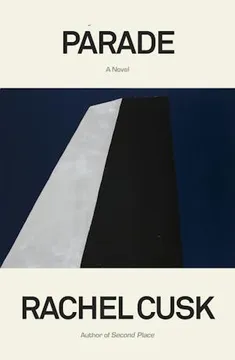


Plot Summary
The World Turned Over
Painter G, stung by early criticism, begins making pictures that appear upside down. Watching foresters fell trees helps him imagine inversion as a way to restore a world damaged by violence. His wife sees something more intimate in the canvases: they give form to the disorientation she recognizes in being a woman.
Elsewhere, a first-person narrator and her companion are forced from the foreign apartment where they have lived for a year. Its landlady later calls with guilty concern, but the couple have already lost the rooms, their bearings, and the large mirror that once placed them within a wider scene. They move between temporary lodgings, unable to settle, while the narrator senses that their imagined new life is coming apart.
The painting and eviction establish the book's recurring tension between perception and reality. G turns the world over to escape the violence embedded in ordinary representation, while the displaced couple discover that a home can orient them even when it belongs to someone else. In both strands, safety depends on a frame that can be withdrawn. The wife's recognition also complicates artistic authorship: G gives visible shape to an experience she feels is hers, raising the question of who is permitted to represent a condition and who receives credit for making it legible.
A Blow From the Double
After the couple finally find an apartment of their own, a woman attacks the narrator on a sunny street, striking her hard enough to leave her bleeding and disoriented. Witnesses gather, but the attacker walks away after turning back to inspect the scene.
The narrator cannot absorb the assault as an isolated event; she connects it to childbirth and other bodily experiences that seem assigned to a nameless second self, a stunt double who bears risks on behalf of the person others recognize.
At an exhibition of sculptor G's cloth figures, she finds images of bodies caught between instinct and identity. Soon afterward, a museum visitor throws himself from an upper gallery and dies, making the body's capacity for violence impossible to treat as mere metaphor.
The attack collapses the comfortable distinction between a person and the body that supposedly belongs to her. The narrator experiences violence as something both external and disturbingly familiar, as if it has crossed from a suppressed part of herself into public space. The museum death intensifies that instability without explaining it away. Art does not solve the event; it gives the narrator forms through which she can look at what ordinary accounts struggle to contain. Her search for meaning is also ethically uneasy, since interpretation risks turning another person's pain into material.
Couples Inside the Canvas
In another strand, painter G's attempts to depict his wife as a nude produce images that seem to erase rather than reveal her. During a visit to his estranged father in a retirement home, G watches his wife move through the room and recognizes that he cannot see her apart from his own effect on her.
He then paints them together, first clothed and later naked, until the couple become a joined, ageing shape in his increasingly abstract canvases. His wife understands that her loyalty and domestic work have helped sustain his career, yet the paintings turn that shared life into his confession.
The narrator, meanwhile, studies other artists, including a woman painter who died after childbirth and a marginalized Black painter whose small cathedral canvas makes obscurity itself visible.
The couple's portraits make intimacy a problem of vision rather than a guarantee of mutual knowledge. G can include his wife and still use her as evidence about himself; her presence in the image does not grant her equal authorship of their life. The narrator's attention to other artists widens this conflict into questions of gender and race: some people are made central by the very act of looking, while others must struggle to have their work noticed at all. Inversion becomes both an artistic method and a way to expose the unequal terms beneath apparently ordinary images.
The Artist's Compromise
Artist G begins in a neglected city studio, making candid work while her parents' disapproval continues to govern her sense of worth. A small gallerist recognizes her talent, but G's marriage to a lawyer draws her into a more conventional life.
After their daughter is born, G's husband takes charge of the child and uses family photographs to fix the girl's attention for his camera. G hires a nanny and returns to painting, increasingly divided between the studio where she feels powerful and the home where her daughter seems to belong more naturally to others.
A female painter friend makes G confront how absent motherhood is from her work. When G later has time alone with her daughter, she begins sketching the child and questions the arrangements that have kept them apart.
G's conflict is not simply between art and motherhood, but between two forms of authorship. Her paintings require solitude and control, while her daughter is an independent person whose needs cannot be composed into a finished image. The husband makes domestic life look orderly through photography, yet G senses that the camera turns the child's compliance into a public possession. The painter friend's question matters because it interrupts G's familiar self-accusations from outside their orbit. G begins to recognize that her apparent failure as a mother is partly produced by a household whose roles and resources are not equally shared.
Mann's Valley Sold Away
The first-person visitors stay at a remote farm run by Mann and his wife. Mann speaks grandly of resisting development, while the farm's buildings and finances decay; his wife keeps the household, animals, and cottage guests functioning.
Johann, a German schoolteacher who helps with the farm, explains that Mann has secretly sold parcels of land and leased them back, weakening the place he claims to defend. When Mann's wife discovers the deals, she moves with their daughter and housekeeper into a caravan on the hillside.
Her strength becomes unmistakable in the labor of hauling it uphill. During a visit to her dying mother in Germany, she encounters a young woman who has been summoned to help the old woman die, a local tradition that gives the chapter its title.
Mann's idealism is exposed as another form of possession: he speaks for the valley while quietly converting it into a resource for his own use. His wife's move is practical rather than symbolic, but the caravan's precarious position makes her situation visible. She has been left to protect both a child and a place from the consequences of a man's abstractions. The death-midwife story extends the chapter's interest in care beyond birth and domestic life. It suggests that intimate labor can include decisive action, while also leaving open the danger of confusing another person's wishes with one's own judgment.
Photographs Bring Police
After G's husband leaves to attend his dying father, G spends time with her daughter and the nanny instead of returning to the studio's usual isolation. Her daughter asks why men are necessary, and the question unsettles G's belief that male authority is the measure of greatness.
She starts drawing the girl without posing her and takes down the photographs her husband has displayed throughout the house. When he returns, he restores his authority and forcibly removes their daughter from the studio.
Later, police arrive because a printer has passed them some photographs of the child. G's husband charms them into accepting his explanation that they are ordinary family pictures, then erupts at home, throwing a mug at G and handling the girl roughly. He tells G she may leave, but not with the house or child.
G's brief domestic reorientation is fragile because it changes not just her feelings but who controls the daughter's image and daily life. Taking down the photographs is a concrete refusal of the husband's claim to define the family, and his response shows how quickly that claim becomes coercive. The police episode does not resolve the danger; his social fluency defeats institutional suspicion, leaving G with fewer options. Her final retreat to the dark studio is not artistic liberation. It is a pause imposed by the practical and legal power he holds over the household.
The Museum's Falling Man
After a public parade leaves the streets clogged with rubbish, guests make their way on foot to a restaurant where the museum director has been released from police questioning. Earlier that day, a man at the exhibition jumped from the gallery into the atrium and died.
The director had been on the upper walkway, listening to her ex-husband's hostile phone call, when the man leapt beside her. For a few seconds she said nothing about what she saw, and realizes that this silence marks a separation from the man who has continued to dominate her.
She is leaving her museum post and plans to move with her daughter to an island. Thomas, an old school friend, has also left teaching after his father's death and is trying to imagine a life outside his assigned role.
The suicide is not presented as a clean symbol or a solution to anyone's suffering. Its immediate consequence is more specific: the director discovers that her ex-husband's voice does not occupy all of her attention, and that she can keep an experience for herself. Her decision to leave the museum and relocate with her daughter has been forming before this moment, but the death clarifies her ability to act separately. Thomas's career change creates a parallel, though not identical, experiment in freedom. Both characters have to ask what remains when duty no longer dictates their daily identity.
David Inherits the Dreams
At dinner, curator Julia, biographer Betsy, professor Mauro, and G's longtime assistant David debate what motherhood costs women artists and whether a child's needs can coexist with serious work. Their accounts expose sharply different positions: Julia recalls a mother who treated her as property, while Mauro remembers waiting outside his writer mother's locked door.
Betsy describes G as ambitious, difficult, and unwilling to accept the role of victim. David reveals that she trusted him with recurring nightmares about daughters lost in foreign places and abused by a father figure drawn from her life.
He feels he has no right place for these private terrors, but their disclosure shifts the conversation from art criticism toward the damage intimacy can leave in its witnesses. The director and Thomas leave together, not knowing what their new lives will become.
The dinner turns biography into a contested act of interpretation. Each speaker brings a different childhood and family arrangement to G's work, so no single account can settle whether her art liberated her or intensified the costs imposed on those around her. David's burden is especially revealing: proximity to an artist can make someone a keeper of material they did not create and cannot easily return. The book refuses to make artistic achievement morally simple. It asks how much of a person's private life becomes public evidence, and who must carry what the artist could not contain.
The Filmmaker's False Name
In the final section, G is a filmmaker who has built his career under an assumed name so his conventional religious mother will not discover what he does. He first leaves teaching, moves to the city, and tries writing fiction, but his novel and stories fail to find readers.
A borrowed film camera gives him a different way to work: he can observe public life without forcing it into a narrator's voice. His first attempt at directing collapses under the practical demands of crews, schedules, and locations.
Rather than abandon film, he makes those constraints part of his method, using ordinary places, available light, and nonprofessional performers. His quiet films follow young women trying to retain freedom in relationships shaped by male possessiveness, while G's own life remains largely unknown.
G's secrecy is both refuge and limitation. The alias protects him from parental judgment, but it also keeps his work from being fully joined to a public self that could answer for it. Filmmaking initially exposes the contradiction: he wants to record life innocently, yet recording requires labor, coordination, and responsibility toward other people. His eventual method does not eliminate authorship so much as reduce its display. By watching rather than directing, he seeks an ethics of attention, although the concealed identity still raises the question of whether invisibility is freedom or a way to avoid consequence.
A Window Opens
The siblings gather around their dying mother, whose body has long been the authority governing their family. They remember her invented histories, her anger at their independence, and the stories that made them distrust both language and love.
Their father orders her to get up and later asks repeatedly whether she has died; the siblings sit beside her until they leave, while nurses stop giving her food and water. Afterward, a museum painting of a child outside a dark window and a woman turning to wave gives them a rare image of reciprocal attention.
At dawn in their hotel, they understand that their mother's death has not repaired their childhood, but has placed her inside their own memories. They accept the broken, ordinary world as the ground on which their lives must continue.
The ending rejects the consoling idea that death automatically reveals a family's truth or grants forgiveness. The siblings gain no explanation from their mother, and their failure to feel grief becomes evidence of what was withheld rather than proof that they are heartless. The museum painting offers a small counter-image: a child is seen and answered, unlike the children who waited for their mother to recognize them. That recognition does not undo the past. It gives the siblings a new model of relation, one in which attention can be returned rather than used to control another person's story.
Analysis
Parade is built from interlocking accounts rather than a single plot, and its repeated anonymous artists called G make identity feel both protected and unstable. Across the four sections, people try to represent experiences that resist representation: a woman's bodily vulnerability, a child's dependence, the legacy of a controlling parent, or the quiet life that institutions overlook. Art can make such experiences visible, but visibility is never innocent. A photograph can preserve a child and expose her; a portrait can include a wife while turning her into evidence about her husband; a film can attend closely to ordinary life while its maker remains concealed.
The book's strongest psychological insight concerns the gap between attention and possession. Characters often claim to care for others while deciding what those others mean. G's husband treats control as responsible parenting, Mann treats land as an extension of his principles, and the siblings' mother organizes family memory around her own authority. Against them, the book offers less triumphant forms of change: a daughter asking a question her mother cannot dismiss, a director recognizing that an ex-husband's voice does not own her perception, and adult siblings learning to offer their children a kind of love they did not receive.
Its formal repetitions do not settle into a lesson that art redeems suffering or that truth automatically frees people. The characters' interpretations remain partial, shaped by history, shame, and desire. Yet the final image of a woman noticing a child at the window suggests that recognition can be reciprocal rather than extractive. The book's measure of progress is modest but exact: not a repaired past, but the possibility of seeing another person without immediately converting them into a role in one's own story.
Review Summary
Reviews of Parade are largely positive, with readers praising Cusk's innovative form and luminous prose. The novel's four sections feature shapeshifting artists all named "G," exploring themes of motherhood, gender, artistry, violence, shame, and death. Many highlight "The Diver" as the standout section. Critics note the book's demanding, fragmented structure rewards patient readers while challenging conventional narrative. Some find it occasionally pretentious or inaccessible. It won the 2024 Goldsmiths Prize, with admirers calling it Cusk's most radical and accomplished work yet.
People Also Read







Characters
The Stuntman narrator
Witness to bodily violenceAn unnamed woman living abroad with a companion, she depends on observation to make sense of a life unsettled by displacement. After a stranger attacks her, she connects the shock to childbirth and to the hidden labor of a second self that seems to absorb risks on her behalf. She is neither a detached critic nor a simple victim: she keeps testing her interpretations against paintings, public behavior, and the physical facts of the event. Her attention moves between private pain and the larger conditions that make women's bodies legible to others but difficult to describe in their own terms.
The upside-down painter G
Painter of inverted worldsA celebrated male artist whose early critical humiliation remains part of his inner life, G makes inversion his way out of a representational impasse. He can perceive violence in the world and make it the subject of art, yet struggles to see his wife as a person independent of his own desire and influence. His paintings bring him public admiration, while his intimate relationships expose the limits of his insight. He is distinct from the other artists also called G in the book.
The upside-down painter's wife
Artist's closest witnessG's wife recognizes in his paintings a condition she associates with being female, even as she wonders whether a man can claim that experience through art. She has built a life beside him and understands the practical and emotional labor that sustains his work. Her perspective is alert to the difference between being seen and being possessed: she wants intimacy, but resists the way her husband turns her into material for his self-understanding.
The artist G
Mother and working artistA successful artist whose early work grows from shame, candor, and a difficult relation to her own body, G is both ambitious and deeply susceptible to judgment. Her marriage to a lawyer offers a model of adulthood and status, but also reorganizes her life around his authority. Motherhood forces her to confront needs that cannot be managed through representation alone. She is observant about other people's weaknesses and less clear-eyed about the bargains she has made herself. Her work, relationships, and domestic choices remain entangled rather than resolving into a simple story of sacrifice or freedom.
G's husband
Lawyer turned household authorityA lawyer who first attracts G through his apparent moral seriousness, he gradually becomes the household's interpreter of what is reasonable. He is skilled at presenting control as responsibility and at managing how others perceive him. His attention to his daughter, including his photographs of her, can look tender from the outside while troubling G from within the family. He treats his wife's art and domestic role according to different standards, making the marriage a struggle over who gets to define their shared reality.
G's daughter
Child who asks plainlyG's daughter is observant, composed, and increasingly independent of the adults who frame her life. Her direct questions unsettle her mother's assumptions about men, artistic status, and family roles. She is often photographed by her father, but G's own drawings begin from a quieter kind of attention that does not require the child to perform. The daughter represents neither a cure for G's conflicts nor an artistic symbol alone; she is a person whose presence changes the household's balance of power.
The nanny
Caregiver and family witnessEmployed to care for G's daughter, the nanny becomes a steady presence in the household and a source of stories that the child absorbs. She is skilled at practical care and comfortable with the family's routines, but her position is shaped by dependence on the adults who employ her. G sometimes sees her as an extension of her own displaced domestic self. The nanny's warmth and competence make visible how much of family life is carried by people who are not granted equal authority within it.
The painter friend
G's candid female peerA successful woman painter who lives in a warm, untidy home with her son, she approaches G as a potential ally rather than a rival. Her ease with domestic life and her lack of deference to male authority unsettle G, who has built much of her identity around striving for recognition on men's terms. The friend's questions about G's work and daughter reveal what G has left outside her paintings. Her importance lies less in offering advice than in embodying a different arrangement of art, care, and self-respect.
Mann's wife
Keeper of the working farmA German woman who has made a life on an island farm, she tends its animals, maintains a clean household, and cares for her daughter while her husband pursues grander schemes. She is practical without being unreflective, and her stories reveal a complicated attachment to both her homeland and the place where she now lives. Mann's ideals do not persuade her when they disregard daily needs. Her strength emerges through sustained work and a clear-eyed understanding of what a supposedly noble project costs the people living inside it.
Mann
Visionary landownerAn idealist who once hoped to build a self-sufficient community and protect a remote valley from development, Mann has become disordered and difficult to rely on. He speaks in political and philosophical terms, often treating ordinary comforts and family obligations as signs of bourgeois weakness. His image as defender of the land is complicated by the gap between his principles and his practical decisions. He represents the danger of ideals that grant their holder moral authority while leaving other people to manage the consequences.
Johann
Farm's blunt caretakerA German schoolteacher who returns to the island farm each year to help with animals and production, Johann is orderly, observant, and unsentimental about the community's decline. He respects Mann's wife's labor and explains the farm's financial troubles to the visitors. His account is informed by affection for the place but not protected by nostalgia. He sees how political struggle can make opponents resemble one another, especially when power and money become part of the same defense.
The museum director
Curator ready to leaveA precise and accomplished museum director, she has organized a major exhibition of G's work while planning to leave her position and move with her daughter to an island. She approaches art institutionally but remains alert to the ways museums can sanctify, commercialize, or diminish what they display. Her relationship with an abusive ex-husband has shaped her sense of danger and responsibility. She is not immune to fear, but she can examine her own reactions without making herself the center of every event.
Thomas
Teacher leaving duty behindA former school friend of the director, Thomas has recently resigned from teaching after his father's death. He has long been the responsible partner in a marriage to a poet, and his choice to step away unsettles the practical arrangement that defined their lives. He describes his family history as shaped by political and emotional silence, though he questions whether his own account is complete. His uncertainty makes him a foil to characters who mistake a well-rehearsed identity for an inevitable one.
Betsy
G's unsentimental biographerA biographer and critic of G, Betsy is physically direct, funny, and resistant to shame as a tool of social control. She admires G's artistic achievement without idealizing her character, and she is willing to describe the unequal conditions faced by women artists. Her own life is organized around comfort, friendship, and intellectual work rather than artistic risk. That difference gives her a valuable perspective, although her judgments remain shaped by her own choices and limits.
Mauro
Professor who questions artA professor involved in the G conference, Mauro is quick to analyze social rituals and suspicious of manufactured authenticity. His habit of criticism can distance him from the ordinary pleasures around him, a weakness his colleague Julia recognizes. At dinner he connects art to shame, survival, and the lives of artists' children. His arguments are thoughtful but not final; the other guests repeatedly complicate them with experiences that resist his theories.
Julia
Curator and single motherA curator and Mauro's friend, Julia is sharp-minded, composed, and attentive to how family roles shape a person's sense of self. Her memories of being treated as an extension of her mother inform her skepticism about idealized motherhood. She can challenge Mauro without rejecting him, and her descriptions of other couples reveal how supposedly equal arrangements may conceal unequal labor. Julia brings the conversation back from abstraction to what children and adults actually experience.
David
Keeper of G's private lifeG's longtime assistant, David has spent decades managing practical matters around her career and legacy. He is quiet, passive, and unusually difficult to provoke, qualities G finds restful. He believes she may have mistaken his apparent neutrality for an answer to the problems of men and women. His closeness to G gives him access to private material, but it does not make him confident that he understands it. He is burdened by the difference between being trusted with another person's fears and knowing what to do with them.
The filmmaker G
Anonymous observer of lifeThe eldest child in a strict religious family, this G becomes a filmmaker while concealing his identity from his mother. He is wary of self-display and of art that forces reality into a tidy moral arrangement. Early attempts at writing fail, and his first film collapses under the logistical work he hoped to avoid. He eventually develops a spare method built around ordinary people and public spaces. His art seeks to observe without domination, but his secrecy also reflects a fear of being seen and held responsible for his own choices.
The siblings' mother
Family's controlling storytellerA powerful presence in the memories of her children, she shapes family life through strict expectations, selective attention, and stories about the past that do not always match what her children remember. Her body, habits, and needs become central facts around which the family organizes itself. The children struggle to distinguish care from control and truth from the narratives that keep them in assigned roles. She is not presented as a simple villain; the siblings recognize that she, too, was formed by forces they only partly understand.
The siblings
Children comparing memoriesThe first-person plural narrators of the final section, the siblings return to their parents' house as adults when their mother becomes gravely ill. Their shared history does not produce one stable version of childhood; each has been shaped differently by the same household. They struggle with inherited habits of concealment, shame, and emotional distance, while their own children give them a more concrete experience of care. Their collective voice keeps disagreement alive and makes family memory feel assembled rather than handed down as a single authoritative account.
Plot Devices
Inverted images
Reverses the familiar worldPaintings turned upside down recur as a way to unsettle the authority of ordinary perception. For painter G, inversion begins as a response to the violence of representation and becomes a new artistic language. His wife recognizes a disturbing resemblance between the upside-down world and her own social condition. Elsewhere, the narrator imagines turning a garden upside down to quiet the pressure of human implication. The device does not supply a single meaning; it shows how changing the viewer's position can reveal assumptions that seemed natural while leaving the underlying conflict unresolved.
The unseen observer
Makes looking an ethical problemCameras, windows, mirrors, and museum displays repeatedly shape who sees whom and who controls the resulting image. G's husband photographs his daughter, while the filmmaker G hides behind an assumed name and camera. The narrator loses a mirror that once helped her feel oriented, and the siblings later recognize a child watching a woman through a window in a painting. These acts of looking range from care to possession to anonymity. The device asks whether observation can be innocent, and whether being seen gives a person recognition or merely makes them available to someone else's story.
The stunt double
Separates self from bodily riskAfter being attacked, the narrator imagines that a second, unnamed self has absorbed the dangers associated with female embodiment, childbirth, and social exposure. Calling this figure a stunt double helps her describe how a person may remain outwardly intact while another part of her bears the impact. The image draws together the narrator's assault and her reflections on art, but it does not turn violence into a neat allegory. It also raises a troubling question: if bodily experience is assigned to a supposedly separate self, can the person ever fully reclaim it?
The death-midwife
Makes care cross into dangerMann's wife recounts an island tradition in which a woman may assist a person who has decided to die, using a signal left at the door and a swift blow. The story echoes the work of a birth midwife, but reverses its direction and makes consent difficult to verify from outside. Later, Mann's wife meets a young woman who has been summoned to help her dying mother. The tradition gives shape to the book's questions about caregiving, responsibility, and the limits of intervention without confirming whether the legend is true or how its rules should be judged.


Download PDF
Download EPUB
.epub digital book format is ideal for reading ebooks on phones, tablets, and e-readers.








