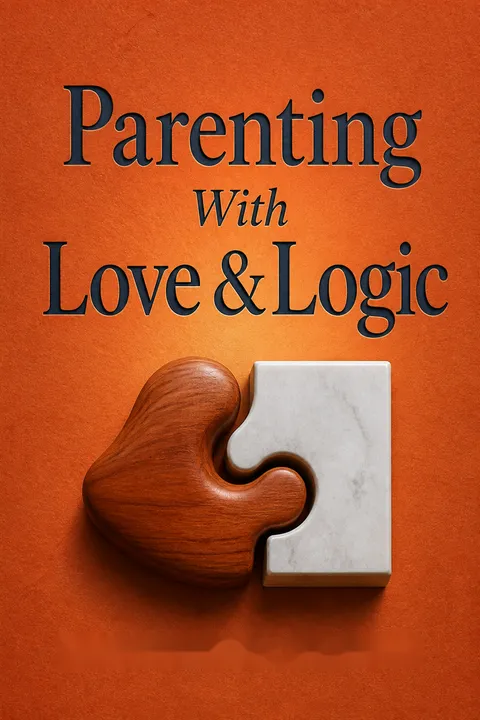


Key Takeaways
Let children practice making decisions before the stakes become adult-sized.
Judgment needs rehearsal. The book's aim is not simply compliant children, but young people who can make decisions when a parent is absent. Jim Fay tells how his teenage son Charlie chose not to attend a party after learning his friend Randy might drink and drive. Randy later drove off a mountain with five passengers. Charlie's earlier practice in thinking through choices helped him avoid that ride, a decision that could have saved his life.
Start with small choices. A young child can decide whether to wear a coat or carry it; an older child can manage an allowance or solve a school problem. These decisions give children practice hearing their own reasoning, weighing consequences, and acting without waiting for an adult to direct them.
What's compelling is the link between ordinary choices and high-stakes judgment. In developmental terms, decision-making is a skill built through repeated practice, not a trait that appears on a birthday. Small choices let children learn how preferences meet reality while adults remain close enough to guide them. The principle needs a boundary: practice should match the child's capacity, and adults retain responsibility for hazards children cannot assess. Independence is not abandonment. It is supported rehearsal, with the adult gradually stepping back as competence grows.
Treat small failures as low-cost tuition, not emergencies to erase.
Failure can teach cheaply. The authors call a mistake that can teach a lasting lesson a significant learning opportunity, or SLO. A child who refuses a coat may feel cold and choose differently next time; a child who spends an allowance too quickly may have to wait for the next payment. The book contrasts a twelve-year-old learning about loans after losing a CD player with an adult learning the same lesson after a bank repossesses a car.
Match the lesson to the stakes. Adults often rescue children to relieve their own distress, but repeated rescue can prevent children from connecting their actions to outcomes. The intended practice is not to manufacture hardship or allow serious danger. It is to let age-appropriate, recoverable mistakes teach while the cost is still manageable.
The tuition metaphor clarifies why timing matters: the same mistake can have very different costs at different ages. This resembles learning in many domains, where low-risk practice builds competence before performance matters. Yet a consequence teaches only when a child can understand the connection and recover from it. A missed coat is usually reversible; hunger, injury, or humiliation may not be. The useful question is not simply whether failure teaches, but whether this particular cost is proportionate, safe, and within the child's ability to manage.
Return each problem to its owner, except when safety requires intervention.
Ask who is affected. The book distinguishes a child's problem, such as a forgotten assignment, from a parent's problem, such as a child damaging shared property or making the household late. When adults repeatedly remind, fix, or rescue, children can learn that someone else will carry the burden. If a child's behavior directly affects the parent, the parent can set a limit and explain what they will do to protect their own time, space, or belongings.
Keep a safety exception. Adults should step in when a child faces serious danger or a decision with potentially lasting harm. The authors offer a rough rule: if there is a meaningful chance the child can solve the problem, give them room to try. Their story of Jim running out of gas and falling from a bridge, however, also shows why consequences need careful judgment, not blind application.
Problem ownership is a useful family-systems lens: rescuing one person can quietly assign another person the work and worry. Returning responsibility can restore a child's sense of agency and reduce recurring conflict. But the gas story exposes a genuine limit. A consequence can be logically related yet wildly disproportionate, especially when judgment, disability, or circumstances change the risk. The adult's task is not to withdraw automatically. It is to distinguish ordinary discomfort from foreseeable danger, then offer the least intrusive support that keeps the child safe.
Set firm limits with choices you can calmly enforce.
Make the limit actionable. The authors call statements focused on what the parent will allow or provide enforceable statements. They contrast these with commands that depend on a child obeying, such as telling a child to stop arguing. A parent can instead make participation conditional on calm speech or say that dinner will be available for a set period. The limit stays with the adult, while the child chooses how to respond.
Offer real options. Both choices should be acceptable to the parent, safe, and possible to follow through on. If a child refuses to choose, the parent may make the decision. Choices become threats when one option is clearly impossible or the parent has no intention of carrying it out. The point is not to disguise orders, but to let the child think inside dependable boundaries.
This approach separates authority from volume. In negotiation theory, a clear boundary paired with genuine options can reduce the incentive to resist simply to regain control. It also makes adult responsibility visible: the parent controls the conditions they can actually enforce, rather than claiming power over a child's thoughts or feelings. The test is sincerity. If every choice is engineered to produce the parent's preferred answer, the child will recognize the maneuver. Respectful limits require both adult follow-through and options the child can meaningfully choose.
Let consequences teach while empathy keeps the relationship intact.
Separate learning from punishment. In the book's bedtime story, Jim stops ordering his children to sleep and instead sets a quiet period for the parents and a fixed wake-up time. The children stay awake, struggle through the next morning, and discover for themselves that late nights make school harder. Jim responds with concern rather than an I-told-you-so lecture. The experience connects their choice to its result without making the parent the enemy.
Empathy is not rescue. The authors distinguish a consequence, which is connected to the child's action, from punishment, which may be an unrelated penalty imposed in anger. They also say consequences can be delayed when a parent needs time to think. A calm expression of sympathy communicates continued love while leaving responsibility with the child.
Empathy changes the emotional meaning of a consequence. A child can face disappointment without also having to defend against a parent's anger, which makes reflection more possible and preserves trust. This resembles the distinction between accountability and shame: one addresses an action, the other can make a person feel defined by failure. Still, consequences are not automatically instructive simply because they occur. Adults need to check that the child understands the link, that the outcome is fair, and that support remains available when the lesson becomes genuinely difficult.
Build confidence through unconditional love, useful skills, and earned wins.
Strengthen three supports. The authors describe a child's self-concept as a three-legged table: feeling loved, believing they have the skills to manage life, and feeling capable of directing their own actions. Weakness in any one support can unsettle the whole structure. A child needs affection that does not depend on grades or good behavior, opportunities to practice practical skills, and decisions they can own.
Let accomplishment belong to the child. The book favors encouragement that invites children to assess their work over praise that insists an adult's judgment is correct. A child unhappy with a drawing can explain what needs improvement and decide to practice, rather than argue with a parent who calls it beautiful. Confidence grows through trying, struggling, and achieving something real, not through flattery or having every task done for them.
The framework usefully combines belonging with competence and agency. A child who feels loved but never trusted with responsibility may remain dependent; a child given tasks without emotional security may experience every mistake as a threat to acceptance. The emphasis on self-evaluation also protects motivation from becoming entirely dependent on adult approval. One caution: accomplishment is not the sole source of worth. Children also need to know that failure does not reduce their value, especially when their effort meets barriers beyond their control.
Hand over more control as children prove ready to carry it.
Increase freedom gradually. The book names its developmental model the V of love: parents begin with strong limits when children are very young, then expand the child's decision-making freedom over time. A toddler might choose a coat or a drink; an older child might manage spending; a teenager can take responsibility for many more choices. The boundary remains firm around safety and the effects of behavior on others.
Avoid both extremes. Helicopter parents rescue children from trouble, while drill-sergeant parents make decisions for them. The book's alternative is the consultant parent, who sets limits, offers guidance, and lets children handle more of the outcome as their capacity grows. This is not laissez-faire parenting. It is a planned transfer of responsibility, not a sudden withdrawal of adult care.
The gradual transfer of control resembles scaffolding in education: support is strongest when a learner is new, then recedes as capability increases. This can prevent the shock of suddenly expecting an adolescent to make decisions they were never allowed to practice. The model also rejects a false choice between strictness and permissiveness. Its harder demand is calibration. Children develop unevenly, so freedom should follow demonstrated ability and context, not age alone or a parent's desire to avoid conflict.
Turn chores, money, and schoolwork into practice in ownership.
Give responsibility a real shape. The practical chapters apply the same approach to everyday routines. The authors recommend a predictable allowance, separate from payment for ordinary family chores, so children can learn through spending and waiting. They suggest negotiating household tasks with children and setting clear deadlines rather than repeatedly reminding them. Morning preparation, homework, and school performance are primarily the child's work, while parents provide support when asked and back up appropriate school consequences.
Notice when the problem changes. If a child's neglected pet is suffering, the parent may need to protect the animal and make the responsibility real. If homework struggles persist, the cause may involve learning or emotional difficulties rather than simple unwillingness. The book's practical message is not to stop caring; it is to avoid doing every task and all the thinking on the child's behalf.
Ordinary routines are powerful because they create repeated, low-stakes practice rather than occasional lectures about responsibility. Money, chores, and schoolwork also reveal different kinds of difficulty: a child may need autonomy in one area and direct teaching or professional assessment in another. A fixed rule against reminders can be counterproductive for a child with executive-function challenges. The strongest use of ownership is diagnostic as well as instructional: observe what the child can manage, what support helps, and where the problem may exceed a discipline issue.
Model the judgment and self-control you hope children will internalize.
Children learn from what adults do. The book argues that values are transmitted through conduct and through how parents treat their children, not mainly through lectures. Children who watch adults handle frustration, keep commitments, and speak respectfully receive a lived example. The authors also describe discussing values within children's hearing, such as explaining why returning excess change feels right.
Build internal judgment alongside safeguards. For peer pressure and online risks, the authors encourage calm questions that help children consider who they are interacting with and what information they share. They regard internet filters as a first line of protection, not a substitute for judgment. Children need practice using their own internal checks, while adults remain responsible for supervision proportionate to the risk.
Modeling is a form of social learning: children observe not just stated rules, but how adults behave when rules become inconvenient. That makes parental consistency more persuasive than a perfectly worded lecture. The digital example also shows why internal judgment and external safeguards are complements, not rivals. A child cannot reliably assess every online threat, and filters cannot anticipate every situation. Effective guidance combines supervision, open communication, and progressively greater participation in decisions as the child demonstrates readiness.
Use parenting techniques to strengthen connection, not automate control.
Practice one change at a time. The authors recommend choosing a recurring problem, rehearsing a response, and starting when the parent has enough time and calm to follow through. Children may push back when a familiar pattern changes. That resistance is a reason to stay consistent, not to escalate into anger or threats.
The relationship is the method's foundation. The book warns that a sympathetic phrase can sound sarcastic, that choices can become disguised threats, and that a scripted response can replace listening. Love and Logic is not presented as foolproof. Parents should intervene when safety is at stake and seek professional help when a serious problem worsens or does not improve. The practical tools work best when paired with real affection, attention, and respect.
The book's most important safeguard is that technique cannot substitute for relationship. Calm phrasing can lower conflict, but it becomes manipulation if the adult uses it only to secure compliance or avoid hearing a child's concern. This distinction matters especially when behavior signals trauma, disability, or unmet needs. Rehearsal can help parents regulate themselves, yet flexibility remains essential. The approach is strongest as a stance of warm accountability, not a collection of clever lines or a promise that every conflict can be solved by better wording.
Analysis
Parenting With Love and Logic is best understood as a theory of how responsibility develops inside a relationship. Its central mechanism is a deliberate redistribution of work: adults establish safe limits, children make progressively more decisions, and consequences provide information that lectures often fail to deliver. Empathy is the relational safeguard. It signals that a child's mistake does not cancel the parent's love, while also preventing the parent from taking over the problem. The book's practical examples, from bedtime to allowances, make this philosophy usable in daily life.
The model has a strong internal logic. Choices create rehearsal; rehearsal builds judgment; judgment supports independence. It also explains why both overprotection and constant command can leave children unprepared. The consultant-parent idea offers a middle path between rescue and abdication, and the emphasis on modeling recognizes that children learn norms through observation as well as instruction.
Its main risk is treating consequences as clearer or fairer than they are. A natural consequence may be too severe, poorly understood, or shaped by factors the child cannot control. The gas-running-out story illustrates that point, even as it is offered as a lesson in ownership. Adult judgment must therefore govern the method: a child should not be left in danger simply to produce learning. Capacity, disability, mental health, family resources, and the wider setting can all change what is reasonable. The book itself recognizes danger and the need for professional help, but some examples require more caution than their brisk presentation suggests.
The most durable reading is neither strict adherence to a script nor rejection of consequences. It is a principle of warm accountability: let children carry the parts of life they can safely manage, give them real choices within clear limits, and stay emotionally present when outcomes hurt. That standard asks parents to change their own habits first, which is why the approach is more demanding than a discipline trick. Its success depends less on the perfect phrase than on a parent's reliable combination of care, restraint, and judgment.
Review Summary
Parenting with Love and Logic receives mixed reviews. While some praise its emphasis on natural consequences and teaching responsibility, many find its methods harsh or manipulative. Critics argue some suggestions border on neglectful or abusive, particularly for young children. Supporters appreciate the focus on giving choices and allowing kids to learn from mistakes. However, even fans note the need to adapt techniques for individual families. The book's religious undertones and outdated gender roles are also criticized. Overall, readers recommend taking useful concepts while discarding problematic advice.
People Also Read









Glossary
Love and Logic
Warmth with accountabilityA parenting approach that joins affection with firm, enforceable limits. Parents offer children choices within those limits and allow age-appropriate consequences to teach, while responding with empathy rather than anger or lectures. The goal is to help children practice decision-making and responsibility without weakening the parent-child relationship.
significant learning opportunities (SLOs)
Mistakes that teachThe authors' term for mistakes and their consequences when these experiences help children learn responsibility. SLOs are intended to happen at a manageable cost, while children are young enough to recover and try again. The concept does not mean creating hardship or allowing serious danger; the consequence should be appropriate to the child's ability and situation.
enforceable statements
Limits parents can upholdStatements that describe what a parent will allow, provide, or do, rather than issuing a command whose success depends entirely on a child's compliance. They make the adult's boundary clear and actionable. A parent might connect access to an activity with a completed task, provided the condition is safe, reasonable, and one the parent can consistently enforce.
thinking words
Language that prompts choiceThe authors' label for questions and statements that shift decision-making to the child while preserving an adult-set limit. Rather than ordering a child to act, a parent presents acceptable options or explains the conditions under which the parent will provide something. The child must consider the alternatives, while the adult remains responsible for safety and follow-through.
consultant parent
Advisor within firm limitsA parenting role in which adults establish boundaries, offer guidance, and encourage children to solve problems themselves. The parent does not routinely rescue or command, but remains available as a source of counsel. As children demonstrate greater ability, the parent allows them to make more decisions and experience appropriate consequences.
V of love
Freedom grows with ageA model of child development in which parents begin with substantial control and gradually give children more freedom within firm limits. The widening shape represents increasing responsibility from infancy toward adulthood. It contrasts with giving young children too much control and then sharply restricting them as they grow older.
Three-Legged Table of Self-Concept
Three supports for confidenceThe book's metaphor for a child's developing sense of self. Its three supports are feeling unconditionally loved, believing one has the skills needed to manage life, and feeling capable of making decisions and living with their outcomes. The authors argue that confidence is weakened when any support is missing and strengthened through affection, practice, and personal accomplishment.
Uh-Oh song
Calm response to misbehaviorA light, repeatable phrase used by a parent to respond to a child's disruptive behavior without anger or threats. It signals that the behavior has crossed a limit and may be followed by a change of location or a choice the parent can enforce. The technique depends on a calm, caring delivery and should not replace attention to safety or the child's needs.
FAQ
What's Parenting With Love and Logic about?
- Focus on Responsibility: The book emphasizes teaching children responsibility through love and logical consequences, helping them think independently and make wise decisions.
- Two-Part Structure: It is divided into two parts: general parenting concepts and practical tools for everyday challenges.
- Empathy and Consequences: A core principle is that children learn best from experiencing consequences with parental empathy, rather than punishment or anger.
Why should I read Parenting With Love and Logic?
- Effective Techniques: Offers practical, research-backed strategies for managing common behavioral issues and fostering independence.
- Improved Relationships: Helps build stronger, more respectful parent-child relationships, reducing conflict and enhancing communication.
- Modern Relevance: Addresses contemporary parenting challenges, making it relevant for today’s complex world.
What are the key takeaways of Parenting With Love and Logic?
- Empower Children: Children should be given choices within limits to foster decision-making skills and responsibility.
- Natural Consequences: Emphasizes allowing children to experience natural consequences to learn from mistakes without interference.
- Use of Empathy: Encourages parents to express empathy when children face consequences, reinforcing love despite mistakes.
What is the Love and Logic method?
- Combination of Love and Logic: Merges unconditional love with logical consequences, creating a nurturing environment for learning from mistakes.
- Consultant Parenting Style: Encourages parents to guide children to make decisions within set limits, promoting critical thinking.
- Focus on Empathy: Emphasizes showing empathy when children face consequences, reinforcing that mistakes are part of learning.
How can I implement the Love and Logic principles in my parenting?
- Start Small: Begin with one specific behavior and apply Love and Logic techniques gradually.
- Use Thinking Words: Replace commands with questions that encourage children to think and make choices.
- Allow Natural Consequences: Let children experience the natural consequences of their actions to learn responsibility.
What are some common parenting styles discussed in Parenting With Love and Logic?
- Helicopter Parents: Hover over children, preventing them from experiencing failure, hindering independence.
- Drill Sergeant Parents: Use strict control, often leading to rebellion and lack of independent thinking.
- Laissez-Faire Parents: Take a hands-off approach, resulting in a lack of structure and guidance.
How does Parenting With Love and Logic address modern parenting challenges?
- Relevance to Today’s Issues: Includes strategies for dealing with technology use, peer pressure, and modern family dynamics.
- Focus on Communication: Emphasizes effective communication, crucial in today’s fast-paced world.
- Empowerment through Choices: Prepares children for modern life complexities by teaching them to make choices and face consequences.
How does the Love and Logic method handle discipline?
- Natural Consequences: Encourages allowing children to experience natural consequences to learn responsibility.
- Avoiding Power Struggles: Teaches parents to avoid confrontations, providing choices instead.
- Emotional Detachment: Advises parents to remain calm during discipline, focusing on behavior, not worth.
What strategies does Parenting With Love and Logic suggest for handling tantrums?
- Change the Location: Remove the child from the situation to minimize emotional impact.
- Use Humor: Defuse situations with light-hearted comments to reduce tension.
- Set Clear Expectations: Communicate expectations clearly to prepare children for acceptable behavior.
How can I encourage my child to take responsibility for chores according to Parenting With Love and Logic?
- Involve in Decision-Making: Allow children to choose their chores, giving them control and ownership.
- Set Clear Deadlines: Establish timeframes for chores to teach time management and accountability.
- Use Natural Consequences: Let natural consequences occur if chores are not completed, reinforcing responsibility.
What advice does Parenting With Love and Logic offer for dealing with peer pressure?
- Encourage Independent Thinking: Help children develop their internal voice for independent decision-making.
- Discuss Openly: Have regular discussions about peer pressure challenges to encourage sharing and guidance.
- Role-Playing Scenarios: Practice responses to peer pressure through role-playing for real-life preparation.
How does the book suggest handling lying and dishonesty in children?
- Address Underlying Feelings: Understand emotions behind lying, often due to insecurity or fear of disappointment.
- Model Honesty: Demonstrate honesty in actions to set a standard for children.
- Use Non-Emotional Responses: Remain calm when addressing dishonesty to convey seriousness without attack.
About the Author
Other books by Foster W. Cline
Download PDF
Download EPUB
.epub digital book format is ideal for reading ebooks on phones, tablets, and e-readers.








