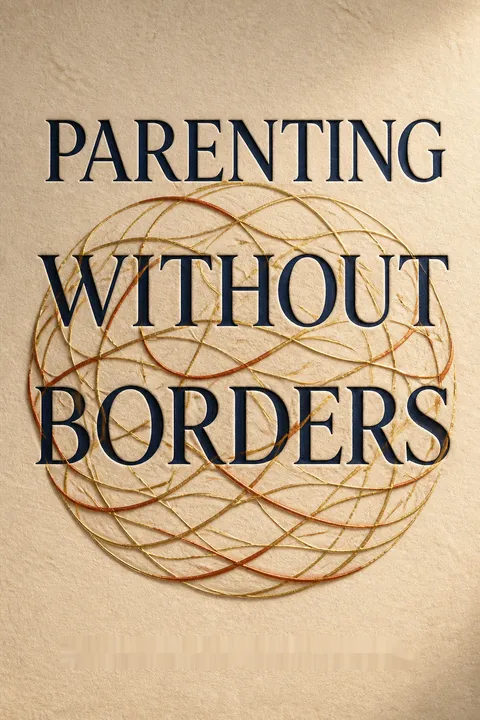


Key Takeaways
Use other cultures to expose your parenting defaults, not copy a whole country
A wider lens helps. Christine Gross-Loh begins as a Korean-American mother confident that familiar American advice is best. After moving to Japan, she watches children thrive under routines that puzzle her: babies sleep near family, young children roam and play, and adults intervene less in peer disputes. The contrast reveals that ideas about independence, praise, food, and safety are cultural choices, not universal laws. Her travels through Japan, China, South Korea, Finland, Germany, and other countries offer alternatives to consider, not a single foreign blueprint.
Borrow principles selectively. The book’s central claim is that parenting works more easily when a community shares expectations. American strengths, including individuality and tolerance, need not be discarded. The challenge is to keep those strengths while learning from cultures that emphasize self-reliance, consideration, and shared responsibility.
What's striking is that the book treats parenting norms as social infrastructure, not merely private preferences. A child’s behavior is shaped by what parents, schools, neighbors, and public policy jointly expect. That perspective usefully shifts the question from “Which country is right?” to “What does this practice train, and does the surrounding environment support it?” Cross-cultural comparison can still flatten differences within nations, especially differences of class, region, and family circumstance. The book recognizes this, and its best use is as a set of questions for examining habits, not a ranking of cultures.
Match infant sleep to family needs without mistaking solitude for maturity
Sleep norms vary. American parents are often taught to view sleeping alone and through the night as early signs of independence. Gross-Loh contrasts this expectation with Japan and Sweden, where babies and children commonly sleep near family and night waking is treated as ordinary. She describes Japanese children who share sleep yet manage belongings, travel, and peer relationships capably during the day. A study she cites found that intentionally co-sleeping preschoolers were reported to handle some daily and social tasks more independently than children who slept alone.
Fit matters more than dogma. The chapter questions whether solitary sleep is the only route to good rest, while also discussing sleep-deprived parents such as Lisa, who turned to sleep training after exhaustion threatened her work and relationships. The author does not make every arrangement suitable for every family. Sleep decisions must account for infant safety and current medical guidance.
The useful distinction here is between a skill and a larger developmental outcome. A child who can fall asleep alone has learned a particular sleep behavior; that alone does not establish broad emotional or social independence. The same caution applies in reverse: cross-cultural reports of confident co-sleepers cannot prove that shared sleep produces independence. Sleep practices are entangled with housing, feeding, caregiver support, and safety conditions. The chapter is strongest when it loosens rigid expectations and asks families to consider their actual circumstances, rather than treating one arrangement as a universal developmental test.
Buy fewer things so imagination has room to work
Possessions carry promises. The book describes American parents researching elaborate lists of baby products because each purchase seems to offer safety, health, or an advantage. One study cited found that families acquired 30 percent more possessions after each child arrived, while American children received an average of seventy new toys a year. In Japan, children often had fewer belongings, reused materials, shared toys, and learned to care for items over time. A paper scrap could become a toy, and neighborhood children invented games without specialized equipment.
Less can invite more. Simple, open-ended objects leave children room to invent what happens next. The practical lesson is not to deny children necessities or meaningful interests. It is to question the assumption that more products, choices, and branded toys automatically produce a richer childhood.
This argument connects consumer behavior to the design of attention. A toy that dictates its own use can narrow the child’s role to operating a finished idea; a plain object invites the child to supply the idea. That does not make every simple toy superior, and material scarcity is not inherently beneficial. Families need resources, and a child’s access to books, equipment, or assistive devices can matter greatly. The sharper target is the anxiety-driven purchase: buying to relieve parental uncertainty rather than because the object serves a clear need.
Make family meals teach taste, patience, and belonging
Palates are learned. Gross-Loh contrasts American food battles with Japanese, Korean, French, and Swedish routines that make eating a shared practice. In Japan, babies join family meals and are gradually offered many of the foods adults eat. Schools reinforce this through cooking, gardens, and lunches where children serve classmates and try the same menu. French families also structure meals and limit constant snacking, while Swedish children may choose among options within a home stocked with nourishing foods.
Routines reduce negotiation. The book cites research linking larger portions with greater intake and describes American children getting nearly 40 percent of their calories from empty calories in the period discussed. Its practical point is to offer variety, cook and eat together when possible, and let children learn food through repeated exposure. Food should be enjoyable, not a daily contest or a moral test.
The chapter’s strongest insight is that preference is partly built by exposure and setting. Behavioral economics calls attention to how defaults and presentation shape choices: a child offered one family meal faces a different decision than a child choosing from a snack buffet. But structure should not become coercion. Allergies, sensory sensitivities, disability, and cultural differences can make a standard menu inappropriate. The useful middle ground is to make nutritious, varied food familiar and accessible while preserving a child’s ability to notice hunger, fullness, and genuine aversion.
Praise effort and reflection, not a child’s fixed identity
Confidence needs evidence. The book argues that constant praise for being smart can make mistakes feel like threats to identity. In a study of roughly 400 fifth-graders, children praised for intelligence were more likely to avoid a harder puzzle, while 90 percent of those praised for effort chose the challenge. Japanese schoolchildren also practiced hansei, a form of reflection in which they examined what went wrong and what could improve. Their confidence was tied to effort, learning, and confronting difficulty, not to appearing flawless.
Make feedback concrete. Instead of labeling a child talented, notice a strategy, sustained practice, or a useful revision. The goal is not relentless pressure. Honest feedback works best when paired with affection, achievable challenges, and help choosing better methods when effort alone is not enough.
The distinction between identity praise and process feedback aligns with a broader psychological principle: people persist more readily when ability feels developable rather than fragile. Reflection also turns failure into information instead of a verdict. Still, effort is not a magic substitute for instruction, rest, access, or aptitude. A child who struggles needs more than encouragement to try harder. The chapter’s most balanced implication is to praise controllable actions while asking what support or strategy would make the next attempt more effective.
Step back from manageable risks so judgment can grow
Not every conflict needs a referee. In Japanese preschools Gross-Loh observed, teachers often let children argue, play roughly, and make up, intervening when danger became imminent. Children were expected to learn how their actions affected peers. In Sweden, parents and teachers gave young children room to explore while explaining boundaries, rather than relying only on constant warnings. The chapter also describes research on risky play, including climbing, roughhousing, and exploring distance, as a way children encounter and learn to manage fear.
Keep risk proportionate. Stepping back means allowing age-appropriate challenges, not abandoning supervision. A child who gets practice assessing a tree branch or negotiating a toy dispute may gain judgment that cannot be learned from an adult’s repeated instruction alone.
This is a persuasive case for graduated autonomy: children need chances to make decisions while the consequences remain manageable. It resembles apprenticeship, where competence develops through real tasks with an attentive guide nearby. The crucial word is manageable. A safe tree, a familiar route, and a peer disagreement are not equivalent to traffic, abuse, or an adult’s failure to protect. Risk also depends on neighborhood conditions and disability. The principle is not “let children do anything,” but “do not remove every challenge that could teach them how to act.”
Protect unstructured play as essential practice, not leftover time
Play does serious work. The book argues that pretend play, self-invented games, and time outdoors help children practice self-control, creativity, and social negotiation. At a Japanese kindergarten, children spent hours choosing activities, making mud balls, building, and inventing games. In German forest kindergartens, children used natural materials to create their own play. By contrast, the book cites an estimate that American children had only four to seven minutes of unstructured outdoor play a day in the period studied.
Recess belongs in learning. The author describes evidence that movement breaks support attention and classroom behavior, and notes that some American schools cut recess for academic instruction. Organized activities can be valuable, but they cannot fully replace time when children set the rules, follow their curiosity, and resolve small disagreements themselves.
Self-directed play is a laboratory for agency: children set goals, test ideas, negotiate rules, and discover whether a plan works. Those processes are difficult to reproduce in adult-designed activities, even excellent ones. The chapter also connects movement with attention, challenging the false choice between learning and recess. Its claim should not be stretched into a universal prescription for unlimited free time. Some children benefit from structure, and safe places to play are unequally distributed. The policy implication is to make play available, not to romanticize the conditions that make it possible.
Pair demanding learning with equitable support and room for choice
Rigor needs a humane frame. China’s learning tradition, as presented here, values practice and mastery before creative rule-breaking. South Korea shows the costs when achievement narrows into exam competition, cram schools, and long study hours. Finland offers a different model: academics begin around age seven, children receive frequent recess, teachers are highly trained and trusted, and schools focus on supporting every learner. More than 99 percent of Finnish students completed compulsory basic education in the period described.
Borrow principles, not packages. Skill-building, high expectations, and sustained effort can help children learn. But test rankings do not capture the whole purpose of education, and pressure can overwhelm curiosity. Finland’s results are tied to teacher preparation, public investment, and support for students, not simply a lighter schedule that another system can copy unchanged.
The comparison separates educational values from the machinery used to pursue them. Deliberate practice can create mastery, while excessive exam pressure can shrink learning to performance. Finland’s example also makes equity an instructional condition: talented teaching and early support help more children succeed without sorting them into winners and afterthoughts. Cross-national rankings are not clean experiments, since systems differ in poverty, governance, and social services. The chapter’s durable lesson is to judge education by both achievement and the conditions under which children learn.
Teach kindness through practiced courtesies, not feelings alone
Courtesy makes care visible. The author contrasts American hesitation about formal manners with Japanese routines such as greeting people, thanking hosts, and acknowledging others before and after meals. At school, children practiced greetings and discussed how actions affected classmates. The book also describes research suggesting that babies show early expectations about fairness, while noting that recognizing fairness is not the same as acting fairly when self-interest is involved.
Give kindness rehearsal. Parents can model considerate behavior, explain why it matters, and give children chances to practice greetings, apologies, and helping repair harm. The point is not to force empty politeness or suppress self-advocacy. It is to make consideration a baseline social skill, while teaching children to speak up when a situation is unsafe or unjust.
Rituals lower the social effort required to recognize another person. A greeting may be formulaic, but repeated forms can train attention and give shy or impulsive children a reliable way to enter an interaction. This connects moral development to practice: compassion is partly a capacity and partly a habit. Courtesy, however, can also enforce hierarchy or silence dissent. Its value depends on whether it teaches mutual regard rather than obedience. A strong social education pairs kindness with the confidence to question unfair rules.
Give children real household work before helplessness becomes habit
Contribution builds capability. Gross-Loh contrasts American parents carrying bags and completing chores with children in Japan who manage their belongings, help cook, clean classrooms, and sometimes travel independently to school. Anthropologists cited in the book observe children wanting to help from a young age. Yet American household expectations have declined over time, and parents may take over because they are rushed or worry a child will do the job imperfectly.
Start small and stay present. A young child can put away clothes or carry a light bag; an older one can prepare part of a meal or care for a sibling with appropriate support. These tasks teach practical competence and awareness of other people’s needs. The wider lesson is communal: children become more responsible when family, school, and neighborhood expectations reinforce contribution, and when parents receive support rather than carrying every duty alone.
Chores link competence to belonging: a child learns not only how to complete a task, but that others can rely on them. This is a concrete route to responsibility, more teachable than repeated speeches about character. The practice should be age-appropriate, shared fairly, and never used to excuse adults from providing care. Domestic labor is often gendered, and family time and resources vary. The broader point is that meaningful contribution can be adapted to circumstance, while communities and public systems must also help sustain the adults doing the raising.
Analysis
Parenting Without Borders is best read as a travel-informed argument about how culture shapes what parents notice, fear, and teach. Its organizing insight is not that Japanese, Finnish, or French parents possess a hidden superior technique. It is that a child’s development unfolds inside shared routines and institutions. Sleep, food, play, manners, school, and chores are connected because each practice expresses a view of what a child is for: an autonomous individual, a family member, a learner, or a contributor to a community.
That frame makes the book more valuable than a list of imported tips. Co-sleeping, for instance, cannot be separated from assumptions about infant dependence, housing, family support, and safety. A child’s freedom to walk to school depends on public space, community trust, and deliberate preparation. Finnish classroom autonomy rests on teacher expertise and social investment. Practices travel poorly when their supporting conditions do not.
The author’s method also has limits. National portraits risk turning tendencies into stereotypes, and anecdotes from families cannot establish that a custom caused an outcome. Comparisons of test scores, health, or behavior are influenced by many factors beyond parenting. The book is most convincing when it uses foreign examples to unsettle American certainty, not when readers treat a country as a controlled experiment.
Its strongest practical synthesis is a change in the direction of parental attention. Give babies responsive care without demanding premature independence. As children grow, replace constant intervention with clear expectations, supervised opportunities, and real responsibility. Praise what they do and learn, not an identity they must defend. Make shared life visible through meals, greetings, play, and contribution. This is neither hands-off parenting nor intensive management. It is a gradual transfer of competence, made possible when adults and institutions share the work.
Review Summary
Parenting Without Borders receives mixed reviews. Many readers find it insightful, offering valuable perspectives on global parenting practices. The book challenges American norms, emphasizing less hovering, more responsibility, and unstructured play. Some critics argue it's biased against American parenting and oversimplifies cultural differences. Readers appreciate the cross-cultural comparisons but note the focus on Japan and Sweden. The book's strengths include its research-based approach and practical suggestions, while weaknesses include repetition and perceived lack of balance in portraying different cultures.
People Also Read







Glossary
concerted cultivation
Organized talent developmentSociologist Annette Lareau’s term for a middle- and upper-class parenting approach that actively cultivates a child’s skills through structured activities, educational support, and close adult involvement. In Gross-Loh’s account, purchases and enrichment programs can become part of this effort to develop a child’s individual talents and future prospects.
goodness of fit
Match between child and expectationsA fit between a child’s individual temperament or sleep patterns and the expectations and routines of the adults caring for them. In the sleep discussion, the concept suggests that families may rest better when they choose arrangements suited to the child and household, rather than forcing every child into one presumed normal pattern.
guan
Care through guidanceA Chinese cultural concept that can include loving, governing, caring for, and closely guiding a child. Gross-Loh uses it to explain why parental oversight of learning may be understood in its cultural context as an expression of devotion and responsibility, rather than automatically as cold or domineering control.
chiao shun
Parental trainingA Chinese term for training children through guidance, instruction, and the maintenance of standards. In the book, it appears alongside guan to show how Chinese parenting concepts may connect discipline and educational involvement with care, perseverance, self-improvement, and a parent’s duty to help a child learn.
hansei
Reflective self-improvementA Japanese practice of examining one’s actions and considering how to improve. Children may reflect on mistakes, successes, and what they might try differently next time. Gross-Loh presents hansei as a way to treat setbacks as part of learning, rather than as proof that a child lacks ability.
growth mindset
Belief abilities can developA concept associated with psychologist Carol Dweck: the belief that abilities such as intelligence can grow through learning, effort, and effective strategies. Children encouraged to adopt this view may be more willing to attempt difficult tasks because struggle does not have to threaten a fixed identity as smart or talented.
dependency conflict
Mixed signals about autonomyA pattern in which parents encourage a child to act independently while simultaneously monitoring, evaluating, or summoning the child’s attention. The mixed message can keep the child oriented toward parental approval even while the stated goal is autonomy.
invisible fence
Internalized safety boundaryGross-Loh’s description of a boundary children learn through adult explanation, trust, and practice rather than a literal barrier or constant shouted warning. Children are given room to explore while learning how far they can go and how to make safer decisions.
shokuiku
Food educationA Japanese term for food education woven into school and family life. It includes learning where food comes from, how to prepare and share it, how meals connect to health, and how to treat food with appreciation. The book describes gardens, cooking lessons, and school lunch duties as examples.
reactive co-sleeping
Shared sleep after problems ariseA pattern in which parents begin sharing a bed with a child in response to existing sleep difficulties, such as repeated waking or bedtime fears. Gross-Loh distinguishes it from choosing shared sleep from infancy, arguing that the circumstances and expectations surrounding the arrangement can affect how stressful it feels for families.
FAQ
1. What is "Parenting Without Borders" by Christine Gross-Loh about?
- Cross-cultural parenting exploration: The book investigates parenting practices from around the world, comparing how different cultures raise children with varying values, expectations, and methods.
- Personal and research-based: Christine Gross-Loh blends her own experiences as a Korean-American parent with interviews and research from psychologists, educators, and anthropologists.
- Universal parenting goals: It identifies three universal aims—survival and health, economic self-sufficiency, and self-maximization—while showing how cultures pursue these differently.
- Challenging assumptions: The book questions American parenting norms, revealing that many beliefs are culturally specific rather than universally optimal.
2. Why should I read "Parenting Without Borders" by Christine Gross-Loh?
- Broaden your parenting perspective: The book challenges the American "good parenting" script and introduces global approaches that foster thriving, confident, and responsible children.
- Learn practical, research-backed advice: Readers gain actionable strategies for resilience, self-control, kindness, and responsibility, grounded in cross-cultural research and real-life examples.
- Reduce parenting anxiety: By exposing the relativity of parenting norms, the book empowers parents to reflect on their assumptions and find a balanced, culturally informed approach.
- Challenge cultural biases: It encourages readers to rethink their own parenting strategies by understanding how values like independence, academic rigor, and social harmony differ worldwide.
3. What are the key takeaways from "Parenting Without Borders" by Christine Gross-Loh?
- Cultural relativity of parenting: Many American parenting practices are not universal and may not always be the most effective.
- Global best practices: The book highlights methods from Japan, Sweden, France, South Korea, and Finland that promote resilience, autonomy, and social competence.
- Balance and moderation: Emphasizes the importance of less materialism, more unstructured play, and fostering effort over innate talent.
- Community and support: Shows the benefits of communal child-rearing and social policies that support families, contrasting with American isolation.
4. How does "Parenting Without Borders" by Christine Gross-Loh compare parenting practices across cultures?
- Sleep and independence: While Americans often promote solitary infant sleep, most cultures co-sleep or room-share, believing it fosters security and independence.
- Materialism and consumerism: American parents often equate good parenting with buying more, whereas Japanese parents teach frugality and contentment with less.
- Education and achievement: Asian countries emphasize effort and perseverance, while Finland focuses on equity, play, and whole-child development.
- Responsibility and autonomy: In Japan and Scandinavia, children are given more freedom and responsibility from a young age, building self-reliance and confidence.
5. What does Christine Gross-Loh say about infant sleep and co-sleeping in "Parenting Without Borders"?
- Cultural differences in sleep: Most cultures practice co-sleeping or room-sharing, viewing close proximity as essential for healthy development.
- Benefits of co-sleeping: Research cited in the book shows that safe co-sleeping can synchronize mother-baby sleep cycles and may reduce SIDS risk.
- Independence through connection: Shared sleep in countries like Japan and Sweden is linked to greater daytime independence and social competence.
- Goodness of fit: The best sleep outcomes occur when parental expectations align with a child's sleep personality, whether co-sleeping or solitary sleep.
6. How does "Parenting Without Borders" by Christine Gross-Loh address consumerism and materialism in American parenting?
- Excessive materialism: American parents often feel pressured to buy the best and most for their children, leading to clutter and stress.
- Cultural contrasts: Japanese parents emphasize frugality and resourcefulness, teaching children to appreciate less and share more.
- Marketing’s impact: Aggressive advertising targets children in the U.S., increasing desires and social comparisons that can harm mental health.
- Advocacy for moderation: The book recommends setting boundaries on consumption to foster creativity, satisfaction, and healthier childhoods.
7. What are Christine Gross-Loh’s insights on food, picky eating, and family meals in "Parenting Without Borders"?
- Structured meals and shared eating: Cultures like Japan, France, and South Korea prioritize three proper meals a day and family mealtimes, discouraging constant snacking.
- High expectations for variety: Parents expect children to try a wide range of foods, teaching them to eat anything rather than catering to picky preferences.
- Food education: In Japan and France, schools teach nutrition, cooking, and gratitude for food, integrating these lessons into daily life.
- Mealtimes as socialization: Food is seen as a source of joy and cultural identity, with mealtimes fostering social skills and appreciation.
8. How does "Parenting Without Borders" by Christine Gross-Loh discuss self-esteem, praise, and the growth mindset?
- Self-esteem’s double-edged sword: Overpraising innate traits like intelligence can undermine motivation and increase fear of failure.
- Cultural differences in praise: Japanese and Taiwanese parents focus on effort, moral values, and self-reflection rather than abundant praise.
- Growth mindset advocacy: The book highlights Carol Dweck’s research, showing that praising effort fosters persistence and learning from mistakes.
- Balanced feedback: Parents are encouraged to set high standards and give honest feedback in a loving context to build genuine self-esteem.
9. What does Christine Gross-Loh mean by "hoverparenting" and how does "Parenting Without Borders" suggest fostering self-control?
- Definition of hoverparenting: Excessive parental involvement that prevents children from developing autonomy and problem-solving skills.
- Negative effects: Hoverparenting can make children anxious, less resilient, and less motivated to try new things independently.
- Cultural contrasts: Japanese and Swedish parents allow children more space to resolve conflicts and develop self-regulation through experience.
- Encouraging autonomy: The book recommends trusting children’s capabilities and letting them face manageable risks to build self-control.
10. What role does unstructured play have in child development according to "Parenting Without Borders" by Christine Gross-Loh?
- Decline in free play: American children have lost much unstructured outdoor playtime due to overscheduling and screen time.
- Play as brain development: Open-ended play fosters imagination, social skills, emotional regulation, and cognitive flexibility.
- Global examples: Countries like Japan, Germany, Denmark, and Finland prioritize play-based education and frequent outdoor exploration.
- Balance with structure: While structured activities have benefits, unstructured play is essential for discovering interests and developing intrinsic motivation.
11. How does "Parenting Without Borders" by Christine Gross-Loh address education systems in Asia and Finland?
- Asian academic rigor: Countries like China and South Korea emphasize perseverance, mastery, and high parental involvement as expressions of love.
- Finnish "less is more" approach: Finland starts formal academics later, has shorter school hours, more recess, and less homework, yet achieves top international rankings.
- Teacher quality and equity: Finland invests in highly qualified teachers and personalized support, ensuring no child is left behind.
- Balancing tradition and modernity: Both regions are blending traditional values with modern ideas to foster creativity and autonomy alongside achievement.
12. What are the best quotes from "Parenting Without Borders" by Christine Gross-Loh and what do they mean?
- “Pressure is a good thing; it pushes us.” This Chinese educator’s quote highlights the value of manageable challenges in motivating children to improve.
- “Interest is the best teacher.” Common in East Asia, this phrase emphasizes the importance of fostering genuine passion for effective learning.
- “We can’t afford to waste a brain.” A Finnish saying that underscores the commitment to equity and nurturing every child’s potential.
- “It takes a village to raise a child.” The book’s concluding theme, stressing the necessity of community support in parenting and contrasting with American isolation.
Download PDF
Download EPUB
.epub digital book format is ideal for reading ebooks on phones, tablets, and e-readers.








