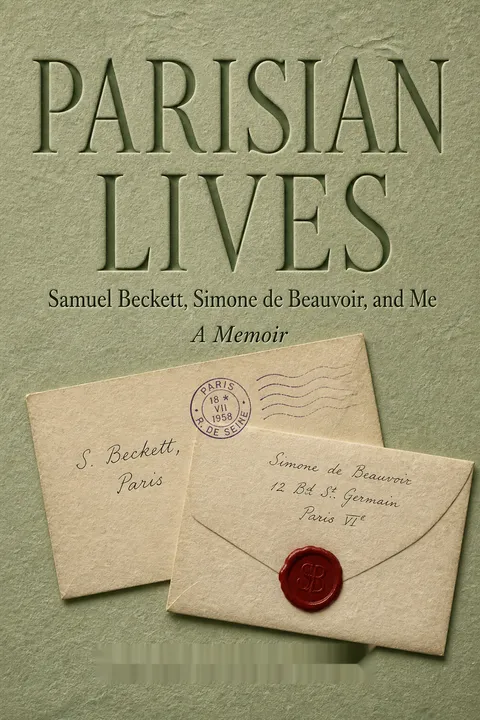


Key Takeaways
When the subject is alive, the biographer becomes part of the evidence
An accidental assignment. Deirdre Bair began as a journalist, then chose Samuel Beckett for a dissertation because she wanted to understand the Irish places and people she recognized in his fiction. A letter asking to write his biography brought an invitation to Paris. Beckett failed to appear for their first scheduled meeting, leaving Bair anxious and nearly out of money. When they finally met, he challenged her confidence and made clear that he would not direct her work.
The observer enters the story. Their arrangement was professional, but the encounters shaped what Bair could learn, how she felt, and what she later wrote. The resulting bio-memoir combines accounts of Beckett and Simone de Beauvoir with the story of Bair researching and writing about them. Her own presence becomes part of the record, not an invisible window onto theirs.
What's striking is that the biographer's involvement is not merely colorful background. It affects access, trust, and the production of knowledge. This resembles reflexive practice in anthropology, where researchers explain how their position shapes what participants say and what can be observed. Such candor can make a narrative more credible, though it cannot eliminate bias. A researcher may document her influence and still misunderstand it. The value lies in letting readers see the conditions under which a claim was formed, rather than presenting interpretation as if it arrived without a person behind it.
Record the encounter before memory edits it into a cleaner story
Prepare without a notebook. Beckett insisted that their meetings were informal conversations, not recorded interviews, and forbade Bair from taking notes in front of him. She adapted by preparing questions on small cards, memorizing them, and rearranging them until she could ask them naturally. She called this intellectual solitaire. After a meeting, she returned to her room and dictated or wrote everything she could remember, including the tone and context of remarks.
Keep a time-stamped record. Years later, Bair found her Daily Diaries, notebooks recording her work and reactions as events unfolded. They let her compare her younger self's immediate impressions with what she remembered decades later. The diaries also preserved practical details, from interview observations to the daily pressures of writing while raising a family and teaching.
The method makes a useful distinction between raw recollection and a polished account. Contemporary notes are not automatically true, but they preserve what a person believed before hindsight reorganized the experience. This is valuable in oral history, where interviewers and witnesses often remember the same exchange differently. The limitation is that a diary remains selective: its writer records what seems important, and emotion can sharpen some details while obscuring others. A reliable account therefore needs both the diary and evidence that can test it.
Treat every witness as evidence, never as the final authority
Memories can migrate. Bair interviewed people who knew Beckett, then compared their accounts with letters, diaries, photographs, and other witnesses. She wanted several independent sources before accepting a sensitive claim. Yet apparent agreement could be misleading. Many people repeated the same account of how Beckett met his wife, Suzanne, and several seemed to confirm it independently. After publication, Bair discovered that their stories all traced back to Maria Jolas, who lacked firsthand knowledge of the event.
Trace the source chain. A witness may be sincere and still pass along another person's story as personal knowledge. Bair also found that Kay Boyle later denied helping her, despite their interviews and correspondence. Such contradictions are not noise to erase. They reveal how memory, reputation, and a person's later wish to distance themselves from events can shape testimony.
The key issue is not simply how many sources agree, but whether they are genuinely independent. In research, five accounts derived from one rumor are functionally one source. Oral-history projects can strengthen their work by asking witnesses where they learned a detail, who else was present, and whether the account was shared before the interview. Bair's error is instructive because her standard was already demanding. Verification is not a ritual count; it is an investigation into provenance, dependence, and the limits of what a witness could actually know.
Let new documents overturn a compelling story, even when it is yours
The archive changed the account. Before seeing Thomas McGreevy's letters, Bair had drafted two explanations for why Beckett left Ireland for Paris. The version she kept portrayed Beckett's mother as reluctantly supporting her son's departure out of love. The letters to McGreevy revealed a more painful picture: Beckett's dependence on his mother, his anger, and a household so strained that he feared what might happen to either of them. The new evidence required Bair to rethink a narrative she had already begun to write.
Evidence has obligations. The letters were private, and lawyers warned that copyright and medical privacy restricted what could be published. Under severe time pressure, Bair secretly took some letters back to her hotel to copy them, a breach she later described candidly. The episode shows that responsible research involves not only finding evidence, but also confronting the ethical cost of using it.
This is the point where research becomes a test of character. New evidence can threaten the coherence of a draft, the subject's privacy, and the researcher's relationship with a source. The most defensible response is to revise the claim and make the evidentiary basis visible, not to protect a satisfying narrative. At the same time, access does not automatically confer permission. Bair's account recognizes that her pursuit of accuracy did not make every choice ethically simple. Readers benefit from seeing both the correction and the compromise.
Adapt your method to the person, not your last successful biography
Beckett required indirection. He wanted privacy, rejected visible note-taking, and communicated selectively. Bair had to remember conversations, reconstruct them afterward, and approach sensitive subjects indirectly. His network was compartmentalized, and friends sometimes expected her to carry information between them.
Beauvoir worked differently. She welcomed recorders and prepared questions, but initially seemed to expect Bair to write the account she herself supplied. Bair explained that her work with Beckett depended on independent research and a full portrait, not simply a subject's preferred version. Beauvoir agreed to that approach. Their meetings became more personal than Bair's formal exchanges with Beckett, which created a different challenge: Bair had to guard her judgment while working with someone she admired and liked.
The contrast resists the fantasy of a universal interview technique. Fieldwork is relational: a method that respects one participant's boundaries may frustrate another, while a warm rapport can improve access and also make critical distance harder. Bair's practice is adaptive without being wholly improvisational. She keeps the same commitments to evidence and independence while changing how she asks questions. That distinction matters in any interview-based work: consistency of standards need not mean sameness of procedure.
Refuse the bargain that calls women's ambition selfish and unpaid
The workload was never just work. Bair began her second career as a married mother of two, having already supported her family as a reporter while her husband studied. Her academic path brought temporary teaching jobs, low pay, grant applications, travel costs, and continual domestic preparation before research trips. She filled a freezer with meals before leaving, while worrying that professional ambition meant neglecting her family.
The resistance was personal and structural. Male scholars questioned her authority to write about an Irish man, colleagues dismissed biography as inferior scholarship, and public discussion repeatedly reduced her access to Beckett to sexual gossip. Women were also expected to do the work of home and family alongside professional labor. Bair's later account of a childcare-related grant captures how unusual it was for institutions to recognize those costs at all.
The memoir makes visible the hidden infrastructure behind a career: childcare, household work, money, and the social permission to pursue demanding projects. Its force comes from connecting private strain to institutional norms rather than treating exhaustion as an individual failure. The story also complicates the popular promise that determination alone can reconcile every competing obligation. Personal support mattered in Bair's life, but it did not remove unequal expectations or insecure employment. The lesson is not to reject ambition, but to question arrangements that make ambition possible only through invisible labor.
Let evidence shape the structure, not a theory imposed beforehand
A life resists a tidy template. Bair first tried to begin Beckett's biography with the fame of Waiting for Godot, then found that readers needed the history behind the play. She moved back to his childhood and built a detailed chronology to connect events, writing, travel, and relationships. Before spreadsheets, she used a long roll of paper to lay out the sequence visually.
Draft widely, then cut. Bair called her approach a non-methodology: she avoided forcing a life into a prefabricated theory or a set of neat categories. Her exploratory drafts, which she called the three p's, often sprawled across many pages before she found the few paragraphs that mattered. This freedom did not mean abandoning discipline. It meant letting the evidence suggest a structure, then revising hard enough to make the story readable.
An emergent structure can protect a biography from the distortions of a theory chosen before the evidence is known. The chronology also helps reveal simultaneity: a creative work, a family conflict, and a political event may bear on one another without fitting a single causal explanation. But openness has a cost. A life can meander so freely that the reader loses the thread. Bair's practice pairs discovery with pruning, a useful balance between archival curiosity and narrative responsibility.
Make biography a doorway back into the work, not a verdict
Context can widen interpretation. Bair challenged readings of Beckett that treated him only as a writer of isolation and despair. Research into his Irish background, the real places he knew, and the people he observed revealed humor and local texture in his fiction. For Beauvoir, Bair looked beyond the familiar label of feminist theorist to her philosophy, fiction, politics, teaching, and memoirs.
A life is not a final explanation. Bair wanted readers to return to the writers' own work with richer questions, not to treat biography as a master key. She rejected the idea that one book could settle a life permanently. Every generation brings different questions to a writer, and later biographies may use evidence or perspectives unavailable to earlier ones.
This is a strong account of biography as an interpretive bridge rather than a substitute for literature. Context can restore comedy, history, and social specificity to work flattened by familiar critical labels. Yet biographical explanation has limits: a writer's childhood or relationships cannot fully account for formal choices, and treating art as a symptom of life can shrink its ambiguity. Bair's stated aim avoids that trap by inviting renewed reading. The best life-writing deepens attention to the work while leaving room for readings it cannot predict.
Use time to write yourself without asking the reader for absolution
Distance made disclosure possible. Bair waited nineteen years before writing this memoir. She was prompted partly by later biographers who, in her view, misrepresented her testimony about Beckett and Beauvoir. When she found her old Daily Diaries, they gave her a contemporaneous record against which to test memory and revisit her younger self's motives.
The narrator has several selves. The book presents the ambitious young journalist, the inexperienced biographer, and the older writer reconsidering both. Bair describes errors, fear, affection, professional resentment, and the strain her work placed on family life. Her aim is not to solicit sympathy or declare herself an objective witness. Instead, she lets readers compare the evidence, her earlier reactions, and her present interpretation.
The memoir's form offers a practical model for writing about one's own past: distinguish the person who experienced an event from the narrator who interprets it years later. That temporal layering can expose changed beliefs without pretending the later self has perfect access to the earlier one. It also makes accountability possible. Still, diaries and hindsight are both partial, and self-criticism can become its own performance. The reader's trust depends less on a claim of complete honesty than on the writer's willingness to show how the account was assembled.
Analysis
Parisian Lives is a memoir about making biographies, but its deeper subject is the unstable boundary between knowing another person and narrating them. Bair's career begins with an unlikely opportunity, then becomes a long negotiation over access, memory, privacy, gender, and authority. Beckett's secrecy forces her to invent interview procedures. Beauvoir's directness and intellectual intimacy require different boundaries. In both cases, the subject is neither a passive object nor a reliable guide to the meaning of a life.
The book's most valuable methodological insight is that rigor is not the same as impersonality. Bair tries to corroborate testimony, check dates, and preserve records, yet she also shows how a source network can reproduce one person's error. Her account of the McGreevy letters demonstrates why a biographer must be willing to abandon an attractive explanation when stronger evidence appears. Her admission that she sometimes crossed boundaries complicates any easy portrait of the researcher as ethically pure. That complication strengthens the memoir because it puts professional standards under pressure rather than presenting them as slogans.
The narrative also records how gender shapes the conditions of scholarship. Bair's work is repeatedly judged through assumptions about women's competence, sexuality, domestic duty, and scholarly legitimacy. Her experience makes visible the hidden labor beneath an apparently individual achievement. Yet the book does not reduce its subjects to symbols of gender or turn Bair's career into a simple triumph story. It preserves fatigue, error, affection, and ambivalence alongside achievement.
The form suits the argument. By combining the subjects' lives with the author's changing understanding, Bair makes interpretation itself part of the story. The result is not a claim to final truth, but a demonstration of how a careful account is built, revised, and limited. Its enduring invitation is to treat biography as accountable interpretation: evidence matters, perspective matters, and neither can be made to disappear.
Review Summary
Parisian Lives receives largely positive reviews, praised for its unique insight into the biography-writing process and Bair's experiences with Samuel Beckett and Simone de Beauvoir. Readers appreciate the author's honesty about challenges faced as a woman in academia and publishing. Some criticize the lack of focus on Paris itself and occasional repetitiveness. The book is commended for its engaging storytelling and behind-the-scenes look at literary giants, though a few reviewers desired more depth on the subjects' work.
People Also Read




Glossary
bio-memoir
biography joined with memoirBair's term for a form that tells her own story through the work of researching and writing about Samuel Beckett and Simone de Beauvoir. It combines accounts of the subjects with the biographer's experiences, decisions, and changing understanding, making the author a visible participant in the history she recounts.
Daily Diaries
contemporaneous work journalsBair's notebooks recording details of her biographical research, interviews, appointments, moods, and reflections as events occurred. Rediscovered years later, they helped her compare immediate impressions with later memory and reconstruct the different versions of herself present during the Beckett and Beauvoir projects.
intellectual solitaire
memorized interview questionsBair's technique for preparing to interview Beckett, who forbade her to take notes or use a recorder during their conversations. She wrote questions on small cards, memorized them, shuffled their order, and refined their wording before meeting him. Afterward, she reconstructed the conversation from memory.
non-methodology
life-led narrative methodBair's name for resisting a fixed theoretical template or rigid set of categories when writing a biography. She aimed to let the subject's evidence and lived sequence suggest the narrative's shape. The approach still depended on research, chronology, revision, and pruning; it rejected imposed neatness, not discipline.
the three p's
exploratory purple proseBair's humorous label for expansive, passionate early drafts that she wrote to discover what a subject or episode meant. These drafts could run far beyond what belonged in the finished biography. Their purpose was exploration; later she cut heavily to retain the most important evidence and interpretation.
yawn factor
repeated interview informationBair's term for the fatigue of hearing interviewees repeat information she already knew. The phrase marked a point in her research when more interviews were yielding repetition rather than useful discoveries. It helped her recognize when accumulated material was sufficient to begin writing.
Lucite curtain
a boundary against questionsBair's metaphor for the point at which Beauvoir would stop responding to a line of questioning. The barrier was figuratively transparent because both women understood what the unanswered question concerned, but communication on that subject ended. Bair sometimes returned to difficult topics later, when circumstances allowed.
personal truth and historical reality
memory versus external evidenceBair's distinction between how a person remembers or experiences an event and what can be established through records, chronology, or other witnesses. The two may conflict without one being simply a lie. A biographer must explain the discrepancy and avoid confusing a sincere personal account with independently verified fact.
FAQ
What's Parisian Lives: Samuel Beckett, Simone de Beauvoir, and Me about?
- Memoir and Biography: The book is a memoir by Deirdre Bair, detailing her experiences writing biographies of Samuel Beckett and Simone de Beauvoir.
- Intertwined Lives: It explores the lives of these literary giants and Bair's personal journey, highlighting her interactions with them.
- Cultural Context: The narrative places Beckett and Beauvoir within the broader cultural and historical context of 20th-century Paris.
Why should I read Parisian Lives?
- Unique Perspective: Bair offers an insider's view of Beckett and Beauvoir, providing depth and context to their works.
- Feminist Insights: The book explores the challenges faced by women in the literary world, particularly through Bair's and Beauvoir's experiences.
- Engaging Storytelling: Bair's personal anecdotes and reflections create a compelling narrative that is both accessible and thought-provoking.
What are the key takeaways of Parisian Lives?
- Complex Relationships: The book illustrates the intricate dynamics between Beckett, Beauvoir, and Bair, showing how personal and professional lives intertwine.
- Gender Challenges: Bair discusses the challenges women face in the literary world, reflecting on her own experiences and broader implications for women writers.
- Biography Ethics: It examines the responsibilities and ethical considerations of writing biographies, balancing personal narratives with objective truths.
What are the best quotes from Parisian Lives and what do they mean?
- “My word is my bond”: Beckett's commitment to honesty and integrity in his relationship with Bair.
- “You must never explain. You must never complain.”: Beckett's advice on maintaining professionalism and composure.
- “I have to find a way of saying the truth without saying it.”: Beauvoir's struggle with self-representation and authenticity.
How does Bair describe her first meeting with Samuel Beckett?
- Awkward Introduction: Beckett greeted Bair with a comment that set a tone of tension and uncertainty.
- Physical Presence: Bair vividly describes Beckett's appearance and demeanor, helping readers visualize him.
- Initial Impressions: Her mixed feelings of awe and intimidation illustrate the weight of her task.
What challenges did Bair face while writing Beckett's biography?
- Access to Information: Bair struggled to gain reliable information, often facing resistance from Beckett's circle.
- Personal Relationships: The dynamics with Beckett and his circle complicated her research.
- Emotional Toll: Writing about a private individual weighed heavily on Bair, raising ethical concerns.
How did Bair's gender influence her experiences as a biographer?
- Male-Dominated Field: Bair faced challenges as a woman in a predominantly male literary world.
- Expectations of Women: The memoir highlights societal expectations of women in academia and literature.
- Empowerment Through Writing: Despite challenges, Bair's journey becomes one of empowerment and asserting her voice.
What role did Bair's personal life play in her writing process?
- Balancing Family and Work: Bair shares her struggles to balance family responsibilities with her writing career.
- Influence on Perspective: Her personal experiences shaped her perspective as a biographer.
- Source of Inspiration: Her family life served as a source of inspiration and motivation.
How did Bair's research methods evolve throughout the writing of Parisian Lives?
- Initial Approach: Bair began with a traditional approach, relying on interviews and correspondence.
- Adapting to Challenges: She incorporated a more flexible approach, using "Daily Diaries" for documentation.
- Emphasis on Narrative: Bair shifted to a narrative-driven approach, focusing on creating a compelling story.
How does Parisian Lives address the theme of feminism?
- Beauvoir as a Feminist Icon: The book highlights Beauvoir's contributions to feminist thought.
- Personal Struggles: Bair shares her own experiences as a woman in the literary world.
- Critique of Gender Norms: The book critiques societal expectations placed on women, encouraging broader reflection.
What insights does Bair provide about Beckett and Beauvoir's relationship?
- Complex Dynamics: Bair explores the intricate relationship between Beckett and Beauvoir.
- Mutual Respect: Despite differences, both writers held respect for each other's work.
- Impact on Their Work: Their relationship shaped their writings, particularly in existentialism and feminism.
What is the significance of the title Parisian Lives?
- Cultural Context: The title reflects the cultural and literary history of Paris.
- Interconnected Narratives: "Lives" emphasizes the intertwining stories of Bair, Beckett, and Beauvoir.
- Personal and Professional Dimensions: It encapsulates the dual nature of the narrative, exploring both personal and professional aspects.
Download PDF
Download EPUB
.epub digital book format is ideal for reading ebooks on phones, tablets, and e-readers.








