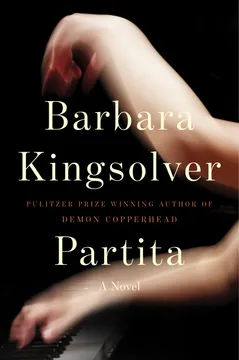


Summary Unavailable
This book is not suitable for a summary (it may be a textbook, workbook, cookbook, reference book, or collection). However, you can still explore the FAQs, about author, and other metadata below!
Plot Summary
The Call After Decades
At the start of the novel, Livia Cable1 is living quietly with her husband,3 Charlie,3 teaching piano and trying to clear her late mother’s5 crowded farmhouse. Then Sigurd,2 the man she has not seen in decades, calls from California. His recent medical diagnosis has brought her to mind, and he wants to visit while consulting doctors in Tennessee.
Livia1 asks for a week to decide, though either answer feels dangerous. The call revives the question that has followed her since childhood: why her brother Cyrus4 walked to the tracks and died beneath a train when she was eleven. She has built a life around what survived, but Sigurd’s2 voice makes the past feel present again.
The call makes memory an active force rather than a settled record. Livia has arranged her days around work, marriage, and manageable obligations, yet Sigurd’s return reveals how much of that calm depends on keeping certain questions unopened. Cyrus’s death and Sigurd’s departure are distinct wounds, but both leave her with the same intolerable gap: the absent person cannot explain what happened. Her request for time is not indecision alone. It is an attempt to control how much of her carefully contained life the past is allowed to enter.
The Orange Flyer
In 1989, twenty-year-old Livia1 is studying piano at Indiana University and sharing an apartment with Jon Link,9 a fellow musician who expects them to marry. She survives on scholarships, work-study, and cheap meals, while fearing that her training is making her useless beyond campus.
Outside the music building, she meets Sigurd,2 a typesetter and labor organizer selling a socialist newspaper. He asks about her work and treats her musical labor as something with value, not a private indulgence.
Their lunch stretches into a conversation about class, ambition, and the distance between her rural Tennessee upbringing and the university’s confident students. Sigurd2 gives her a flyer for a student meeting. She goes, but leaves when she realizes he is not there.
Livia’s attraction begins alongside an intellectual disturbance. Sigurd does not simply flatter her playing; he offers a language for the feeling that her work matters while the institutions around her treat it as ornamental. His labor politics also unsettle her assumption that ambition is a private ladder climbed by exceptional individuals. Yet she remains caught between competing forms of belonging: the musicians who share her devotion, her boyfriend’s predictable future, and the working-class world she left behind. The flyer becomes a small object carrying a larger possibility, one she is not yet ready to join.
A Number on a Flyer
Days later, Livia1 hears a South African singing group at a campus rally supporting divestment. The women’s unfamiliar harmonies break the rules she has been taught, and she stays after their performance to find Sigurd2 packing sound equipment.
She gives him her number. Their next lunch turns intimate when Livia1 explains Cyrus’s4 death, his wish to learn piano, and her guilt over answering his last invitation with a joke. Sigurd2 listens without reducing her grief to a lesson, then takes her to a quiet campus cemetery, where they kiss.
Meanwhile, Livia’s1 planned marriage to Jon Link9 falters. When Jon9 urges her to visit her family before his summer in Munich, Livia’s1 resentment and confusion expose how little their shared future has been examined.
The rally gives Livia an experience of music beyond mastery: voices that move her before she can classify them. That encounter prepares her to respond to Sigurd differently, while the cemetery scene lets her speak of Cyrus without performing competence or concealing pain. Her guilt over their final piano lesson shows how grief turns an ordinary missed chance into an imagined cause. At the same time, Jon’s practical plans cannot contain the changes already underway in Livia. Her first serious attachment is not simply exchanged for a new man; it is disrupted by her emerging sense that the life she accepted may not be the life she wants.
Gaspard After Midnight
Livia1 prepares Ravel’s punishing Gaspard de la Nuit for a major piano jury, and Sigurd2 finds her practicing late at night. She explains the water spirit in the first movement while he touches her, and music becomes part of their sexual intimacy.
Livia1 earns praise for her performance, but her attention has shifted from pleasing teachers toward questioning whether elite musicianship serves anyone beyond its own circle. She moves into Sigurd’s2 apartment without formally discussing it, while Jon9 leaves for Munich and their relationship ends in embarrassed distance.
Sigurd’s2 political commitments remain central to his life, but he gives Livia1 tenderness, curiosity, and an appetite for her rural past. Their love feels expansive, even as Livia1 begins to doubt the career she has built around piano.
The practice-room encounter binds artistic discipline to bodily desire, making Livia’s talent newly intimate rather than merely public property. Yet the same relationship that awakens her also destabilizes the structure that has protected her: hours, juries, and recognition no longer answer the question of purpose. Sigurd’s attention helps her feel visible, but his politics and her music are not interchangeable callings. The tension is not between love and selfish ambition. It is between two genuine forms of devotion, each demanding time, allegiance, and a future the other cannot automatically accommodate.
The Railroad Transfer
As summer begins, Sigurd2 tells Livia1 that his party is closing its Bloomington branch and transferring him to Arizona to organize railroad workers. He presents the move as a commitment he has chosen, not an order, but the distinction offers Livia1 little comfort.
She cannot imagine leaving her music school for an industrial job, and she cannot follow him without joining the political life she has repeatedly declined. Sigurd2 does not ask her to abandon music outright, yet he assumes they might build a shared life around his work.
Their arguments sharpen as he packs. Livia1 briefly promises she could go, then admits that stopping piano would feel like stepping off a cliff. Sigurd2 leaves for Phoenix, and Livia1 returns to Jon’s9 empty apartment, bereft and without a plan.
The transfer exposes the asymmetry beneath their intimacy. Sigurd’s revolutionary project supplies him with a collective future and a clear account of what sacrifice means. Livia’s music is equally serious, but its value is harder to defend in the language he trusts. She is not choosing comfort over courage; she is protecting the only practice through which she has made a self. Their failure to imagine a common future becomes especially painful because both believe they are acting responsibly. Love cannot resolve incompatible definitions of meaningful work, and Livia experiences that truth as abandonment.
The Dough Roller
After Sigurd2 leaves, Livia1 struggles to pay rent and takes a kitchen job at Gorgo’s, where Amadeo10 puts her on salad preparation and urges her to keep practicing. During a chaotic late shift, the manager orders her to clean an industrial dough roller. The machine pulls in her right hand and crushes its bones, tendons, and nerves.
Surgeons rebuild what they can, pinning damaged joints and saving her thumb and index finger, but the hand can no longer manage concert piano. Amadeo10 visits her in the hospital and makes sure the doctors understand what her hand means to a pianist. Livia1 loses her scholarship and leaves school. As she struggles through one-handed recovery, a routine X-ray appointment brings another shock: she is pregnant.
The accident turns Livia’s earlier fear of uselessness into a physical crisis. The hand is not a symbol detached from her life; it is the instrument through which she earns money, makes art, and understands herself. Its damage also follows directly from the fragile economics of her choices: she takes a kitchen job because love has ended and rent remains due. Amadeo’s advocacy contrasts with the indifference of a system that sees an injured worker as a case. The pregnancy arrives while Livia is already grieving a future that seemed to depend on two functioning hands.
The Pregnancy Clock
Because surgery and pain medication obscured her symptoms, Livia1 is nearly five months pregnant before she learns it. She decides she does not want a child and seeks an abortion, but a clinic volunteer falsely tells her she needs parental permission.
A bomb threat then closes the clinic. By the time Livia1 reaches Sigurd2 in Los Angeles and explains the situation, the pregnancy is beyond the local clinic’s limit and hospital care costs more than she can afford. She refuses his plan to send her to his political contacts in Phoenix.
Soon afterward, she suffers a severe placental abruption. She reaches the hospital bleeding and unconscious; the fetus is not viable, and surgeons remove her uterus to stop the hemorrhage. Livia1 survives several cardiac arrests, but loses another possible future.
Livia’s crisis is shaped by more than private indecision. False information, intimidation outside the clinic, financial precarity, and the passage of time steadily narrow her choices. The pregnancy is unwanted, but that does not make the loss of her uterus emotionally simple. She is forced to confront a body that has acted beyond her knowledge and a medical system that intervenes only after the emergency becomes catastrophic. Sigurd’s late offer of help cannot reverse the delays or restore trust. Survival here is neither triumph nor punishment; it is an outcome Livia must learn to inhabit.
Home Between Two Beds
With no safe way to travel alone after surgery, Livia1 asks the Cable family3 for help. Charlie3 drives her home to Tennessee, carrying her on a bed of clean sheets in his car. On the journey, she learns that her father, Willard,8 has had terminal cancer since spring. Her mother5 never told her, even when she demanded that Livia1 come home for Easter.
Charlie3 and Livia1 are placed in the den beside Willard’s8 hospital bed, while Faye7 and Mickie6 help care for them. Willard8 dies shortly before Christmas, on the same day the family cannot find their old dog, Dolly. At his funeral, Livia1 cannot play. Later, alone in the church, she manages a halting version of a song she once shared with Cyrus.4
The return home is both rescue and belated revelation. Livia learns that her mother’s plea for family had concealed the very fact that might have changed her decision, leaving her to imagine a preventable absence. Charlie’s practical care does not demand an explanation, which lets Livia accept help without immediately defending herself. Her father’s death closes the possibility of repairing their relationship through conversation, but the small attempt at the church piano marks a beginning rather than a cure. Music has become difficult, yet it still gives Livia a way to approach grief without pretending it is resolved.
The Dairy Inheritance
Willard’s8 will leaves Livia1 the family dairy, while Charlie,3 who has been running it, offers to teach her the work. She finds herself responsible for a business she barely understands, though she gradually learns the herd records, milking routines, and farm finances.
The two grow closer through practical work and shared grief. Faye7 later tells Livia1 that Charlie3 has loved her since they were young. When Livia1 and Charlie3 learn Willard8 hoped they would build a life together, they marry at the courthouse rather than stage the wedding her mother5 expected.
They settle in a small apartment over the Cable3 garage, and Livia1 begins teaching piano again. Her students and the farm give her a modest but durable place in the community, even as her damaged hand limits what she can play.
The inheritance reverses Livia’s expected trajectory without simply replacing one vocation with another. She is not suddenly transformed into a confident farmer; she learns by watching Charlie and accepting responsibility in increments. Their marriage grows from trust, shared history, and daily cooperation rather than the consuming intensity she knew with Sigurd. That difference matters. Livia’s new life is not a consolation prize, though she sometimes treats it as one. Teaching and farm management give her forms of contribution that do not depend on public acclaim, while the piano remains both a wound and a practice she is not ready to relinquish.
The Mother’s Old Songs
Decades later, Livia1 is sorting her mother’s5 hoarded belongings after the funeral when Sigurd’s2 call unsettles her. Her friend Mickie6 helps her keep working and listens as Livia1 finds boxes of military photographs, bridal clippings, old recital programs, and letters from her grandmother.
The letters reveal that Livia’s mother5 once left home for Nashville to pursue singing, while her own mother condemned the ambition and pressured her to marry Willard.8 Programs show that the young woman5 had performed as a singer before returning to the farm.
Livia1 begins to see her mother’s5 hostility to her music as bound up with a dream that was punished and abandoned. Mickie6 also shares worries about her teenagers, Betts and Ethan,15 whose choices reflect the pressures surrounding education, identity, and belonging.
The house changes from a burden of junk into an unintended archive. Livia has long read her mother’s hoarding as a personal rejection, but the old programs and letters complicate that account without excusing the harm she suffered. Her mother’s lost musical ambition creates an inheritance of resentment: the daughter’s freedom may have looked like a fresh injury to someone denied her own. The discovery does not produce a neat reconciliation, especially because the mother is dead. Instead, it gives Livia a more complex explanation of how family pain travels, often disguised as judgment or silence.
Cyrus’s Hidden Letter
Among the papers, Livia1 finds newspaper clippings about a police raid involving local teenagers and an envelope in Cyrus’s handwriting. One note, addressed to their mother,5 says he meant to resist being shaped into someone else and wanted Livia1 to pursue what she loved. Another, meant for Livia,1 reveals that Cyrus4 had fallen in love with Marshall Sterling.18
Marshall’s18 family sent him into the Marines, separating the boys, and Cyrus4 could not imagine enduring a life without him. He had expected Livia1 to be angry, but believed her music would carry her forward. The letters overturn Livia’s1 lifelong conviction that a careless joke about piano lessons helped drive her brother to the tracks. Her mother5 had kept the notes from her.
The letters do not make Cyrus’s death comprehensible in the sense of making it acceptable. They do, however, replace Livia’s imagined responsibility with evidence of the pressures he faced and the love he experienced. Her childhood guilt had turned one missed response into a private verdict against herself. Cyrus’s words restore him as a person with desires and a secret life, not only the brother who left her. The mother’s concealment compounds the family silence, but the discovery also reveals an unintended bond: both siblings tried to claim a life their parents had not imagined for them.
The Bonfire of Keepsakes
After reading Cyrus’s4 letters, Livia1 tells Charlie3 what she has found and asks him to stay while she clears the house. She feeds boxes of clippings, family papers, and accumulated possessions into the old backyard incinerator, keeping two dresses that testify to her mother’s5 Nashville hopes.
She burns the note addressed to her mother5 but saves Cyrus’s4 letter to herself until she has read it again. Then she lets it go, choosing memories of their years together over the final hour that ended them.
The fire grows beyond the pit, and an ember catches the farmhouse roof. Charlie3 hoses the flames while Mickie6 sends Ethan and Betts15 with the farm’s irrigation rig. They contain the blaze before firefighters arrive; the house survives, damaged but standing.
The fire gives Livia an action where years of rumination offered only repetition. She is not erasing the family or claiming that pain has been purified. She is deciding which objects and memories she can carry forward, and which have become containers for inherited accusation. Keeping the dresses while burning the letters shows that release is selective: she can honor her mother’s unrealized desire without preserving every injury attached to it. The near fire adds consequence to the ritual. Livia’s attempt to control the past remains imperfect, but the community’s quick response turns a solitary act into shared labor.
A Recital for the Living
Livia1 arranges a student recital so Sigurd,2 now older and living with a manageable illness, can visit without facing her alone. He tells her that he once believed she was destined for a concert career and stayed away because he feared obstructing it; she hears both remorse and the limits of his understanding. At the church, Charlie3 meets him, and Livia’s1 pupils perform for the gathered families.
A trapped bird finds the open window by following its reflection in a tray of water. Deronne14 later plays the slow middle movement of Gaspard de la Nuit, the piece Livia1 once shared with Sigurd.2 She takes Charlie’s3 hand as the notes end. The old love remains part of her history, but it no longer dictates what she owes the present.
The recital converts private memory into a communal event. Livia does not need to recover her former virtuosity to make music matter; her students create it in forms that belong to them, from classical pieces to a comic performance and a child’s improvisation. Sigurd’s presence tests whether memory still governs her body and choices. His apology matters, but it does not undo the consequences of their separation, and the meeting does not revive their romance. By holding Charlie’s hand, Livia locates herself in the life she has made. The ending offers no perfect resolution, only a fuller capacity to live with unresolved parts.
Analysis
Partita makes the question of survival concrete through Livia’s1 changing relationship to work, art, family, and the body. She begins by believing that a life can be made secure through discipline: practice enough, perform well enough, and perhaps the world will answer. That belief is challenged by Cyrus’s4 death, by Sigurd’s2 departure, and most brutally by the injury that removes her ability to play as she once did. The novel refuses to treat these losses as interchangeable or to claim that later love repairs them. Instead, Livia1 learns that a self can persist through altered capacities and imperfect forms of belonging.
Music offers the book its strongest model of understanding, but not a universal promise of closure. Livia1 depends on the answer in Bach, while grief behaves more like a minor-key phrase that returns without resolving. Her students complicate her former idea of artistic worth: they make music without needing to become celebrated professionals, and their performances change the work by making it their own. Teaching becomes meaningful not because Livia1 has failed at greatness, but because she can help others enter the world that once saved her.
The novel also places private pain inside material conditions. Livia’s injury occurs because she needs a low-paid kitchen job; her pregnancy crisis worsens through cost, misinformation, and obstruction. Sigurd’s2 politics recognize the force of class, but his certainty cannot make room for the particular value Livia1 attaches to music. Charlie3 offers a contrasting ethic of attention through shared work and practical care. Neither politics nor intimacy alone can guarantee justice. The book’s resolution is smaller and more credible: Livia1 gains a fuller account of her family, lets some inherited accusations go, and remains present to the people who are still beside her. Survival is not restoration to an original whole. It is the continuing work of making a life from what remains.
Last updated:
Report IssueReview Summary
Reviews for Partita are largely positive, with many praising Kingsolver's beautiful prose, complex characters, and moving musical metaphors. Readers admire Livia's resilience through trauma, loss, and reinvention, with the dual timeline structure drawing particular appreciation. The ending receives consistent acclaim. Common criticisms include a slow first third, heavy classical music terminology that some found alienating or excessive, and occasional difficulty connecting with the protagonist. Several reviewers note it doesn't quite reach the heights of Demon Copperhead, though most consider it a worthy, emotionally resonant follow-up.
Characters
Livia Bohusz, later Cable
The pianist who begins againLivia is a gifted pianist raised on a Tennessee farm, where music gives her a private language and a route beyond the expectations placed on her. She is observant, disciplined, and often more comfortable interpreting notes than asking directly for care. Her brother’s4 death teaches her to associate love with abandonment and to make herself useful rather than vulnerable. At college, she is drawn to people who recognize both her talent and her working-class origins. Her adult life asks her to build meaning through teaching, marriage, and farm work after injury has changed what her hands can do. Livia’s intelligence is not only musical; she slowly learns to revise the stories she has told herself about responsibility, ambition, and survival.
Sigurd
The labor organizer who sees herSigurd is a typesetter, union organizer, and committed socialist whose attention makes people feel unusually visible. He is curious, physically confident, and sincerely devoted to a future in which workers share power. His political certainty gives his life direction, but it can also make personal compromise difficult to recognize. With Livia1, he is tender and attentive, especially when she describes music and her rural childhood. He is drawn to her gifts, yet his own sense of obligation repeatedly competes with the intimacy they create. Sigurd is not a simple romantic rescuer or villain. He embodies the genuine appeal and the human cost of living wholly for a cause.
Charlie Cable
The steady farmer beside herCharlie is Livia’s1 childhood neighbor, Mickie’s6 brother, and a farmer whose prosthetic leg has never prevented him from working hard. He is quiet, practical, and attentive to what people need before they ask. Rather than treating care as a grand declaration, he brings food, teaches Livia1 the dairy, and stays nearby through difficult moments. His patience can make him seem almost self-effacing, but his gentleness is not passivity: he has a firm sense of what can be done and a talent for doing it now. Charlie offers Livia1 a form of love grounded in routine, respect, and shared labor, distinct from the consuming intensity she once mistook for the only kind of happiness.
Cyrus Bohusz
Livia’s tender older brotherCyrus is Livia’s1 older brother and earliest companion in music, games, and the private world they build around the family farm. He is sensitive to the expectations imposed on boys, especially the assumption that he should want sports and conventional masculinity. He prefers to include Livia1 rather than defeat her, and he recognizes in her a fierce musical purpose. As a child, Livia1 remembers him as the person who understood her without requiring explanation. His hidden inner life is one of the silences around which the family is organized, and Livia’s1 memory of him remains both loving and unsettled.
Livia’s mother
The guarded keeper of thingsLivia’s mother is a practical, religious Tennessee farm wife whose emotional reserve shapes the home her children grow up in. She holds tightly to objects and household routines, and often responds to Livia’s1 ambitions with skepticism rather than encouragement. Her behavior leaves Livia1 uncertain whether disapproval is about music, independence, or something more personal. She is neither easily understood nor reducible to cruelty: her own history, obligations, and disappointments remain largely unspoken. The clutter of her home reflects a life organized around holding on, while her silences make it difficult for her daughter1 to know what love looked like in that family.
Mickie Barnes
Livia’s plainspoken confidanteMickie is Charlie’s3 younger sister, James’s wife, and Livia’s1 closest friend. Warm, funny, and direct, she can turn an uncomfortable truth into something Livia1 can finally examine. Her life as a teacher and mother gives her a grounded understanding of how young people test identities and resist expectations. She does not treat Livia’s1 childlessness as a reason to exclude her from family life, and she brings her into the ordinary, sometimes chaotic work of friendship. Mickie is loyal without being indulgent; she offers humor, practical help, and the occasional push when Livia1 retreats into silence.
Faye Cable
The neighbor who makes roomFaye is Charlie3 and Mickie’s6 mother, a home-care worker whose instinct is to notice who needs feeding, company, or a place to stay. She is practical and generous without making kindness feel like a debt. During Livia’s1 hardest years, Faye provides a kind of maternal attention Livia1 has rarely known: she listens, helps with daily needs, and allows grief to be spoken plainly. Her care extends beyond her own household and helps connect the neighboring families. Faye’s steadiness gives Livia1 a living example of how warmth can be ordinary, repeated, and offered without conditions.
Willard Bohusz
The quiet dairy farmerWillard is Livia1 and Cyrus’s4 father, a mail carrier and dairy farmer whose love is more visible in practical gestures than conversation. He supports Livia’s1 musical life when he can, drives her to lessons, and makes room for her enthusiasm even when the household is strained. He is physically worn down by years of work and cautious about risking the farm, yet he thinks carefully about its future. Livia1 understands him only gradually, especially through the knowledge he shares with Charlie3 and the records he leaves behind. His affection is real, but often quiet enough that his children must learn to recognize it.
Jon Link
The musician in her first homeJon Link is Livia’s1 college boyfriend and fellow musician. He is kind, orderly, and accustomed to a family culture that treats education and artistic careers as ordinary possibilities. His plans for marriage and shared student housing offer Livia1 stability, but their assumptions about family, class, and the future do not fully meet. He respects her musical ability, though their relationship has settled into habits before either has asked what those habits mean. Jon is not an antagonist; he represents a plausible life Livia1 once believed she wanted.
Amadeo
The kitchen’s protective managerAmadeo manages Gorgo’s and loves music with the ardor of someone who once imagined a different life for himself. He recognizes Livia’s1 talent and treats her as a person worth protecting, not merely an employee. When she is overwhelmed, he feeds her, finds her work, and helps preserve her connection to piano. His warmth is exuberant, but it is matched by practical action. Amadeo becomes an important advocate at the moment when Livia1 is least able to advocate for herself.
Bassoon, also called Greg
The gentle musician friendBassoon is one of Jon Link’s9 musician friends, nicknamed for his instrument. Shy, funny, and emotionally earnest, he becomes a dependable companion during Livia’s1 recovery. He offers company without demanding that she explain more than she can bear, and helps her manage tasks made difficult by injury. His own willingness to claim happiness gives Livia1 a glimpse of how unexpectedly life can widen. He is a caring friend, not a substitute for the family she has lost.
Percussion
The drummer in their circlePercussion is a lively musician in Jon Link’s9 circle and a regular visitor to the apartment Livia1 shares with him. He is outgoing and irreverent, often easing the awkwardness among friends with humor. His connection to Bassoon11 becomes part of the group’s changing relationships, while his presence helps show the loose, communal student life Livia1 briefly inhabits.
Ladawna
The nurse who opens doorsLadawna is a physician’s assistant in the orthopedic clinic, a perceptive and outspoken caregiver who notices when Livia’s1 medical situation exceeds the appointment in front of them. She gives Livia1 clear information, advocates for her when she encounters obstruction, and treats her distress as worthy of time. Her practical courage contrasts with the misinformation and institutional barriers Livia1 faces. Ladawna’s care is professional, but it carries genuine human warmth.
Deronne
The hungry young pianistDeronne is a gifted Black student who studies piano with Livia1 and approaches each lesson with unusual focus. He seeks out music on his own and is willing to explore beyond what his teacher assigns. His seriousness reminds Livia1 of her own childhood absorption, while his independent musical choices show that a student can inherit a tradition and still transform it. He is one of the pupils through whom Livia’s1 teaching becomes a meaningful vocation.
Ethan and Betts Barnes
Mickie’s searching teenagersEthan and Betts are Mickie6 and James’s children, growing up amid school pressures, family expectations, and the uncertainty of what adulthood should look like. Betts experiments with how she names herself and where she belongs, while Ethan questions whether college is worth pursuing. Their concerns give Mickie6 and Livia1 a window onto the next generation’s choices. They are not symbols of a single answer; their differences show how the same family can make room for distinct paths.
The Furies
Three unruly piano studentsBella, Cleo, and Rose are Livia’s1 teenage piano students, a close trio whose bold clothes and sharp humor conceal a serious attachment to one another. Each brings a different temperament to music, and together they turn lessons into a place where frustration, grief, and invention can be expressed. Their performances reveal that classical training need not erase popular taste or personal voice. They challenge Livia1 to teach with more flexibility than she once allowed herself.
The Callister family
The farm family of young musiciansThe Callisters are a large farming family whose children study piano with Livia1 while sharing a household shaped by work, cooperation, and limited resources. Their lessons are part of family life rather than a route to prestige. They value music alongside practical skills and support one another through difficulty, including a serious illness affecting one daughter. Their presence broadens Livia’s1 sense of who classical music can belong to.
Marshall Sterling
A name from the county pastMarshall is a young man from Livia’s1 hometown whose name appears in old newspaper clippings among her mother’s papers. His story belongs to the private lives and constrained choices of the county’s young people. Though Livia1 knows little about him at first, his presence helps show how public notices can preserve only a thin outline of a person’s life.
Gaz, whose full name is Gaspard
Livia’s watchful border collieGaz is Livia1 and Charlie’s3 border collie, an alert, devoted dog who keeps close to Livia1 during her visits to her mother’s5 farmhouse. He tracks movement, senses distress, and offers a steady presence without needing explanations. His full name recalls the music that once bound Livia1 and Sigurd2, though in daily life he is simply her companion and helper around the farm.
Plot Devices
Musical counterpoint
Grief seeks an answerLivia1 understands music through statements, responses, tension, and release, and the novel uses those patterns to shape how she interprets relationships. Bach’s balanced structures promise an answer; Chopin’s grief can remain unresolved; Ravel’s Gaspard carries memories of desire and loss. These works are not decorative references. Livia1 plays them, teaches them, and uses their structures to think through choices that ordinary language cannot settle. The final student performances show music changing as it passes between people, rather than remaining the private possession of a virtuoso.
The railroad
A question without answerThe train is first bound to Cyrus’s4 death and Livia’s1 lifelong inability to understand why he went to the tracks. Later, Sigurd’s2 move into railroad work brings the image back into her love story, joining political sacrifice to private terror. Livia’s1 repeated attention to whistles, crossings, and the sound of passing trains makes the railroad both a concrete feature of rural life and a measure of what she cannot control. Its meaning shifts as she learns more about Cyrus4, but the sound remains part of her history.
The hoarded archive
Objects conceal family historiesThe clutter in Livia’s mother’s5 farmhouse initially appears to be an obstacle to clearing and selling the property. As Livia1 opens boxes, it becomes a disordered record of ambitions, disappointments, and family secrets. Old programs and letters complicate her understanding of her mother5, while Cyrus’s4 preserved notes revise Livia’s1 belief that she caused his death. The objects do not provide a complete account, and their disorder resists a tidy family history. Their physical removal becomes part of Livia’s1 effort to decide what should be remembered and what can be released.
Livia’s damaged hand
A vocation made physicalLivia’s1 right hand is both her livelihood and the means by which she experiences music. Its destruction in the restaurant kitchen forces her out of piano school and changes the scale of every future she had imagined. The hand’s recovery is incomplete, but it retains enough function for daily work, teaching, and limited playing. Its painful reconstruction prevents an easy return to her former career and makes her confront the difference between musicianship and virtuoso technique. The injury also connects her private ambition to the hazards and economic vulnerability of service work.
The family dairy
Work becomes shared inheritanceThe dairy links Livia’s1 family history to the novel’s questions about class, labor, ownership, and belonging. Sigurd2 argues that farmers are trapped by debt and the structure of production; Willard’s8 farm embodies both the dignity and the strain of that work. After inheriting the business, Livia1 must learn its practical systems from Charlie3 rather than treating it as an abstract symbol. The farm gives her a role in a community but also demands decisions about money, labor, and its future. It is neither a simple refuge nor merely an economic burden.
About the Author
Barbara Ellen Kingsolver is a Pulitzer Prize-winning American novelist, essayist, and poet, celebrated for works including The Poisonwood Bible and Demon Copperhead, which earned her the 2023 Pulitzer Prize for Fiction. Her writing frequently explores social justice, biodiversity, and human relationships with community and environment. Raised in rural Kentucky and briefly in the Congo, she studied biology and ecology at DePauw University and the University of Arizona. She became the first author to win the Women's Prize for Fiction twice and has placed every book on the New York Times Best Seller list since 1993. She currently lives in Appalachia.
Download PDF
Download EPUB
.epub digital book format is ideal for reading ebooks on phones, tablets, and e-readers.








