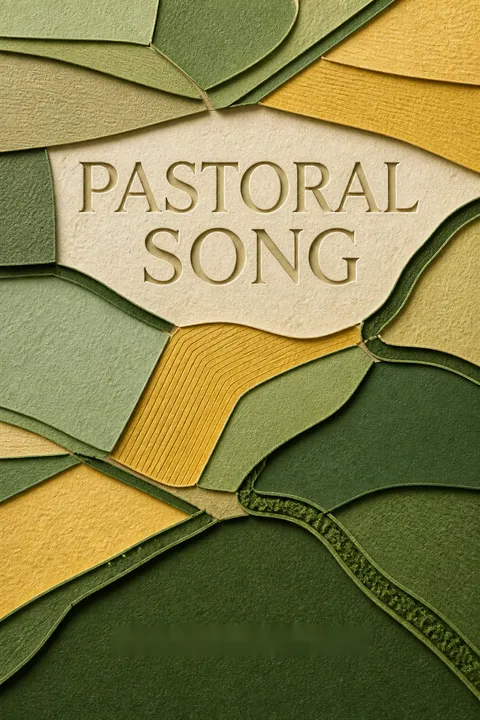


Key Takeaways
Cheap food shifts its real costs onto soil, wildlife, and farm families.
A plow shows the bargain. As a boy, Rebanks watched gulls follow his grandfather’s tractor, feeding on worms exposed by the plow. The birds and farmer belonged to a shared working landscape. Decades later, he saw how postwar farming had transformed that landscape: more food, produced faster and more cheaply, but with fewer workers, less wildlife, and increasing ecological damage.
The bill goes elsewhere. In the United States, the share of income spent on food fell from about 22 percent in 1950 to 6.4 percent; farmers receive only about 15 cents of each food dollar. The low shelf price conceals costs borne by depleted soils, damaged habitats, farm families under pressure, and communities far from the supermarket. Consumers have gained convenience and choice, but lost sight of how food is made.
What's striking is how price can make a complex system look simple. A low checkout total feels like proof of efficiency, even when costs have merely moved beyond the buyer's view. This is a problem of feedback: shoppers cannot respond to harms they cannot see, and individual farmers cannot easily charge for benefits such as healthy soil or wildlife habitat. The book's account usefully resists blaming either farmers or consumers alone. Its challenge is to make the hidden costs legible without treating every cheap food purchase as a moral failure.
Protect soil fertility with rotations, animals, and returned nutrients.
Fertility was a cycle. Rebanks’s grandfather grew different crops and kept different animals. Fields moved through rotations because repeatedly growing the same crop exhausted soil and encouraged pests. Clover helped restore fertility, while livestock grazing and manure returned nutrients to the land. The farm’s muck was not waste; it was part of the machinery that kept the soil productive.
Then fertilizer changed the rules. The Haber-Bosch process made it possible to turn atmospheric nitrogen into industrial fertilizer. Farmers could replace nutrients from a bag and grow the same crop again, loosening the link between crops, animals, and soil. This helped deliver abundant food, but also encouraged simplified farming and heavy reliance on purchased inputs. The book presents the breakthrough as both a major aid to human survival and a source of new ecological risks.
The contrast is not between clever technology and ignorant tradition. It is between a system that must regenerate its own fertility and one that can import it. Purchased inputs can solve an immediate constraint while making the farm more dependent on suppliers and less attentive to biological feedback. That distinction matters beyond agriculture: a short-term fix can quietly redesign the conditions of future success. The book's case is strongest when it asks what a technology permits farmers to stop noticing, rather than implying that every synthetic input has the same effects.
Track intensity, because small upgrades can erase wildlife.
Decline can arrive gradually. Rebanks remembers curlews nesting in his family’s fields. They persisted through earlier changes, but faster-growing grass, nitrogen fertilizer, and repeated silage cuts brought mowing forward and increased its frequency. When fields could be cut from May through October, chicks had fewer chances to survive. Adult birds continued returning to familiar nesting places, so the loss was not obvious until generations had passed.
No single upgrade explains it. Larger mowers, earlier cutting, stronger inputs, and altered grass management accumulated into conditions the birds could not tolerate. The machinery itself was not the whole problem. The problem was the intensity and timing of its use, in a system where farmers, manufacturers, and buyers had little reason or ability to measure wildlife effects.
This is a vivid case of delayed feedback. A practice can appear harmless while the affected population still contains older adults, and the damage becomes undeniable only after recovery is difficult. That makes simple before-and-after judgment unreliable: the visible landscape may look productive even as its capacity to support life is shrinking. The practical implication is not to reject machinery, but to monitor outcomes and preserve room to adjust. The harder question is who should pay for that monitoring when the market rewards output, not ecological knowledge.
Judge farming by the soil and life it leaves behind.
One farm challenged the story. Henry, a neighboring farmer, kept an old-fashioned mixed farm, using crop rotations and manure rather than the latest inputs. Other farmers regarded him as behind the times. After he died, a soil analyst found his land exceptionally healthy and full of earthworms, requiring no added nutrients. The result unsettled Rebanks’s father, who had begun to doubt whether modernization was improving the land.
The past was not perfect. Traditional farming demanded hard labor, and Rebanks does not present it as a lost paradise. But Henry’s fields showed that productivity alone was a poor measure of success. A farm could look less advanced and still maintain soil fertility better than a more intensive neighbor. The example turns nostalgia into a testable question: what condition is the land in after years of farming?
Henry's farm works as a counterexample, not a universal verdict. One healthy field cannot establish that every older system is better, but it can expose the weakness of equating modern equipment with lasting improvement. The soil test gives the story a material anchor: it shifts judgment from a farmer's style to the land's condition. That is a valuable standard because it can be applied across traditions. The remaining challenge is measurement over time, since soil health is not a single score and farms face different climates, soils, and economic constraints.
Design farms where food production and wild habitats can coexist.
Fields are made, not found. Rebanks argues that farming always changes nature: making a field means displacing some life so people can grow food. That reality does not excuse industrial damage, but it does complicate the idea that farming and nature are simple opposites. A working landscape can support many species, especially when it contains varied habitats rather than uniform fields.
The setting matters. England has more than 1,100 people per square mile and 56 million people to feed, so the author rejects the idea that all farmland can simply become wilderness. Abandoning land does not automatically restore a functioning wild ecosystem. The practical aim is to keep producing food while making room for meadows, hedges, wetlands, rivers, and other habitats across the wider landscape.
This position avoids two tempting simplifications: that any farming is ecological failure, or that food production alone justifies any intervention. It treats landscapes as shaped systems where choices distribute both benefits and harm. The useful question is not whether a farm is natural, but which forms of life its management makes possible, and what its production costs. That framework also demands scale awareness. A habitat patch may help locally, but connected wildlife and water systems cross property boundaries. Compromise is not a weak substitute for an ideal; it is the real design problem.
Make restoration practical enough for farmers to adopt.
A conversation changed the farm. Lucy, from a river conservation charity, visited Rebanks and his father to discuss floods and stream health. She explained how straightened channels, compacted soil, and drained wetlands could speed water downstream. Her proposals included fencing riverbanks, planting trees, restoring bogs, and letting streams regain more natural shapes. Crucially, she could help pay for the work, so restoration was not just another unfunded demand.
The changes had visible returns. After riverbanks were fenced, rough grass supported more voles, and barn owls returned. Over several years, flowers and insects increased, while streams developed pools and gravel areas. The farm also began restoring meadows, hedges, and habitats. The account shows that ecological recovery takes time, and that money, practical knowledge, and a farmer’s cooperation can make it possible.
The most persuasive feature is the combination of local expertise and workable incentives. Lucy did not arrive with a lecture detached from farm economics; she offered a plan that addressed a shared problem and helped cover its cost. This is a model of adaptive stewardship: change a manageable part of the system, observe what happens, and build from there. It also prevents the familiar trap of assigning environmental responsibility to individuals while leaving them to absorb every expense. Restoration is more likely to last when it fits both ecological processes and the livelihood of the people doing the work.
Keep diverse breeds and habitats as insurance against shocks.
Different animals do different work. Rebanks’s Belted Galloway cattle tolerate the wet, cold conditions of his upland farm. Their varied grazing creates a different pattern from sheep, leaving some plants to flower while keeping other areas short. Together, cattle and sheep help produce a mosaic of habitats used by different plants, insects, and birds. The lesson is not that one species is always better, but that uniformity narrows what a landscape can support.
Diversity preserves options. The book also describes traditional farms and heritage breeds as a living store of agricultural knowledge and genetic variety. Their traits may matter when intensive breeds or crops face disease, stress, or changing conditions. Rebanks cites a global population of about two billion farmers and says small farmers provide much of the world’s food. Their practices and varieties are not merely remnants of the past.
Diversity functions here like a portfolio: it spreads risk and preserves alternatives that a uniform system has discarded. The analogy is useful because resilience is not the same as maximizing output under ideal conditions. Yet diversity should not become a romantic slogan. Different breeds and mixed systems still need viable markets, skilled care, and suitable land. The book’s strongest point is that these resources cannot be stored only in a catalogue; knowledge and genetic variation persist through people actively farming them. Protecting diversity therefore means sustaining livelihoods as well as preserving specimens.
Pay farmers for public benefits, not only cheap commodities.
Farmers face a rigged choice. Rebanks’s family adopted modern methods partly because they were trying to keep pace with larger farms and survive falling prices. Supermarkets and global markets rewarded cheaper, more uniform food, while costs for machinery, feed, and chemicals rose. A farmer who produces food in more nature-friendly ways can face higher costs without receiving a higher price. Rebanks’s farm earns more from livestock than environmental payments, even while participating in the highest available schemes.
The social contract needs revision. Healthy soil, flood protection, wildlife, and attractive landscapes benefit people beyond the farm, but ordinary food prices do not reliably pay for them. The book argues that these public benefits require public support, fairer trade rules, and consumers willing to bear the real cost of food. Farmers cannot independently repair a system that rewards the opposite behavior.
This is an argument about incentives, not simply personal virtue. When markets reward low prices and ignore ecological benefits, asking individual farmers to choose stewardship can amount to asking them to accept a competitive penalty. Public payments can correct that mismatch, but only if they are dependable and tied to outcomes that matter. Consumer choice also has limits: shoppers often lack clear information and cannot reorganize supply chains alone. The book therefore shifts responsibility upward, toward rules and institutions, while retaining a role for informed purchasing and public pressure.
Make stewardship a practical inheritance, not a sentimental promise.
Knowledge passed through work. Rebanks’s grandfather taught him to read animals, fields, weather, and seasons. His father passed the farm on while still working, including a day spent repairing a gate with the grandchildren. Those lessons were not abstract claims about rural virtue; they were practical skills, built through attention and shared labor. The author later expands that inheritance by learning from ecologists, botanists, river specialists, neighbors, and his family.
A farm cannot be a solo project. Restoring land requires stockmanship, ecological knowledge, money, and people able to do skilled work. Rebanks describes planting thousands of trees, changing grazing, and learning to read soil and plants, while acknowledging that the farm remains financially difficult. The inheritance is therefore not a perfect landscape handed down intact. It is a responsibility to keep learning, adapt, and pass on a place with more life and knowledge than before.
The intergenerational story gives stewardship a concrete scale: a repaired gate, a learned skill, a tree planted for someone not yet born. These acts matter because ecological change is often gradual and distributed across many hands. The account also corrects the heroic farmer myth. A functioning landscape depends on family labor, local craftspeople, and specialists whose knowledge complements one another. Still, inheritance can become a burden if continuity is treated as an obligation without choice. The book’s more humane model is transmission without coercion: teach the work, care for the place, and leave the next generation room to decide.
Analysis
Pastoral Song turns an environmental argument into a family history, and that choice is central to its force. Rebanks does not begin with a policy prescription or a chart of species decline. He begins with a child on a tractor, noticing gulls feeding behind a plow. The image contains the book’s whole tension: farming is productive work embedded in living systems, not an activity that can be assessed by yield alone.
The narrative moves through three overlapping transformations. The grandfather’s mixed farm embodies accumulated local knowledge. The father’s generation faces financial pressure to adopt machinery, synthetic inputs, and larger-scale production. The son first interprets modernization as necessary progress, then recognizes its ecological consequences and tries to build a more regenerative practice. This progression prevents the critique from becoming a simple morality play. The people changing the landscape are not presented as villains; they are making constrained decisions inside systems that reward volume and low prices.
The strongest argument is about cumulative change. No single tractor, fertilizer application, or silage cut explains the disappearance of wildlife. A sequence of small efficiencies changes timing, habitat, and dependence until a threshold is crossed. That account makes responsibility harder to assign, but more realistic. It also makes observation, long-term monitoring, and public incentives necessary rather than optional.
The book’s own limits are instructive. A Lake District livestock farm cannot stand in for every agricultural region, and local restoration does not settle the global question of how to produce enough food on limited land. Rebanks acknowledges the need for efficiency and the costs of older methods, but the book offers a moral and practical direction more than a complete economic model. Its value lies in rejecting the false choice between untouched wilderness and industrial output. It asks readers to judge farming by what it produces, what it depletes, and whether the land can continue to sustain both people and other life.
Review Summary
Pastoral Song receives mostly positive reviews for its lyrical prose and insightful exploration of farming's evolution. Readers appreciate Rebanks' honest portrayal of agricultural challenges and his efforts to balance tradition with sustainability. The book is praised for its thoughtful examination of environmental issues and the author's personal connection to the land. Some find the writing repetitive or overly detailed about farming practices. Overall, reviewers commend the book for its important message about rural life, ecology, and the future of farming, though a few felt it didn't match the quality of Rebanks' previous work.
People Also Read

Glossary
mixed and rotational farming
Crops and livestock in sequenceA mixed farm grows several crops and keeps more than one kind of livestock. In rotational farming, fields move through different crops, grazing, or periods of rest over time. These linked practices spread risk and help maintain soil fertility by returning organic matter and nutrients to the land.
Haber-Bosch
Industrial nitrogen fertilizer productionThe Haber-Bosch process made it possible to convert atmospheric nitrogen into a form that could be used to produce fertilizer on an industrial scale. In Rebanks’s account, it allowed farmers to replace some fertility formerly produced through rotations and livestock with purchased inputs, greatly increasing food production while encouraging dependence on synthetic nutrients.
no-till farming
Seeding with little soil disturbanceNo-till farming plants seeds directly into soil without turning it over with a plow. The method can reduce disturbance to soil structure and its living networks. It also creates practical challenges, including how to manage weeds and crop remains without plowing or relying on chemical sprays.
regenerative agriculture
Farming to rebuild soil healthIn the book, regenerative agriculture refers to farming approaches that improve soil and ecological function rather than treating land as an inert surface for production. Rebanks learns about soil life, plant growth, grazing, and water absorption through this approach. The term is used broadly in the narrative, not as a single fixed recipe.
rotational grazing
Moving stock between recovering fieldsRotational grazing moves livestock among fields or paddocks so grazed areas can rest and regrow. Rebanks contrasts it with keeping animals continuously in one area. The timing, grazing pressure, animal mix, and length of recovery affect grass, soil, and habitat, so the practice must be adapted to local conditions.
hefted flocks
Sheep attached to familiar rangesA hefted flock is accustomed to grazing a particular area and tends to remain within its familiar range without constant fencing or supervision. Rebanks describes flocks whose traditional movements between fell and pasture connect generations of sheep, shepherds, and local farming practice.
FAQ
What's Pastoral Song: A Farmer’s Journey about?
- Personal Farming Journey: James Rebanks shares his experiences growing up on family farms in England, highlighting the shift from traditional to modern farming practices.
- Connection to Nature: The book explores the evolving relationship between farmers and the land, particularly in the context of technological and global changes.
- Cultural Reflection: Rebanks reflects on the cultural and emotional aspects of farming, including nostalgia and the challenges of modern agricultural life.
Why should I read Pastoral Song: A Farmer’s Journey?
- Insightful Perspective: The book offers a unique view on farming, blending personal stories with broader insights into agricultural practices and environmental impacts.
- Cultural Significance: It emphasizes the importance of understanding food origins and the cultural heritage of farming, relevant for those interested in sustainability.
- Emotional Resonance: Rebanks' storytelling provides emotional depth, addressing themes of loss, legacy, and the struggle to maintain traditions.
What are the key takeaways of Pastoral Song: A Farmer’s Journey?
- Importance of Tradition: The book highlights the value of traditional farming methods and generational knowledge, often overshadowed by modern techniques.
- Environmental Awareness: Rebanks discusses the ecological consequences of industrial farming, advocating for land-respecting practices.
- Personal Connection: It emphasizes the crucial relationship between farmers and their land for sustainable farming practices.
What are the best quotes from Pastoral Song: A Farmer’s Journey and what do they mean?
- “The hardest thing of all to see is what is really there.”: This quote urges readers to recognize the true state of the environment beyond surface appearances.
- “Every journey must start somewhere, and this is where mine began.”: It signifies the importance of beginnings and personal history in shaping identity.
- “A healthy farm culture can be based only upon familiarity.”: This emphasizes the need for a deep connection to the land for true sustainability.
How does Pastoral Song: A Farmer’s Journey address the issue of industrial farming?
- Critique of Modern Practices: Rebanks critiques the separation of livestock and crop farming, leading to ecological degradation.
- Call for Sustainable Methods: He advocates for mixed farming practices that enhance biodiversity and soil health.
- Personal Responsibility: The author emphasizes the need for farmers to take responsibility for sustainable practices.
What farming practices does James Rebanks discuss in Pastoral Song: A Farmer’s Journey?
- Traditional Methods: Rebanks describes practices like rotational grazing and mixed farming, prioritizing soil health and biodiversity.
- Modern Industrial Farming: He contrasts these with industrial practices reliant on synthetic inputs, causing ecological harm.
- Sustainability Focus: The book advocates for sustainable practices that honor natural cycles and the land.
How does Pastoral Song: A Farmer’s Journey reflect on the relationship between farmers and the land?
- Deep Connection: Rebanks illustrates the profound bond farmers have with their land, shaped by generations of experience.
- Mutual Dependence: Farmers rely on the land for livelihood, while the land depends on farmers for care and nurturing.
- Changing Dynamics: The relationship has evolved with modern practices, often becoming more exploitative.
What role does community play in Pastoral Song: A Farmer’s Journey?
- Support Networks: Rebanks highlights the importance of community among farmers for support and shared experiences.
- Cultural Identity: Farming communities shape cultural identity, passing down values and traditions.
- Collective Challenges: Shared challenges create solidarity and collective action in addressing sustainability and economic issues.
How does Pastoral Song: A Farmer’s Journey address the theme of nostalgia?
- Personal Memories: Rebanks shares vivid childhood memories, evoking nostalgia for a simpler, connected life.
- Cultural Loss: He reflects on the loss of traditional practices and their cultural significance.
- Hope for the Future: Despite nostalgia, the book expresses hope for sustainable practices that honor the past.
What challenges does James Rebanks face as a modern farmer in Pastoral Song: A Farmer’s Journey?
- Economic Pressures: Rebanks discusses financial difficulties faced by small farmers in a market dominated by industrial operations.
- Environmental Concerns: He highlights the ecological impact of modern practices, threatening agricultural sustainability.
- Cultural Disconnection: The book addresses the growing disconnect between consumers and the land.
How does Pastoral Song: A Farmer’s Journey address the future of farming?
- Call for Change: Rebanks advocates for a shift to sustainable practices prioritizing ecological health and community well-being.
- Embracing Tradition: He suggests embracing traditional methods proven effective over centuries.
- Hopeful Outlook: The book conveys hope that new generations can learn from the past for a sustainable future.
What is the significance of the title Pastoral Song?
- Connection to Nature: The title reflects the harmonious relationship between farming and nature.
- Cultural Heritage: It evokes the traditional pastoral lifestyle, valuing land and resources.
- Hopeful Vision: The title conveys hope for a future where ecological balance and productivity coexist.
Download PDF
Download EPUB
.epub digital book format is ideal for reading ebooks on phones, tablets, and e-readers.








