

Key Takeaways
When officials hide corruption, expose the evidence and attach a practical vote.
Make theft visible. Navalny’s anti-corruption work turns abstract accusations into things people can inspect: drone footage of officials’ estates, ownership records, and declared salaries set beside extravagant purchases. One investigation highlighted a press secretary’s watch, valued at $620,000, in a country where one in five people lived below the poverty line, which Navalny put at about $160 a month. The point was not outrage for its own sake. Viewers were directed to a website recommending whom to support against the governing United Russia party.
Connect proof to action. This approach helped his team win local races despite being barred from many elections. In Tomsk, 19 of 27 candidates they supported won; in Novosibirsk, 12 were elected. Investigation, indignation, and a next step formed one campaign.
The method joins investigative journalism to a basic insight from behavioral science: people are more likely to act when a problem feels concrete and the next action is clear. A hidden financial network can seem distant; a mansion beside a modest official salary is legible. Yet vivid evidence is not self-authenticating. Independent verification and fair opportunities to respond matter, especially when accusations are politically consequential. The strongest version of this model makes evidence accessible without asking the audience to suspend skepticism.
Separate love of country from obedience to its government.
A childhood lesson in lying. Navalny traces his distrust of official power to the 1986 Chernobyl disaster. His relatives lived near the plant, yet authorities minimized the danger and sent people to work in contaminated fields. In Kyiv, a public parade went ahead days after the explosion, presenting normality while concealing risk. The damage was not only radioactive: families were evacuated, lost homes and livelihoods, and struggled to replace what they had left behind.
Keep country distinct. Navalny describes his family as patriotic while treating the state as a fallible, often hostile institution. That distinction helps explain why he rejects the idea that opposing the Kremlin means betraying Russia. He sees love of Russian people, language, and culture as a reason to challenge rulers who lie to and impoverish them.
This distinction resembles a useful idea in political theory: loyalty to a political community need not mean loyalty to whoever governs it. It also has practical force during crises, when citizens need trustworthy information to make decisions. Research on institutional trust suggests that credibility is difficult to rebuild once authorities are caught concealing risks. The distinction has limits, though. National belonging can itself be used to exclude or silence dissenters, so patriotism is most defensible when it protects equal citizenship rather than demanding cultural conformity.
Never excuse lawlessness as the price of political progress.
A hard self-correction. Navalny recounts first supporting Boris Yeltsin as the alternative to Soviet restoration. As a young man, he defended the 1993 shelling of parliament and argued that force was justified against opponents of reform. He also defended privatization while treating legality as separate from whether the process served the public. He later came to see how that reasoning licensed abuses and helped insiders capture wealth and power.
Rules shape the outcome. In his account, post-Soviet elites changed ideological costumes while preserving a central habit: treating public office as a route to private advantage. He distinguishes a few figures he considers principled from the broader pattern, but argues that democratic language cannot compensate for manipulated elections, arbitrary force, or stolen assets. Methods that weaken accountability can become the machinery of the next authoritarian order.
The admission matters because political actors often judge their own side by its intentions and their opponents by their methods. Institutional analysis reverses that bias: rules and constraints matter precisely when leaders claim exceptional circumstances. At the same time, a memoir’s retrospective account cannot settle every dispute about the 1990s or assign responsibility evenly. Its sharper contribution is personal: Navalny shows how certainty about a desirable destination can make unlawful means look temporarily harmless, until those means become the system.
Use shareholder rights and small donations to turn spectators into investigators.
Find a lawful foothold. Navalny bought roughly $5,000 in shares of state-controlled companies, then used shareholder rights to request records, attend meetings, and challenge suspicious deals. In one case, VTB paid about 50 percent above the price of drilling rigs bought through an offshore intermediary. Navalny traced the paperwork and found unused rigs rusting in Siberia. He published documents and encouraged other minority shareholders to join complaints and lawsuits.
Build independence. His online projects, including RosPil, invited specialists to identify suspicious public contracts and help prepare challenges. Small donations funded the work without dependence on oligarchs: the average RosPil contribution was about 400 rubles, and one month brought nearly 4 million. The Anti-Corruption Foundation later raised more than 80 million rubles in 2019, largely through small gifts.
This is a model of civic leverage: use an existing legal right, lower the cost of participation, and distribute expertise across a network. It resembles citizen science, where many volunteers contribute data or specialized knowledge to a shared investigation. Transparency also functions as a trust mechanism, allowing donors to evaluate how their money is used. But open participation is not automatically safe or representative. In a repressive setting, public donors can face retaliation, and online contributors may not reflect the wider population.
Build an opposition broad enough to include people you disagree with.
Reach beyond the political niche. Navalny began with Yabloko, a democratic party he regarded as honest but timid and increasingly isolated. He argued that opposition politics could not grow by writing off citizens whose views were conservative or nationalist. His support for their right to assemble was not an endorsement of every belief in those movements. It was a claim that political disputes should be settled through equal participation and elections, rather than bans.
Make elections useful. In 2013, despite a criminal conviction and a hostile media environment, he won 27.2 percent in Moscow’s mayoral race. Later, his tactical voting strategy asked voters to back the strongest available opponent to United Russia, even when that candidate was a Communist. In the 2019 Moscow City Duma elections, the party’s seats fell from 40 to 25.
Coalition building often requires distinguishing procedural inclusion from ideological approval. A democracy does not become stronger by pretending unpopular constituencies do not exist; exclusion can leave them available to authoritarian mobilization. Navalny’s approach also challenges the comfort of political purity. Still, broad coalitions can obscure real conflicts and marginalize vulnerable groups if inclusion becomes an excuse to avoid confronting prejudice. The durable principle is equal political access, paired with clear limits against violence and discrimination.
Make proof compelling, then give audiences a job beyond watching.
Adapt the medium. When authorities blocked Navalny’s blog, he shifted toward video, despite disliking appearing on camera. He concluded that a well-made film could reach more people than a detailed article, especially when it combined documents, narration, graphics, and images of officials’ properties. An investigation into Prosecutor General Yury Chaika’s family and alleged links to organized crime drew more than five million views in its first days.
Turn viewers into participants. The Anti-Corruption Foundation asked people to share investigations, join regional groups, observe elections, submit complaints, and donate. A 2017 investigation into Dmitry Medvedev’s properties helped trigger demonstrations in more than 100 cities, many attended by young people who had never protested before. The goal was not simply to win attention; it was to convert attention into a network capable of acting together.
The section anticipates a central problem of digital politics: reach is not the same as influence. A strong story can interrupt the news cycle, but participation gives viewers a role and creates relationships that can outlast a single viral moment. The combination of evidence and entertainment is effective because each compensates for the other’s weakness. Still, platforms reward emotional intensity and speed, which can flatten nuance. A responsible campaign needs durable verification and organizing, not only impressive view counts.
Treat fear as a cost of conviction, not a command to retreat.
Return and accept the risk. After being poisoned with Novichok in 2020, Navalny spent months recovering in Germany. He returned to Russia in January 2021, knowing arrest was possible, and was detained at the airport. He explains the decision as keeping a promise to voters and refusing to abandon his country. His account does not present danger as imaginary: his brother Oleg served a 3.5-year sentence in a case Navalny considered fabricated, and his family endured searches, surveillance, and separation.
Purpose has a price. Navalny says he tried to assess the danger and then stop letting it dictate his choices. That did not mean he felt no fear or had no concern for his family. It meant he regarded political work as worth its risks, while trying to reduce the danger to those close to him.
This is closer to moral commitment than fearlessness. In decision theory, people often accept substantial costs when an action protects a central value or fulfills an obligation to others. That framing makes courage intelligible without turning it into a personality trait reserved for heroes. It also raises an ethical question: the risks of dissent are rarely borne by the dissenter alone. Navalny acknowledges that burden through his family’s experience, a reminder that principled action needs consent, preparation, and care for those who share its consequences.
Use routines, humor, and human bonds to resist imposed isolation.
Protect small forms of agency. Navalny’s prison diaries record repetitive searches, cramped exercise yards, arbitrary rules, and prolonged isolation. He marks time through small events, writes to supporters, reads, exercises when possible, and makes jokes about prison food and bureaucracy. When prison authorities denied him adequate medical care, he began a hunger strike that lasted 24 days; public pressure helped secure examinations by civilian doctors. He called his strategy of accepting the worst without surrendering purpose “prison Zen.”
Let connection interrupt isolation. Letters from supporters, his wife Yulia’s visits, and even a fellow prisoner’s small religious icon countered the state’s effort to make him feel alone. The memoir’s prison narrative ends not with release but with Navalny’s death in an Arctic prison on February 16, 2024.
Rituals and humor can preserve continuity of self when a person has little control over surroundings. Social support also changes the experience of confinement by making private endurance publicly witnessed. These practices are not substitutes for medical care or legal rights, and the hunger strike’s physical cost makes that distinction stark. Nor should resilience become an expectation imposed on prisoners. Its value here is descriptive: the state can restrict movement and contact, but connection still gives meaning to acts that confinement is designed to render futile.
End the war and divide power before calling a country democratic.
Freedom must improve ordinary life. Navalny’s proposed “Beautiful Russia of the Future” is not merely a change of leaders. He calls for fair elections, independent courts, free speech, federalism, local self-government, and limits on presidential power. He links anti-corruption to practical outcomes: better health care, education, wages, and a fairer share of national wealth. His argument is that a vast country cannot be governed responsibly from a single center of power.
Peace is part of repair. In his 2023 platform, he calls the invasion of Ukraine unjust, demands the withdrawal of Russian troops, supports investigation of war crimes, and proposes compensation for damage to Ukraine after a change of power. He rejects territorial conquest as a national goal and argues that Russia’s future depends on peace, accountable government, and a European democratic path.
The platform joins liberal institutions to material well-being, resisting the idea that democracy is only a ballot procedure. Public services and fair distribution help make political legitimacy tangible, while federalism can reduce the dangers of overcentralized rule. The antiwar position is integral to this vision because aggression abroad and impunity at home reinforce one another. Yet institutional blueprints do not explain how a transition would manage competing interests or repair deep distrust. Their value is as a direction and a set of standards by which power can be judged.
Analysis
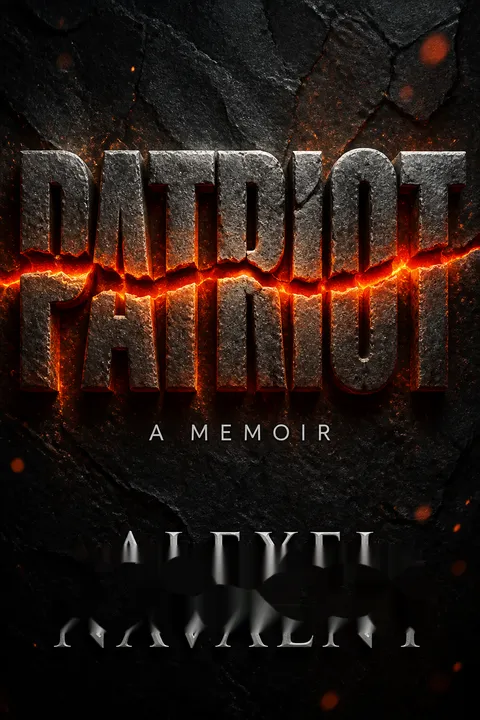
Patriot is a political memoir, a personal history of late Soviet and post-Soviet Russia, and a record of imprisonment. Its shape is deliberately unsettled: it opens with the forensic detail of Navalny’s 2020 poisoning, rewinds to childhood, follows the growth of his political work, then shifts into prison diaries. That structure makes a political argument through lived scenes rather than through a single abstract thesis. A contaminated parcel of fish, a shareholder meeting, a failed court procedure, or a prison meal can reveal how institutional dishonesty enters daily life.
The memoir’s strongest credibility comes from self-criticism. Navalny recounts paying a bribe as a student, defending Yeltsin’s unlawful use of force, and mistaking political slogans for principled reform. Those admissions complicate a simple hero narrative and support his central warning: the excuse that one’s own side must win can erode the rules that would make victory meaningful. At the same time, the book is openly written from the perspective of an opposition leader. Its accounts of political history and responsibility are arguments as well as recollections, not a neutral survey of every faction or interpretation.
Humor is more than a stylistic flourish. It punctures official theater, preserves social connection, and shows the absurdity of rules that claim authority while abandoning reason. The prison diary also resists the illusion that resilience makes repression harmless. Navalny’s routines and relationships help him endure, but they do not undo the physical damage, isolation, or consequences for his family. His death in 2024 gives the memoir an unfinished quality: its promised democratic future remains a political aspiration, while its final record is the cost of refusing to recant.
Review Summary
Patriot: A Memoir receives mixed reviews, with many praising Navalny's bravery and dedication to fighting corruption in Russia. Critics argue he held imperialist views similar to Putin's. Readers appreciate his humor and resilience in the face of persecution. Some find the book lacking depth or coherence, while others are deeply moved by Navalny's story. The prison diary entries and personal anecdotes offer insights into his character and motivations. Overall, the book sparks discussions about Russian politics and Navalny's legacy.
People Also Read





Glossary
RosPil
Public procurement watchdogA project Navalny started to identify suspicious government procurement and challenge it through complaints, legal work, and public scrutiny. Volunteers helped assess contracts, while lawyers prepared formal objections. RosPil showed how online readers could contribute expertise and turn scattered concerns about public spending into organized oversight.
tactical voting
Strategic anti-incumbent votingNavalny’s method for reducing United Russia’s electoral advantage by asking voters to support the strongest available opponent in each contest, even when that candidate’s politics differed from their own. The aim was not necessarily to endorse the alternative party, but to concentrate votes against the governing party rather than split them among weaker challengers.
SHIZO
Prison punishment cellA Russian prison abbreviation for the punishment isolation cell. Prisoners can be sent there for alleged rule violations and face severe restrictions on possessions, contact, and daily routine. The memoir describes Navalny being repeatedly placed there for minor infractions, including alleged uniform violations, and portrays it as a tool of pressure as well as formal discipline.
prison Zen
Acceptance under confinementNavalny’s informal name for mental practices he used to withstand prison and uncertain sentences. A central element was imagining the worst plausible outcome, accepting it rather than living in constant expectation of release, and continuing to act according to his beliefs. He also describes faith, humor, and close relationships as supports for this approach.
Beautiful Russia of the Future
Navalny’s democratic visionNavalny’s name for a Russia governed through fair elections, independent courts, free speech, federalism, local self-government, and limits on presidential power. The vision also includes peace, less corruption, and improvements in health care, education, wages, and the distribution of national resources. The phrase signals a normal, accountable country rather than an imperial or authoritarian project.
FAQ
What's Patriot: A Memoir about?
- Personal Journey: The memoir chronicles Alexei Navalny's life as a political activist in Russia, focusing on his fight against corruption and his experiences under Vladimir Putin's regime.
- Near-Death Experience: It begins with Navalny's near-fatal poisoning in 2020, detailing his struggle for survival and the political ramifications of the attack.
- Political Landscape: The book explores the broader political context of Russia, including historical events like the collapse of the Soviet Union and the rise of authoritarianism.
Why should I read Patriot: A Memoir?
- Insight into Russian Politics: The memoir provides a unique perspective on the inner workings of Russian politics and the pervasive corruption Navalny fights against.
- Inspiring Resilience: Readers will find inspiration in Navalny's determination to stand up for democracy and human rights, even in life-threatening situations.
- Understanding Russia: The book offers a detailed historical backdrop, helping readers grasp the complexities of modern Russia and the significance of Navalny's activism.
What are the key takeaways of Patriot: A Memoir?
- Corruption in Russia: Navalny highlights the extent of corruption within the Russian government and its impact on ordinary citizens and democracy.
- Courage and Activism: The memoir underscores the importance of courage in activism, showcasing Navalny's commitment to justice despite significant risks.
- Impact of Authoritarianism: Readers gain insight into how authoritarian regimes operate, including tactics to suppress dissent and manipulate public perception.
What are the best quotes from Patriot: A Memoir and what do they mean?
- "Dying really didn’t hurt.": This reflects Navalny's surreal experience during his poisoning, emphasizing the disconnection between physical pain and emotional weight.
- "In our authoritarian country... it wasn’t ever an easy matter to persuade people to turn out and vote.": Highlights the challenges faced by activists in mobilizing public support against a repressive regime.
- "Love heals and brings you back to life.": Navalny expresses the profound impact of love and support from his family during recovery, underscoring the human element in his political struggle.
How does Navalny describe his experiences in prison in Patriot: A Memoir?
- Harsh Conditions: Navalny details the brutal conditions, including solitary confinement and inadequate medical care, highlighting the inhumane treatment of political prisoners.
- Psychological Strain: He discusses the mental toll of incarceration, including constant surveillance and psychological games by prison officials.
- Resilience and Reflection: Despite hardships, Navalny uses his time in prison for reflection and to strengthen his resolve against corruption.
What does Navalny say about his poisoning in Patriot: A Memoir?
- Detailed Account: Navalny vividly describes the moments leading up to his poisoning, including the physical sensations on the plane.
- Political Implications: He frames the attack as a Kremlin attempt to silence dissent and eliminate threats to Putin's power.
- Survival and Recovery: The memoir details his harrowing recovery process, including the challenges in regaining health and the emotional toll.
How does Navalny address the issue of corruption in Patriot: A Memoir?
- Direct Confrontation: Navalny confronts corruption head-on, exposing the lavish lifestyles of corrupt officials and the contrast with ordinary Russians.
- Investigative Approach: He describes his methods, including using video and social media to mobilize public outrage against corrupt practices.
- Call to Action: The memoir serves as a rallying cry for citizens to take action against corruption, emphasizing change through collective effort.
What role does Navalny's family play in Patriot: A Memoir?
- Support System: His family, especially his wife Yulia, is portrayed as crucial support during his struggles, providing emotional strength and encouragement.
- Personal Reflections: Navalny reflects on how his family's love helped him recover from poisoning and motivated his fight for justice.
- Shared Sacrifices: The memoir highlights the sacrifices made by his family, illustrating the personal cost of political engagement.
How does Navalny view the future of Russia in Patriot: A Memoir?
- Optimism Amidst Adversity: Despite the oppressive climate, Navalny expresses hope for a democratic and prosperous Russia driven by its people.
- Call to Action: He encourages citizens to engage in activism and resist the regime, believing collective action can lead to change.
- Vision for Democracy: Navalny envisions a Russia where power is decentralized, corruption is eradicated, and citizens have a voice in governance.
What methods does Navalny use to expose corruption in Patriot: A Memoir?
- Investigative Journalism: Navalny employs thorough investigative techniques, using public records and insider information to uncover corrupt practices.
- Public Engagement: He engages the public through social media and video content, making complex issues accessible and rallying support.
- Crowdsourcing Evidence: Navalny encourages citizens to report corruption and participate in investigations, creating a collective effort for accountability.
How does Navalny's faith influence his perspective in Patriot: A Memoir?
- Source of Strength: Navalny discusses how his faith provides comfort and resilience during imprisonment, helping him cope with challenges.
- Moral Compass: His beliefs guide his actions and decisions, reinforcing his commitment to justice and truth.
- Community and Solidarity: His faith connects him to a broader community, fostering solidarity among those with similar values.
What role does social media play in Navalny's activism in Patriot: A Memoir?
- Platform for Awareness: Social media is crucial for raising awareness about corruption and mobilizing support for Navalny's campaigns.
- Direct Communication: It allows him to communicate directly with the public, bypassing state-controlled media and fostering community.
- Crowdsourcing Support: Navalny uses social media to encourage citizen participation in investigations and protests, creating a grassroots movement.
Download PDF
Download EPUB
.epub digital book format is ideal for reading ebooks on phones, tablets, and e-readers.








