

Key Takeaways
Read Paul as a Jewish prophet of the imminent Kingdom, not Christianity's founder.
Start with Paul's clock. Paula Fredriksen's central claim is that Paul understood himself as a Jew commissioned to announce God's approaching Kingdom, not as a convert leaving Judaism to found a new religion. His letters repeatedly show him expecting Jesus, the messiah, to return soon, raise the dead, and complete Israel's redemption. That expectation shaped his mission, his arguments, and his sense of time. Paul could not know that the movement would outlive him or develop into a predominantly gentile religion distinct from Judaism.
Resist hindsight. The book asks readers to reconstruct Paul's world from his first-century letters rather than project later Christian identities backward. Paul calls himself an Israelite and treats Israel's scriptures, covenant, and ancestral practices as his own. Fredriksen's portrait does not make every point certain, but it changes the question: instead of asking how Paul escaped Judaism, ask how he understood his mission within it.
What's striking is how much historical interpretation depends on refusing to let an outcome dictate an origin story. Because Christianity became a distinct gentile tradition, it is tempting to treat Paul as if he already inhabited that later identity. The corrective resembles a basic discipline in intellectual history: distinguish what an actor could plausibly know from what later observers know. Yet Paul's letters are advocacy, not private diaries. His Jewish self-description is powerful evidence, but it still needs to be read alongside his polemics and the communities he was trying to persuade.
Treat Jesus's resurrection as the first sign of a coming collective resurrection.
A beginning, not an ending. In Paul's account, Jesus's resurrection meant that the general resurrection of the dead had begun to approach. Jewish apocalyptic hopes anticipated a collective End-time event: the dead would rise, Israel would be restored, and God's rule would replace the present order. Jesus's followers faced a puzzle because one person had been raised while ordinary history continued. They interpreted his resurrection as the first installment of the coming transformation, not as an isolated marvel.
Paul's earliest testimony. In 1 Corinthians, Paul reports that the risen Jesus appeared to Peter, other followers, and eventually Paul himself. Later Gospel accounts differ about where appearances occurred and who first saw Jesus. The sources do not let historians reconstruct every vision with confidence. They do show how strongly the early movement linked those experiences to Jesus's Kingdom message and to the expectation that he would return.
The key historical insight is not that a modern reader must accept the resurrection claim, but that the claim reorganized the movement's understanding of time. A vision can function as evidence within a community's worldview even when outsiders cannot verify the experience itself. This distinction helps explain why the followers continued after an execution that might otherwise have ended the movement. It also keeps interpretation honest: the surviving accounts establish what early believers proclaimed more securely than they establish exactly what each witness experienced.
See ancient worship as inherited civic kinship, not private belief.
Gods belonged to communities. In the Greco-Roman world Fredriksen describes, worship was less a private set of opinions than a pattern of inherited duties. Families, cities, and peoples had relationships with particular gods, maintained through offerings, festivals, and public acts of respect. Ethnicity, ancestry, place, and cult overlapped. Refusing a city's gods could therefore look like disloyalty to family and civic life, not merely a change of personal conviction.
Jewish life was connected, too. Diaspora Jews lived within these cities and participated in their social worlds. Synagogues gathered Jews to hear scripture and also attracted interested pagans, sometimes called god-fearers. Such pagans might attend Jewish gatherings or support Jewish institutions while continuing to honor their own gods. The category of religion as a separate, private domain obscures how ordinary and socially embedded these overlapping affiliations could be.
This account clarifies why the same act can mean different things in different social systems. A modern observer might classify worship as an individual's spiritual choice; a civic-minded ancient might see it as part of the maintenance of family continuity and public safety. The connection resembles the sociological idea that rituals create membership by making shared obligations visible. Still, ancient practice was not uniform. Inscriptions and literary testimony preserve varied forms of accommodation, so the general pattern should not be mistaken for a rule followed identically by every Jew or pagan.
Include pagans as pagans, but require exclusive loyalty to Israel's God.
A new kind of member. Fredriksen uses the phrase ex-pagan pagans for non-Jews who joined the Jesus movement without becoming Jews. They remained gentiles, but stopped worshiping their ancestral gods and committed themselves exclusively to Israel's God. That differed from a god-fearer, who could honor Israel's God while continuing traditional pagan worship, and from a proselyte, who entered Jewish life and, for a man, received circumcision.
Inclusion without conversion. Jewish apocalyptic texts imagined that the nations would eventually turn from idols to Israel's God. The early Jesus movement, spreading through mixed Jewish and pagan cities, treated interested pagans as evidence that this promised turning was beginning ahead of the End. Fredriksen argues that this was an improvised response to pagan interest, not the result of a widespread Jewish program to convert gentiles into Jews.
The distinction between inclusion and assimilation remains useful far beyond this ancient case. A community can invite outsiders into shared commitments without requiring them to adopt the group's ancestry or erase their social identity. Here, however, the boundary was not simply relaxed: the new members had to abandon public loyalty to their old gods. That made the arrangement both inclusive and demanding. The historical claim that Jewish groups generally lacked organized missions is plausible within the evidence presented, but absence of surviving records cannot prove that no local initiative ever occurred.
Treat persecution as a civic crisis over worship, not simply a Torah dispute.
The cost of renouncing gods. Paul reports being flogged by fellow Jews five times and beaten by Roman authorities on other occasions. The book argues that these punishments are better understood in the setting of his mission than as straightforward evidence that he rejected Jewish law. By demanding that pagan followers stop honoring their native gods, the movement challenged obligations that families and cities believed protected their well-being. Roman officials and local populations could regard the new practice as a threat to civic stability.
A careful inference. Fredriksen also proposes that synagogue leaders worried that a disruptive message could provoke backlash against Jewish neighbors. This may help explain why Paul once punished members of the movement and was later punished himself. Paul's letters do not name every motive or authority involved, so the account remains a historical reconstruction, not a directly reported explanation.
The argument usefully restores nonhuman agents to Paul's social world: divine powers were not metaphors to ancient worshipers, but participants in the expected exchange between a city and its gods. That makes the movement's demand for exclusive worship politically legible. The explanation also corrects a habit of treating every conflict as a dispute over Jewish legal observance. Its weak point is evidentiary: the letters document beatings and danger more clearly than they identify the motives behind each incident. The model is illuminating, but its specific causal links remain conjectural.
Reject gentile circumcision without reading Paul as anti-Jewish.
A boundary, not a rejection. Paul's fiercest arguments against circumcision address gentile men being asked to enter the Jewish people. In his view, pagans who joined the messianic movement should remain gentiles while worshiping Israel's God. Circumcision signaled entry into a covenantal and ancestral identity, so requiring it would change the very status Paul wanted them to retain. His letters do not show him telling Jews to stop circumcising their sons or abandoning Jewish tradition himself.
The controversy was internal. In Galatians, Paul attacks other Christ-following apostles who urged circumcision on his gentile communities. Their precise motives are unclear. Fredriksen's broader point is that Paul was resisting a competing policy for gentile membership, not repudiating Judaism as a whole. His heated language can sound universal when detached from its audience, but the letters were addressed to communities made up chiefly of former pagans.
This reading separates two questions often collapsed together: whether a practice is required of a particular group, and whether that practice is valuable for the group to which it belongs. A rule can mark one community without being imposed on everyone who joins an adjacent movement. That distinction makes Paul's position less neatly universalist than some later readings suggest, but more historically coherent. It also calls for caution: the letters' polemical tone and limited account of opponents make it difficult to reconstruct exactly what each rival group believed.
Read Paul's faith as allegiance that produces justice inside the assembly.
Loyalty with consequences. Paul often uses pistis, usually translated as faith, in a world where the word could also carry the sense of fidelity, trust, or steadfast allegiance. Fredriksen reads dikaiosynē, often translated as righteousness or justification, against the Jewish commandments governing relations among people. On this account, gentiles who trusted the gospel were made right with God and enabled by divine spirit to act rightly toward one another.
The Law still matters. Paul urges his communities to reject idols and practice neighbor-love, sexual discipline, and other conduct grounded in Jewish scripture. He can say that gentiles are not under the Law while also expecting them to fulfill its ethical demands through Christ and spirit. This does not reduce every use of Paul's language to one definition, but it challenges the familiar picture of salvation as merely a private belief replacing Jewish practice.
The reading gives Paul's language a communal dimension that can disappear when later theological debates make the isolated individual's status the only question. It also connects conviction to behavior: allegiance is visible in the obligations people accept toward one another. That connection fits both ancient covenant language and broader accounts of how groups build trust. The caution is that pistis and dikaiosynē have interpretive range, and Paul's rhetoric shifts with the argument. A strong contextual reading should illuminate those shifts rather than pretend that one English gloss resolves them all.
Keep Israel and the nations distinct within Paul's shared redemption.
A two-people hope. In Romans 9 to 11, Paul struggles with the fact that many gentiles respond to his message while most Jews do not. He does not conclude that God has abandoned Israel or that the church has replaced it. Instead, he expects the full number of the nations to turn toward Israel's God and all Israel to be saved, trusting that God's promises to the patriarchs remain in force.
The mission serves Israel, too. Gentiles are included in Israel's redemption without becoming Israel. Paul imagines them praising God alongside God's people and being ruled by the Davidic messiah. Their inclusion helps explain why he keeps preaching to them, but his stated hope remains larger than the success of his own congregations: the restoration of Israel and the nations together.
This is a powerful challenge to readings that make Paul's universal scope depend on erasing particular identities. The text can imagine common worship without requiring identical ancestry, a distinction relevant to contemporary debates about pluralism. It also prevents the gentile mission from being read as simple replacement theology. Yet Paul's expectation is a first-century apocalyptic claim, not a ready-made modern program for managing religious difference. Its historical specificity matters as much as its inclusive reach.
Notice how the unfulfilled Kingdom reshaped Paul's later Christian reputation.
History changed the reading. Paul expected Christ's return and the Kingdom soon, but his lifetime ended without the promised cosmic transformation. Later writers adapting Paul's name and message offered explanations for the delay, built more settled institutions, or described a universal humanity that blurred the distinction between Israel and the nations. These changes responded to communities living in a world Paul had expected to end.
The apostle was recast. Fredriksen traces how some second-century gentile Christian thinkers separated the high God from the Jewish God of scripture, and how later Christian interpretation increasingly presented Paul as an opponent of Jewish law. The result was a Paul who could seem like a founder of a new religion rather than a Jewish messenger awaiting Israel's messiah. The book asks readers to distinguish that influential afterlife from the apostle's own first-century commitments.
The changing portrait of Paul illustrates how traditions preserve a figure by revising him. When a prophecy's timetable fails, communities can reinterpret the expectation, shift its horizon, or emphasize other parts of the message. This is not unique to religion; political and intellectual movements also adapt founding arguments to new conditions. The important analytical distinction is between continuity of a name and continuity of an idea. At the same time, later Christian readings are not merely distortions: they are evidence of how communities made Paul's letters meaningful under circumstances he did not anticipate.
Analysis
Fredriksen's chief contribution is to restore Paul's first-century setting as an explanatory system rather than a decorative backdrop. In her account, apocalyptic expectation, Jewish scripture, urban cult, ethnic kinship, and public order fit together. The gentile mission is not an early version of modern evangelism. It is the unexpected social realization of a Jewish hope: the nations turn from their gods to Israel's God while remaining nations. This makes Paul's opposition to circumcision intelligible as a strategy for preserving that distinction, not as proof that he rejected Jewish identity.
The argument also changes how familiar Pauline terms are heard. Faith becomes allegiance, righteousness becomes communal practice, and law can be a privilege for Israel while shaping the conduct of gentiles in Christ. The gain is substantial: apparent contradictions become easier to place within Paul's audience-specific arguments. The same method, however, creates a risk. Because Paul writes polemical letters, the reconstruction of his opponents, his earlier conduct, and the reasons for his punishments often depends on inference. Fredriksen marks some of these claims as conjectural, but the cumulative portrait can feel more certain than any single piece of evidence allows.
Her interpretation of Romans 9 to 11 is especially consequential. It resists the later habit of turning Israel into a metaphor for the gentile church and keeps God's promises to Israel central to Paul's hope. That reading is historically coherent with Paul's stated anguish and his insistence on Israel's continuing election. Still, the book's strong contextual thesis should not become a new shortcut in which every difficult passage is automatically assigned to gentile hearers. Paul can be internally diverse, rhetorically strategic, and imperfectly recoverable at once.
The result is less a final verdict on every verse than a disciplined change of perspective. Paul becomes legible as a Jewish apocalyptic agent whose success among pagans confirmed, for him, that the End was near. His later influence grew precisely as that original expectation became harder to inhabit.
Review Summary
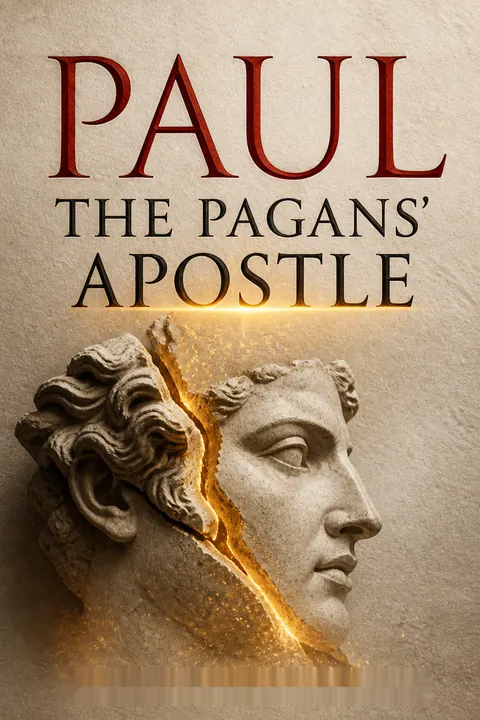
Paul: The Pagans' Apostle offers a fresh perspective on Paul's Jewish identity and his mission to gentiles. Fredriksen argues that Paul remained deeply rooted in Judaism while advocating for gentile inclusion without conversion. The book challenges traditional interpretations, emphasizing Paul's apocalyptic worldview and his understanding of gentile salvation within Jewish eschatology. Readers appreciate Fredriksen's scholarly approach, though some find her arguments unconvincing. The work is praised for its historical context and provocative insights, making it a significant contribution to Pauline studies despite its dense academic style.
People Also Read



Glossary
apocalyptic eschatology
Hope for imminent cosmic repairA Jewish way of interpreting history through the expectation that God will soon intervene decisively. It promises a reversal of present injustice, the defeat of evil, the restoration of Israel, and often resurrection and judgment. In Fredriksen's account, this expectation supplies the urgent timetable behind Jesus's message and Paul's mission.
eschatological gentiles
Gentiles worshiping Israel's GodThe nations as imagined in Jewish End-time hopes: they turn away from their own gods and worship Israel's God, yet remain gentiles rather than becoming Jews. Fredriksen applies the concept to non-Jews in the early Jesus movement, who abandoned pagan worship without taking on Jewish identity through circumcision.
god-fearers
Pagan sympathizers in Jewish communitiesA term used for non-Jews who were interested in Jewish worship and community life. They might attend synagogue gatherings, observe some Jewish customs, or support Jewish institutions while continuing to honor their ancestral gods. Fredriksen distinguishes them from gentile Christ-followers, who were expected to renounce those gods.
Judaizing
Adopting Jewish customsThe adoption by a non-Jew of some practices associated with Jewish life. In the ancient setting described here, such conduct could involve worshiping Israel's God, observing the Sabbath, or following Jewish food customs. Fredriksen uses the term broadly for gentile Christ-followers, while distinguishing their exclusive worship from full conversion to Judaism.
Parousia
Christ's expected returnThe anticipated return of Jesus as messiah. Paul expected the Parousia to bring the resurrection of the dead, transformation of the living, defeat or subjection of hostile cosmic powers, and the establishment of God's Kingdom. The expectation of its nearness shaped Paul's pastoral advice and the urgency of his mission.
huiothesia
Adoption as a sonA Greek term for adoption or the making of a son, used by Paul to describe gentiles' new relationship with God through Christ and spirit. In the Roman social world, adoption could create family membership and inheritance obligations. Paul's image gives gentiles a share in the promised inheritance without making them descendants of Israel by birth.
pistis
Trust, fidelity, or allegianceA Greek term often translated as faith. Fredriksen emphasizes meanings such as trust, steadfastness, and loyalty, rather than reducing it to private belief. In Paul's message to gentiles, pistis describes commitment to the gospel and to Israel's God, a commitment associated with receiving spirit and living rightly within the community.
dikaiosynē
Justice or right conductA Greek term commonly translated as righteousness or justification. Fredriksen interprets its Pauline use in relation to Jewish teachings about justice between people, especially the social commands of the Torah. In her reading, gentiles made right through commitment to Christ are enabled to act rightly toward others, rather than merely receiving an individual verdict.
FAQ
What’s Paul: The Pagans' Apostle about?
- Focus on Paul's Mission: The book explores Paul's life and mission, emphasizing his role as a Jewish apostle preaching to Gentiles. It examines how his beliefs about the imminent Kingdom of God influenced his actions and teachings.
- Historical Context: Paula Fredriksen situates Paul within the Jewish apocalyptic hopes of his time, highlighting the tension between his Jewish identity and his mission to the Gentiles.
- Reinterpretation of Paul: The author challenges the traditional view of Paul as an anti-Jewish figure, presenting him as a committed Jew whose mission was misunderstood by later generations.
Why should I read Paul: The Pagans' Apostle?
- In-depth Analysis: The book provides a thorough examination of Paul’s letters and their implications for understanding early Christianity, offering fresh insights into his theology and relationship with Judaism.
- Historical Relevance: Readers interested in the New Testament's historical context will find valuable information about the socio-political dynamics of the first century.
- Challenging Perspectives: It invites readers to reconsider preconceived notions about Paul and the early church, encouraging a deeper understanding of Jewish and Gentile identities in Christian thought.
What are the key takeaways of Paul: The Pagans' Apostle?
- Paul’s Jewish Identity: The book emphasizes that Paul operated within his Jewish context, asserting that he did not abandon his heritage.
- Role of Gentiles: Fredriksen discusses how Paul included Gentiles without requiring them to adopt Jewish customs, marking a significant development in the early church.
- Apocalyptic Expectations: The text highlights the urgency of Paul’s message, driven by his belief in the imminent return of Christ and the establishment of God’s Kingdom.
What are the best quotes from Paul: The Pagans' Apostle and what do they mean?
- Subjective Historical Interpretation: “The past is gone; and the truth of what is past lies in our own judgment, not in the past event itself.” This quote underscores the subjective nature of historical interpretation.
- Paul’s Jewish Life: “Paul lived his life entirely within his native Judaism.” This challenges the perception of Paul as someone who broke away from Judaism.
- Imminent Kingdom: “The Kingdom of God, Paul proclaimed, was at hand.” This reflects the urgency and apocalyptic nature of his teachings.
How does Paul: The Pagans' Apostle reinterpret Paul’s relationship with Judaism?
- Committed Jew: Fredriksen argues that Paul’s Jewish identity was foundational to his mission, seeking to fulfill Jewish prophecies through outreach to Gentiles.
- Engagement with Scriptures: Paul’s teachings were deeply rooted in Jewish scripture, often referencing and reinterpreting these texts to explain Jesus as the Messiah.
- Conflict with Jewish Groups: The book discusses tensions between Paul and other Jewish groups, particularly regarding Gentile inclusion, illustrating the diversity within Judaism.
What is the significance of Paul’s mission to the Gentiles in Paul: The Pagans' Apostle?
- Breaking Down Barriers: Paul’s mission included Gentiles in the covenant community without requiring circumcision, marking a significant shift in early Christianity.
- Eschatological Implications: Paul believed Gentile inclusion was a sign of the approaching Kingdom of God, suggesting the fulfillment of God’s promises extended beyond Israel.
- Cultural Context: Fredriksen situates Paul’s mission within the Greco-Roman world’s cultural dynamics, shaping his understanding of engaging with Gentiles.
How does Paul: The Pagans' Apostle address the concept of “Law” in Paul’s teachings?
- Complex Relationship: Paul viewed the Law as both a privilege and a challenge, acknowledging its importance to Jewish identity while arguing it should not be a barrier for Gentiles.
- Faith Over Law: Fredriksen discusses Paul’s belief that faith in Christ superseded the need for strict adherence to the Law for salvation.
- Covenantal Context: Paul’s reinterpretation of the Law was not a rejection but a redefinition in light of Christ’s resurrection.
What role do apocalyptic expectations play in Paul: The Pagans' Apostle?
- Urgency of the Message: Paul’s belief in the imminent return of Christ fueled his missionary zeal, shaping his interactions with Jews and Gentiles.
- Eschatological Framework: His teachings were framed within a broader eschatological narrative, providing urgency and purpose to his mission.
- Impact on Early Christianity: The apocalyptic nature of Paul’s message influenced early Christian thought and practice, creating an expectant and active community.
How does Paul: The Pagans' Apostle explore the theme of persecution?
- Intra-Jewish Dynamics: Paul’s persecution of the early church was rooted in intra-Jewish conflicts, initially opposing Christ’s followers due to his adherence to Jewish law.
- Persecution from Gentiles: Paul faced persecution from Gentiles as his message threatened established religious orders, provoking backlash.
- Theological Implications: Persecution is tied to Paul’s understanding of suffering as part of the Christian experience, viewed as confirmation of his mission.
What is the relationship between Paul and the Jerusalem apostles in Paul: The Pagans' Apostle?
- Collaboration and Tension: The book illustrates the complex relationship between Paul and the Jerusalem apostles, with tensions over Gentile inclusion.
- Council of Jerusalem: Fredriksen discusses the Council of Jerusalem’s significance, where Paul presented his gospel, crucial for establishing Gentile inclusion parameters.
- Ongoing Dialogue: Despite differences, Paul and the apostles sought to work together for the gospel’s advancement.
How does Paul: The Pagans' Apostle contribute to our understanding of early Christianity?
- Revising Historical Narratives: The book challenges traditional narratives about Christianity’s origins, encouraging reconsideration of Paul’s identity and mission complexities.
- Interconnected Cultures: Fredriksen emphasizes Jewish and Gentile cultures’ interconnectedness in the early church, highlighting thought and practice diversity.
- Legacy of Paul’s Teachings: Paul’s teachings on grace, faith, and Gentile inclusion continue to resonate in contemporary faith and identity discussions.
How does Paul: The Pagans' Apostle interpret Paul’s conversion experience?
- Radical Transformation: Fredriksen describes Paul’s conversion as a radical transformation, pivotal in shaping his understanding of the Gospel.
- Prophetic Call: Paul viewed his conversion as a prophetic call to spread Christ’s message, underscoring his mission’s urgency and significance.
- Historical Context: The conversion is placed within first-century Judaism’s context, suggesting it was part of a larger movement, enriching early Christian dynamics understanding.
Download PDF
Download EPUB
.epub digital book format is ideal for reading ebooks on phones, tablets, and e-readers.








