

Key Takeaways
Put women at the center to see what Homer’s plot depends on
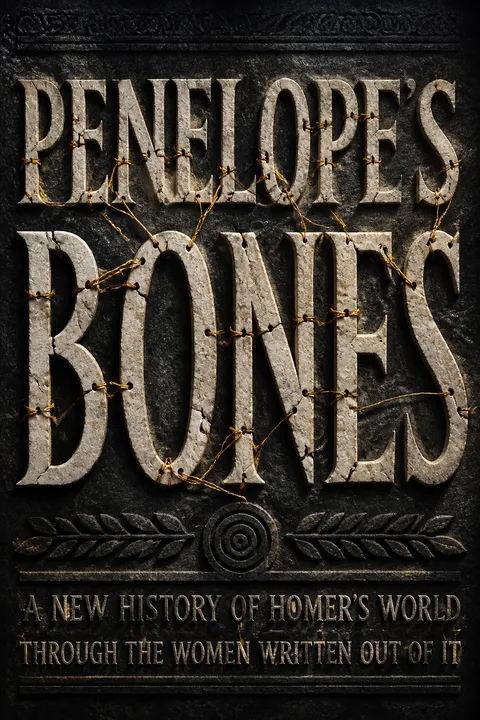
The story needs its women. Homer’s epics often present women as silent, secondary figures. Yet Helen helps set the Trojan War in motion, enslaved Briseis triggers the Iliad’s central quarrel, and Penelope is the destination that gives the Odyssey its shape. Hauser’s central claim is that women are not decorative figures in a men’s story. Their bodies, labor, losses, and decisions make the stories happen.
Recovery, not wishful repair. The book joins close readings of Homer with archaeology, ancient DNA, inscriptions, and art to ask what real women’s lives may have contributed to myth. It does not claim that Helen or Penelope were historical individuals. Instead, it uses them as entry points to recover the mothers, workers, captives, rulers, and fighters who left thinner traces in the record.
The argument shifts attention from who speaks most to who makes events possible. That is a useful distinction in any study of power: formal visibility and causal importance are not the same. Homer’s women can be constrained by the stories while still shaping their plots. The approach also avoids treating recovery as proof that ancient women enjoyed equality. Making their importance visible means confronting both their agency and the systems that limited it.
Treat Homer as layered memory, not a Bronze Age transcript
A poem with a long past. The Iliad and Odyssey emerged from oral traditions performed and reshaped over centuries, then took written form in the early Greek alphabet. Their settings look back toward the Mycenaean Bronze Age, but the poems also reflect later concerns. They preserve details from different times rather than offering a clean historical report.
Test each echo. Homer’s boar’s-tusk helmets and the old word for a ruler have Bronze Age parallels. A writing tablet described in the Iliad also resembles an actual tablet found in a shipwreck from that era. Such matches make historical memory plausible, not certain. Troy was a real, repeatedly rebuilt city, and one layer shows evidence of destruction around the period associated with the legendary war. No evidence identifies its attackers as Homer’s Greeks or proves Helen existed.
This is a strong model for reading literature alongside material evidence: neither source is forced to carry more certainty than it can bear. A matching artefact can establish that a detail was possible, but it cannot verify an entire plot. The same discipline matters in modern historical storytelling, where vivid narratives can make conjecture feel settled. The poems remain valuable not as transcripts, but as records of how later people imagined and remembered a past.
Name the labor and coercion hidden inside heroic war
A prize is a person. In the Iliad, Greek leaders treat captive women as war booty. Agamemnon’s seizure of Briseis from Achilles drives the epic’s opening conflict, while Chryseis is the captive whose release prompts Agamemnon to take Briseis. The language of honor between men depends on women being treated as property, exposed to sexual violence, and traded between captors.
The tablets add names to the pattern. A Linear B record from Pylos lists seven women from Chios, their children, and food rations for their work group. They made a specialized textile border. Other records list women from eastern Aegean and Anatolian places, including one apparently identified as Trojan. The tablets do not explicitly label every group enslaved, but their foreign origins, assigned labor, dependence on rations, and association with a term for captive women make coerced deportation a strong possibility.
The pairing of epic and administrative records is especially revealing because each source has a different blind spot. Epic turns captivity into a dramatic dispute between male leaders; palace accounts reduce workers to categories and rations. Read together, they expose how violence can be normalized as both a story convention and an economic system. The inference of enslavement remains probabilistic, which is important: careful qualification strengthens rather than weakens the case.
Use bones and archives to recover women’s uneven power
Status was not only marital. DNA analysis of a richly furnished Mycenaean grave suggests that Γ58, a woman buried beside a high-status man, was probably his sister, not his wife. A separate cemetery at Aidonia contains related women buried together, suggesting that elite female kin could matter within family lines. The evidence complicates the assumption that women gained standing only by marrying into a male dynasty.
Power varied by place and rank. Homer presents Helen as heir to Sparta, with her husband joining her kingdom. Historical Hittite queen Puduhepa ruled alongside her husband, served as chief priestess, corresponded with foreign rulers, and placed her seal beside his on a peace treaty. These examples are exceptional, not proof of a generally equal society. Most surviving evidence favors elites, leaving ordinary women’s authority harder to see.
The evidence resists a single rule about women’s status. Kinship patterns, succession, religious authority, and political office could work differently across communities, and even within one society. This makes comparison more useful than broad claims about what women could or could not do. At the same time, tombs overrepresent people with resources and visible burials. Exceptional queens and wealthy sisters illuminate possibilities, not the typical experience of the population.
Don’t mistake gender conventions for universal biological rules
Objects complicate categories. Warrior graves around the Black Sea once routinely identified as male have yielded women through skeletal and DNA analysis. Some Scythian cemeteries include women buried with weapons, horses, and evidence of battle injuries. In Mycenae, women in Grave Circle B were also buried with weapons, though earlier excavators often reassigned those weapons to men.
Identity remains an open question. The Griffin Warrior was biologically male, yet buried with both weapons and objects conventionally associated with women, including a mirror, combs, and jewelry. The grave’s arrangement and images invite questions about gender expression, but cannot establish how the person understood themself. Athena offers a mythic parallel: a goddess who moves between female-coded weaving and male-coded warfare. Together, these cases challenge rigid assumptions without making ancient identities certain.
The material record can overturn modern expectations, especially when old classifications were based on the assumption that weapons belong to men and jewelry to women. But an object’s gender association is not a person’s self-description. The distinction between biological sex, social role, and personal identity must remain visible when interpreting burials. The book’s best insight is methodological: treat gendered objects as evidence to investigate, not as labels that settle the question.
Count childbirth among war’s deadliest costs for women
Motherhood carried grave risks. A baby buried beneath a house floor at Bronze Age Cydonia was a full-term infant who may have lived only hours. Its teeth and bones suggest poor nutrition or infection. At the settlement of Asine, about 60 percent of recovered children died in their first month. Skeletal evidence also points to poorer diets and health for women than men in some communities, conditions that could make pregnancy and birth more dangerous.
Thetis makes that cost epic. Achilles’ mother knows he will die young, and her interventions shape the Iliad from its opening crisis to its final scenes. Her grief is not a substitute for archaeological evidence, but it gives a mythic form to the fear of losing a child. The book places childbirth, infant death, and mourning beside the celebrated violence of battle, where they are often overlooked.
This reframing corrects a familiar imbalance: war deaths are public, named, and memorialized, while reproductive mortality is dispersed across families and often leaves less legible evidence. Archaeology helps recover that burden, although it cannot diagnose every death or reconstruct a mother’s private response. The juxtaposition with Thetis works because myth concentrates a widely shared vulnerability into one character, while the burials remind readers that the historical cost was borne by many ordinary families.
Treat women’s textile work as infrastructure, not decoration
Cloth held the economy together. Women gathered and washed wool, dyed it, spun thread, and wove garments, sails, and prestige goods. At Myrtos, spindle whorls, loom weights, and washing equipment reveal a village organized around textile production. Chemical analysis at a Cretan workshop identified traces of costly dyes, including purple from murex snails. Experimental estimates suggest one woman could need about four years of seven-hour workdays to make enough cloth for a sail.
The labor could be coerced. Pylos and Knossos records list hundreds of women assigned to textile production, many apparently dependent workers from elsewhere. Their cloth supported palaces and trade. Homer’s stories also show women weaving: Helen’s tapestry echoes the war narrative, and Calypso’s sail enables Odysseus’ voyage. The beautiful finished fabric hides long, repetitive work and the power relations governing who did it.
Textiles are a useful lens because they connect intimate life, commerce, state administration, and storytelling. The same craft can clothe a bride, equip a ship, enrich a palace, or become a metaphor for composing a poem. The comparison with modern garment labor draws attention to persistent undervaluation, but ancient coerced labor and contemporary employment are not identical systems. The deeper continuity is that consumers often see finished goods while the labor behind them remains obscured.
Read marriage as property law, but notice women’s maneuvering
Marriage moved wealth and status. Hammurabi’s Babylonian laws distinguish a bride price, paid to secure a marriage agreement, from a dowry, which helped establish the new household and could protect a wife if the marriage ended. These laws are comparative evidence, not proof that Mycenaean Greece used identical rules. Homer’s Nausicaa is surrounded by suitors offering gifts, while Penelope’s uncertain status as wife of a missing king leaves her responsible for a household others want to claim.
Women could work within constraints. Penelope delays a decision and accepts gifts from suitors, adding wealth to Odysseus’ household while keeping her options open. Arete, queen of the Phaeacians, decides whether Odysseus receives hospitality and a ship. The Greek term xenia describes reciprocal guest friendship, a network of food, safe passage, and gifts that could bind influential people across distance.
Property law makes the emotional plot of the Odyssey legible as a political and economic crisis. Penelope’s delay is not simply indecision when remarriage could transfer wealth and power. Her room to maneuver is real, but it exists inside a system that treats women and household property as closely linked. Cross-cultural legal comparison can clarify shared problems, provided it is not mistaken for direct evidence of identical laws or customs.
Question the happy ending built on enslaved women’s bodies
The return is violent. Odysseus reaches Ithaca, kills the suitors who have occupied his household, and orders the enslaved women who slept with them to clean the blood from the hall. His son Telemachus then hangs twelve of them. Odysseus calls their relations with the suitors rape, while the punishment treats the women as traitors. Their enslavement left them little control over their bodies, yet the poem gives them no defense before their deaths.
Order comes at a cost. The killings restore Odysseus as husband, king, and owner of the household. The ending can feel like the repair of disorder if attention stays with the elite family. Turning toward the women reveals whose lives are excluded from that restoration. Their deaths are not a minor afterthought: they make the homecoming’s social order visible.
This reading does not require pretending that Homer offers a modern moral critique. It asks what the plot’s resolution demands and whose perspective makes it look just. The distinction between a character’s account of events and the victims’ constrained choices is crucial, particularly in stories involving slavery and sexual violence. A celebrated return can simultaneously be a restoration for one group and a catastrophe for another.
See the Bronze Age collapse as a network failure, not one invasion
Several crises converged. Around 1200 BCE, cities and palaces across the eastern Mediterranean were destroyed, abandoned, or weakened. Evidence from tree rings, cave deposits, pollen, and sea sediments points to prolonged drought and reduced harvests. A severe three-year drought struck the Hittite region around 1198 to 1196 BCE. Ugarit’s records describe earthquakes, famine, and pleas for grain before the city was destroyed.
The Sea Peoples were only part of it. Egyptian accounts describe attacks by groups now called the Sea Peoples, but not every fallen city was attacked by them, and some places may have fallen through rebellion, migration, earthquake, or other causes. Interconnected palace economies made local shocks travel: scarcity disrupted trade, and disruption made political systems more fragile. The evidence supports a complex collapse, not a single-cause story.
The collapse is a compelling case of systemic risk: tightly connected institutions can spread shocks as readily as they distribute goods. Environmental stress matters here, but drought alone does not explain the destruction, abandonment, and varied fates of different cities. The book’s synthesis is strongest when it presents climate, conflict, migration, and political concentration as interacting pressures rather than a neat chain with one villain. That distinction also keeps historical analogy from becoming prediction.
Keep discoveries provisional: even Ithaca and Aegea have rival histories
A convincing story is not proof. Schliemann called his Trojan gold Priam’s Treasure and linked it to Helen, but it dates to about 2400 BCE, more than a thousand years before the likely period of the Trojan War. A more recent proposal identifies Homer’s low-lying, western Ithaca with Paliki, now joined to Cephalonia. Ancient writing and geological evidence make the idea plausible, but researchers still need to date when the former sea channel was blocked.
Names choose what survives. A Roman source offers Aegea, an African Amazon queen, as an alternative origin for the sea’s name, against the familiar story of the Greek Aegeus. The account is fragmentary, not established fact. Its value is a reminder that histories select which claims to preserve. Hauser’s invitation is to pursue neglected possibilities while clearly distinguishing evidence, inference, and legend.
The book’s method depends on a productive tension: imaginative reconstruction can direct attention toward overlooked evidence, but it can also tempt investigators to make evidence fit a desired story. Paliki is an instructive test because its geological plausibility does not settle its date. Aegea likewise matters as a trace of an alternative tradition, not as a verified etymology. Intellectual humility here is not timidity; it is what lets new discoveries revise rather than merely decorate old narratives.
Analysis
The book’s distinctive achievement is not simply inserting women into a familiar epic. It shows how the archive itself has been built: oral poetry preserves some memories, palatial tablets record administrative categories, burials privilege the wealthy, and later scholarship decides which traces count as history. Each source has a different resolution. A poem can expose the logic of a war prize, but not certify a Bronze Age person. A tooth can reveal ancestry or diet, but not self-understanding. A grave can overturn a gender assumption, yet cannot supply a private testimony. The strongest interpretations keep those limits in view.
This method also revises what centrality means. Women can be narratively indispensable without being socially free. Helen gives a war its premise, Briseis triggers its opening quarrel, and Penelope completes the homecoming, yet the plots repeatedly convert women into property, labor, or political leverage. Recognizing their agency should not soften the evidence of coercion. Nor should exceptional queens or warrior burials be used to claim that Bronze Age societies were egalitarian. The evidence describes variation within hierarchy, not a simple reversal of patriarchy.
The book’s most generative move is to treat material evidence as a counter-reading of literature. A ration tablet changes how an anonymous captive appears; a child’s burial changes the emotional scale of a myth about motherhood; a shipwreck makes gift exchange and trade tangible. The result is a history that neither dismisses Homer as fiction nor treats epic as fact. It asks how memory, ideology, and lived experience become entangled, and how present-day questions make certain absences newly visible. The answer remains provisional by design: recovery is not the final word, but a better account of what the evidence can and cannot say.
Review Summary
People Also Read


Glossary
Linear B
Mycenaean palace writingA syllabic writing system used by the Mycenaean palaces in the Late Bronze Age. Its surviving clay tablets mainly record administration, including supplies, workers, and textile production. Alice Kober identified important grammatical patterns, and Michael Ventris deciphered the script in 1952, showing that it recorded an early form of Greek.
aDNA
Ancient DNA evidenceShort for ancient DNA, genetic material recovered from archaeological human or animal remains. Analysis can help identify biological sex, ancestry, family relationships, migration, and some physical traits. Samples are often fragmented or chemically damaged, and contamination from modern handling must be controlled. Genetic evidence cannot by itself determine a person’s cultural identity or gender.
geras
War prize and honorA Homeric Greek term for a prize awarded or claimed as a sign of honor, often after warfare. In the Iliad, it can refer to captured goods as well as enslaved women such as Briseis and Chryseis. The word reveals how the poem’s economy of prestige can treat human captives as possessions exchanged between men.
hedna
Bride-price paymentA Homeric Greek term for gifts or payment offered by a prospective groom to secure a bride’s marriage agreement. Homer presents suitors competing with valuable goods, sometimes livestock. The book compares this practice with the bride price described in ancient Near Eastern laws, while cautioning that such parallels do not prove identical legal systems.
oikos
Household and its assetsAn ancient Greek term meaning more than a physical house. It can include the household’s land, goods, livestock, enslaved people, and family relationships. In the Odyssey, control of the oikos is at stake while Odysseus is absent: Penelope’s marital status and the suitors’ consumption of household resources threaten the family’s wealth and political authority.
xenia
Reciprocal guest friendshipA Homeric social and religious practice governing relations between hosts and guests. A host provides welcome, food, and safe passage; a guest receives hospitality and may depart with gifts. Such exchanges could establish enduring ties between distant households and political communities. In the Odyssey, Odysseus’s treatment by the Phaeacians depends on this institution.
pharmaka
Potent plant-based drugsThe Greek plural of pharmakon, referring to drugs, potions, or plant substances that may heal or harm. In the Odyssey, Circe is described as an expert in many such substances, using them in her transformations and enchantments. The book connects this literary figure cautiously to women’s historical knowledge of plants, healing, and childbirth.
antianeirai
Women comparable to menA Homeric epithet for the Amazons, built from Greek elements that suggest both opposition to men and comparison with them. Its ambiguity captures their unusual place in epic: they are female adversaries who challenge male dominance, but are also represented as formidable warriors worthy of comparison with male heroes.
Thesmophoria
Women’s Demeter festivalAn ancient Greek women-only festival honoring Demeter and Persephone. Later evidence describes rites involving piglets placed in pits and associated with fertility and the harvest. The book compares these practices with Bronze Age rituals elsewhere that used pigs as human substitutes in ceremonies concerning death, health, and renewal, while noting the limits of direct evidence.
Late Bronze Age collapse
Regional civilizational breakdownThe widespread weakening, destruction, or abandonment of cities and palace states around the eastern Mediterranean near 1200 BCE. Evidence points to interacting pressures, including drought, crop failure, earthquakes, disrupted trade, migration, conflict, and political instability. The term describes a complex regional crisis, not a single event or a collapse caused by one invading group.
Download PDF
Download EPUB
.epub digital book format is ideal for reading ebooks on phones, tablets, and e-readers.








