Key Takeaways
1. The Pervasive Dehumanization of Palestinians
Such responses to our terrible losses, whether on the international stage or in the media, are not merely callous. They reveal a far more troubling truth: the standard, across industries, is to dehumanize the Palestinian.
Systemic dehumanization. Palestinians face a deeply institutionalized and pervasive dehumanization, extending beyond overt racist rhetoric to subtle, yet more pernicious, practices. This phenomenon is evident in the world's reluctance to acknowledge Palestinian tragedies as legitimate or their reactions as normal human responses. It categorizes fundamental instincts like survival and self-defense as "deviance" when they come from Palestinians.
The sniper's metaphor. The author uses the metaphor of "the sniper" to represent those who erase Palestinian existence without direct engagement. This includes not only literal snipers but also:
- Underhanded journalists who use passive voice to obscure culpability.
- Spineless bureaucrats who fund demise while feigning sympathy.
- Academics who pathologize resistance and lecture in the past tense.
- Politicians who fund violence then offer conditional condolences.
Existence as indictment. Dehumanization ejects Palestinians from the human condition, making their very existence an "enigma" and an "embryonic threat." They are "guilty by birth," their actions inviting indictment, and their sentiments viewed with suspicion. This framework denies them agency, intellectual contributions, and institutional participation, reducing them to "damning or passive" attributes.
2. The "Politics of Appeal" Demands "Perfect Victimhood"
Once we internalize the dichotomy, we produce perfect victims not only for sincere sympathizers and deeply committed allies, but for the entire zealous congregation: the overbearing activists, the voyeuristic liberals, the empathic army wives, the repentant Afrikaners, and the grandchildren of Nazis.
The victim-terrorist dichotomy. Palestinians are trapped in a false and strict dichotomy: either "victims" or "terrorists." Those labeled "terrorists" are denied a voice and due diligence, while "victims" are granted a microphone only if they meet stringent prerequisites. These victims must be wounded, weak, and express grief without context or blame, their suffering existing outside history and politics.
Defanging for acceptance. To be "humanized" in this framework, Palestinians must be "defanged." This involves sanitizing and subduing their image, severing them from their origin story, and rendering them "utterly displaced and effaced." They are expected to be polite in their suffering, suppressing any "crass statements" about those who steal their homes, replacing anger with "muted resilience."
An impossible rulebook. The prescribed humanity for Palestinians follows an intricate rulebook, sustained by perpetual victimhood and ethnocentric parameters for sympathy. This restricts the range of emotions they can express, the ideologies they can claim, and even censors their thoughts. Worthiness of liberty and dignity becomes conditional on proximity to "innocence," such as:
- Whiteness, civility, wealth, compromise.
- Non-alignment, non-violence, helplessness.
- Exceptionalism or an exceptionally violent fate.
3. Citizenship Creates a Hierarchy of Grief and Worthiness
Why contribute—even if only with a simple phrase—to a hierarchy of lives where citizenry, like race, class, gender, “civility,” plays a role in determining whether someone deserves compassion or due diligence?
Passports as currency. The value of a Palestinian life, and the international response to its loss, is often determined by citizenship. The murder of Shireen Abu Akleh, an American citizen, garnered more attention than countless other Palestinian deaths, highlighting how certain passports can transform a statistic into a "person of blood and flesh, a victim worthy of sympathy."
Conditional deplorability. Violence against citizens of powerful Western nations is suddenly deemed "deplorable," while the routine killing of stateless Palestinians is met with indifference. This creates a perverse incentive to leverage citizenship for accountability, even if it means reinforcing a racist hierarchy of lives. The author questions whether such "strategic" maneuvers truly deliver justice or merely sell a narrative of innocence that caters to xenophobic worldviews.
Hollow formality. For those condemned to dehumanization, citizenship often proves to be a hollow formality. Examples like Rachel Corrie, an American crushed by an Israeli bulldozer, or Omar As'ad, an 80-year-old Palestinian-American left to die by Israeli soldiers, demonstrate that even Western passports do not guarantee protection or justice against Israeli violence. The focus on citizenship distracts from the inherent injustice of the colonial project itself.
4. The "Civilian" Trope Depoliticizes Palestinian Resistance
The invention of the civilian as a “nonpartisan,” “neutral” figure has exacerbated the depoliticization of the Palestinian cause.
Myth of neutrality. The concept of the "civilian" as a neutral, nonpartisan figure is a colonial invention that depoliticizes the Palestinian cause, reducing it from a liberation struggle to a "humanitarian crisis." This framework expects Palestinians to exist without perspective, portraying revolutionaries as "rogue actors" rather than integral parts of a nation motivated by political aspirations.
Double standards in resistance. Mainstream media applies glaring double standards to resistance. Ukrainian civilians taking up arms are glorified as "heroes" and "insurgents" fighting for freedom, even when using Molotov cocktails or operating in residential areas. In stark contrast, Palestinian resistance, even against occupation, is pathologized as "terrorism," its motivations obscured, and its perpetrators demonized.
Ignoring context. This framing ignores the context that gives rise to resistance. The militant is not an inexplicable phenomenon but a product of daily Nakbas, displacement, demolition, and premature funerals. By fixating on whether a "knife was planted" next to a slain Palestinian, the discourse avoids the fundamental question of why someone might pick up a knife in the first place, thereby reinforcing the colonizer's self-appointed jurisdiction.
5. The Burden of Disproving Antisemitism Distracts from Oppression
A drone is one thing, but a trope—a trope is unacceptable. We learn to internalize the muzzle.
Semantic violence vs. material violence. Palestinians are constantly forced to defend themselves against accusations of antisemitism, a "semantic violence" that is often prioritized over the systemic and material violence they endure. This burden of disproving libel, even when baseless, distracts from the reality of living under a self-proclaimed "Jewish state" that explicitly enshrines "Jewish settlement" as a national value.
The "muzzle" of language. From a young age, Palestinians are taught to navigate a linguistic minefield, where using "wrong words" can make the boots, bullets, and batons of occupation invisible. This internalizes a "muzzle," forcing them to riddle their speech with disclaimers and disavowals, even when describing the Jewish identity of their oppressors, to avoid being discredited or deemed "deserving of brutality."
A strategic red herring. The constant demand to distinguish between Zionism and Judaism, while admirable, is not the primary responsibility of the oppressed. The author argues that this focus is a "glaring red herring" that inadvertently elevates the history of Jewish suffering above present-day Palestinian suffering. It diverts attention from the tangible oppression—the cement walls, siege, exile, and daily killings—to a "losing battle" against accusations.
6. Zionist Propaganda Uses Absurdity as a Deliberate Diversion
But why is this our impulse? An extremely well-trained muscle is responsible for the refutation reflex, which has become an intrinsic part of the Palestinian body.
Absurdity as a weapon. Zionist propaganda often employs simplistic and incoherent narratives, such as the Israeli president displaying a copy of "Mein Kampf" found in a "children's living room" in Gaza. The absurdity of these claims is precisely their strength, as it invites endless argumentation and distracts from the core issues of colonialism, siege, and military occupation.
The refutation reflex. Palestinians have developed a "refutation reflex," meticulously debunking absurd claims instead of challenging the premise itself. This leads to wasted energy defending against ad hominem attacks, strawman arguments, and red herrings, diverting attention from the burning flesh, demolished homes, and torture in concentration camps.
Challenging the premise. The author argues that instead of succumbing to this "annihilatory logic," Palestinians should refuse to legitimize such absurdity with serious responses. Even if a book like "Mein Kampf" were found, it does not justify genocide. The goal is to unmask the deceit and duplicity of the accusers, rather than clearing one's name from false accusations, thereby refusing to dignify the insidious propaganda with a response.
7. External Validation Undermines Authentic Palestinian Narration
Why do we give the authority of narration to those who have murdered and displaced us when the scarcity of their guilt means honesty is unlikely?
The quest for credibility. Palestinians often seek validation from Western and Israeli sources, believing their testimonies will only be credible once they attain "respectability" or are corroborated by "reliable narrators." This leads to an "obsessive curation" of unthreatening testimonies, favoring Jewish and Israeli sources over Palestinian ones, based on a "farcical, though deep-seated notion that the former are somehow more credible."
Commodification of suffering. This reliance on external validation is rooted in a market for Palestinian suffering, where the Palestinian becomes a commodity and the audience a consumer. The market demands a "manicured version" of the Palestinian, often reduced to a victim, not a protagonist, whose story is curated into context-free exhibitions to entertain rather than inform. This leads to:
- "Trauma porn" documentaries.
- Films with docile, doe-eyed young girls as protagonists.
- Collaboration films that fetishize reconciliation between slayer and slain.
The prestige of the oppressor. The author critiques the "prestige" given to Western and Israeli institutions, where their acknowledgment of an eyewitness account is deemed more valuable than the account itself. This perpetuates a racist structure that elevates one testimony over another on a purely identitarian basis, dismissing Palestinian historians, organizations, and knowledge production.
8. The Psychic Cost of Constant Cross-Examination and Self-Censorship
How does spending a life in cross-examination influence our gaze? How does it guide our interactions and relationships? Have we, in our efforts to disown the legacy of the terrorist, reared settlers in our subconscious?
Restricted affective allowance. Palestinians are granted an extremely restricted "affective allowance," permitted to express only a narrow range of "uniquely human emotions." Ambition, cunning, sovereignty, or revenge are forbidden, robbing them of complexity and the right to "contain multitudes." Their sadness must be "without teeth," and belligerence exiles them from humanity.
Internalized muzzle. The constant pressure to conform to external expectations, to preemptively disavow bigotry, and to prove innocence against baseless charges takes a severe psychic toll. This "life in cross-examination" forces self-censorship and can lead to internalizing colonial logic, where Palestinians become "criminals of thought" for their natural responses to brutalization.
The burden of exceptionalism. To be deemed "human," Palestinians are often expected to be "superhumans" – as generous as a giving tree, as forgiving as God himself. This mandate imposes an "inordinate burden" on those mourning their loved ones, demanding an "unattainably angelic" disposition. The author questions the impact of this on the Palestinian psyche, asking if, in disowning the "legacy of the terrorist," they have "reared settlers in our subconscious."
9. Irreverence as a Dignifying Act of Refusal and Liberation
Even if—even if!—my dreams were your worst nightmares, who are you to rob me of my sleep?
Challenging the "want" of the charge. When asked if he wants to "throw Israelis into the sea," the author highlights that the question's core is "want," implying that mere desire for revenge negates claims to justice. He rejects this premise, asserting that even if his dreams were his enemies' worst nightmares, it does not invalidate his plight or justify colonial brutality. This stance is a refusal to submit to a logic that criminalizes thought.
Irreverence as pedagogy. The author advocates for irreverence—facetious, flippant, or sarcastic responses—as a pedagogical tool against absurd and bad-faith questions. This approach:
- Ridicules the ridiculous, making it "funny" and disarming the argument.
- Teaches those who share frustrations not to be shamed into accepting an upside-down world.
- Acts as a catalyst for critical thinking and intellectual autonomy.
- Reconfigures the hierarchy of what deserves outrage, moving trivialities from equal status with serious issues.
Reclaiming mental space. Irreverence is a dignifying act of refusal, allowing the oppressed to be "emancipated in the mind." It builds an alternative reality where occupation is not impenetrable, the occupier is not indelible, and military vehicles are mere "boring nuisances." This psychological liberation allows the speaker to discard coerced roles, speak truths previously whispered, and foster a collective sense of self-respect.
10. Collective Resistance is the Only Path to a Liberated Future
The rallying cry that We are all Palestinians must abandon the metaphor and manifest materially.
Beyond symbolic gestures. The author calls for the rallying cry "We are all Palestinians" to move beyond metaphor and manifest materially. This means embodying the "Palestinian condition" of resistance and refusal in daily lives, rejecting complicity in bloodshed, and refusing inertia. Gaza, having paid a "steeper, bloodier price," cannot stand alone in sacrifice.
Challenging fragmentation. The Israeli regime's architecture of displacement, through "real-estate disputes," demolitions, and land confiscation, aims to control land with minimal Palestinians, without triggering international alarm. This fragmentation has created disparate realities, making collective struggle seem impossible. However, the author insists that the Nakba is "relentless and recurring" across all of Palestine, uniting the people in their ongoing struggle.
Refusing to be silenced. Despite the immense challenges—hyper-capitalism, surveillance, and the criminalization of advocacy—the author asserts that there is "no room for fear or silence." He urges those with platforms and protection to "raise the ceiling of what is permissible," to speak the truth "unflinchingly, unabashedly, cleverly," and to challenge the status quo. The ultimate goal is to defeat Zionism, an "aging, trembling beast," and realize a liberated future where "seeds can germinate in the inferno, so can revolution."
Last updated:
Review Summary
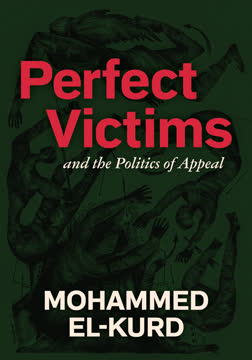
Perfect Victims and the Politics of Appeal by Mohammed El-Kurd receives overwhelming praise (4.78/5) for its powerful critique of how Palestinians must perform "perfect victimhood" to gain sympathy. Readers highlight El-Kurd's unflinching analysis of Western media's dehumanization, respectability politics, and the asymmetry between semantic and systemic violence. His poetic yet accessible prose challenges readers to question colonial logic and Zionist propaganda. Reviewers emphasize the book's relevance to all liberation movements, its refusal to be conciliatory, and its important examination of how Palestinian men are particularly demonized. Many call it essential, transformative reading.