

Key Takeaways
Treat Palestine as a laboratory whose occupation powers global security sales
The central claim. Loewenstein uses “Palestine laboratory” for a system in which methods of controlling Palestinians are developed, demonstrated, and sold abroad. He traces its roots to Israel’s creation in 1948, when Palestinians were displaced on a mass scale, and its expansion after Israel occupied the West Bank, Gaza, East Jerusalem, and the Golan Heights in 1967. The point is not only that weapons are tested in conflict, but that an enduring occupation creates demand for tools of surveillance, separation, and force.
From rule to export. Drawing on reporting in Palestine and interviews with people in the arms trade, Loewenstein argues that the experience of governing an occupied population helps Israeli firms sell equipment and expertise to foreign clients. The model appeals to governments seeking to monitor or suppress populations they regard as threats.
The concept connects military innovation to the conditions that make it possible: continuous deployment, a captive population, and buyers eager to see a system in operation. That is more revealing than treating each drone or surveillance product as an isolated invention. It also invites a useful distinction between testing a device and legitimizing the policy built around it. The claim is strongest when the book traces a product or training program to a specific use. The broader metaphor can become less precise when every Israeli security export is treated as a direct product of the occupation.
A record of atrocities rarely stops arms deals when alliances pay
A family’s reckoning. Daniel Silberman’s father, David, was imprisoned after Augusto Pinochet’s 1973 coup in Chile, tortured, then abducted and never seen again. Israel supplied weapons to Pinochet’s government, including after a US arms embargo took effect. Years later, Daniel and other survivors sought access to Israeli records about the relationship, but their legal campaign met secrecy and delay.
A recurring pattern. Loewenstein documents Israeli arms and training links with governments accused of grave abuses, including Guatemala’s military regime and Rwanda’s Hutu government during the 1994 genocide. He argues that diplomatic support and commercial advantage often outweighed human-rights concerns. He also notes that Israel was not alone: the United States, France, and other powers supported abusive governments too.
Silberman’s story gives a personal cost to what can otherwise sound like a familiar argument about realpolitik. It also shows why transparency matters: without records, survivors cannot establish responsibility or challenge official accounts. The comparison with other powers strengthens the analysis by avoiding a claim of uniquely Israeli misconduct. At the same time, the repeated pattern raises a question about institutional incentives: when an arms export serves both commercial and diplomatic aims, which agency is responsible for assessing the harm, and who can compel it to act?
After 9/11, counterterrorism became a worldwide market for Israeli expertise
A new customer base. The September 11 attacks helped transform Israel’s long-running security experience into a global sales pitch. Israeli leaders presented the country as a veteran of counterterrorism just as governments worldwide expanded homeland-security budgets. The resulting market included weapons, drones, border systems, and surveillance tools, not only traditional military equipment.
From army to start-up. The book describes the Israeli military as a training ground for private technology firms. Unit 8200, Israel’s signals-intelligence unit, is a prominent example: veterans move into cybersecurity and surveillance companies, carrying technical skills and professional networks with them. Israeli defense exports reached a record US$11.3 billion in 2021, according to figures cited in the book. The growth narrative often celebrates innovation while leaving the uses of that innovation out of view.
This account shows how a crisis can convert a local security practice into an international policy product. Once governments share a vocabulary of threat, tools developed in one setting can appear transferable elsewhere. The military-to-industry pipeline also helps explain why security technology can advance quickly: expertise, funding, and procurement are closely linked. Yet a high export figure measures demand, not effectiveness or public safety. Buyers may be purchasing the promise of control as much as a demonstrably successful solution.
Spyware turns diplomacy into a quiet trade in political leverage
A phone becomes an entry point. Pegasus is NSO Group’s phone-hacking spyware, designed to give an operator access to a target’s device. The book follows its use in Mexico, where journalist Griselda Triana received suspicious messages after her husband, reporter Javier Valdez, was murdered. Investigators later found attempts to infect her phone. The case illustrates how a tool sold as crime-fighting can reach journalists and people around them.
More than a sale. Loewenstein argues that Israeli spyware exports also support foreign relations. He describes sales to governments including the United Arab Emirates and Saudi Arabia, and reports that spyware deals could help cultivate diplomatic partners. The state’s role in licensing exports complicates the claim that a private company alone determines who receives the technology.
Spyware is unusually suited to covert diplomacy because it offers a government leverage without the visibility of a weapons shipment. It can expose networks, sources, and private communications while making attribution difficult. That secrecy complicates ordinary oversight: a buyer can claim a security purpose, while those targeted may not know how their information was obtained. The book’s cases make a strong argument for export controls and independent audits. Still, individual examples establish the possibility and consequences of abuse more readily than they establish the precise diplomatic motive behind every sale.
Do not mistake automated surveillance for autonomous control
People remain central. Blue Wolf is an Israeli military app used to collect and match photographs of Palestinians against a large database. The book reports that soldiers were instructed to add dozens of Palestinian records during a shift. Such systems scale identification and make routine monitoring easier, but they do not remove the human decisions that determine whom to watch, question, or punish.
Technology has limits. Israeli human-rights lawyer Eitay Mack argues that human sources, such as friends, relatives, and community members, remain important to the Shin Bet, Israel’s internal security service. He also warns that companies can exaggerate what their products achieve to attract buyers. The technology can widen surveillance, but it cannot by itself explain or control every social relationship in an occupied population.
The distinction matters because public debate often treats surveillance as an all-seeing machine, obscuring the people who select targets and act on information. Automation can increase the scale and speed of monitoring, while human judgment still shapes how data is interpreted. That combination can make errors harder to contest: officials may blame the system, and vendors may describe it as objective. A useful test for any surveillance proposal is therefore not only what the software detects, but who sets its purpose, checks its accuracy, and bears responsibility for its consequences.
Border systems export separation, not just security equipment
A border is a system. Loewenstein follows Israeli drones and surveillance technology beyond Palestine. The European Union used Israeli-made Heron drones to monitor the Mediterranean, while Elbit Systems supplied surveillance equipment for the US-Mexico border. In each setting, the technology helps authorities track movement and manage people they wish to keep out.
Watching is not rescuing. The author argues that drone surveillance can help European authorities locate migrant boats without committing them to rescue. Frontex, the EU border agency, says its aircraft alert rescue authorities and help save lives. The dispute is consequential: the book cites more than 22,000 migrant deaths in the Mediterranean since 2014, and describes a border regime in which surveillance can coexist with policies that leave people in danger.
Border technology is often presented as neutral infrastructure, but its purpose depends on the policy it serves. A camera can locate someone for rescue, detention, or forced return. This is why evaluating equipment requires examining operating rules and outcomes, not merely technical capability. The book’s account also highlights a difficult evidentiary question: surveillance data may show that authorities knew a boat’s location, but proving that a particular delay was deliberate requires more than the presence of a drone. Frontex’s stated rescue role deserves scrutiny alongside documented harms.
Ethnonationalist governments borrow the model, not simply the machinery
A political template. The book argues that some governments admire not only Israeli weapons, but also the idea of maintaining a dominant national group through surveillance, restrictions, and territorial separation. India’s consul general in New York explicitly invoked Israel as a model for Kashmir after India revoked much of the region’s autonomy in 2019. Israeli weapons and drones also became important to India’s defense relationship with Israel.
Adaptation, not duplication. Loewenstein compares this pattern with earlier ties between Israel and apartheid South Africa, including shared security interests and ideas for confining populations to separated areas. He does not claim that India, South Africa, and Israel are identical. His argument is that governments selectively borrow tactics and rhetoric that help them manage populations they see as politically or demographically threatening.
Policy transfer rarely means copying an entire system. Governments select the components that fit their own institutions, conflicts, and political coalitions, then present them as locally necessary. Explicit praise of the Israeli model makes this argument more concrete than a simple resemblance between two cases. But resemblance alone cannot prove influence, and the histories of Kashmir, Palestine, and apartheid South Africa differ in important ways. The strongest analysis distinguishes direct borrowing, such as a leader’s stated admiration, from parallel responses that may arise independently.
Platform moderation can make the occupier's vocabulary seem neutral
Context disappears online. During the 2021 conflict, Palestinian users reported that posts about Sheikh Jarrah and Al-Aqsa Mosque were removed or restricted. The book describes errors involving Arabic words, locations, and references to Palestinian political groups. Meta later commissioned a review that found its actions had adversely affected Palestinians’ freedom of expression and other rights, citing factors including weak Arabic-language capacity and flawed systems.
Unequal rules, unequal reach. The author contrasts the moderation of Palestinian posts with the survival of racist and violent Hebrew-language content. He argues that the platforms’ rules can treat Palestinian speech as suspicious while presenting that treatment as routine enforcement. He also notes that Israeli government requests were frequent and that Palestinians had little access to the policy discussions shaping their visibility.
Content moderation is a form of governance because it determines which accounts can make events visible and which descriptions are treated as legitimate. Language coverage and local expertise matter: an automated system trained on poor context can turn a religious site, a name, or a political term into a false signal. The reported impact is significant even without proof of deliberate bias in every removal. At the same time, uneven outcomes should be assessed alongside evidence about policy design, staffing, appeals, and government pressure, rather than assumed to reveal a single motive.
Hold buyers, regulators, and investors accountable alongside spyware makers
One company is not the whole market. Loewenstein argues that shutting down NSO Group would not eliminate demand for spyware. Other firms and state agencies can provide similar tools, while governments continue to seek access to private communications. He points to proposals for stronger export regulation, legal liability, and limits on commercial cyber-hacking products.
Use institutional leverage. The book describes divestment by Norway’s largest pension fund from companies linked to settlement activity, and by New Zealand’s Super Fund from Israeli banks it said financed settlements. Such actions show how investors can challenge business relationships when they judge the human-rights risk unacceptable. The author’s broader case is that accountability must reach the states that license exports and the customers who deploy them, not only the firms that build them.
The focus on the whole chain is a valuable corrective to scandal-driven reform. A supplier can be replaced, but procurement rules, licensing decisions, and customer demand shape whether the market persists. Public investors and government contracts offer practical leverage because they can change the costs of doing business. A ban on commercial spyware, however, would face resistance from states that view these tools as essential, and could shift some activity into government programs with even less transparency. Any durable framework needs enforcement, disclosure, and meaningful remedies for people targeted.
Analysis
The book’s main contribution is to connect a local system of occupation with a global market for security. Its argument is not simply that Israeli companies sell weapons, or that other governments copy Israeli practices. It is that occupation supplies a durable setting in which surveillance, border control, and crowd suppression can be deployed, while the language of counterterrorism makes those practices legible and attractive to buyers. The resulting trade carries both hardware and political assumptions about whose movement, privacy, and rights can be restricted.
The reporting is most persuasive where it makes the chain visible: a specific company, a product or training program, a documented user, and a concrete consequence. The account of Daniel Silberman’s family gives historical arms dealing a human scale; the cases involving Pegasus and border drones show how much quieter contemporary security exports can be. The book also strengthens its argument by acknowledging that the United States and other powers have supported abusive governments. Its sharper claim is about the contradiction between Israel’s democratic self-image and its willingness to arm or surveil repressive partners.
Some of the book’s broadest claims require more caution than its documented cases. Similar policies can emerge from shared incentives, not only from Israeli influence, and a government’s purchase of technology does not prove that it has adopted the ideology associated with its supplier. Likewise, claims about the purpose of a sale or a delayed rescue can be harder to establish than the sale, deployment, or resulting harm. These qualifications do not dissolve the central concern. They clarify what evidence is needed to distinguish direct transfer from analogy, and negligence from intent.
The book ultimately asks readers to treat security technology as political infrastructure. That framing is useful well beyond Israel: assess who is monitored, who profits, who authorizes use, and whether those affected can appeal or obtain redress. The export market is not sustained by invention alone. It also depends on governments willing to buy, institutions willing to overlook consequences, and publics who rarely see the people on the other side of the system.
Review Summary
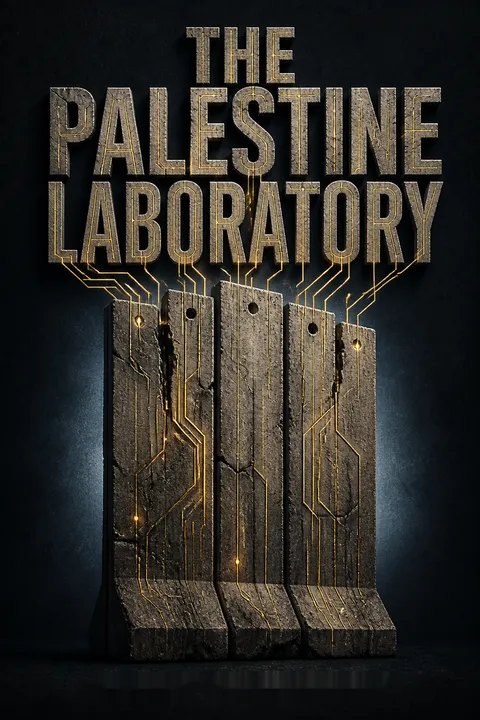
The Palestine Laboratory examines Israel's use of occupied territories as a testing ground for military and surveillance technology, which it then exports globally. Readers found the book informative, well-researched, and eye-opening, highlighting Israel's role in global conflicts and its monetization of occupation. Many praised Loewenstein's thorough investigation and clear writing, though some felt the book became repetitive. Critics noted the book's focus on Israel's tech exports rather than its direct impact on Palestinians. Overall, reviewers considered it an important, if disturbing, read that contextualizes Israel's military apparatus and global influence.
People Also Read










Glossary
Palestine laboratory
Occupation as export testing groundLoewenstein’s term for the way Israeli control of Palestinians becomes a setting in which weapons, surveillance systems, and methods of population management are used and presented to foreign buyers. The phrase describes both the testing and marketing of security products and the wider export of practices associated with occupation.
Politicide
Dissolving a people politicallyA term used by Israeli sociologist Baruch Kimmerling for a process aimed at dismantling the existence of a people as a legitimate social, political, and economic entity. In the book’s context, it describes policies directed at Palestinian national life. Kimmerling’s definition allows that such a process may involve, but does not necessarily require, partial or complete expulsion.
Espionage diplomacy
Intelligence tools used diplomaticallyA phrase used by Israeli journalist Yossi Melman for the use of intelligence relationships and surveillance capabilities to advance Israel’s foreign relations. The book applies the idea to the sale of spyware and other security technologies to governments whose diplomatic support or strategic cooperation Israel seeks.
Unit 8200
Israeli signals-intelligence unitA major intelligence unit within the Israeli military, described in the book as specializing in signals intelligence, communications monitoring, and cyber operations. Its recruits and veterans are prominent in Israel’s technology sector. The book focuses on its surveillance of Palestinians and on the transfer of expertise from military service into private cybersecurity and surveillance companies.
Pegasus
Mobile-phone intrusion spywareA surveillance product developed by Israeli company NSO Group. Pegasus can provide an operator access to a targeted mobile phone and its information. NSO has said it sells the tool to governments for serious crime and terrorism investigations. The book documents its reported use against journalists, activists, political opponents, and other people with no clear connection to those crimes.
Blue Wolf
Palestinian facial-recognition database appAn Israeli military application described in the book as collecting photographs of Palestinians and comparing them with a larger database. Soldiers used it in the West Bank, where the book reports instructions to add new records during their shifts. It illustrates how mobile devices and facial recognition can make population monitoring routine at the level of individual encounters.
digital orientalism
Digital suspicion of Arab speechA term used in the book for online systems that reproduce a historically unequal view of Arabs and Palestinians as inherently suspicious or threatening. It describes how platform rules, automated tools, and moderation practices can treat Arabic-language or Palestinian content as dangerous while failing to recognize its political and cultural context.
global pacification industry
Worldwide market for population controlA phrase associated with scholar Jeff Halper and used in the book to describe the transnational market for military and security tools that manage, monitor, or suppress populations. Israel is presented as an important participant because its occupation generates experience and products that can be sold to governments facing insurgencies, protests, migration, or political dissent.
Start-Up Nation
Israel as an innovation economyA popular description of Israel’s technology-driven economy, also the title of a book by Dan Senor and Saul Singer. In Loewenstein’s account, the narrative celebrates entrepreneurship, military service, and innovation while often giving little attention to the role of defense and surveillance products, or to the occupied Palestinians against whom some capabilities are used.
FAQ
What is "The Palestine Laboratory: How Israel Exports the Technology of Occupation Around the World" by Antony Loewenstein about?
- Core focus: The book investigates how Israel has developed and exported its occupation, surveillance, and control technologies, using the Palestinian territories as a testing ground.
- Historical and global context: It traces the evolution of Israel’s arms and security industries from 1948 to the present, showing their impact on global policing, border control, and repression.
- Broader implications: Loewenstein connects Israel’s practices to the rise of ethnonationalism and authoritarianism worldwide, highlighting the global consequences of these exports.
Why should I read "The Palestine Laboratory" by Antony Loewenstein?
- Unveiling hidden networks: The book exposes the global reach of Israeli military and surveillance technology, revealing connections often overlooked in mainstream discussions.
- Critical perspective: It challenges dominant narratives by examining the ethical and political contradictions of Israel’s defense industry and its complicity with authoritarian regimes.
- Contemporary relevance: Understanding these dynamics is crucial for grasping current trends in global surveillance, repression, and the erosion of democratic norms.
What are the key takeaways from "The Palestine Laboratory" by Antony Loewenstein?
- Israel as a global exporter: Israel is a leading supplier of arms and surveillance technology, using the occupation as a “laboratory” for testing and marketing these tools.
- Human rights impact: These technologies are widely used to suppress dissent, target minorities, and facilitate human rights abuses worldwide.
- Ethnonationalism and repression: The book warns of the dangers posed by the global spread of ethnonationalist ideologies and the normalization of digital repression.
What is the "Palestine Laboratory" concept in Antony Loewenstein’s book?
- Definition: The “Palestine Laboratory” refers to Israel’s use of occupied Palestinian territories as a real-world testing ground for military, surveillance, and control technologies.
- Export model: Technologies and tactics refined in Palestine are then marketed and sold globally to states seeking to control or repress populations.
- Ideological export: Beyond hardware, Israel exports an ethnonationalist ideology that appeals to authoritarian and far-right regimes.
How does Antony Loewenstein describe Israel’s arms and surveillance industry in "The Palestine Laboratory"?
- Battle-tested marketing: Israeli companies promote their products as “battle-tested” on Palestinians, enhancing their appeal to international buyers.
- Global sales: Israel is among the world’s top arms exporters, selling to both democracies and dictatorships, often disregarding human rights concerns.
- Profit over ethics: The industry prioritizes financial and strategic gains, with little accountability for how exported technologies are used.
What is the significance of Unit 8200 in "The Palestine Laboratory" by Antony Loewenstein?
- Elite intelligence unit: Unit 8200 is Israel’s premier signals intelligence and cyber warfare division, central to mass surveillance of Palestinians.
- Tech incubator: Many veterans of Unit 8200 go on to found or staff leading Israeli cyber-surveillance firms, exporting their expertise globally.
- Moral controversy: Some former members have publicly criticized the unit’s role in abuses, such as blackmail and indiscriminate spying.
How does "The Palestine Laboratory" by Antony Loewenstein explain the role of the NSO Group and Pegasus spyware?
- Pegasus as a cyberweapon: Pegasus is a powerful phone-hacking tool sold to governments, often used to target activists, journalists, and dissidents.
- State-backed operations: NSO Group operates under the close supervision of Israel’s Ministry of Defense, making its sales part of state policy.
- Global scandals: The spyware has been implicated in numerous human rights abuses, sparking international efforts to regulate or blacklist NSO.
How does Antony Loewenstein describe Israel’s relationship with authoritarian regimes in "The Palestine Laboratory"?
- Historical alliances: Israel has a long record of selling arms and surveillance tools to dictatorships in Latin America, Africa, and Asia.
- Strategic pragmatism: These relationships are driven by diplomatic and strategic interests, often overriding human rights concerns.
- Ongoing complicity: Despite evidence of abuses, Israeli officials and companies frequently deny responsibility, prioritizing alliances and profits.
How does "The Palestine Laboratory" by Antony Loewenstein address the global impact of Israeli technology on border control?
- Exported border technologies: Israeli firms supply surveillance towers, drones, and biometric systems to borders worldwide, including the US-Mexico and EU frontiers.
- Militarization of borders: These technologies contribute to the criminalization and endangerment of migrants and indigenous peoples.
- Testing in Palestine: The occupied territories serve as a laboratory for developing and refining these border control methods before global export.
How does "The Palestine Laboratory" by Antony Loewenstein discuss the role of social media companies in censoring Palestinian voices?
- Systematic censorship: Platforms like Facebook, Instagram, and TikTok routinely remove or restrict Palestinian content, often under Israeli government pressure.
- Algorithmic bias: Palestinian posts are frequently misclassified as incitement, while anti-Palestinian content often remains online.
- Lack of representation: Few Palestinians hold key policy roles in these companies, leading to biased moderation and silencing of Palestinian narratives.
How does Antony Loewenstein link Israel’s occupation to global trends in ethnonationalism and authoritarianism in "The Palestine Laboratory"?
- Ideological export: Israel’s model of privileging one ethnic group is increasingly admired and emulated by far-right and authoritarian leaders worldwide.
- Template for repression: Israeli methods of surveillance and control serve as blueprints for other regimes facing internal dissent or minority populations.
- Democracy’s decline: The book argues that as satisfaction with democracy wanes, Israel’s model becomes more attractive to leaders seeking to maintain power.
What are some key examples of countries or regions influenced by Israeli occupation technology and ideology in "The Palestine Laboratory" by Antony Loewenstein?
- United States: US police forces have received Israeli training, adopting militarized tactics and surveillance methods.
- Europe and the EU: Israeli drones and surveillance tech are used by European border agencies, impacting migration and border control.
- India and Kashmir: India’s occupation of Kashmir mirrors Israeli policies, with Israeli arms and training supporting Indian repression.
- Africa and Latin America: Israel has armed and trained regimes in countries like Guatemala, South Sudan, and Myanmar, often accused of severe human rights abuses.
Download PDF
Download EPUB
.epub digital book format is ideal for reading ebooks on phones, tablets, and e-readers.








