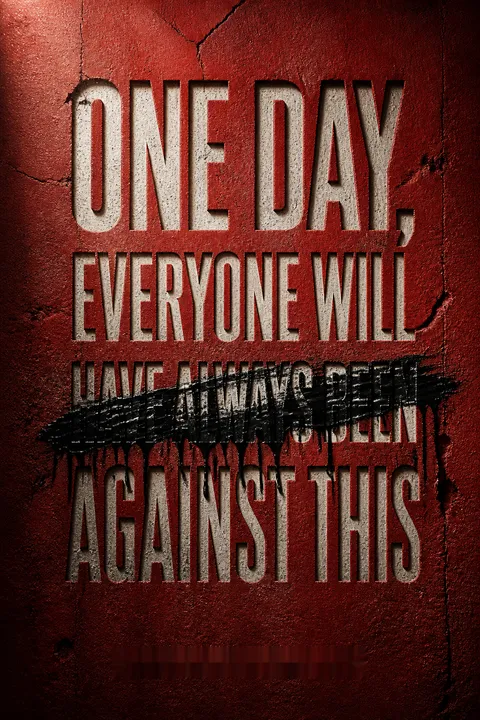


Key Takeaways
Expect history to condemn what polite society excuses in real time.
A family-scale opening. In Portland, El Akkad watches his daughter build an imaginary town while, on his screen, children in Gaza are pulled from destroyed homes. The contrast opens the book’s central wound: a child’s life feels precious when she is near, yet distant children are discussed as acceptable costs. El Akkad argues that powerful societies often excuse violence while it happens, then later present their condemnation as though it had always been clear.
Hindsight is a refuge. The title points to a familiar transformation: once the danger has passed, people claim they opposed what they tolerated or enabled. The book asks readers to judge not only what history eventually says, but what people chose to see, say, and do while the harm was unfolding.
What's striking is how the domestic scene makes a political argument legible without turning the daughter into a symbol. She is a specific child, absorbed in play, and that specificity exposes how selectively societies distribute emotional attention. The book also identifies hindsight as a form of reputation management: a later consensus can protect people from asking what they accepted at the time. That pattern is not confined to governments. Institutions and individuals can all convert changed circumstances into a flattering story about their past.
See law as a shield power lends selectively, not a universal guarantee.
A passport cannot protect everyone. El Akkad recalls his father leaving work in Egypt during curfew. Soldiers demanded his papers, tore them up without reading them, and might have detained him if his employer had not intervened. The episode shaped the son’s view of law: rules can be discarded when they obstruct the people who hold power. His father later faced unexplained detention at a border crossing, and a U.S. work opportunity stalled after September 11.
The pattern travels. As a journalist, El Akkad sees legal protections bent at Guantánamo Bay, where prisoners face secrecy, censored evidence, and proceedings unlike ordinary courtrooms. The book connects these experiences across governments and borders. Law can restrain authority, but its presence on paper does not guarantee equal protection in practice.
The memoir gives institutional critique an unusually concrete foundation: a torn document, a delayed visa, a courtroom with rules altered for the accused. In political theory, formal rights and effective rights are distinct. A right matters only if people can invoke it, and if institutions enforce it against powerful interests. The book’s warning is strongest when it shows that gap through lived episodes. Its broader claim should still be tested case by case, since legal institutions can sometimes constrain power, even unevenly.
Treat faraway suffering as real before proximity makes it undeniable.
Distance dulls recognition. As a child in Qatar, El Akkad watches televised images of the Gulf War. The explosions first shock him, then become an ordinary feature of distant places. The unspoken comfort is that the violence is happening to someone else. Years later, reporting in Afghanistan, he experiences the privilege of entering a war zone and then leaving it. Local deaths can become background detail to a visiting journalist’s account of danger.
Closeness changes the scale. In Oregon, a tree falls near the spot where his daughter had played hours earlier. His fear for his own child is immediate, even as he has been watching children elsewhere endure far worse. He does not pretend this instinct is fair. Instead, he asks how to extend care beyond the people whose vulnerability feels personal.
The book confronts a basic feature of human attention: vivid, nearby risks often feel more urgent than larger harms encountered through images or statistics. That tendency helps explain emotional distance, but it does not excuse political indifference. Personal connection can open the door to wider concern, provided it is treated as a starting point rather than the measure of whose suffering counts. El Akkad’s admission of his own uneven empathy gives the argument credibility. It also leaves readers with a difficult task: widening concern without expecting equal emotional intensity.
Make journalism name perpetrators, not just report competing claims.
Neutrality has consequences. El Akkad describes a journalistic ideal in which reporters act like referees, presenting opposing claims and letting readers decide. That model depends on participants accepting shared rules and on claims being treated with appropriate scrutiny. When a government’s statements are given the same weight as evidence of civilian harm, apparent balance can conceal the imbalance of power.
Framing shapes responsibility. The author recalls early Western coverage of the October 7 attacks, including a widely repeated claim about beheaded babies, while reporters had little access to Gaza. He contrasts this with the killing of Palestinian journalists, which he says received less decisive attention. By July 2024, the book cites the Committee to Protect Journalists’ count of at least 108 Palestinian journalists killed. It argues that professional caution can become preemptive deference to powerful sources.
The distinction between impartiality and false equivalence is central here. Fair reporting requires consistency in standards, not identical treatment of claims with different evidentiary support or institutional power. This is especially important when access is controlled by parties to a conflict. Still, moral clarity does not remove the journalist’s obligation to verify, correct, and distinguish evidence from inference. The strongest version of El Akkad’s argument is not that reporters should abandon rigor, but that rigor includes identifying who acts, who is harmed, and who controls the account.
Watch euphemism erase victims and launder state violence.
Grammar can hide agency. El Akkad points to descriptions in which buildings seem to collapse by themselves, people simply disappear, or civilian deaths become collateral damage. Passive wording can be accurate in some contexts, but repeated avoidance of an actor makes responsibility harder to see. The book calls this a shadow vocabulary: terms such as enhanced interrogation and detainee soften the realities of torture and indefinite imprisonment.
Naming is part of witness. The author argues that language affects whether readers understand violence as an action or as an unfortunate event. A headline that says a journalist was hit by a bullet may leave unanswered who fired it. The same structure appears when victims are labeled terrorists after death, unable to challenge the designation. For El Akkad, accurate language cannot undo violence, but it can resist the story that makes violence seem natural or unavoidable.
This analysis connects political language to a practical question of accountability: can an audience identify who made a decision and who bears its cost? Bureaucratic phrasing often reduces emotional friction, which can make large-scale harm easier to administer and harder to contest. Yet a single vivid label can also oversimplify or prejudge. The answer is not to replace euphemism with rhetoric, but to use precise descriptions, attribute disputed claims, and make agency visible where the evidence supports it.
Ask whose fear counts before accepting fear as justification.
Fear has unequal force. El Akkad reflects on his own unease around Western flags and border crossings, while recognizing that his fear has little political influence. By contrast, fear of migrants, Arabs, or Muslims can be used to justify surveillance, detention, and harsh border policies. In the book’s argument, fear is not merely an emotion; it is a resource whose political value depends on who feels it and who is feared.
Labels shape permission. In his reporting on the Toronto 18 terrorism case, El Akkad learns how an older recruit drew a younger man in by showing him images of violence against Muslims before threatening him with a grave. He argues that ignoring the conditions in which political violence develops makes it harder to understand or prevent. The state’s own violence, meanwhile, is often treated as a separate category, beyond the same scrutiny.
Fear can create a security spiral: one group’s demand for protection becomes another group’s evidence of impending harm. Recognizing that cycle does not excuse violence or dissolve responsibility. It helps explain why one population’s fear is treated as a policy emergency while another’s is discounted as irrational or threatening. El Akkad’s account is persuasive in asking who receives the benefit of the doubt. Its challenge is to keep explanation distinct from justification, especially when discussing recruitment and political violence.
Refuse the lesser-evil bargain when it becomes a blank check.
Relative harm has limits. El Akkad acknowledges that he considers Republicans more destructive than mainstream Democrats on many issues. His objection is to using that comparison to excuse a party’s support for policies he regards as intolerable. In the 2023-24 debate over Gaza, he argues that telling voters to accept a government’s actions because its opponent might be worse can make moral accountability disappear.
A vote is not absolution. The book describes activists and voters unwilling to support a candidate who enables mass killing, despite warnings that abstention could help the greater danger win. El Akkad sees this refusal as a demand that political parties earn continued support through action, not merely through contrast with a worse alternative. He also recognizes that people exposed to the greatest danger may reasonably choose harm reduction over symbolic refusal.
The dilemma resembles a principal-agent problem: voters delegate power, then struggle to discipline leaders without increasing the chance of a worse outcome. The author is right that permanent loyalty can reward unresponsive parties. Yet refusing the lesser evil can impose consequences on vulnerable people who did not choose the policy at issue. The ethical question is therefore not simply whether compromise is pure or impure. It is how to combine immediate harm reduction with credible pressure for change, without treating either strategy as universally correct.
Judge cultural institutions by what they risk, not what they praise.
Craft meets consequence. El Akkad questions writers and arts organizations that defend open expression in principle but fall silent when Palestinian writers and artists are censored, killed, or excluded. He recalls a ceasefire protest at the Giller Prize ceremony and notes that its corporate sponsor had a reported $500 million stake in an Israeli weapons maker. Other institutions canceled or delayed events involving Palestinian writers, while some artists risked awards, contracts, or work by speaking publicly.
Patronage has conditions. The book recognizes that writers often depend on grants, prizes, and donors to survive. That dependence helps explain caution, but it does not erase its effects. El Akkad contrasts institutional silence with writers declining prizes and students risking discipline through protest. He asks whether artistic integrity can be separated from the choices an artist makes when speaking carries a price.
Art institutions are not outside politics; their funding, programming, and rules determine which voices are heard. The book makes the useful distinction between celebrating bravery as an aesthetic ideal and accepting professional risk for a position. At the same time, risk is not a reliable measure of truth, and symbolic gestures can be mistaken for material change. A stronger test asks both what an institution is willing to jeopardize and whether its response changes access, resources, or the conditions facing the people it claims to support.
Make refusal a form of engagement, then build solidarity around it.
Two kinds of resistance. El Akkad distinguishes active resistance, such as protesting, organizing, and speaking publicly, from negative resistance, his term for refusing to participate in institutions or transactions one considers complicit. He describes boycotts, artists withdrawing from awards, workers refusing to load weapons, and people declining events that suppress discussion of Palestine.
Refusal can train commitment. The author does not claim that individual gestures alone can end state violence. He argues that small refusals can disrupt the appearance of normality and strengthen the habit of drawing moral boundaries. He also sees a danger in systems that respond only when their economic interests are threatened. Resistance may need collective organization, not just personal withdrawal, to turn a private refusal into pressure that institutions cannot ignore.
This distinction clarifies how political action can include both intervention and noncooperation. Collective boycotts, strikes, and refusals can alter incentives, while personal withdrawal can preserve moral agency when institutions demand complicity. Neither is automatically effective: isolated acts may be absorbed as branding or dismissed as symbolic. The relevant measure is whether refusal connects people, changes institutional costs, or opens routes to a more accountable alternative. The book’s emphasis on the inward effect matters too, but conscience alone cannot substitute for coordinated power.
Keep a ledger of courage alongside atrocity.
Witness includes more than horror. The book records Palestinian doctors who stay with patients, journalists who keep reporting, a puppet-maker who entertains displaced children, and protesters who risk their education or livelihoods. These acts do not balance the ledger of deaths, and El Akkad does not present them as a cure for violence. They show people preserving care, truth, and solidarity under conditions designed to destroy them.
Memory has two directions. El Akkad expects many people to claim, once the violence is safely past, that they always opposed it. He also believes that those who documented the harm and those who resisted will matter to the future account. The book ends by refusing both despair and easy reassurance: courage exists, but a different future requires people to dismantle systems that normalize extraction and suffering.
A record of courage counters the way atrocity can make people appear only as victims and perpetrators. It preserves evidence of agency, care, and political choice, while refusing to imply that admirable individuals compensate for institutional failure. The book’s ending also resists a common trap in moral writing: treating hope as proof that outcomes will improve. Here, hope is a reason to act, not a prediction. That distinction keeps solidarity grounded in responsibility rather than sentiment.
Analysis
El Akkad’s book is memoir, political argument, and act of witness, held together by a central question: what does a society’s stated moral code mean when its leaders excuse violence against people who have little power? The author answers through a series of crossings: Egypt to Qatar, Qatar to Canada, journalism into war zones, and the protected life of an immigrant writer into the public argument over Gaza. Each movement changes his understanding of safety, belonging, and the supposed universality of law. The personal stories do more than establish credibility. They show how political arrangements are felt in a passport check, a censored record, a newsroom decision, or the ability to leave a battlefield.
The book’s strongest method is to connect language and institutional behavior. Passive headlines, official euphemisms, and claims of neutrality are not treated as mere stylistic flaws. They help distribute responsibility and make unequal treatment appear ordinary. Its account of journalism is especially sharp when it distinguishes fairness from mechanical balance: competing claims do not deserve equal weight simply because they conflict. Its treatment of art and political refusal extends the same inquiry to institutions that praise freedom while depending on donors or sponsors who may constrain it.
The argument is deliberately unsparing, and its breadth creates a tension. El Akkad sometimes speaks of Western liberalism as a single structure, although parties, journalists, courts, and civic groups differ in their power, motives, and capacity to resist. That sweeping frame makes the indictment vivid but can obscure the distinctions needed to identify where reform is possible. The book also poses, without fully resolving, the strategic problem of refusing a lesser evil when vulnerable people may bear the cost of political backlash. Its contribution is not a universal voting formula. It is a demand to stop treating comparative advantage as moral innocence, and to measure institutions by what they do when their principles become inconvenient.
Review Summary
Reviews for One Day, Everyone Will Have Always Been Against This are largely positive (4.59/5), with many praising its moral clarity, sharp critique of Western liberalism, and powerful indictment of complicity in the Gaza genocide. Admirers call it essential, beautifully written, and transformative. Critics, however, raise concerns about the author's lack of direct Palestinian connection, insufficient sourcing, surface-level historical context, and the interweaving of personal memoir with accounts of atrocity—some finding this exploitative or distracting from Palestinian voices.
People Also Read





Glossary
negative resistance
Refusal to participateA form of political opposition based on withdrawing participation from institutions, events, purchases, or relationships judged complicit in harm. El Akkad distinguishes it from direct protest or organizing, which he calls active resistance. Negative resistance can make complicity harder to treat as normal, but its force grows when individual refusals become coordinated and create meaningful pressure.
active resistance
Direct public oppositionPolitical action that openly confronts a policy or institution, including protest, organizing, public speech, and efforts to change rules or decisions. El Akkad uses the term alongside negative resistance to distinguish doing something against an injustice from refusing to participate in the systems that sustain it. The two forms can work together.
WCNSF
Wounded child, no surviving familyAn acronym described in the book as having been created by medics to identify a wounded child with no surviving family. Its clinical efficiency points to the scale of civilian suffering: professionals need a new category for children who have been injured and left without relatives. El Akkad uses the term to show how mass violence enters ordinary medical language.
rules-based order
Claimed international legal systemThe stated ideal that nations and governments are bound by shared principles, legal conventions, and protections for human rights. El Akkad examines the gap between this ideal and political practice, arguing that powerful states often uphold rules when convenient and set them aside when they threaten strategic interests. The phrase names both a political aspiration and the author’s critique of its selective enforcement.
M-copy
Balancing conflict accountsA journalistic shorthand described by El Akkad for background paragraphs that present one side’s action and then an offsetting action by another side. He criticizes this format when it removes historical context or implies equivalence between unequal acts. The problem is not explaining more than one perspective, but flattening agency and responsibility into a formula of opposing claims.
Download PDF
Download EPUB
.epub digital book format is ideal for reading ebooks on phones, tablets, and e-readers.








