

Key Takeaways
Reject a culture that sells sexual visibility as women's only power
Attention is not authority. The book begins with three 1999 images: a teenage Britney Spears posed in a bedroom, Gail Porter’s naked image projected onto Parliament, and American Beauty eroticizing a teenage girl for an adult man. Each treats women’s visibility as a kind of power, yet the power depends on youth, sexual appeal, and other people’s attention. It is fleeting, conditional, and largely controlled by those doing the looking.
The same bargain keeps returning. Gilbert traces how popular culture encourages women to call exposure, consumption, and self-objectification empowering, even when those choices leave existing power relations intact. Her central claim is not that women’s sexual expression is false, but that culture repeatedly narrows women’s options until being desirable looks like the only route to influence.
What's striking is the gap between visibility and agency. Social platforms can let people represent themselves, but representation alone does not confer control over how an image circulates, who profits, or what happens when attention turns hostile. This distinction is useful well beyond celebrity culture: a person can be highly visible and still lack bargaining power. The argument is strongest when it examines institutions that reward sexual display, rather than treating individual women as dupes for participating. A necessary nuance is that sexual self-presentation can be pleasurable and self-directed. The question is not whether exposure is inherently liberating, but who sets the terms and who captures its benefits.
Keep feminist anger collective before brands turn it into shopping
Two slogans, two politics. In the early 1990s, riot grrrl bands such as Bikini Kill used music and handmade zines to challenge sexism, abuse, and women’s exclusion from punk. Their work urged girls to claim physical and creative space, and questioned the reduction of people to things for sale. By decade’s end, the Spice Girls had made Girl Power a global commercial slogan. The group encouraged confidence and self-expression, but linked those ideals to consumer choice and individual success.
The difference matters. Riot grrrl organized around shared conditions and political change. The Spice Girls’ version suggested that personal confidence and buying power could stand in for collective action. Its appeal was real, but its vagueness made it easy for companies to package. The slogan spread widely while the demands behind the movement weakened.
What's valuable here is the distinction between a movement and its marketable vocabulary. Brands can adopt words such as choice and confidence without taking on the institutions those words once challenged. This resembles a broader pattern in political communication: a complex demand becomes easier to circulate once reduced to an individual lifestyle signal. Still, popular commercial culture is not automatically empty. The Spice Girls offered girls pleasure, identification, and a public language of confidence. The problem arises when that language implies that personal purchasing or self-belief can remedy structural barriers. A useful test is whether a message builds shared capacity or merely sells a private feeling of freedom.
Ask who controls the camera before calling sexual exposure liberation
Porn became a style guide. Gilbert follows pornographic imagery into fashion, music videos, film, advertising, and celebrity culture. In the 1990s, Madonna’s Sex presented a famous woman shaping her own erotic persona, while photographers and brands increasingly borrowed porn’s poses and visual language. By the early 2000s, that borrowing could be labeled art, parody, or empowerment, even when men still controlled the shoots and the profits. Terry Richardson’s fashion work exemplifies how sexualized provocation could move from the margins into mainstream prestige.
Context changes the meaning. The book does not argue that all erotic art or sex work is exploitation. It asks whether a woman controls the image, can refuse, and benefits from its circulation. A declaration of empowerment cannot by itself resolve unequal power behind the camera.
The camera is not a neutral witness. It selects, frames, and circulates, so the meaning of an image depends partly on who has the authority to make those decisions. This connects cultural criticism to labor analysis: consent matters, but so do working conditions, ownership, and the ability to leave a project safely. That framework helps avoid two unhelpful extremes, treating every sexual image as liberation or every sexual image as victimization. The book’s examples make a strong case that irony often shields powerful creators from criticism. Yet the viewer’s interpretation is not completely fixed. Images can be reused, resisted, or understood in ways their makers did not intend.
Notice when reality TV turns self-surveillance into a woman's job
Being watched reshapes behavior. Jennifer Ringley’s Jennicam broadcast ordinary scenes from her dorm room in the late 1990s. She saw the webcam as an experiment in everyday life, but many viewers wanted sexual access and personal contact. Reality television scaled up this tension. Shows such as Big Brother presented surveillance as entertainment and invited audiences to judge contestants, while makeover and dating programs taught women to monitor their bodies, behavior, and desirability.
The pressure was gendered. Media scholar Rosalind Gill calls this postfeminist sensibility: a media pattern that emphasizes women’s self-monitoring, sexual self-presentation, personal choice, and individual improvement. Reality shows could also reproduce racial stereotypes, though some, including Flavor of Love, can be read as parodying the respectable ideals represented by The Bachelor. Visibility can expose women to judgment, but it can also create room for voices previously excluded.
Self-surveillance is powerful because it makes outside judgment feel like personal preference. Once people anticipate being assessed, they begin to adjust themselves without needing a direct command. That dynamic connects reality television to workplace evaluation and social-media metrics, where measurement can quietly define what counts as acceptable. The book also shows why visibility cannot be judged by a simple rule: appearing within a stereotype may reinforce it, yet absence can erase people altogether. The question is who gets to shape the representation and whether participants can complicate the role assigned to them. Audience participation may create accountability, but it can also turn judgment into a game.
Treat beauty makeovers as sales pitches, not proof that bodies need fixing
Transformation became entertainment. In The Swan, contestants underwent extensive cosmetic procedures and competed in a beauty pageant after months without mirrors. The format made physical change appear to promise confidence, status, and a new life. Makeover shows proliferated: about two dozen aired in the United States in 2004, and Brenda Weber later counted more than 250 by 2009. Cosmetic procedures also rose sharply during the decade. By 2009, the number performed annually in the United States was 69 percent higher than at the start of the 2000s.
The ideal kept changing. Later, the Kardashians helped popularize a curvier silhouette, but the demand to reshape the body did not disappear. Social media made beauty more visible and more marketable, promoting a polished, increasingly standardized look. The standard could shift from thinness to curves while the underlying message stayed constant: your body is a project to improve.
The makeover format turns an economic proposition into a story of personal rescue: buy the intervention, become more worthy of admiration. That resembles advertising’s broader promise that a product can return self-esteem in improved form. The scale of cosmetic procedures suggests that these ideals are not just abstract images; they can influence costly, physical decisions. At the same time, the book’s account of changing body ideals warns against defining progress as simply replacing one preferred shape with another. Greater representation can matter, but inclusion is limited if every body is still expected to be optimized, displayed, and monetized.
Question stories that make sexual access a boy's coming-of-age prize
A comedy can carry a script. In American Pie, four boys make a pact to lose their virginity before graduation. The movie gives them jokes, humiliations, and personal growth, while girls largely appear as the people who grant or withhold sex. In one plotline, a boy secretly broadcasts a girl changing clothes over the internet. His embarrassment becomes the joke; the girl is sent away and never gets to explain the harm.
Entitlement can feel like destiny. Gilbert connects such stories to fairy-tale logic, a pattern in which a hero expects a happy ending if he completes the right steps, and blames a villain when it fails to arrive. In some incel thinking, women become that villain for refusing sex. The book does not claim that films cause violence. It argues that repeated stories can normalize sexual entitlement and make women’s choices seem like obstacles.
Narratives teach more than explicit morals. They also teach whose frustration deserves sympathy, whose boundaries count, and who is responsible when a desired outcome does not arrive. That makes the film’s treatment of the secretly broadcast girl more revealing than its crude jokes: the boy’s humiliation is legible, while her loss of privacy barely registers. Still, a story is not a simple behavioral instruction. Viewers interpret media through relationships, institutions, and prior beliefs, so no single film explains a violent act. The more careful claim is that familiar scripts can make entitlement feel ordinary, especially when alternatives are scarce or absent.
Remember that celebrity exposure can turn audiences into accomplices
The spectacle feeds itself. In 2007, Britney Spears, Lindsay Lohan, Amy Winehouse, Paris Hilton, and other famous women were followed through crises by tabloids, gossip sites, and paparazzi. Each new image attracted attention, and that attention justified still more exposure. Photographers pursued upskirt images and paparazzi provoked stars into reacting; the resulting pictures were then used to shame the women they had targeted. Spears later described being relentlessly pursued while the photographers profited from the images.
Fame blurred person and character. Reality TV and gossip media encouraged viewers to feel they knew celebrities, then treated their private lives as public entertainment. The cycle made women appear both available for inspection and blameworthy for being seen. Gilbert argues that this spectacle helped train audiences to view famous women less as people than as stories, failures, or punch lines.
The attention economy distributes responsibility across a chain. Photographers and publishers create the material, platforms circulate it, and audiences reward it with clicks and conversation. That does not make every viewer equally culpable, but it does show why private outrage alone rarely changes the incentives. The chapter’s account is especially persuasive when it connects supposedly light entertainment to the normalization of invasive scrutiny. A further distinction matters: public interest in a person’s work is not the same as entitlement to their body or private life. Celebrity may involve visibility, but visibility is not consent to every form of exposure.
Let women narrate messy lives without demanding that pain justify their voice
First-person stories reclaim authorship. Lena Dunham’s Tiny Furniture and Girls, Issa Rae’s Awkward Black Girl, and Taylor Swift’s autobiographical songwriting put flawed, awkward, and emotionally complicated women at the center. Their work challenged a culture that had often treated women as decoration or spectacle. Critics frequently labeled women who wrote about themselves narcissistic or oversharing, even as male artists used personal material without the same suspicion. Nora Ephron’s Heartburn made the stakes plain: telling a story can help a person regain control of how an experience is understood.
Confession has risks. Online personal writing helped make women’s accounts of harassment and assault more publicly credible, contributing to the conditions in which #MeToo could spread. But editors and audiences can also turn intimate pain into content. A woman’s voice should not have to be shocking, wounded, or endlessly exposed to count as art.
Personal narrative can correct a record that has excluded women’s interior lives, but it can also become a new demand for disclosure. This tension is familiar in memoir and journalism: testimony may create recognition while making the person who speaks newly vulnerable to scrutiny. The book’s strongest distinction is between women controlling a story and audiences consuming a woman’s pain as proof of her value. That distinction also guards against treating trauma as a universal female identity. Specific experience can reveal social patterns without standing in for every woman, especially across differences of race, class, and sexuality.
Build structural power, not just a more polished female brand
Individual success has limits. Lean In urged women to pursue workplace power through personal initiative, while critics argued that this approach left employers and public policy largely unchanged. The girlboss era extended the formula: women entrepreneurs and influencers sold beauty, clothing, and lifestyle goods while presenting personal success as feminist progress. Multilevel marketing schemes made the promise especially stark. One analysis cited in the book found that 99 percent of people recruited into such companies lost money over time.
Representation is part of the structure. The book ends by asking for more stories of women seeking authority, not only women being desired, mocked, or watched. Hillary Clinton and Sarah Palin faced different political circumstances, but both were framed through gendered expectations about ambition, sexuality, and femininity. Rewriting cultural archetypes can widen the imaginable forms of power, but it cannot replace material changes to work, care, and political life.
A marketable success story can make systemic barriers look like personal failures: if one woman rises, everyone else is told to imitate her. This is a narrow model of equality because it measures progress by who reaches the top, not by whether institutions become more livable or fair. The book’s attention to care work and insecure employment helps expose that gap. Cultural representation still matters because people use stories to imagine who can lead and what authority looks like. But representation and redistribution are separate tasks. Stronger narratives can support political change; they cannot substitute for it.
Analysis
Girl on Girl is cultural history shaped into an argument about power. Its method is cumulative: rather than treating music, film, fashion, reality television, celebrity gossip, pornography, and entrepreneurship as separate industries, it traces their shared habit of making women visible while limiting the terms on which visibility becomes influence. The recurring contradiction is that women are told to perform sexual confidence and individual ambition, then punished for being too sexual, too ambitious, too ordinary, or too conspicuous. Consumer culture turns that contradiction into a renewable business model: first sell the ideal, then sell the tools to approach it.
The historical sequence gives the argument force. Riot grrrl’s collective politics provide a revealing contrast with commercial Girl Power. Pornographic aesthetics migrate from marginal contexts into mainstream entertainment, while reality television makes self-monitoring seem like common sense. In the next decade, influencer businesses and girlboss branding translate self-presentation into labor. The closing insistence on new narratives follows logically: cultural images help determine which forms of authority seem plausible, and which women are presumed unworthy of it.
The book is most compelling when it treats agency as constrained rather than absent. Madonna, sex workers, reality stars, and online writers may make choices, pursue pleasure, or build careers, while still operating inside unequal systems. Its account also repeatedly foregrounds race, especially where Black women face the double bind of being excluded from representation or represented through degrading stereotypes. That attention helps prevent a universal story of womanhood from appearing too simple.
A caution concerns causality. The book persuasively shows that media can circulate scripts of entitlement, self-objectification, and contempt, but its cultural readings cannot establish that a specific film or image caused a specific behavior or political result. The work is stronger as an account of normalization and incentive than as a direct causal theory. Its broad focus on US and British popular culture, and its concentration on heterosexual gender norms, also leave other histories less visible. These limits do not undo its central insight: repeated stories are part of the environment in which social power is learned, contested, and sold.
Review Summary
Girl on Girl receives widespread praise for its insightful analysis of pop culture's impact on women, especially millennials. Readers appreciate Gilbert's examination of misogyny in music, reality TV, and social media. Many find the book eye-opening, nostalgic, and compulsively readable. Some note its overwhelming and anxiety-inducing content but commend its importance. The book is lauded for its accessible writing style and thorough research. Critics mention its abrupt ending and occasional repetitiveness. Overall, it's highly recommended for its powerful exploration of how media has shaped women's perceptions of themselves and each other.
People Also Read










Glossary
Postfeminism
Individual choice framed as liberationA cultural sensibility that presents feminism as largely completed and emphasizes personal choice, sexual self-expression, consumerism, and individual achievement. In the book, it often turns collective political questions into private lifestyle decisions. A woman may be told that any choice is empowering, even when the available choices remain shaped by commercial interests and unequal power.
Riot grrrl
Feminist punk activismA loosely organized feminist punk movement that grew in the early 1990s around bands, zines, performances, and local networks. Riot grrrl challenged sexism and abuse in music scenes and wider society, while encouraging girls to create work, claim space, and support one another. Its political and collective meaning contrasted with the later commercial use of Girl Power.
Hip-hop feminism
Intersectional critique through hip-hopA feminist approach that centers Black women's experiences of both racism and sexism within hip-hop culture. It makes room to love and participate in the music while criticizing its misogyny, and it treats sexual pleasure, racial solidarity, and political critique as potentially overlapping concerns rather than forcing a choice between them.
New Traditionalism
Nostalgic domestic femininityA media trend that encouraged women to return to traditional domestic roles, often by presenting home, marriage, and family life as comforting alternatives to the pressures of women's increased public and professional participation. In the book, it exists alongside a seemingly opposite fascination with sexualized images of women, while both can direct women's lives toward male-centered expectations.
New Voyeurism
Sex as a spectator experienceA cultural response to the AIDS crisis in which looking at sex, reading about it, and watching it became more prominent than participating in it. The book uses the term to describe a media environment where sexual imagery became ubiquitous, often turning women into objects for spectators even as some women artists tried to place their own desires and fantasies at the center.
Postfeminist sensibility
Self-monitoring as feminine agencyMedia scholar Rosalind Gill's term for a recurring cluster of ideas in popular culture: close monitoring of women's bodies, self-discipline, makeovers, individual gratification, gender essentialism, and the presentation of women as active sexual subjects. The book applies the concept to reality television, where women are encouraged to manage their appearances and behavior as personal projects.
Fairy-tale logic
A promised reward for correct stepsA pattern of thinking in which completing the right actions is expected to produce a predictable happy ending. In the book's discussion of incel culture and romantic comedies, this logic can turn sex or love into a reward owed to a male protagonist. When the expected outcome fails, women may be cast as villains for withholding it.
Torture porn
Horror built on graphic bodily harmA label for horror films, especially prominent in the 2000s, that emphasize graphic torture, bodily suffering, and extreme violence. The term highlights how these movies combine the visceral impact of horror with imagery that can resemble pornography or melodrama. The book links the genre to a broader appetite for spectacle, cruelty, and post-9/11 vengeance.
Gonzo porn
Action-centered amateur-style pornographyA style of pornography that minimizes narrative and presents sexual activity as immediate, direct action, often imitating the look of amateur footage. The book contrasts mainstream productions with a more extreme version of gonzo porn that marketed boundary-pushing acts as a sign of realism and intensified the risk of coercion and physical harm.
Misogynoir
Anti-Black misogynyA term coined by feminist scholar Moya Bailey for the specific, intersecting forms of racism and misogyny directed at Black women. In the book, the term helps identify how Black women can face attacks that are not fully explained by racism or sexism considered separately, including in media coverage and online responses to public accusations.
FAQ
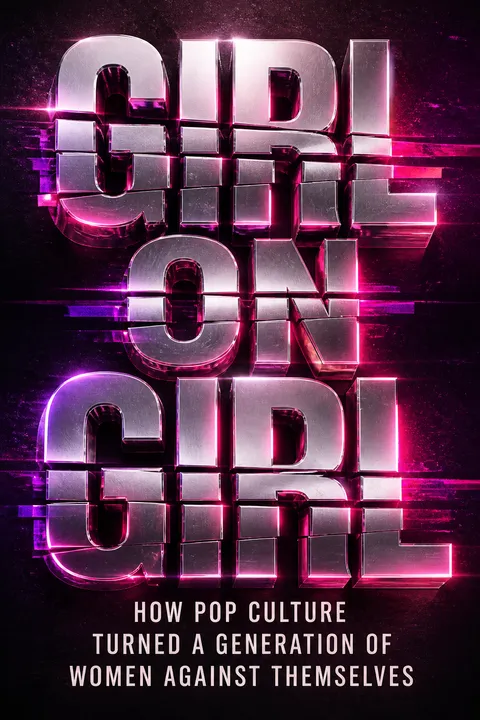
1. What is Girl on Girl: How Pop Culture Turned a Generation of Women Against Themselves by Sophie Gilbert about?
- Pop culture’s impact on women: The book explores how pop culture from the 1990s to the 2010s shaped millennial women’s self-perception, relationships, and identities.
- Media and female representation: It analyzes how women were portrayed in music, TV, film, magazines, and social media, and how these portrayals influenced societal expectations and personal ambitions.
- Historical and cultural context: Gilbert situates these trends within broader movements like postfeminism, the riot grrrl movement, and the #MeToo era, revealing how culture both empowered and constrained women.
- Call for narrative change: Ultimately, the book urges a rewriting of cultural narratives around female power, ambition, and solidarity.
2. Why should I read Girl on Girl by Sophie Gilbert?
- Nuanced cultural analysis: The book offers a comprehensive, critical look at how pop culture both empowered and limited women, making it essential for anyone interested in feminism, media, or cultural history.
- Insight into millennial womanhood: Readers gain a deeper understanding of the forces shaping contemporary issues around female identity, empowerment, and self-perception.
- Encourages critical thinking: By exposing the mechanisms behind media messages, Gilbert empowers readers to question and resist harmful narratives about women and power.
- Relevance to current debates: The book’s discussions on postfeminism, #MeToo, and the resurgence of misogyny are timely and vital for activists, creators, and consumers.
3. What are the key takeaways from Girl on Girl by Sophie Gilbert?
- Pop culture’s double-edged sword: Media offered both opportunities and limitations for women, often packaging empowerment in ways that reinforced traditional gender norms.
- Postfeminism’s paradox: The rise of postfeminism encouraged individualism and consumerism, but often sidelined collective activism and masked ongoing objectification.
- Reality TV and social media: These platforms democratized fame and self-presentation but also intensified pressures around appearance, competition, and self-surveillance.
- Need for new narratives: Gilbert calls for more diverse, authentic portrayals of women’s power and ambition to challenge ingrained cultural assumptions.
4. What is postfeminism according to Girl on Girl by Sophie Gilbert?
- Media-driven sensibility: Postfeminism is described as a cultural attitude, not a political movement, that emerged in the 1980s and 1990s, promoting individualism, consumerism, and sexualized femininity.
- Opposition to traditional feminism: It often defined itself against a caricature of feminism, encouraging women to embrace consumer culture and sexual availability as empowerment.
- Cultural saturation: By the late 1990s, postfeminist ideals had permeated media, replacing collective activism with personal choice and upward mobility.
- Critique of “empowerment”: Gilbert is skeptical of how “empowerment” is used in postfeminist contexts, arguing it often disguises continued objectification.
5. How does Girl on Girl by Sophie Gilbert describe the influence of pornography on mainstream culture?
- Pervasive cultural force: Pornography is depicted as a defining product of the era, shaping music, fashion, art, and even politics.
- Training effect: The book argues that porn conditions audiences to see women as objects for male pleasure, normalizing violence and degradation.
- Mainstream adoption: Porn’s aesthetics and values filtered into mainstream media, blurring boundaries between art, commerce, and explicit sexual imagery.
- Impact on activism: Self-objectification, promoted by both postfeminism and porn, is linked to decreased activism and social justice engagement among women.
6. How did music in the 1990s and 2000s shape feminism and misogyny according to Girl on Girl?
- Feminist music in the 1990s: Artists like Madonna, Janet Jackson, and riot grrrl bands challenged misogyny and asserted feminist ideals.
- Backlash and sidelining: By the late 1990s, feminist voices were replaced by younger, less opinionated pop stars and a surge of misogynistic music genres.
- Hip-hop feminism: Female artists like Queen Latifah and Salt-N-Pepa offered counter-narratives but were often overshadowed by sexist rap culture.
- 2000s sexualization: The rise of teen pop idols and the increasing sexualization of young female stars reflected and reinforced postfeminist ideals.
7. What role did reality television play in shaping women’s cultural narratives in Girl on Girl?
- Commodification of femininity: Reality TV in the 2000s promoted hyperfeminine ideals and self-surveillance, reinforcing postfeminist sensibilities.
- Competition and spectacle: Shows like The Bachelor and Who Wants to Marry a Multi-Millionaire? reduced women to competitors for male attention and wealth.
- Visibility paradox: Reality TV increased women’s visibility but often trapped them in roles emphasizing appearance, rivalry, and emotional excess.
- Racialized stereotypes: Programs featuring women of color often perpetuated harmful stereotypes, limiting authentic representation.
8. How does Girl on Girl by Sophie Gilbert address beauty standards and body image in the 2000s?
- Transformation obsession: The 2000s saw a boom in cosmetic surgery and makeover shows, promoting a homogenized, hyperfeminine ideal.
- Diet culture and fatphobia: Intense fat-shaming, diet fads, and media scrutiny of women’s bodies were rampant, reinforcing harmful messages about weight and worth.
- Kardashian influence: The Kardashian family redefined beauty ideals around curvaceousness and cosmetic enhancement, shaping global standards.
- Intersection with race: Shifts in beauty ideals included the fetishization of ethnically marked bodies, raising issues of colorism and cultural appropriation.
9. What are the key cultural concepts discussed in Girl on Girl by Sophie Gilbert?
- Postfeminism and its paradox: The book explores how postfeminism encouraged empowerment through consumerism and self-surveillance, yet reinforced traditional gender norms.
- Confessional auteur and autofiction: Gilbert highlights women creators who used confessional storytelling to reclaim female narratives and challenge sanitized myths.
- Girlboss culture: The rise and critique of entrepreneurial feminism focused on individual success and branding, often ignoring systemic inequalities.
- Media’s double-edged influence: The book examines how media both empowered and constrained women, shaping gender politics and self-perception.
10. How does Girl on Girl by Sophie Gilbert explore the impact of the #MeToo movement and confessional writing?
- Confessional writing as empowerment: The book traces a resurgence of first-person narratives by women, reclaiming control over their stories and exposing vulnerabilities.
- #MeToo’s significance: Gilbert situates #MeToo as a culmination of increased visibility and validation of women’s testimonies about harassment and abuse.
- Backlash and risks: Women who speak out often face skepticism, harassment, and professional risks, highlighting the movement’s incomplete progress.
- Persistent misogynoir: The book discusses cases like Megan Thee Stallion’s to illustrate ongoing backlash, especially against women of color.
11. What critique does Girl on Girl by Sophie Gilbert offer about "girlboss" culture and female entrepreneurship?
- Commodification of feminism: "Girlboss" culture repackaged feminism as a marketable brand focused on individual success and consumerism, often ignoring structural barriers.
- Rise and fall of girlbosses: Figures like Sophia Amoruso and Emily Weiss became icons but faced criticism for workplace practices and lack of inclusivity.
- MLM schemes and exploitation: The book connects girlboss culture to multi-level marketing schemes that exploit women’s networks and aspirations.
- Limited transformative power: Gilbert argues that girlbosses were often symbolic rather than agents of broad, systemic change.
12. What hopeful perspectives and solutions does Girl on Girl by Sophie Gilbert offer for rewriting women’s stories and power?
- Cultural re-vision as survival: Drawing on Adrienne Rich, Gilbert emphasizes the importance of challenging ingrained assumptions about women and power through art and storytelling.
- Emergence of diverse voices: The book highlights new media and creators who offer more nuanced, authentic portrayals of women’s experiences and ambitions.
- Expanding representation: Gilbert calls for more complex, humanized portrayals of female leaders and creators to change societal expectations.
- Path to genuine change: Rewriting narratives is presented as essential for expanding possibilities and achieving real progress for women.
Download PDF
Download EPUB
.epub digital book format is ideal for reading ebooks on phones, tablets, and e-readers.








