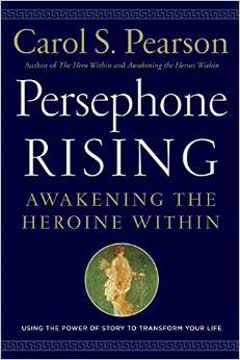
Key Takeaways
1. The Power of Story Shapes Our Reality and Potential
The story of Demeter and Persephone has had that role in my life, and I share some of my personal history as a way to illustrate how such archetypal and mythic stories can serve as a guide on your journey to greater happiness, abundance, and freedom.
Narratives define us. Our lives are shaped by the stories we tell ourselves and those we absorb from our culture, families, and experiences. These narratives, whether conscious or unconscious, act as maps, guiding our actions, shaping our perceptions, and determining our sense of possibility. Recognizing the stories we live by is the first step toward intentional transformation.
Archetypes as universal patterns. Depth psychologists, like C.G. Jung, define archetypes as universal psychological patterns embedded in the collective unconscious, manifesting across all cultures and times. When an archetype awakens within us, it expresses a subpersonality with its own motivations, strengths, and narrative. Connecting our personal challenges to these mythic patterns helps us tap into dormant strengths and universal wisdom.
Transformative potential. By understanding archetypal stories, we gain a framework to interpret our experiences, identify our innate capacities, and navigate life's complexities. This book reinterprets the ancient Eleusinian Mysteries, centered on Demeter and Persephone, as a guide for modern heroines to awaken their inner Demeter (heart), Zeus (power), Persephone (transformation), and Dionysus (joy) to achieve a fulfilling life.
2. Demeter: Cultivating a Connected, Resilient Heart
Demeter’s choice, to help teach the mortals in the Mysteries instead of punishing them for their ignorance, was radical and unheard of.
Connected consciousness. Demeter, the Earth Mother and grain goddess, embodies openheartedness, compassion, and altruism. Her archetype fosters a worldview where all life is interconnected, and our well-being is intertwined with others and the planet. This "Demeter consciousness" allows us to feel a radical sense of belonging, moving beyond alienation to reciprocal care.
Brave-hearted resilience. Demeter's journey through grief and worry after Persephone's abduction illustrates how love makes us vulnerable to loss, yet also builds immense resilience. Her ability to keep moving, even in despair, and eventually to take a stand against Zeus, demonstrates that facing our fears and acting on what we care about can lead to unexpected strength and purpose. This resilience is crucial for navigating life's inevitable traumas and disappointments.
Valuing the generous heart. The Demeter archetype reminds us that caring for others, nurturing community, and protecting resources are vital, often undervalued, contributions. Her "sit-down strike" against Zeus's patriarchal decree highlights the power of withdrawing energy from systems that demean or exploit. This teaches us to honor our own needs and values, ensuring our generosity is balanced with self-care, rather than leading to martyrdom or depletion.
3. Zeus: Mastering Power for Purposeful Leadership
The Zeus part of us enables us to claim our power and to exercise our responsibility for family, workplace, civic engagement, and social organization—that is, to make sure that all parts of our world run well.
Overcoming fear-driven ambition. The Zeus archetype represents the king/queen, CEO, or president within us, embodying ego strength, ambition, and strategic thinking. Its shadow, the "power complex" (like Cronus, who swallowed his children), manifests as a fear of losing control, status, or wealth, leading to ruthless or self-serving behaviors. Recognizing this complex helps us avoid being consumed by endless striving and instead pursue purpose-driven goals.
Declaring independence. Zeus's exile and eventual overthrow of Cronus symbolize the need to differentiate from inherited expectations and societal norms that don't align with our authentic selves. This involves questioning assumptions, identifying our unique gifts, and cultivating the courage to forge our own path. It's about becoming the monarch of our own lives, not just conforming to external scripts.
From power-over to power-with. Initially, Zeus rules autocratically, but Demeter's famine forces him to learn the limits of his "power over." His transformation involves recognizing interdependence, valuing diverse contributions, and shifting to a collaborative leadership style. This evolution allows him to coordinate efforts, empower others, and achieve greater ease and effectiveness, moving beyond a narrow focus on winning to a broader vision of collective well-being.
4. Persephone: Embracing Transformation and Authentic Destiny
Persephone’s ease in moving back and forth between the worlds and the seasons can be a model for our gaining ease in shifting between multiple roles and adjusting to new life stages that require different things from us.
Responding to the call of Eros. Persephone, queen of the Underworld and goddess of spring, embodies the wisdom of eros—the life force, creativity, and intimate love that calls us to our deeper selves. Her "abduction" by Hades, though initially unsettling, represents a profound initiation into self-discovery and transformation. This archetype teaches us to discern and follow our deepest desires, even when they lead us into the unknown or challenge conventional paths.
Claiming your love rights. Persephone's journey from Kore (the maiden) to queen signifies a coming-of-age, where she learns to balance intimacy with independence. Her decision to eat the pomegranate seeds, binding her to the Underworld, is an act of autonomous choice, rejecting passive victimhood. This empowers us to make choices that align with our authentic identity and destiny, even if it means navigating complex relationships or societal disapproval.
Doing life a simpler way. The myth of Psyche and Eros, a complementary narrative, reveals how to reconnect with our erotic guidance system when feeling lost. Psyche's seemingly impossible tasks are overcome by openness to help, diffuse awareness, and trust in intuition. This teaches us to simplify by letting go of control, embracing serendipity, and recognizing that small, conscious choices can lead to profound transformations and a sense of radical belonging.
5. Dionysus: Unleashing Embodied Joy and Collective Aliveness
Dionysus, however, teaches me to feel connected with this chaotic world—to dance with it rather than fight against it.
Realizing the Eleusinian promise. Dionysus, the god of joy, dance, and ecstasy, represents the culmination of the Eleusinian journey. He teaches us to find radical aliveness through embodied experience, not just mental knowledge. His myths, like the tale of King Midas, warn against excess and the monetization of life, guiding us toward genuine prosperity that includes savoring abundance and appreciating life's beauty.
Celebrating life's great beauty. Dionysus invites us to break free from the "business of life" and reclaim spontaneity and play. His spirit encourages us to engage fully with the present moment, finding joy in movement, nature, and authentic self-expression. This is an antidote to modern ennui and the pressure to constantly strive, reminding us that true fulfillment comes from savoring life's inherent beauty.
Dancing collective joy. Dionysus fosters collective joy and belonging, countering modern isolation. Group dancing, like ancient Dionysian revels, creates entrainment and deep bonding, defusing conflict and strengthening community. This archetype encourages us to be "person-positive viruses," spreading aliveness and connection, whether through physical dance, shared experiences, or virtual interactions, to build a more harmonious and joyful world.
6. The Eleusinian Promise: A Blueprint for Happiness and Freedom
Your grail is the bliss you feel when you have gained mastery in all of these elements, so that you are showing up as your best and most complete and authentic self.
Integrated archetypal wisdom. The Eleusinian Mysteries, through Demeter, Zeus, Persephone, and Dionysus, offer a holistic path to happiness, prosperity, and freedom from fear. Demeter provides the wisdom of the heart and interconnectedness; Zeus, the strength of purpose and effective action; Persephone, the intuition for transformation and authentic choice; and Dionysus, the embodied joy and spontaneity of living fully in the present.
Beyond individual archetypes. While each archetype offers unique gifts, true fulfillment comes from their integration. A balanced life isn't about excelling in one area, but about harmonizing these energies. For instance, Zeus's ambition tempered by Demeter's compassion, Persephone's intuition grounded in Zeus's strategy, and Dionysus's joy informed by all three, creates a multidimensional, authentic self.
A life of conscious choice. The Eleusinian promise is realized when we consciously choose to awaken and direct these inner resources. This means actively cultivating self-care, pursuing meaningful goals, trusting our intuition, and embracing joy. It's a continuous process of aligning our inner world with our outer actions, leading to a life that feels purposeful, abundant, and free from the grip of fear.
7. Navigating the Unfinished Revolution with Archetypal Wisdom
Persephone Rising can help you thrive within a revolution that remains unfinished.
Modern challenges, ancient parallels. Our current era, marked by rapid technological change, environmental crises, and evolving gender roles, mirrors the "unfinished revolution" of ancient Athens. Just as the Eleusinian Mysteries provided a framework for navigating societal shifts and challenging patriarchal norms, these archetypes offer guidance for today's heroines and heroes to adapt and thrive.
Balancing masculine and feminine. The book emphasizes the critical need to balance historically masculine (Zeus-like) values of competition and achievement with feminine (Demeter-like) values of care, collaboration, and community. This integration is essential for addressing global challenges like climate change and social inequality, moving towards a "partnership society" where all contributions are valued.
Evolving consciousness. The archetypes themselves are evolving, reflecting humanity's changing consciousness. By consciously engaging with these archetypal energies, we contribute to a larger societal shift, moving from outdated narratives of control and separation to new stories of interdependence, authenticity, and collective well-being. Our personal transformations ripple outwards, influencing the evolution of the world around us.
8. Narrative Intelligence: Your Toolkit for Life Transformation
Your magic wand is your capacity to transform the plotlines you are thinking, telling, and living, as well as the savvy that allows you to recognize what kind of script is needed for you to prevail in meeting the challenges of your life.
Story vigilance as a shield. We are constantly bombarded by narratives that can disempower us or lead us astray. "Story vigilance" involves critically examining the stories we hear and tell ourselves, using critical thinking to discern truth from manipulation or unconscious bias. This protects us from internalizing limiting beliefs and allows our authentic selves to flourish.
Finding your authentic story (your grail). Our life stories are powerful containers of meaning, revealing our identity, values, and purpose. By consciously crafting and recounting narratives that energize us and reflect our deepest desires, we solidify our sense of self. This "grail" of authentic meaning helps us navigate challenges, find resilience, and ensure our actions align with our true calling.
Shifting the plot with a magic wand. Narrative intelligence empowers us to rewrite disempowering internal scripts and choose new plotlines. This "magic wand" allows us to transform our behaviors and, consequently, our lives. By understanding the archetypal dramas at play in ourselves and others, we can engage in dialogues that bridge conflicting views, foster collaboration, and collectively shape a more desirable future.
Last updated:
Review Summary
Persephone Rising receives mixed reviews averaging 4.01/5 stars. Many readers praise Carol S. Pearson's exploration of archetypes (Zeus, Demeter, Persephone, Dionysus) and their application to personal growth, finding the work thought-provoking and empowering. Several reviewers appreciated the connection between ancient Greek mythology and modern contexts. Critics found the book dense, slow-paced, or overly academic, with some feeling it didn't match their expectations based on the title. Persian-language reviewers noted the book's psychological approach and practical wisdom, though reactions varied from enthusiastic to disappointed.
Similar Books