

Plot Summary
Prologue
A year before the main story, Scarlett Day walks barefoot through New Orleans in a manic state, exhausted from days without sleep and convinced that music fills the street and her mind. Her friend Jaime tries to get her home, but she runs from the police and is taken toward a hospital.
A masked stranger appears beside the patrol car. His gaze quiets the noise in her head, and Scarlett remembers him as the first person who made the chaos stop. She does not know his name, only that she wants to find him again.
The opening makes Scarlett’s mental illness a lived emergency rather than a romantic metaphor: sleeplessness, racing thoughts, reckless behavior, and police intervention have tangible consequences. Yet the encounter with the masked stranger introduces a different kind of quiet, one that Scarlett experiences as bodily relief before she can explain it. The scene establishes the novel’s central tension between reality and perception. Her need for comfort is genuine, but it will later complicate her ability to judge whether a person who soothes her is also violating her boundaries. The memory gives their eventual connection emotional force without making her first crisis a cure.
The Lead and the Heir
In the present, Scarlett wins the lead in a Bordeaux Conservatory opera after months as an understudy. From a private box, Sol Bordeaux, the masked twin who oversees his family’s security, watches her sing while negotiating with Rand Chatelain, heir to a rival New Orleans crime family.
Their families divide the city under a fragile truce, and Rand wants access to the port and French Quarter. Then he recognizes Scarlett as a childhood friend and calls her his sweetheart. Sol’s jealousy breaks through his usual restraint.
When Rand publicly claims Scarlett for the Chatelains, Sol insists she belongs under Bordeaux protection. Scarlett, unaware of the danger in that exchange, welcomes Rand backstage and mistakes his possessiveness for affection.
The opera house functions as both a stage and a border checkpoint. Scarlett’s artistic success is hers, but the two families immediately interpret her visibility as political territory. Sol’s claim is not merely romantic jealousy: it exposes how accustomed he is to translating care into possession and protection into control. Rand’s polished return offers Scarlett a familiar past just as Sol’s hidden attachment begins to surface. Their competing interpretations of her allegiance foreshadow the novel’s most consequential question: whether love can be distinguished from the power to decide someone else’s safety, movement, or future.
A Skull Seal Appears
Before joining the cast’s after-party at Masque, Scarlett finds another letter from her unknown music admirer, accompanied by a white rose and new sheet music. Its skull seal resembles the mark on a threatening note delivered to director Monty Arquette. At the speakeasy, Scarlett meets Sol, the reclusive Bordeaux twin rumored to be the Phantom of the French Quarter, while Rand warns her that Sol is dangerous.
Monty’s letter demands that he stop favoring Jilliana Cruz and give Scarlett the lead; it also threatens exposure of his conduct behind the scenes. Monty denies wrongdoing and accuses Scarlett. A text then announces that Jacques Baron, a Chatelain associate who worked around the theater, has been found dead beneath the stage.
The letters fuse private consolation with public coercion. Scarlett has treated the rose and music as evidence that someone understands her, while Monty receives the same visual signature as a threat backed by force. The skull seal therefore refuses a clean distinction between tenderness and intimidation. The party also makes the city’s political structure legible through behavior rather than exposition: Jaime and Maggie react to Rand’s presence as a territorial breach, while Scarlett sees only old friends and a mysterious handsome man. Her incomplete understanding is not simply naïveté; the people around her have deliberately kept her outside the information that shapes her life.
The Phantom’s Warning
Sol admits privately that he killed Jacques after seeing him grope Scarlett backstage. He arranged the body to look like a suicide and sent Monty a photograph to stop the director from blaming Scarlett for the threatening letter.
Rand confronts Sol over the death, arguing that a Chatelain man was killed on Bordeaux ground. Sol calls Jacques a spy and refuses to show evidence. Scarlett leaves the party with Jaime, unsettled by the violence but relieved that her letters are not imaginary.
At home she finds her medication missing, takes an older drug that makes her drowsy, and imagines Sol stepping through her mirror. The figure guides her through an intimate encounter, leaving her unsure whether desire, medication, or illness has shaped what she experienced.
Sol’s vigilante code protects Scarlett from an assailant, but he also appoints himself judge, executioner, and narrator of what she is allowed to know. The apparent connection between her admirer’s seal and his public threat intensifies that ambiguity. Scarlett’s reaction to Jacques’s death reveals the residue of her own assault: she feels vindication before she can summon sympathy, then questions whether that response means her mind is becoming unstable. The intimate mirror episode deliberately complicates consent and perception. Because Sol is real but Scarlett believes him to be a drug-shaped fantasy, the scene exposes how secrecy can make emotional comfort indistinguishable from exploitation.
Torn Music, Public Shame
The next day, Jilliana accuses Scarlett of using blackmail to take the lead role. When Scarlett shows her the anonymous letters and music, Jilliana tears the pages apart in front of students and uses Scarlett’s bipolar diagnosis to discredit her. Jaime and assistant director Maggie hesitate, leaving Scarlett alone in the public humiliation.
Rand calls and takes her to Café du Monde, where he reveals that he funded her Bordeaux scholarship after her father died. He presents himself as a caring friend, but questions whether her illness makes a solo music career possible and treats her discomfort with his advances as a symptom. Scarlett leaves without accepting his date, yet the disclosure makes her feel indebted to him.
Jilliana’s accusation converts Scarlett’s fear of relapse into a weapon that other people can use to challenge her credibility. The ripped music matters because it destroys a private practice through which Scarlett has begun to imagine authorship beyond inherited expectations. Rand’s scholarship confession then complicates the injury: genuine material help becomes leverage, whether or not he intends it that way. By attributing Scarlett’s irritation to bipolar disorder, he reproduces the same disbelief she fears from the school. The sequence shows how dependence can distort consent and self-trust, especially when a benefactor presents his interpretation of someone’s feelings as more reliable than her own.
The Chandelier’s Threat
Sol learns that Monty coerced Jilliana into sexual favors to secure her role, so he intervenes during a closed rehearsal. After Monty insults Scarlett’s singing, Sol orders a stagehand to lower the opera house chandelier until it hangs frighteningly close to the director. Its safety mechanism prevents a fatal fall, but Monty quits in terror.
Scarlett sees Sol watching from a box and bolts backstage, convinced that she has hallucinated him. Already frightened by her racing thoughts and recent medication mistake, she swallows too many pills in an attempt to stop a panic attack. The evidence of her admirer’s letters appears intact despite Jilliana’s destruction, deepening her confusion about what is real just as her body begins to fail.
Sol’s intervention is ethically divided: he uses a controlled theatrical danger to stop an abusive director, yet the spectacle reinforces his belief that fear is an acceptable instrument of justice. For Scarlett, the chandelier is less important than the sight of Sol vanishing from the box. Her panic grows from uncertainty about her own perception, not from a calculated wish to die, and she acts impulsively to regain control. The intact pages sharpen that crisis by making the world seem to contradict her memory. Here the plot’s supernatural-seeming mystery has a grounded psychological cost: secrecy and destabilizing circumstances make Scarlett doubt her own account of events.
The Mirror Opens
Sol enters Scarlett’s dorm through a hidden passage in her mirror and finds her collapsed among the music sheets. Jaime helps count the missing medication while Sol carries her through the tunnels beneath the opera house.
He makes her vomit the pills and brings in the Bordeaux family psychiatrist, who finds her stable enough to recover under observation. When Scarlett wakes in Sol’s underground home, she recognizes the mask, the piano, and the scent from her supposed dreams.
Sol admits he has watched her through the hidden mirror, written the music, and delivered the letters and roses. He also confirms that her earlier mania was real, not his doing. Scarlett is relieved to know the letters existed, but alarmed by how long he has entered her private life.
The reveal grants Scarlett reality without granting Sol innocence. He has provided genuine artistic companionship and emergency care, but he also monitored her bedroom and controlled what she knew about him. The distinction matters: validating her perceptions does not erase the violation that accompanied them. Sol’s rescue is likewise double-edged. His knowledge of her routines helps him respond quickly, while his secrecy has helped create the very confusion that made her vulnerable. Scarlett’s relief is emotionally credible because the letters sustained her during grief, yet the narrative refuses to make gratitude a substitute for consent or a reason she must accept his authority.
A Song Without Backup
After recovering, Scarlett tries to leave Sol’s apartment, but he explains that she needs monitoring after the overdose and takes her to a masquerade at Masque instead. He guides her through the Prohibition tunnels, introduces her to the real network behind his Phantom persona, and corrects Rand’s claim that the Bordeauxs extort Madam G.
At the speakeasy, Scarlett admits that she wants to sing her own music but fears having no understudy if illness interrupts her work. Sol brings her onto the stage and accompanies her as she sings alone for the first time. The crowd’s applause and an invitation from the band give her a practical opening to perform again. Back underground, Scarlett and Sol begin a physical relationship.
The performance marks a shift from being selected for a role to choosing a voice and risking its reception without the safety of a cast. Sol’s support is meaningful because he responds to a specific fear rather than simply praising her talent. Yet he still engineers the opportunity and directs her onto the stage, preserving the possessive pattern that runs through their relationship. The scene’s emotional force comes from Scarlett discovering that vulnerability does not automatically equal incapacity. Her illness requires planning and care, but it does not cancel her artistic agency. The applause offers evidence of possibility, not a guarantee that solo performance will always be easy.
The Eye Beneath
The morning after their first night together, Scarlett finds Sol at the piano wearing an eye patch instead of his usual prosthetic. He explains that his right eye was destroyed when he was fifteen. Scarlett asks permission before removing the patch, then accepts the exposed socket without recoiling.
The intimacy deepens, and Sol lets her glimpse a vulnerability he usually hides even from the people closest to him. That evening he takes her to visit the Bordeaux family tomb, where she meets his mother, Valérie, who lives with severe psychological distress after a family tragedy.
When Valérie becomes agitated, Scarlett sings an opera aria with her, helping her regain focus. The encounter brings Scarlett closer to Sol’s family, even as it exposes wounds he rarely discusses.
Sol’s eye becomes a test of whether intimacy can survive the sight of injury without turning into pity. Scarlett’s careful request gives him a form of control that his past has denied him, and his acceptance of her attention makes the relationship more reciprocal. At the cemetery, however, tenderness expands beyond the couple. Scarlett uses her musical skill to meet Valérie where she is, showing that performance can serve connection rather than applause. The episode also links the two protagonists through different experiences of mental distress without treating them as equivalent: Scarlett’s diagnosis and Valérie’s grief each require distinct forms of care, patience, and respect.
Rand’s Gardenia Warning
At the cemetery, Rand approaches Scarlett and warns her that Sol is dangerous, linking him to the death of Rand’s brother and the disappearance of a Chatelain employee. He calls Scarlett his childhood sweetheart and suggests Sol is using her against the Chatelains.
Scarlett rejects their old romance but does not tell Sol about the encounter. Sol notices Rand’s scent on her and asks whether she is hiding something. During a later private conversation, he questions her about her father’s murder and reveals that he was himself kidnapped and tortured as a teenager.
Scarlett presses him about the family feud, but his anger and evasions leave her uncertain. She finally leaves his underground home, believing she cannot trust a man who keeps so much from her.
The conflict is not simply a contest between a truthful Sol and a lying Rand. Sol’s surveillance gives him information but not a right to demand disclosure, while Rand’s concern is laced with a claim of ownership over Scarlett’s past. Scarlett’s silence about the cemetery encounter reflects the same conflict she faces throughout the novel: she wants closeness but anticipates punishment for telling the truth. Sol’s trauma disclosure could invite empathy, yet his refusal to explain the present leaves her with facts too partial to evaluate. Their separation is therefore produced by mismatched strategies of protection, not by a single misunderstanding.
Jaime’s Hidden Badge
A week later, Scarlett performs at Masque while Rand waits beside her, disparaging the club and her choice to pursue live music. Sol appears in white and accompanies a song built from the music he has sent her, but Scarlett cannot yet accept his return. Afterward, Jaime admits that Sol hired him to watch over her after her father died.
Jaime explains that the friendship became genuine, although he was ordered to keep other men away and failed to defend her when Jilliana accused her. He also says Sol did not give him the skull-shaped injury he suffered: a copycat wearing a Bordeaux mask attacked him. The revelation weakens Rand’s account of Sol’s violence and gives Scarlett reason to reconsider the separation.
Jaime’s confession restores complexity to a relationship Scarlett had begun to experience as wholly authentic. His work for Sol does not make his affection false, but it does reveal that their friendship began under unequal conditions and that his silence had consequences. The copycat’s attack introduces an important distinction between the Phantom as a person and the Phantom as a usable image. A mask can protect loyal workers, but it can also let an enemy manufacture evidence. Scarlett’s renewed doubt is therefore not a simple reversal of judgment. She has discovered that visible marks, reassuring explanations, and personal histories can all be manipulated.
Rand Takes the Roof
Rand lures Scarlett onto the opera house roof and reveals that he intends to seize New Orleans for business partners seeking access to the port. He says her father worked as a Chatelain informant, then became a liability after informing a Bordeaux shadow of the family’s plans. Rand admits he sent an assassin, Two-Shot, to kill Gustave Day and later used a captured Bordeaux shadow to stage attacks that would turn Scarlett against Sol.
When Rand tries to assault her and push her from the roof, Scarlett fights back and reveals that she, not Sol, killed Two-Shot after her father fell. She kicks Rand and escapes his grip. Sabine wounds Rand with a thrown dagger, giving Scarlett time to flee toward Sol’s tunnels.
Rand’s confession reorganizes the novel’s apparent history: the benefactor who funded Scarlett’s education also orchestrated the murder that devastated her family. His claims exploit her unresolved grief and the genuine misconduct she has seen from Sol, making manipulation effective precisely because it contains fragments of truth. Scarlett’s revelation that she killed Two-Shot reverses her usual self-image as someone who freezes when threatened. Her action does not erase the trauma of that night, but it establishes that she has agency inside it. Sabine’s intervention then converts private resistance into a possible escape, while confirming that the conflict has become an immediate physical threat.
The Confession Below
Scarlett reaches Sol’s home wounded and admits Rand’s plan. She apologizes for believing Rand and for leaving, while Sol admits that he watched the night her father died. He had come to kill Two-Shot for murdering his own father, but saw Two-Shot attack Scarlett and Gustave. Gustave wounded the assassin; Scarlett then shot him, and Sol strangled him before hiding the body and gun to protect her from police and Chatelain retaliation.
Sol had mistaken Scarlett’s presence and rage for evidence of a larger connection, but he never knew she fired the fatal shots. Scarlett accepts his scars and explains that her earlier fear was directed at Rand’s cruelty, not Sol’s face. They reconcile, and Scarlett chooses to wear Sol’s mark.
This disclosure links the protagonists through a shared act of concealed survival rather than a magical bond. Sol’s intervention protected Scarlett from legal and criminal consequences, but it also withheld the truth about the defining moment of her life. His protection therefore contains both care and paternalism. Scarlett’s confession and acceptance of his scars do not settle the moral questions; they make a conscious choice possible after those questions have been spoken. Her decision to return is distinct from her earlier reliance on Sol during crisis. For the first time, she can choose intimacy with knowledge of what he did and what he concealed.
The Last Chatelain
Sol takes Scarlett to his underground dungeon, where Rand is bound and Sabine and Jaime stand guard. Sol offers Rand a chance to confess who killed a Bordeaux shadow and identify his business partners, but Rand chooses a sword duel.
During the fight, Sol reveals that newly recovered videos show Rand helped his older brother Laurent torture him as a teenager, including setting him on fire. Rand lunges recklessly after Sol exposes that his own action helped Sol escape Laurent’s ropes.
Sol cuts Rand down when he attacks again. Scarlett runs to Sol, checking his minor wound as he holds her. The killing ends the Chatelain line’s immediate threat, though the hidden body and the partners Rand mentioned leave consequences for the Bordeaux family to manage.
The duel gives Sol’s violence a procedural structure: he offers confession, allows a weapon choice, and insists that the opponent can fight. That code distinguishes his justice from torture, but it does not make execution impartial or lawful. The recovered footage also changes Rand from a successor to Laurent into a participant in the violence that shaped Sol. His death follows from his own attack during the duel, yet Sol remains responsible for the lethal outcome. Scarlett’s presence matters because she has chosen to witness his darkness rather than romanticize it from a distance. Their bond does not dissolve the ethical cost of the act.
The Phantom Finds Daylight
After Rand’s death, Sol tells Scarlett that he can finally offer her a life beyond the underground home. At the family tomb, he cleans his father’s memorial while his mother sings, and Scarlett stands beside him as he acknowledges that the Chatelain threat is over. Ben has arranged for Rand’s disappearance to be explained as a retreat to Europe and has provided for the murdered shadow’s family.
He apologizes to Scarlett for doubting her place with Sol. Rather than retreating into the opera house’s tunnels, Sol agrees to travel with Scarlett after graduation so he can take photographs himself and share the world she wants to see. He begins to imagine public life without the disguise that once protected him.
The resolution makes daylight concrete: travel, photography, family time, and a public future replace the sealed routes and borrowed identities that have structured Sol’s life. His freedom is not presented as a sudden cure for trauma; it follows a specific change in circumstance, as the family enemy is gone and Sol is willing to reconsider prosthetics and public exposure. Ben’s arrangements preserve the Bordeaux family through secrecy, showing that the old system has not vanished simply because the lovers have reached a personal resolution. Scarlett’s presence helps Sol imagine a future, but the choice to enter it remains his.
Epilogue
One year later, Scarlett is engaged to Sol and performs at the New French Opera House while he pleasures her in the shadows of box five. They travel, perform together, and maintain the medication and routines that help Scarlett stay well. She has removed her birth-control implant and now believes she is pregnant with their child, a future Sol has long wanted.
As the orchestra plays, she plans to reveal the news through new lyrics in their shared song. Their life is no longer confined to secret letters and hidden tunnels: Sol wears his scars openly with her, and Scarlett pursues the music she once feared choosing for herself.
The epilogue converts the novel’s private symbols into shared life. The box that once let Sol watch Scarlett unseen becomes the place where they perform intimacy openly to each other, while her planned lyrics turn authorship into a means of telling the truth. Pregnancy fulfills Sol’s desire for a family, but Scarlett’s changed routines and continued treatment keep the ending from implying that romance cures bipolar disorder. Their stability depends on practical care as well as devotion. The closing image remains deliberately possessive, yet Scarlett’s artistic independence and informed participation complicate that possession: she is not merely the muse he observes, but a singer shaping what their future means.
Analysis
Phantom builds its romance around a problem more difficult than whether two wounded people can love one another: how can intimacy survive when one person controls the information, access, and safety the other depends on? Sol’s music gives Scarlett genuine companionship, and his intervention protects her from immediate harm. Yet the same hidden passages that let him rescue her let him watch her bedroom. His devotion is therefore neither wholly benevolent nor reducible to villainy. It is care organized through unilateral power, and the novel repeatedly tests whether Scarlett can refuse that arrangement without losing the support she values.
Scarlett’s bipolar disorder adds ethical weight to that question. Her fear that she may be relapsing makes her vulnerable to dismissing her own perceptions, while others use her diagnosis to discredit her. The story distinguishes her genuine illness from the reality of Sol’s letters and presence, but does not imply that love cures the condition. Medication, sleep, treatment, and routine remain necessary. Her most important development is not becoming fearless or independent of care; it is learning to treat her own account of her needs as evidence.
Music offers a counterpoint to surveillance. Sol first approaches Scarlett by listening unseen, then writing for her. Their duet becomes more reciprocal when she chooses to perform her own work before an audience. She is no longer merely the voice he observes. Her art can answer him, challenge him, and eventually carry truths he has hidden. The novel’s theatrical imagery also exposes identity as a performance: masks conceal bodily damage, but polished social manners conceal Rand’s violence and Monty’s abuse.
The ending resolves the family feud through Sol’s victory, not through institutional justice. That choice is emotionally satisfying within the novel’s vigilante moral system, but it leaves a genuine tension intact: Sol’s personal code may punish dangerous men while remaining accountable to no public authority. The romance accepts that danger rather than pretending it has disappeared. Its hopeful conclusion rests on Scarlett’s active choice, Sol’s willingness to enter daylight, and practical care that must continue beyond the final performance.
Review Summary
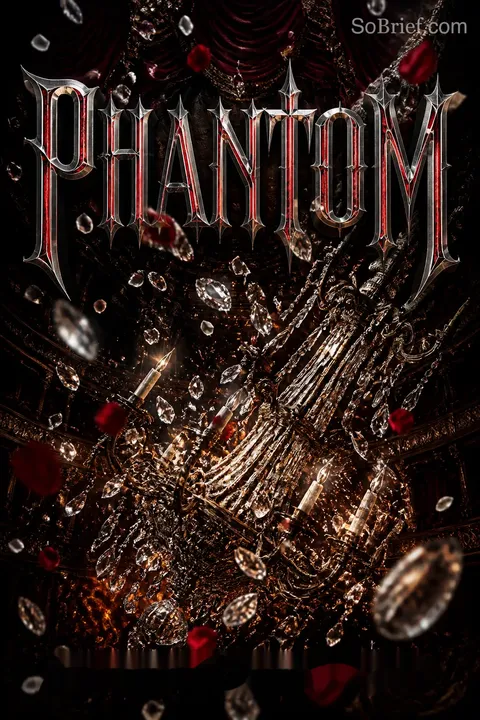
Phantom by Greer Rivers is a dark romance retelling of The Phantom of the Opera set in New Orleans. Readers praised the Gothic atmosphere, steamy scenes, and mental health representation. The obsessive anti-hero, Sol, captivated many, while some found the female lead, Scarlett, frustrating. Critics noted repetitive language and pacing issues. Overall, opinions were divided, with fans applauding the passionate romance and original take on a classic tale, while others felt it fell short in character development and plot execution.
Characters
Scarlett Day
The aspiring singerScarlett is a music student and opera performer whose ambitions are shifting from interpreting other people’s work to writing and singing her own songs. She lives with bipolar I disorder and works to manage it through medication, sleep, and routines, while grief over her father’s murder makes her wary of emotional upheaval. Her gentle manner can conceal a capacity for anger and decisive action, especially when someone she loves is threatened. Scarlett wants care without being treated as incapable, and intimacy without surrendering her judgment. Her musical ear gives her a language for feelings she struggles to name, but her growth depends on learning that she can trust her perceptions and choose her own stage.
Sol Bordeaux
The masked music-makerSol is Ben’s identical twin and the hidden enforcer of the Bordeaux family. A childhood of kidnapping, torture, and severe disfigurement has left him committed to secrecy and more comfortable in tunnels than in public. He composes music and follows Scarlett’s development from afar, initially mistaking surveillance and control for protection. Beneath his feared Phantom identity is an artist who longs to travel and a son still grieving his parents. Sol’s moral code gives offenders a chance to fight, but his self-appointed justice remains violent and dangerous. His deepest conflict is not whether he can love Scarlett, but whether he can show himself without using possessiveness to manage his fear of rejection.
Rand Chatelain
The polished heirRand is the heir to the Chatelain family and an old friend of Scarlett’s from her childhood visits to New Orleans. He returns with polished manners, family obligations, and a history that Scarlett remembers through affection and nostalgia. His relationship with her is shaped by an age difference and by memories she has not fully reconsidered. Rand understands how to use charm and familiarity to gain trust, while his family’s rivalry with the Bordeauxs colors every interaction. He presents himself as someone who can offer Scarlett support and opportunity, making it difficult for her to separate genuine help from the expectations attached to it.
Jaime Dominguez
Scarlett’s closest friendJaime is Scarlett’s best friend, fellow performer, and most dependable source of everyday support after her father’s death. He is theatrical, funny, protective, and quick to read when her energy or mood changes. His closeness to Scarlett is genuine, though he also carries obligations that complicate his loyalty and silence. He can act decisively in a crisis, yet falter when public pressure forces him to choose between protecting a friend and preserving a secret. Jaime’s care is shown in ordinary acts, including monitoring Scarlett’s well-being, while his mistakes reveal that good intentions do not automatically make secrecy harmless.
Ben Bordeaux
The diplomatic twinBen is Sol’s identical twin, a lawyer, and the public-facing leader of the Bordeaux family. He prefers negotiation and legal protection to his brother’s physical enforcement, and his marriage to Maggie and devotion to their daughter give his decisions a strong domestic center. Ben tries to preserve the truce because he remembers how much it cost their family to survive its collapse. His caution often puts him at odds with Sol’s instincts, but it comes from responsibility rather than cowardice. He serves as a counterweight to Sol’s secrecy and reminds him that personal obsession can endanger people beyond the person he wants to protect.
Maggie Bordeaux
The theater’s steady directorMaggie is Ben’s wife, Madam G’s daughter, and a capable member of the Bordeaux Conservatory staff. She supports students while carrying the workload Monty neglects, and her practical competence makes her a natural leader. Maggie also parents Marie and remains closely involved with Valérie, balancing family care with professional ambition. She is warm but not passive: when offered the directorship, she considers the risks of being dismissed as a beneficiary of nepotism, then recognizes the work she has earned the right to do. Her role links the theater’s artistic community to the Bordeaux family’s private life.
Sabine
The watchful secondSabine is Sol’s second-in-command, a skilled and disciplined protector who works in a fire-patterned mask. She is candid with Sol when his choices endanger the operation, and her loyalty does not require her to flatter him. Her history with the Bordeaux and Chatelain feud gives her a personal stake in the family’s security. Sabine’s sharp judgment and readiness to act make her a bridge between Sol’s hidden world and the people it affects. She keeps close watch on threats while remaining alert to the damage caused by trusting the wrong person.
Valérie Bordeaux
The grieving matriarchValérie is Sol and Ben’s mother, a woman whose grief has deeply altered her sense of the present. Music can sometimes help her reconnect with family and memory, but her condition is unpredictable and painful for both sons. She was once a devoted opera lover and continues to carry the family’s artistic history. Her vulnerability is not treated as a puzzle for others to solve; it shapes the family’s routines and the care they give one another. Valérie’s moments of recognition reveal the tenderness still present beneath her confusion.
Jilliana Cruz
The ambitious sopranoJilliana is a talented performer who has worked hard to secure leading roles at Bordeaux Conservatory. Her ambition is entangled with a director’s abuse of authority, leaving her fearful that speaking up will damage her career. When she suspects Scarlett has benefited unfairly, she lashes out rather than confronting the people who exploited her. Jilliana is capable of cruelty and later of remorse; her apology recognizes the harm she caused without asking Scarlett to excuse it. Her character shows how institutional pressure can turn vulnerable people into rivals.
Monty Arquette
The compromised directorMonty is the conservatory’s director, whose authority over student casting gives him leverage he abuses. He presents himself as the person responsible for artistic standards while using his position to pressure performers for sexual favors. His conduct poisons the school’s professional environment and helps create the resentment that divides Scarlett and Jilliana. Monty’s self-importance makes him slow to recognize the danger surrounding him, and his fear eventually proves more persuasive than his confidence.
Madam G
The speakeasy’s matriarchMadam G runs Masque, the speakeasy beneath the opera house, and comes from a family with a long history of influence in the French Quarter. She is watchful, formidable, and protective of the community that gathers in her establishment. Her ties to Maggie and the Bordeaux brothers are familial as well as practical. Madam G understands the value of secrets, but her authority is not simply borrowed from the Bordeauxs: she maintains her own business and standards.
Gustave Day
Scarlett’s musician fatherGustave is Scarlett’s late father, a traveling musician who loved jazz and blues and raised her on stories shaped by music. He wanted her to build a more stable life through opera, but his own past involved compromises and secrets she did not know while he was alive. His encouragement remains central to Scarlett’s sense of artistic purpose. The memories she carries are loving but incomplete, and learning that her father had a hidden history forces her to hold affection and uncertainty at once.
Laurent Chatelain
Rand’s elder brotherLaurent is Rand’s older brother and a former leader in the Chatelain family. His choices shaped the feud between the Chatelains and Bordeauxs and left a lasting mark on Sol and Ben’s lives. To outsiders, family history around Laurent is fragmentary and politically charged. His presence in the story is felt through the old truce, the violence attached to it, and the expectations Rand inherits.
Jacques Baron
The theater’s predatory handJacques is connected to the Chatelain organization and works around the conservatory, where his behavior makes women in the cast feel unsafe. He represents the way criminal influence can hide inside ordinary workplaces. His access to students and backstage corridors gives his misconduct a direct effect on Scarlett and the theater community.
Dr. Portia
The family psychiatristDr. Portia is the psychiatrist trusted by the Bordeaux family and the doctor called when Scarlett takes too much medication. She is calm, direct, and professionally cautious, willing to help Sol while making clear that his preferences cannot replace medical judgment. Her presence grounds the emergency in clinical care rather than letting romance stand in for treatment.
Miss Mabel
The Treme floristMiss Mabel owns Saint’s Petals in Treme and supplies the roses Sol sends to Scarlett. She is warm, talkative, and fond of the Bordeaux family, while caring for a husband undergoing treatment. Her shop connects Sol’s hidden identity to the neighborhood life he tries to observe from the shadows.
Marie Bordeaux
Ben and Maggie’s daughterMarie is the young daughter of Ben and Maggie. Her presence draws the adults toward ordinary family routines and offers Valérie a source of joy. She is still a toddler, known in the story through her curiosity, laughter, and close bond with her parents.
Two-Shot
The hired assassinTwo-Shot is a hired killer associated with the city’s criminal networks. His reputation and past work connect the old Bordeaux and Chatelain feud to the dangers Scarlett encounters outside the conservatory. He is an efficient and feared figure whose actions have consequences for several families.
Ziggy Miles
The welcoming bandleaderZiggy leads the band at Masque and recognizes Scarlett’s talent when she performs there. He offers her a chance to sing with the group again, giving her an opening beyond the conservatory’s opera productions.
Plot Devices
The music and letters
A private artistic bondSol sends Scarlett roses, letters, and handwritten sheet music through a hidden passage connected to her dorm. The gifts support her when grief and depression have left her struggling to create, and the music helps her imagine a future beyond opera. Because the letters arrive without identifying their author, Scarlett cannot tell whether they are evidence of a real admirer or part of her illness. Their eventual source confirms her perceptions while also revealing that Sol has been watching her without consent. The device therefore functions as both courtship and a measure of the relationship’s imbalance.
The Phantom mask
Identity hidden in plain sightSol’s skull mask makes him a feared public legend while concealing the scars and missing eye left by childhood torture. His men also use masks, including disguises resembling Ben, to protect their identities and create the impression that the Bordeauxs are everywhere. The disguise lets Sol move between family business and public life, but it also makes him difficult to know as a person. Because others can imitate the Phantom’s appearance, the mask can be used to frame him and mislead Scarlett.
The Prohibition tunnels
A hidden city beneathThe tunnels and runoff channels beneath the opera house were built to move liquor and people during Prohibition. In the present, they connect the conservatory, Masque, Sol’s underground home, and his dungeon. Their secret doors enable Sol to watch over the theater and reach Scarlett during emergencies, while the channels also serve as the dangerous escape route offered to criminals in his custody. The tunnels turn New Orleans geography into an extension of the family feud: territory exists above ground, but the Bordeauxs’ real power is concealed below it.
Medication and routine
Stability under pressureScarlett manages bipolar I disorder through prescribed medication, sleep, and daily routines. These practices help her recognize warning signs and remain well, but stress, lost medication, and fear of hospitalization can disrupt her judgment. When she takes too many pills during a panic attack, the consequence is a medical emergency, not a romantic awakening. Sol and the family psychiatrist respond to the crisis, though their actions do not replace Scarlett’s ongoing treatment. The device keeps her illness specific and consequential while showing that care requires more than affection.
The Bordeaux skull mark
A chosen sign of belongingThe skull symbol appears on Sol’s ring, the family’s correspondence, and the marks associated with the Phantom. It carries different meanings depending on who encounters it: protection, threat, loyalty, or evidence of an attack. Near the end, Sol uses his ring to leave a permanent mark on Scarlett after she agrees to wear his sign of belonging. This changes the symbol from an external warning into a personal commitment, though its permanence also sharpens the story’s question of how freely devotion can be chosen in a relationship shaped by possession.
FAQ
Synopsis & Basic Details
What is Phantom about?
- Dark Retelling, Modern Mafia: Phantom by Greer Rivers reimagines Gaston Leroux's Phantom of the Opera as a dark contemporary romance set in New Orleans, blending classic gothic themes with modern mafia feud as modern gothic intrigue. It follows Scarlett Day, a talented music student grappling with bipolar disorder and the trauma of her father's murder.
- Obsessive Protector, Hidden World: Scarlett becomes the muse of Sol Bordeaux, the scarred and reclusive "Phantom of the French Quarter," who secretly controls the city's underworld from beneath the opera house. His obsession leads him to protect and manipulate Scarlett from the shadows, sending her anonymous letters, roses, and music as connection.
- Love, Lies, and Vengeance: The story delves into a centuries-old feud between the Bordeaux and Chatelain mafia families, with Scarlett caught in the crossfire. As secrets about her past and Sol's traumatic history are revealed, Scarlett must navigate betrayal, question her sanity, and ultimately choose between the light of her dreams and the dangerous, yet deeply understanding, darkness of her demon of music.
Why should I read Phantom?
- Intense Psychological Depth: Phantom offers a raw and empathetic exploration of mental illness, particularly bipolar disorder, through Scarlett's journey, blurring the lines between hallucination, obsession, and reality. This psychological complexity adds significant layers to the dark romance genre.
- Unique Modern Gothic: The novel masterfully blends classic gothic elements—a reclusive, scarred hero, a hidden lair, a haunting obsession—with a gritty, modern mafia backdrop in atmospheric New Orleans, creating a truly distinctive and immersive reading experience.
- Redemptive, Consensual Darkness: Despite its dark themes and morally ambiguous characters, the story ultimately champions a powerful, transformative love that embraces flaws and trauma. It explores how two broken souls can find healing and acceptance in each other's darkness, leading to a deeply satisfying, if unconventional, happily ever after.
What is the background of Phantom?
- New Orleans Setting & Culture: The novel is deeply rooted in the vibrant, mysterious atmosphere of New Orleans, utilizing its unique cultural elements like Bourbon Street, Café du Monde, jazz and blues music, Mardi Gras beads, and the city's historical architecture, including the French Opera House and its Prohibition-era tunnels.
- Author's Personal Experience: Greer Rivers draws from her own journey with bipolar disorder, infusing Scarlett's experiences with authenticity and nuance. This personal connection lends a powerful, empathetic voice to the portrayal of mental health struggles and the stigma surrounding them.
- Mafia History & Architecture: The Bordeaux family's control of the French Quarter and their use of the New French Opera House (rebuilt after a fire in 1920) and its intricate, flood-proof Prohibition tunnels and speakeasy (Masque) are central to the plot, providing a rich, historically-inspired backdrop for the modern mafia feud.
What are the most memorable quotes in Phantom?
- "She is my muse, and I am her demon of music.": This iconic line from Sol's perspective perfectly encapsulates his obsessive, artistic, and possessive relationship with Scarlett, defining their core dynamic from the outset.
- "If I am the phantom, it is because man's hatred has made me so. If I am to be saved it is because your love redeems me.": A direct quote from Gaston Leroux's The Phantom of the Opera, this epigraph sets the thematic stage for Sol's journey of redemption through love and violence through Scarlett's love, highlighting the novel's classic inspiration.
- "You are my moonlight," I whisper against her shoulder in a kiss. "And you are my midnight," she murmurs back.": This exchange beautifully symbolizes Scarlett and Sol's mutual acceptance of each other's light and darkness, signifying their deep, intertwined connection and the balance they find together.
What writing style, narrative choices, and literary techniques does Greer Rivers use?
- Dual POV & Intimate Narration: The story is told through alternating first-person perspectives of Scarlett and Sol, providing deep insight into their complex internal worlds, motivations, and emotional states, enhancing reader empathy and tension.
- Sensory-Rich & Atmospheric Prose: Rivers employs vivid sensory details, particularly scents (whiskey, sugar, leather, gardenias) and sounds (jazz, opera, rushing water), to immerse the reader in the New Orleans setting and heighten the emotional and psychological intensity of scenes.
- Symbolism & Thematic Echoes: The novel is rich with recurring symbols like masks, mirrors, fire, water, and specific musical pieces, which subtly reinforce themes of identity, duality, trauma, and transformation, adding layers of meaning beyond the surface plot.
Hidden Details & Subtle Connections
What are some minor details that add significant meaning?
- Glass Shards in Knees: In the prologue, Scarlett's fall and the glass shards embedded in her knees subtly foreshadow her vulnerability and self-destructive tendencies during manic episodes, hinting at the physical toll her mental state can take. It also sets up Sol's initial observation of her "dark side."
- Folded Journal Page: The seemingly innocuous detail of Scarlett finding a folded corner in her journal (Scene 2) before she consciously realizes Sol's presence in her room, subtly indicates his prior, intimate intrusions and his knowledge of her private thoughts and creative process.
- Rand's "Childhood Sweethearts" Claim: Rand's insistence on their "childhood sweethearts" status (Scene 8) is a minor detail that reveals his manipulative nature and long-term planning. It's a fabricated narrative designed to assert control over Scarlett and provoke Sol, highlighting his insidious villainy from early on.
What are some subtle foreshadowing and callbacks?
- "You'll see me soon" (Tu me verras bientôt): The new French sign-off on Sol's letter (Scene 2) directly foreshadows his physical appearance to Scarlett, blurring the lines between her perceived hallucinations and his very real presence, building anticipation for their first direct encounter.
- Scarlett's "Chicory in her sugar": Scarlett's seemingly throwaway line about her coffee preference (Scene 8) subtly foreshadows her eventual acceptance and craving for Sol's "darkness" mixed with her "light," mirroring their complex relationship and her journey to embrace her own shadows.
- Broken Mirror Frame: The detail of Scarlett noticing her mirror frame is broken and fixing it (Scene 2) subtly foreshadows
Tattered Curtain Series


Download PDF
Download EPUB
.epub digital book format is ideal for reading ebooks on phones, tablets, and e-readers.








