

Key Takeaways
Turn the room where you hide into the place you make art
A first safe stage. As a child, Randy found joy in musical theatre, costumes, and performing. At home, his mother encouraged this, even helping him create a Snow White costume for a backyard show. At school, the same gender-nonconforming expression drew taunts. He learned to retreat into his room, where cast albums and make-believe worlds offered relief.
Words restore some control. When bullying left him unable to answer, his mother suggested writing down what he wished he could say. The index cards did not stop the bullying, but they helped him name his feelings. Performance became another way to be seen, at a time when ordinary social life felt unsafe.
The distinction between safety and escape matters. A private creative practice can protect a young person’s sense of self when the surrounding social world punishes difference. Writing and performance also turn diffuse distress into something shaped and shareable. Yet art cannot replace adult protection or make bullying harmless. The cards failed as a defense against classmates, even as they helped Randy understand himself. The strongest lesson is not that pain automatically produces talent, but that a supportive person can help transform expression into a resource without asking the child to become less himself.
Treat peculiar obsessions as rehearsal, not evidence you're behind
Play became practice. Randy spent years memorizing Broadway performances, imitating singers, staging one-person shows, and making homemade music videos. His childhood bedroom, decorated with theatre posters and performers he admired, became an informal school for timing, character, and song. Later, he painstakingly filmed pop-video recreations with a camcorder, building each scene by scene because he had no editing software.
Interest can accumulate skill. None of this looked like a career plan, especially to his father, who doubted that wigs and videos could earn a living. But the repeated acts of watching closely, performing, writing, and editing gave Randy abilities he could use when an audience finally appeared. His unusual enthusiasms were not a detour from the work. They were early practice for it.
Deliberate practice is often described as a formal routine, but it can also hide inside intense play. Repetition, imitation, and attention to detail build skill before a person knows what to call that skill. Randy’s example is especially useful because his early experiments were not efficient or obviously marketable. Still, enthusiasm alone does not guarantee a career, and many private passions remain private. The practical point is to notice which interests repeatedly draw effort and curiosity, then ask what transferable abilities they are quietly building.
Turn anger into a joke only after reading the room
Humor can release pressure. Randy learned this first from his grandmother, Nanny, whose sharp jokes could turn irritation into a performance that made others laugh. When he came out, she broke the tension in a car with a joke that reassured him while also teasing a Republican friend. The moment showed him how comedy could interrupt fear and reconnect people.
Satire needs a softener. Randy describes satire as the protective layer in a demonstration where a pin enters a taped balloon without a loud pop. The extra layer makes a sharp point easier to approach. His own comedy aims at difficult subjects through performance and exaggeration, rather than simply delivering an insult. But a joke can still hurt, and a comedian cannot control every interpretation.
The balloon image captures a real feature of humor: it can lower defensiveness enough for people to face an uncomfortable subject. Social psychologists often describe laughter as a signal of shared perspective, though that signal is not universal. A joke that bonds one group may humiliate another, especially when the target has less power. Nanny’s success depended on knowing her companions and their relationship. That makes audience awareness part of the craft, not a decorative extra. Comic intent matters, but so do the target, setting, and consequences.
Build your own platform when the audition room has no part for you
An unconventional route. Randy moved to New York with little money and no clear career plan. He worked at Hooters, then in Broadway offices and an accounting firm, while writing a blog and making videos after hours. When Mel Gibson’s abusive recordings dominated the news, Randy made a sketch in which he played the actor’s oblivious boyfriend. The video passed 100,000 views in its first week, and his Twitter following rose from about 600 to 6,000.
The format fit the creator. Rather than wait for casting directors to find a role for him, Randy wrote, acted, filmed, and edited his own work. His topical videos and musical parodies gradually built an audience and attracted professional opportunities. The breakthrough was not a clean leap into fame. It grew from jobs, experiments, and repeated attempts.
This is a strong example of reducing dependence on gatekeepers by creating a channel that rewards distinctive work. Digital platforms let creators test ideas directly with audiences, but visibility is not the same as stable income or broad control. Randy’s early views gave useful feedback and recognition, yet he still held day jobs and faced failed promises from industry figures. The model is best understood as a way to generate evidence of audience interest, not as proof that anyone can bypass structural barriers through hustle alone.
Familiar songs can carry hard truths past people's defenses
A shared tune creates entry. Randy uses well-known musical theatre songs to frame current events. The audience recognizes the melody before hearing the new lyrics, creating a common starting point across differences in age, politics, or familiarity with his work. His parody of Donald Trump’s debate language set a comic critique to a tune from Mary Poppins and drew more than 16 million views in a day.
The borrowed form does work. A familiar song supplies rhythm, emotional associations, and a structure that makes complicated headlines easier to follow. Randy believes this can let people laugh together even when they disagree about politics. But the same video can be read differently by different viewers. A catchy form invites attention; it does not guarantee persuasion or agreement.
Music can serve as a cognitive scaffold: a known melody helps listeners anticipate phrasing and retain unfamiliar words. Popular culture also offers a temporary common reference point, which can soften the boundaries between groups. Still, shared recognition should not be mistaken for shared meaning. Viewers may enjoy a parody while rejecting its political premise, or treat the performance as advocacy rather than comedy. The form widens the doorway, but the creator cannot decide what every audience member carries through it.
Use loss as a deadline to stop postponing the work
A death clarified the choice. Randy’s grandmother, Irene, died soon after a sudden cancer diagnosis. She had been his fiercest supporter and wondered whether she would live to see him become famous. Her question made his uncertain future feel newly urgent. After the funeral, Randy quit his receptionist job, where he had been tracking bathroom breaks, and committed to a modestly paid web series about theatre.
The risk was real. He had no guarantee that the work would support him. He was anxious about money and unsure where his career would lead. Still, grief changed the cost calculation: staying in an unsatisfying job also meant spending limited time away from the creative work he wanted to pursue. His mother, facing her own mortality after her mother’s death, also left her unhappy marriage.
Mortality can sharpen priorities because it makes opportunity costs emotionally visible. Randy’s choice was not a simple triumph of courage over fear; it was a wager made under uncertainty, supported by existing skills and a small professional opening. That nuance matters. Loss does not dictate one correct response, and quitting work without resources can deepen hardship. The more general insight is to use moments of clarity to examine what a safe routine is costing, then seek a viable next step rather than waiting for certainty.
Turn an awkward prop into a public badge of self-acceptance
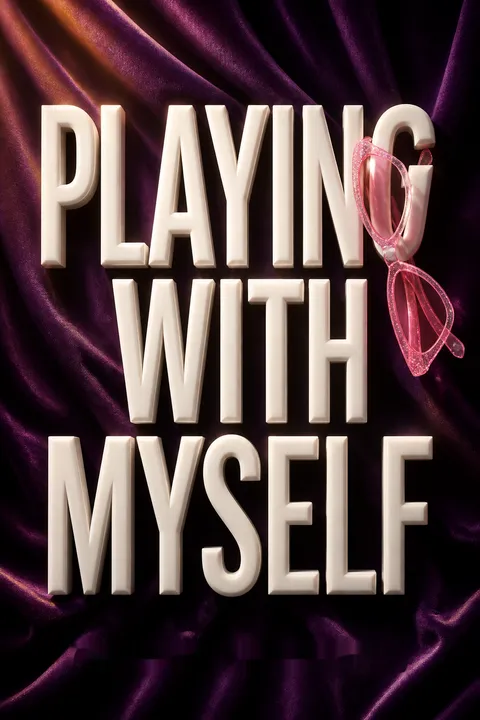
A gag became a symbol. Randy’s pink, rhinestoned cat-eye glasses began as a visual joke in one of his interview spoofs. He kept using them, and they became part of his recognizable image. Fans adopted similar glasses for Halloween, voting, protests, and even chemotherapy appointments. What began as an inexpensive costume accessory came to represent permission to be visibly oneself.
Visibility can encourage others. Randy had worn lipstick and performed flamboyantly as part of a comic character, without initially treating those choices as a statement. Audience members told him that seeing this unapologetic performance helped them or their children feel less alone. The glasses became a way to embody courage and playfulness, not a promise that self-expression will always be easy or safe.
Symbols can make an abstract value portable. A recognizable object lets people signal affiliation, remember a feeling, or borrow a little confidence from a public figure. The glasses work because they combine theatricality with an everyday act of self-presentation. Still, visible identity can carry different risks in different environments. A badge that feels liberating to one person may expose another to danger. The useful principle is not to demand visibility from everyone, but to let people choose forms of expression that feel both meaningful and manageable.
Own the harm in old jokes without claiming intent cancels impact
Context explained, but did not erase. In 2020, old tweets from Randy’s early comedy years resurfaced. Some relied on racist or transphobic language, written when he was trying to imitate provocative insult comedy for a small audience. He argued that the jokes used irony to mock bigotry, not endorse it, but also acknowledged that some were poor work and offensive. He apologized and discussed how his understanding had changed.
Accountability requires more than defense. Randy had also made a video using darker makeup to imitate Oprah, which fans later told him was hurtful. At first he dismissed the criticism because he did not intend to reproduce racist performance. He eventually removed it. He describes learning that a good intention does not settle how an image lands, and that criticism can reveal what the creator failed to see.
This episode holds two truths in view: context changes how comedy should be interpreted, and impact cannot be dismissed simply because a performer meant to satirize prejudice. Treating every joke as a literal confession is reductive; treating intent as a complete defense is equally so. A useful accountability practice asks who is targeted, who is invited to laugh, and what history a joke invokes. Growth is more credible when it includes changed choices, not only a persuasive explanation of the old ones.
Let creative work steady you, without asking it to heal everything
Art became a lifeline. During the pandemic, Randy could not tour and was frightened to leave his apartment. He continued making songs about the virus and public life, using the home studio that had already supported his career. The work gave him a way to express fear and offer audiences brief comic relief. At the same time, his elderly cat Mushi became gravely ill, and pandemic restrictions made saying goodbye especially painful.
Comfort has limits. Randy’s creative work helped him manage depression and isolation, but it could not prevent grief or replace companionship. Mushi had been beside him through years of lonely editing sessions, and losing him left the apartment feeling emptier. The book treats making art as a source of connection and purpose, not as a cure-all for mental distress or bereavement.
Creative activity can provide structure, agency, and a way to communicate during periods when ordinary life contracts. It can also help an audience feel accompanied, which is especially valuable in isolation. But the story resists a simplistic claim that making something beautiful redeems suffering. Randy still faced depression, fear, and the loss of a beloved companion. Art is most sustaining when it complements human support and practical care, rather than being asked to carry every emotional need alone.
Analysis
Playing with Myself is a comic memoir, but its deeper structure is a story about converting private refuge into public work. Randy begins as a child whose theatrical instincts are encouraged at home and punished at school. Musical theatre gives him language, models, and a place to be noticed. As an adult, he turns those same materials into a distinct online form: topical satire performed through a heightened persona, familiar songs, wigs, and do-it-yourself production.
The book’s most useful argument is not that success rewards persistence in a neat or predictable way. Randy’s path includes financial instability, exploitative professional behavior, an eating disorder, an abusive father, and long stretches when recognition did not pay the bills. His eventual breakthrough follows years of experiments and accumulated craft, but timing and circumstance matter too. A viral news moment can open a door; it cannot guarantee what lies beyond it. The memoir is strongest when it keeps both effort and contingency visible.
Its account of comedy is similarly complicated. Satire can create a shared frame for discussing frightening or divisive events, and theatricality can signal that a performance is not literal testimony. Yet the author’s experience with old jokes shows that the signal is imperfect. Context may explain a joke without making its effects disappear. The resulting tension is productive: comedians need freedom to take risks, while audiences need not suspend judgment about whom those risks burden.
The recurring symbols, from childhood costumes to the pink glasses, turn self-expression into something practical and visible. They do not solve loneliness or guarantee acceptance. Instead, they offer a way to act before confidence feels complete. That makes the memoir less a polished success blueprint than a portrait of identity built through repeated performance, chosen family, and revision. Its central invitation is to take one’s peculiar materials seriously, while remaining willing to change what those materials mean to others.
People Also Read

Glossary
Scotch Tape
Satire's softening layerRandy’s metaphor for the satirical framing that changes how a sharp joke lands. In his balloon demonstration, tape lets a pin enter without the balloon bursting loudly. Applied to comedy, the extra layer can make provocative material more inviting and less blunt. It does not guarantee that no one will be hurt or that every audience will recognize the satirical intent.
Pink Glasses
A badge of self-expressionRandy’s rhinestoned pink cat-eye glasses began as a comic prop in his videos and became a signature image. For him and many fans, they represent the courage to show an unconventional self openly. The glasses also function as a shared emblem, adopted by audience members for occasions ranging from voting and protest to personal milestones.
the Randettes
Randy's backing chorusThe name Randy uses for the layered backing vocals in his musical parody recordings. He originally recorded his own harmonies, then began working with a musical director who arranged more elaborate parts and a producer who coordinated musicians remotely. The term reflects the expanded, self-produced sound of his videos.
Download PDF
Download EPUB
.epub digital book format is ideal for reading ebooks on phones, tablets, and e-readers.








