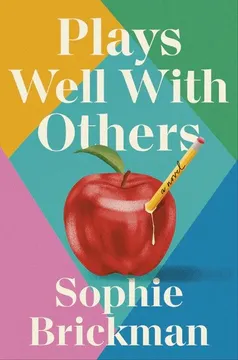


Plot Summary
Prologue
Annie Lewin is at a playground with her children when the rubber ground presses against her cheek and a deep rumble shudders through her. She hears a distant, rising sound and sees her own body from above, strangely calm even as people hurry toward her.
The sound is not a subway or a dream: an ambulance has arrived. Something is badly wrong, though the scene withholds what brought Annie down and why this moment feels both familiar and frightening.
The prologue places a crisis before its causes, making Annie's altered point of view part of the mystery rather than a decorative flourish. Her detachment from her own body echoes a mother who has learned to observe herself from outside, measuring whether she is coping well enough instead of inhabiting what she feels. The children and playground establish the ordinary world that the emergency will rupture. By withholding the cause, the opening also invites a later reinterpretation: the fall is not an isolated shock but the consequence of pressures accumulating through daily life.
The Application Clock Starts
When Bartleby's exmissions year begins, Annie Lewin is already juggling three young children, a recent move into a cavernous Manhattan apartment, and a parenting-advice column that feels increasingly unlike her old work as a New York Times arts reporter.
Her four-year-old son, Sam, can apply early to Sawyer because his father, Dan, is an alumnus. The advantage should simplify the school search, but Annie sees a system where wealth, connections, essays, interviews, and even extracurriculars can shape a child's future before kindergarten.
She remembers arriving at Harvard from a New Jersey public school and discovering doors she had never known existed. Dan sees Sawyer as access for Sam. Annie sees a test of whether her family's new privilege has quietly rewritten her values.
The application process converts a private family decision into a public test of class belonging. Annie's unease is not simple rejection of privilege: she knows that access can protect a child from the exclusions she encountered, yet she fears that pursuing it will teach her to accept its rules as natural. Dan's confidence comes from a different history. His family's collapse made security feel earned through foresight, while Annie's upbringing taught her to trust institutions she now sees failing to distribute opportunity fairly. The conflict begins before any school makes a decision because the parents disagree about what a school is for.
Belinda Sets the Pace
At Bartleby, Annie encounters Belinda Brenner, a celebrated divorce lawyer whose polished clothes, demanding schedule, and talk of violin lessons make every school conversation feel like a contest. Belinda treats performances and activities as application advantages; Annie cannot even find time to unpack her clothes.
Her friend Laura, a professor and mother of a boy named Jack, steps in when Annie begins to feel weightless during one of Belinda's monologues. Laura's humor brings her back to the playground, where Sam promptly takes Jack by the hand and draws him into a game.
At home, Annie writes cheerful advice she does not believe, while her workload and sleepless nights grow. The contrast between her public Mother Inferior persona and private uncertainty begins to split her sense of self.
Belinda is threatening partly because she makes an implicit standard visible: every choice can be optimized, and every parent can be ranked by how well they perform competence. Annie's response is not merely envy. She is watching a social environment turn care into evidence for an admissions file, then wondering whether her own less organized parenting will count against Sam. Laura supplies a countermodel based on recognition rather than competition. The first floating sensation marks how the strain exceeds Annie's capacity to narrate it as ordinary stress, even while she keeps translating distress into jokes.
A Crush Comes Home
Annie recognizes Shawn Axel, the actor whose posters once covered her bedroom, at Bartleby with his toddler daughter, Amelia. His arrival electrifies the parent chat, but Annie's interest becomes personal when Shawn says he admired her old Times arts writing.
Meanwhile, she continues to wake at night with Max and has a second episode of floating darkness, this time while holding the baby in his nursery. A massage at a class-mothers' spa night triggers the same black, sucking void, and Annie struggles to explain the visions as exhaustion.
She meets Shawn's wife, Clementina, a former model launching a children's candle and toy company, and sees how easily celebrity, parenting, and commerce mingle in this school community. Her attraction to Shawn gives her an escape fantasy, but not yet a clear desire.
Shawn's return gives Annie a vivid object for feelings she has barely admitted: nostalgia for a self whose attention belonged to art, sex, and possibility. His praise matters because it recognizes her as a writer, not only as a mother or online advice voice. Yet the novel keeps the fantasy unstable. Annie is drawn to a remembered screen image while confronting the mundane realities of his family life, and her visions intrude even in moments meant for rest. The recurring void turns dissociation into a bodily plot, registering a self that is trying to escape demands she cannot yet name.
Sawyer Says No
At Sawyer's family interview, Annie abandons the polished answer she prepared and admits she cannot say with certainty why the school is right for Sam. She explains that she wants him among people who will understand his curiosity, not simply in the most prestigious place.
Sam builds a castle for a family of different backgrounds while the admissions team watches. The head of admissions later calls the interview memorable, and Dan believes the family has succeeded. Then Sawyer rejects Sam.
Annie learns through the Bartleby mothers' chat that a wealthy donor reportedly changed an anonymous gift into a named contribution while his relative applied. Dan cycles through anger, bargaining, and acceptance, then proposes St. Edward's or homeschooling. Annie is left to confront the difference between merit as a principle and access as a practical advantage.
The interview briefly allows Annie to speak outside the admissions script, and the school appears to reward that honesty. The rejection then exposes how little an ideal performance can control when the institution is also shaped by money and family networks. Dan copes by converting disappointment into a new strategy, a habit rooted in his need to make uncertainty manageable. Annie cannot move so quickly. The donor story sharpens her moral discomfort, but also awakens the fear that refusing an unfair system may leave Sam to bear its costs. Her ambivalence now has consequences for a child she loves.
The $8,800 Provocation
The alarm in Annie and Dan's new home begins sounding at night, and Annie takes a kitchen knife upstairs while checking on her sleeping children. She believes an intruder may be inside, then realizes the system is malfunctioning; the next morning, Dan explains that a window triggered it.
Her fear does not vanish with the explanation. At Bartleby's Gatsby-themed benefit, still stung by Sawyer's rejection and Belinda's easy confidence, Annie raises her paddle against Belinda for a family stay in Dan's uncle's Bahamas timeshare.
She keeps bidding until the price reaches $8,800, far beyond the trip's value. Dan is appalled, but Annie has already made the bid a contest she intends to win. The purchase earns the school money and ties the family to a trip they will later take.
The alarm scene and the reckless auction bid are different expressions of the same difficulty: Annie can no longer reliably distinguish an immediate danger from a symbolic one. The faulty alarm produces a real, bodily panic, while Belinda's social provocations make a school fundraiser feel like a fight for Sam's future. Annie's bid is an act of agency, but it is agency distorted by a competitive world that has trained her to mistake winning for protection. The scene also makes money strangely theatrical: she spends thousands not to improve the trip, but to prove she can refuse to be outmaneuvered.
A Different Test of Merit
With Sawyer closed to Sam, Annie begins considering Thatcher, a free school for gifted children that admits applicants through standardized testing and rejects family recommendations, essays, and legacy preferences. Bartleby headmistress Ellie Halpert steers the family toward boys' schools, while Dan favors St. Edward's and its traditions.
Annie likes Thatcher's austere rules because they appear to judge Sam rather than his parents, though she knows an IQ score cannot capture a whole child. At a pediatric appointment, Dr. Rapaport listens as Annie admits that she is exhausted, nursing Max, and overwhelmed by the applications.
He tells her to seek professional support. Around the same period, Annie begins writing more candid advice columns, testing whether her real voice can reach readers better than Ash's bright, marketable version of motherhood.
Thatcher's test-based process appeals to Annie because it replaces social ambiguity with a number she can imagine as fair. Her attraction to that apparent neutrality is understandable, but the school's history and the test's biases make the promise incomplete. Dr. Rapaport offers something the admissions system cannot: attention directed toward Annie rather than the performance of her family. His concern names the cost of her coping without turning it into a failure of character. Meanwhile, the sharper column hints that honesty can create connection, even as Annie is still using work to manage emotions she has not yet addressed.
The Bite Breaks Cover
At the playground, Brando Brenner bites Annie's three-year-old daughter, Claire, during the children's animal game. Claire falls and fractures her elbow. Shawn calls for an ambulance and helps Annie keep the children still, while Brando's father, Greg, offers little reassurance.
Dan does not come to the emergency room because his work calendar is full. Once Claire is home, Annie confronts him about leaving her to manage the injury alone. Dan calls the incident a normal childhood mishap and explains that his career demands a crucial decade of effort.
Annie tells him that she needed him there as a parent, not as a problem-solver. He apologizes the next morning, but the fight remains embedded in their marriage, exposing how much of the children's daily care Annie carries by default.
Claire's injury makes invisible labor impossible to discuss abstractly. Annie is not asking Dan to punish a preschooler or escalate a playground accident into a legal dispute; she wants him to show up when the family is frightened. Dan evaluates his presence through usefulness and career cost, while Annie understands presence itself as care. Both positions reflect their histories, but they are not equally available to the children: Annie absorbs the immediate work, then must argue for its value. The fracture's fading bruise becomes a precise image for conflict that appears resolved while continuing to shape trust.
The Cost of Going Viral
The auction win sends the Lewins to Dan's family's cramped Bahamas timeshare, where the heat, bugs, and poor sleep sharpen Annie's sense that she and Dan are living parallel lives. He proposes homeschooling Sam and frames education as a system the family can exit; Annie cannot yet tell whether this is a real plan or another attempt to control uncertainty.
Back in New York, her increasingly blunt Mother Inferior columns attract a vast audience, and a newspaper profile turns her into a public figure. But Annie's judgment grows less reliable.
At brunch, she pushes Laura's son Jack through increasingly difficult tangrams to prepare for Sam's IQ test. Laura sees Annie's anxiety spilling onto her child and leaves with Jack. Annie's success online now coexists with a damaged friendship and worsening isolation.
Annie's viral success supplies the recognition she misses from her old career, but it does not restore a stable sense of authorship. The audience rewards the very frankness she is only beginning to understand, encouraging her to turn private frustration into public performance. Her treatment of Jack shows how anxiety travels through relationships: she opposes the admissions race, then reproduces its pressure on a friend's child. Laura's departure is a necessary rupture, not simple punishment. It reveals that being understood by strangers cannot substitute for being accountable to people whose trust she needs.
Sam Faces the Numbers
Annie takes Sam to certified psychologist Noah Siegler for Thatcher's IQ assessment, afraid that preparation could disqualify him but unable to resist buying practice puzzles. Sam refuses to answer easy questions, then solves far more advanced visual problems after noticing a pattern the psychologist nearly misses.
He questions whether a single test can measure a child's intelligence fairly, and Siegler writes an exceptional report despite Sam's low formal score. Sam advances to Thatcher's next round.
Ellie Halpert then tells the Lewins that Brando is also a contender at Thatcher and St. Edward's. The two boys' applications now affect each other, and Halpert calls a meeting with both families to coordinate their choices. Annie's wish for an objective process has led her into a new, even more complicated contest.
Sam's test performance dramatizes the gap between intelligence and compliance. He sees patterns the assessment values, yet refuses the premise that a number can reliably express a child's potential. Siegler's decision to advocate for Sam acknowledges the test's limits without pretending the test is irrelevant. Annie must confront an uncomfortable irony: she wanted Thatcher because it seemed to bypass privilege, but Sam's success now places him in a scarce competition where families can still negotiate around one another. The child's curiosity remains vivid, while adults prepare to turn it into an admissions outcome.
A Pair of First Choices
At Halpert's meeting, the Lewins and Brenners learn that St. Edward's will take Sam and Brando only if both families submit first-choice letters. Committing would remove both boys from Thatcher; refusing could leave both families with only the less desired fallback school.
Dan, joining by video call, names the situation as a prisoner's dilemma, and Belinda immediately understands the strategic stakes. At the playground afterward, Belinda apologizes for the biting incident and for her conduct during the meeting.
She describes the pressure she has put on Brando and urges Annie to choose St. Edward's together, presenting the school as a place where their boys could flourish. Annie is moved by Belinda's apparent sincerity, but she cannot tell whether this is reconciliation, persuasion, or both.
The prisoner's dilemma gives the parents a vocabulary for a problem that is both strategic and intimate. Their decision is not only about odds; it asks whether they can trust one another when each family's best individual move may damage the other. Belinda's apology complicates Annie's established picture of her as a pure adversary. The vulnerability may be sincere and still function persuasively, which is precisely why Annie struggles to interpret it. Her temptation to cooperate comes from a genuine hope that competition can stop, but also from a longing to feel that someone else understands the pressure.
The Violin in Flames
At Bartleby's curriculum night, Annie drinks too much, and Shawn Axel takes her to a late-night gathering with his entertainment-industry friends. She nearly acts on their flirtation, but Laura's warning and the discovery that Shawn's wife is pregnant make her leave before the encounter becomes an affair.
While searching online, Annie finds a TechCrunched video of someone destroying a violin. The camera briefly reveals Greg Brenner's wall of framed bird photographs, matching the collection he once described to her.
The revelation gives Annie a glimpse of the anger behind the Brenners' polished household and shifts her view of the admissions bargain. With the deadline near, she forges a first-choice letter in Belinda's name, believing she has found a way to secure Sam's place without surrendering her own options.
The night gathers three forms of temptation: sexual escape, the relief of seeing a rival's private life crack, and the fantasy of beating the admissions system by controlling its rules. Annie withdraws from Shawn, but not from the more consequential deception. The violin video is a revelation about Greg, yet it does not make Annie morally superior to the Brenners; it gives her ammunition at the moment she is deciding whether to cooperate. Her forged letter converts anxiety into action. For once, she does not merely fear becoming someone she dislikes. She deliberately crosses that line.
Two Letters, One Fall
At Belinda's Bartleby Brooch luncheon, Annie means to send Laura the link to Greg's violin-destruction video, but she sends it to the entire mothers' chat instead. The discovery spreads through the room, and Annie flees before she can contain the damage.
The next morning, at the playground, Belinda tells her that she leaked the resulting story to the press after Annie's message exposed her marriage. Then the school decisions arrive: Sam and Brando have both been accepted to St. Edward's.
Annie and Belinda realize they each forged the other's first-choice letter, each expecting the other to break their agreement. Before Annie can process the shared deception or the admissions outcome, the world tilts, the playground drops away, and she collapses. The fall fulfills the emergency foreshadowed at the book's opening.
The climax refuses the comfort of a clean victim and villain. Belinda retaliates, Annie has exposed Greg, and both women manipulate the admissions process while imagining themselves uniquely justified. Their forged letters accidentally produce the cooperative outcome they could not risk choosing honestly. Yet the acceptance does not resolve the deeper crisis: Annie's body has reached a limit that strategy cannot negotiate away. The collapse arrives at the moment when her public reputation, her friendship, her marriage, and her parenting all seem to demand a verdict. The book instead redirects attention from judgment to the exhaustion beneath her choices.
Born Beside Her Baby
In the hospital, Annie tells a doctor that her floating visions began months earlier, then recognizes the view of Central Park from the labor ward where she delivered her children. Memory returns to Sam's birth: as he is placed on her chest, Annie understands that a mother is born alongside a baby, and that her new self will take time to form.
She has forgotten that insight while trying to manage work, marriage, school applications, and three small children without enough rest. The doctor arranges follow-up care, and Camila arrives to help her recover. The visions are not explained as magic; they have carried Annie's experience of losing control until she can finally see the pressures that accumulated around her.
The resolution does not suggest that motherhood becomes simple once Annie identifies its source. Instead, it restores context to symptoms she had feared were proof of personal failure. The birth memory reframes her identity as something developing, not a stable self that she has either preserved or lost. Her insight also complicates the idea of maternal instinct: love can be immediate while competence, confidence, and adaptation take years. Medical help and Camila's presence matter because insight alone cannot replace rest or support. Annie's first step toward recovery is accepting that her distress has a history and deserves care.
Epilogue
Fifteen years later, Annie has written a book about matrescence and credits Ash, Camila, and Laura with helping her regain her footing. She is married to Marty Rapaport, a pediatrician, while Dan, now married to Belinda, works in public service on education. Sam, Claire, and Max are home for summer, developing an algorithm meant to predict what kind of school environment a child will need over time.
Their project imagines an education system more responsive than the one that consumed their parents. Annie closes by honoring the mothers who share the work of raising children, and the community that helped her finish what began with a moment of bewilderment.
The epilogue offers a future without pretending the earlier conflict has been neatly repaired. Annie's new marriage, Dan's partnership with Belinda, and her lasting friendships show that lives can reorganize after rupture. The children's algorithm turns their family's old admissions anxiety into a problem they can examine together, although its ambition also gently echoes the adult urge to predict and optimize. Annie's book is not a claim that she has mastered motherhood. By naming matrescence as an ongoing life stage, she replaces the demand for instant competence with a longer account of becoming, supported by other people.
Analysis
Plays Well with Others treats elite kindergarten admissions as both a plot engine and a machine for turning parental love into measurable performance. Essays, violin lessons, donations, recommendation letters, and IQ scores promise to convert a child's future into something adults can secure. Annie resists that logic, then repeatedly uses it herself when she fears Sam will lose opportunities. Her contradictions are the novel's central psychological truth: values do not disappear under pressure, but they become negotiable in small, defensible steps.
The book also distinguishes between being cared for and being managed. Dan believes he is protecting his family by building financial and educational options, yet Annie's conflict with him is often about presence: staying through a hospital wait, noticing the daily work, and sharing the uncertainty without immediately turning it into a strategy. Belinda's competence and aggression mirror Annie's own capacity for tactical behavior, which is why their rivalry eventually reveals similarities rather than a simple moral divide.
Annie's column provides a second arena in which care becomes performance. Her early reassurance sounds false to her because it asks mothers to feel confident before they have support. The more honest voice attracts readers, but public recognition cannot replace Laura's friendship or Camila's attention. The novel is skeptical of platforms that reward rawness while converting vulnerability into traffic.
The floating visions make that cost legible in the body. Annie interprets them as evidence that she is failing, until the birth memory gives them context: becoming a mother is itself a profound transition, not an identity that arrives complete with the baby. The ending does not solve unequal schooling, work, or domestic labor. It offers a more humane measure of progress: the capacity to recognize what has happened, accept help, and allow a self to develop over time.
Characters
Annie Lewin
Writer and anxious motherAnnie is a former New York Times arts reporter and the author of the Mother Inferior advice column. She loves her three children, but sleep deprivation, career uncertainty, and the pressure of New York's school admissions culture make her question her judgment. Her humor lets her expose social absurdities, while also keeping painful feelings at a distance. Annie values fairness and creative work, yet she is vulnerable to the same status pressures she criticizes. Her central struggle is not whether she loves her family, but how to remain a person with ambitions and needs while caring for them.
Dan Lewin
Strategic venture capitalistDan is Annie's husband, a successful venture capitalist and Sawyer alumnus. He approaches uncertainty through planning, probabilities, and leverage, habits shaped by his family's financial collapse. Dan loves his children and can be playful with them, but his career often takes precedence over the ordinary labor of parenting. He sees elite education as access to a network and a way to preserve options. His instinct to solve problems can make him appear emotionally absent when Annie needs companionship rather than a plan.
Sam Lewin
Curious eldest childSam is Annie and Dan's four-year-old son, observant, inventive, and unusually absorbed by insects, patterns, and the logic of the world. He builds elaborate contraptions, shares discoveries with his siblings, and often notices when a rule is less fair than it first appears. His kindness is not presented as perfect obedience; he is still a small child with strong feelings and a stubborn streak. The adults' competition over schools grows around him, even as his questions reveal how little a single admissions measure can capture.
Belinda Brenner
Tactical school motherBelinda is a high-powered divorce attorney, Brando's mother, and a forceful presence in Bartleby's parent community. She treats preparation as protection, applying at work the same strategic habits she uses in family life. Her confidence, sharp social instincts, and meticulous presentation can make her seem invulnerable, while her anxieties about parenting and her own choices remain less visible. Belinda and Annie are rivals, but both are trying to secure a good future for their children in a system that rewards resources and performance.
Laura Carter
Annie's grounding friendLaura is a professor, Jack's mother, and the parent Annie trusts most at Bartleby. She is warm and funny, but not endlessly indulgent; when Annie's anxiety begins to affect Jack, Laura sets a boundary. Her care includes both reassurance and confrontation. Laura's academic career gives her a steadier professional structure than Annie's changing media work, though she too negotiates the demands of parenting and employment. Their friendship offers Annie a form of intimacy that does not depend on status or admissions success.
Shawn Axel
Former teen idolShawn is a onetime teen-film star, now a Bartleby father and the husband of Clementina. Annie remembers him as a screen crush, but his present-day role is that of a parent trying to participate in school life. He admires Annie's earlier journalism and becomes a source of flirtatious attention. His history of fame and excess complicates the image she has carried since adolescence, while his easy charm makes him a tempting symbol of escape.
Claire Lewin
Annie's strong-willed daughterClaire is Annie and Dan's middle child, a spirited preschooler who loves art, stories, and imaginative play. She can turn bedtime into a lengthy negotiation and moves through the world with the practical certainty of a young child. Her closeness to Annie is expressed through routines, requests, and the comfort of being together. Claire's ordinary mishaps and needs make the demands of care concrete, rather than theoretical.
Max Lewin
The youngest Lewin childMax is Annie and Dan's baby, still nursing during the admissions year. His night wakings and dependence intensify Annie's exhaustion, but his closeness also gives her moments of tenderness and calm. He is too young to understand the school conflict, yet his care occupies a large share of Annie's attention and time. Through Max, the novel keeps the physical realities of early motherhood in view.
Greg Brenner
Belinda's distant husbandGreg is Belinda's husband and Brando's father. He appears detached in parent settings, often distracted by his phone and uncertain how to respond when conflict involves his son. His interests include urban birds and the destruction videos watched by other technology-minded parents. Greg's quiet manner contrasts with Belinda's forceful public presence, leaving their family's emotional life difficult for outsiders to read.
Brando Brenner
A tightly managed preschoolerBrando is Belinda and Greg's son, a classmate of Sam's who studies violin and is being prepared for competitive kindergarten applications. He is often quiet and compliant in adult company. In play, he joins the children's animal games, where the difference between pretend aggression and actual harm becomes important. Brando's behavior is shaped by pressures he did not choose, and he remains a child rather than a symbol of his parents' choices.
Ash Wempole
Annie's digital editorAsh edits Annie's column at RAWr.com and communicates through exuberant emails, social-media ideas, and relentless enthusiasm for clicks. They want Annie to sound more candid and accessible, though their suggestions often misunderstand her voice. Ash is sincere about nurturing writers and about building a career in a changing media world. Their relationship with Annie exposes the tension between editing as careful attention and online publishing as a race for engagement.
Camila Garcia Williams
Annie's long-distance confidanteCamila is Annie's college friend, living in Berkeley and raising her own child. Their long emails give Annie a private audience beyond the New York parent community. Camila challenges the city's status logic and notices when Annie's thoughts become too anxious to carry alone. She offers affection without pretending that Annie's choices are always sound, making her a clear-eyed source of continuity.
Ellie Halpert
Bartleby's admissions guideEllie Halpert is Bartleby's head of school and the families' guide through the exmissions process. Experienced and well connected, she understands how admissions offices communicate and how much informal influence circulates among them. She tries to manage competition by bringing families into direct conversation, believing transparency can prevent worse outcomes. Her role shows how even a preschool can become an intermediary in a high-stakes educational market.
Dr. Rapaport
The Lewin children's pediatricianDr. Rapaport is the family's warm, unhurried pediatrician, whose appointments often become a rare chance for Annie to be asked how she is doing. He treats parents' anxiety as part of the child's health environment and encourages Annie to seek help. His steady attention contrasts with the hurried demands of work, admissions, and family logistics.
Dr. Noah Siegler
Thatcher's IQ examinerDr. Siegler administers the Stanford-Binet assessment required by Thatcher. He knows the formal rules of testing but recognizes that a young child's performance cannot be reduced neatly to a score. Sam's unusual responses prompt him to look beyond the numerical result and advocate for the child he observed. His role highlights the gap between measurement and judgment.
Clementina Axel
Model turned toy founderClementina is Shawn's wife and Amelia's mother, a former model who starts a business making candles and toys for children. Her ideas about play and risk differ sharply from Annie's more cautious instincts. At Bartleby, her celebrity and entrepreneurial identity make her a focus of other parents' curiosity.
Maria
The Lewins' trusted caregiverMaria has cared for Annie and Dan's children since Sam was small and is a dependable presence in the household. She helps with childcare and routines, sometimes providing more continuity than Dan's demanding work schedule allows. Annie relies on her while also feeling uneasy about how much of parenting she delegates.
Timmie Sullivan
Sawyer's admissions chiefTimmie Sullivan is Sawyer's seasoned head of admissions. She conducts parent-and-child interviews with deliberate calm, hoping to see how families interact rather than judge only polished presentations. Her authority makes the interview feel consequential, but her manner briefly gives Annie room to speak honestly.
Plot Devices
The admissions gauntlet
Turns schooling into stakesBartleby's exmissions process links private-school applications to essays, interviews, extracurriculars, family history, donor influence, and competing institutional philosophies. Sawyer represents inherited access and status, while Thatcher promises a score-based process and St. Edward's offers tradition and connection. The schools give the novel a concrete structure for examining how parents translate love into strategy. Each decision changes the family's options, but none can guarantee a child's happiness or future.
Mother Inferior
Turns private strain publicAnnie's online advice column lets her address other mothers while testing different versions of her own voice. At first she writes breezy reassurance under pressure from editor Ash; later she becomes more candid and gains a large audience. The column provides comic counterpoint to the admissions plot, but its success also blurs the boundary between reflection and performance. Annie's growing readership does not automatically make her more grounded, and her public persona cannot replace intimate support.
The floating visions
Makes overload bodily visibleAnnie experiences recurring episodes in which she floats in a dark, cosmic space and feels pulled toward a vast void. They begin amid sleep deprivation and escalating stress, then recur during moments when she feels trapped or overwhelmed. The visions are not treated as a supernatural puzzle with a literal solution. They give physical form to Annie's dissociation and loss of control, culminating in her collapse at the playground and a memory that reframes her distress through the transition into motherhood.
The prisoner's dilemma
Frames trust as strategyDan and Belinda use the game-theory model of the prisoner's dilemma to explain the families' school choices. Each family can commit to St. Edward's, hold out for Thatcher, or risk being left without either preferred option. The model clarifies the incentives but cannot make the parents trust one another. Its neat grid also reflects Dan's habit of making emotional uncertainty calculable. The eventual forged letters expose how each parent tries to control the other's move rather than accept shared risk.
The burning violin video
Reveals a hidden householdThe TechCrunched video of a violin being methodically destroyed first appears as part of a popular stream of wealthy people wrecking expensive objects. Annie later notices Greg Brenner's framed bird photographs in the background and recognizes the connection. The video gives her new information about the private strain behind the Brenners' carefully managed public image. It also becomes a source of leverage and contributes to Annie's decision to manipulate the school-choice process.
Download PDF
Download EPUB
.epub digital book format is ideal for reading ebooks on phones, tablets, and e-readers.








