

Plot Summary
A Bride for Boston
Callum Kavanaugh has inherited a fragile Boston Irish mafia after killing his brutal father, who had ordered the assault of Callum’s teenage sister, Maeve. He keeps the family moving through intimidation and violence, but his uncle Seamus argues that the clan needs allies more than another war. The proposed alliance is with the Nerettis, a powerful Italian family whose men and territory could strengthen the Kavanaughs.
It depends on Caterina Neretti, the family’s only daughter, and Callum, its newly installed leader. Caterina has been living as a novice in a missionary order near Palermo. Since she has not taken final vows, Seamus believes she can be made to marry. Callum agrees to the plan, though he knows she has not agreed to him.
The marriage proposal makes political necessity intimate before the leads ever meet. Callum’s authority depends on being able to treat people as pieces in a strategic arrangement, yet his own rise began when he refused his father’s rule over Maeve. The contradiction is already present: he has rejected one form of patriarchal cruelty while preparing to decide Caterina’s future for her. Seamus offers alliance as a less bloody alternative, but the bargain still makes a woman bear the cost of male conflict.
Caterina Chooses the Order
Caterina once lived amid Manhattan wealth, protected by her three brothers and raised largely by the family nanny, Talia. At eighteen, her father arranged her marriage to Carmine Lucero, a much older man who threatened to abuse and traffic her after she resisted him. Caterina escaped the contract by joining the Sisters of the Sacred Heart, where she helps run a clinic and food pantry for a poor Sicilian village.
She is devoted to the work, but still misses her brothers and the life she gave up. On her twenty-first birthday, they call to promise a visit and again urge her to leave the order. Caterina refuses to let them kill their father for her freedom, then blows out her birthday candle hoping her true path will become clear.
Caterina’s vocation is both sincere service and a practical refuge from coercion. Treating it as merely an escape would erase the skill and tenderness she brings to the clinic; treating it as uncomplicated fulfillment would ignore her grief for family, education, and the future she imagined. Her refusal to let her brothers murder their father marks an important distinction between self-rescue and revenge. She is not passive, but her available choices have been narrowed by the very family power that claims to protect her.
The Missionary's Gun
Callum, his brothers Quinn and Dare, and their youngest brother Kellan enter the mission after midnight to take Caterina. She mistakes Callum for a rapist, bites his hand, shoots his thigh, and attacks Dare with a mop before the men subdue her with a sedative. Callum orders his brothers not to hurt her, but still carries her away against her will.
On the flight across Sicily, Caterina wakes, recognizes the Kavanaugh name, and learns that Callum intends to marry her for the alliance. She rejects the plan and warns that her brothers will retaliate. Callum sees her resistance as another obstacle to manage, while Caterina sees four armed men and a future already decided without her consent.
Caterina’s first encounter with Callum is shaped by the danger she has already survived, so her violence is not a coy test of attraction but an attempt to prevent another assault. The scene also establishes Callum’s divided moral code: he protects her from his men and refuses to force sex, yet believes kidnapping her is permissible. Her weapon changes the balance of physical power without changing the fact of captivity. Attraction may complicate their relationship later, but it does not retroactively make this beginning consensual.
Terms Against Captivity
At the Kavanaugh safe house, Caterina refuses food and water, hoping to die rather than enter another forced marriage. Kellan, the youngest brother, wins her trust by feeding her soup himself, and Callum abandons his threat to have her restrained.
He explains that his father once ordered him and his brothers to beat Maeve, then forced young Kellan and their brother Eamon to hold her while her fiancé raped her. Callum says he killed their father to stop him.
Caterina understands the violence behind his decision and shares that her brothers considered the same act to free her. Callum offers her university, a career, control over how many children she bears, and a promise never to arrange a daughter’s marriage. She agrees to negotiate, not to surrender her independence.
Kellan’s small act of feeding gives Caterina a form of care that does not demand obedience in return. Callum’s account of Maeve complicates his brutality without excusing his treatment of Caterina: he recognizes what coercion does, yet has used it himself. The negotiated terms are therefore more than romantic concessions. Education, work, bodily autonomy, and a daughter’s right to choose directly challenge the family rules that shaped both leads. Caterina’s willingness to consider marriage emerges from concrete guarantees, not from sudden trust.
Vows Without Obedience
On the wedding day, Callum gives Caterina a contract spelling out the freedoms they negotiated and a dress he chose himself. He arranges the ceremony on a flower-covered terrace because he knows she wanted a church wedding.
When the priest’s traditional vows require Caterina to promise obedience, she refuses, insisting that marriage cannot make her one of Callum’s subordinates. Callum protests, but Seamus backs her, and the vow is removed. Caterina then completes the ceremony and accepts a ring set with emeralds for Ireland and rubies for Italy.
Callum kisses her; she responds before breaking away, unsettled by the desire she feels. The marriage is legally and religiously sealed, but Caterina’s insistence on equality remains part of its foundation.
The omitted vow gives the ceremony its real turning point. Caterina does not pretend that the marriage began freely, but she uses the moment she can control to reject obedience as its governing principle. Callum’s flowered terrace and carefully chosen ring show attention to her faith and identity, while his initial resistance reveals how unfamiliar equality remains to him. Their first kiss registers attraction, not a resolution of the power imbalance. The scene makes intimacy possible only alongside a visible boundary.
Escape Through Sicilian Crossfire
As the newlyweds prepare to leave Sicily, Caterina’s father, Alessio, approaches with armed relatives. Nera, the housekeeper, offers a little-known route out and risks accompanying them. The Kavanaugh SUV is fired upon on the road, so Callum’s men return fire and disable the attackers’ vehicle. Nera guides them across rough ground to a road leading to the airfield, where two more hostile SUVs wait beside their jet.
Callum divides the men: Quinn fires a rocket, Dare throws grenades, and Kellan escorts Caterina toward the plane while Callum and Seamus provide cover. They escape as Alessio reaches the airfield too late. The attack confirms that Caterina’s father would rather seize her than accept the marriage she has made.
The escape turns the marriage from a private contract into an immediate test of survival. Nera’s local knowledge matters more than the Kavanaughs’ firepower until the route delivers them to a battlefield where their violence becomes decisive. Caterina is not merely cargo: her translation and cooperation help the group trust Nera and navigate unfamiliar ground. Alessio’s attack also exposes the limits of family protection. He claims paternal authority while endangering the daughter he says he wants to reclaim.
Boston's Uneasy Welcome
Back in Boston, Caterina learns that Callum’s home is a shared Kavanaugh penthouse, where he expects her to share his bedroom. She begins attending church, volunteering, exploring the city under guard, and helping housekeeper Lorna with meals.
At the wedding reception, her brothers Rafe, Leo, and Gianni arrive ready to confront Callum. Caterina insists on joining their business meeting and tells them she wants the marriage because Callum has offered a future she could not obtain elsewhere. Rafe accepts her choice and begins discussing an alliance.
At the party, Callum’s sister Maeve dances with Rafe, briefly easing the hostility between the families. Caterina and Callum dance together too, but she still refuses to consummate the marriage, leaving attraction and mistrust side by side.
Boston gives Caterina practical freedom, but not uncomplicated independence: she can study, volunteer, and move around only within Callum’s security arrangements. Her decision to enter the meeting is a direct challenge to the rule that men alone may determine her life. Rafe’s acceptance depends on hearing her own reasoning rather than treating her as a bargaining token. The reception’s dances create possibilities for connection across families, especially through Maeve and Rafe, without resolving the larger political tensions or Caterina’s uncertainty about Callum.
The Fire at Fifteenth Street
As Callum prepares to open the Kavanaughs’ new nightclub, a fire engulfs one of the family warehouses. His soldier Sean dies inside. Callum visits Sean’s wife and young son to deliver the news, then returns home shaken by their grief and by his own sense that every order he gives carries the possibility of another death. Caterina has waited up for him and asks about Sean.
Callum, who usually keeps business and feeling separate, tells her that Sean had been his friend and had asked him to be godfather to his son. Caterina sits with him, lights a candle, and prays for Sean. Later, Callum admits he has never believed love could be anything but a dangerous weakness, while Caterina argues that he has judged it without experiencing it.
Sean’s death makes the costs of Callum’s leadership personal rather than abstract: he must face a widow and child whose loss is connected to his organization. Caterina’s care does not absolve him or make the violence disappear; it creates a space where he can name the grief he normally converts into work. Their disagreement about love exposes the emotional inheritance Callum carries from his father. Caterina offers another interpretation, but she cannot force him to accept it before he is ready.
Bandia's Dangerous Debut
At Bandia, the Kavanaughs’ new nightclub, Caterina watches Jocelyn, a politician’s daughter, touch Callum while he maintains a polite business rapport. Caterina confronts them, then leaves the VIP area in anger. A clubgoer named Blake corners her on the dance floor and gropes her. Callum pulls him away and nearly strangles him before Quinn and Kellan restrain him.
Caterina calms Callum, but his reaction shows how possessive he has become. Later, Callum learns Blake has a history of sexual assault and kills him in the club’s freezer. Caterina is not present for the killing, but the incident sharpens the divide between the tenderness Callum shows her and the lethal justice he carries out against other men.
The club scene gives Caterina agency twice: she openly challenges Jocelyn’s access to Callum, then resists Blake’s assault rather than accepting the role of protected ornament. Callum’s response is both protective and frightening, because the same possessiveness that reassures him can become lethal control. His later killing of Blake is framed as punishment for repeated assaults, but it remains extrajudicial violence. The sequence refuses to make romantic devotion and coercive power cleanly separable.
Desire Without Taking
After Dare challenges her to drink at Bandia, Caterina becomes drunk and tries to seduce Callum in the car. He refuses to have sex with her while she is intoxicated, though they bring each other to orgasm without intercourse.
The next morning, he stays to nurse her hangover instead of leaving her alone. Once Caterina is sober, she asks him to touch her; he pleasures her, and she returns the intimacy. Their physical trust grows alongside their marriage.
At St. Francis, Callum volunteers with Caterina and reads to children, showing her a gentler side of him. Watching him with the children, Caterina recognizes that she has fallen in love. She tells him she is ready to make love to him, and they leave the clinic together, but gunfire interrupts them outside.
Callum’s refusal matters because it distinguishes desire from entitlement at a moment when Caterina is too intoxicated to make a clear choice. Their later intimacy is initiated by her while sober, shifting the physical relationship toward mutual consent. His tenderness with children gives Caterina evidence of care that is not directed only at her, while her growing love does not erase the violence of his profession. The interrupted offer of sex becomes a sharp hinge: emotional commitment has arrived just before the danger it cannot prevent.
The Shot at St. Francis
Outside St. Francis, gunmen open fire as Callum and Caterina head for their car. Callum throws himself over her and takes a bullet in the shoulder. His guards get him to the Kavanaughs’ private medical room instead of a hospital, where surgeons remove the bullet and repair a damaged artery. Caterina waits with his brothers, then stays beside him when he wakes.
Callum suggests that his death would free her to return to her former life. Caterina rejects the idea and tells him she wants a life with him. She admits she loves him; Callum answers in Italian that he loves her too. Her prayerful vigil and his first spoken declaration transform their marriage from a negotiated alliance into a chosen emotional bond.
The attack makes Callum’s protective instinct literal, but his assumption that Caterina would be better off without him reveals how deeply he distrusts his own worth. Her declaration is not gratitude for being rescued; she explicitly chooses the shared life they have begun building. Their language choice matters: Callum’s Italian response meets Caterina within her cultural world rather than insisting she enter his alone. Love here does not cure the danger surrounding them. It changes what each is willing to risk and lose.
The Beachside Bargain
Callum spends two days recovering in the house’s medical room, with Caterina managing his care. His brothers then move him to Seamus’s beach house, where he can heal away from the clan’s eyes. Caterina continues her university studies and helps him through physical therapy, while Callum chafes at being treated as an invalid.
Once his wound has healed enough, the couple finally have sex by the fire, with Caterina choosing the pace and position that feel safe. Their intimacy deepens over the following months, as Caterina balances school, volunteering, and life with the Kavanaughs. Callum’s shooting has not ended the danger or his criminal work, but the recovery lets them build a relationship that depends on care as well as desire.
Care reverses their original dynamic: Caterina, once carried into Callum’s custody, now decides how to care for him and when physical intimacy is safe. The beach house offers privacy, not escape from the world that wounded him. Their first intercourse follows recovery and Caterina’s consent, making it a consequence of trust rather than marital obligation. Callum’s frustration with dependence also reveals the cost of equating strength with control. Letting himself be cared for becomes another form of intimacy.
A Lie at the Club
Several months later, Caterina realizes she is late and confirms at a doctor’s appointment that she is six weeks pregnant. Hoping to tell Callum in person, she discovers through a tracking app that he is at Álainn, the Kavanaughs’ strip club, not his office as she had been led to believe. She takes a gun from her bodyguard Owen and makes him drive her there.
Callum denies cheating, but Caterina is devastated that he hid the club and its business from her. She tells him about the pregnancy, then leaves before he can repair the damage. Outside, Alessio’s men force her into a van. Callum sees the abduction but cannot reach her in time. Her anger at his deception has briefly separated her from the protection he thought he controlled.
The pregnancy makes the couple’s future tangible at the exact moment their trust breaks. Caterina’s objection is not simply jealousy; she rejects Callum’s secrecy about a business built around women’s bodies and the unequal standard by which he monitors her while concealing his own movements. Taking Owen’s gun is reckless, but it is also an assertion that she will confront the truth herself. The abduction exploits that rupture, converting a private betrayal into the external crisis the marriage can no longer contain.
The Warehouse Door
Caterina wakes bound in a warehouse with Carmine, the former fiancé she escaped, and Alessio, who plans to force her into marriage again. Carmine wants her as his wife and heir-bearer; Alessio intends to use their union to secure an alliance with the Jersey Bratva. When Caterina reveals she is pregnant, she begs her father to accept peace with Callum.
Alessio refuses, and Carmine beats her abdomen. Callum, Quinn, Dare, and Kellan track her to the warehouse and blast through a wall to reach her. They rescue Caterina before she loses the baby. Callum leaves her father’s death to Rafe, who kills Alessio, while Carmine remains alive for Callum to deal with. The rescue ends Caterina’s immediate captivity, not the threat Carmine represents.
Caterina’s pregnancy turns the patriarchal bargain into a direct threat against both her bodily autonomy and her child. Alessio and Carmine treat her as a means to produce heirs and secure territory, repeating the logic she fled years earlier. Her appeal for peace is strategic as well as emotional, but neither man recognizes her as a political actor. The rescue answers her fear with action, while Rafe’s execution of Alessio transfers authority within the Neretti family. Carmine’s unresolved fate prevents the climax from pretending violence has neatly repaired what it broke.
A Family Reclaimed
In the hospital, Caterina wakes to learn that her daughter is safe and that Rafe killed Alessio. Callum tells her he had wanted to avenge her himself but honored Rafe’s claim as her brother and the new Neretti leader. Caterina remains angry that Callum hid Álainn from her, and she asks him to give up his share of the club rather than profit from the sex industry.
He agrees to transfer it to Quinn. She does not pretend the lie no longer matters, but his willingness to change his business gives her a concrete reason to rebuild trust. Callum also promises their daughter will have a future of her own. Their alliance now rests on negotiated choices, not only on the power their marriage brings.
The resolution makes repair material. Callum cannot restore trust through declarations alone, so Caterina asks him to relinquish a source of income that violates her values, and he does. Her boundary changes the clan’s business structure rather than merely softening her feelings. Alessio’s death clears a political threat but does not make Callum’s world safe or absolve its violence. The most consequential change is the couple’s willingness to negotiate again after betrayal, with Caterina retaining the authority to name what repair requires.
Epilogue
Ten months later, Caterina and Callum bring their three-month-old daughter, Julianna Maeve, to a checkup. Callum hovers over her during vaccinations, while Caterina teases him for treating each injection as a personal attack. The family is preparing to travel to Sicily for Julianna’s baptism at the church near the mission where her parents first met.
Quinn and Dare are moving into nearby homes, while Orla and Eamon are joining the Boston household to help care for the baby. After recovering from childbirth, Caterina tells Callum she is ready to resume their sex life. He reaches for a condom, accepting that their next child will wait until Julianna is older.
The family’s new life does not erase the conditions that brought Caterina and Callum together. Instead, it gives those conditions a different outcome: the place of their first encounter becomes the site of their daughter’s baptism, and a former instrument of forced marriage becomes a family that makes room for Caterina’s choices. Callum’s protectiveness remains excessive, now redirected toward a baby, while Caterina continues to temper it with humor and boundaries. Even their decision to use contraception matters. Parenthood does not cancel her bodily autonomy; love is shown through respecting it.
Analysis
The novel’s central tension is that protection and control often wear the same face in a mafia family. Callum believes he is different from his father because he will not tolerate violence against women, yet he begins by abducting Caterina and deciding that marriage is necessary. His moral distinction matters, but it is incomplete: refusing sexual force does not make coercion disappear. Caterina’s story insists on that difference. She does not become free because a better man claims her. She gains room to act by demanding education, work, control over pregnancy, and authority in the marriage itself.
Faith is not simply the obstacle to romance. Caterina’s religious life expresses service, discipline, and a vision of human dignity that challenges the transactional logic of both crime families. Leaving the order costs her a community and a vocation, so her choice to build a life with Callum does not erase grief or doubt. Her continued prayer and volunteer work make faith an active moral standard against which Callum’s choices can be measured.
The family histories create a parallel between Callum and Caterina. Both have fathers who treat daughters as instruments of power. Callum has already rebelled through violence; Caterina first escapes through religious commitment, then uses negotiation and direct confrontation. Their bond develops when each recognizes the other’s injury without claiming that shared trauma excuses present harm. The shooting, pregnancy, and abduction test that recognition, while Callum’s hidden strip club demonstrates that affection cannot substitute for honesty.
The ending offers repair rather than purification. Callum remains a criminal leader, and the novel does not resolve every threat, including Carmine’s fate. What changes is the marriage’s internal structure: Caterina can name a boundary, and Callum can alter his conduct and business in response. Their daughter represents continuity, but also a chance to interrupt inherited arrangements. The book’s hopeful claim is therefore modest and specific: love cannot make a violent world just, yet mutual consent and accountability can keep that world from governing every intimate choice.
Review Summary
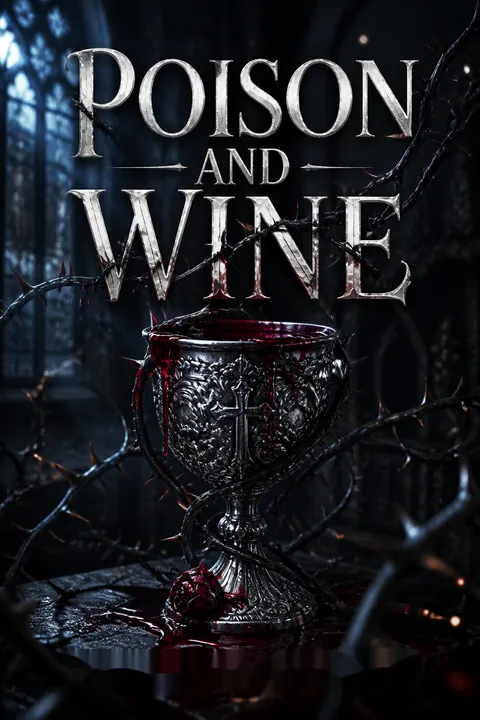
Poison and Wine is a highly-rated mafia romance novel featuring Callum, an Irish mob boss, and Caterina, an Italian mafia princess turned novice nun. Readers praise the book's humor, chemistry between characters, and slow-burn romance. The forced marriage trope and enemies-to-lovers dynamic are well-executed, with many appreciating Caterina's strong personality and Callum's character development. While some found certain plot elements far-fetched, most readers enjoyed the balance of dark themes, humor, and steamy scenes, eagerly anticipating future books in the series.
Characters
Caterina Neretti
The self-rescuing daughterCaterina is the only daughter of a powerful Italian crime family, raised amid wealth and guarded by three older brothers. Compassionate and quick-witted, she uses her medical training at a Sicilian mission clinic and is deeply attached to serving its community. Her decision to join a religious order grows from both faith and a refusal to accept a dangerous arranged marriage. Caterina wants education, meaningful work, and control over her future, even when the men around her regard those wishes as negotiable. Her warmth with children and instinct to care for others coexist with a fierce capacity to resist. She does not confuse kindness with submission, and she expects any lasting relationship to recognize her as a full partner.
Callum Kavanaugh
The guarded clan leaderCallum is the oldest Kavanaugh brother and leader of the family’s Boston Irish mafia. Educated and strategic, he carries the authority his father prepared him to inherit, but rejects the older man’s cruelty toward women and children. Callum is still shaped by that upbringing: he often treats control as protection and mistakes emotional distance for strength. He is loyal to his brothers, deeply protective of Maeve, and accustomed to resolving threats through violence. Caterina unsettles his assumptions because she challenges him without surrendering her compassion. Beneath his intimidating command is a man afraid that love will compromise his judgment, and whose growing capacity for care depends on learning that devotion does not require ownership.
Quinn Kavanaugh
The scarred enforcerQuinn is Callum’s imposing brother and the Kavanaugh family’s principal enforcer. A car bomb left him visibly scarred and wary of touch, while years of violence have made him formidable in a fight. His reserve can look like coldness, but his loyalty to his siblings is absolute, and he takes the safety of women and children seriously. Caterina’s ease around him gradually draws him into conversation and family life. Quinn serves as both muscle and a quiet measure of how trauma can make ordinary contact difficult without extinguishing a person’s tenderness.
Dare Kavanaugh
The irreverent brotherDare, whose given name is Darragh, is Callum’s witty, sociable brother and a skilled member of the family’s criminal operation. He uses humor to defuse tension and needle Callum, especially when his brother becomes jealous or overly controlling. His charm can conceal a ruthless streak, and he is no stranger to violence. Dare helps carry out Caterina’s abduction, yet accepts that her resistance comes from believing herself under attack. His lively presence provides contrast to Quinn’s severity and Callum’s command, while his loyalty remains firmly with the family.
Kellan Kavanaugh
The gentle youngest brotherKellan is Callum’s youngest brother, a capable numbers man who is less comfortable with the family’s physical violence. He has a thoughtful, restrained manner that distinguishes him from his older brothers, though he is loyal to their clan. Kellan carries painful guilt connected to his sister Maeve and is especially sensitive to situations in which a woman is being forced or restrained. His kindness toward Caterina is practical rather than showy: he offers medicine and feeds her when she is weakening herself. He represents a different form of usefulness and courage within the family.
Maeve Kavanaugh
The protected sisterMaeve is Callum’s younger sister, a university student whose life has been shaped by her family’s attempt to protect her from the dangers of their world. She is loved fiercely by her brothers, but does not want to be reduced to a symbol of their guilt or concern. Maeve values her education and the independence she has found away from Boston. Her warmth and resilience help explain Callum’s rejection of his father’s treatment of women, while her own need to be seen as more than her past challenges the family’s protective instincts.
Seamus Kavanaugh
The calculating adviserSeamus is Callum’s uncle and trusted adviser, a seasoned operator who helped the Kavanaughs establish themselves in America. He favors political alliances when they can spare the family a costly war, which leads him to arrange Callum and Caterina’s marriage. Seamus understands the clan’s strategic needs, but he is not simply a hard-nosed schemer; his grief over losing his son and wife gives him an intimate understanding of suffering. He often sees emotional possibilities in Callum before Callum can admit them himself.
Raphael Neretti
The emerging family leaderRaphael, commonly called Rafe, is Caterina’s eldest brother and a senior figure in the Neretti family. He is protective of his sister and quick to challenge anyone he believes has harmed her. Beneath his explosive temper is a strategic mind capable of weighing what a conflict would cost the family. Rafe initially distrusts Callum, but he listens when Caterina insists that her marriage is also a path toward the future she wants. His position makes him central to the fragile negotiations between the Nerettis and Kavanaughs.
Leandro Neretti
The watchful middle brotherLeandro, usually called Leo, is one of Caterina’s three older brothers and a trusted member of the Neretti family. He is alert to threats against his sister and initially views Callum through the lens of the abduction. Leo contributes to the family’s intelligence gathering and supports Rafe during negotiations. His protectiveness is genuine, but he also reflects the assumptions of their world, where men expect to make decisions for women they love.
Gianni Neretti
The resourceful brotherGianni is Caterina’s youngest older brother, a Made Man with a talent for technology and family intelligence. He shares his brothers’ fierce attachment to Caterina, though his practical skills make him useful beyond physical protection. Gianni helps track information and supports the Neretti family’s evolving leadership. His affection for his sister is playful, but he takes threats to her seriously.
Alessio Neretti
The controlling patriarchAlessio is Caterina’s father and head of the Neretti family. He prizes traditional authority, political alliances, and control over his children’s futures. His treatment of Caterina reflects a worldview in which family members can be traded to secure power, even when they resist. He is also a father whose sons are increasingly unwilling to accept his decisions, making his control less secure than he believes.
Carmine Lucero
The predatory former fiancéCarmine is the older man once selected to marry Caterina. He treats the proposed marriage as a right to command her body and threatens her when she refuses to submit. His entitlement gives Caterina a clear reason to seek refuge in the religious order and shapes her caution around Callum’s power. Carmine’s polished status within the criminal world masks a predatory view of women.
Lorna
The household's steady heartLorna has worked for the Kavanaugh family for years and is more than a cook and housekeeper to the brothers. She provides continuity, warmth, and practical care in a household governed by danger and unpredictable schedules. She welcomes Caterina without demanding that she immediately fit a traditional wife’s role, and helps her navigate domestic life. Lorna’s affection for the brothers is frank enough to include teasing and scolding.
Orla Kavanaugh
The formidable motherOrla is Callum’s mother, a strong-willed woman whose home and heart remain in Belfast. She does not hesitate to challenge Callum when she learns how he brought Caterina into the family. Orla cares more about Caterina’s happiness than about preserving appearances or a purely Irish alliance. Her warmth toward her new daughter-in-law offers Caterina a maternal bond different from the emotionally distant relationship she has with her own mother.
Eamon Kavanaugh
The youngest KavanaughEamon is Callum’s youngest brother, a teenager with Dare’s ease and a talent for teasing. He is close to Maeve and joins the family gatherings in Boston. His presence gives Caterina another sibling relationship to build as she becomes part of the Kavanaugh household.
Nera
The resourceful housekeeperNera works in the Sicilian house where the Kavanaughs stay before the wedding. She understands local roads and loyalties better than the visiting Irish family, and her practical knowledge makes her valuable in a crisis. Her willingness to help Caterina and the Kavanaughs places her between competing family powers.
Sister Lucia
The mission's gentle guideSister Lucia works alongside Caterina at the Sacred Heart mission. She helps care for the clinic and its children, understands Caterina’s affectionate nature, and offers companionship within the religious community. Her presence represents the meaningful service and daily relationships Caterina leaves behind.
Sean
Callum's loyal soldierSean is a longtime member of the Kavanaugh organization and one of Callum’s trusted men. His marriage and young child give Callum a personal connection to the human cost of the family’s dangerous work. Sean’s place in the clan is defined by loyalty and the responsibilities he carries beyond the job.
Plot Devices
The arranged marriage
Alliance through marriageCallum and Caterina’s marriage is designed to secure cooperation between the Irish Kavanaugh clan and the Italian Neretti family. It begins as a political solution imposed by Seamus and the family powers, but Caterina negotiates concrete terms before accepting it: education, work, control over family size, and a daughter’s right to choose her own spouse. The device drives the romance while keeping its central ethical question visible. Marriage offers Caterina a different future, but only as she pushes the people around her to recognize that an alliance cannot make her property.
The marriage contract
Freedom in writingThe contract records the promises Callum makes to Caterina before the ceremony. It gives her a tangible safeguard in a world where spoken assurances are easily discarded, and it lets her judge Callum by what he is willing to formalize. The document also becomes a measure of the couple’s changing relationship: Caterina asks for specific protections rather than trusting attraction to solve the imbalance between them. Its terms establish what she expects from marriage and shape their arguments about education, work, children, and autonomy.
The religious order
Refuge and moral compassThe Sisters of the Sacred Heart gives Caterina a way out of an abusive arranged match and a life of practical service in a Sicilian village. Its clinic, food pantry, and community give her a purpose independent of her family’s wealth. Leaving the order after Callum takes her creates spiritual grief as well as relief, and she continues to attend church and volunteer after the marriage. The order therefore functions not as a disguise for an unfaithful vocation, but as a real source of values Caterina carries into the criminal world around her.
The tracker
A trail to the captiveCallum secretly has a tracker placed in Caterina’s arm to monitor her location. When Alessio’s men abduct her from outside the club, Callum and his brothers use its signal to begin searching the North End. The trail leads them close enough for Rafe to supply the specific warehouse address through family intelligence. The device turns Callum’s controlling behavior into a practical rescue tool, but its secrecy also embodies the unequal surveillance Caterina resents. It helps save her without making the violation of trust disappear.
The Kavanaugh alliance
A fragile political bridgeThe alliance links the Kavanaughs’ Irish network to the Nerettis’ Italian influence, improving the Kavanaughs’ position after Callum inherits leadership. It is never simply a treaty between equal organizations: Caterina’s marriage becomes its visible bond, while Alessio’s resistance and the brothers’ competing loyalties threaten to break it. The alliance gives the characters a reason to negotiate, attend the same celebrations, and reconsider old hostilities. It also raises the stakes of personal choices, since the survival of each family can be affected by what happens between Callum and Caterina.
Download PDF
Download EPUB
.epub digital book format is ideal for reading ebooks on phones, tablets, and e-readers.








