

Key Takeaways
A political career can turn on five images, not five years of work
Public memory edits ruthlessly. Clegg describes a political zoetrope: a sequence of snapshots that viewers mentally spin into a story about a politician. His public sequence began with the 2010 leaders’ debate and the sudden excitement of Cleggmania, then moved through the Rose Garden coalition announcement, tuition-fee protests, a viral apology, and his resignation after the 2015 election. Five years of policy work could not dislodge those defining scenes.
Attention is uneven. Most people do not follow politics daily. They notice it at moments of drama, when a single image can stand for a complicated record. Clegg’s error was not simply failing to deliver policies. He underestimated how quickly the public story could harden, and how little control a politician has once opponents and media repeat a more memorable version.
The zoetrope is a useful model of political memory because it explains why a record and a reputation can diverge without either being imaginary. Voters have limited attention, so a few highly charged events become shortcuts for judging a leader. The model also warns against treating communication as decoration added after policy is made. Yet it has a limit: a vivid story cannot indefinitely conceal outcomes people experience directly. Narrative shapes what voters notice, but governance supplies the material that makes a story credible or brittle.
Liberalism must tell an emotional story, not merely present sound policy
Values need a pulse. Clegg defines liberalism less as a midpoint between left and right than as a commitment to disperse power and let individuals shape their lives. That principle can support civil liberties, local decision-making, fairer elections, and wider educational opportunity. But it is harder to communicate emotionally than socialism’s promise to challenge inequality, conservatism’s defence of tradition, or nationalism’s appeal to belonging.
Facts rarely travel alone. Clegg argues that voters usually encounter politics through stories, not policy documents. Reagan’s repeated story of a free America under threat was more memorable than the detailed arguments of his opponents. The Brexit campaign similarly made a simple promise of regained control more compelling than forecasts about household finances. Liberals need a story of fairness, freedom, and change that people can recognize in their own lives.
The distinction between a policy and the story that gives it meaning is important: a tax change, a civil-liberties safeguard, or a school reform becomes persuasive when people understand whom it helps and what kind of society it expresses. This does not mean emotional politics must be manipulative. Emotion can communicate stakes that statistics alone leave abstract. The difficulty is keeping a simple narrative honest. A compelling promise that hides trade-offs may win attention quickly, but it can corrode trust when reality arrives.
Enter government to change lives, but never mistake compromise for cost-free
Power brings responsibility. After the 2010 election, the Liberal Democrats faced an inconclusive result and an urgent economic crisis. Clegg concluded that a Conservative coalition was the only workable route to a stable government. A Labour and Liberal Democrat arrangement lacked enough seats, while a fragile minority government or another election risked further instability. He still argues that taking power was preferable to remaining an opposition party unable to implement its ideas.
Promises carry emotional weight. The tuition-fee controversy became the defining mark of the coalition. Liberal Democrat MPs had signed a pledge against higher fees, then supported an increase after entering government. Clegg says the party had an implausible policy, made a damaging promise, and communicated the eventual change badly. The replacement system improved repayment terms and access support, but those details could not erase the sense of betrayal created by the broken pledge.
This episode captures a basic problem of representative government: voters judge both the decision and the path taken to it. A policy may be defensible on its merits while still violating a promise that helped earn public trust. Clegg’s account is strongest where he accepts that distinction rather than treating good intentions as a full defence. The hard question for any party entering a coalition is how to preserve credibility when it must abandon a commitment. Candour before the compromise is often more valuable than explanation after it.
If the public cannot see power, it cannot judge who wielded it
Authority needs a shape. As Deputy Prime Minister, Clegg had substantial influence: major coalition decisions required agreement between him and David Cameron. Yet his office lacked the visible status of Number 10, and he chose to sit beside Cameron at Prime Minister’s Questions. The public saw a junior figure, not a co-author of policy. The symbols around an office helped determine how its authority was understood.
The machinery stayed hidden. Economic policy was often negotiated in small meetings involving Cameron, Clegg, George Osborne, and Danny Alexander. But Osborne was the government’s most visible economic messenger, so the public often credited him with decisions that had been contested or shaped by Liberal Democrats. Meanwhile, Clegg’s early lack of staff and the Civil Service’s limited experience with coalition government made it harder to explain what his role actually involved.
Visibility is not a shallow concern when citizens need to assign responsibility. If decision-making is opaque, public accountability becomes guesswork, and the most prominent face can receive either undeserved credit or blame. Clegg’s experience also shows that institutional design communicates authority before a leader says a word. However, better staging cannot substitute for transparent records of decisions or meaningful scrutiny. Political optics are most legitimate when they make real responsibility easier to trace, rather than merely making a leader look powerful.
Use bargaining to turn partial agreement into practical reform
Give-and-take can deliver. Coalition bargaining sometimes produced policies neither party would have achieved alone. Liberal Democrats secured a major rise in the income-tax personal allowance, despite early Conservative resistance. The threshold rose from £8,105 to £9,205 in one budget, giving millions of people on low and middle incomes a tax cut. Conservatives later adopted the policy as their own, but its political ownership mattered less than its implementation.
Small deals can matter. David Laws used a spending trade-off to secure free school meals for children in the first three years of primary school. By September 2014, the policy was reaching more than a million additional children. On surveillance, Clegg accepted emergency legislation only with a sunset clause and independent reviews, creating pressure for renewed parliamentary debate. These examples show compromise as a method for getting workable change through institutions, not simply splitting differences.
Bargaining can act as a check on overconfidence: competing parties must defend proposals to someone with both the incentive and the authority to object. The examples also show why policy outcomes deserve attention even when political credit is disputed. Still, compromise is not automatically virtuous. A deal can preserve a bad policy, distribute costs unfairly, or obscure who made which choice. Its value depends on whether the negotiated result improves people’s lives and whether the public can understand the trade-offs behind it.
Reform rules that let votes translate into wildly unequal political power
The seat count misleads. First Past the Post awards each constituency to its leading candidate, even without majority support. In 2015, the Conservatives won a parliamentary majority with 37 per cent of votes cast, while UKIP received 3.9 million votes and won one seat. The Liberal Democrats won 2.4 million votes and eight seats. Parties with support spread across the country were disadvantaged, while parties with concentrated support could win many seats efficiently.
The rules protect incumbents. Clegg argues that an unelected House of Lords, dependence on large donors, and an electoral system built around a two-party contest all weaken public trust. The coalition promised electoral and Lords reform, but the Alternative Vote referendum failed and Lords reform collapsed amid party resistance. His lesson is that those who benefit from existing arrangements often have little reason to change them, especially once public pressure fades.
Electoral rules do more than count preferences. They shape which parties organize, where candidates campaign, and which voters receive attention. When large groups feel that their votes rarely affect representation, alienation is a predictable response. But proportionality alone cannot solve every democratic problem: coalition negotiations can move decisions away from direct public scrutiny, and a more representative chamber may still be unresponsive. Reform therefore needs both fairer translation of votes and institutions that make bargaining visible and accountable.
Keep parties distinct while making cooperation a credible route to government
Coalitions have unequal risks. Clegg uses the Dutch phrase Burgemeester in oorlog, meaning to be a mayor in wartime, for the bind facing a smaller coalition partner: stay in office and accept compromises, or leave and let others govern. Smaller parties in Sweden, Ireland, the Netherlands, and elsewhere also faced accusations of betrayal and electoral punishment. The Liberal Democrats’ collapse in 2015 was severe, but Clegg argues that other forces, including Scottish nationalism and the campaign’s two-way framing, also mattered.
Pluralism is not a merger. Clegg rejects Roy Jenkins’s idea that progressive politics should permanently combine into a centre-left bloc. He favours independent parties that can cooperate when voters and circumstances require it. Yet an election that presents a simple choice between continuity and change leaves a centrist party explaining both sides of its record. Cooperation must be clear enough for voters to evaluate, without erasing the parties’ separate identities.
The smaller partner’s problem is partly structural: it shares responsibility for government while the larger party usually dominates public recognition. Naming that imbalance helps explain why coalitions can punish junior partners even when policies succeed. Still, preserving party identity cannot mean avoiding responsibility or presenting every compromise as imposed from outside. An honest coalition offer should specify shared aims, likely trade-offs, and limits. That gives voters a chance to judge a governing arrangement, rather than discovering its terms only after election night.
Read populism as a signal of insecurity, not just a failure of reason
Anger has a setting. At a focus group, former Liberal Democrat voters who had switched to UKIP listed irritations ranging from television to noisy supermarkets. Asked what they liked about modern Britain, one participant answered that he liked the past. Clegg sees this nostalgia as part of a wider response to rapid social change, economic insecurity, migration, and institutions that seem distant or unresponsive.
Grievance finds a target. Populist movements offer a group to blame, a simplified past to recover, and a decisive solution to complex problems. Those appeals can attract voters on the right and left, even when their policies differ sharply. Clegg argues that immigration often expresses deeper worries about housing, jobs, community, and control. Dismissing these concerns as ignorance leaves the underlying conditions untouched and gives grievance politics room to grow.
Treating populism as a signal rather than a diagnosis changes the response. A voter’s fear may be politically exploited and still point toward a real experience of instability or exclusion. Listening carefully does not require endorsing scapegoating or false claims. It means separating the anxiety from the proposed culprit, then addressing the material or social conditions that make the story persuasive. The limitation is that economic remedies alone may not resolve concerns about identity and belonging. Those require civic language and institutions people experience as genuinely shared.
Understand Brexit as a clash over belonging as well as Brussels
History shaped the argument. For countries scarred by war or dictatorship, European integration carried a powerful promise of peace, reconciliation, or democratic return. Britain’s entry into the European Community was more pragmatic, rooted in economic calculation and an awareness of declining imperial influence. Clegg argues that this weaker emotional attachment helped make appeals to sovereignty and national pride especially potent in the referendum.
Distance invites blame. The European Union’s democratic deficit is the gap citizens perceive between decisions made through complex negotiations in Brussels and the accountability they expect from national politics. Clegg argues that national leaders often deepen the problem by claiming absolute control at home while blaming Europe for shared decisions. He sees immigration as a prominent referendum issue, but also as a sign of deeper dissatisfaction with uneven opportunity and a sense of lost control.
The historical comparison helps explain why the same institution can mean reconciliation to one public and constraint to another. Political identity is not determined by economic calculation alone; inherited narratives shape what feels like a national gain or loss. Yet history can become a tidy explanation after the fact. Britain’s varied regions and communities did not share one attitude toward Europe, and no single account of national character explains every vote. Good analysis keeps those competing experiences in view without turning them into destiny.
Answer grievance with homes, fairer generations, and shared civic pride
Make reform tangible. Clegg’s proposed response to populism is not a better slogan alone. He calls for sustained investment in infrastructure and housing, stronger action on economic imbalances, and a fairer settlement between younger and older generations. He points to insecure work, shrinking access to home ownership, and public benefits tilted toward older people as sources of strain. Restricting immigration, he argues, cannot substitute for improving jobs, housing, and public services.
Patriotism can welcome change. Clegg urges liberals to present tolerance, democratic reform, and local empowerment as sources of national pride, rather than treating patriotism as the property of traditionalists or nationalists. He points to the 2012 Olympics as a moment when public services, innovation, culture, and shared identity sat comfortably together. His aim is a politics that gives people both a sense of belonging and a practical stake in the country’s future.
This programme connects democratic legitimacy to everyday material conditions. A person who cannot find secure work or affordable housing may hear abstract defences of openness as indifference, even when those principles are sincerely held. Policies that improve security can make pluralism feel less like a demand for sacrifice. The proposals also expose a difficult distributional question: protecting older people and supporting younger ones both require resources, and the balance cannot be settled by patriotic language alone. Belonging becomes credible when institutions share burdens fairly.
Analysis
The book’s most persuasive achievement is to connect a personal political rise and fall with the institutional habits that shape public life. Clegg is not simply recounting how he became unpopular. He examines why a coalition partner can exercise substantial influence yet appear powerless, why a policy record can be eclipsed by a handful of symbolic events, and why voters may treat compromise as evidence of betrayal. The memoir gives these claims texture: the Rose Garden, the tuition-fee pledge, hidden budget negotiations, and the failed reform agenda make abstract political mechanisms legible.
Its argument is also self-interested, as any political memoir is. Clegg defends the decision to enter coalition and presents the Liberal Democrats as a moderating force, while his account of opponents’ motives is necessarily partial. He acknowledges mistakes, especially the tuition-fee promise, but the book’s interpretation still places substantial weight on hostile framing, electoral structure, and forces beyond his control. Readers should distinguish the useful diagnosis from the implied verdict on his own record.
The central tension is that liberal politics depends on compromise, but democratic audiences often judge politics through conflict, identity, and visible consequences. Clegg is right that evidence cannot do all the work of persuasion, and that institutional opacity leaves room for populist claims. Yet clearer storytelling is not enough if people experience economic insecurity or believe the political system ignores them. His strongest proposals therefore join narrative to material reform: housing, opportunity, accountable institutions, and a civic patriotism broad enough to include disagreement.
The book is most valuable as both a defence and a warning. Coalition can produce balanced policy, but the junior partner may pay a steep electoral price. Liberalism can resist authoritarian simplicity, but only if it speaks to emotion without abandoning evidence. And reform is especially difficult when those who must approve it benefit from the existing rules. The book leaves readers with no easy formula, but a demanding standard: make compromise visible, reform the machinery, and show how moderation changes ordinary lives.
Review Summary
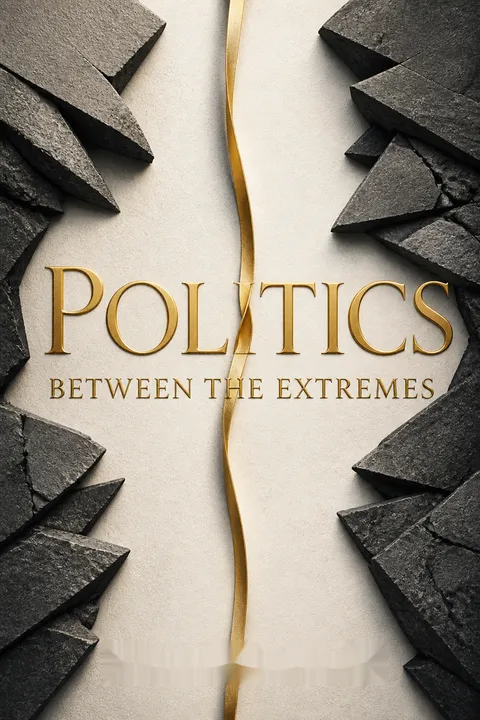
Politics: Between the Extremes receives mixed reviews, with ratings ranging from 1 to 5 stars. Readers appreciate Clegg's candid reflections on his time in government and his analysis of current political trends. Many find his writing style engaging and his arguments well-reasoned. However, some critics view the book as self-serving and defensive. Clegg's discussion of liberalism, populism, and the challenges facing centrist politics resonates with some readers, while others find his perspective out of touch. The book's exploration of coalition politics and the LibDem experience in government is widely considered informative.
People Also Read


Glossary
political zoetrope
Snapshots forming a public storyClegg’s term for the sequence of memorable moments through which the public forms an impression of a politician. Like images inside a spinning zoetrope, separate events combine into an apparent story. Routine work may be overlooked, while a few dramatic scenes come to represent an entire political career.
Burgemeester in oorlog
Compromise under wartime pressureA Dutch phrase meaning to be a mayor in wartime, used to describe the dilemma of a junior coalition partner. The party can remain in government and accept compromises, or leave and allow others to take power. Either choice can alienate supporters and damage the party.
First Past the Post
Constituency winner takes seatThe electoral system used for UK general elections in which each constituency elects the candidate with the most votes, even if that candidate receives less than half the vote. Clegg argues that it can produce a sharp mismatch between parties’ national vote totals and their number of parliamentary seats.
democratic deficit
Gap between decisions and accountabilityThe perceived distance between decisions made through complex European Union negotiations and the public accountability citizens expect from political institutions. Clegg argues that national leaders contribute to this gap when they conceal their role in shared decisions or present their own authority as greater than it is.
interest voters
Voters prioritizing practical advantageClegg’s label for voters who primarily assess which party seems likely to benefit them, their families, or their communities. They tend to judge politics pragmatically and may accept compromise when essential interests remain protected. The term describes one broad tendency, not a fixed or exclusive voter type.
values voters
Voters prioritizing social idealsClegg’s label for voters who primarily choose parties that express their worldview and desired kind of society. They may care about equality or other principles even when they are not personally disadvantaged. Such voters can be less willing to accept compromises they see as weakening those principles.
expressive individualism
Politics as personal self-expressionA political tendency in which people use political choices to express individual identity and values, rather than treating voting mainly as a practical assessment of policy. Clegg links it to consumer choice, social media, and declining party loyalty, and warns that it can encourage idealized expectations of political leaders.
Age of Unreason
Politics ruled by closed certaintiesClegg’s name for a political climate in which populist movements reject doubt, open inquiry, and compromise in favour of confident claims and simple solutions. He does not mean that their supporters are inherently irrational. Rather, he argues that the political style discourages scrutiny and the possibility that a claim may be wrong.
Download PDF
Download EPUB
.epub digital book format is ideal for reading ebooks on phones, tablets, and e-readers.








