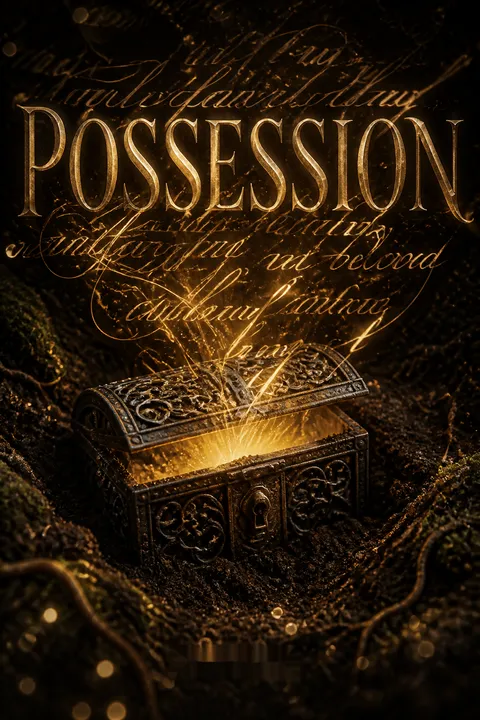


Plot Summary
The Vico's Hidden Leaves
In 1986, Roland Michell, an underpaid research assistant editing Victorian poet Randolph Henry Ash, finds two unfinished letters tucked into Ash’s copy of Vico at the London Library. Their urgency contradicts the polished, uneventful life Roland has imagined for the poet.
Rather than report the find, Roland secretly removes the letters and makes photocopies, telling himself he needs to learn what happened before other scholars claim them. At home, his partner Val barely responds to his discovery.
She earns their rent through temporary office work, while Roland’s academic prospects have narrowed to rejection and odd jobs. Her anger exposes how little their shared life now gives either of them. The letters become Roland’s private mystery and his first deliberate act of disobedience.
The discovery begins as a breach of both archival protocol and Roland’s self-image. He has treated scholarship as disciplined distance, but the letters draw him into a more bodily relation with the past: he wants not merely to interpret them but to keep them close. His theft also mirrors the imbalance at home. Val supports him materially while he claims an inward life organized around a dead poet. The novel makes possession morally unstable from the start: Roland’s curiosity may serve knowledge, ambition, or a need to feel that something belongs to him.
Christabel's Unseen Reader
Following a reference to Miss LaMotte in the letters, Roland visits Dr Maud Bailey, a scholar of the Victorian poet Christabel LaMotte and a distant descendant of her sister’s family. Maud distrusts the idea that Ash and LaMotte mattered to each other, but lets Roland consult the diary of Blanche Glover, LaMotte’s housemate.
Its pages describe LaMotte receiving unexplained literary letters, growing absorbed in correspondence, and fearing a prowler outside their Richmond home. Blanche’s account shifts between jealousy, loyalty, and dread, without identifying the visitor.
Roland shows Maud his photocopies and admits that he took the originals. Though she disapproves, she sees that the dates and references fit. She invites him to stay, and they begin investigating together, bound by curiosity and a fragile agreement to keep the find secret.
Maud enters as more than a source of information. Her resistance makes Roland test the difference between evidence and a story he wants to believe. Blanche’s diary complicates the archive further: it records domestic routines alongside feelings its writer cannot safely name, so apparent triviality becomes evidence without becoming proof. The two modern scholars initially approach the past through opposing habits, Roland through textual detail and Maud through feminist literary history. Their collaboration begins when neither method is sufficient alone, and when Roland’s confession forces their intellectual partnership to include a question of trust.
The Dolls' Secret Compartment
Maud takes Roland to Seal Court, the decaying Lincolnshire home of her Bailey relatives, where Sir George and his disabled wife Joan live in a fraction of the great house. Joan persuades her husband to show the scholars LaMotte’s locked room.
Maud remembers a poem about a watchful doll and searches beneath the dolls’ bed, uncovering letters wrapped in linen and silk. The bundles contain correspondence between LaMotte and Ash, including their first meeting, their intense exchange about poetry, faith, and imagination, and their eventual separation.
Some final letters show LaMotte demanding the return of her words and Ash complying, though neither reveals what happened after their last summer together. Sir George keeps the documents, wary of scholars and money. Roland and Maud leave with permission to study them, but not to control them.
The concealed letters turn literary research into a material contest. Their hiding place is domestic, small, and easily overlooked, unlike the grand institutional collections controlled by male scholars. Maud’s knowledge of LaMotte’s poems makes her the person who can recognize the clue, yet Sir George retains physical power over what she finds. The correspondence also resists the clean categories its readers bring to it. It is intellectual exchange, desire, disagreement, and an argument over privacy at once. The archive offers access, but every act of access raises a new question about who has the right to read.
Rival Keepers of Ash
As Roland and Maud begin reading the correspondence, they learn how many interests surround Ash’s papers. James Blackadder, Roland’s exacting supervisor, fears that American collector Mortimer Cropper will acquire another British archive. Cropper, meanwhile, photographs a handful of Ash’s letters to a child and pressures their owner to sell.
In the British Museum, Beatrice Nest has spent decades editing the private journal of Ash’s wife, Ellen, while facing criticism from scholars who want the journal to support their own theories. Roland asks Beatrice to check for LaMotte references.
Her index reveals that Ellen read LaMotte’s epic, and her journal praises its force with startling enthusiasm. This contemporary response unsettles the tidy divide between Ash’s famous work and LaMotte’s neglected one, while Cropper’s appearance makes the modern researchers’ secrecy increasingly difficult to maintain.
The academic rivalry turns interpretation into a form of institutional ownership. Cropper equates preservation with acquisition, while Blackadder’s patriotism can shade into possessiveness of its own. Beatrice occupies the least powerful position, yet her years with Ellen’s papers have given her a sensitivity the more fashionable interpreters overlook. The journal’s praise matters because it is neither a modern feminist recovery nor a neutral scholarly verdict. It comes from a woman close to Ash’s domestic world, and it suggests that private reading can preserve judgments excluded from public reputation. The novel asks whether an archive protects voices or merely gives new authorities permission to speak for them.
The Yorkshire Reading
At Christmas, Sir George allows Roland and Maud to read the letters in Seal Court’s cold library. Ash’s vivid, unsettled writing makes Roland realize that these pages were composed for LaMotte, not for future editors.
The two scholars divide their notes, then compare Ash’s account of Yorkshire natural history with LaMotte’s language in The Fairy Melusina. They travel north to investigate. At Filey Brigg, Roland studies sea anemones while Maud challenges the habit of reducing every image to sexual symbolism.
Their walks through waterfalls and moorland reveal shared language and landscape, though not conclusive proof of LaMotte’s presence. At the Boggle Hole, Maud unpins her tightly concealed hair and lets it fall in the sea air. The release changes their guarded partnership into a quieter, mutual attraction.
The field trip tests whether interpretation can remain open to the world it describes. Roland resists turning every natural image into a sign of human sexuality; Maud acknowledges that critical frameworks can become prisons even when they expose real patterns of power. Their movement through the landscape gives them a way to share attention without forcing confession. Maud’s unbound hair is not a romantic cure but a small act of reclaiming bodily choice from other people’s judgments. Their intimacy grows through restraint, which distinguishes it from the more coercive forms of desire both have experienced.
Blanche's Last Warning
Back in London, Maud searches Beatrice’s papers for evidence about Blanche Glover and finds Blanche’s suicide note, written before she drowned herself in the Thames. Blanche describes their attempt to live independently as women artists, undone by poverty and the lack of work or security.
She leaves her paintings to LaMotte and says that she had tried to protect her friend from a painful truth. Maud also uncovers a fragment in which Blanche accuses Ellen of keeping evidence that was not hers.
The documents do not establish exactly what Blanche discovered, but they make her death part of the correspondence’s history rather than a detached biographical footnote. Maud and Roland now suspect that Blanche knew of Ash and LaMotte’s affair, and that Ellen learned of it through her.
Blanche’s note gives economic pressure the force of plot. Her artistic ambitions are not defeated by a lack of talent alone; the conditions that might sustain a woman’s work are absent, and her chosen independence becomes materially precarious. The papers also reveal how disclosure can be both care and injury. Blanche may have meant to protect LaMotte or Ellen, yet the evidence she preserved feeds the curiosity of later scholars. Maud’s search brings her closer to the women she studies, but it also risks reproducing the very intrusion their writing tried to resist.
A Daughter in Brittany
Leonora Stern, Maud’s American colleague and friend, brings word of a newly found journal by Sabine de Kercoz, a Breton cousin of LaMotte. Maud and Roland travel to Nantes and then Finistère, where scholar Ariane Le Minier gives them a copy.
Sabine’s account describes LaMotte arriving during a storm, ill and guarded, then gradually sharing her ideas about writing and women’s freedom. Sabine grows jealous when LaMotte becomes close to her father, but later recognizes that LaMotte is pregnant.
LaMotte refuses to discuss the child, disappears near the time of delivery, and returns thin and altered, still asking that no questions be raised. The journal ends without explaining the child’s fate. Its account changes the mystery from a possible affair into a concealed family history.
Sabine’s journal is a second archive nested inside the first, and its emotional truth depends on its limits. She records her jealousy, her admiration, and her uncertainty, but cannot know what LaMotte will not tell her. That incompleteness resists the modern scholars’ appetite for a seamless biography. The pregnancy also exposes the difference between freedom as an ideal and freedom under material conditions: LaMotte can claim artistic autonomy, yet pregnancy makes privacy, shelter, and other women’s help matters of survival. The journal preserves care without converting it into full knowledge.
The Lovers Leave the Trail
Roland and Maud leave their colleagues behind and spend several weeks traveling through Brittany, following LaMotte’s traces while avoiding the pressure of academic competition. At the Bay of the Dead, they are surprised by Leonora and Blackadder, who have followed the research trail.
Knowing that Cropper is also closing in, Roland and Maud return to England rather than explain their secret. Their relationship has changed during the journey. They share quiet physical closeness, but neither demands that it become a declared romance; both fear losing the independence that has protected them.
Back in Lincoln, Roland has no secure job and has walked away from Blackadder and Val. Maud’s work and reputation offer her a firmer footing. Their private alliance now has to survive the return of money, colleagues, and competing claims.
The flight grants Roland and Maud a temporary space outside their familiar roles, but it cannot make them innocent of the power structures they evade. Their secrecy protects research and intimacy while also wounding Leonora, who believes Maud has appropriated information they shared. Their restraint is psychologically specific: both fear that desire will become possession, and both understand how easily a relationship can recreate old inequalities. The return to England matters because private feeling must meet ordinary obligations. Their bond can no longer rely on the landscape or the mystery to suspend questions of work, loyalty, and dependence.
The Will in the Deedbox
Val has left the Putney flat and begun a relationship with Euan MacIntyre, the solicitor who once offered her a life beyond temporary typing. At a dinner in Lincoln, Euan brings Maud a copy of LaMotte’s signed bequest, found among old family papers.
It leaves LaMotte’s manuscripts and copyrights to Maud’s ancestor, strengthening Maud’s claim to the correspondence. Euan explains that the letters themselves may belong to their recipient, while copyright follows their writers, so Sir George’s control could be contested.
Val tells Roland she is marrying Euan, and he accepts the news with genuine relief and grief. The discovery offers Maud a route to preserve LaMotte’s work, but it also makes Roland feel that the quest he began has given her a future while leaving him without one.
The will converts a family connection into a legal and ethical problem. Maud’s inheritance may secure LaMotte’s work, but ownership does not settle where the letters belong or who should benefit from them. Euan’s advice makes law a plot mechanism rather than a final authority: every claim depends on incomplete documents and vulnerable relationships. Val’s decision to marry Euan is not simply a replacement of Roland. She chooses a life that includes pleasure and attention, after years of being treated as the practical support behind his ambitions. Roland’s response shows that letting go can be loving and still leave a wound.
Cropper's Graveyard Scheme
Cropper tries to secure the Ash and LaMotte letters by offering Sir George a fortune, then publicly announces their existence as an international scholarly treasure. Blackadder and Leonora challenge his account on television, arguing that the letters belong in Britain and that LaMotte deserves recognition in her own right.
Cropper searches Ash’s old papers and discovers a reference to the spiritualist Hella Lees, whose seances once involved both poets. He then persuades Hildebrand Ash, heir to the Ash estate, to help him retrieve a box buried with Randolph and Ellen.
Beatrice overhears their plan and warns Maud. Euan, Val, Roland, Blackadder, Leonora, and Beatrice gather to stop the proposed grave robbery. The stakes are no longer only access to documents: Cropper may destroy the boundary between private memory and public evidence.
Cropper’s plan is the logical extreme of his scholarly creed. He believes that if an object can illuminate a life, its preservation justifies almost any intervention. The grave makes visible what the archive usually conceals: research has a body, and the dead cannot consent to being made legible. The public debate over national ownership is therefore incomplete; keeping a relic in Britain does not answer whether anyone should expose it. Beatrice’s warning matters because a scholar long treated as timid becomes the group’s decisive witness. Her knowledge is practical, not spectacular, and it prevents theory from arriving too late.
Ellen's Unopened Letter
Before the planned interception, the narrative follows Ellen Ash in the days after Randolph’s death. Her journal shows that Blanche Glover once came to her with evidence of the affair, and that Ellen returned LaMotte’s first Swammerdam manuscript to her husband. Ellen and Ash acknowledged the betrayal, then agreed not to speak of it again.
Near his death, he asked her to destroy what should remain private. Instead, Ellen places their love letters, a hair bracelet, a lock of LaMotte’s hair, and a sealed letter addressed to Ash in his specimen box, then buries it with him. She burns one unfinished letter but never opens LaMotte’s final message. Her silence preserves both her marriage and the possibility that the truth may someday be read.
Ellen’s account breaks the easy division between the dutiful wife and the hidden lover. She knows more than the public record suggests, yet refuses the role of investigator into her husband’s private life. Her silence is neither simple consent nor ignorance; it is a strategy for surviving knowledge that cannot be undone. By preserving the sealed letter while destroying another, Ellen chooses partial transmission over full disclosure. The specimen box becomes an ethical container: it holds evidence, affection, and the limits of what one person can bear to know about another.
The Watchers Gather
At Beatrice’s home, the modern group compares what each has learned. Euan explains Maud’s claim to the correspondence, while Blackadder argues that the letters should be available for a proper edition.
Roland finally returns the two drafts he stole from the London Library, admitting that curiosity and a sense of personal possession led him to take them. Blackadder accepts them without escalating the theft. Beatrice recounts how Cropper and Hildebrand planned to unearth Ash’s grave and remove the box. The group traces them to the Rowan Tree Inn near Hodershall.
Val and Euan will watch the road, while the others prepare to intervene if Cropper acts. Their uneasy coalition forms not because they agree about ownership, but because they share a duty to prevent a secret burial from being violated in private.
The meeting forces the investigators to acknowledge that they have not stood outside the problem they study. Roland’s return of the drafts is a small but important relinquishment: he stops treating discovery as a personal entitlement. The group remains divided over national custody, feminist scholarship, and the needs of the Baileys, yet those disagreements do not erase a common limit. They can argue about who should read the letters after they exist in public; they can also prevent one man from taking them by force. Cooperation here is provisional and ethical rather than sentimental.
The Daughter's Portrait
Cropper and Hildebrand begin digging at Hodershall during a violent storm. Cropper finds the rusted box, but falling trees trap the pair in the churchyard before they can escape. Roland, Maud, Blackadder, Leonora, Beatrice, Val, and Euan reach them and make Cropper open it.
Inside are Ash and Ellen’s letters, a hair bracelet, LaMotte’s hair, a photograph, and a sealed letter to Ash. Christabel’s letter explains that her daughter Maia survived: LaMotte arranged for her sister Sophie to raise the child as her own, then stayed away so Ash could not claim her.
The photograph shows Maia as a bride. Maud recognizes her own ancestor and learns that her research has traced both sides of her family’s hidden history. Ash never received the confession while alive.
The storm is not a verdict on the scholars, but it interrupts the fantasy that the past can be opened through clean, controlled procedures. Cropper’s physical excavation reveals a story that neither his biography nor the surviving letters could complete. LaMotte’s choice to hide Maia arises from love, fear, and a wish to remain the child’s mother; it also deprives Ash and Maia of knowledge of each other. Maud’s ancestry collapses the distance between researcher and subject without granting her total possession of either. The sealed letter’s late arrival preserves the cost of delay as well as its revelation.
A Future Beyond Ash
After the storm, Maud and Roland retreat to a bedroom with Maia’s photograph, now able to see Ash and LaMotte’s features in their descendant. Their own relationship, strained by Roland’s insecurity and Maud’s fear of being possessed, comes into the open.
Roland tells her he loves her and admits he has three academic offers, in Hong Kong, Barcelona, and Amsterdam. Maud explains that her reserve protects the independence her scholarship requires, but she does not want to remain alone. They spend the night together, accepting both desire and uncertainty rather than pretending either is harmless.
The next day, Roland’s new poems and career prospects remain open choices, while Maud faces legal and scholarly work over the letters. Their ending begins a shared future without pretending their practical problems have vanished.
The novel closes its modern romance without making love a cure for professional precarity or fear. Roland’s confession is meaningful partly because he has a future beyond Maud; he no longer offers dependence as proof of devotion. Maud’s decision to risk intimacy does not erase her concern about autonomy, and the narrative leaves their practical arrangements unresolved. Their connection differs from the Victorian affair because they can name the danger and negotiate it, though they cannot abolish it. The final choice is not possession but a willingness to remain in relation while each person retains a life of their own.
Epilogue
In 1868, Ash meets a little girl named Maia Thomasine Bailey in a flower-filled meadow. He recognizes that she resembles both himself and a woman he once loved, but does not know she is his daughter. Maia prefers horses and play to poetry, yet helps him make a flower crown and gives him a lock of her hair, which he keeps in his watch.
Ash sends a message for her aunt, Christabel, but Maia forgets it when her brothers break the crown. The encounter grants Ash a brief, unknowing closeness to the child he lost, while the message that might have reunited him with Christabel disappears.
The postscript completes the novel through an encounter that changes nothing in the characters’ conscious understanding and everything in the reader’s. Ash meets Maia without learning who she is, so knowledge arrives for the reader but not for the people who most wanted it. The lock of hair echoes the keepsakes buried with him, while the broken crown turns the fairy tale’s promise of recognition into an ordinary childhood interruption. Maia’s indifference to poetry also resists the idea that inheritance must be literary or chosen. The past leaves traces, but it does not arrange itself to satisfy those who seek it.
Analysis
Possession makes scholarship a drama of desire. Roland begins by treating Ash as a mind he can know through exact reading, then discovers that the most urgent evidence was written for someone else. His early theft and Cropper’s later grave robbery are different in scale but related in logic: both men imagine that intensity of interest grants a right of access. By contrast, Maud and Beatrice learn that caring for a record may require preserving its limits as well as its contents.
The novel’s archive is not a neutral storehouse. Diaries, letters, poems, photographs, family bequests, and legal documents each distribute knowledge unevenly. Blanche sees a threat but cannot name it; Sabine observes pregnancy but not its outcome; Ellen knows of the affair yet declines to expose its full history; Christabel eventually writes the truth, but too late for Ash to answer. The gaps are not merely puzzles awaiting solution. They are consequences of gender, money, shame, and the unequal freedom to speak. The reader’s hunger for closure resembles the scholars’ hunger for documents, and the novel makes that appetite both pleasurable and ethically suspect.
Its treatment of romance is equally double. Ash and Christabel share intellectual recognition and passionate attachment, but the later evidence complicates any easy idealization of their affair. Ellen’s account reveals that marital love can contain pain and silence, while Christabel’s decision to protect her daughter can be loving and possessive at once. The modern pair are not offered as a simple correction to the Victorian pair. Roland and Maud must negotiate autonomy, employment, class, and the possibility that intimacy itself can become a claim of ownership.
The book’s central proposition is not that the past is unknowable, nor that diligent research can recover it whole. Rather, interpretation is a relationship with limits. Language can preserve a particular life without exhausting it. The final revelations matter because they alter what the living believe, not because they undo the choices that separated the dead. In that sense, the novel’s title names both love’s wish to hold another person and the danger of mistaking that wish for a right.
Review Summary
Possession is a highly praised, intricate novel blending Victorian poetry with modern academic pursuit. Readers admire Byatt's masterful storytelling, rich characters, and exploration of themes like love, obsession, and literary scholarship. The book's poetry and complex narrative structure divide opinions, with some finding it pretentious or challenging. Many consider it a literary masterpiece, while others struggle with its density. Overall, it's seen as a rewarding read for those willing to invest in its layered storytelling and poetic elements.
People Also Read






Characters
Roland Michell
Restless Ash scholarA young textual scholar with a strong appetite for exact words and a weak sense of his own professional worth, Roland begins as an observer who believes distance protects him from sentiment. His discovery of Ash’s private writing draws him into a mystery he cannot keep purely academic. His relationship with Val has become strained by money, silence, and his absorption in dead writers. Around Maud, Roland must confront his tendency to confuse intimacy with possession and to hide insecurity behind scholarly competence. His intelligence is genuine, but so is his need to be recognized as more than a careful assistant. He is most alive when reading closely, noticing material details, and allowing language to exceed the theories he has been taught.
Maud Bailey
Guarded LaMotte scholarMaud is a disciplined academic whose work on thresholds, confinement, and women’s writing reflects her own careful management of access to herself. Descended from the Bailey family connected to Christabel LaMotte, she approaches the archive with intellectual rigor rather than sentimental reverence. Her composure is not coldness so much as a defense against being treated as a beautiful object or a convenient interpretation. She values feminist scholarship but can question its tendency to impose a single explanatory system. Her relationship with Roland unsettles the protections she has built around work and solitude. She is perceptive, proud, and capable of revising her judgments when evidence complicates them, though she does not easily relinquish control.
Christabel LaMotte
Independent Victorian poetLaMotte is a reclusive poet and writer of fairy tales whose work combines domestic precision with mythic strangeness. She is fiercely protective of her privacy and serious about the intellectual life available to women, resisting the expectation that female writing remain modest, decorative, or morally reassuring. Her friendship with Blanche Glover shapes her daily world, while her exchanges with Ash offer a rare meeting of minds. LaMotte’s sharpness can conceal vulnerability, and her commitment to self-possession does not make her immune to longing or consequence. Her poems return to metamorphosis, hidden spaces, and women whose power is mistaken for monstrosity. She seeks a form in which contradictory parts of female experience can coexist.
Randolph Henry Ash
Restless Victorian poetAsh is a celebrated poet, historian of imaginative lives, and tireless reader of subjects ranging from theology to natural history. His dramatic poems inhabit minds unlike his own, while his essays and letters reveal a man troubled by the relation between evidence, belief, and invention. He values particular human beings, yet his curiosity can become intrusive, especially when he assumes that understanding another person grants him a claim on them. His marriage and his intellectual life are central to his public image, which later scholars mistake for a complete account of the man. His work repeatedly tests whether imagination reveals truth or merely gives persuasive form to desire.
Mortimer Cropper
Possessive Ash collectorCropper is an American scholar and collector who has devoted his career to assembling Ash’s papers, objects, and movements into a comprehensive record. His methods are meticulous, his resources formidable, and his belief in preservation sincere. Yet he treats access and ownership as nearly interchangeable, often assuming that the best funded institution is the best guardian of the past. His fascination with Ash also has a private intensity that complicates his professional claims. Cropper’s polished manners conceal impatience with owners who refuse to sell and a readiness to bend ethical boundaries when he believes a document belongs in his collection.
Val
Overlooked practical partnerVal has supported Roland through years of study by earning the money he could not, while keeping much of her own work and frustration to herself. Her office jobs expose her to illness, exploitation, and sudden loss, realities that make Roland’s devotion to dead poets seem remote. She is observant, funny, and often sharper than the people who underestimate her. Years of silence have made her reserve look like passivity, but she is capable of wanting pleasure and a different life. Her movement toward independence is not a rejection of affection; it is a refusal to remain merely useful to someone else’s ambitions.
Ellen Ash
Keeper of private memoryEllen is Ash’s wife, a careful reader and household manager whose surviving journal appears, at first, to confirm her reputation as a dutiful helpmeet. Her reflections reveal a more complicated intelligence, attentive to faith, women’s limited choices, and the difference between public biography and private life. She does not compete with her husband’s fame, but neither is she simply an empty space beside it. Her restraint shapes what future readers can know. Ellen’s loyalty is genuine, yet it coexists with pain, self-protection, and a deep awareness that some truths cannot be spoken without changing the life built around them.
Blanche Glover
Artist and housemateBlanche is a painter and wood engraver who shares a home and artistic ambitions with LaMotte. She values their chosen independence and the daily rituals that sustain it, but she also fears being displaced within the intimacy they have built. Her diary gives later readers a partial, emotionally charged view of LaMotte’s changing life. Blanche’s sense of responsibility is tangled with jealousy and the precarious economics faced by women artists. She wants her work to endure and to be understood, even as she recognizes how little support the surrounding society offers to women who refuse conventional dependence.
James Blackadder
Cautious Ash editorBlackadder has spent decades editing Ash’s complete works, a project that both fulfills his devotion to literature and confines his career to another man’s legacy. Severe, exacting, and often discouraging, he distrusts Cropper’s wealth and international reach. His reserve can make him seem indifferent, but he is committed to British scholarship and to the difficult labor of checking evidence. Blackadder’s own work is marked by self-erasure: he revises away personal judgments in pursuit of editorial neutrality. He is capable of generosity toward Roland, though he rarely expresses it warmly, and he must reconsider the limits of the scholarly caution he prizes.
Leonora Stern
Forceful feminist scholarLeonora is an energetic American scholar of women’s writing whose arguments and personality fill whatever room she enters. She champions LaMotte and presses Maud to recognize the political stakes in recovering women’s work. Her generosity can become invasive, particularly when she assumes that friendship entitles her to intimate knowledge. Leonora’s shifting relationships and unconventional history have made her suspicious of domestic arrangements that restrict women. She is both a lively ally and a difficult presence, capable of fierce loyalty, strategic action, and genuine hurt when she believes a colleague has shut her out.
Beatrice Nest
Patient journal editorBeatrice has spent much of her academic life editing Ellen Ash’s journal, a task others dismiss as dull or overlong. She is physically and intellectually underestimated, and years of institutional exclusion have made her hesitant to assert the value of her work. Her slow, careful familiarity with Ellen’s papers gives her an unusual understanding of what an archive can conceal without falsifying. Beatrice is concerned not only with scholarly importance but with the dignity of the women whose lives are being interpreted. Her courage appears quietly, through attention, memory, and the decision to speak when a secret threatens to become an act of violence.
Fergus Wolff
Provocative academic rivalFergus is a charismatic literary theorist who enjoys intellectual combat and knows how to make his own interpretations sound irresistible. He has history with both Roland and Maud, and his sexual confidence often turns scholarly language into a means of control. His teasing can reveal real insight, but it also lets him disguise jealousy and avoid accountability. Fergus believes himself unusually perceptive about other people, though his certainty often serves his own desires. He represents a form of academic brilliance that can be seductive and destabilizing, especially for colleagues who are less practiced at turning every exchange into a contest.
Sir George Bailey
Defensive country ownerSir George is the owner of Seal Court, an aging estate whose upkeep strains his resources and whose family history he guards with blunt suspicion. He dislikes scholars who treat his home as a public archive, and he resents outsiders who judge the property without accepting responsibility for it. His manner can be abrasive, especially toward Maud and Leonora, but his attachment to his wife and woodland is real. George’s practical concerns are easily mistaken for greed or mere obstinacy. He stands at the point where private family inheritance meets the public appetite for literary history.
Joan Bailey
Generous estate hostessJoan, Sir George’s wife, lives with a disability in a large house that has become difficult to maintain. She is courteous, curious, and more welcoming to Roland and Maud than her husband expects. Joan values conversation and recognizes the emotional importance of the objects held in her home, even when she does not share the scholars’ expertise. Her hospitality gives the research a human setting and makes clear that access to an archive depends on relationships, not only credentials. She balances practical needs with a genuine wish to treat visitors fairly.
Euan MacIntyre
Solicitor and practical allyEuan is a successful solicitor, racehorse owner, and attentive companion to Val. He is comfortable with practical action and enjoys the puzzle of a complicated legal claim. His enthusiasm brings warmth to tense academic gatherings, though his confidence can make a risky plan sound easier than it is. Euan sees Val as someone deserving pleasure and attention, not merely as Roland’s abandoned partner. He also understands that ownership, copyright, and family inheritance are distinct questions. His legal skills help the scholars move from speculation toward a strategy, while his personal loyalty keeps the dispute connected to ordinary lives.
Sabine de Kercoz
Young Breton writerSabine is a Breton cousin of LaMotte who dreams of becoming a writer in a household shaped by her father’s scholarship and local folklore. Her journal begins as an exercise in observation but becomes a record of desire, jealousy, and uncertain understanding. Sabine longs to be taken seriously as an artist and is initially wounded by LaMotte’s reserve. Her changing view of her cousin reveals how admiration can coexist with possessiveness, especially when affection is scarce. She is attentive to the stories and thresholds of Brittany, and her writing preserves events that LaMotte herself refuses to explain.
Ariane Le Minier
Breton archive scholarAriane is a French scholar researching Breton women’s writing and the family papers of Sabine de Kercoz. She shares her findings with Maud and offers access to material that changes the direction of the investigation. Her generosity reflects a collaborative ideal of scholarship, though her discoveries are carefully distinguished from what the surviving records can actually prove.
Hildebrand Ash
Ash family heirHildebrand is a descendant of Ash’s family who hopes to turn his lineage into a source of income and public recognition. His enthusiasm for lectures and memorabilia makes him receptive to Cropper’s plans. He is less scholarly than the researchers around him, but he has a legal and familial connection to the poet’s papers.
Maia Thomasine Bailey
Bright child in the meadowMaia is a lively girl who prefers riding, play, and family life to the poetry adults try to teach her. She is direct about her tastes and unawed by a stranger’s literary fame. Her name and family history connect her to the Bailey household, though she understands that history only through the ordinary world around her.
Plot Devices
The Ash and LaMotte letters
Private words drive the searchThe correspondence begins with two drafts found inside Ash’s Vico and expands into a hidden collection at Seal Court. Its letters record intellectual exchange, desire, disagreement, and separation, but they do not explain every consequence of the affair. Their physical return to LaMotte changes the question of ownership, while their burial with Ash makes private writing part of a contested public archive. The letters repeatedly force modern scholars to distinguish what a document states from what they hope it means. Their eventual disclosure transforms both the literary reputations of Ash and LaMotte and the family history of Maud Bailey.
Diaries and nested narratives
Partial records contradict certaintyBlanche Glover’s diary, Ellen Ash’s journal, and Sabine de Kercoz’s journal provide different views of the same historical lives. Each writer records some things and withholds or misunderstands others. Blanche sees changes in her household without knowing their cause; Sabine records LaMotte’s pregnancy without learning what happens to the child; Ellen preserves private evidence while refusing to expose all of it. These documents let the modern scholars build hypotheses, but never a perfectly complete biography. Their contradictions make the act of reading itself part of the plot, as each scholar must decide how much to infer from silence.
The archive rivalry
Research becomes a custody fightThe British Library, Blackadder’s edition, Cropper’s Stant Collection, the Women’s Resource Centre, and the Bailey family all claim different kinds of authority over the papers. Financial resources, family inheritance, copyright, and scholarly expertise do not line up neatly. Cropper argues for preservation through centralized ownership, while Maud wants LaMotte’s work recognized and kept accessible in Britain. Blackadder’s nationalism and Beatrice’s long editorial labor complicate both positions. The institutional contest gives the mystery practical consequences: who possesses the manuscripts shapes which histories can be written and who gets to interpret them.
Poems as evidence
Images link distant livesAsh’s poems and LaMotte’s The Fairy Melusina contain recurring landscapes, phrases, and natural images that the scholars compare with letters, diaries, and Yorkshire geography. The poems help Roland and Maud detect possible connections, including shared language around fountains and waters, but they cannot by themselves prove where either poet traveled or what occurred. The recurring garden, serpent, hair, water, and golden fruit also link the novel’s modern relationships to its Victorian ones. Poetry works as both evidence and invention, preserving recognizable detail while transforming private experience into forms later readers can reinterpret.
The buried specimen box
A sealed past survives burialAsh’s airtight specimen container, designed to preserve fragile natural objects, becomes the vessel Ellen uses for letters, hair, and a sealed message. She buries it with Ash rather than choosing either complete destruction or immediate disclosure. The box’s scientific purpose becomes an image of archival preservation, but its contents are not neutral specimens: they carry love, grief, and decisions made by people who could not agree about what should be known. Cropper’s attempt to retrieve it turns the question of discovery into a physical violation. The box ultimately releases a family truth that its original recipients could not share.
About the Author
Other books by A.S. Byatt

Download PDF
Download EPUB
.epub digital book format is ideal for reading ebooks on phones, tablets, and e-readers.








