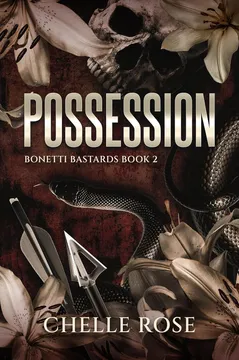


Plot Summary
Roses for the Dead
Thirty days after the night everything broke, Killian Bonetti2 returns to the bloodstained field and leaves another purple rose for Heather Mancini,1 the woman he believes he helped get killed.
His secret report to the authorities had been meant to protect his triplet brother3 Carter3 from Heather,1 whom Killian2 misjudged as a threat. Instead, Heather1 was shot and Carter,3 unable to imagine life without her, stabbed himself in the chest. He survived, but Knox4 cut Killian2 off and took Carter3 away.
Alone in the brothers' house, Killian2 relives the storm, the failed rescue, and Knox's4 goodbye. He finally admits to himself that he never hated Heather.1 By the time he understands what she meant to them, his attempt to protect his family has torn it apart.
The opening makes guilt the story's present tense: Killian is alive, but his daily ritual turns the place of apparent loss into a sentence he administers to himself. His protective identity has fused with control, so he cannot recognize that he has injured the very people he means to shelter. The rose is both memorial and measurement, marking time without making progress. By beginning after the catastrophe, the novel asks readers to judge the consequences before learning the full chain of decisions, placing emotional responsibility ahead of explanation.
A Pulse Beneath the Silence
Still unable to learn whether Carter3 survived, Killian2 receives a message from Butch,14 the Bonettis' locator,14 and drives out for news. Butch14 confirms that Carter3 is alive, though Knox4 has hidden him under another name, and reveals that Heather1 was discharged from hospital and sent to St. Dymphna's Asylum.
Killian2 knows the institution from Carter's3 past: its religious staff treated trauma as sin and used coercion as supposed healing. A letter from Heather's father,5 Jedediah,5 persuaded the judge to place her there, making Killian2 realize that his own actions helped deliver her into a familiar kind of abuse.
He decides to get her out and kill Jedediah.5 To learn the truth, he accepts a meeting with the asylum's owner, Father Murphy,13 despite knowing the rescue will demand a terrible price.
The news rearranges Killian's guilt into an obligation. He cannot undo the first betrayal, but he can choose whether remorse becomes another form of self-absorption or a reason to act. St. Dymphna's is especially cruel because its language of care reproduces the authority Heather escaped in childhood. The letter exposes how institutions can convert a family's power into respectable paperwork. Killian's resolve is morally meaningful, but it is not yet repair: he still makes consequential choices alone, a habit that will keep endangering the family even when his motive has changed.
The Heathen Refuses Kneeling
Inside St. Dymphna's, Heather1 refuses Sister Agatha's17 orders to kneel and hears the nun17 repeat the same language of wickedness that her father5 used. Amanda,18 another former Wellard inmate, chants scripture, while Nikki18 warns Heather1 that Amanda18 has changed since arriving.
A priest summons Heather,1 then beats her with her father's5 old paddle when she will not submit. The familiar object pulls her into memories of childhood punishment, but she fights back: she grabs Sister Agatha's17 rosary and drives its cross into the nun's17 throat.
Before Heather1 can escape, the priest strikes her head and knocks her unconscious. Her resistance does not free her, but it establishes that the asylum has not made her compliant. She begins looking for a way out and thinks of the violent escape that once worked at Wellard.
Heather's refusal is not a simple rejection of religion; it is a refusal to let an institution rename domination as salvation. The paddle collapses past and present, showing how trauma can be reactivated by an object and by the voice attached to it. Her counterattack is both practical and psychologically revealing: violence is the survival language her father taught her, even as she resists his claim that she was born wicked. Amanda and Nikki also connect this confinement to Heather's earlier asylum life, making the institution feel less like an isolated misfortune than a recurring system.
Everything Has a Price
Killian2 meets Father Murphy13 under armed guard and asks what it will take to release Heather.1 Murphy13 refuses money alone. He demands a death match, control of Killian's2 chop shop, and Heather's1 presence at the fight, threatening her if Killian2 backs out.
Killian2 accepts, insisting that his employees cannot simply be handed over as property, but he puts his business and his life at risk. Murphy13 has Heather1 brought in unconscious, and Killian2 carries her through the gates. She wakes in his car convinced he is taking her somewhere to finish what began with his betrayal.
Killian2 keeps driving toward Knox4 and Carter,3 knowing that extracting Heather1 has not restored trust. He has made a dangerous bargain without consulting his brothers, repeating the very habit that first broke their family.
The bargain gives Killian a chance to act sacrificially, but the novel refuses to equate sacrifice with absolution. He risks his livelihood and body to repair damage he helped cause, yet once again he decides on behalf of everyone else. The distinction matters: love expressed as unilateral protection can reproduce the structure of control, even when its immediate aim is rescue. Murphy's demand turns intimacy into leverage, making Heather's safety conditional on a spectacle of violence. The rescue therefore ends one captivity while setting a deadline for the next crisis.
Home Is Not Forgiveness
At the Bonetti house, Knox4 takes Heather1 from Killian2 and Carter3 checks her injuries, relieved to find her alive. Heather1 says the asylum used her father's5 paddle and suspects her family arranged her placement.
The brothers gather supplies and leave for a hidden Arizona safe house, taking an unregistered vehicle to make themselves harder to find. In the car, Carter3 tells Heather1 that he loves her and admits he tried to die after believing she was gone; she makes him face what that choice would have done to her and Knox.4
Killian2 remains in the vehicle but outside their renewed closeness. When they reach the basement refuge, Heather1 learns that Killian's2 rescue has cost him his business and a possible fight to the death. She refuses to mistake his sacrifice for forgiveness.
The reunion is deliberately uneven. Heather can return to Carter and Knox's embrace without extending the same trust to Killian, because emotional closeness is not a debt owed to the person who caused harm. Carter's confession also reframes survival as a shared responsibility: his despair would have become another wound for those he loves. The hidden house offers physical protection, but its underground design carries an emotional echo of the family's impulse to seal danger away. The scene begins repair through care and truth, while insisting that affection cannot erase accountability.
Noah's Name Changes Everything
As the group settles into the safe house, Heather1 learns that a man named Noah6 has been searching for her and claiming to be her boyfriend. She tells the brothers he is her older brother6 and Jedediah's5 favored enforcer,6 responsible for violence against people who disobey the Prophet.5
Heather1 fears that her sister Abby15 may be punished if Jedediah5 finds evidence she has kept in contact with her, and she reminds the men that children remain trapped in the cult. She wants them to rescue the children and help her settle accounts with her family immediately.
Knox4 insists Killian's2 scheduled fight must come first, since refusing the bargain could put Heather1 back in danger. Their argument makes clear that the safe house is a pause, not an escape from the cult's reach.
Noah gives the threat a family face. Heather is not simply pursued by a distant authority; she is endangered by a brother who has been trained to enforce the same order that harmed her. Her concern for Abby and the children complicates the revenge plot with obligations beyond personal justice. The brothers' insistence on sequencing the fight before rescue is strategically understandable, but it also means Heather must live with another delay imposed by others. The conflict tests whether protection can include listening to her priorities rather than only calculating risk.
The Rose on Killian's Chest
While the brothers hide, Killian2 admits that he has watched Heather's1 videos and memorized small things she likes, though he once disguised his attention as surveillance for Carter's3 safety. He asks for a night with her, invoking an old pool bet she had lost.
Before she agrees to spend time with him, he explains how Carter's3 kidnapping when they were children made him take on the role of family protector. Their mother16 warned him not to hold Carter3 too tightly, but Killian2 could not stop.
He believed Heather1 would hurt Carter3 and acted without speaking to his brothers. At the time, he also believed she had died; he marked the field with daily purple roses and tattooed one over his heart. Heather1 understands his fear without excusing his choice, then agrees to give him time.
The rose moves from a ritual of guilt into evidence of Killian's belated recognition. His childhood role explains why protection became his measure of love, but the scene carefully distinguishes explanation from exoneration. Heather's willingness to hear him is an exercise of agency, not a declaration that the harm has vanished. Their intimacy begins only after she names the limits of what she can promise. This exchange shifts the romance from entitlement toward negotiated trust, while leaving the central question open: can someone who confuses care with control learn to protect without deciding for others?
Grave's Price
When the men ask what she knows about Grave,7 Heather1 explains that Jedediah5 traded girls to the gang leader7 in return for drugs. Grave7 first chose her when she was thirteen. At fourteen, after she became pregnant, the cult ordered an abortion; when she resisted, Grave7 later used a sharp instrument to force the pregnancy to end.
The damage left Heather1 unable to carry children. She remembers his methods as calculated as well as violent: he hides weapons, taunts opponents about their loved ones, and tries to break them mentally before attacking.
Heather1 warns Killian2 not to expect a fair fight. He agrees to abandon his usual code and fight dirty if necessary. The information turns a nameless opponent into the person who embodies some of Heather's1 deepest losses.
Grave's threat is not merely physical; he represents the conversion of Heather's body into currency between men. The story links the cult's religious authority to the gang's transactional violence, showing different institutions reinforcing the same entitlement. Heather's tactical knowledge gives her expertise, but recounting it also forces her to revisit an experience others might prefer to soften or silence. Killian's willingness to fight outside his code signals a change in priorities: principle matters less than preventing the powerful from using rules as another weapon.
The Bonetti Name Returns
An alarm wakes the brothers to a fire in their Arizona safe house, and they find Heather1 still in the kitchen with her coffee. Outside, a note signed by her father5 waits on the vehicle, and Knox4 discovers a tracking device beneath it. The group escapes and Heather1 calls Bianca,9 a friend she met at Wellard Asylum, who invites them to New York and asks Raven,8 her partner,8 for help.
At Raven's8 guarded estate, the brothers learn that Raven8 and the others belong to a Bonetti mafia family. When Bones10 recognizes their father, Frank, as his own relative, the welcome turns tense. The brothers discover that Frank's crimes reached beyond their household, while Heather1 argues that they should not be judged by a father who abused them.
The fire makes surveillance tangible: the refuge was never as sealed as the brothers hoped. Heather's call to Bianca expands the story from a closed family crisis into a network of people who survived institutions and built protection outside them. The revelation of Frank's kinship complicates the Bonetti name, previously understood by the triplets as a narrow, damaged inheritance. Heather's defense of the brothers is significant because she refuses inherited guilt even after being judged and controlled by her own family. But belonging to an armed mafia household brings help and fresh uncertainty at once.
Frank's Blood, Carter's Truth
At the estate, Bones10 and Reaper11 explain that Frank was their uncle and that Bella12 killed him for the abuse he inflicted on Reaper.11 The revelation unsettles the triplets, who had never known their father had harmed this branch of the family too. Carter3 cannot remain in the room.
Outside, he tells Heather1 that Frank sexually abused him as a small child, a truth he had hidden from Knox4 and Killian2 because shame made him fear they would see him differently. Heather1 lets him choose whether to touch her; after several attempts, he takes her hand and finds that contact with her comforts rather than overwhelms him. She returns with him and leaves the disclosure for his brothers to hear from him, not from her.
Carter's disclosure changes the meaning of his touch aversion from an unexplained limitation into an adaptation to childhood violation. The scene does not make affection a cure; it gives Carter control over a small, specific choice and lets him test safety at his own pace. Heather's restraint is as important as her comfort, because she offers contact without claiming it. Frank's connection to the other Bonettis widens the family history, yet Carter's truth remains his to disclose. The moment joins intimacy to consent rather than treating love as permission to override fear.
Tracked for Their Safety
Raven's8 family offers guards, a guest house, and access to Benji,19 an intelligence specialist.19 After hearing about Heather's1 risk, the three brothers arrange for trackers to be implanted beneath their skin, and Heather1 insists on receiving one for each man too.
Benji19 later reports that Grave's7 gang works with both the church and St. Dymphna's. The fight is likely to become a bloodbath, and Jedediah5 has offered Heather1 to Grave7 as payment, with Grave7 intending to keep her.
Bones10 plans extra guards, closes off hiding places in the warehouse, and orders surveillance of the roof and exits. The brothers now understand that Killian2 is not the only target: the fight may be cover for taking Heather,1 so their preparations must protect her as well as keep Killian2 alive.
The trackers expose a conflict between safety and autonomy. Heather accepts reciprocal tracking only after demanding that the men be monitored too, turning a unilateral instrument of control into a shared pact. That exchange matters because her history makes surveillance especially charged. The intelligence report then reveals how the institutions she escaped may be cooperating rather than operating separately. Bones's warehouse plan is an attempt to reduce uncertainty through architecture and personnel, but the story keeps its limits visible: preparation can improve their odds without guaranteeing anyone's safety.
Heather Trades Herself
As the fight approaches, Heather1 leaves a note asking the three men not to track her and travels to a Kansas motel, planning to surrender herself so the Prophet5 will spare them. The brothers ignore her request and follow the tracker by private plane with Raven's8 family. They reach the motel as Diego, one of Grave's7 men, drags Heather1 outside.
Her face is bruised and bloodied, but he has not yet taken her to Grave.7 Carter3 shoots Diego before he can move her farther, and the brothers carry Heather1 to a guarded hotel. Killian2 is furious that she chose for all of them, while Heather1 explains that she could not bear the thought of them dying for her. The rescue prevents immediate capture but leaves trust shaken again.
Heather's decision repeats the structure that has injured her: she tries to protect loved ones by surrendering control of her own fate. Her intention is loving, but it reproduces a familiar bargain in which her body becomes the price others pay or collect. The brothers' tracking saves her from Diego, yet their disregard of her request complicates the rescue with a genuine question about consent. Killian's anger comes from terror as much as judgment. Their reunion cannot settle the disagreement; it exposes how survival and autonomy can collide even inside a devoted family.
The Death Match
After a week of recovery and preparation, Killian2 enters the warehouse ring while Heather1 watches beside Knox4 and Carter.3 Grave7 taunts him, then produces a concealed knife and drives it into Killian's2 stomach. Killian2 had brought a blade hidden in his shoe, following Heather's1 warning that Grave7 would not fight fairly. He pulls Grave7 down and stabs him in the chest.
Before collapsing, Killian2 signals that he has won. Medics rush both men away as Heather1 tries to follow, but the danger has not passed: the crowd and the Bonetti guards shift their attention when Noah6 arrives with armed men. Killian2 survives the contest's immediate test, but his victory leaves Heather1 exposed at the moment the family is divided.
The fight pays off the earlier warning that Grave weaponizes both psychological pressure and concealed steel. Killian's choice to fight dirty is not a sudden transformation but a response to Heather's lived expertise. He wins by adapting rather than preserving an idealized code that would have favored his opponent. Yet the apparent victory is deliberately unstable. The moment Killian falls, the story transfers danger away from the ring and toward Heather, showing that defeating one antagonist cannot end a system of threats when her father and brother remain active.
Taken at the Finish
Noah6 and his men aim their guns at Carter3 and Knox,4 forcing the brothers to hold still while Heather1 decides whether to step toward them. She moves forward to protect the two men she loves, and Noah6 grabs her before the Bonetti guards can respond. In the confusion, Killian2 is being taken for medical care and cannot intervene.
Heather1 tells Carter3 and Knox4 that she loves them, but Carter3 answers that the story is not over and promises they will find her. The novel ends with Heather1 in Noah's6 grasp and the brothers separated from her, while Killian's2 condition remains unresolved. The immediate threat has shifted from Grave7 to the family that created it, leaving the rescue and revenge unfinished.
The ending turns Heather's protective instinct into the lever Noah uses against her. Her choice is constrained by guns and the threat to Carter and Knox, so it is not a free surrender, even though she acts deliberately. Carter's insistence that the story continues resists the finality that has haunted his earlier despair, but it cannot substitute for a rescue. The cliffhanger refuses easy catharsis: Grave's defeat has not dismantled the cult, and the lovers' commitment now faces physical separation. Love remains a motive for action, not a guarantee of safety.
Analysis
Possession builds its romance around a difficult distinction: wanting to protect someone is not the same as respecting their freedom. Killian's2 original betrayal grows from a childhood role he never chose consciously, yet the story does not let that history erase the harm he causes. His attempt to repair it begins only when he accepts that Heather1 may understand him without forgiving him. That distinction makes their changing relationship more compelling than a simple conversion from hostility to affection.
Heather's1 autonomy is the book's central moral pressure. She has survived a father5 who used religious authority to control her body, an asylum that repeats that language, and a gang that treats girls as payment. Against that history, even loving surveillance can feel like another claim on her. The reciprocal trackers sharpen this conflict: they offer a practical defense while requiring the men to accept the same vulnerability they impose on her. Her flight to Kansas shows that devotion can still reproduce self-erasure when she decides her life is the acceptable price for everyone else's.
The brothers' trauma appears in distinct forms. Killian2 manages fear by controlling danger, Knox4 by organizing safety, and Carter3 by negotiating touch and fighting despair. Heather1 does not cure them; she helps create conditions in which they can speak, choose, and remain present. Carter's3 hand reaching for hers is a small but consequential act because he controls its timing. The book repeatedly makes care meaningful through such concrete negotiations rather than treating intensity alone as proof of love.
Its ending withholds the promised emotional shelter. Killian2 has defeated Grave,7 but Noah6 captures Heather,1 and the unresolved text, the cult's power, and the unfinished plan to protect the children remain active threats. The result is an installment about the limits of private devotion: love can organize courage and mutual responsibility, but it cannot by itself dismantle the institutions that keep making people vulnerable.
Review Summary
Possession is the second book in the Bonetti Bastards series and receives overwhelmingly positive reviews, averaging 4.39 out of 5. Readers praise its emotional depth, dark themes, and compelling character growth, particularly Killian's redemption arc. The why-choose romance featuring triplets Knox, Carter, and Killian alongside FMC Heather is described as addictive and spicy. The full-cast audiobook narration from Amanda Willow, Joe Arden, Sean Masters, and James Cassidy earns consistent acclaim. Nearly all reviewers warn of heavy trigger content and express desperation for the concluding third book after another brutal cliffhanger ending.
Characters
Heather Mancini
The defiant survivorHeather is a survivor of a controlling religious cult whose violence shaped both her distrust of authority and her fierce commitment to protecting others. She kills men who prey on the vulnerable, yet she is not emotionally numb: she forms deep attachments to Carter3, Knox4, and eventually Killian2 while guarding her right to make her own choices. Her blunt humor and appetite for danger sit beside persistent care for her sister15 and the children still trapped in the cult. Heather's defining tension is that she can act with startling courage for everyone else while struggling to believe her own life deserves protection. She responds most strongly to people who respect her agency rather than treating her as something to manage.
Killian Bonetti
The self-appointed protectorKillian is one of three identical triplet brothers and has long treated responsibility for their survival as his personal assignment. His childhood belief that strength means anticipating danger makes him decisive, capable, and difficult to challenge, but it can also turn concern into control. He is fiercely loyal to Carter3 and Knox4, conceals vulnerability behind confidence, and has trouble admitting when fear is shaping his judgments. Heather1 unsettles him because she is neither a danger to be contained nor someone he can protect by making decisions for her. Beneath his abrasive manner is a man who feels intensely and measures himself by whether the people he loves remain safe.
Carter Bonetti
The boundary-setting hunterCarter is the triplet brother whose early trauma left him wary of touch and alert to the ways other people ignore boundaries. He is a skilled hunter, but his deepest strength is perceptiveness: he notices Heather's1 pain and offers her a kind of attention that does not demand she soften herself. His bond with Knox4 and Killian2 is central to his sense of safety, even when his mental health makes that bond difficult to sustain. Carter's emotional life moves between tenderness and frightening despair, and he needs others to take his suffering seriously without reducing him to it. Heather's1 respect for his limits allows him to risk closeness on his own terms.
Knox Bonetti
The steady centerKnox is the triplet who often steadies the family when Carter's3 pain or Killian's2 urgency threatens to overwhelm a situation. He is observant, practical, and able to communicate with his brothers through small gestures, but his composure should not be mistaken for emotional distance. He carries grief and fear quietly, and his instinct is to make safety tangible through plans, shelter, and attentive care. With Heather1, Knox combines possessiveness with an unusual emphasis on consent, offering reassurance without denying her strength. He values family loyalty, yet understands that trust and affection are not the same thing and that betrayal cannot be repaired by a single apology.
Jedediah Mancini
The cult's self-made prophetJedediah is Heather's father1 and the leader of the religious cult in which she grew up. He uses religious language to claim authority over his family and to punish dissent, turning belief into a system of obedience. His influence extends beyond the compound: he can shape how outsiders view Heather1 and make violence look like an attempt at treatment. He values power more than the welfare of the people who depend on him, and he trains family members to enforce his will. For Heather1, he represents not only her personal history but an ongoing threat to the children and women who remain under his control.
Noah Mancini
The Prophet's enforcerNoah is Heather's brother1 and one of Jedediah's5 most trusted enforcers. He handles violence and intimidation that the Prophet5 would rather direct than carry out himself, giving him considerable power inside the cult. Heather's1 knowledge of his cruelty makes his pursuit especially frightening: he is not an unfamiliar gang member but someone raised within the same family system. Noah serves as a reminder that kinship can be used as an instrument of control, and that family loyalty means little when one person has been trained to police everyone else.
Grave
The gang's brutal championGrave is a gang leader who has an arrangement with Jedediah5, receiving girls in exchange for drugs. His violence is deliberate rather than impulsive: he studies fear, hides weapons, and tries to exhaust opponents psychologically before striking. Through Heather's1 memories and warnings, he becomes a threat whose methods are as important as his physical strength. He represents a criminal world that can profit from abuse while relying on institutions and families to supply its victims.
Raven Bonetti
The dangerous allyRaven is Bianca's partner9, a member of a powerful Bonetti mafia family, and a former patient at Wellard Asylum. Heather1 remembers him as someone willing to use extreme violence to protect the people he loves. His willingness to help gives the brothers access to security, intelligence, and resources they cannot easily obtain themselves. Raven is deeply protective and understands what it means to be treated as dangerous by institutions, though his methods make clear that his world has its own risks.
Bianca
Heather's asylum friendBianca became Heather's1 friend at Wellard Asylum, where both women experienced confinement and mistreatment. Warm, direct, and quick to welcome Heather1 back into her life, she provides a bridge from the brothers' isolated safe house to Raven's8 wider network. Her relationship with Raven8 is affectionate and fiercely protective, and her pregnancy brings an image of the future into a story dominated by violence and lost choices.
Bones
The mafia strategistBones, also known as Luca, leads the Bonetti family that offers the brothers temporary protection. He is wary of Killian2 because their family histories are entangled, but he agrees to coordinate security after Raven8 asks for help. His attention to entrances, sightlines, and personnel makes him a practical counterweight to the brothers' more personal motives. Bones is protective of his household and does not pretend that assistance comes without complicated loyalties.
Reaper
The family survivorReaper, whose name is Nico, is Bella's husband12 and one of the men harmed by Frank Bonetti. His history gives the triplets evidence that their father's violence reached beyond their own home. He is intensely loyal to Bella12 and guarded around people connected to Frank, but he can distinguish a father's crimes from the character of the sons who escaped him.
Bella
The avenging wifeBella is Reaper's wife11 and a member of the Bonetti household. She is small in stature but not in resolve, and she has taken decisive action against a man who harmed someone she loved. Her warmth toward Heather1 contrasts with the lethal capacity she has shown in defense of her family. Bella's presence helps the triplets see that survival can include both tenderness and retaliation.
Father Murphy
The asylum's brokerFather Murphy controls St. Dymphna's Asylum and treats access to its patients as a source of leverage and profit. His religious position gives him a respectable surface, but his armed guards and willingness to threaten Heather1 reveal the coercion beneath it. He recognizes that Killian's2 desperation can be converted into a valuable bargain.
Butch
The Bonettis' locatorButch works for the Bonetti brothers as a locator and information gatherer. He brings Killian2 news about Carter3 and Heather1, then helps Knox4 and Carter3 obtain the same information. Butch is an employee rather than a member of the family, yet his access and discretion make him essential to their attempts to locate people and stay ahead of their enemies.
Abby
Heather's endangered sisterAbby is Heather's sister1 and remains inside Jedediah's5 cult. Heather1 worries that Abby will be punished for keeping contact with her and wants to protect her and the children around them. Her situation gives Heather's1 fight a purpose beyond personal revenge.
Madeline Bonetti
The triplets' lost motherMadeline is the triplets' mother, remembered as loving but overwhelmed after Carter's kidnapping and later memorialized in the garden at their home. Her warning that Killian should not protect Carter so tightly becomes a lasting measure of the burden he chose to carry.
Sister Agatha
The asylum's punisherSister Agatha enforces St. Dymphna's rules through humiliation and physical punishment. Her familiarity with Jedediah's5 rhetoric reveals how closely the asylum's practices echo the abuse Heather1 escaped, making her a personal face of institutional cruelty.
Amanda and Nikki
Former asylum inmatesAmanda and Nikki are women Heather1 knew at Wellard Asylum and encounters again at St. Dymphna's. Amanda has become absorbed in repetitive scripture, while Nikki lives with dissociative identity disorder. Their presence links Heather's1 present confinement to the earlier asylum world she survived.
Benji
The intelligence specialistBenji gathers information for Bones10 and investigates the people and organizations surrounding the planned fight. His reports reveal the links among Grave7, the church, and St. Dymphna's, allowing the brothers to prepare for threats they cannot see directly.
Plot Devices
The Purple Roses
A daily measure of guiltKillian2 leaves a purple rose each day at the spot where Heather1 appeared to die, then marks his body with a rose tattoo. The gesture gives his guilt a physical routine: he returns, remembers, and refuses himself the relief of forgetting. After Heather1 survives, the image changes meaning. It becomes a record of how completely his fear and love were tangled, rather than proof that his punishment has repaired what he broke. The rose also links Killian's2 private grief to the story's larger concern with whether remorse can become responsible action.
The Death Match
A rescue with a deadlineFather Murphy13 makes Heather's1 release conditional on Killian2 fighting a death match, surrendering his chop shop, and bringing Heather1 to the event. The bargain gives the rescue an immediate cost and forces the brothers to prepare for a fight they cannot simply cancel. It also lets Murphy13 and the people backing Grave7 turn an arena into a likely ambush. The pact is not just a test of Killian's2 skill; it puts Heather's1 safety, the family's livelihood, and the brothers' fractured trust on the same timetable.
The Tracking Implants
A safeguard that cuts both waysAfter the brothers escape a fire and find a tracker on their vehicle, they arrange for tracking devices to be implanted beneath their skin. Heather1 insists that all three men receive one as well, turning the measure into a reciprocal pact rather than surveillance imposed only on her. Later, the device lets the brothers locate her in Kansas after she leaves to surrender herself. Its usefulness is inseparable from its ethical tension: Heather1 values her right to choose, while the people who love her fear that respecting distance may mean losing her.
The Safe Word
A boundary reclaimedHeather1 uses the word donut as her sexual safe word, a term shaped by a history in which food was used to reward compliance with abuse. With the Bonetti brothers, the word gives her a clear way to stop intimacy and makes consent practical rather than symbolic. Its darker history connects pleasure, memory, and control without making the word a simple joke. The device shows how Heather1 can reclaim an object associated with coercion and repurpose it as a boundary she controls, while the brothers' willingness to honor it demonstrates whether their protection includes listening.
The Unknown Text
A lure that stays unresolvedBefore Heather1 is shot, an anonymous message convinces her that her father5 is ready to confront her at the family property. She believes Killian2 sent it to lure her into danger; Killian2 denies sending the text, though he admits that his separate report to authorities helped set events in motion. The distinction leaves a crucial uncertainty hanging over the story. The message may connect to the cult's surveillance or another unseen actor, but the book does not identify its sender. It remains a reminder that a betrayal can have several causes and that suspicion persists even after one person confesses to a different wrong.
Download PDF
Download EPUB
.epub digital book format is ideal for reading ebooks on phones, tablets, and e-readers.








