

Key Takeaways
Treat conflict as raw material, not a problem to erase
Conflict is part of life. William Ury argues that clashes are not automatically destructive. Surfacing disagreement can expose injustice, improve decisions, and create pressure for change. The danger lies in responding with attacks, avoidance, or resignation until relationships and opportunities are damaged. He calls someone who searches for constructive openings a possibilist: not a blind optimist, but a person who faces grim possibilities while working toward better ones.
Change the form of the fight. Ury’s encounters with peace efforts in South Africa and Colombia show that agreement may not end every tension, yet it can stop violence and change how people deal with one another. A Semai elder offers the book’s plainest logic: people make war, so people can also stop it. Transformation can begin before anyone agrees on everything.
The distinction between conflict and destructive conflict is useful because it avoids confusing social harmony with justice. In organizations, for example, dissent can expose risks that consensus hides. The possibilist stance adds a practical discipline: neither deny danger nor treat the worst outcome as inevitable. Its limits matter, though. In situations of coercion or severe power imbalance, inviting collaboration cannot replace protection, accountability, or pressure on an aggressor. Constructive conflict requires conditions in which people can speak without being punished for doing so.
Work on yourself, the other, and the surrounding community
Three arenas, one conflict. Ury organizes his approach around three connected efforts. The balcony is the work of gaining calm and perspective within oneself. The golden bridge is the work of making a workable route toward cooperation with the other party. The third side is the surrounding community, whose members can help contain and transform the dispute. The terms describe a practical map, not a promise that every conflict can be solved quickly.
A camel story illustrates the map. Three brothers inherit seventeen camels, to be divided in halves, thirds, and ninths. A wise woman lends them one camel, allowing the brothers to take nine, six, and two, then return the extra animal. Her calm view, creative offer, and community standing help the family escape a fight that their narrow arithmetic could not resolve.
The model’s strength is that it treats conflict as both psychological and social. A person’s self-regulation can change an interaction, while a wider community can make cooperation less risky. This resembles systems thinking: shifting one part of a relationship can alter the options available to the whole. The camel story is memorable, but its neat arithmetic should not be mistaken for a universal solution. Real disputes often involve unequal stakes, contested facts, or harms that cannot be repaired with a clever addition. The map helps identify where to work; it does not decide what justice requires.
Interrupt your first reaction before it chooses the outcome
Create a moment of choice. During the 1962 Cuban Missile Crisis, Soviet officer Vasili Arkhipov opposed launching a nuclear torpedo after American depth charges shook his submarine. The captain believed war might already have begun. Arkhipov insisted they did not know that, and the launch did not happen. Ury uses this episode to show how a pause can interrupt the chain in which threat triggers reaction, and reaction triggers escalation.
Practice the pause before it is needed. In a meeting with an enraged Hugo Chávez, Ury focused on his breathing, quietly pinched his palm, and reminded himself of his purpose. Instead of defending his pride, he listened until Chávez asked what to do. A pause can be a breath, a silence, a walk, or a planned break. Its job is to restore enough perspective to choose a response.
This advice fits what is known about stress: when threat feels immediate, attention narrows and habitual responses become more likely. A deliberate pause can create room for reappraisal, the process of interpreting a provocation differently before acting. Ury’s examples make that skill concrete rather than heroic. Still, a pause is not a cure for danger, nor does calmness guarantee a wise decision. Some situations require immediate protective action. The useful question is not whether to react, but whether the first reaction serves the actual goal.
Ask why until the position gives way to a human need
Look beneath the demand. A position is what someone says they want; an interest is why they want it. In a familiar library dispute, one student wants an open window for fresh air and another wants it shut to stop a draft from scattering papers. Opening a window in the next room serves both interests better than splitting the difference. Ury urges negotiators to keep asking why until they reach basic needs such as safety, dignity, belonging, or freedom.
Needs can change the negotiation. When Brazilian businessman Abilio Diniz listed demands in a corporate feud, Ury asked what he most wanted. Diniz answered that he wanted freedom, especially time with his family and room to pursue new ventures. The answer gave him a clearer guide than any single demand and helped him consider choices that restored his life beyond the dispute.
Separating stated demands from underlying motives is a core move in problem solving: it expands the search space beyond the first proposed solution. The method also makes emotions informative. Anger may point to a crossed boundary; fear may signal a threat to security. Yet needs language should not flatten political or legal claims into personal feelings. A demand for rights, land, or recognition can represent a legitimate public claim, not merely a private need. Going deeper should sharpen the issue, not domesticate it.
Map everyone affected, then build a credible path without agreement
Look beyond the table. Early in his career, Ury helped negotiate with coal mine management and union leaders. The leaders signed an agreement, but the miners rejected it overwhelmingly because they distrusted management and had not shaped the deal. The negotiators had mistaken leaders for the people they represented. Ury’s lesson is to identify all the relevant stakeholders, including people inside each organization who can support or block an outcome.
Keep another route available. BATNA means Best Alternative To a Negotiated Agreement, the best way to meet one’s needs if talks fail. WATNA means Worst Alternative To a Negotiated Agreement, the outcome to avoid. Thinking through both can reduce dependence on the other party. Diniz, for instance, began taking steps toward family time and new work before his business dispute was settled. Negotiation becomes a choice, not a trap.
Stakeholder mapping corrects a common error in formal negotiations: assuming that the people at the table control everyone whose consent matters. The coal mine story shows why internal legitimacy is not an administrative detail; it is part of the substance of an agreement. A strong alternative can also reduce panic and improve judgment. But alternatives can be misused as threats, especially when one party has far more power. The point is not to abandon negotiation at the first setback. It is to know what each party can actually do if no deal emerges.
Listen for the other person's fears before offering your solution
Start where they are. Ury sought insight into Kim Jong Un’s intentions during a dangerous US-North Korea standoff. The person he managed to speak with was Dennis Rodman, a former basketball star who had visited Kim. Rodman described Kim’s personal enthusiasm for basketball and a dream of watching a game in New York. Ury could not treat this as proof of Kim’s intentions, but it offered a human clue that conventional caricatures had obscured.
Respect is not agreement. Listening means trying to understand another person’s perceptions, fears, and hopes without endorsing their actions. Ury also recounts a conversation with a Syrian rebel commander who had studied poetry before war and described wanting a family, while fearing extremists within his own movement. Such encounters challenge stereotypes and may reveal openings that argument alone misses.
Perspective-taking can correct the tendency to explain an opponent’s behavior as irrational while treating one’s own side as reasonable. It is especially valuable when a negotiator has access to little reliable information. Yet empathy is a method of understanding, not a substitute for evidence. Rodman’s impressions could inform hypotheses about Kim, but they could not establish policy intentions. The same distinction matters in everyday disputes: listening can reveal motives and reduce misattribution, while facts, boundaries, and consequences still need careful attention.
Invent a shared win, then make accepting it less costly
Build options around needs. At Camp David in 1978, Egypt sought sovereignty over Sinai, while Israel sought security from attack. A demilitarized zone helped address both concerns. The negotiations used a one-text process: a mediator drafted an informal proposal, gathered criticism from each side, and revised it repeatedly. The parties did not have to trade concessions line by line from the start. The final text emerged through their feedback, and the leaders faced a clear decision at the end.
Design for acceptance. The proposal went through twenty-three drafts. Ury’s broader point is that a technically sound solution may still fail if the process makes people feel cornered or politically exposed. A useful offer gives the other side a credible way to explain its choice to its own supporters. The aim is not to disguise a bad deal, but to make a genuinely useful agreement easier to accept.
This approach connects negotiation design to procedural justice. People are more likely to regard an outcome as legitimate when they have a voice in shaping the process, even if they do not receive everything they sought. The informal draft also lowers the reputational cost of exploring an idea before committing to it. A caution remains: a process can be elegant while excluding affected groups. The Camp David agreement created durable peace between Egypt and Israel, but did not resolve Palestinian claims. A shared win among the negotiators may not be a just win for everyone affected.
Let the surrounding community host and support the conflict
Make room for the whole. Ury calls the third side the people around a conflict who can help prevent escalation and support a better process. Among the Kua of the Kalahari, community members gather when a dispute threatens violence, remove access to weapons, listen to those involved, and keep talking until they can repair relations. The community is not merely an audience. It has a stake in what happens and can act on that stake.
Welcome before you advise. During Venezuela’s political crisis, a public gathering brought supporters of opposing sides into one theater. Participants voiced a shared rejection of violence and later organized further dialogues. In South Africa, civic, religious, business, and international actors helped press for negotiations and reduce violence. Ury’s practical roles for a third party include hosting people, helping them communicate, and making their voices heard.
Community involvement adds a resource that direct negotiation often lacks: people with relationships, local knowledge, and reasons to care about the aftermath. It also makes conflict transformation less dependent on a single expert mediator. The idea is strongest when community members are trusted by those involved and can protect space for dialogue. It can fail when outsiders claim to speak for a community or when calls for inclusion obscure unequal responsibility. Taking the third side does not mean pretending every party has caused equal harm. It means working for a safer, more durable whole.
Concentrate trusted people and ideas where conflict can still turn
Gather a critical mass. Ury uses swarming to describe coordinated effort by a group that surrounds a conflict with ideas, relationships, and influence. During the 2017 North Korea crisis, he and colleagues ran a two-week experiment with twelve volunteers from different backgrounds. The team studied the leaders, consulted experts, and developed practical proposals rather than limiting itself to describing the danger. The effort continued through contacts who had access to decision makers.
Pool influence and trust. Ury summarizes the ingredients as ACT: access to the parties, credibility based on competence, and trust based on reliable intent. In Colombia, a broad coalition helped sustain a peace agreement even after a referendum rejected it by one-fifth of one percent. The revised agreement was ratified by Congress, and the FARC later laid down its weapons. The point is coordinated persistence, not a quick rescue.
Swarming offers a useful answer to problems too complex for one negotiator or institution. Diverse teams can find more entry points, test assumptions, and connect policy expertise with local credibility. The ACT framework also highlights that good ideas travel through relationships, not just reports. Still, mobilization is not automatically wise: a large coalition can amplify misinformation, crowd out local voices, or create pressure that hardens resistance. Effective collective action needs clear purpose, trusted intermediaries, and enough humility to revise its plan as new information arrives.
Analysis
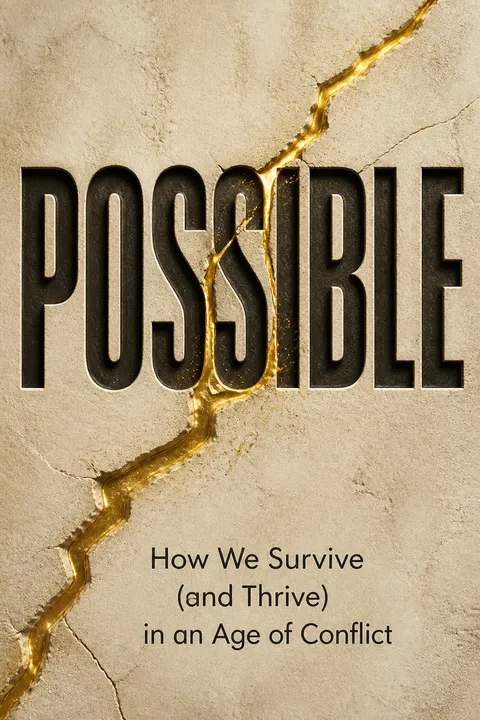
Possible is a memoir-shaped argument about negotiation: destructive conflict is not an unavoidable feature of human disagreement, but the product of choices that can be interrupted. Its narrative moves from the author’s early fear of nuclear war to a practical sequence that widens the frame from self, to adversary, to community. The stories make the sequence memorable because they show it under pressure: Arkhipov refuses an irreversible launch, a coal mine deal collapses when workers are excluded, and a mediator’s curiosity helps leaders discover interests beneath hostile positions.
The method’s central contribution is its insistence that negotiation is not merely persuasion at a table. It is emotional regulation, stakeholder analysis, option design, process design, and community organization. That breadth helps explain why apparently small interventions, such as a pause or a trusted back channel, can matter in high-stakes disputes. It also gives ordinary readers several entry points rather than presenting mediation as a specialist’s craft.
The book’s hopeful case is supported mainly by experience and illustrative episodes, not systematic comparison. This makes it rich in practical texture but leaves open how often these methods work, for whom, and under what conditions. Some celebrated outcomes remain partial: reduced danger or a ceasefire is not the same as justice, reconciliation, or resolution of every underlying claim. The approach is most persuasive when treated as a set of hypotheses to test, not a universal formula. Power, coercion, and accountability can require tools beyond dialogue and creative agreement.
Its most durable idea may be that possibility is not a prediction. It is a disciplined starting stance. Imagining a better outcome matters only when translated into listening, options, credible processes, and sustained collective effort. The book’s optimism is therefore less about expecting success than refusing to confuse present impasse with permanent impossibility.
Review Summary
Glossary
possibilist
Constructive seeker of openingsA possibilist faces the negative outcomes a conflict could produce without treating them as inevitable. The term describes someone who searches for constructive ways forward, even when success is uncertain and progress is slow. It combines ambition about what might improve with humility about obstacles, setbacks, and the limits of any one person’s influence.
balcony
Calm, wider perspectiveThe balcony is Ury’s metaphor for stepping back from immediate reaction to regain perspective during conflict. From this mental position, a person can pause, clarify what matters, and consider the wider situation before responding. It may be supported by practical choices such as breathing, taking a break, going for a walk, or arranging a less pressured setting.
golden bridge
Inviting route to agreementA golden bridge is a path toward agreement that addresses the parties’ important needs and makes acceptance easier. It is more than splitting the difference between opposing positions. The idea includes listening for what the other party values, developing options that can serve both sides, and designing a process that lets people consider and accept the outcome without feeling trapped.
third side
Community supporting transformationThe third side is the surrounding community affected by a conflict and capable of helping change its course. It can include relatives, colleagues, civic groups, leaders, or other trusted people. Rather than simply choosing one party over another, third-side participants can help calm escalation, include overlooked voices, support dialogue, and encourage outcomes that benefit the wider community.
BATNA
Best alternative to agreementBATNA stands for Best Alternative To a Negotiated Agreement. It is the best available course of action for meeting one’s needs if negotiation does not produce an acceptable agreement. Knowing and improving this alternative can reduce dependence on the other party and make it easier to judge whether a proposed deal is better than walking away.
WATNA
Worst alternative to agreementWATNA stands for Worst Alternative To a Negotiated Agreement. It means considering the worst plausible outcome if talks fail. Facing that possibility can help people distinguish genuine danger from fear amplified by uncertainty, and can motivate steps to prevent the worst case. It complements BATNA by examining both the best available fallback and the outcome most urgently to avoid.
one-text process
Iteratively revised draft agreementThe one-text process is a negotiation method in which a mediator prepares one informal draft proposal and revises it in response to the parties’ comments. Instead of having each side bargain from fixed competing drafts, the parties critique a shared text without committing immediately. The repeated revisions can incorporate their concerns and make the eventual decision clearer.
trust menu
Reciprocal goodwill signalsA trust menu is a previously discussed list of small, voluntary actions that each side would recognize as positive signals from the other. Parties select and reciprocate actions step by step, rather than beginning with demands or requiring immediate trust. The actions are intended to test reliability, reduce suspicion, and create conditions in which further contact may become possible.
ACT
Access, credibility, and trustACT names three forms of influence that can help community members reach decision makers and encourage constructive action. Access means a connection to the relevant people. Credibility comes from perceived competence and knowledge. Trust comes from confidence in the intermediary’s intentions and integrity. A group can pool these qualities when no single participant possesses all three.
kgotla
Community conflict gatheringIn Ury’s account of the Kua community, a kgotla is an open gathering where community members discuss a dispute affecting the group. People involved and others in the community have an opportunity to speak, while the group seeks to understand what happened and restore social harmony. The practice reflects the community’s view that conflict affects more than the immediate parties.
About the Author


Download PDF
Download EPUB
.epub digital book format is ideal for reading ebooks on phones, tablets, and e-readers.








