

Key Takeaways
Rehearse a Christ-centered response before hardship dictates your thinking
Thoughts steer behavior. Meyer’s central claim is that habitual thoughts shape attitudes, choices, relationships, and the way people meet difficulties. She does not say thought alone creates any outcome: confidence is meant to work alongside faith, effort, and circumstances. A friend’s planned move was blocked by a housing downturn, but the new job she took in response led her to meet her future husband. An altered plan could still become useful experience, even when it does not produce the expected result.
Make renewal practical. Meyer recommends a twelve-week practice: focus on one of the book’s power thoughts each week, write it down, revisit it aloud, and keep notes on how it affects daily choices. She suggests repeating the cycle. The first thought is a reminder that, in Christ, a person can meet what life actually requires, not a promise of unlimited achievement.
The strength of this approach is its move from vague optimism to repeated practice. Cognitive behavioral approaches likewise help people notice automatic thoughts and test how those thoughts shape action. But attention and belief do not control every outcome: illness, discrimination, poverty, and other constraints remain real. The friend’s story makes a more defensible point than a guarantee of success: a setback can redirect a life in ways that become meaningful, without proving that positive thinking caused the turn.
Separate your worth from your performance, then change without shame
Grace before improvement. Meyer distinguishes a person’s value from their conduct. In her Christian account, faith in Jesus gives a person acceptance before behavior is perfected; that acceptance becomes a basis for growth, rather than a prize earned by flawless performance. She argues that shame and fear of rejection can trap people in frantic efforts to prove their worth.
A courtroom story illustrates mercy. Meyer recounts Mayor Fiorello LaGuardia presiding over a night court case involving an older woman who stole bread for hungry grandchildren. He imposed the legal fine, paid it himself, and collected small contributions from the courtroom to help her. The story illustrates justice paired with practical compassion. For Meyer, repentance and correction still matter, but a mistake does not erase a person’s worth or make them unlovable.
This distinction resembles the psychological value of self-compassion: people can acknowledge failure without turning it into a verdict on their entire identity. That can make accountability more sustainable, because shame often invites hiding or defensiveness. The story also makes mercy material, not merely sentimental. Its limit is that a moving act of aid cannot resolve the social conditions that produced hunger. Compassion can relieve an immediate need while still leaving justice and prevention necessary.
Let fear warn you, but never let it choose your direction
Feelings are not orders. Meyer argues that fear can arise during change or risk, but it need not determine the next action. Her instruction is to pray, recall a faith-based response, and continue with a sound decision even when confidence has not arrived. She calls this moving forward while afraid, rather than waiting for fear to disappear.
Fear can distort social situations. Meyer describes Sarah arriving at a party and becoming so preoccupied with being rejected that she watches every interaction for evidence. Her self-protective focus makes her seem distant, which may then reinforce her original fear. The practical lesson is to shift attention outward, take a manageable social step, and distinguish a feeling of rejection from proof that rejection is occurring.
This is close to a useful principle in exposure-based therapy: avoiding a feared situation can preserve the fear, while safe, gradual contact can build confidence. Yet fear is not always a false alarm. It can signal real danger, coercion, or a need for preparation. A strong version of the advice asks what the evidence shows and what a proportionate next step would be, rather than treating every hesitation as an enemy to defeat.
Forgive quickly so another person's offense does not commandeer your day
Do not feed the injury. Meyer presents offense as a temptation that can grow into resentment, anger, and damaged relationships when repeatedly rehearsed. She urges readers to forgive, pray for those who hurt them, and consider that an apparent slight may not have been intentional. In her example, Becca is passed over for a church choir and interprets it as personal rejection, though she does not know why the decision was made.
Notice your vulnerable moments. Meyer says tiredness, stress, and emotional strain can make people more reactive, so timing matters when raising a difficult issue. Forgiveness is meant to release a person from carrying bitterness, not to declare harmful behavior acceptable. Meyer’s advice focuses on refusing revenge and leaving justice to God.
The insight that rumination keeps an injury emotionally present is useful, and charitable interpretation can prevent needless conflict. Forgiveness, however, should not be confused with reconciliation, restored trust, or abandoning accountability. Those may require evidence of safety and changed behavior. A person can relinquish revenge while setting firm boundaries, seeking help, or reporting abuse. That distinction protects the book’s emphasis on peace from becoming pressure on people to tolerate further harm.
Turn love into a daily act of useful generosity
Love takes practical form. Meyer treats love not primarily as a warm feeling, but as a choice expressed through help, attention, generosity, and kindness. She challenges readers to do at least one useful thing for someone each day, sometimes beyond their usual circle. A morning question about whom to help can turn good intentions into a specific act; an evening review can reveal whether the intention became action.
Listening counts as generosity. Meyer recalls giving a colleague a gift connected to a preference the colleague had mentioned in conversation. The colleague valued not only the gift but the fact that someone had listened and remembered. Meyer also tells of paying for a stranger’s earrings, an act she believed encouraged another observer. Her broader point is that service can involve time and attention, not just money.
The emphasis on noticing what people actually say is a strong corrective to performative generosity. Listening makes help more responsive and communicates respect. Prosocial behavior can also give people a sense of connection and agency, especially when attention turns outward during discouragement. Still, giving should not become a test of personal virtue or a substitute for boundaries. Sustainable care respects the giver’s resources and the recipient’s preferences, rather than assuming every offer is wanted.
Replace rumination with prayer, practical action, and trust
Worry is repetitive, not productive. Meyer compares worry to an activity that consumes energy without changing the problem. She defines its source, in her faith perspective, as difficulty trusting God with what cannot be controlled. Her proposed response is not passivity: identify what is genuinely one’s responsibility, take that action, pray about what remains, and stop trying to mentally solve what cannot yet be known.
Reasoning can become a loop. Meyer describes repeatedly analyzing why people acted as they did and whether a decision was right, until the thinking produced confusion rather than clarity. She advises noticing when reflection has stopped yielding useful options. Prayer, recalling blessings, worship, and continuing ordinary commitments can redirect attention. She also recommends helping others during difficult periods instead of withdrawing entirely into self-pity.
The distinction between problem-solving and rumination is valuable: the first generates a next step, while the second often repeats the same questions without new information. A practical check is whether thinking produces an action, a request for help, or a decision to wait. Faith can support acceptance of uncertainty, but it should complement concrete planning. Persistent anxiety may also call for clinical support, not simply stronger self-discipline or a judgment that worry reflects weak faith.
Practice gratitude and patience to steady emotions across changing circumstances
Stability is a learned response. Meyer contrasts her own reactive response to unexpected bills with her husband Dave’s steadier habit of appreciating that they had money to cover them. She notes that their circumstances had not been as favorable as hers growing up, yet his family had modeled greater contentment. Her conclusion is that circumstances influence moods, but do not have to dictate them.
Build a wider view. Meyer recommends listing concrete reasons for gratitude, including ordinary abilities and comforts that are easy to overlook. She describes being frustrated by treatment for an aching elbow, then feeling more grateful when she considered what was still healthy. Patience creates space between a feeling and a decision; self-control helps a person choose a response without pretending the feeling is absent.
Gratitude can broaden attention beyond whatever currently feels wrong, while emotional regulation helps prevent an immediate mood from becoming an impulsive choice. The contrast between two families also supports the idea that material conditions alone do not determine outlook. Still, gratitude should not be used to silence grief, anger, or legitimate complaints. Emotional steadiness means responding thoughtfully, not insisting that every painful circumstance be reinterpreted as good.
Expect provision without confusing abundance with entitlement or reckless spending
Provision is broader than money. Meyer’s abundant mind-set includes physical health, wisdom, relationships, strength, and the resources to meet responsibilities. She argues that prosperity should equip people to help others, not simply expand personal consumption. Her account of a former “cheap” attitude shows how fear of running out can make a person feel deprived even when some spending is affordable.
Hope needs stewardship. Meyer tells of choosing a more expensive car she genuinely wanted, then receiving an unexpected pay increase that roughly matched the added monthly cost. She interprets the timing as God’s provision, while explicitly cautioning against spending money one does not have. Her guidance is to manage money prudently, give, save, and spend responsibly, while resisting the assumption that present scarcity defines the future.
The best version of this teaching pairs hope with stewardship: scarcity fears can lead people to deny every reasonable pleasure, while entitlement can encourage unsustainable risk. The car anecdote is meaningful as personal testimony, but its timing cannot establish a general rule that faith produces a matching raise. Economic security depends on factors beyond mindset. Prayer and expectancy may sustain resilience, but they do not replace budgeting, fair wages, social support, or realistic planning.
Pursue peace by lowering perfectionist demands on yourself and others
Peace requires adjustment. Meyer describes three relationships to tend: with God, with oneself, and with other people. In her Christian framework, honesty and repentance maintain closeness with God; patience with personal weaknesses makes growth less punishing. With others, she recommends realistic expectations, acceptance of different temperaments, and encouragement rather than constant criticism.
Difference need not become conflict. Meyer describes learning not to demand that her more easygoing husband become like her. She also recounts how letting go of repeated corrections changed the tone of their relationship. Adapting does not mean surrendering boundaries; it means deciding which matters are important enough to contest and which are better met with flexibility. Peace, in this account, is pursued through choices rather than expected to arrive by itself.
This advice usefully reframes relationships as coordination among different people, not projects in which one person fixes the other. Encouragement often makes cooperation easier than relentless fault-finding. The qualification about boundaries is essential: adaptation can be generous, but chronic accommodation can become self-erasure when power is unequal. Peace is not simply the absence of argument. It can include honest disagreement, fair limits, and repair after harm.
Give today's task and people your attention before tomorrow steals them
Attention is part of enjoyment. Meyer recalls being so focused on work when her children were young that she missed small moments she later wished she had noticed. A friend whose husband died unexpectedly was grateful that she had enjoyed their years together rather than postponing closeness. These stories support the book’s call to value the present without denying that life includes loss and future responsibilities.
Do one thing with care. Meyer advises reducing excessive multitasking, setting aside distractions, and finding enjoyment in ordinary routines as well as special events. She uses the biblical contrast between Martha, overwhelmed by serving, and Mary, who pauses to listen to Jesus. The point is not to abandon work, but to avoid being so consumed by it that people and experiences in front of you disappear from view.
The focus on attention has a strong practical basis: divided attention can make conversations less meaningful and ordinary activities less memorable. Present-moment awareness can also interrupt automatic rushing. But planning and remembering the past are not inherently failures; both help people learn and care for others. The useful goal is flexible attention, not compulsory cheerfulness or a demand to enjoy every moment, including grief, pain, and necessary labor.
Use discipline to protect freedom from appetites, distraction, and unfinished goals
Limits can create freedom. Meyer argues that repeated choices shape habits, and that a person can become controlled by spending, food, fatigue, or distraction when self-restraint is absent. Discipline, in her account, is not punishment but the capacity to act according to a considered purpose instead of an immediate urge. She recommends preparing for predictable temptations and practicing focus in everyday situations, including conversations.
Progress comes through practice. At sixty-four, Meyer began a more serious exercise routine after years of making excuses about her schedule. She describes struggling through demanding circuit training and choosing to finish the final set rather than stop early. The episode illustrates persistence, though her broader advice is to tackle difficult goals one day at a time and keep training the mind through repetition.
The book treats self-control as a skill, not a fixed personality trait, which makes change feel possible. Contemporary behavior design adds a useful complement: routines, reminders, and reduced friction can support discipline so that success does not depend on willpower alone. Persistence is valuable, but pushing through is not always wise. Rest, medical advice, and a revised plan can be signs of sound judgment rather than failure.
Put God first in ordinary decisions, not only emergencies
Faith should shape the whole life. Meyer warns against keeping religion confined to church while excluding it from work, money, family, and daily conduct. She describes a Christian business leader who attends church and serves there but treats honesty at work as separate from faith. In her view, putting God first means seeking guidance and acting ethically across these ordinary domains, not turning to God only when a crisis arrives.
Give the first attention. Meyer draws on the biblical practice of firstfruits, offering the first portion of a harvest as a sign of trust and priority. She applies the idea to time, attention, and money: make space for prayer and study before the day fills up, and decide how to use resources deliberately. The central practice is repeated realignment, since priorities can drift amid a busy life.
Integrating values across work and private life can make ethical commitments more durable than treating them as Sunday-only ideals. The example of the compartmentalized executive shows how people can sincerely identify with a faith while exempting convenient decisions from its demands. Yet spiritual priority should not be measured only by time spent or money given. Conscience, service, honesty, and care for others offer a richer test than religious busyness.
Analysis
Power Thoughts is a practical Christian guide built around a clear premise: repeated thoughts influence attention, emotion, speech, and action, so a changed inner script can support a changed life. Its structure moves from the general claim that the mind can be trained to twelve concise reminders, each tied to biblical passages and daily exercises. The recurring method is deliberately concrete: select a thought, repeat it, write it down, reflect on it, and practice behavior consistent with it.
The book’s strongest contribution is not the claim that optimism guarantees success. It is the discipline of interrupting automatic reactions. A person who expects rejection may withdraw; a person who interprets every delay as disaster may spend energy on worry instead of the next useful step. Rehearsed alternatives can widen the space between impulse and response. The stories, from forgiveness in marriage to beginning exercise late in life, give the advice a human scale and show how the author understands spiritual change as gradual practice.
The book also makes a more ambitious theological claim: God’s Word supplies truth, strength, and provision. That is its organizing faith, not a neutral psychological theory. Some cited claims about health and positive thinking are presented more confidently than the evidence warrants, and the text sometimes risks turning suffering into a test of attitude. Thought patterns matter, but they do not determine every illness, hardship, or social outcome. Mindset can help people respond to constraints; it cannot erase them.
Read most usefully, the book offers a set of prompts rather than a guarantee. Its advice is strongest when it joins prayer with responsibility, gratitude with honest emotion, forgiveness with boundaries, and confidence with preparation. The twelve thoughts become practical when they shape a specific choice: make the call, apologize, ask for help, rest, listen, or keep a commitment. In that form, spiritual affirmation is not an escape from life. It is a way to meet it with intention.
Review Summary
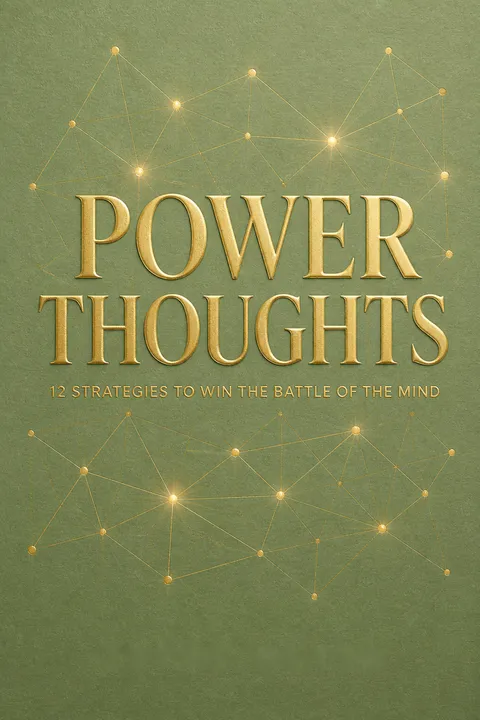
Power Thoughts offers 12 strategies to overcome negative thinking and develop a positive mindset through Biblical principles. Readers praise Meyer's practical advice, relatable examples, and straightforward teaching style. Many found the book life-changing, helping them control their thoughts and attitudes. Some critics felt it was repetitive or put words in God's mouth. Overall, most reviewers appreciated the book's encouragement to replace destructive thought patterns with faith-based, positive thinking. Many plan to reread and apply the strategies in their daily lives.
People Also Read







Glossary
Power Thoughts Program
Twelve-week thought practiceMeyer’s practice for embedding twelve faith-based thoughts in daily life. The reader concentrates on one thought each week, writes and speaks it, reflects on it in a journal, and applies it to decisions. Meyer recommends repeating the twelve-week cycle so the ideas become familiar responses rather than statements merely read once.
on-purpose thinking
Deliberate thought selectionMeyer’s term for intentionally directing attention toward chosen thoughts instead of passively following every idea that appears. It includes preparing responses before difficult situations, returning attention to beliefs grounded in Scripture, and choosing thoughts that support the behavior a person wants to practice.
Think Sessions
Scheduled positive reflectionMeyer’s name for deliberately setting aside time to think about beneficial, faith-aligned ideas. She suggests using these sessions to repeat biblical truths and the book’s power thoughts, building familiarity with them so they are easier to recall during ordinary routines or periods of stress.
strongholds
Entrenched false thought patternsMeyer uses this biblical term for persistent mental patterns built around beliefs she considers false and harmful. In her account, patterns such as worthlessness, fear, or rejection can influence many areas of behavior. She proposes weakening them through sustained attention to Scripture and repeated practice of alternative thoughts.
power twins
Prayer and spoken affirmationMeyer’s phrase for combining prayer with a spoken statement of faith when fear arises. Prayer asks God for help; speaking a biblical response reinforces the belief the person wants to act on. The paired practice is meant to interrupt fear early, rather than waiting until it dominates attention.
prosperity with a purpose
Resources used to helpMeyer’s framing of prosperity as resources that should serve purposes beyond personal comfort. Money, health, abilities, and other forms of provision can meet personal responsibilities and equip someone to help others. The phrase distinguishes generosity and stewardship from accumulating wealth as an end in itself.
firstfruits offering
First portion given to GodA biblical practice Meyer uses to explain priority and trust: people offered the first portion of a harvest or increase to God rather than waiting to see what remained. She extends the idea to daily life, encouraging readers to give God their first attention and to plan time and money around their faith commitments.
FAQ
What's Power Thoughts about?
- Mindset Focus: Power Thoughts by Joyce Meyer emphasizes the transformative power of thoughts in shaping our lives. It presents twelve specific "power thoughts" to help change thinking patterns.
- Biblical Principles: These thoughts are rooted in biblical teachings, aiming to encourage a positive and faith-filled outlook on life.
- Practical Application: The book is interactive, encouraging readers to meditate on and apply these thoughts daily for lasting change.
Why should I read Power Thoughts by Joyce Meyer?
- Personal Growth: The book offers practical strategies to improve mental and emotional well-being, leading to personal transformation.
- Spiritual Foundation: Grounded in scripture, it serves as a resource for those seeking spiritual growth alongside personal development.
- Empowerment: It empowers readers to take control of their thoughts and lives, promoting a proactive approach to overcoming negativity and fear.
What are the key takeaways of Power Thoughts by Joyce Meyer?
- Mind's Influence: The book highlights that "Whatever you hold in your mind will tend to occur in your life," emphasizing the power of thoughts.
- Choice of Thoughts: Meyer stresses the importance of actively choosing positive thoughts over negative ones, a central theme throughout the book.
- God's Support: Readers are reassured of God's strength and support, with the reminder, "I can do whatever I need to do in life through Christ."
What are the best quotes from Power Thoughts by Joyce Meyer and what do they mean?
- "Where the mind goes, the man follows." This quote encapsulates the book's core message that our thoughts direct our lives.
- "I can do whatever I need to do in life through Christ." It emphasizes reliance on divine strength rather than personal limitations.
- "I will not live in fear." This serves as a powerful affirmation against fear, encouraging readers to confront and not be dictated by it.
What are the twelve power thoughts in Power Thoughts by Joyce Meyer?
- Power Thought 1: "I can do whatever I need to do in life through Christ," emphasizing reliance on Christ for strength.
- Power Thought 2: "God loves me unconditionally!" reassuring readers of God's unwavering love.
- Power Thought 3: "I will not live in fear," encouraging courage over fear.
- Power Thought 4-12: Include thoughts on emotional resilience, trust in God, contentment, peace, discipline, and prioritizing faith.
How can I apply the concepts from Power Thoughts in my daily life?
- Daily Affirmations: Use the power thoughts as daily affirmations to reinforce positive thinking and shift your mindset.
- Journaling: Reflect on your thoughts and progress by writing down experiences and insights related to the power thoughts.
- Prayer and Meditation: Incorporate prayer and meditation on scripture to deepen understanding and application of these concepts.
How does Joyce Meyer define a "power thought" in Power Thoughts?
- Positive Affirmation: A power thought is a positive affirmation aligned with biblical truths, meant to counteract negativity.
- Mindset Shift: These thoughts aim to shift your mindset from defeat to victory, improving emotional well-being.
- Spiritual Foundation: Each thought is rooted in Scripture, providing a solid foundation for personal growth.
What specific methods does Power Thoughts suggest for overcoming negative thinking?
- Daily Affirmations: Write down and recite power thoughts daily to internalize positive beliefs.
- Scriptural Meditation: Meditate on Bible verses corresponding with each power thought to reinforce God's promises.
- Journaling: Track your thoughts and progress, reflecting on how power thoughts impact your mindset.
What role does discipline play in Power Thoughts by Joyce Meyer?
- Foundation for Growth: Discipline is crucial for personal and spiritual growth, leading to a more fulfilling life.
- Consistency in Practice: Developing a disciplined mindset requires consistent practice of power thoughts and spiritual disciplines.
- Overcoming Obstacles: Discipline helps overcome obstacles and distractions, achieving greater emotional stability and peace.
How does Power Thoughts by Joyce Meyer address emotional stability?
- Contentment and Peace: Emphasizes the importance of being emotionally stable and content, valuing inner peace.
- Managing Emotions: Provides strategies for managing emotions with discipline and self-control.
- Building Healthy Relationships: Emotional stability is essential for maintaining healthy relationships and connecting with others.
What is the significance of living in the present according to Power Thoughts by Joyce Meyer?
- Appreciating Life: Encourages enjoying each moment and not dwelling on the past or worrying about the future.
- Reducing Regret: Living in the present minimizes feelings of regret and disappointment.
- Mindfulness Practice: Promotes mindfulness to enhance daily experiences, cultivating joy and gratitude.
How can I ensure that I put God first in my life as suggested in Power Thoughts by Joyce Meyer?
- Daily Devotion: Start each day with prayer and Bible reading to prioritize your relationship with God.
- Aligning Actions with Faith: Make decisions reflecting your commitment to God's will, seeking His guidance.
- Community Involvement: Engage in church and community activities to reinforce your commitment to putting God first.
About the Author
Other books by Joyce Meyer







Download PDF
Download EPUB
.epub digital book format is ideal for reading ebooks on phones, tablets, and e-readers.








