

Key Takeaways
Treat protection as calm preparation, not denial or a life spent fearing attack
Choose the middle ground. Dugan presents protection magick as a practical skill for people who practice Witchcraft. She rejects two extremes: dismissing every troubling experience as imagination, and treating each headache or mishap as proof that someone has placed a curse. Her approach is to notice what is happening, learn about it, and respond without panic. In her spiritual framework, magick combines personal intention with natural materials and ritual to create change, and protection is part of using that power responsibly.
Strength without alarm. The book’s recurring image is the practitioner who can be alert without becoming afraid. That balance matters whether a reader understands psychic attack literally or uses the term for the emotional harm caused by hostility, manipulation, or envy.
The middle-ground position is the book’s most useful safeguard against turning protection into paranoia. It resembles sensible preparation in other areas of life: awareness can guide action, while constant threat-monitoring can make ordinary uncertainty feel dangerous. The distinction between preparedness and hypervigilance is especially important because the same bodily sensations can have many explanations. The approach works best when protection practices build confidence and calm, rather than encouraging the reader to search continually for an invisible adversary.
Map your sensitivities before choosing how to protect yourself
Know your pattern. Dugan asks readers to consider four forms of psychic sensitivity: clairaudience, or clear hearing; clairvoyance, or clear seeing; empathy, or sensitivity to other people’s emotions; and intuition, or immediate insight. Her quizzes are intended as prompts for self-observation, not as formal tests. She argues that different strengths come with different vulnerabilities. An empath may become overwhelmed by other people’s feelings, while a clairvoyant may struggle to sort meaningful images from distracting ones. Someone who relies on an inner voice may discount bodily unease, and a confident intuitive may mistake past accuracy for certainty.
Use the results practically. The point is not to collect a label. It is to notice what helps a person stay calm, what tends to overwhelm them, and what warning signs they often ignore.
This is a useful move from abstract identity to self-monitoring. People often notice patterns more clearly when they record situations, reactions, and outcomes rather than relying on a single vivid memory. The book’s categories can serve as a vocabulary for that reflection, especially for readers who find emotional or sensory environments tiring. They should not, however, be mistaken for validated measurements of paranormal ability. Their value is strongest when they help someone identify ordinary needs, such as quiet, rest, or more time before making a decision.
Check ordinary causes before treating bad luck as psychic attack
Investigate before interpreting. Dugan describes psychic attack as the deliberate or unconscious direction of negative mental or psychic energy toward another person. She lists possible signs such as recurring nightmares, unease, feeling drained, bodily tension, and a run of mishaps. Crucially, she also tells readers to check ordinary explanations first. Fatigue, illness, stress, and other physical causes can produce some of the same experiences. If a problem seems linked to one person or place, noting when it happens can help clarify the pattern.
Bring concerns into daylight. For a suspected haunting, her advice includes cleaning the home, researching the building’s history, and considering whether a recent activity might explain the experience. She recommends calm observation and, within her practice, divination as another perspective, rather than making a fearful guess.
The advice to rule out mundane explanations is a strong protection against premature conclusions. A diary can reveal useful connections, but it can also make a pattern seem more certain simply because it has been documented. Divination may help a practitioner organize thoughts, yet it cannot independently establish that a curse or spirit is the cause. The most responsible reading of this method is as structured reflection: gather observations, look for plausible explanations, and seek medical or practical help when the situation calls for it.
Set boundaries with words, distance, and follow-through
Attention can drain. Dugan calls persistently demanding people emotional vampires, meaning people who repeatedly seek attention, affection, or emotional care while disregarding another person’s needs. The label describes a pattern of behavior, not proof of a supernatural condition. Her example is a woman who repeatedly asked for a spell to make her estranged husband return, dwelling on the money and comforts she had lost. Dugan declined to manipulate the husband and offered a spell focused on the woman’s own healing instead.
Make the limit clear. The practical response is direct: say no, name the behavior that must stop, reduce access, or leave the interaction. Dugan also recounts screening repeated calls from the woman. A boundary becomes effective through consistent action, not only through an intention or ritual.
The strongest part of this section is its insistence that care does not require unlimited availability. Contemporary work on assertive communication makes a similar distinction between stating a limit and trying to control another person: the first clarifies what one will accept, while the second demands that someone else behave differently. The vampire metaphor can make a draining pattern memorable, but it may also flatten complex relationships into a villain story. Specific behaviors, repeated over time, are a sounder basis for decisions than a label.
Prevent energy drains by staying grounded and refusing unwanted contact
Separate need from predation. Dugan distinguishes emotional vampires from psychic vampires, which she calls psi-vamps: people who take energy from others, either knowingly or unknowingly. She describes three broad situations: unintentional feeding, deliberate feeding without permission, and feeding with a willing person’s consent. She also distinguishes ordinary mutual support between friends from a pattern in which one person repeatedly takes and does not reciprocate.
Protect your space. Her practical suggestions focus on controllable actions: remain calm, step back from unwanted touch, keep physical distance, and use a clear refusal when a hug or other contact feels uncomfortable. She warns that a protective shield should not be treated as the only defense. In her framework, attention, composure, and everyday choices matter alongside ritual protection.
The clearest real-world value here is permission. A person does not need to prove that someone is literally taking energy before declining touch or ending an uncomfortable conversation. That principle aligns with consent-based approaches to personal space and with simple strategies for managing stressful interactions. The book’s account of invisible energy links remains a spiritual interpretation rather than an established mechanism. Keeping that distinction clear lets readers use its boundary advice without needing to accept every metaphysical claim.
Treat physical care as part of protection, not separate from magick
Build strength in ordinary ways. Dugan links physical well-being with confidence, body awareness, and the ability to feel centered. She recommends accessible activity such as walking, gardening, dancing, tai chi, or adapting movement to a person’s abilities. Her account is personal: after recognizing that she was significantly overweight, she changed her habits, exercised, and lost sixty pounds over about a year and a half. She presents the process as gradual work, not a quick fix.
Support healing responsibly. When describing self-healing magick, she also urges readers to seek medical advice and combine practical care with ritual, rather than substitute a spell for treatment. Her wider point is that sleep, movement, nourishment, and recovery affect how well a person can cope with stress and maintain confidence.
Connecting care of the body with spiritual practice gives the book’s protection theme a useful material foundation. Exercise and rest can support mood, energy, and a sense of agency, regardless of a person’s beliefs about magick. Dugan’s own story makes the change feel lived rather than abstract. The claim that fitness makes someone less vulnerable to attack should be handled carefully, though: illness, disability, or body size does not make a person responsible for being mistreated. Health practices are valuable for well-being, not as a test of deserving protection.
Place protective reminders at thresholds, but keep locks and common sense
Make protection tangible. Dugan’s chapter on warding describes objects used to mark and protect a home’s boundaries. She suggests handmade wreaths, decorated brooms, horseshoes, hex signs, runes, or gargoyle figures. In her practice, making and charging an object personally gives it meaning and ties it to a specific intention. A seasonal wreath, for example, can be refreshed at the change of the seasons; a gargoyle can serve as a visible symbol of guardianship near an entrance.
Keep the mundane safeguards. Dugan is explicit that a ward is not a guarantee against burglary or harm. She recommends ordinary precautions such as locking doors, using appropriate lighting, and staying aware of people and situations. The ritual object is meant to complement those steps, not replace them.
A meaningful object can function as a recurring cue: it reminds residents to attend to a boundary, maintain a ritual, or feel at home in a space. That practical role does not depend on proving supernatural protection. The book’s emphasis on making objects oneself also encourages attention and personal investment. The clearest limit is equally important: symbolic security cannot replace physical safety measures. A charm can help someone feel settled, but it should not be mistaken for a lock, a smoke alarm, or a plan for responding to danger.
Neutralize harmful intent without letting revenge choose your next move
Slow the response. Dugan argues that curses and hexes are possible within her spiritual worldview, but she warns against treating every setback as evidence of one. Her seven practical rules emphasize knowing personal vulnerabilities, recognizing a possible problem, seeking confirmation, and responding with integrity and restraint. She favors stopping harmful energy rather than reflexively sending it back, which she compares to a contest that can harm both sides.
Learn from the coven story. Dugan recounts a group whose leaders removed three disruptive candidates. After members experienced a series of hardships, the high priestess tracked events and dates, and a tarot reading reinforced the group’s suspicion of a curse. They performed protection rituals and strengthened their group practices. The author presents the episode as a lesson in vigilance, leadership, and learning from poor judgment.
The story shows how documentation and group action can restore a sense of agency after a destabilizing period. It also illustrates a risk: once a group suspects a curse, later misfortunes can seem to confirm the theory, while coincidence and ordinary causes receive less attention. The rituals may have helped members feel united and regain composure, but that outcome alone cannot establish a supernatural cause. The most durable lesson is to address documented misconduct, protect vulnerable members, and avoid retaliatory decisions made in fear.
Use ritual correspondences to focus intention, then act in the material world
Make the practice your own. Dugan offers a broad toolkit of correspondences: the elements of earth, air, fire, and water; colors; herbs; stones; days of the week; moon phases; and deities. For example, she associates waning lunar phases with removing obstacles, and describes using herbs or stones in a charm bag or around a candle. These are traditions within her form of Witchcraft, not interchangeable scientific prescriptions. Her advice is to select materials that suit the purpose and the practitioner’s own style.
Pair ritual with action. A cleansing ritual can accompany physically cleaning a room; a protection charm can accompany a direct boundary or a safety measure. That pairing captures the book’s practical spirit: ritual gives intention a form, while everyday choices address the situation itself. Candle work also requires ordinary fire precautions, whatever the spell’s instructions say.
Correspondences give a flexible symbolic language to practices that might otherwise feel vague. Choosing a color, object, or seasonal moment can help a person focus attention and remember a commitment. This resembles the role of ritual in many cultural settings, where repeated actions make values tangible. The limitation is that symbolic systems vary across traditions, and a correspondence should not be treated as a universal law. Pairing ritual with concrete action is the most grounded way to retain its personal meaning without outsourcing practical decisions to symbolism.
Analysis
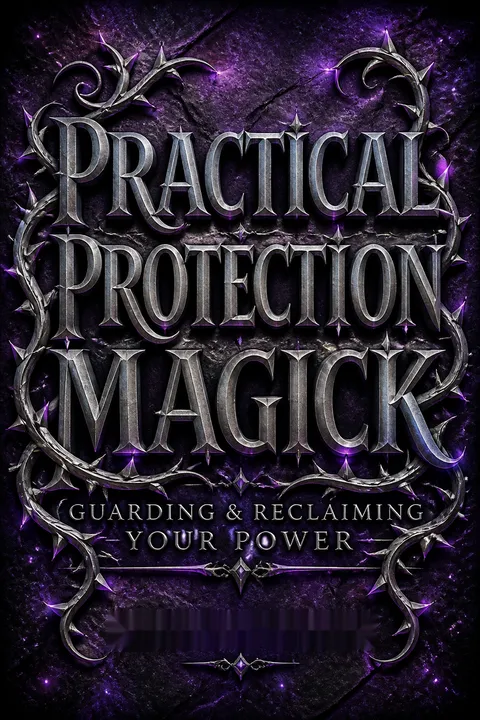
Practical Protection Magick is part spiritual manual, part collection of personal stories, and part guide to interpersonal self-defense. Its central proposition is that protection should be active, proportionate, and ethically governed. The book moves from self-knowledge to recognizing possible threats, setting boundaries, strengthening the body, protecting the home, and responding to curses or conflict. The four elements provide a memorable organizing device: air represents learning, water emotional boundaries, earth grounding and recovery, and fire vitality and transformation.
The strongest material does not depend on accepting psychic attacks as literal forces. Advice to refuse unwanted touch, decline manipulative requests, research a troubling situation, clean a living space, maintain health, and avoid retaliatory behavior can be useful across religious and secular settings. The author’s anecdotes add warmth and show how difficult it can be to act with restraint when someone behaves badly. Her refusal to cast a spell to control a woman’s estranged husband is a particularly clear example of ethical practice.
The book’s main weakness is epistemic. It presents supernatural explanations for misfortune, energy transfer, hauntings, and curses with confidence, while the methods offered to confirm them, including intuition and tarot, cannot distinguish those explanations from coincidence or ordinary causes. Some symptom lists risk encouraging readers to reinterpret common experiences as evidence of attack. The author does advise checking physical causes and staying calm, but a modern reader should give those cautions priority and seek professional help for illness, abuse, or credible safety threats.
The most balanced way to use the book is as a vocabulary for agency and ritual, not as a diagnostic system. Its practices can help readers focus, mark boundaries, and recover a sense of control. The value is highest when symbolic protection reinforces observable actions, and lowest when it replaces evidence, healthcare, or practical security.
Review Summary
Practical Protection Magick receives mixed reviews, with an overall rating of 4.01/5. Some readers appreciate the author's practical advice and personal stories, finding the spells and rituals helpful. Others criticize the book for its condescending tone, lack of depth on basic protection techniques, and excessive focus on the author's experiences. The book's Wiccan-centric approach and treatment of cursing are contentious points. While some readers find it empowering and informative, others feel it lacks substantial new information and fails to address diverse pagan perspectives.
Glossary
Psychic attack
Directed negative mental energyDugan defines psychic attack as the conscious or unconscious focusing of psychic or mental energy to cause emotional harm to another person. She associates it with experiences such as hostility, unease, or feeling diminished. The term reflects the book’s spiritual framework; its use does not establish that a supernatural cause has been verified.
Emotional vampires (emo-vamps)
Persistently demanding peopleDugan’s term for people who repeatedly seek attention, affection, or emotional support while treating their own needs as more important than others’. She describes behaviors such as manipulation, flattery, tantrums, and disregard for limits. The phrase is a metaphor for a draining interpersonal pattern, not a clinical diagnosis or a claim of supernatural power.
Psychic vampires (psi-vamps)
People said to take energyDugan uses this term for people believed to draw energy from others to raise their own energy levels. She distinguishes unintentional behavior, deliberate feeding without permission, and feeding with a willing person’s consent. The book recommends boundaries and distance around unwanted contact, while treating the energy-transfer explanation as part of its magickal worldview.
Crossed condition
A spiritual roadblockIn the book, a crossed condition is a subtle or persistent obstruction in someone’s path, described as a spiritual problem rather than necessarily a direct magical attack. Dugan contrasts it with a hex, which she characterizes as more severe. Uncrossing work is intended to clear obstacles and help restore a sense of forward movement.
Uncrossing
Removing spiritual obstaclesA form of magick intended to remove roadblocks, negativity, or a crossed condition. Dugan describes uncrossing as a way to redirect a person toward a more open path, and includes candle rituals using selected colors, oils, and lunar timing. The practice is presented as spiritual support, not as a substitute for addressing practical causes of a problem.
Warding
Magickal protection for placesWarding is the use of spells, symbols, or charged objects to protect a home, business, possessions, or other space. Dugan’s examples include wreaths, decorated brooms, horseshoes, runes, and gargoyle figures. She emphasizes that wards are meant to complement common-sense safety measures, not guarantee protection from physical threats.
Psychic detox
Ritual for clearing negativityDugan’s name for a process of recovering after feeling emotionally or psychically depleted. It combines cleansing, rest, grounding, reduced exposure to stressful demands, and self-care. Her accompanying candle spell gives the process a ritual form. The term describes spiritual practice, not a medical detoxification procedure.
Evocation
Calling a deity nearbyIn Dugan’s terminology, evocation means calling a deity to be present beside the practitioner as an honored guest during magickal work. She distinguishes it from invocation, in which the deity’s essence is drawn into the practitioner. Her protection rituals use evocation to seek a deity’s presence and assistance.
Download PDF
Download EPUB
.epub digital book format is ideal for reading ebooks on phones, tablets, and e-readers.








