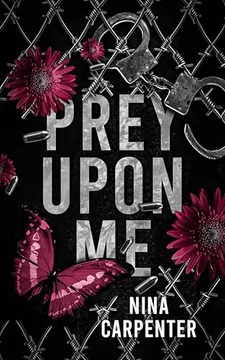


Plot Summary
Prologue
Three years before the main story, Damon Knox2 is serving time in a federal prison when a fellow inmate attacks him with a shank. The guard assigned to protect him proves unable to stop the assault.
As the attacker strangles Knox,2 he reveals that Lillian,4 Knox’s stepmother,4 arranged the killing. Knox2 uses a broken chair leg to kill his attacker, then understands that surviving prison is only the first part of his fight against Lillian.4
The opening makes violence a political instrument before it becomes part of the romance. Knox is not simply endangered by prison’s ordinary brutality: the attack reaches him through a corruptible system and carries Lillian’s message. His survival depends on alertness, improvisation, and a willingness to act more decisively than the authorities around him. The scene also establishes his defining contradiction. He is capable of lethal force, yet the violence is tied to a specific history of betrayal and a demand for justice, not to indiscriminate cruelty.
The Jewelers’ Ambush
After nearly a month of staying inside her apartment, Anna1 forces herself to interview at Westfall Jewelers, hoping a job will steady her finances and her nerves. Before the store opens, three masked robbers smash the displays and threaten the staff. One has pale blue eyes. When the guard, Keith,18 returns and fires wildly, the robbers seize Anna,1 Keith,18 and another employee as hostages.
In the getaway SUV, Keith18 wrestles a gun away from one thief and is shot dead. Anna’s1 attempt to pull the driver off course sends the vehicle into a drainage trench during a storm. She escapes through a broken window and runs to the interstate, where a truck driver calls an ambulance.
The robbery forces Anna back into public life through the very act she hoped would restore it. Her fear is not baseless: the day she opens her apartment door, the world answers with a gun, a dead guard, and a crash. Yet Anna acts under pressure, pulling the driver away from a fatal shot and escaping the wreck. That mixture of terror and practical courage defines her more accurately than her isolation does. The pale-eyed robber becomes a crucial point of recognition, while the violence at Westfall entangles Anna with the family whose business she hoped would employ her.
A Name Under Watch
At the hospital, Anna1 worries less about her bruises than about being identified in the police investigation. She has moved to Paradise City under a new name to escape her abusive ex, Sebastian Chadwick,3 and fears a public witness statement will expose her. After discharge, a routine trip to the DMV and grocery store leaves her feeling watched.
She follows a dark SUV toward a crowded bar, speeds to reach witnesses, and is pulled over by Officer Holt.11 He claims he stopped her because her tail light is failing, then calls her a pet name Sebastian3 used. Anna1 retreats to her apartment, where a police car appears to watch the building. Her fear attracts Damon Knox,2 one of the robbers, who has begun following her.
Anna’s new identity protects her from one kind of danger while making ordinary contact feel perilous. A traffic stop should be a minor inconvenience, but Holt’s familiar pet name turns it into evidence that her past may have found her. The police presence is doubly threatening because Anna has learned that institutions can mistake or manipulate the truth. Her responses, hiding, checking, and avoiding disclosure, are survival strategies that also deepen her isolation. Meanwhile, Knox’s surveillance mirrors the danger she fears, although his interest begins with the robbery rather than with her history.
The Man Beneath Her Bed
Knox2 searches Paradise City for the blonde witness and finds Anna1 at a grocery store. Her guarded movements suggest a life shaped by more than the robbery, and he traces her car to her apartment. He enters while she showers, copies material from her computer, and hides beneath her bed when she returns.
Later, he reads the notes she made about the robbers, including details that could identify him and his friends. When Anna1 wakes from a nightmare, Knox2 threatens to expose her real identity unless she stays silent. He burns her notes, but she has already told her roommate5 enough for Knox2 to fear discovery. He returns, restrains Anna,1 and uses sex to punish and control her.
The parallel between stalker and survivor is deliberately unsettling: Knox recognizes Anna’s secrecy because he also lives behind a guarded story, yet he exploits that recognition before he earns any trust. His surveillance turns her home into contested territory, and his blackmail weaponizes the very vulnerability that keeps her from seeking help. Anna’s notes give her a measure of agency, but they also reveal how sharply she observes the men who endangered her. The attraction complicates the power imbalance rather than erasing it. Desire, fear, and coercion occupy the same space, and the story asks the reader to hold that contradiction.
The Reaper’s Dance
Anna1 discovers the camera Knox2 planted in her living room and orders one of her own, refusing to remain the only person watched. Her roommate Darcy5 finds her temporary work at Derry’s Slaughterhouse, a Halloween festival where makeup and a costume let Anna1 perform anonymously. For the first time in months, she dances with guests and enjoys being among people.
When a drunken visitor grabs her, a masked stranger intervenes and beats the men who rush to help him. Anna1 later discovers the stranger is Knox:2 he has locked her inside the costume warehouse and taken her car key. Their confrontation turns into a sexual encounter, followed by repeated meetings that shift their bond from threat toward a dangerous intimacy.
The festival gives Anna a controlled experiment in visibility. Her costume conceals the identity that makes public life dangerous, allowing her to reclaim movement and performance without pretending her fear has vanished. Knox’s rescue seems protective, but his decision to lock her in and control her exit keeps the encounter morally unstable. The setting’s theatrical blood and masks make that instability literal: both characters can approach one another through roles, while neither is yet fully safe to trust. Anna’s pleasure matters, but it does not cancel the coercion surrounding it.
Two Men Tracking Anna
After watching Anna1 at the festival, Knox2 notices Holt11 following her car and discovers a GPS tracker beneath it. He shows Anna1 the device and warns that Holt11 is not acting for the police department alone. Lillian Blackwood,4 Knox’s stepmother4 and the owner of Westfall Jewelers, has ordered Holt11 to investigate Anna’s1 past.
Nash,10 the detective handling the robbery, also begins probing Anna’s1 finances and history after an anonymous tip points suspicion toward her. When Knox2 learns Anna1 is trying to investigate him, he appears at her apartment and demands an explanation. Anna1 tells him about the scar Sebastian’s3 hired attacker left in her back, forcing Knox2 to confront the personal danger she has been carrying.
The revelation of two watchers changes Anna’s predicament from generalized paranoia into a concrete network of surveillance. Knox’s tracker and Holt’s are materially similar, but their motives differ: one seeks control over Anna, while the other serves Lillian’s interests. The distinction does not make either device benign. Anna’s scar breaks through the sexual game and makes her history impossible for Knox to treat as useful leverage alone. For the first time, his protective impulse must answer to a real wound rather than to jealousy or possession.
Anna’s Stolen Life
Anna1 tells Knox2 why she disappeared. After she broke up with Sebastian,3 he pressured classmates to accuse her of cheating, costing her scholarship and threatening expulsion.
Her roommate Francesca16 then helped him fabricate threatening messages from Anna’s1 phone, and police treated Anna1 as the aggressor when she sought protection. Sebastian’s3 hired attacker later beat and stabbed her in an alley. A domestic-violence advocate named Carmela17 helped Anna1 escape: a body double continued toward her supposed destination while Anna1 changed her appearance and traveled elsewhere.
She took the name Annaleigh Evans and eventually came to Paradise City. Knox2 listens as Anna1 lays out the steps that made her fear authorities as much as the man who hurt her.
Anna’s past reveals how coercive control can recruit bystanders and institutions without requiring them to understand the whole scheme. Sebastian turns classmates, a roommate, police reports, and a hospital into parts of a single trap. Anna’s disappearance is not impulsive flight but a carefully arranged survival plan, made possible by Carmela’s practical expertise. The cost is a life stripped of ordinary continuity: friends, education, and even her name become liabilities. Telling Knox does not undo that loss, but it marks a choice to let someone else know the truth without surrendering control of it.
Knox’s Inheritance Trap
Knox2 explains that his father’s will promised him an inheritance if he worked in the family businesses, but a criminal conviction would disqualify him. After his father died, Lillian4 used her influence to have Knox2 blamed for stealing an antique watch, while Officer Holt11 helped frame him for assault. Knox’s friend Jax6 intervened when Holt11 attacked him, then went to prison too.
Years later, Knox’s2 prison connections include Nicolo Moretti,14 whose life he once saved. Knox2 calls in a favor from Moretti14 to arrange a plan against Lillian4 and to protect Anna.1 The two survivors begin sharing more than danger: each recognizes how wealth and institutional power turned private losses into lasting punishment.
Knox’s history reframes his criminality without absolving it. He has committed the robberies, but the conviction that shaped his adult life was engineered to remove him from an inheritance and leave Lillian in control. His anger is therefore both personal and structural: the same institutions that claim neutrality protected a wealthy family’s interests. Jax’s imprisonment shows how loyalty can become another cost of resistance. Moretti’s favor offers Knox leverage outside the law, a resource that can protect Anna while also drawing the couple further into dangerous methods.
The Gala Reveals Knox
Knox2 takes Anna1 to a charity gala connected to Lillian,4 where she finally sees his face and learns his name: Damon Knox.2 The revelation does not make her retreat. Instead, they move through the event as if newly introduced, and Anna1 tells Lillian4 she may sue Westfall and Devin12 for throwing her toward the robbers during the first heist.
Lillian4 recognizes the threat beneath the polite conversation. Knox’s friend Jax6 is working as a server and quietly approaches Mia,9 a Westfall employee who witnessed the robbery. Knox2 confronts him afterward, warning that contact with a witness could endanger them both. Jax6 admits that Mia’s9 attention makes him feel alive after years of prison, and Knox2 can only ask him to be careful.
The gala makes class visible as performance: Anna and Knox must pass among wealthy donors while concealing their histories and intentions. Anna’s proposed lawsuit is an unusually direct use of the system that previously failed her, and it unsettles Lillian because the witness has become a claimant. Knox’s unmasked face allows intimacy to deepen, but their shared public appearance also increases risk. Jax’s connection with Mia echoes Knox and Anna’s attraction while exposing its danger: desire offers a route back to ordinary human contact, yet the people they approach may become witnesses against them.
Westfall Is Hit Again
Knox2 and his crew strike at Lillian’s4 interests in a coordinated night of vandalism and theft. They damage several Borough businesses she owns or rents, then drive an SUV through the reinforced entrance of a Westfall store. The crew smashes cases and takes jewelry while Jax6 attacks Holt,11 who is working security there.
The assault is revenge for Holt’s11 role in Knox’s2 conviction, but it also creates fresh evidence of the crew’s criminality. The men escape before police arrive. The next morning, officers take Knox2 and Anna1 in for questioning. Their alibis are weak, so Moretti14 arranges a separate robbery in another county during the interrogation, giving Knox2 a time-stamped event that complicates the police case.
The retaliation is not a clean act of justice. Knox’s crew answers institutional abuse with new violence, theft, and intimidation, risking the very freedom they are trying to reclaim. Their careful diversion demonstrates competence, but also reveals how thoroughly they have learned to operate outside the law. Anna’s presence in the investigation makes the cost collective: Knox’s choices now threaten someone who has already been punished for being disbelieved. The distinction between revenge and repair remains unresolved, especially when a staged crime becomes their best defense against a system that once fabricated evidence against Knox.
Sebastian Finds Anna
At the station, Anna1 passes a polygraph, while news breaks of a third Westfall robbery far from Paradise City, strengthening Knox’s alibi. Outside, Sebastian3 appears and taunts her, then obtains a temporary restraining order by claiming she threatened him. He uses the order to disrupt her attempts to go out with Knox,2 appearing at restaurants, a cinema, and other places before they can settle in.
During a rare casino date, Sebastian3 insults Knox2 and threatens to destroy Anna’s1 prospects until she has nowhere to turn but back to him. The encounter clarifies that his goal is not reconciliation. Anna1 and Knox2 stop trying to outrun him and plan to draw him somewhere they can confront him on their terms.
Sebastian’s return converts the law into a continuation of his private control. The restraining order does not protect Anna from him; it gives him a fresh instrument for interrupting her life and making her relationship with Knox appear suspect. His threat at the casino exposes the logic beneath his earlier charm: he measures intimacy by whether he can monopolize and diminish another person. Anna’s response is not simply to endure his harassment. With Knox, she begins planning an encounter that replaces avoidance with deliberate confrontation.
A Decoy at Vortex
Knox2 uses Moretti’s14 nightclub and Ella,15 Moretti’s cousin,15 to draw Sebastian3 away from his security detail. Ella15 pretends to be a vulnerable young woman seeking a private encounter, then leads him into a secluded gated road where Knox’s2 crew blocks his car and captures him. Sebastian3 tries to bargain, then reveals that his men have seized Anna.1
Earlier, Anna’s1 car was blocked after the festival, and attackers dragged her into a trunk. Moretti’s14 people intervene before Sebastian’s3 threat can be carried out, and Anna1 appears at the warehouse unharmed. She makes clear that the men assigned to hold her have been dealt with, turning Sebastian’s3 leverage into a bluff.
The capture reverses Sebastian’s accustomed position: the man who relies on money, security, and intermediaries becomes physically exposed to the consequences of his own methods. Ella’s performance and Moretti’s network make the plan possible, but the real test is whether Anna remains an object to be exchanged. Her appearance alive and capable breaks Sebastian’s assumed leverage. The sequence still carries the moral danger of using deception and force, yet it gives Anna a decisive role in the confrontation rather than leaving her as a threatened prize.
Anna Names Her Attacker
Anna1 confronts Sebastian3 in the warehouse and threatens him with the props arranged around them, then cuts off one finger and partly severs another. Faced with her resolve, he admits that he arranged the earlier alley attack, claiming it was meant only to frighten her. He also offers evidence of Lillian’s4 real-estate fraud.
Knox2 beats Sebastian,3 while Moretti14 arranges for him to be cleaned up and left at a hospital with the evidence secured. At the police station, Sebastian3 confirms that he orchestrated the attack on Anna.1 Nash10 finally has proof of what she endured, and the temporary order against her loses its force. Anna’s1 account is no longer dependent on her word alone.
Anna’s violence is a rupture in the role she was forced to occupy as an unreliable victim. She does not merely survive Sebastian’s threats; she makes him answer for the violence he outsourced and hid behind polite appearances. The scene is not a simple restoration of justice, because her methods are brutal and Knox’s retaliation remains extralegal. Yet Sebastian’s confession changes the public record that once treated Anna as delusional. Her act of naming what happened becomes consequential because it is now joined to evidence and an admission from the person who arranged it.
Lillian’s Safe Opens
Police question Lillian4 at her manor about suspicious property deals, then find stolen Westfall jewelry spilling from a hidden safe. She blames Knox,2 but Detective Nash10 also confronts her with evidence that she concealed interior cameras and worked with Holt,11 whose financial records and history connect him to Knox’s2 framing.
Lillian’s4 real-estate fraud and her role in the jewelry crimes come under investigation. With Holt’s11 conduct newly scrutinized, Knox’s2 old conviction is reopened. Anna1 pursues claims against Westfall and Devin12 for endangering her during the first robbery. The immediate threat from Lillian4 and Sebastian3 begins to loosen, though the legal consequences unfold beyond the warehouse and the police station.
The safe turns the material logic of the story against Lillian: wealth and secrecy, once her protections, become evidence. The stolen jewelry implicates her in the very robberies she used to direct suspicion toward Knox, while scrutiny of Holt reveals that the old conviction rested on compromised authority. Nash’s change matters not because the police become wholly trustworthy, but because evidence finally forces them to reconsider the story they accepted. Anna’s lawsuit also shifts her from witness to claimant, asserting that survival does not erase the liability of those who placed her in danger.
Epilogue
One year later, Anna1 has finished college, works in book design, and helps a domestic-violence organization. Damon2 has opened an auto shop and supports efforts to overturn wrongful convictions.
Lillian4 is imprisoned as her fraud and role in the robberies face further prosecution; Holt11 is also serving time. At the Halloween festival, Damon2 arrives dressed as a skeleton groom and proposes to Anna.1 She accepts before he can finish asking, and their friends celebrate around them.
The ending gives Anna and Damon a future built from choices rather than rescue alone. Anna returns to public life, completes the education Sebastian helped derail, and turns her experience toward practical support for others. Damon uses his freedom to work with cars and help people harmed by wrongful convictions, converting the skills and loyalties formed in prison into something constructive. Their proposal at the festival brings the story back to the setting where Anna first found anonymous freedom. The masks remain, but now they are chosen costumes, not defenses against being recognized.
Analysis
Prey Upon Me builds its romance around a conflict that cannot be softened into a simple story of rescue. Anna’s1 fear is grounded in repeated experiences of betrayal: Sebastian3 manipulates her friends, falsifies evidence, and uses institutions to recast her as the aggressor. Damon2 has also been harmed by a system shaped by wealth and influence, but he initially responds by surveilling and blackmailing Anna.1 Their shared history of institutional failure creates recognition between them, not automatic moral equivalence. The novel’s central tension lies in the difference between being understood and being safe.
Masks, cameras, and false records make visibility a contested resource. Anna1 wants privacy because exposure once enabled further violence; Damon2 wants information because uncertainty feels dangerous. Both use surveillance, yet their motives and power over each other are not identical. The story repeatedly asks who controls the account of an event: the survivor, the wealthy person who can manufacture evidence, the police officer who files a report, or the camera that captures only one angle. Anna’s1 meticulous observation becomes a counterweight to that power, but evidence matters only when someone with authority is willing to read it honestly.
The romance does not erase the coercion in its beginnings. Damon’s2 attraction grows through acts that violate Anna’s1 privacy and constrain her choices, while Anna’s1 desire emerges alongside fear and anger. That collision is part of the book’s dark-romance design, not proof that the danger was imaginary. As the relationship develops, Damon2 begins to listen to the history behind Anna’s1 defenses, and she begins to make choices within the relationship rather than merely react to his. Their intimacy becomes most meaningful when it supports her agency instead of replacing it.
The ending offers imperfect justice rather than a clean moral settlement. Anna1 and Damon2 answer violence with violence, then use testimony, records, and public scrutiny to expose Lillian4 and reopen Damon’s2 case. The novel values accountability, but it also shows how readily the protagonists rely on criminal networks when ordinary legal channels fail them. Their future feels earned not because every choice is virtuous, but because they begin building a life in which survival can finally make room for work, friendship, and love.
Characters
Anna
The fugitive designerAnna is a gifted freelance book designer who has rebuilt her life under an assumed name after surviving an abusive relationship. She wants financial independence and ordinary companionship, but fear has trained her to treat doors, phones, and strangers as possible threats. Her sharp memory and attention to detail help her notice what others overlook, even as anxiety can make her doubt her own judgment. Beneath her careful self-protection is a playful, socially curious woman who comes alive when she can perform without being identified. Her central struggle is not simply learning to trust someone else; it is reclaiming the right to define her own history and decide when it will be shared.
Damon Knox
The wronged mechanicDamon is a convicted thief with a mechanic’s instincts, a prison-shaped alertness, and a deep resentment toward the wealthy family he believes destroyed his future. He reads people quickly and uses observation, intimidation, and elaborate planning to control uncertain situations. His attraction to Anna1 begins through surveillance and blackmail, so protectiveness and possessiveness are difficult to separate from his behavior. Beneath his swagger is grief over his parents and anger at a justice system that treated him as disposable. He wants to punish Lillian4, but Anna’s1 presence challenges him to imagine a life not organized entirely around revenge, even as his choices keep placing them both at risk.
Sebastian Chadwick
The polished abuserSebastian is a wealthy law student and heir whose charm makes entitlement look like generosity. He courts Anna1 with luxury, attention, and the promise of a larger life, then gradually turns affection into surveillance and control. He is skilled at making his own actions disappear behind other people’s words, money, and institutional authority. What drives him is not mutual attachment so much as possession: he expects people to remain available to him and treats resistance as an insult. His polished manner makes his cruelty harder to name, particularly when he can present himself as the reasonable party.
Lillian Blackwood
The calculating matriarchLillian is Damon’s2 wealthy stepmother and the force behind the Blackwood family’s public respectability. A former model, she understands how appearance can command attention and how influence can make inconvenient facts disappear. She regards family relationships through the lens of status, inheritance, and control, and Damon’s2 existence threatens the arrangement she wants to preserve. Her confidence rests on connections and the assumption that other people will accept her version of events. She is not merely an antagonist in Damon’s2 private history; her power depends on institutions and business structures that reach far beyond the family home.
Darcy
The generous roommateDarcy is Anna’s1 warm, sociable roommate, a student who treats shared space as a place for friends, snacks, and noisy television. Her ease with people contrasts with Anna’s1 vigilance, but she does not demand that Anna1 explain herself before offering company. Darcy’s casual kindness gives Anna1 a first foothold back into daily life, including a route to work at the Halloween festival. She is perceptive enough to notice changes in her roommate without turning every concern into an interrogation.
Jax Hawley
The watchful loyalistJax is Damon’s2 closest friend, a quiet and physically capable man whose loyalty was tested by prison and the circumstances of Damon’s2 arrest. He tends to say little, which makes his silences especially revealing to those who know him. Beneath his reserve is a capacity for tenderness and a hunger for connection that he struggles to express. His growing interest in Mia9 creates both hope and risk, since she is tied to the investigation that threatens his friends.
Dominic Graves
The volatile accompliceDominic is a prison-hardened member of Damon’s2 crew who favors bluntness, aggression, and fast action. He has little patience for hesitation and often channels stress into anger, making him useful in a confrontation and dangerous in a delicate one. His loyalty to the group is genuine, but it does not make his violence harmless. Dominic embodies the improvisational life the men have built around criminal records and limited legitimate options.
Michael Hawley
The practical cousinMichael is Jax’s cousin6 and a capable member of the robbery crew, valued for his driving, contacts, and steady handling of logistical problems. He is less openly volatile than Dominic7 and often helps turn a chaotic plan into a workable one. His role in the group is practical, but his family bond with Jax6 keeps the consequences of their choices close to home.
Mia Esposito
The jeweler witnessMia works at Westfall Jewelers and is present during the robbery, giving her a direct connection to the investigation. She is socially perceptive and self-possessed, able to read a room without making a performance of it. Her brief encounters with Jax6 suggest a person open to attraction but not naïve about the circumstances surrounding her. She represents the ordinary life the crew’s crimes keep disturbing.
Detective Nash
The skeptical detectiveNash is the Paradise City detective responsible for questioning Anna1 and Damon2. He is observant, persistent, and accustomed to building a case from patterns rather than trusting a suspect’s account. His suspicion of Anna1 is sharpened by the gaps in her history, while his interest in Damon2 is colored by the latter’s criminal record and connection to Westfall. Nash is neither instantly perceptive nor wholly immovable; evidence forces him to reconsider assumptions he had treated as settled.
Benedict Holt
The compromised officerHolt is a tall, athletic police officer whose confident manner conceals a willingness to use his authority for private ends. He has ties to Lillian4 and knows how to make an abuse of power look like routine procedure. His presence unsettles Anna1 because he combines the familiar language of safety with the threat of surveillance. Holt represents the particular danger of an institution’s authority being placed in the service of personal influence.
Devin Blackwood
The careless heirDevin is Lillian’s son4 and Damon’s half-brother2, a privileged jewelry-store manager whose ease comes from never having to carry the full burden of his decisions. He is more comfortable with status than responsibility and treats people as useful when they serve his needs. His relationship with Damon2 is marked by inherited resentment and a striking difference in how each man understands work, family, and obligation.
Georgia
The bar-owning confidanteGeorgia owns Mott’s, a neighborhood bar where Damon2 and his friends find familiar company and practical help. She is shrewd about people and protective of her establishment, maintaining her own discreet system for monitoring what happens inside. Her teasing manner masks a strong sense of loyalty, and she serves as one of the few adults from Damon’s2 childhood who remains firmly in his corner.
Nicolo Moretti
The influential allyNicolo Moretti is a powerful figure with criminal connections who met Damon2 in prison. Damon2 once protected him, creating a debt that Moretti takes seriously. He is controlled, observant, and accustomed to converting loyalty into practical action. His help offers the protagonists resources the police cannot provide, but it also draws them into a world where favors carry real obligations.
Ella Parisi
The observant socialiteElla is a young member of the Moretti family14 who can convincingly perform innocence when a situation calls for it. She understands the social expectations surrounding wealth and uses them to her advantage. Her connection to Nicolo14 places her near the criminal world, but she has a composure and resourcefulness of her own.
Francesca
The former roommateFrancesca shared a dorm room with Anna1 during college and knew details of Anna’s1 relationship with Sebastian3. Her access to Anna’s1 private life makes her an important part of the history Anna1 is trying to escape. She illustrates how proximity and friendship do not always guarantee safety or loyalty.
Carmela
The safety advocateCarmela works with survivors of domestic abuse and understands how to help someone disappear from a dangerous partner’s reach. She offers Anna1 more than sympathy: practical knowledge, a plan, and the means to leave without announcing where she is going. Her work shows how specialized support can turn a desperate escape into a survivable one.
Keith Randall
The jewelry guardKeith is the security guard at Westfall Jewelers, a large man whose confidence exceeds his preparedness. His return to the store interrupts the robbers’ escape plan and sharply escalates the danger for everyone inside.
Nana
The ambitious grandmotherAnna’s1 grandmother raised her after her mother died and urged her to pursue education and a more secure life than the one she had known. Her hopes shaped Anna’s1 decisions, including the choice to leave her first serious relationship for college.
Ryan
The first loveRyan is Anna’s1 former boyfriend from her hometown, a mechanic whose modest, grounded life contrasts with the glamorous future Anna1 once thought she wanted. Their relationship remains part of her memory of the choices she made before meeting Sebastian3.
Plot Devices
Anna’s Assumed Identity
A shield with a costAnna1 changes her name and appearance after escaping Sebastian3, then rebuilds her life in Paradise City with few connections and limited money. The hidden identity explains her fear of public attention and makes even a witness interview feel dangerous. It also gives Knox2 leverage when he discovers that she does not want to be found. Her concealment protects her from immediate pursuit, but it prevents her from seeking help freely and leaves her vulnerable to anyone who can uncover her past.
The Watching Devices
Surveillance changes the balanceA planted camera, competing GPS trackers, security footage, and hidden recordings turn private spaces into sources of evidence and control. Knox2 uses observation to find Anna1 and understand her routines; Holt11 uses a tracker on her car for Lillian4; Anna1 responds by ordering a camera of her own. These devices make surveillance both a threat and a tactical resource. They also distinguish what characters know from what they can prove, a distinction that drives the police investigations and the struggle over whose version of events will be believed.
Masks and Costumes
Anonymity becomes freedomThe robbers’ masks conceal their identities, while Anna’s1 skeleton costume gives her a rare chance to perform in public without being recognized. Knox2 later uses the same festival setting to approach her under a Reaper mask. Costumes therefore work in opposite directions: they hide criminal responsibility but also let Anna1 recover a sense of movement and play. When Damon2 finally appears without a mask at the gala, the reveal marks a change in their relationship from anonymous pursuit toward a more direct, if still dangerous, intimacy.
Staged Alibis
Crime hides other crimeKnox2 and his associates create diversions, use borrowed vehicles, and arrange a robbery in another county while police question him. The tactics exploit the same evidentiary gaps that once helped authorities frame him: timing, association, and incomplete footage can shape a case without establishing the whole truth. These plans temporarily frustrate suspicion, but they also deepen the characters’ criminal exposure and put Anna1 near the consequences. The device underscores the novel’s uneasy distinction between getting away with an act and proving what actually happened.
Download PDF
Download EPUB
.epub digital book format is ideal for reading ebooks on phones, tablets, and e-readers.








