

Key Takeaways
Price for what readers will pay, not for the work behind the book
The market sets value. Hours spent writing, editing, and designing do not determine what a reader will pay. The practical task is to find the price supported by the book’s genre, presentation, audience, and alternatives. Martelle groups the basic ways to earn into three author-named models: sell many copies at a small margin, sell fewer copies at a larger margin, or bring readers in with one offer and sell them more books afterward.
Choose the business model. The third approach is especially important for authors with a series or a deep catalog. A free or discounted title can introduce new readers, but only if there are other books for them to buy. The book still needs a strong cover, a compelling description, and a story that earns continued attention.
This is a useful shift from effort-based pricing to value-based pricing, a familiar idea in economics: buyers respond to the benefit they expect, not the producer’s hours. The three models also distinguish unit margin from customer lifetime value, a distinction that matters whenever an introductory offer leads to repeat purchases. The caution is that observed willingness to pay is shaped by visibility and trust, not just intrinsic value. A low price can signal accessibility, but it can also signal poor fit or low quality. Price tests therefore need to be read alongside conversion and reader response.
Use genre benchmarks to find a price readers recognize as credible
Start with comparable books. Martelle urges authors to study the prices of successful titles in the genre where likely readers actually shop. His science-fiction novels moved from an initial $2.99 price to a regular $4.99, a level he found his audience would accept. A shorter book, a new author, or a different genre may support another price. The point is to research, not imitate blindly.
Mind the royalty brackets. In the book’s 2019 Amazon context, ebooks priced from $2.99 to $9.99 generally qualified for a 70% royalty, with a download fee. Above $9.99, the Amazon rate fell to 35%. Thus, a $9.99 ebook could earn more per sale than a $14.99 ebook. Platform terms change, so these figures are historical guidance, not current guarantees.
Comparable titles act as reference prices. Readers use them to decide whether an unfamiliar book seems like a bargain, a fair purchase, or an implausible outlier. This makes genre research a form of market positioning, not merely competitor watching. Yet bestseller lists can mislead: prominent authors, publisher promotions, and temporary discounts distort the apparent norm. A sound comparison set should include books with similar length, audience, and author recognition. Royalty thresholds add another layer, showing why the displayed price alone cannot reveal the seller’s actual return.
A 99-cent sale can earn more than free by attracting committed readers
Downloads are not readers. In Martelle’s example, 5,000 free downloads with a 2% continuation rate produce 100 purchases of the second book. At an assumed $3.34 royalty per copy, that is $334. A 99-cent promotion selling 500 copies earns $175 upfront; if half those buyers continue, the next book brings another $835. The example excludes promotion costs, but it shows why raw download totals can flatter a campaign that earns little.
Use free with a destination. Free can make sense when a book gathers email subscribers or introduces a series with more titles available. Without a next step, many downloaders may never read the book. Martelle prefers 99 cents for many promotions because a small purchase can increase the chance that the buyer actually tries the story.
The example captures a real funnel distinction: acquisition volume and qualified demand are not the same thing. A small payment may create commitment, while a free offer can reach people who collect more books than they read. But the 2% and 50% continuation rates are author observations and illustrations, not universal laws. Genre, cover, promotion source, and the quality of the next book all matter. The practical lesson is not that paid always beats free, but that each offer should have a defined purpose and its results should be judged by downstream purchases, not downloads alone.
Discount a series opener only when later books can repay the cost
Measure the whole series. Buy-through is the share of buyers who purchase a later book after starting with an earlier one. In one example, ten sales of a $4.99 first book yield about $33.93 after fees. If five readers buy book two and four of those buy book three, the three-book total reaches $64.47. The first title is worth more than its own royalty because it can lead to additional sales.
Make the next step easy. A discounted first book can act as a loss leader, meaning the author accepts a smaller return on the opening title to attract readers who may buy the rest. This strategy is stronger with a substantial backlist than with a single book. Clear links to the next installment and a satisfying first story help convert initial interest into continued reading.
This is the publishing version of customer lifetime value: the first transaction is only one part of the relationship’s economic value. It also explains why the same discount can be sensible for a long series and wasteful for a standalone. The calculation is powerful, but continuation rates are not a pure measure of book quality. Readers may pause for timing, discover a series late, or switch formats. Authors should compare cohorts over a reasonable period and distinguish weak reader retention from weak promotion before making costly changes.
Evaluate promotions by their lasting profit, not their launch-day spike
Revenue does not scale in straight lines. Martelle warns that doubling ad spend does not reliably double sales. A campaign may reach less responsive readers as it expands, while a brief sales surge can fade without producing continued purchases. He cites Joe Solari’s review of sales curves across genres: in eight out of ten cases, half of top authors’ revenue over an eighteen-month period arrived in the first six months.
Track the full return. Include promotion fees, advertising, royalties, and follow-on sales when assessing a campaign. Martelle calls the continuing sales after a launch or promotion its tail. Stacking promotions means coordinating several paid placements within a limited period to reach more readers. A larger spike is not automatically a better outcome if the campaign fails to earn back its costs or attract readers who continue.
This is a case for marginal analysis: the next dollar spent should be judged by the additional return it produces, not by the average performance of earlier spending. It also resembles cohort analysis in subscription businesses, where customers are tracked after the initial acquisition rather than counted at signup. The book’s sales-curve figure is a useful warning, but it does not prove that every title follows the same timeline. Promotion channels, release cadence, and genre differ. The durable practice is to record spend and delayed revenue, then scale only when evidence supports it.
Give discounts a rhythm so readers learn your regular price
Regular price is the anchor. A book’s full price sets the reference point for judging a sale and signals what readers should expect to pay. Frequent, permanent discounting can train an audience to wait for the bargain. Martelle recommends choosing a regular price that fits the genre, then using limited promotions with clear start and end dates. His own release routine changed over time, but consistency helped readers understand when a price was temporary.
Protect trust as well as margin. Readers may feel misled if a price changes without warning, or feel punished if a newly purchased book is discounted immediately. A sale should be presented plainly and returned to regular price when it ends. There are exceptions: Martelle kept an omnibus below its former price when sales data showed that the lower price was producing a positive return.
Price rhythm is a form of expectation management. In behavioral economics, a reference price shapes how people experience both a discount and a price increase. Predictability can reduce the feeling that a seller is manipulating the buyer, while a genuine time limit makes the offer easier to understand. Still, consistency should not become a ritual that overrides evidence. A discount that repeatedly earns less than it costs is not valuable just because it matches a calendar. Trust is best supported by transparent terms and a pricing policy that has a business reason.
Keep preorder prices stable unless you intend to discount every order
A price change can reach backward. In the book’s account of Amazon preorders, lowering the list price during the preorder period meant earlier orders were charged at the lowest price offered. Martelle illustrates the risk with 1,000 orders at $4.99: lowering the price to 99 cents could reduce launch revenue from about $3,400 to $350. The exact mechanics depend on the platform and may change, so authors should verify current rules before adjusting a preorder.
Use preorders for what they do well. They can establish a publication date, provide a purchase link for promotions, and give fans a way to order before release. They do not guarantee a flood of sales, especially for an unfamiliar author. A preorder’s value is partly operational: it helps coordinate the launch and lets interested readers secure the book in advance.
The striking issue is not simply pricing, but the asymmetry between a small administrative change and its potentially large financial effect. This is a classic operational-risk problem: a setting that seems reversible may affect a whole batch of transactions. A brief checklist before changing a preorder can prevent an expensive mistake. The broader lesson is to distinguish a marketing decision from a platform rule. The book’s example belongs to its 2019 platform environment, so the general principle remains sound while the specific checkout mechanics require fresh confirmation.
Choose subscriptions, wide distribution, and bundles by audience economics
Different readers create different returns. Kindle Unlimited pays authors according to pages read, rather than a fixed sale price. In the book’s 2019 estimate, a 60,000-word title might earn roughly $1.26 to $1.58 from a complete subscription read, compared with about $3.40 from a $4.99 sale. Subscription rates varied, and enrollment required Amazon exclusivity for a three-month term. Martelle found the model worthwhile for his science-fiction audience, but notes that other genres may perform better across multiple retailers.
Bundles reach another buyer. An omnibus gathers several books into one edition. It can appeal to readers who want a series together and can generate additional sales or page reads, though pricing and royalty rules affect the margin. Martelle often waited about a year before bundling books, giving individual editions time to sell first.
This is a useful reminder that distribution is a choice about customer segments, not just storefronts. Subscription readers, ebook buyers, and bundle shoppers may overlap, but they do not behave identically. The right comparison is therefore expected return by format and audience, adjusted for exclusivity and the value of reaching readers elsewhere. Concentrating on one dominant platform may be profitable, but it also creates dependency on that platform’s rules. Because subscription payouts and royalty terms change, authors need to update the calculation rather than inherit an old recommendation.
Build revenue beyond ebooks without promising more than you can deliver
Offer different ways to support the work. Martelle surveys paperbacks, hardbacks, audiobooks, Patreon memberships, crowdfunding, affiliate links, and branded merchandise. Each carries different costs and labor. A paperback’s print cost limits its margin. Narrators can require a large upfront investment for audio, while distribution to libraries may create another sales channel. Affiliate links can add modest income, but require disclosure and compliance with platform rules.
Sell access, not just objects. On Patreon, Martelle offered weekly chapters, early artwork, and opportunities for readers to contribute ideas at different membership levels. Kickstarter can fund a planned project, but a campaign is much harder without an existing audience. Merchandise may serve superfans more than it serves profit. The guiding test is whether the offering can be produced reliably and whether its price covers the work and expenses involved.
Additional revenue streams can stabilize income, but diversification is not free: each channel adds fulfillment, customer service, and reputational obligations. Portfolio thinking helps here. A creator can compare the expected margin and labor of each offer, then keep the channels that reinforce the core work rather than distract from it. Community research also suggests that participation can deepen loyalty, but creative control and clear boundaries matter. A membership promise that becomes burdensome may damage the relationship it was designed to strengthen.
Analysis
The book’s central contribution is to treat ebook pricing as a portfolio decision rather than a single number. A price affects unit revenue, the kind of reader who tries the book, the likelihood of continuing through a series, and the economics of advertising. The best-known example is the comparison between free and 99 cents: the lower-reach offer can produce more total value if it attracts readers who continue to paid titles. That argument is more useful than a blanket rule because it asks authors to connect price to a measurable objective.
Martelle’s practical strength is his movement between arithmetic and lived publishing experience. He shows how platform royalty brackets, download fees, subscription page reads, and sequel purchases interact. His advice to calculate revenue across a series is especially important: evaluating only book one can make a successful acquisition strategy look like a failure, while counting downloads as readers can make an ineffective campaign look triumphant.
The evidence is primarily the author’s own experience, observed market prices, and examples from the 2019 publishing environment. Those are valuable for generating hypotheses, but they should not be mistaken for universal benchmarks. Reader behavior varies by genre, audience size, release cadence, and platform. Amazon’s terms, payout rates, and discovery systems also change. The durable method is to preserve the underlying questions while refreshing the numbers.
A further implication is that price is not an isolated lever. The book repeatedly links it to genre fit, cover and description, story quality, catalog depth, and reader trust. A price test cannot rescue a weak match between book and audience, and a temporary sales bump does not establish long-term profitability. The most reliable operating loop is to choose a clear goal, run a bounded test, track costs and downstream behavior, and revise without confusing a noisy result for a rule. Pricing is therefore less like setting a tag and more like managing a small product portfolio whose value compounds through satisfied readers and future books.
Review Summary
Pricing Strategies by Craig Martelle receives mostly positive reviews, with an average rating of 4.40 out of 5. Readers appreciate the book's valuable insights on pricing strategies for indie authors, particularly those writing series. While some find the information repetitive or focused on specific genres, many praise the author's straightforward style and practical advice. The book is considered a must-read for beginners, offering a comprehensive look at pricing tactics, though a few readers suggest taking the information with a grain of salt.
Glossary
Walmart model
High volume, small marginOne of three author-labeled approaches to earning money from books. The Walmart model emphasizes selling many copies while earning relatively little from each one. Its viability depends on reaching enough readers to make the small return per sale worthwhile.
Ferrari model
Low volume, high marginOne of three author-labeled approaches to book revenue. The Ferrari model seeks a larger return from each sale, even if fewer copies are sold. It depends on a price and audience that support a premium, rather than on maximizing unit volume.
Godiva chocolate factory tour
Attract readers, sell moreThe author’s label for bringing people into a shop or to an introductory offer, then encouraging them to buy additional products. For an author, a free or discounted first book can serve as the entry point, while a series or catalog provides the follow-on purchases.
Buy-through
Purchases of later booksThe proportion of customers who buy a later title after purchasing an earlier one, often the next book in a series. Authors can estimate it by comparing sales of successive books over a suitable period. It helps show whether an introductory price is generating valuable repeat purchases.
Read-through
Continuation through a seriesIn the book, this term refers specifically to a Kindle Unlimited reader checking out the next book in a series. The author sometimes uses it interchangeably with buy-through, but buy-through refers to purchases, while read-through can describe continued subscription reading.
Kindle Edition Normalized Pages
Amazon’s paid page countAmazon’s normalized page measure for an ebook enrolled in Kindle Unlimited. Authors use the KENP count, along with the monthly page-read rate, to estimate payment for subscription reading. It differs from the print length shown on a book’s retail product page.
Stacking ads
Coordinated promotional placementsThe practice of scheduling multiple paid promotions to support a book during a fixed period. The aim is to expose the title to more potential readers across several outlets, often while the book is discounted. The cost of each placement should be included when judging the campaign’s return.
Tail
Sales after a promotionThe continued sales that follow a launch or promotion after its initial spike has passed. The author associates a longer tail with factors such as word of mouth, series continuation, and ongoing reader discovery. A tail can matter because it generates sales without the same immediate promotional spend.
KDP Select
Amazon ebook exclusivity programA Kindle Direct Publishing program that requires an ebook to be exclusive to Amazon for a fixed enrollment period. Participation makes the title eligible for Kindle Unlimited page-read payments and certain promotional tools. The book describes three-month enrollment terms in its 2019 context, so current rules should be checked.
FAQ
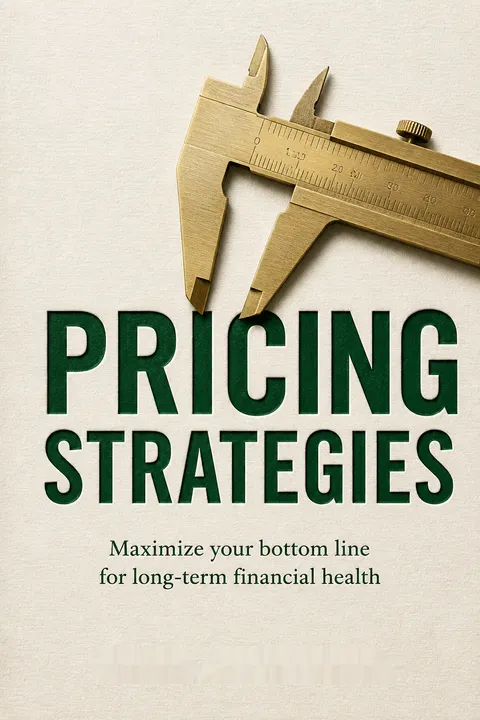
What's "Pricing Strategies: Maximize your bottom line for long-term financial health" about?
- Author's Focus: The book, written by Craig Martelle, is part of the Successful Indie Author series and focuses on pricing strategies for authors to maximize their earnings from book sales.
- Target Audience: It is aimed at professional authors, particularly those who are self-publishing, and want to make a career out of writing.
- Core Content: The book covers various pricing models, the psychology of pricing, and how to manage reader expectations to optimize sales and revenue.
- Practical Advice: It provides actionable strategies for setting book prices, running promotions, and leveraging different revenue streams like paperbacks and audiobooks.
Why should I read "Pricing Strategies" by Craig Martelle?
- Comprehensive Guide: It offers a detailed exploration of pricing strategies specifically tailored for indie authors, which is a niche not often covered in depth.
- Proven Strategies: The book is based on the author's extensive experience and includes real-world examples and case studies.
- Actionable Insights: Readers will gain practical advice on how to set prices, run promotions, and manage reader expectations effectively.
- Long-term Focus: It emphasizes strategies that contribute to long-term financial health rather than short-term gains.
What are the key takeaways of "Pricing Strategies" by Craig Martelle?
- Pricing Models: Understand different pricing models like the Walmart model (sell a lot at a low price) and the Ferrari model (sell fewer at a high price).
- Reader Psychology: Learn how pricing affects reader perception and how to use this to your advantage.
- Promotional Strategies: Discover the importance of strategic promotions and how to stack ads for maximum impact.
- Revenue Streams: Explore additional revenue opportunities such as audiobooks, paperbacks, and crowdfunding.
What are the best quotes from "Pricing Strategies" and what do they mean?
- "Dress for the job you want": This emphasizes the importance of presenting your book in a way that aligns with your desired market position.
- "The Godiva Chocolate Model": Refers to the strategy of offering something for free to entice customers to explore more of your offerings.
- "Don’t leave money on the table": Encourages authors to optimize their pricing strategies to ensure they are maximizing their potential earnings.
- "Genre = Marketing": Highlights the importance of understanding your genre as a key component of your marketing strategy.
How does Craig Martelle suggest setting book prices?
- Market Research: Conduct thorough research on your genre to understand what prices are typical and what the market will bear.
- Regular Price Strategy: Set a regular price that reflects the value of your book and aligns with industry standards.
- Discounts and Promotions: Use strategic discounts and promotions to attract new readers and boost sales.
- Reader Perception: Consider how different price points affect reader perception and willingness to purchase.
What is the psychology of pricing according to "Pricing Strategies"?
- Perception of Value: Readers often associate price with quality; a higher price can imply a higher value.
- Price Points: Common price points like $0.99 or $2.99 are used strategically to attract different types of buyers.
- Discount Impact: Discounts can create a sense of urgency and increase perceived value if positioned correctly.
- Reader Expectations: Managing reader expectations through consistent pricing strategies can build trust and loyalty.
How does Craig Martelle recommend managing reader expectations?
- Consistent Pricing: Maintain consistent pricing strategies to avoid confusing or alienating your readership.
- Transparent Communication: Clearly communicate any changes in pricing or promotions to your readers.
- Value Proposition: Ensure that your pricing reflects the value you are offering, whether through content quality or additional perks.
- Long-term Strategy: Focus on building a long-term relationship with readers through strategic pricing and quality content.
What are the different pricing models discussed in "Pricing Strategies"?
- Walmart Model: Sell a large volume of books at a lower price to maximize total revenue.
- Ferrari Model: Sell fewer books at a higher price, focusing on premium content or niche markets.
- Subscription Model: Utilize platforms like Kindle Unlimited to earn through page reads rather than direct sales.
- Promotional Pricing: Use temporary discounts to boost visibility and attract new readers.
How does "Pricing Strategies" address the use of promotions?
- Stacking Promotions: Use multiple promotions simultaneously to maximize visibility and sales impact.
- Timing and Frequency: Plan promotions strategically, considering factors like market trends and reader behavior.
- Targeted Advertising: Focus on reaching the right audience through targeted ads and promotional channels.
- Measuring Success: Track the effectiveness of promotions to refine future strategies and improve ROI.
What additional revenue streams does Craig Martelle suggest exploring?
- Audiobooks: Tap into the growing audiobook market to reach a wider audience and increase revenue.
- Paperbacks and Hardbacks: Offer physical copies to cater to different reader preferences and expand your market.
- Crowdfunding: Use platforms like Kickstarter to fund projects and engage with your audience.
- Affiliate Income: Leverage affiliate programs to earn additional income from related products or services.
How does "Pricing Strategies" suggest calculating read-through and buy-through rates?
- Track Sales Data: Monitor sales and page reads to understand reader engagement and series performance.
- Calculate Rates: Use sales data to calculate the percentage of readers who continue to the next book in a series.
- Adjust Strategies: Use these metrics to adjust pricing and promotional strategies for better results.
- Long-term Focus: Focus on improving read-through and buy-through rates as part of a long-term growth strategy.
What are the challenges of pricing in non-US markets according to "Pricing Strategies"?
- Market Research: Conduct thorough research to understand pricing norms and reader expectations in different regions.
- Currency and VAT: Consider currency exchange rates and VAT when setting prices for international markets.
- Cultural Differences: Be aware of cultural differences that may affect reader perception and purchasing behavior.
- Targeted Strategies: Develop targeted pricing and marketing strategies for each specific market to maximize impact.
Download PDF
Download EPUB
.epub digital book format is ideal for reading ebooks on phones, tablets, and e-readers.








