

Key Takeaways
Treat mental health courage as daily persistence, not a polished recovery story.
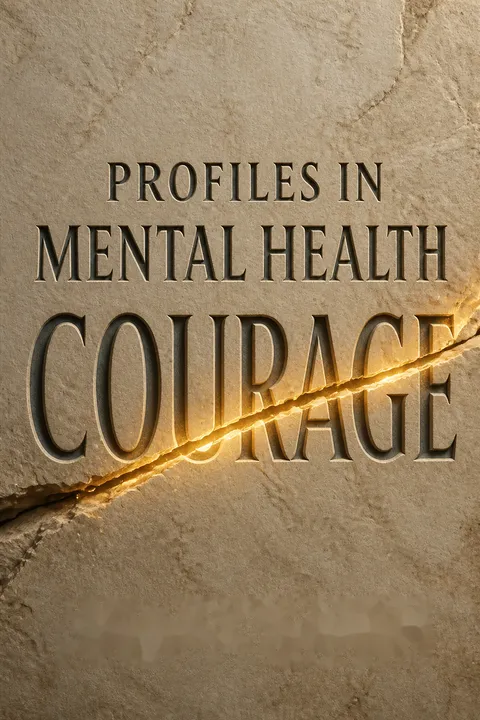
Courage is ongoing. The book’s twelve profiles show people living with mental illness, addiction, or both, including people whose symptoms return and people who die by suicide or overdose. Their courage is not a dramatic cure or a tidy redemption arc. It includes admitting something is wrong, seeking care, trying again after a setback, and telling the truth when stigma makes silence seem safer. The authors call this mental health courage: the effort to keep pursuing wellness and connection while illness remains part of life.
Honesty has a cost. Patrick Kennedy describes losing relationships after publishing his own story, but also hearing from readers who felt less alone. The profiles likewise show that openness can help others while exposing the speaker to judgment and professional risk.
The book’s choice to include ongoing illness and loss resists a familiar storytelling trap: presenting recovery as a clean before-and-after transformation. That honesty may help readers recognize that progress can coexist with symptoms, uncertainty, and renewed treatment. It also matters that disclosure is not treated as universally safe. People face different risks at work, at home, and in public, so courage should not become a demand that everyone reveal private medical information. The more useful social goal is to make support available whether or not someone tells their story publicly.
Treat addiction and psychiatric illness together, not as separate moral failures.
The conditions overlap. The book argues that mental illness and substance use disorders are best understood as connected, not as problems belonging to separate treatment worlds. In a 2022 federal prevalence study cited by the authors, 84 million American adults had at least one mental disorder, 34 million had a substance use disorder, and 11 million had both. The authors stress that substance use may intensify psychiatric symptoms, while untreated symptoms can help sustain substance use.
Care is uneven. The study found that 60.8 percent of adults with a mental disorder received treatment in the previous year, compared with 12.2 percent of those with a substance use disorder. Tonie Dreher spent years being treated for drug use without understanding that psychosis, trauma, and mood symptoms were also central to her distress.
Treating overlapping conditions as unrelated can create a clinical version of passing the patient from one door to another. The profiles show how a diagnosis can change what care seems possible, but they also caution against assuming that substance use explains every unusual thought or mood. Integrated assessment is valuable precisely because it keeps more than one explanation in view. The prevalence figures support the scale of the problem, though they cannot tell readers which treatment will fit any individual. The stories supply human context, not a substitute for careful diagnosis.
Build care around the whole person, not one favored treatment.
Combine useful supports. Across the profiles, care may include psychiatric medication, talk therapy, recovery groups, crisis services, and relationships that help a person stay engaged. Ashley Dunlop’s Vanderbilt team tried to coordinate psychiatric treatment, addiction care, social work, and recovery coaching. The authors call these coordinated practical supports wrap-around supports. Philomena Kebec’s care also included psychiatric medication and therapy alongside Ojibwe ceremonies and spiritual practices. Her experience challenges the idea that people must choose between cultural or spiritual care and Western medicine.
No single route fits all. Twelve-step meetings helped Philomena maintain sobriety, yet she also questioned their hostility to some medications. She and the authors argue for treatment pluralism: respect for evidence-based approaches even when a particular approach did not work for someone else.
This emphasis on combining supports resembles systems thinking: a person’s health depends on how clinical care, daily life, and social connection interact, not simply on whether one intervention exists. The profiles also make clear that coordination is difficult when providers work in separate institutions or hold opposing assumptions. Pluralism is not the same as saying every treatment has equal evidence or is equally safe. Its strongest form protects informed choice while allowing clinicians, patients, and communities to weigh evidence together rather than turning one person’s successful path into a rule for everyone.
Do not mistake high performance for mental health stability.
Achievement can conceal distress. Henry Platt began college singing in an acclaimed campus group while privately struggling to get out of bed, eat, and stay alive. At Penn, students called the pressure to look effortlessly successful Penn Face. Naia Butler-Craig built a high-profile aerospace career while hiding self-harm and suicidal thoughts because she feared treatment could end her astronaut ambitions. Justin Maffett was a promising lawyer whose manic episode rapidly disrupted his work and relationships.
Appearances mislead. These stories show that grades, professional success, humor, or public confidence do not reliably reveal how someone is doing. Social media can intensify the pressure by turning ordinary life into a public performance measured through attention and approval.
The profiles expose the gap between visible competence and private capacity. In workplaces and universities, polished performance can be rewarded so consistently that distress becomes harder to disclose, and harder for others to notice. That does not mean every successful person is secretly unwell, or that achievement itself is a warning sign. It means institutions should not use productivity as a proxy for wellness. A culture that values only what can be seen may overlook the less visible work of surviving, asking for help, or adjusting expectations before a crisis.
Make treatment handoffs immediate, not another obstacle for sick people.
Care must connect. Henry discovered that Penn’s counseling service was closed on weekends when his distress first became urgent. Justin Maffett was discharged from a psychiatric hospital without a firm connection to outpatient care, then became manic again soon afterward. His godfather, a behavioral health leader, had to rely on personal contacts to navigate systems that were confusing even to him. The authors describe the practical measure of connection to care rates: how often people leaving hospital actually reach the next stage of treatment.
Coverage is not access. Ashley’s Medicaid-funded treatment could not simply follow her across a state border, even when she needed a longer residential program. Insurance parity laws may promise coverage, but a covered service without an available bed, timely appointment, or workable referral is not meaningful access.
A discharge is not a finish line. It is a transition point at which responsibility can become unclear: the hospital assumes the outpatient clinician will follow up, while the patient may be too ill or overwhelmed to arrange it. The stories suggest that continuity should be treated as part of clinical care, not as optional administration. They also reveal a broader design problem: systems often require people in crisis to become expert navigators. Better coordination can reduce that burden, although it cannot eliminate shortages, cost barriers, or the need for patient choice.
Join medical care with culturally trusted support instead of demanding a choice.
Context shapes care. Philomena draws on both psychiatric treatment and Ojibwe spiritual practices, including ceremonies and prayer. Her story presents these approaches as potentially compatible, not rival explanations that force her to reject one part of her identity. Tonie’s experience highlights a different gap: carceral care means treatment connected to jails, prisons, and the period after release. She recalls receiving medication in prison without enough diagnosis or therapy, then returning to the community without the support needed to stay well.
Trust is not automatic. Tonie also describes how little she knew about mental health while growing up, and how her symptoms were understood chiefly as addiction or personal weakness. Race, trauma, cultural traditions, and incarceration all affect whether care feels safe, relevant, and reachable.
A treatment plan can be medically sound in theory and still fail if it ignores the person’s language, history, community, or reasons for mistrusting institutions. The profiles make cultural fit part of care rather than a decorative extra. They also caution against romanticizing either traditional practices or clinical medicine: each approach needs to be considered on its merits and in relation to the person’s needs. Respectful care can hold spiritual meaning and medical treatment in the same conversation without pretending they answer identical questions.
Offer love that separates the person from illness, without erasing harm.
Support needs limits. Ashley’s husband, Drew, tries to distinguish Ashley from her addiction, staying emotionally connected while recognizing the danger of relapse. He offers support without pretending that repeated disappearances and overdoses are harmless. Gabrielle Anwar’s husband, Shareef, likewise learns to support her treatment while insisting that mental illness does not excuse abusive behavior. Their relationship includes medication, therapy, and difficult conversations about trust and safety.
Friends can matter enormously. Hannah, Henry’s college friend, stayed with him through a dangerous night and helped him tell the truth about suicidal thoughts. But she was also a young student, not a substitute for professional care. The profiles show how relationships can help someone remain connected to treatment while also placing real strain on loved ones.
The distinction between a person and an illness can reduce blame without denying consequences. That balance is difficult: too much condemnation can isolate someone, while limitless accommodation can exhaust or endanger caregivers. The strongest examples pair affection with clear expectations, professional care, and room for the supporter’s own needs. A friend’s presence can be a powerful bridge during a crisis, but responsibility should not be quietly transferred to an untrained partner or peer. Compassion works best when a wider care network shares the load.
Take every suicidal disclosure seriously, even when no neat explanation follows.
Warnings can be indirect. Harry McMurrey told his father he could not remain at college and told a friend he needed help, yet the people around him did not understand how close he was to suicide. Ella Thomas’s family saw her change after a sexual assault but did not know the full story until much later. Solomon Thomas, grieving his sister, concealed his own suicidal thoughts while speaking publicly about prevention.
Do not demand certainty. The book does not claim that families or clinicians can predict every suicide. It shows why changes in behavior, direct statements, and expressions of hopelessness deserve follow-up, even when a person seems composed or the cause remains unclear. It also portrays grief as ongoing, not something public advocacy automatically resolves.
The profiles make hindsight painful, but they do not offer a simple checklist that could have guaranteed prevention. A single sign is not a reliable forecast, and families should not be made to believe that they could have decoded every hidden danger. A more useful response combines direct, compassionate questions with professional assessment and continued contact when concern persists. The account of public advocacy alongside private grief also matters: speaking for prevention can be meaningful, but it is not the same as receiving care for one’s own loss or symptoms.
Plan for setbacks as part of long-term care, not proof treatment failed.
Recovery is iterative. Ashley relapses repeatedly despite medication, therapy, recovery meetings, and a supportive marriage. Aidan Understein cycled through many programs before finding a structured sober community that suited him. His experience with wilderness therapy and dialectical behavioral therapy, a form of treatment that teaches emotional regulation and distress tolerance, gave him tools he could carry into daily life, though it did not prevent every setback.
Plans can change. Bob Kazel’s bipolar disorder repeatedly disrupted work, so he built a meaningful life through volunteering, peer support, and writing when full-time employment was no longer realistic. His story shows that adapting a life around illness can be a form of progress, not surrender. Recovery may require changes in treatment, setting, expectations, and support.
A lapse can reveal that a plan was incomplete, poorly matched, or too dependent on conditions that changed. Treating relapse only as a failure of character obscures those practical questions and can drive people away from care. At the same time, describing setbacks as part of recovery should not minimize their risks, especially when overdose or suicide is possible. The profiles hold both truths: improvement is possible, and safety may require repeated reassessment. A flexible plan is not a promise of success; it is a way to keep options open.
Give caregivers support without making love a substitute for services.
Families carry the strain. Gene Barduson spent years trying to help his daughter Gretchen and his son Tommy, whose drinking ultimately contributed to his death. He learned that constant rescue did not make him able to control either person’s illness. In the Thomas family, grief over Ella’s suicide unfolded alongside Chris’s alcoholism and Solomon’s depression, leaving several relatives in need of care at once.
Support must include boundaries. Families may need counseling, information, and practical help, as well as permission to set limits. The book shows that loved ones can remain deeply committed while acknowledging exhaustion, anger, or fear. Family support can be vital, but it cannot replace accessible treatment, crisis services, or professional guidance.
Caregiving is often treated as an unlimited private resource, especially when public services are fragmented. These stories show the emotional cost of expecting one parent, spouse, or sibling to monitor risk, arrange appointments, absorb relapses, and keep the household functioning. Supporting families does not mean assigning them clinical responsibility. It means giving them their own space to learn, grieve, and set boundaries, while ensuring that public systems remain accountable for care. Love can sustain connection, but it cannot provide the beds, clinicians, or continuity that illness may require.
Analysis
Profiles in Mental Health Courage is a reported story collection rather than a manual. Its argument emerges through contrast: public achievement alongside private collapse, treatment alongside stigma, and love alongside exhaustion. The profiles make mental illness tangible not through diagnosis alone, but through the ordinary logistics that shape it: finding an appointment on a weekend, deciding whether to disclose symptoms, securing insurance coverage, and trying to return home safely after hospitalization.
The book’s most important analytical move is to connect personal experience to institutional design. Henry’s college crisis and Justin’s interrupted discharge are not simply stories of individual suffering. They expose systems that make access and continuity depend on timing, money, geography, and a patient’s ability to advocate while unwell. Tonie’s and Ashley’s experiences further show how addiction care can miss psychiatric needs, while Philomena’s story questions the false choice between cultural practice and clinical treatment. In combination, the cases suggest that fragmented care is not a minor inconvenience. It can shape the course of illness.
The profiles also resist a single model of recovery. Medication, therapy, peer groups, family support, cultural practices, and changes to work or living arrangements appear as different parts of a person’s response, not as a universal recipe. That variety is a strength, though narrative evidence has limits. These cases can reveal mechanisms and illuminate overlooked experiences, but they cannot establish how common a pathway is or prove that one intervention caused a particular outcome. Readers should take the stories as a guide to questions worth asking, not a clinical algorithm.
Finally, the book complicates the language of courage. People do not become courageous only when they disclose, recover, or serve as advocates. Some are still ill; some cannot speak publicly; some die. The moral challenge shifts to the surrounding society: build care that does not require exceptional stamina, influential friends, or a supportive family before help becomes possible. The profiles make a persuasive case that mental health is both a personal reality and a shared responsibility.
Review Summary
Profiles in Mental Health Courage received mostly positive reviews, praised for its powerful stories and diverse perspectives on mental health and addiction. Readers found it eye-opening, emotional, and inspiring. Many appreciated the raw, honest portrayal of struggles and the emphasis on resilience. Some critics felt it could have been more concise or analytical. Overall, reviewers commended the book for raising awareness and promoting empathy, though a few found it challenging to read due to the heavy subject matter.
People Also Read

Glossary
mental health courage
Persistence while strugglingThe authors’ term for the effort involved in living with mental illness, substance use disorder, or both. It includes acknowledging a problem, seeking and adapting treatment, coping with setbacks, supporting someone else, and sometimes sharing a personal story. Courage does not require a complete recovery or a public disclosure.
Penn Face
Pressure to appear fineA term used at the University of Pennsylvania for the expectation that students appear composed and successful even when struggling. The book connects that pressure to the difficulty of recognizing distress in high-achieving students and to campus discussions about mental health and suicide.
psych stain
Fear of a treatment recordNaia Butler-Craig’s phrase for the perceived professional mark that mental health treatment might leave on her record. She worried that medication, diagnosis, or hospitalization could disqualify her from becoming an astronaut. That fear led her to conceal symptoms and delay care, illustrating how anticipated discrimination can affect treatment decisions.
harm reduction
Reducing drug-related dangerAn approach that seeks to reduce injury, infection, and death associated with substance use, even when a person is not ready or able to stop using. In Philomena Kebec’s community work, it included needle exchange and access to naloxone, with the aim of protecting people and connecting them with further support.
wrap-around supports
Coordinated practical careA coordinated approach that brings medical, psychiatric, addiction, social, and recovery supports into closer contact. The aim is to reduce the gaps people often encounter between hospital care, outpatient treatment, peer support, and everyday needs. The book describes this model in Ashley Dunlop’s care at Vanderbilt.
carceral care
Care linked to incarcerationMental health and addiction treatment provided before, during, or after incarceration. The term highlights that care needs do not end at arrest or release, and that short clinical encounters or medication without adequate assessment and follow-up may leave people without sustained support.
medication-assisted treatment (MAT)
Medication for substance disordersThe use of medications as part of treatment for substance use disorders. The book discusses methadone and buprenorphine for opioid use disorder, and naltrexone for reducing the effects or cravings associated with some substances. These medications may be combined with counseling and recovery support; they are not simply substitutes for care.
connection to care rates
Follow-up after dischargeA measure of whether people discharged from a hospital successfully reach the next stage of treatment. The book describes using financial incentives in Philadelphia to encourage providers to improve these rates. The concept emphasizes that a referral alone may not be enough if patients cannot begin follow-up care promptly.
twelve-step
Peer recovery meetingsA broad term the author uses for recurring peer-support meetings for addiction, originating with Alcoholics Anonymous and later adopted by other groups. In this book, it includes groups that may differ in confidentiality practices, religious language, and attitudes toward psychiatric medication or medication for substance use disorders.
Download PDF
Download EPUB
.epub digital book format is ideal for reading ebooks on phones, tablets, and e-readers.








