

Key Takeaways
Treat everyday work as projects, because winging it burns time, money, and trust
Projects hide in ordinary jobs. A project is temporary work with a defined beginning and end that creates something distinct. The book argues that much modern knowledge work is project work, even when nobody has the title or training to manage it. In one survey cited from the Project Management Institute, 45 percent of projects were overdue or canceled, and only 45 percent achieved their intended goals. The same source estimated a net loss of $13.50 for every $100 invested in projects worldwide.
Failure costs more than cash. Unclear goals, unrealistic schedules, competing priorities, weak support, and poor planning can also drain morale and squander opportunities. The authors’ answer is a practical method for everyday project leaders, not a heavyweight professional manual.
What's striking is the reframing of project management as ordinary workplace literacy rather than a specialist career. When tasks depend on several people, a deadline, and a distinct result, coordination is already happening; the only question is whether it is visible and deliberate. That perspective can help organizations notice the many small projects that escape formal oversight. The cited figures make the problem vivid, though they are historical industry estimates, not a universal forecast for every workplace. Their enduring value is diagnostic: activity and good intentions do not reliably produce agreed outcomes.
Lead without a title by pairing reliable process with earned trust
Two kinds of work matter. A project leader manages deliverables, schedules, and scope, while also helping people choose to contribute. The book calls this balance People + Process = Success. Formal authority comes from a job title; informal authority is the influence earned through dependable conduct and respect. It matters especially when teammates report to other managers or have many competing demands.
Make trust observable. The authors group effective leadership into four behaviors: show respect, listen before prescribing, make expectations explicit, and follow through on commitments. Seth Godin’s story illustrates the point: as a young employee without a senior title, he publicized his small team’s contributions and gave people a shared mission. The team grew from three helpers to thirty. People were drawn by a meaningful role, not an org chart.
This account treats leadership as a relationship built through repeated evidence, not a personality trait bestowed by promotion. That aligns with research on psychological safety, the shared sense that a team can raise concerns without humiliation. Listening and clear expectations make it easier to surface problems while they are still manageable. There is a useful caution, too: respect and inspiration do not erase structural limits. An informal leader may still lack authority to resolve staffing conflicts or approve spending. The behaviors increase influence, but they work best when paired with honest recognition of what the role can and cannot control.
Frontload stakeholder alignment before ambiguity becomes expensive rework
Start by finding the real audience. A stakeholder is anyone involved in, or affected by, the project. Key stakeholders are those able to shape its success or failure. The book’s D.A.N.C.E. tool helps identify them by considering who controls decisions, has authority, needs the outcome, has useful connections, or brings influential energy. Interviewing them early reveals competing definitions of success.
Turn words into specifics. The authors tell of a retreat organizer who assumed the goal was team-building, while the manager actually needed product launch plans. A shared scope statement could have exposed the mismatch before money and time were spent. It records purpose, deliverables, exclusions, communication expectations, acceptance criteria, constraints, and approvals. The guiding practice is frontloading: gather essential information as early as possible, then confirm that stakeholders share the same understanding.
The retreat example exposes a common coordination problem: familiar words can disguise incompatible mental models. In organizational psychology, this resembles a failure of shared mental models, where people believe they agree because they use the same labels. A written scope is useful not because documentation magically creates consensus, but because it gives disagreement somewhere concrete to appear. Interviews also redistribute voice toward people who may be overlooked. One limitation is that stakeholder lists and signed approvals can create false confidence if assumptions change. Alignment needs periodic checking, not merely an opening ceremony.
Rank risks before they become emergencies, then choose a response deliberately
Separate possible from urgent. Risk management begins with a team brainstorm of what might disrupt the project. The book suggests scoring each risk by multiplying its impact by its probability, then giving high-scoring items active attention. In its example, an office relocation could be undermined by scarce housing, inadequate training capacity, or customer service slipping during the transition.
Choose a fitting response. TAME names four options: transfer a risk to another party, accept it and prepare to respond, mitigate its likelihood or impact, or eliminate it. For housing, the relocation leader could hire a specialist and reserve temporary hotel rooms. For training, she could arrange outside support. Recording the risk, response, and responsible person makes the plan actionable and gives stakeholders a chance to help before trouble arrives.
The method is valuable because it converts vague anxiety into prioritized choices. It also discourages the impossible standard of preventing every surprise. This resembles decision analysis: probability and consequence are considered together, so a frightening but unlikely event does not automatically dominate attention. The arithmetic is a screening device, not a precise measurement of reality. Scores depend on judgment, and risks can be linked, such as staffing shortages worsening training delays. Teams should discuss assumptions behind their numbers and revisit them as evidence changes, rather than treating a matrix as a promise that uncertainty has been mastered.
Build schedules from deliverables, dependencies, and real calendar time
Plan the work in pieces. A Work Breakdown Structure, or WBS, organizes the project’s deliverables into smaller components and tasks. The team then sequences tasks according to dependencies, assigns people, estimates duration, and marks milestones. A Gantt chart displays tasks against time, making progress and bottlenecks visible. The critical path is the longest chain of dependent tasks that determines the earliest possible finish; a delay on that chain delays the whole project.
Schedule life, not fantasy. The book distinguishes effort, the labor needed to do a task, from duration, the calendar time it takes amid other responsibilities. A task requiring eight hours of work may stretch over eight working days if people can spare only an hour daily. PERT estimates uncertain duration by weighing optimistic, likely, and pessimistic estimates, rather than betting the schedule on best-case optimism.
The central strength of this planning approach is that it exposes hidden structure. A team can be busy while a single dependent task quietly blocks everything else. Making dependencies visible supports better resource allocation and earlier intervention. The distinction between effort and duration is especially practical in workplaces where contributors split time across projects. Still, schedules are models, not reality itself. Estimates can be distorted by optimism, political pressure, or unknown work. A useful plan therefore combines calculation with frequent updates, and it leaves room to learn without disguising uncertainty as precision.
Give the team a weekly rhythm for commitments, help, and course correction
Make progress a shared habit. A Team Accountability Session is a short, regular meeting focused on the project scoreboard, last week’s commitments, new commitments, and obstacles the team can remove. It differs from a long status recital: the point is to see whether work is on track and decide what help is needed. The book recommends a weekly rhythm, with shorter check-ins when critical tasks require closer attention.
Address missed promises constructively. When someone falls behind, first hear the reason, then explain the effect on the work, restate the expectation, and agree on a specific next step. Carl, a university staff member who let his student-integration project stall for months, restarted it by admitting his own failure to follow through and inviting the team into weekly check-ins. The leader’s first act of accountability was being honest about his own lapse.
A regular cadence turns accountability from a dramatic confrontation into a normal feature of collaboration. Behavioral science suggests that public commitments and timely feedback can make intentions more salient, while a predictable meeting reduces the cost of asking for help. The emphasis on clearing obstacles is important: accountability should reveal where the system is failing, not simply assign blame. Yet rituals can become theater if the team reports activity instead of meaningful progress. The facilitator needs to keep the conversation brief, psychologically safe, and tied to concrete deliverables rather than rewarding performative busyness.
Report bad news early, with facts and recovery options
Visibility beats reassurance. Monitoring means comparing actual progress with the agreed scope, schedule, budget, quality, and risks. The book warns against both abandoning a team and micromanaging it. A project status report gives stakeholders a concise account of what is complete, what is threatened, and what action is needed. Green, yellow, and red indicators can help make project health legible at a glance.
Olivia faces a staffing shock. When only 20 percent of employees chose to relocate, her hiring and training plan was suddenly inadequate. Rather than hide the problem, she told the team and convened stakeholders. The group found possible budget to redirect and offered finance support. Transparent reporting did not instantly fix the risk, but it brought people with authority and resources into the response before the situation worsened.
Early disclosure is a form of risk control because information has value only while there is time to act on it. It also counters a familiar escalation trap: people conceal setbacks to protect their reputation, then reveal them when options have narrowed. Pairing a candid diagnosis with possible responses makes bad news more useful and less paralyzing. The traffic-light metaphor is accessible, but summary colors can flatten important distinctions. A red status should come with an explanation of consequences, uncertainty, and decisions required, not just a label that invites alarm.
Reject decorative scope creep, but follow evidence toward better outcomes
Make changes earn their cost. Scope creep is the uncontrolled expansion of a project beyond its agreed boundaries. The book recommends documenting a proposed change and examining its effects on time, budget, quality, resources, and risk before accepting it. In one example, adding two pickles to fast-food advertising images threatened nearly $50,000 in rework. The cost report helped an executive reconsider a request that had seemed trivial.
Distinguish creep from discovery. A change can also reveal that the original plan misses the real problem. Eve’s hospital infection project expanded when the team found evidence implicating antibiotics and poor pharmacy records. The authors call this scope discovery: changing direction to serve the intended outcome more effectively. The test is not whether a change was in the original plan, but whether evidence shows it is necessary and worth its consequences.
This distinction avoids two opposite errors: saying yes to every attractive add-on, and treating the initial plan as sacred even when reality contradicts it. The change form makes trade-offs discussable, which is a practical defense against hierarchy and impulse. The deeper principle is adaptive fidelity: remain loyal to the purpose while revising the route. That requires judgment, since advocates can frame personal preferences as newly discovered needs. Evidence, stakeholder impact, and explicit approval help separate genuine learning from scope expansion dressed up as strategy.
Close with acceptance, lessons, reusable records, and visible recognition
Finish the work explicitly. Closing means checking every task, confirming that stakeholders accept the deliverables, settling contracts and bills, submitting a final report, and recording what the team learned. The book stresses that finishing on time and on budget is not enough: the project should also meet its intended quality and business purpose. Carl’s first cultural event drew few local students, but the team used that result to improve its next events rather than pretending the turnout met expectations.
Make learning findable. Archive plans, records, and lessons where future project leaders can locate them. Then recognize the people who contributed. In the hospital infection story, the team’s celebration marked a measurable improvement in patient outcomes and gave credit to the people behind it. Closing transforms a one-time effort into organizational memory, while recognition helps participants see their work as meaningful.
Formal closure is a safeguard against the organizational tendency to move immediately to the next urgent task. Without it, unresolved obligations linger and useful learning disappears with the team. A blameless review can help distinguish a bad outcome from a bad process, while archiving makes experience available beyond individual memory. Recognition also has a practical function: it signals which contributions the organization values. Celebration should not be confused with declaring every project a success, however. Credible closure names disappointing results plainly and treats learning as part of the deliverable.
Analysis
The book’s most useful argument is that project management is not primarily a software problem or a scheduling specialty. It is a coordination discipline for people who have limited time, divided loyalties, and different pictures of success. Its structure makes that claim operational: clarify the destination, map the work, secure commitments, monitor the route, and close the loop. The stories give ordinary workplace failures a recognizable shape, from a retreat planned for the wrong purpose to a relocation plan upended by employee decisions.
Its distinctive contribution is the integration of human leadership with a conventional project process. The four behaviors are not presented as decorative virtues; they are the means by which an unofficial leader earns enough trust to ask for candid information, negotiate priorities, and hold peers to commitments. The process and the relationships reinforce each other. Clear plans make conversations less personal, while respectful conversations improve the information on which plans depend.
The method is strongest as a minimum viable operating system. A small project can use a brief scope note, a list of tasks, and a weekly check-in. A large or regulated effort may need formal governance, specialist tools, and technical expertise the book does not attempt to supply. Its five process groups offer a useful map, but real projects often revisit decisions, discover new requirements, or run workstreams in parallel. The map should guide judgment, not impose a rigid sequence.
The book also relies on numerical scoring and schedules that can look more exact than their inputs. Risk ratings and duration estimates are only as trustworthy as the assumptions behind them. Their purpose is to expose uncertainty and prompt discussion, not manufacture certainty. Applied with that humility, the framework offers a strong practical lesson: do not confuse heroic effort with competent coordination. A project becomes more predictable when people can see the outcome, the work, the risks, and the truth about progress.
Review Summary
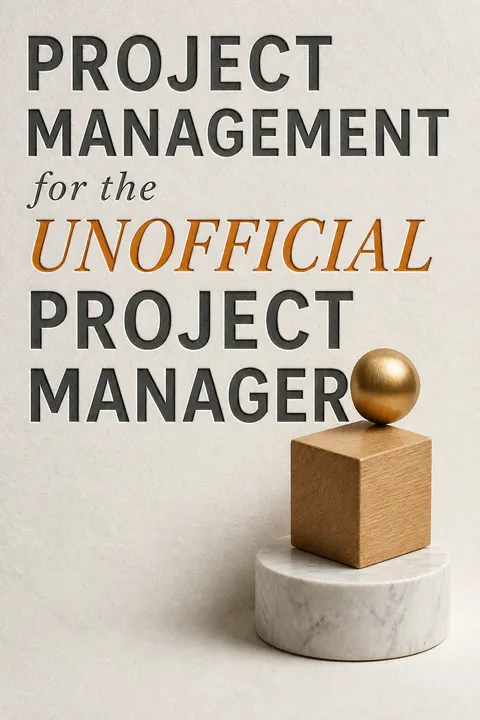
Project Management for the Unofficial Project Manager receives mostly positive reviews for its accessible introduction to project management concepts. Readers appreciate its practical advice, real-world examples, and simple language. Many find it helpful for those new to project management or in unofficial roles. Some criticize its simplicity and reliance on quotes from other sources. Overall, reviewers recommend it as a solid primer for beginners, praising its concise coverage of essential project management principles and leadership skills.
People Also Read





Glossary
People + Process = Success
People and process togetherThe book’s core project-management principle: successful delivery requires both a workable process and engaged people. Managing schedules, scope, and tasks is not enough if the team lacks trust or commitment. Likewise, positive relationships cannot substitute for clear objectives and organized work. The formula is especially relevant when a project leader has little formal authority.
Informal Authority
Influence earned through conductThe ability to inspire people to contribute willingly, even when they do not report to the project leader. Unlike formal authority, which comes from a title or position, informal authority is built through character, reliability, respect, listening, clear expectations, and accountability. It is central to leading project teams across organizational boundaries.
Four Foundational Behaviors
Four trust-building leadership practicesThe book’s set of behaviors for earning influence and engaging project teams: demonstrate respect, listen first, clarify expectations, and practice accountability. They are intended to work together. Respect and listening make it safer to surface concerns, clarity reduces conflicting assumptions, and accountability helps people keep commitments and address problems.
Five Process Groups
A practical project lifecycle mapThe five broad categories used to organize project work: initiating, planning, executing, monitoring and controlling, and closing. The book adapts this established project-management structure for people managing projects without specialist training. The groups provide a repeatable guide from authorization and shared expectations through delivery, progress checks, and formal completion.
D.A.N.C.E.
A key-stakeholder identification toolA mnemonic for identifying stakeholders who can significantly affect a project. It prompts the project leader to consider people involved in decisions, people with authority, those who need or are affected by the outcome, people with useful connections, and people whose positive or negative energy can influence success. It helps reveal influential stakeholders who may not be obvious approvers.
Frontloading
Clarifying essentials earlyThe practice of gathering important information as early as possible, before substantial work begins. In this book, it includes identifying stakeholders, interviewing key decision-makers, clarifying desired outcomes and constraints, and documenting shared expectations. The purpose is to reduce preventable rework and avoid discovering late that stakeholders imagined different results.
Project Scope Statement
A documented project boundaryA record of the project’s purpose, description, desired results, exclusions, communication needs, acceptance criteria, constraints, and approvals. It defines what the project is meant to deliver and what lies outside its boundaries. Shared and approved by key stakeholders, it supports decisions during planning and provides a reference when proposed changes arise.
TAME
Four options for managing riskA risk-response mnemonic: transfer the risk to another party, accept it and prepare to deal with it, mitigate its probability or impact, or eliminate it by removing the threat. Project leaders use these options after identifying and prioritizing risks. The book recommends documenting chosen responses and assigning responsibility for carrying them out.
Work Breakdown Structure
A hierarchy of project workA structured breakdown of the project’s deliverables into smaller components that can be planned and assigned. It begins with what the project must produce, then identifies the parts and activities needed to produce it. The structure helps teams build schedules, estimate resources, identify dependencies, and avoid overlooking necessary work.
Critical Path
Tasks that determine project durationThe longest sequence of dependent activities that determines the shortest possible completion time for a project. Activities on this path have no schedule flexibility without affecting the project end date. Identifying the path helps project leaders spot bottlenecks and assign dependable people to the tasks most likely to delay delivery.
Team Accountability Session
A brief commitment and obstacle reviewA regular, focused team meeting to check progress against the project plan, review commitments from the previous period, agree on upcoming work, and identify obstacles requiring help. The book presents it as a short alternative to unfocused status meetings. Its purpose is shared visibility and coordinated action, not lengthy narration of individual activity.
Scope creep
Uncontrolled expansion of project workThe gradual growth of a project beyond its agreed scope, often adding time, cost, or work without a clear increase in value. The book recommends assessing proposed changes against effects on schedule, budget, quality, resources, and risk. It distinguishes scope creep from evidence-based changes that better serve the project’s intended outcome.
FAQ
What's "Project Management for the Unofficial Project Manager" about?
- Focus on Unofficial Managers: The book is designed for individuals who manage projects without formal training or the title of a project manager.
- Practical Guidance: It provides a blueprint for managing projects effectively, focusing on both people and processes.
- Seven Chapters: The content is structured into seven chapters, each addressing a different aspect of project management.
- Real-World Application: The book includes real-life stories and examples to illustrate the principles and practices discussed.
Why should I read "Project Management for the Unofficial Project Manager"?
- Improve Project Skills: It helps you transition from an amateur to an adept project manager by providing practical tools and techniques.
- Address Workplace Challenges: The book tackles common workplace challenges like organizing projects on the fly and leading teams without formal authority.
- Enhance Career Impact: Following the advice in the book can have a positive impact on your career by improving your project management skills.
- Focus on People: It emphasizes the importance of the 'people' aspect in project management, which is often overlooked.
What are the key takeaways of "Project Management for the Unofficial Project Manager"?
- People + Process = Success: Successful project management requires a balance between managing processes and leading people.
- Four Foundational Behaviors: Demonstrating respect, listening first, clarifying expectations, and practicing accountability are crucial for informal authority.
- Five Process Groups: Initiate, Plan, Execute, Monitor and Control, and Close are essential steps in managing any project.
- Risk Management: Identifying, assessing, and managing risks are vital to prevent project failure.
What are the best quotes from "Project Management for the Unofficial Project Manager" and what do they mean?
- "Manage things. Lead people." This emphasizes the dual role of a project manager in handling both tasks and team dynamics.
- "Character is who you are under pressure, not when everything is fine." It highlights the importance of maintaining integrity and composure in challenging situations.
- "A cadence of visibility and accountability produces not only reliable results again and again, but also a high-performance team." This underscores the value of regular check-ins and accountability in project success.
- "The cause of almost all relationship difficulties is rooted in conflicting or ambiguous expectations around roles and goals." It stresses the need for clear communication and expectation setting.
How does "Project Management for the Unofficial Project Manager" define an unofficial project manager?
- Role Without Title: An unofficial project manager is someone who manages projects without having the formal title or training.
- Common in Workplaces: Many knowledge workers find themselves in this role, managing projects that are not officially recognized.
- Lack of Training: These individuals often lack formal project management training, making resources like this book valuable.
- Significant Impact: Despite the lack of formal recognition, unofficial project managers play a crucial role in organizational success.
What is the "People + Process = Success" formula in "Project Management for the Unofficial Project Manager"?
- Balanced Approach: The formula emphasizes the need to balance managing processes with leading people for project success.
- Process Alone Isn't Enough: While a good process is essential, it must be complemented by effective leadership and team engagement.
- Engagement and Morale: Focusing on people helps build team morale and engagement, which are critical for successful project outcomes.
- Replicable Success: By mastering both aspects, unofficial project managers can replicate success across different projects.
What are the Four Foundational Behaviors in "Project Management for the Unofficial Project Manager"?
- Demonstrate Respect: Treat team members with respect to foster a positive and productive work environment.
- Listen First: Prioritize listening to understand team members' perspectives and challenges before responding.
- Clarify Expectations: Clearly communicate roles, goals, and expectations to avoid misunderstandings and conflicts.
- Practice Accountability: Hold yourself and others accountable for commitments to build trust and ensure project success.
How does "Project Management for the Unofficial Project Manager" suggest managing risks?
- Identify Risks: Begin by brainstorming potential risks that could impact the project.
- Assess Impact and Probability: Evaluate each risk based on its potential impact and likelihood of occurrence.
- TAME the Risks: Use the TAME strategy to Transfer, Accept, Mitigate, or Eliminate risks.
- Document and Communicate: Create a risk management plan to document strategies and communicate them to the team.
What is the role of a Project Scope Statement in "Project Management for the Unofficial Project Manager"?
- Defines Project Boundaries: The scope statement outlines the project's purpose, description, desired results, exclusions, and constraints.
- Guides Decision-Making: It serves as a reference for making decisions and ensuring all stakeholders have a common understanding.
- Prevents Scope Creep: By clearly defining what is included and excluded, it helps prevent the project from expanding uncontrollably.
- Requires Stakeholder Approval: The scope statement should be reviewed and approved by key stakeholders to ensure alignment.
How does "Project Management for the Unofficial Project Manager" recommend handling scope changes?
- Evaluate Impact: Assess how the proposed change will affect the project's time, cost, quality, and resources.
- Use a Change Request Process: Document the change request and its implications before seeking approval.
- Involve Stakeholders: Engage key stakeholders in the decision-making process to ensure buy-in and support.
- Balance Flexibility and Control: Be open to necessary changes while maintaining control over the project's scope and objectives.
What is the importance of a Team Accountability Session in "Project Management for the Unofficial Project Manager"?
- Regular Check-Ins: These sessions provide a regular opportunity to review progress and address any issues.
- Promotes Transparency: They ensure that all team members are aware of the project's status and any challenges.
- Encourages Commitment: By making and reviewing commitments, team members are more likely to stay engaged and accountable.
- Facilitates Problem-Solving: The sessions provide a forum for discussing obstacles and finding solutions collaboratively.
How does "Project Management for the Unofficial Project Manager" suggest closing a project?
- Evaluate Task Completion: Review the task list to ensure all project activities are completed.
- Confirm Scope Fulfillment: Verify that the project has met its goals and delivered the expected results.
- Document Lessons Learned: Capture insights and lessons from the project to improve future performance.
- Celebrate Success: Recognize and reward the team's efforts to boost morale and encourage continued excellence.

Download PDF
Download EPUB
.epub digital book format is ideal for reading ebooks on phones, tablets, and e-readers.








