Plot Summary
Silence and Shadows
Kallum "Kal" Anderson, a brilliant but broken doctor with a taste for violence, narrates his life of duality—healing by day, killing by night. Raised in silence and trauma, Kal finds solace in the void, but his world is upended by Elena Ricci, the mafia princess he's sworn to protect. Their connection is forbidden, electric, and dangerous, echoing the myth of Hades and Persephone. Kal's obsession with Elena grows, and when a blackmail threat endangers her, he's forced to make a deal with her father, Rafael Ricci, that will bind their fates together in darkness.
A Deal for a Soul
Kal confronts Rafael Ricci, Elena's father and Boston's fading mafia don, about a blackmail letter threatening the family's secrets. The only way to protect Elena is to claim her as his own. Kal demands Elena's soul in exchange for her safety, setting in motion a chain of events that will destroy old alliances and ignite new wars. Elena, meanwhile, is trapped in a gilded cage, her life dictated by family duty and a looming marriage to Mateo, a man she does not love. The stage is set for a violent, passionate collision.
Wedding of Blood and Lies
On the day of her arranged marriage, Elena is swept into a nightmare. Mateo, her fiancé, is murdered—poisoned and stabbed by Kal, who orchestrates the hit to remove all obstacles. In a chilling, clandestine ceremony, Kal forces Elena to marry him, threatening her family to ensure her compliance. The wedding is a grotesque inversion of tradition: vows are exchanged over a corpse, and Elena's consent is wrung from her in terror and defiance. The union is sealed not by love, but by violence and blackmail.
The Captive Bride
Elena is whisked away from Boston, drugged and stripped of her agency, awakening on Kal's private jet bound for the remote Aplana Island. She is both prisoner and wife, her autonomy stolen by the man who both terrifies and fascinates her. Kal's home, the Asphodel, is a luxurious but empty mansion, echoing the underworld he rules. Elena's world narrows to Kal's whims, her own desires warring with her fear and anger. The power dynamic is fraught, their chemistry undeniable, and the boundaries between captor and captive begin to blur.
Island of Exile
On Aplana, Elena struggles with loneliness, resentment, and the slow, insidious pull of Kal's darkness. She explores the house, forms a wary alliance with Marcelline the housekeeper, and tries to maintain contact with her sisters. Kal, meanwhile, is consumed by his need to control and protect Elena, even as he battles his own triggers and violent urges. Their relationship is a dance of dominance and submission, pain and pleasure, as Elena discovers the power she holds over the monster who has claimed her.
Games of Power and Pain
The marriage becomes a battleground of wills and bodies. Kal and Elena's encounters are charged with pain, blood, and forbidden pleasure. Elena tests her limits, pushing back against Kal's control, even as she finds herself drawn to his darkness. Kal, for his part, is tormented by jealousy, possessiveness, and the fear of losing her. The outside world intrudes in the form of blackmail, threats, and the ever-present danger of the Ricci family's enemies. Trust is fragile, and betrayal lurks in every shadow.
The Garden That Won't Bloom
Elena attempts to plant a garden at the Asphodel, desperate to create something beautiful in her captivity. The flowers refuse to bloom, mirroring her own sense of stagnation and loss. Her calls home reveal the unraveling of her family, the lies her parents spread, and the growing distance between her old life and new. The garden becomes a symbol of her struggle to find meaning and agency, even as Kal's world closes in around her.
The Monster's Past
Kal's history is laid bare: a childhood of neglect, a mother lost to cancer, a father who rejected him, and a life shaped by violence and betrayal. His relationship with Elena's parents—especially her mother, Carmen—is revealed to be fraught and damaging. Kal's scars, both physical and emotional, are the legacy of a life spent surviving at any cost. Elena learns the truth of his pain, and the ways in which their fates have been intertwined long before their marriage.
The Queen's Awakening
No longer content to be a pawn, Elena begins to assert herself. She confronts Kal, demands honesty, and refuses to be defined by her family's expectations or her husband's control. Their relationship shifts as Elena embraces her own darkness, matching Kal's intensity with her own. Together, they become a force—equal parts love and destruction, passion and ruin. The myth of Persephone is rewritten: the queen of the underworld is not a victim, but a willing, powerful partner.
Family Ties, Family Lies
Returning to Boston, Kal and Elena face the full weight of family secrets and betrayals. Elena's mother, Carmen, is revealed to have had an affair with Kal, a revelation that shatters Elena's trust and sense of self. Her father, Rafael, is exposed as manipulative and desperate, willing to sacrifice his daughter for power and money. The Ricci empire teeters on the brink of collapse, and Elena must choose where her loyalty lies: with the family that raised her, or the man who ruined and remade her.
The Mother's Betrayal
Carmen's confession devastates Elena, who is forced to confront the ways in which her mother's jealousy and cruelty have shaped her life. The revelation of Kal and Carmen's past is a wound that nearly destroys Elena's marriage. In the aftermath, Elena lashes out, seeking solace in her sisters and the remnants of her old life. The cycle of abuse and betrayal is laid bare, and Elena must decide whether to perpetuate it or break free.
Ruin and Rebirth
The Ricci family falls: their criminal empire exposed, their secrets laid bare, and their power broken. Elena, armed with evidence, becomes the architect of their downfall, choosing truth over loyalty. Kal, too, severs his ties to the underworld, buying his way out and dissolving the trust that bound him to the Riccis. In the ashes of their old lives, Kal and Elena find the possibility of something new—a love forged in darkness, but capable of surviving in the light.
The Recital Reckoning
At Ariana's recital, Elena and Kal's relationship reaches a breaking point. The wounds of betrayal, jealousy, and unspoken love erupt in a confrontation that is both violent and vulnerable. In a moment of raw need, they reclaim each other's bodies, even as their hearts remain uncertain. The performance on stage mirrors the drama unfolding in the shadows, as Elena must decide whether to run from her pain or face it head-on.
The Price of Freedom
Elena flees, seeking refuge with her sisters and grandmother, grappling with the aftermath of her choices. Kal, too, is forced to confront the consequences of his actions—his need for control, his fear of abandonment, and his inability to let go. Both must reckon with what it means to be free: to choose love, to choose pain, to choose each other. The path to reconciliation is fraught, but the possibility of redemption remains.
The Return to Darkness
Elena returns to Aplana, confronting Kal with annulment papers and the demand for honesty. Their reunion is explosive, both physically and emotionally, as they lay bare their wounds and desires. In a ritual of pain and pleasure, they mark each other with scars and vows, choosing to embrace the darkness that binds them. The garden finally blooms, a testament to their survival and growth.
The Truth in Blood
Kal and Elena's relationship is consummated in blood, sex, and mutual understanding. They accept each other's flaws, histories, and needs, forging a partnership that is as much about destruction as it is about creation. The myth of Hades and Persephone is fulfilled: the queen chooses her king, and together they rule the underworld on their own terms.
The End of the Riccis
With Elena's help, Kal severs his last ties to the Ricci family, ensuring their downfall and his own freedom. The criminal world that shaped them both is left behind, and the possibility of a new life emerges. Elena's act of betrayal is both an ending and a beginning, as she claims her own agency and destiny.
Persephone's Choice
In the aftermath, Kal and Elena build a life together on Aplana, raising a daughter and finding peace in the darkness they once feared. The garden blooms, the past is laid to rest, and the myth is rewritten: Persephone chooses to stay in the underworld, not as a captive, but as a queen. Their love, forged in violence and pain, becomes a source of light in the shadows.
Characters
Kallum "Kal" Anderson
Kal is a man forged in trauma, shaped by loss, neglect, and the violence of the criminal underworld. A brilliant doctor with a psychological aversion to noise (misophonia), he finds solace in silence and control. His dual life as healer and killer is a constant source of tension, and his obsession with Elena is both his salvation and his undoing. Kal's relationship with Elena's family—especially her mother, Carmen—is fraught with betrayal and pain. Over the course of the story, Kal evolves from a cold, calculating monster to a man capable of love, vulnerability, and sacrifice. His journey is one of self-acceptance, as he learns to let go of the past and embrace the possibility of happiness.
Elena Ricci Anderson
Elena is the eldest daughter of the Ricci crime family, raised in a world of violence, duty, and repression. Intelligent, passionate, and rebellious, she chafes against the expectations placed upon her, dreaming of freedom and self-determination. Forced into marriage with Kal, she is initially a pawn, but quickly becomes a player in her own right. Elena's journey is one of awakening: she confronts her own darkness, claims her desires, and ultimately chooses to embrace the life—and the man—she once feared. Her relationship with her family, especially her mother, is a source of pain and conflict, but also the crucible in which she is forged. By the end, Elena is no longer a victim, but a queen in her own right.
Carmen Ricci
Carmen is a woman consumed by envy, regret, and the need for control. Her affair with Kal is a wound that festers, poisoning her relationship with Elena and fueling the cycle of betrayal that defines the Ricci family. Carmen's inability to love unconditionally, her manipulation of those around her, and her ultimate downfall are both a warning and a mirror for Elena. She is both villain and victim, a product of her world and a perpetuator of its cruelties.
Rafael Ricci
Rafael is the patriarch of the Ricci family, a man whose power is slipping away. His willingness to sacrifice his daughter for alliances and money is emblematic of the moral decay at the heart of the family. Rafael's relationship with Kal is complex—mentor, employer, adversary—and his actions set the story's events in motion. Ultimately, his downfall is the result of his own choices and the legacy of violence he has created.
Ariana Ricci
Ariana is Elena's younger sister, a source of comfort, humor, and support. Her presence grounds Elena, reminding her of the life and love she risks losing. Ariana's own struggles with family expectations and loyalty mirror Elena's, and her perspective offers a counterpoint to the darkness of the main narrative.
Stella Ricci
Stella, the youngest Ricci sister, is a background presence who represents the possibility of a different life. Her intelligence and detachment offer a contrast to the emotional turmoil of her siblings, and her relationship with Elena is one of understated support.
Marcelline
Marcelline is Kal's housekeeper on Aplana, a figure who observes the unfolding drama with a mixture of fear, loyalty, and resignation. She is drawn into the couple's world, becoming both a confidante and a bystander to their violence and passion.
Jonas Wolfe
Jonas is Kal's associate and friend, a fellow survivor of the underworld. His British wit and practical advice offer a counterbalance to Kal's intensity. Jonas's own history of violence and betrayal parallels Kal's, and his presence serves as a reminder of the world they are both trying to escape.
Violet
Violet is Kal's half-sister, a figure from his past who represents the possibility of family and forgiveness. Her refusal to accept Kal's help is both a source of pain and a catalyst for his growth. Violet's eventual appearance on Aplana signals the potential for healing and connection beyond the cycle of violence.
Mateo de Luca
Mateo is Elena's original fiancé, a pawn in the Ricci family's machinations. His murder at Kal's hands is the spark that ignites the story's central conflict, and his absence haunts Elena as she navigates her new life.
Plot Devices
Hades and Persephone Myth
The story is structured as a contemporary, psychological reimagining of the Hades and Persephone myth. Kal is cast as the underworld king, Elena as the reluctant queen. The myth's themes—abduction, transformation, the cycle of death and rebirth—are woven throughout, providing both narrative structure and emotional resonance. The pomegranate, the garden, and the underworld setting are recurring symbols of temptation, captivity, and eventual agency.
Duality and Moral Ambiguity
The narrative thrives on the tension between opposites: healer and killer, victim and queen, love and ruin. Both Kal and Elena are forced to confront the darkness within themselves and each other, challenging the reader's assumptions about morality, agency, and redemption. The story's structure—alternating perspectives, flashbacks, and confessions—mirrors the characters' internal struggles.
Blackmail and Power Plays
The plot is driven by blackmail, manipulation, and the constant threat of exposure. The use of sex tapes, forged evidence, and shifting alliances keeps the stakes high and the characters off-balance. Trust is both a weapon and a vulnerability, and the revelation of secrets is both destructive and liberating.
Violence as Intimacy
The story uses violence—both physical and emotional—as a means of connection and transformation. Blood, scars, and pain are not just symbols of suffering, but of intimacy and trust. The characters' willingness to hurt and be hurt becomes a form of communication, a way to claim and be claimed.
The Garden as Metaphor
Elena's attempts to cultivate a garden on Aplana mirror her own journey from captivity to agency. The refusal of the flowers to bloom is a symbol of her stagnation and despair; their eventual blossoming marks her acceptance of her new life and her own power.
Narrative Structure and Foreshadowing
The novel's structure is cyclical, with the ending echoing the beginning: a return to the underworld, a choice to stay, a new spring. Foreshadowing is used to build tension and deepen the emotional impact, as past traumas and secrets are revealed in layers.
Analysis
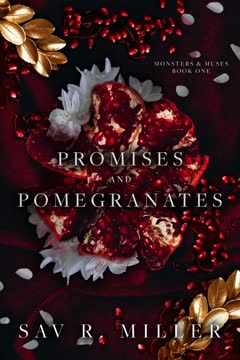
Promises and Pomegranates is a dark, contemporary romance that interrogates the boundaries between love and violence, agency and captivity, myth and reality. By reimagining the Hades and Persephone myth in a world of organized crime, the novel explores the ways in which trauma, power, and desire shape identity and relationships. The story refuses easy answers: Kal and Elena are both victims and perpetrators, their love both a source of ruin and redemption. The use of violence as intimacy, the blurring of moral lines, and the emphasis on choice—even in the face of overwhelming constraint—speak to contemporary anxieties about autonomy, consent, and the legacy of family. Ultimately, the novel suggests that true freedom comes not from escape, but from the willingness to confront and embrace one's own darkness. The garden that finally blooms is not a return to innocence, but a testament to survival, growth, and the possibility of love in even the darkest places.
Last updated:
Review Summary
Promises and Pomegranates received mixed reviews, with praise for its steamy scenes but criticism of underdeveloped characters and plot. Many readers found the story confusing and disjointed, lacking context and backstory. The mafia setting and dark romance elements appealed to some, while others were put off by the graphic content and controversial storylines. Some appreciated the Hades and Persephone retelling aspects, but others felt it was too loosely connected. Overall, opinions varied widely, with some DNFing early and others eagerly continuing the series.