

Key Takeaways
Follow the small eviction case until it reveals who really holds power
A case opens the door. In 2004, private investigator Sam Brower read about Ross and Lori Chatwin, an FLDS couple threatened with expulsion after seeking an additional wife without the prophet’s permission. Brower visited, checked their account, and agreed to work for one dollar, lending Ross the bill himself. He also made clear that marrying a sixteen-year-old would be illegal, even within their religious community. The Chatwins’ dispute over a home soon showed him that the conflict was not simply a private disagreement.
The pattern widens. Church leaders controlled housing, work, family arrangements, and local authorities. When Brower saw police help force their way into the Chatwins’ home, he stopped treating the town as an oddity and began investigating it as a system. The book’s central story grows from that shift: a local eviction exposes a much larger machinery of coercion and abuse.
The opening works because it begins with a concrete problem that can be checked: who owns the house, who issued the eviction, and what the law permits. That is a useful investigative discipline. Large systems often become visible through mundane disputes over housing, wages, or paperwork, where power has to act in public. The detail that Brower refuses to endorse the proposed underage marriage also complicates the familiar hero narrative. Advocacy does not require suspending judgment about a client’s own conduct; credibility depends on applying standards consistently.
When one leader controls homes, marriages, and religious standing, dissent becomes costly
Authority reaches everywhere. In Brower’s account, FLDS leader Warren Jeffs could declare someone unworthy of priesthood, expel him, reassign his wives and children, and threaten his access to a home held by the United Effort Plan Trust. The term “priesthood,” which ordinarily signifies religious authority, became a lever for governing practical life. Jeffs also used the threat of “blood atonement,” a doctrine described by Brower as requiring a sinner’s death for certain offenses, to intensify fear. He reports no firsthand witness to an actual blood-atonement killing, a distinction that matters.
Punishment teaches everyone. In January 2004, Jeffs expelled twenty-one men in one meeting, including his own brothers and influential Barlows. Their families faced separation, and the men were told to repent away from home. The message reached beyond those expelled: ordinary members learned that disagreement could cost them family, livelihood, and shelter.
This is a portrait of authority without meaningful checks. Political science often describes such arrangements as personalist rule: institutions exist, but their decisions ultimately depend on one person’s favor. Here, spiritual status and material security reinforce each other, making dissent unusually expensive. The distinction between a doctrine’s threat and a proven ritual is also essential. Fear can govern behavior even when the threatened act is never carried out. That does not make every claim equally established, but it explains why a credible threat can shape an entire community.
A system that reserves girls for older men can make boys disposable
Marriage shapes the hierarchy. Brower describes a community where leaders controlled who could marry whom, while girls were treated as valuable future wives and mothers. That imbalance left many boys competing for approval, work, and a possible assignment of a wife. A young man could be expelled for minor disobedience, reducing competition for brides and reinforcing the authority of older men. Brower calls these expelled boys the “Lost Boys.” He reports that some were cast out as young as eleven and often left with little education or knowledge of the outside world.
Labor and family reinforce control. Boys also worked on construction projects, sometimes while very young, with income flowing to fathers or church-linked businesses. The threat of expulsion therefore disciplined both family life and labor. Girls faced a different danger: many were denied sex education and then placed in marriages with older men, sometimes as teenagers. In this account, the family structure is not separate from the economy; both serve the same hierarchy.
The gender arrangement is more than a set of unequal customs. It allocates access to partners, education, and economic security, so reproductive control becomes a form of social organization. The comparison to a labor system is especially revealing when children’s work contributes to church-linked businesses. Still, the category “Lost Boys” can flatten varied experiences: some left voluntarily, some were expelled, and some remained connected to family. A precise account should preserve those differences while recognizing the shared vulnerability created by exclusion and limited preparation for life outside.
Treat enforced silence as infrastructure, not proof that abuse is absent
Silence is produced. Members were taught to distrust outsiders and to obey the prophet, while local institutions often answered to church leaders. Brower recounts the case of Nicole Holm, who was fifteen when leaders arranged her marriage to an older man. Her parents withdrew consent, but she disappeared and was found in the FLDS community in Canada. The family contacted authorities in several jurisdictions, including the FBI and the Royal Canadian Mounted Police, yet the investigations did not resolve the matter for them.
The system crosses borders. The FLDS moved people and decisions between Utah, Arizona, Canada, and later Texas, where authority was divided among local police, state agencies, and federal investigators. Officials sometimes deferred to the community or failed to coordinate. Secrecy was therefore not just a rule imposed on members. It was strengthened by jurisdictional gaps, fear of retaliation, and institutions that found it easier to look away.
A lack of reports is weak evidence when reporting itself carries the risk of losing family, home, or religious belonging. In organizational research, this resembles a feedback failure: people who see harm have little safe route to report it, and agencies receive an artificially quiet picture. Brower’s account also shows why coordination matters when cases cross borders. Yet institutional failure should be described with care. Different agencies may have faced distinct legal limits, and a disappointing outcome does not by itself prove deliberate complicity.
Follow the paperwork, money, and property to expose hidden power
Evidence has many forms. Brower did not rely only on survivor accounts. He studied court files, property records, business registrations, interviews, and the FLDS’s complicated corporate arrangements. He traced assets and shell companies connected to construction projects and places where Jeffs could hide. That work helped explain how the church could appear poor in some neighborhoods while controlling valuable property and businesses elsewhere.
The archive changes the case. During the 2008 search of the Yearning for Zion Ranch in Texas, investigators found a concealed vault beneath the temple complex. It held marriage records, computer files, recordings, and Jeffs’s extensive “Priesthood Record,” a journal documenting his decisions and private thoughts. The material gave investigators a detailed record to compare with testimony and other evidence. In a community built around secrecy, the leader’s own record-keeping became a major vulnerability.
The strongest investigative insight here is methodological: different kinds of evidence can corroborate one another. Testimony explains lived experience; property records reveal control of resources; contemporaneous journals can establish what a leader knew or ordered. This triangulation reduces dependence on any single witness, especially when witnesses face pressure. At the same time, an archive is not self-interpreting. Documents require context, authentication, and fair legal scrutiny. Their value comes from testing them against other evidence, not from treating a private record as an automatic verdict.
Protect witnesses from family pressure that can undo testimony
Testimony takes support. Candi Shapley told investigators that she had been forced into marriage at sixteen and raped by her much older husband. She testified before a grand jury, which indicted both the husband and Jeffs. After her identity became public, her family and church exerted pressure, and she later refused to answer questions at her former husband’s trial. Her changing decisions were not an abstract legal problem; she was a young mother with children to care for and strong ties to the family she had lost.
Safety changes what is possible. Elissa Wall’s case used a different approach. Her identity was protected while prosecutors developed evidence, and she was carefully escorted to court. She testified that Jeffs had arranged her marriage at fourteen and that she was raped by the man assigned to her. In 2007, Jeffs was convicted in Utah as an accomplice to rape. The contrast shows why witness support must include privacy, practical help, and room to make difficult choices.
The contrast between Candi and Elissa is not a simple lesson in courage versus retreat. Coercive control works through relationships, and a witness can face pressure from the same family that provides emotional connection or childcare. Trauma-informed practice therefore treats safety and agency as part of evidence gathering, not as distractions from it. The legal process also needs to avoid turning a survivor into a symbol whose value depends on testifying. A credible case should be built from multiple sources wherever possible, so the burden does not fall on one vulnerable person.
Build cases across jurisdictions, because fragmented enforcement gives abusers room
The investigation becomes collective. Brower’s work expanded from helping the Chatwins to gathering information for lawyers, police, prosecutors, and federal agents. He worked with former members, including Canadian FLDS leader Winston Blackmore, and shared evidence across agencies. Civil lawsuits over housing and alleged racketeering complemented criminal investigations. A court ruling gave the Chatwins a life estate, allowing them to remain in their home, while later intervention over the UEP Trust sought to protect residents from arbitrary eviction.
Pressure accumulates. Texas raised its minimum marriage age after Brower and others testified about child marriage. Candi’s testimony helped produce Arizona charges, and Elissa’s evidence led to the Utah trial. Jeffs was arrested in Nevada in 2006 after a traffic stop and placed on the FBI’s Ten Most Wanted list. A jury convicted him in 2007. These gains depended on many people linking records, witnesses, legal tools, and agencies rather than waiting for one institution to solve the case.
This is a practical model of coalition work: civil litigation can expose assets, local investigators can develop witnesses, and state or federal authorities can pursue crimes beyond a town’s boundaries. Each tool addresses a different point of vulnerability. The approach also demonstrates that legal action need not be limited to punishment; protecting a family’s right to remain housed can reduce an abuser’s leverage. The limitation is equally clear: coordination depends on political will and sustained resources. A network of willing professionals can make progress, but it cannot substitute for accountable public institutions.
A rescue can fail if child protection retreats after the cameras leave
A false call reveals real danger. In 2008, a caller using the name Sarah claimed she was a battered teenage bride at the Texas ranch. The caller was later identified as Rozita Swinton, who had fabricated the story. Yet the search warrant prompted by the calls led authorities to find extensive evidence of abuse and remove hundreds of children from the compound. The state ultimately took 463 children into custody. A later agency report said 274 children from 91 families were subjects of abuse or neglect.
Discovery was not protection. Courts reversed the broad custody decision, requiring cases to be assessed individually. Texas child-protection officials then released children, sometimes without the DNA verification that had been ordered. Brower describes agency pressure to reduce costs and close cases, while advocates warned that children remained at risk. The episode contains two truths: the search uncovered serious harm, and the state’s sweeping response raised difficult questions of due process and execution.
The raid’s consequences resist a clean victory narrative. A fabricated report can still lead investigators to genuine evidence, but that does not erase the need for reliable procedure. Individualized assessments, clear parentage, and fair hearings matter both legally and practically: without them, state action can lose legitimacy and weaken future protection. Conversely, releasing children simply to end an expensive case is not meaningful due process. The central challenge is to protect children with evidence-based care that is durable enough to survive legal review and public pressure.
An arrest is not enough when a leader can still command followers from prison
Control outlasts the hideout. After Jeffs was arrested, he continued preaching and issuing instructions by telephone. His followers had already learned to treat his voice as authority, even when he was far away. In 2010, the Utah Supreme Court overturned his conviction because of an error in the jury instructions. At the time Brower’s account closes, Jeffs is incarcerated in Texas and awaiting trial on serious charges, but the Utah conviction no longer stands.
Institutions remain contested. The book follows continuing fights over the UEP Trust, the church’s assets, and who should lead the FLDS. Jeffs’s detention does not automatically free members from dependence on church-controlled homes, family assignments, or community services. Brower’s conclusion is therefore less about a single man’s capture than the unfinished work of protecting children and limiting the structures that sustained his authority.
The distinction between removing a leader and changing the conditions that sustain leadership is crucial. Authority can travel through routine communication, property ownership, family loyalty, and shared fear, even when its source is physically confined. This resembles a resilient organization more than a one-person performance. The appellate reversal also illustrates why procedural fairness is not a technical distraction: a conviction that cannot withstand review may leave victims without durable accountability. The wider test is whether institutions can protect people and preserve rights without relying on one dramatic arrest.
Analysis
Prophet’s Prey is both an investigative narrative and an argument about how coercive power survives in ordinary settings. Brower’s story begins with a house, a disputed eviction, and a one-dollar client fee, then widens into a system that joins religious authority to control of property, marriage, work, education, and local policing. The scale changes, but the mechanism stays recognizable: a leader defines dissent as spiritual failure, and the community’s material dependencies make that definition costly to resist. The book’s strongest contribution is its account of investigation as accumulation. Brower combines interviews with survivors and defectors, property and corporate records, court proceedings, and the hidden Priesthood Record. No single source carries the whole argument. The journal found in the Texas temple vault becomes powerful because it can be compared with witness accounts and other evidence. That documentary approach also helps explain why the story is not only about Jeffs’s personality. An individual leader could not wield this reach without institutions, collaborators, businesses, and officials who either obeyed or failed to intervene.
The narrative is necessarily partial. Brower is not a detached observer: he is a PI, an advocate for clients, and a participant in efforts to prosecute Jeffs. That proximity supplies rare access, but it also calls for careful distinctions among documented events, witness allegations, the author’s inferences, and claims never established in court. His speculation about motives or hidden plans should not be treated as equivalent to a conviction or a verified record. Likewise, his account of the 2008 Texas raid celebrates the discovery of abuse while documenting serious failures in the state’s handling of children. Both aspects belong in the analysis.
The broader lesson is that child protection requires more than exposing wrongdoing. It requires safe ways to report, competent cross-jurisdictional enforcement, reliable evidence, due process, and sustained support after public attention fades. If institutions act too slowly, they leave vulnerable people under private control. If they act carelessly and cannot justify their decisions, they risk losing legitimacy. The book’s most durable question is how to hold leaders accountable while also dismantling the dependencies that let coercion continue in their absence.
Review Summary
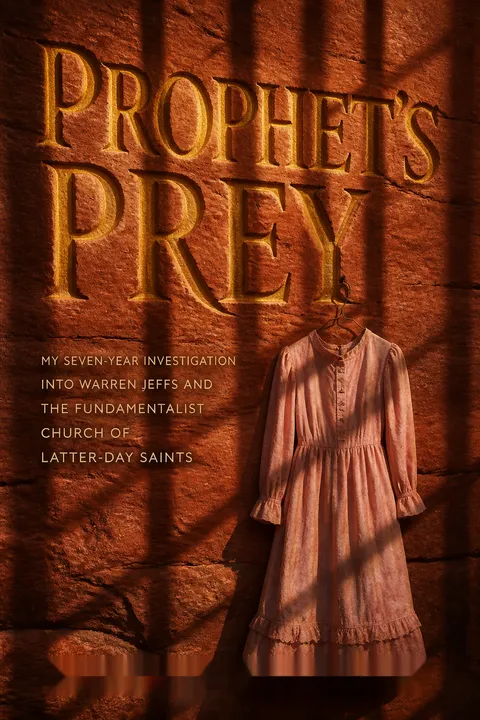
Prophet's Prey is a disturbing yet compelling exposé of Warren Jeffs and the FLDS cult. While some readers found the writing repetitive, most praised Brower's unique investigative perspective and comprehensive coverage of the subject. The book details horrific abuses, including child marriages and sexual exploitation, perpetrated under the guise of religion. Many reviewers expressed shock at the ongoing nature of these crimes and frustration with law enforcement's slow response. Despite its difficult subject matter, most found it an important read that sheds light on a secretive and abusive organization.
Glossary
Fundamentalist Church of Jesus Christ of Latter-Day Saints (FLDS)
Polygamous breakaway sectThe FLDS is a polygamous religious group that split from the mainstream Church of Jesus Christ of Latter-day Saints after the latter renounced plural marriage. In Brower’s account, Warren Jeffs’s followers regard their group as the true continuation of the faith. The FLDS is institutionally distinct from the mainstream LDS Church, which does not practice or endorse polygamy.
United Effort Plan Trust (UEP)
Church-linked property trustThe UEP was a trust holding land and other assets associated with the FLDS community. In Short Creek, homes were often built on UEP-owned land, leaving residents dependent on the trust’s decisions about who could live there. Brower describes the trust as a source of community resources and as leverage used by church leaders to reward obedience or threaten expulsion.
Lost Boys
Expelled FLDS boys“Lost Boys” is the name used for boys and young men expelled from, or driven out of, the FLDS community. Brower describes expulsions for conduct ranging from disobedience to relationships with girls, and says many left with little formal education or preparation for life outside. Their removal also reduced competition among males for marriages controlled by church leaders.
Priesthood Record
Jeffs’s private chronicleThe “Private Priesthood Record of President Warren Jeffs” was a large collection of journals, dictations, and related materials documenting Jeffs’s decisions, religious claims, relationships, and activities. Investigators found extensive records in a hidden vault beneath the Texas temple. Brower describes the archive as crucial evidence that could be compared with testimony, marriage records, and other investigative findings.
blood atonement
Atonement through deathIn the doctrine described by Brower, certain sins are considered too grave to be forgiven through ordinary religious repentance, and the sinner’s death is presented as the means of atonement. Brower reports that FLDS leaders used the idea as a threat and recounts a case in which Jeffs allegedly ordered a father to bring his daughter back to face death. He also states that none of his interviewees had witnessed such a killing.
keep sweet
Required cheerful obedience“Keep sweet” describes the expectation that FLDS women and children remain agreeable, submissive, and outwardly cheerful, even when frightened, hurt, or opposed to what is happening. Brower presents it as a learned response that discourages resistance and disclosure. The phrase can make visible distress seem like a personal failure rather than a signal that someone is being coerced.
Sons of Helaman
Youth obedience networkThe Sons of Helaman were young FLDS members organized under a religious name drawn from Mormon scripture. Brower says Jeffs used boys in this group to monitor the community, enter homes, and report whether members followed his instructions. This turned a youth religious organization into a mechanism for surveillance and helped extend the prophet’s authority into private households.
heavenly sessions
Claimed revelatory trances“Heavenly sessions” is the term used for episodes in which Jeffs claimed to communicate with God or deceased religious figures. Brower describes accounts of Jeffs collapsing, trembling, or speaking incoherently, after which he presented instructions as divine revelations. The term refers to Jeffs’s and followers’ interpretation of these events, not to an independently established supernatural experience.
places of refuge
Hidden FLDS safe sites“Places of refuge” were properties used by FLDS leaders and followers as secluded compounds, temporary homes, or hiding places. Brower describes sites across several states and in Canada, including the Texas Yearning for Zion Ranch. Some properties were held through companies or other arrangements that obscured ownership, making it harder for investigators to locate Jeffs or trace church assets.
FAQ
What's Prophet's Prey about?
- Investigation of Warren Jeffs: The book details Sam Brower's seven-year investigation into Warren Jeffs, the leader of the FLDS, focusing on his rise to power and abusive practices.
- Child Abuse and Polygamy: It exposes systemic child abuse and forced marriages within the FLDS, highlighting the plight of young victims.
- Personal Accounts and Legal Battles: Brower includes stories from victims and the legal challenges faced in seeking justice against Jeffs and the FLDS.
Why should I read Prophet's Prey?
- Insight into a Hidden World: The book offers a rare glimpse into the secretive FLDS community and its extreme practices.
- Compelling True Crime Narrative: Brower’s investigation is presented as a gripping true crime story, combining journalism with personal narratives.
- Awareness of Child Abuse: It raises awareness about child exploitation and the need for legal reform, encouraging readers to consider the implications of unchecked religious authority.
What are the key takeaways of Prophet's Prey?
- Power and Control Dynamics: The book illustrates how Warren Jeffs manipulated followers through fear and control, demonstrating the dangers of charismatic leadership.
- Consequences of Blind Obedience: It emphasizes the tragic outcomes of blind obedience to authority, particularly in religious contexts.
- Legal and Social Implications: The investigation reveals the complexities of legal battles against powerful religious organizations and the challenges faced by law enforcement.
What are the best quotes from Prophet's Prey and what do they mean?
- “Warren Jeffs is a tall, bony man...”: This quote captures Jeffs's self-perception and delusions of grandeur, setting the tone for his manipulative nature.
- “The Lord will have me do this...”: It reveals Jeffs's twisted rationale for marrying underage girls, highlighting his predatory leadership.
- “I am a private detective...”: Reflects Brower’s dedication to uncovering the truth and seeking justice, emphasizing the personal toll of his investigation.
Who is Sam Brower, the author of Prophet's Prey?
- Private Investigator: Brower is a private investigator who spent years uncovering abuses within the FLDS.
- Advocate for Victims: He emerges as a passionate advocate for victims, working tirelessly to bring their stories to light.
- Chronicler of a Dark Chapter: His narrative documents a dark chapter in American religious history, aiming to inform and educate readers.
How did Warren Jeffs maintain control over his followers in Prophet's Prey?
- Fear and Intimidation: Jeffs instilled fear among followers, using threats of divine punishment to maintain control.
- Manipulation of Doctrine: He twisted religious doctrine to justify his actions, presenting himself as the mouthpiece of God.
- Isolation from the Outside World: Jeffs kept followers isolated, discouraging contact with non-FLDS individuals to reinforce dependence.
What methods did Sam Brower use in his investigation in Prophet's Prey?
- Interviews with Victims: Conducted extensive interviews with victims and former FLDS members to gather firsthand accounts.
- Legal Research and Documentation: Researched legal documents and court cases to build a comprehensive understanding of the FLDS.
- Collaboration with Law Enforcement: Worked closely with law enforcement to provide evidence and support for investigations.
What impact did Prophet's Prey have on public perception of the FLDS?
- Increased Awareness: The book brought significant attention to FLDS abuses, challenging the notion of religious freedom as a shield for criminal behavior.
- Calls for Legal Action: Prompted discussions about the need for legal reforms to protect vulnerable individuals within religious communities.
- Cultural Reflection: Encourages readers to critically examine the intersection of religion and authority, reflecting on the dangers of extremist beliefs.
How does Prophet's Prey address the theme of child abuse?
- Personal Accounts of Victims: Includes harrowing personal accounts from victims, providing insight into life under Jeffs’s rule.
- Systemic Issues: Explores systemic issues that allowed child abuse to flourish, emphasizing the need for societal awareness and intervention.
- Legal and Social Consequences: Highlights the consequences of child abuse, advocating for justice and reform to protect children.
What challenges did Sam Brower face during his investigation in Prophet's Prey?
- Threats and Intimidation: Faced threats from FLDS members, making it difficult to gather information.
- Legal Obstacles: Navigated a complex legal landscape, with many members reluctant to speak out.
- Personal Sacrifices: The investigation took a toll on Brower’s personal life, as he dedicated years to uncovering the truth.
What were the legal challenges faced in prosecuting Warren Jeffs?
- Jurisdictional Issues: The FLDS operates across state lines, complicating legal proceedings and coordination.
- Witness Intimidation: Many potential witnesses feared retaliation, making it difficult to gather evidence.
- Bureaucratic Obstacles: Law enforcement faced bureaucratic hurdles, slowing down the process of bringing charges.
How did the FLDS respond to the investigations and raids?
- Public Relations Campaign: Launched a campaign to portray themselves as victims of government overreach.
- Legal Maneuvering: Employed lawyers to fight legal actions, using delay tactics to prolong proceedings.
- Internal Control: Tightened grip on the community, reinforcing loyalty to Jeffs and discouraging dissent.
Download PDF
Download EPUB
.epub digital book format is ideal for reading ebooks on phones, tablets, and e-readers.








